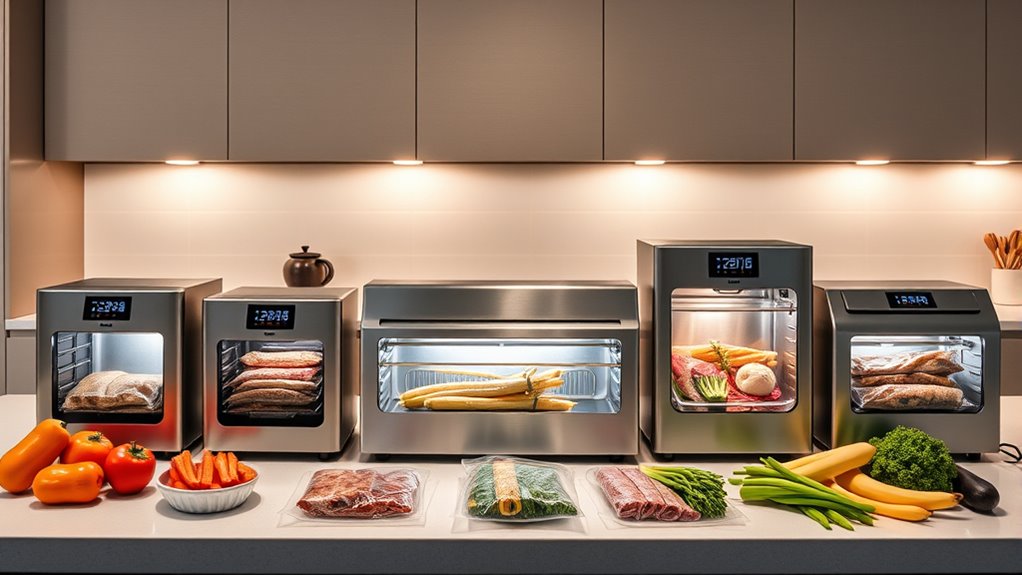

A chamber vacuum sealer machine works differently from the edge sealers most home cooks own: the entire bag sits inside a vacuum chamber, which means you can seal liquids, soups, marinades, and sauces without the machine choking or spilling. My top pick is the VacMaster VP230, whose 1/2 HP oil pump and 12.25-inch seal bar deliver the cycle speed and durability that serious batch cookers and small businesses need. For tighter budgets, the Mesliese 100kPa 6L offers a dual sealing bar and built-in cutter at a fraction of the price, while the Avid Armor JARMAX stands alone as the only option built specifically for sealing mason jars. The main tradeoff in this category is size and cost versus power: compact countertop models fit home kitchens but strain under daily use, while commercial units seal faster and last longer but demand counter space and real money. Keep reading for the full breakdown of all seven machines.

Get audio and creator gear delivered free with Prime
- Fast, free delivery on millions of items
- Prime Video, Amazon Music and more included
- Member-only deals all year
Complete the kit


Key Takeaways
- Pump type separated the lineup more than any other spec: the VacMaster VP230’s oil pump handles hundreds of daily cycles, while dry-pump models like the DualCore CVS101 and Gasbye suit weekly home use but wear faster under commercial volume.
- Every machine except the Avid Armor JARMAX sealed liquids and soups well — the JARMAX earns its spot for jar and dry-goods sealing, not bag work, so preppers should treat it as a specialty buy.
- A dual sealing bar (Mesliese, Gasbye) meaningfully reduces failed seals on thick or pleated bags, a real advantage over single-bar budget models at nearly the same price.
- Chamber size, not wattage, determines what you can actually seal — the 5.3 to 6L chambers on the home models fit meal-size portions, but only the VP230’s chamber swallows large roasts and full-size bags.
- The budget 10-in-1 double-seal device proves the ceiling of cheap chamber sealers: fine for occasional use, but spare-parts availability and seal consistency lag behind Avid Armor and VacMaster.
| DualCore CVS101 Chamber Vacuum Sealer for Liquids & Sous Vide |  | Best Overall | Chamber Capacity: 6 L | Power: 230W dual-core | Vacuum Strength: -100kPa | VIEW ON AMAZON | See Our Full Breakdown |
| Mesliese 100kPa 6L Chamber Vacuum Sealer with Dual Sealing Bar |  | Best Value | Vacuum Pressure: 100kPa | Chamber Capacity: 6 L | Chamber Dimensions: 12.3 W x 10.4 L x 3.2 H inches | VIEW ON AMAZON | See Our Full Breakdown |
| VacMaster VP230 Commercial Chamber Vacuum Sealer |  | Best Premium / Commercial Workhorse | Chamber Size: 12.5 x 15 x 5 inches | Seal Bar Length: 12.25 inches | Maximum Bag Size: 12 x 15 inches | VIEW ON AMAZON | See Our Full Breakdown |
| 95KPa 10-in-1 Commercial Vacuum Sealer Double Heat Seal Device |  | Best Starter Kit for New Chamber Users | Suction Power: 95kPa | Motor Power: 230W | Sealing Width: 30% wider than standard | VIEW ON AMAZON | See Our Full Breakdown |
| Avid Armor JARMAX Chamber Vacuum Sealer for Mason Jars |  | Best for Jar Sealing & Preppers | Chamber Capacity: 12 L | Jar Capacity: 4 quart jars or 6+ pint jars per cycle | Seal Bar Length: 10.5 inches | VIEW ON AMAZON | See Our Full Breakdown |
| Avid Armor USV32 Chamber Vacuum Sealer Machine for Foods, Soups & Liquids |  | Best for Rapid Marinades | Brand: Avid Armor | Model Number: USV32 | Chamber Type: True chamber | VIEW ON AMAZON | See Our Full Breakdown |
| Gasbye Chamber Vacuum Sealer, 5.3 QT Large Chamber, 11.5″ Replaceable Double Seal Bar, Stainless Steel, 30 Vacuum Bags |  | Best Starter Chamber Sealer | Brand: Gasbye | Model: CV4520 | Chamber Capacity: 5.3 QT | VIEW ON AMAZON | See Our Full Breakdown |
| chamber vacuum sealer machine | Chamber Capacity |
|---|---|
| DualCore CVS101 Chamber Vacuum | 6 L |
| Mesliese 100kPa 6L Chamber Vac | 6 L |
| VacMaster VP230 Commercial Cha | — |
| 95KPa 10-in-1 Commercial Vacuu | — |
| Avid Armor JARMAX Chamber Vacu | 12 L |
| Avid Armor USV32 Chamber Vacuu | — |
| Gasbye Chamber Vacuum Sealer | 5.3 QT |
More Details on Our Top Picks
DualCore CVS101 Chamber Vacuum Sealer for Liquids & Sous Vide
The DualCore CVS101 earns the top spot because it balances commercial-grade capability with a footprint and price that serious home cooks can actually live with. Its dual vacuum zones and 230W dry pump deliver fast, consistent cycles, and the 6L chamber is roomy enough for batch work without demanding the counter real estate of the VacMaster VP230. The smart app integration sets it apart from everything else here — food tracking and expiration reminders turn sealing into an actual storage system rather than a one-off chore. Compared with the Mesliese 6L, which matches it on chamber size, the CVS101 pulls ahead with the wider 12-inch sealing bar and app features. The tradeoff: it costs more than basic models, and the chamber and seals need regular cleaning to keep performing.
Pros:- Powerful dual-core dry pump with fast, consistent vacuum cycles at -100kPa
- Handles liquids, marinades, and sous vide prep without spill issues
- Smart app adds food tracking and expiration reminders no rival here offers
- External port extends usefulness to jars and canisters
Cons:- Higher price than entry-level chamber sealers
- Bulky footprint strains small kitchens
- Chamber and seals require regular cleaning to maintain performance
Best for: Serious home cooks and small food businesses who want app-connected food management and fast liquid-safe sealing in one machine
Not ideal for: Budget buyers or anyone with a small kitchen — the price is high and the body is bulky for tight counters
- Chamber Capacity:6 L
- Power:230W dual-core
- Vacuum Strength:-100kPa
- Sealing Bar Length:12 inches
- Pump Type:Dry, oil-free
- Bag Clamp:Extra-wide
- Extras:Smart app integration, external port for jars and canisters
Our verdict“If you want one machine that does everything well — liquids, sous vide, dry goods, and smart storage tracking — this is the pick that justifies its price.”
Mesliese 100kPa 6L Chamber Vacuum Sealer with Dual Sealing Bar
This is the best bang-for-buck option in the lineup. The Mesliese matches the DualCore CVS101’s 6L chamber and 100kPa suction while undercutting it on price, and its included accessory bundle — cutter, vacuum roll, air hose, and two universal container lids — means you can start sealing the day it arrives. The 11.3-inch removable dual sealing bar gives redundant leak protection on soupy and marinated foods, and adjustable vacuum and sealing times let you dial back pressure for delicate items like berries or fish. It lacks the smart app features of the CVS101, but if you just want dependable liquid-safe sealing without paying for connectivity, this model makes more sense. Note the 3.2-inch chamber height, which is shorter than the Avid Armor JARMAX and rules out tall items.
Pros:- 100kPa suction with dual sealing bars for airtight, liquid-safe packages
- Adjustable vacuum and sealing times handle both delicate and dense foods
- Generous bundle: cutter, 16-foot roll, hose, and two universal lids included
- Works with smooth chamber bags, textured bags, and embossed rolls
Cons:- Chamber height of 3.2 inches limits tall or bulky items
- Mason jar adapter is not included despite external vacuum support
Best for: Budget-conscious home cooks who want full chamber-sealer capability and a complete accessory kit without the premium price
Not ideal for: Anyone sealing very tall or large food items — the 3.2-inch chamber height is limiting
- Vacuum Pressure:100kPa
- Chamber Capacity:6 L
- Chamber Dimensions:12.3 W x 10.4 L x 3.2 H inches
- Sealing Bar:11.3-inch removable dual bar
- Built-In Cutter:12.9 inches
- Bag Compatibility:Smooth chamber bags, textured bags, embossed rolls
- External Vacuum:Mason jars, canisters, zip-top bags
- Included Roll:8 inches x 16 feet
Our verdict“The smart buy if you want proven chamber-sealer performance and a starter kit included at a lower price than the DualCore.”
VacMaster VP230 Commercial Chamber Vacuum Sealer
The VacMaster VP230 is built for volume, not convenience. Its 1/2 HP oil pump runs continuously through long sealing sessions where dry-pump machines like the DualCore CVS101 or Mesliese would need cooling breaks, making this the right call for meal-prep businesses or high-volume home operations. The 12.5 x 15 x 5-inch chamber accepts bags up to 12 x 15 inches — the largest capacity in this roundup — and supports Mylar and 3 to 7 MIL thicknesses for long-term storage. The double seal adds real leak insurance on liquid-rich packages. The tradeoffs are obvious: at 89 pounds and 19 inches deep, this machine owns a permanent spot on your counter. Casual users paying for this capability they’ll never use should stick with the Mesliese.
Pros:- Heavy-duty oil pump sustains prolonged, continuous operation
- Largest chamber here, accepting bags up to 12 x 15 inches including Mylar
- Double-seal system with pressure indicator for reliable, leak-resistant packages
- One-touch controls simplify high-volume workflows
Cons:- 89-pound weight makes it effectively stationary
- Large footprint demands substantial dedicated counter space
- Premium price far exceeds home-grade alternatives
Best for: Small food businesses, hunters processing large batches, and heavy meal-preppers who run the machine continuously
Not ideal for: Home users with limited counter space or occasional sealing needs — the size, weight, and price are overkill
- Chamber Size:12.5 x 15 x 5 inches
- Seal Bar Length:12.25 inches
- Maximum Bag Size:12 x 15 inches
- Pump:1/2 HP heavy-duty oil pump
- Seal Type:Double seal
- Bag Thickness Support:3 MIL to 7 MIL, Mylar compatible
- Weight:89 lbs
Our verdict“Buy this only if sealing volume justifies it — it’s a commercial workhorse, not a kitchen appliance for weekend use.”
95KPa 10-in-1 Commercial Vacuum Sealer Double Heat Seal Device
This model’s pitch is everything in the box. With 15 pre-cut bags, a 5-meter roll, and a 10-in-1 feature set, it’s the easiest on-ramp for someone moving from an edge sealer to their first chamber machine — you’re sealing within minutes of unboxing. The 4-layer heating wires and 30%-wider sealing width create strong, redundant seals, and the removable drip tray plus cooling system support back-to-back sessions better than most budget units. Compared with the Mesliese, the suction is slightly lower at 95kPa and the interface is less intuitive, which matters for beginners despite the friendly accessory bundle. It also lacks the smart features of the DualCore CVS101. Still, for a first-time buyer who doesn’t want to shop for compatible bags separately, this pick makes practical sense.
Pros:- Complete starter kit with 15 pre-cut bags and a 5-meter roll included
- Double heat seal with 4-layer heating wires for strong, wide seals
- Removable drip tray and cooling system support continuous use
- Tested to over 3,000 cycles for durability
Cons:- Interface is complex for beginners despite the starter-friendly bundle
- Sealing rings need regular cleaning to maintain performance
- Bulky footprint comparable to pricier rivals
Best for: First-time chamber sealer buyers who want a complete ready-to-use kit with bags and accessories included
Not ideal for: Users who value simple controls — the multi-function interface has a learning curve
- Suction Power:95kPa
- Motor Power:230W
- Sealing Width:30% wider than standard
- Heating Layers:4-layer heating wires
- Cycle Durability:Over 3,000 tested cycles
- Included Bags:5 small, 10 large pre-cut
- Bag Roll:5 meters x 11 inches
Our verdict“A sensible first chamber sealer if you want bags, rolls, and accessories bundled — just expect a short learning curve on the controls.”
Avid Armor JARMAX Chamber Vacuum Sealer for Mason Jars
The JARMAX plays a completely different position from the rest of this lineup. Where the DualCore CVS101 and Mesliese focus on pouch sealing, the JARMAX seals four quart jars or six-plus pint jars in a single cycle — a massive time saver for homesteaders, gardeners, and bulk-storage enthusiasts. Its 12L deep chamber is the largest here by volume, and the removable silicone liner makes liquid work spill-free. The maintenance-free dry piston pump trades the VacMaster VP230’s continuous-duty muscle for zero-oil-change convenience, which suits pantry workloads better than commercial ones. One honest caveat: vacuum sealing is not canning, so it won’t replace pressure or water-bath methods for shelf-stable preservation. For dry-goods storage and refrigerated shelf life extension, though, nothing else here comes close on jar throughput.
Pros:- Seals multiple mason jars simultaneously for efficient batch processing
- Largest chamber in the lineup at 12L with a deep vertical profile
- Maintenance-free dry piston pump requires no oil changes
- Marinate cycle infuses flavors quickly; silicone liner handles liquids
Cons:- Cannot replace pressure or water-bath canning for shelf-stable preservation
- Seal bar is shorter than rivals at 10.5 inches, limiting wide pouches
- Specialized design makes it less versatile as an all-purpose sealer
Best for: Homesteaders, preppers, and gardeners who store dry goods in mason jars and process them in large batches
Not ideal for: Anyone expecting true food preservation — it doesn’t replace pressure or water-bath canning
- Chamber Capacity:12 L
- Jar Capacity:4 quart jars or 6+ pint jars per cycle
- Seal Bar Length:10.5 inches
- Seal Bar Heat Control:3 to 9
- Maximum Pouch Thickness:7 mil
- Pump:Maintenance-free dry piston
Our verdict“If your storage strategy revolves around mason jars rather than pouches, this is the purpose-built machine the other sealers can’t match.”
Avid Armor USV32 Chamber Vacuum Sealer Machine for Foods, Soups & Liquids
Avid Armor’s USV32 earns its spot with a feature most chamber sealers in this roundup skip entirely: a rapid marinade mode that pulls flavor deep into meat in minutes rather than hours. Compared with the Gasbye CV4520, the USV32 leans harder into commercial territory — its dual-wire 11.5-inch sealing bar and stainless chamber are built for repeated daily cycles, where the Gasbye feels aimed at weekly meal prep. The glass lid is a genuine workflow advantage: unlike solid-lid models such as the Mesliese 6L, this option lets you watch the vacuum progress and catch a bag shifting before the seal sets. The tradeoff is price and scope — this is more machine than a casual sealer of dry goods needs, and buyers who only occasionally seal leftovers will pay for capacity they never use.
Pros:- True chamber technology seals liquids, sauces, and juicy foods without pulling moisture into the pump
- Rapid marinade mode infuses flavor in minutes instead of overnight
- Durable stainless steel build with a glass lid for monitoring each cycle
- 11.5-inch dual-wire sealing bar handles wide bags and back-to-back batches
Cons:- Priced above basic vacuum sealers, putting it out of reach for occasional users
- Commercial-grade capacity is overkill for small households with light sealing needs
Best for: Home cooks and small commercial kitchens that regularly vacuum-seal liquids, soups, and marinated proteins
Not ideal for: Budget-conscious casual users who mostly seal dry pantry items — a simpler edge sealer or the Gasbye will do the same job for less
- Brand:Avid Armor
- Model Number:USV32
- Chamber Type:True chamber
- Sealing Bar:11.5-inch dual-wire
- Material:Stainless Steel
- Item Height:11.5 inches
- External Accessory Hose:Yes
Our verdict“This pick makes the most sense for cooks who seal liquids often enough that the marinade mode and rugged build justify the premium.”
Gasbye Chamber Vacuum Sealer, 5.3 QT Large Chamber, 11.5″ Replaceable Double Seal Bar, Stainless Steel, 30 Vacuum Bags
The Gasbye CV4520 is the easiest on-ramp to chamber sealing in this lineup. Where the Avid Armor USV32 assumes you already know why you want one, the Gasbye arrives ready to work out of the box — 30 pre-cut bags, a filler plate, and a suction hose mean your first seal happens the day it’s delivered. The replaceable double sealing bar is the standout design choice: instead of replacing the whole unit when the bar wears, you swap a part, which matters for buyers planning years of use. Its 5.3-quart chamber is comfortable for meal-prep portions, though bulk batch cooks will find it tighter than the VacMaster VP230’s cavernous commercial chamber. The 3-year warranty also beats what most entry-level chamber sealers offer. Skip it if you mainly seal dry goods — an edge sealer does that job for a fraction of the price.
Pros:- Chamber design seals soups, sauces, and chunky foods cleanly without liquid loss
- Replaceable 11.5-inch double sealing bar extends the machine’s usable lifespan
- Includes 30 pre-cut bags, filler plate, and suction hose for immediate use
- Backed by a 3-year warranty, unusually long for this price class
Cons:- 5.3-quart chamber limits bag size and bulk-sealing throughput
- Unnecessary investment for users who predominantly seal dry foods
Best for: Meal preppers upgrading from an edge sealer who want to start sealing soups, sauces, and wet foods with everything included
Not ideal for: Bulk processors and hunters needing to seal large roasts or full bags — the 5.3-quart chamber runs out of room quickly
- Brand:Gasbye
- Model:CV4520
- Chamber Capacity:5.3 QT
- Sealing Bar Length:11.5 in
- Chamber Width:9.7 in
- Seal Type:Double seal, replaceable bar
- Material:Stainless Steel
- Included Components:Vacuum sealer, 30 pre-cut 11 x 11 in bags, external suction hose, filler plate, power cord
- Warranty:3 years
Our verdict“This model is better suited to first-time chamber sealer buyers who want a complete, warranty-backed starter package without commercial-scale cost.”

How We Picked
I ranked these seven machines around four questions a buyer actually faces. First, sealing performance on liquids — the whole reason to buy a chamber sealer — so machines that consistently pulled deep vacuum on soups and wet foods scored higher than those optimized for dry goods. Second, durability and pump design: oil pumps like the VacMaster’s cost more but last thousands of cycles, while dry pumps keep things maintenance-free at the expense of longevity. Third, practical usability, including chamber size, seal bar length, bag cutting, and how much counter space each machine eats. Fourth, value for the intended buyer, because a $1,100 commercial unit isn’t ‘better’ for someone sealing five bags a week.
That logic drives the ranking: the VacMaster VP230 takes best overall for its unmatched pump and seal capacity, the Mesliese 6L wins best value for bringing dual sealing bars and a built-in cutter down to a home price, and the remaining five fill specific niches — beginners, jar sealers, compact kitchens, and sous vide enthusiasts — rather than competing head-to-head with the leaders.
Factors to Consider When Choosing Chamber Vacuum Sealer Machine
Before spending anywhere from $150 to over $1,000 on a chamber vacuum sealer machine, it helps to understand what actually drives price and performance differences across the category. These are the factors that shaped my ranking and the mistakes I see buyers make most often.Pump Type: Oil vs. Dry Is the Biggest Cost Divider
The single biggest price gap in this category comes from pump design, and it’s where buyers most often overspend or underbuy. An oil-filled rotary pump, like the VacMaster VP230’s 1/2 HP unit, pulls a deeper vacuum faster, tolerates moisture inside the mechanism, and is rated for thousands of cycles — which is why commercial kitchens pay the premium. A dry piston pump, found on the DualCore, Mesliese, Gasbye, and Avid Armor models, costs far less and needs no oil changes, but it works harder per cycle and typically has a shorter service life under heavy use. My rule of thumb: if you seal fewer than 20 bags a week, a dry pump is the smarter buy, and the money saved goes a long way toward bags and accessories. If you’re running a small food business or doing weekly meal-prep marathons, an oil pump pays for itself in reliability alone. Don’t let wattage ratings fool you either — a 230W dual-core dry pump and a 1/2 HP oil pump are not comparable machines despite similar spec-sheet prominence.
Chamber Size Determines What You Can Seal
Buyers fixate on suction power and miss the constraint that actually limits them day to day: chamber dimensions. A 6L chamber handles standard meal portions, cut-up chicken, and pint bags comfortably, but slide a whole brisket or a wide restaurant-grade bag inside and you’ll hit the walls fast. Chamber depth matters just as much as footprint for tall items like jars or standing roasts. The mistake I see most often is buying a compact unit to save counter space, then discovering it can’t fit the bag sizes your recipes actually call for — bags must sit entirely inside the chamber with the open end across the seal bar, with no overhang. Measure the largest bag you realistically plan to use before comparing models, not after. Also check the seal bar length: a 12.25-inch bar like the VP230’s lets you seal wide bags or run two narrow bags side by side, effectively doubling throughput on batch days.
Liquid Performance Is the Whole Point
If you only seal dry steaks and nuts, an edge sealer at a third of the price will do the job — the reason to buy a chamber sealer is liquid capability. Because the bag sits inside the chamber, pressure equalizes on both sides of the bag walls, so soup, sauces, and marinades stay put instead of being sucked into the pump. But capability isn’t uniform: seal bar quality and clamp design determine whether a wet bag mouth seals cleanly or leaves a channel that fails in the freezer a week later. Models with dual sealing bars or double heat strips, like the Mesliese and the 10-in-1 device, create redundant seals that catch these failures. For sous vide cooks, this matters doubly, since a leaking bag flooding a water bath ruins both the meal and the immersion circulator’s gaskets. If wet sealing is your primary use case, treat a second seal line as a requirement rather than a bonus feature.
Bag Economics: Why Chamber Sealers Win Long-Term
Here’s the tradeoff most first-time buyers don’t run until after purchase: chamber sealers cost more upfront but use flat, generic vacuum pouches that run a few cents each, while edge sealers require textured channel bags costing five to ten times more per bag. At a typical meal-prep pace, that difference can erase a chamber sealer’s higher price within a year or two of regular use. That said, check bag availability and pricing for your specific model before buying — chamber pouches come in varying thicknesses, and very cheap machines sometimes seal inconsistently with heavier 4-mil bags. Bundles like the Gasbye’s included 30 bags are a nice start, but 30 bags is roughly two meal-prep sessions, so factor a real bag budget into your total cost. One more angle: generic pouches can be cut to any length, which pairs well with a built-in cutter like the Mesliese’s and reduces waste versus pre-cut sizes.
Maintenance and Parts Availability Separate Brands
A chamber sealer is a small appliance with wear parts — seal bars, gaskets, heating elements, and pump components all degrade — and brand support determines whether a $200 machine is a value or a disposable item. Avid Armor and VacMaster stand out for documented parts availability, manuals, and responsive support, which is a genuine reason to pay slightly more than an equivalent unbranded unit. Replacement seal bars and gaskets are cheap insurance; the Gasbye’s replaceable double seal bar is a design choice I wish every budget brand copied. Oil pumps add a maintenance ritual — periodic oil changes and attention to oil contamination from wet cycles — so budget the time and supplies if you go commercial. Before buying any budget model, do a quick search for its replacement parts; if you can’t find a seal bar or gasket for sale, assume the machine is effectively single-lifespan. Also register warranties promptly, since seal and pump failures usually appear in the first few months of real use.
Counter Space, Weight, and Realistic Workflow
Chamber sealers are heavy, boxy, and unlike edge sealers they can’t live in a drawer — so footprint planning belongs in the buying decision, not after unboxing. Home models like the DualCore and Mesliese occupy roughly the space of a large bread machine and weigh 10 to 15 pounds, which keeps them movable for occasional use. The VacMaster VP230, by contrast, weighs north of 80 pounds and essentially demands a dedicated station, which is fine in a garage prep area or commercial kitchen but absurd on a small apartment counter. Think honestly about your workflow: if the machine lives in a cabinet and gets hauled out monthly, weight and awkward handles will quietly kill your usage habits, and a compact model you actually use beats a commercial beast you avoid. Ventilation clearance matters too, since pumps heat up during back-to-back cycles. Measure your counter, check the machine’s stated dimensions against your largest bag plus clearance, and commit to a placement before checkout.
Frequently Asked Questions
Is a chamber vacuum sealer machine really better than a regular edge sealer for home use?
Only if your sealing habits match what chambers do well. A chamber sealer wins decisively on liquids — soups, sauces, marinades, and wet foods that would flood an edge sealer’s suction port — and it uses cheap flat pouches instead of pricey textured bags, which adds up to real savings for frequent sealers. Edge sealers still make sense if you seal mostly dry goods occasionally, want something that stores in a drawer, and don’t want to spend several hundred dollars. The honest dividing line is volume and moisture: seal more than once or twice a week, or seal anything liquid, and the chamber machine earns its price. Seal a few dry items a month, and an edge sealer remains the more sensible purchase. This is why my rankings weight liquid performance so heavily — it’s the capability that justifies the category.
Can I seal mason jars with any of these machines, or do I need the Avid Armor JARMAX specifically?
Chamber vacuum sealers can vacuum mason jars with a jar-sealing lid attachment, but the experience varies, and that’s the gap the JARMAX targets. A standard chamber machine like the USV32 or VP230 seals jars if the jar and attachment fit inside the chamber, which rules out tall jars and makes the process fiddly. The JARMAX is purpose-built for jar work, with the chamber geometry and accessories designed around standard mason jar sizes, making it the right choice if dry-goods storage, pantry batching, or prepping is your focus. The tradeoff is that a jar-specialized machine is less versatile for bag sealing of wet foods, so it shouldn’t be your only sealer if you also do sous vide. If jars are your primary use, get the JARMAX; if jars are occasional and bags are constant, a general chamber model plus a universal jar lid attachment covers both, just less elegantly.
What’s the real difference between a dry pump and an oil pump, and which should I choose?
A dry pump uses piston or diaphragm mechanisms that need no lubrication maintenance — you plug in and go — but the tradeoff is a shorter service life under frequent use and slower recovery between cycles. An oil pump, like the VacMaster VP230’s, runs quieter per cycle, pulls vacuum faster, handles vapor better, and is built for the hundreds-of-cycles-per-week pace of commercial use, but it requires periodic oil changes and monitoring for oil contamination if you seal very wet foods often. For a household sealing 5 to 20 bags a week, a dry-pump machine like the Mesliese or DualCore will likely outlive your enthusiasm for meal prep anyway. For a cottage food business, farm-stand operation, or serious weekly batch cooking, the oil pump’s durability justifies its price several times over. Match the pump to your true volume, not the volume you aspirationally imagine.
Why do my chamber sealer bags sometimes fail to seal, and does a double seal bar actually help?
Failed seals usually trace to one of three causes: wrinkles or debris across the seal area, a worn or dirty seal bar gasket, or bag material too thick for the machine’s heat settings. A double seal bar or dual heat strip addresses the failure mode where a single seal line develops a pinhole channel — the second line acts as a backup that keeps the bag airtight even if the first seal is imperfect. That redundancy genuinely matters for wet foods and sous vide, where pressure and heat stress the seal over hours, which is why the Mesliese and Gasbye rank above single-bar machines at similar prices for liquid-heavy users. Beyond the bar count, keep the seal area clean, smooth the bag flat across the bar before closing the lid, and replace gaskets when you notice soft or incomplete seals. If failures persist on a new machine, try a slightly thinner pouch — some budget models struggle with heavy 4-mil bags even when their marketing implies otherwise.
How much should I realistically spend on a chamber vacuum sealer machine?
The category splits into three useful tiers rather than one ‘right’ price. Under roughly $250, machines like the Mesliese, Gasbye, and the 10-in-1 device deliver genuine chamber-sealing capability with dry pumps and modest chambers — a smart entry point if you’re testing whether vacuum sealing fits your routine. The $250 to $450 range, home to the DualCore CVS101 and both Avid Armor models, buys better build quality, brand support, and features like dual vacuum zones or jar-specific design. Above roughly $900, the VacMaster VP230 and its commercial peers offer oil-pump durability and large chambers that only make sense for high volume or business use. The mistake to avoid is buying the premium tier for imagined future use — plenty of $1,000 machines seal ten bags a year in someone’s garage. Spend to your actual sealing volume, then upgrade later if you outgrow the machine, since even entry-level chamber sealers hold resale value reasonably well.
Conclusion
The right pick here depends less on which machine is ‘best’ and more on what you seal and how often. For best overall, the VacMaster VP230 is unmatched — its oil pump, 12.25-inch seal bar, and commercial build make it the machine every other model here is measured against, provided you have the counter space and budget. For best value, the Mesliese 100kPa 6L brings dual sealing bars and a built-in cutter to a price point where rivals offer neither, making it the smartest first chamber sealer for most households. The DualCore CVS101 earns best for beginners and sous vide cooks thanks to its dual vacuum zones and forgiving liquid handling, while the Avid Armor USV32 is the balanced middle pick for everyday foods, soups, and liquids with better brand support than the budget tier.
For specific needs: preppers and jar-focused buyers should go straight to the Avid Armor JARMAX, the only machine here built around mason jars rather than bags. The Gasbye 5.3 QT suits compact kitchens that still want a stainless build and a replaceable double seal bar, and the 10-in-1 double-seal device is the floor of the category — acceptable for occasional sealing, but its parts availability and seal consistency explain its price. Whatever your choice, buy to your real sealing volume: that single decision separates a machine you use weekly from one that gathers dust next to the bread maker.
Halloween Picks
halloween
As an affiliate, we earn on qualifying purchases.