Selecting the right drone for business use requires balancing payload capacity, regulatory compliance, and operational efficiency. The DJI Matrice 4T stands out as the best overall choice for professional enterprises needing thermal imaging and rugged durability. For smaller teams or solo operators, the DJI Mavic 4 Pro offers exceptional tri-camera versatility in a portable form factor, while the DJI Mini 4K provides an entry-level solution with minimal regulatory hurdles. The primary tradeoff lies between flight endurance and sensor capability; larger platforms carry heavier payloads but require more complex logistics, whereas sub-249g models simplify compliance but limit specialized sensor integration. Continue reading for a detailed breakdown of each model’s role in your workflow.

Get audio and creator gear delivered free with Prime
- Fast, free delivery on millions of items
- Prime Video, Amazon Music and more included
- Member-only deals all year
Complete the kit


Key Takeaways
- The DJI Matrice 4TD is the only model in this lineup featuring IP55 weather resistance and anti-ice propellers, making it indispensable for industrial fieldwork in harsh conditions.
- Sub-249g drones like the DJI Mini 5 Pro significantly reduce regulatory friction for commercial pilots, though they sacrifice the payload flexibility required for LiDAR or heavy zoom lenses.
- The DJI Mavic 4 Pro bridges the gap between consumer convenience and professional data quality, offering tri-camera systems that previously required multiple aircraft to capture.
- Thermal imaging capabilities, found exclusively in the Matrice 4T and 4TD, represent a distinct category of utility that justifies their higher cost for inspection and search-and-rescue operations.
- Flight time differences are marginal across the high-end models, meaning battery management systems and hot-swap capabilities matter more than raw endurance numbers for daily operations.
| DJI Mini 3 with DJI RC – 4K HDR Camera Drone, 3-Axis Gimbal, 38-Min Flight, 10km Video Transmission |  | Best Overall for Small Business Content | Weight: Under 249 g | Camera: 4K HDR | Gimbal: 3-axis mechanical | VIEW ON AMAZON | See Our Full Breakdown |
| Ruko U11MINI 4K Camera Drone with 5.5″ Touchscreen Remote |  | Best for Longer Entry-Level Shoots | Weight: Under 249 g | Photo and video: 8K photos; 4K/30fps video | Gimbal: 3-axis mechanical brushless | VIEW ON AMAZON | See Our Full Breakdown |
| DJI Mavic 4 Pro Drone with DJI RC 2 – Flagship Tri-Camera Drone |  | Best Premium Imaging Platform | Main camera: 100MP Hasselblad 4/3 CMOS | Video: 6K/60fps HDR | Gimbal: 360° Infinity Gimbal | VIEW ON AMAZON | See Our Full Breakdown |
| DJI Neo Mini Drone with 4K UHD Camera, Self-Flying, Palm Takeoff, Subject Tracking, QuickShots, Stabilized Video, Propeller Guards (Controller-Free) |  | Best for Quick, Low-Setup Clips | Weight: 135 g | Camera: 4K UHD | Control options: Controller-free, voice control, mobile app, or RC | VIEW ON AMAZON | See Our Full Breakdown |
| DJI Mavic 4 Pro 512GB Creator Combo with RC Pro 2 and 1-Year Care Plan |  | Best Complete Kit for Production Teams | Main camera: 100MP Hasselblad | Video: 6K/60fps HDR; ALL-I 4:2:2 | Gimbal: 360° Infinity Gimbal | VIEW ON AMAZON | See Our Full Breakdown |
| DJI Mini 5 Pro Fly More Combo with DJI RC 2 |  | Best Compact Business Drone | Camera sensor: 1-inch CMOS | Video: 4K/60fps HDR | Still resolution: 50 MP | VIEW ON AMAZON | See Our Full Breakdown |
| DJI Mini 4K Fly More Combo Drone with 4K UHD Camera, 3 Batteries, 3-Axis Gimbal, 10km Transmission, Auto Return, Under 249g |  | Best Entry-Level Business Pick | Weight: Under 249 g | Camera: 4K UHD | Gimbal: 3-axis | VIEW ON AMAZON | See Our Full Breakdown |
| DJI Mavic 4 Pro Drone with 512GB Creator Combo |  | Best Premium Production Kit | Camera system: 100 MP wide, 48 MP medium tele, 50 MP tele | Video: 6K/60 HDR | Flight time: Up to 51 minutes | VIEW ON AMAZON | See Our Full Breakdown |
| DJI Mavic 4 Pro Drone Fly More Combo |  | Best for Multi-Lens Aerial Work | Camera system: 100 MP wide-angle, 48 MP medium tele, 50 MP telephoto | Maximum video resolution: 6K/60 HDR | Flight time: Up to 51 minutes | VIEW ON AMAZON | See Our Full Breakdown |
| DJI Mini 5 Pro Fly More Combo Plus Drone with DJI RC 2 | | Best Compact Pick for Longer Sessions | Sensor: 1-inch CMOS | Video: 4K/60fps HDR | Still resolution: 50 MP | VIEW ON AMAZON | See Our Full Breakdown |
| DJI Matrice 4T Professional Drone with Thermal Imaging Camera |  | Best for Thermal Inspection and Emergency Response | Brand and model: DJI Matrice 4T | Wide-angle camera: 1/1.3-inch CMOS, 48 MP, f/1.7, 24 mm equivalent | Medium-telephoto camera: 1/1.3-inch CMOS, 48 MP, f/2.8, 70 mm equivalent | VIEW ON AMAZON | See Our Full Breakdown |
| DJI Matrice 4TD Quadcopter with RC Plus 2 Enterprise, Thermal, Wide & Tele Lenses, Laser Range Finder, Low-Noise Anti-Ice Propellers, IP55 |  | Best for Dock-Based, All-Weather Operations | Aircraft: DJI Matrice 4TD quadcopter | Included controller: DJI RC Plus 2 Enterprise | Included battery: Flight battery | VIEW ON AMAZON | See Our Full Breakdown |
| DJI Mini 4K Camera Drone Combo, 4K UHD Camera, 3-Axis Gimbal, 10km Video Transmission, Auto Return, 62-Min Flight Time, 2 Batteries |  | Best for Lightweight Business Content Capture | Weight: 249 g | Camera resolution: 4K UHD | Gimbal: 3-axis | VIEW ON AMAZON | See Our Full Breakdown |
| drones for business use | Weight | Flight time |
|---|---|---|
| DJI Mini 3 with DJI RC | Under 249 g | 38 minutes standard; up to 114 minutes with Fly More combo |
| Ruko U11MINI 4K Camera Drone w | Under 249 g | Up to 64 minutes |
| DJI Mavic 4 Pro Drone with DJI | 2,372 g | Up to 51 minutes |
| DJI Neo Mini Drone with 4K UHD | 135 g | — |
| DJI Mavic 4 Pro 512GB Creator | — | Up to 51 minutes |
| DJI Mini 5 Pro Fly More Combo | 249.9 g ± 4 g | Up to 36 minutes per battery |
| DJI Mini 4K Fly More Combo Dro | Under 249 g | — |
| DJI Mavic 4 Pro Drone with 512 | — | Up to 51 minutes |
| DJI Mavic 4 Pro Drone Fly More | — | Up to 51 minutes |
| DJI Mini 5 Pro Fly More Combo | Approximately 249.9 g ± 4 g | Up to 52 minutes per Intelligent Flight Battery Plus |
| DJI Matrice 4T Professional Dr | — | — |
| DJI Matrice 4TD Quadcopter wit | — | — |
| DJI Mini 4K Camera Drone Combo | 249 g | — |
More Details on Our Top Picks
DJI Mini 3 with DJI RC – 4K HDR Camera Drone, 3-Axis Gimbal, 38-Min Flight, 10km Video Transmission
I’d choose the DJI Mini 3 for a small business that needs polished, repeatable aerial content without carrying a larger aircraft. Its 4K HDR camera and 3-axis gimbal suit property updates, social clips, and basic site documentation, while vertical shooting helps create footage for mobile-first channels. The included 5.5-inch DJI RC display keeps framing and flight control together, a practical advantage over the controller-free DJI Neo when a job calls for planned shots. At under 249 g, it is also easier to pack between locations, though weight alone does not settle every business-flight rule. The tradeoff is a 38-minute standard flight and no obstacle sensing listed; the Ruko U11MINI offers longer stated flight time, while the Mini 3 has a more established DJI positioning. Extra batteries add cost and, with the Battery Plus, push the aircraft above 249 g.
Pros:- Under-249 g aircraft is easy to transport between business locations.
- 4K HDR video, vertical shooting, and a 3-axis mechanical gimbal support varied content formats.
- DJI RC has a built-in 5.5-inch HD display, avoiding reliance on a phone screen.
- GPS Return and automated takeoff and landing can simplify routine flights.
Cons:- The standard battery is rated for 38 minutes, so longer shoots call for additional batteries.
- Battery Plus raises the aircraft weight above 249 g, changing its regulatory profile.
- Obstacle avoidance is not listed, leaving more flight-path responsibility to the operator.
Best for: Small property, tourism, and social-media teams that need portable stabilized 4K footage and a dedicated screen controller.
Not ideal for: Survey crews or operators who need obstacle sensing, specialized enterprise features, or extended flight time without battery changes.
- Weight:Under 249 g
- Camera:4K HDR
- Gimbal:3-axis mechanical
- Flight time:38 minutes standard; up to 114 minutes with Fly More combo
- Video transmission range:Up to 10 km
- Controller display:5.5-inch HD built-in display
- Wind resistance:Level 5
- Maximum altitude:4,000 m
Our verdict“Choose the Mini 3 for portable, polished marketing footage and a dedicated controller, but look to a specialized enterprise model for inspection or survey work.”
Ruko U11MINI 4K Camera Drone with 5.5″ Touchscreen Remote
The Ruko U11MINI is aimed at small operators who value included flight time and straightforward controls more than a broad professional workflow. Its stated 64-minute flight time with dual batteries can mean fewer interruptions during a property shoot or outdoor inspection than the DJI Mini 3’s 38-minute standard-flight figure. The 5.5-inch touchscreen remote also gives beginners a direct view without needing a phone, and the 3-axis gimbal supports steadier footage than a basic fixed-camera drone. Ruko lists 8K photos, but I would treat that separately from its 4K/30fps video capability when planning client deliverables. The tradeoff is the Wi-Fi-based control system, which may be more vulnerable to local interference than a buyer expects from the advertised range; there is also no obstacle avoidance listed. Compared with the DJI Mavic 4 Pro, this is a lighter-duty, entry-level choice rather than a high-end production platform.
Pros:- Two-battery setup is rated for up to 64 minutes of flight time.
- Touchscreen remote provides an integrated viewing and control experience.
- 3-axis mechanical brushless gimbal helps stabilize aerial footage.
- Under-249 g design is compact for travel between jobs.
Cons:- Wi-Fi control may face range and interference limits in some operating environments.
- No obstacle avoidance sensors are listed.
- The 4K video specification is 30fps, which offers less frame-rate flexibility than higher-end production options.
Best for: Solo real-estate agents and small outdoor businesses seeking a touchscreen controller and longer stated flight time for basic aerial photos and 4K clips.
Not ideal for: Commercial crews needing obstacle sensing, advanced low-light work, or dependable specialized features for inspection and mapping.
- Weight:Under 249 g
- Photo and video:8K photos; 4K/30fps video
- Gimbal:3-axis mechanical brushless
- Flight time:Up to 64 minutes
- Listed range:20,000 ft
- Controller display:5.5-inch touchscreen
- Battery:2,200 mAh lithium-ion
- Connectivity:Wi-Fi, R2 digital system
Our verdict“Pick the U11MINI for approachable controls and longer stated flight time on simple jobs, but choose a more capable platform when sensing and production flexibility matter.”
DJI Mavic 4 Pro Drone with DJI RC 2 – Flagship Tri-Camera Drone
For businesses selling premium visual work, the DJI Mavic 4 Pro offers a different class of imaging flexibility from compact picks such as the DJI Mini 3. Its 100MP Hasselblad camera, dual telephoto lenses, and 6K/60fps HDR video give production teams more ways to capture detail and frame distant subjects without moving the aircraft as often. The 360° Infinity Gimbal expands camera movement for cinematic sequences, while 0.1-lux omnidirectional obstacle sensing is designed to support flight in very low light. Up to 51 minutes of flight time and a stated 30 km transmission range also suit longer, planned sessions, though those figures do not replace local operating limits or site planning. At 2,372 g, this is much less convenient to carry than the Mini 3, and it calls for a more deliberate professional workflow. Android users may also need to install DJI Fly outside Google Play.
Pros:- 100MP Hasselblad camera and 6K/60fps HDR video support detailed client deliverables.
- Dual telephoto cameras provide framing options for distant subjects.
- 360° Infinity Gimbal enables camera movement beyond standard gimbal framing.
- Low-light omnidirectional obstacle sensing and up to 51 minutes of flight time support demanding shoots.
Cons:- At 2,372 g, it is substantially heavier and less portable than the Mini 3 or Ruko U11MINI.
- Its advanced imaging and flight capabilities may exceed the needs of routine social-media or property work.
- Android users may need to download the DJI Fly app from DJI’s website rather than Google Play.
Best for: Commercial production teams and high-end property marketers who need multiple focal lengths, high-resolution stills, and 6K HDR capture.
Not ideal for: Solo operators prioritizing a compact kit, casual business content, or a lightweight aircraft for frequent travel.
- Main camera:100MP Hasselblad 4/3 CMOS
- Video:6K/60fps HDR
- Gimbal:360° Infinity Gimbal
- Obstacle sensing:0.1-lux nightscape omnidirectional
- Flight time:Up to 51 minutes
- Maximum transmission range:30 km (O4+)
- Weight:2,372 g
- Battery capacity:6,654 mAh
Our verdict“Choose the Mavic 4 Pro when premium image options and low-light sensing justify a larger, more complex professional kit.”
DJI Neo Mini Drone with 4K UHD Camera, Self-Flying, Palm Takeoff, Subject Tracking, QuickShots, Stabilized Video, Propeller Guards (Controller-Free)
The DJI Neo is the most approachable pick here for quick, simple footage when carrying a standard controller would slow a job down. At 135 g, it is lighter than the DJI Mini 3, and palm takeoff, subject tracking, and controller-free operation make it handy for short behind-the-scenes clips or simple business social content. Its stabilized 4K UHD camera and included propeller guards add practical value for close, casual filming, but this is not a substitute for the Mini 3’s dedicated-screen control or the Mavic 4 Pro’s multi-camera production options. The biggest business limitation is missing flight-time information in the supplied specs, which makes shoot scheduling harder. Level-4 wind resistance is also a more modest stated rating than the Mini 3’s Level 5. App availability may add setup friction for Android users.
Pros:- 135 g weight makes it especially easy to carry for spontaneous content capture.
- Palm takeoff and controller-free operation reduce setup for short clips.
- Stabilized 4K UHD video and subject tracking support simple moving-subject shots.
- Propeller guards are included for added protection during close-range use.
Cons:- The supplied product data does not specify flight time, complicating business shoot planning.
- Level-4 wind resistance is lower than the Mini 3’s stated Level 5 rating.
- DJI Fly app installation may require downloading from DJI’s website for Android users.
Best for: Small business owners and social-media staff who need quick self-filmed clips, lightweight carry, and simple subject tracking.
Not ideal for: Operators planning long site surveys, carefully framed client shoots, or work requiring documented flight endurance and advanced sensing.
- Weight:135 g
- Camera:4K UHD
- Control options:Controller-free, voice control, mobile app, or RC
- Wind resistance:Level 4
- Takeoff and landing:Palm takeoff and landing
- Included:Battery and propeller guards
Our verdict“Choose the Neo for short, low-setup social clips, not as the primary aircraft for scheduled commercial coverage or extended fieldwork.”
DJI Mavic 4 Pro 512GB Creator Combo with RC Pro 2 and 1-Year Care Plan
This Creator Combo is the more workflow-ready way to buy the DJI Mavic 4 Pro when a business expects repeated shoots rather than occasional flights. It pairs the platform’s 100MP camera, dual tele cameras, and 6K/60fps HDR with 512GB of storage, three batteries, a charging hub, and the RC Pro 2 controller. That included kit can reduce gaps between shooting sessions and gives crews a large, rotatable 7-inch display for framing. Against the standard Mavic 4 Pro in this roundup, the imaging platform is similar; the difference is the bundled production setup and 12-month care plan. The tradeoff is bulk: the listed item weight is 10 lb, so transport is less convenient than with the Mini 3 or Neo. This is a substantial kit for businesses that can make use of its storage and battery capacity, not a sensible first drone for occasional clips.
Pros:- Three included batteries and a parallel charging hub support longer production days.
- 512GB storage reduces the need to manage footage between flights.
- RC Pro 2 includes a 7-inch rotatable high-bright display for field framing.
- 100MP imaging, dual tele cameras, and 6K/60fps HDR provide broad production options.
Cons:- The listed 10 lb item weight makes the kit less convenient to transport than compact drones.
- Its advanced equipment may be excessive for routine social posts or basic property images.
- Android users may need to obtain DJI Fly from DJI’s website rather than Google Play.
Best for: Commercial video teams and agencies that shoot frequently, need onboard storage and spare batteries, and can use a dedicated large-screen controller.
Not ideal for: Small businesses with occasional aerial-content needs, limited transport capacity, or no workflow requiring 6K HDR and extensive storage.
- Main camera:100MP Hasselblad
- Video:6K/60fps HDR; ALL-I 4:2:2
- Gimbal:360° Infinity Gimbal
- Flight time:Up to 51 minutes
- Transmission range:Up to 30 km
- Obstacle sensing:0.1-lux omnidirectional
- Controller:RC Pro 2 with 7-inch rotatable high-bright display
- Storage and batteries:512GB storage; 3 included batteries
- Care plan:12 months; accidental damage and liquid ingress coverage for up to two replacements
Our verdict“Choose this combo over the standard Mavic 4 Pro when your crew will use the extra batteries, storage, controller, and care coverage regularly.”
DJI Mini 5 Pro Fly More Combo with DJI RC 2
I’d choose this Mini 5 Pro when a business needs capable video in a kit that is easy to carry between jobs. Its 1-inch sensor and 4K/60fps HDR give marketing teams more image flexibility than the simpler DJI Mini 4K, while vertical filming suits social campaigns without requiring a separate crop from horizontal footage. Omnidirectional sensing and ActiveTrack 360° can help when recording a moving subject, though they do not replace a trained pilot or safe flight planning.
The combo’s three batteries, controller, charging hub, and ND filters make it more work-ready than a bare drone package. The tradeoff is endurance: each battery is listed for up to 36 minutes, less than the Plus-battery Mini 5 Pro option in this lineup. I’d also check local operating rules and plan for DJI Fly’s download process on Android.
Pros:- Compact folding design is easy to transport between client locations.
- 1-inch sensor records 4K/60fps HDR video and 50 MP stills.
- True vertical filming supports social-media deliverables.
- Combo includes three batteries, DJI RC 2, charging hub, and ND filters.
Cons:- Up to 36 minutes per battery can mean more landing and battery swaps on longer assignments.
- 42 GB of internal storage may require frequent offloads during high-volume shoots.
- Android users may need to download DJI Fly from DJI’s website.
Best for: Small marketing teams, real-estate photographers, and solo operators who need a compact drone for polished short-form video and location shoots.
Not ideal for: Survey crews or production teams needing long uninterrupted flights, specialist thermal imaging, or extensive onboard media capacity beyond 42 GB.
- Camera sensor:1-inch CMOS
- Video:4K/60fps HDR
- Still resolution:50 MP
- Gimbal rotation:225°
- Flight time:Up to 36 minutes per battery
- Internal storage:42 GB
- Weight:249.9 g ± 4 g
- Included components:DJI RC 2, three batteries, spare propellers, charging hub, ND filters
Our verdict“Choose this combo for portable, higher-quality business content when a 36-minute battery limit is acceptable.”
DJI Mini 4K Fly More Combo Drone with 4K UHD Camera, 3 Batteries, 3-Axis Gimbal, 10km Transmission, Auto Return, Under 249g
For a business testing aerial content without needing advanced tracking or a high-end camera, I’d start with the DJI Mini 4K Fly More Combo. Its 4K camera and 3-axis gimbal provide stabilized footage for basic property, venue, and social-media work, while the simple controls and QuickShots make it less demanding to learn than the Mini 5 Pro. The three-battery package is rated for up to 93 minutes combined, useful for a session with several short flights, though it is not one continuous flight.
Compared with the Mini 5 Pro, this model gives up the larger sensor, vertical filming, and listed omnidirectional sensing. That makes it a practical starter rather than a growth platform for more demanding production. I’d also verify local commercial flight rules: the under-249-gram weight does not automatically remove business-operation requirements, and performance can vary in wind.
Pros:- Under-249-gram design is easy to pack and carry.
- 4K UHD camera with 3-axis gimbal stabilization suits basic video assignments.
- Three batteries provide up to 93 minutes of combined flight time.
- Beginner-friendly controls and QuickShots reduce the learning burden.
Cons:- Lacks the Mini 5 Pro’s 1-inch sensor, vertical filming, and advanced tracking features.
- Wind can affect performance despite the stated Level 5 resistance.
- Commercial flight rules still need checking; low weight alone does not settle compliance.
Best for: Small businesses and independent operators learning aerial capture for straightforward property, venue, and promotional footage.
Not ideal for: Commercial teams needing advanced subject tracking, higher-end low-light image quality, vertical capture, or specialized inspection data.
- Weight:Under 249 g
- Camera:4K UHD
- Gimbal:3-axis
- Combined flight time:Up to 93 minutes with three batteries
- Maximum transmission range:10 km (32,800 feet)
- Wind resistance:Level 5 (38 kph)
- Motors:Brushless
- Included accessories:Two-way charging hub, shoulder bag
Our verdict“Pick this combo to begin routine business filming affordably in capability, provided advanced imaging and tracking are not requirements.”
DJI Mavic 4 Pro Drone with 512GB Creator Combo
This is the business pick for crews whose deliverables justify a flagship camera platform and a ready-to-work accessory package. The triple-camera system pairs a 100 MP wide camera with medium and telephoto options, letting a production team change framing without relying on digital crops. Its 6K/60 HDR video and 512 GB onboard storage are a stronger fit for demanding capture days than the compact Mini 5 Pro, which is easier to carry but offers a single camera and 4K footage.
The Mavic 4 Pro also lists up to 51 minutes of flight time, omnidirectional sensing with LiDAR, and the RC Pro 2. Those capabilities come with a larger, more complex kit and a steeper learning curve. I’d reserve it for paid work where lens flexibility and high-resolution files matter; for routine social clips, the Mini 4K is a simpler choice. Long transmission range is not permission to fly beyond legal limits or visual line of sight.
Pros:- Triple-camera setup offers wide, medium-tele, and telephoto framing.
- 6K/60 HDR video and 100 MP wide-camera stills support high-resolution production.
- 512 GB onboard storage accommodates larger capture sessions.
- Up to 51 minutes of flight time and omnidirectional sensing with LiDAR.
Cons:- Bulkier and more involved to operate than the Mini 5 Pro or Mini 4K.
- Advanced camera and flight features add a learning burden for new pilots.
- Cinematic imaging does not replace specialist thermal or enterprise inspection equipment.
Best for: Commercial cinematographers and production companies that need multiple focal lengths, high-resolution deliverables, and a substantial onboard storage reserve.
Not ideal for: Solo operators focused on quick social clips, beginners, or businesses that need a lightweight inspection drone rather than a cinematic camera platform.
- Camera system:100 MP wide, 48 MP medium tele, 50 MP tele
- Video:6K/60 HDR
- Flight time:Up to 51 minutes
- Range:18.6 miles
- Obstacle avoidance:Omnidirectional sensors with LiDAR
- Transmission:O4+ with 10-bit HDR
- Onboard storage:512 GB
- Included components:RC Pro 2, three batteries, backpack, parallel charging hub, 128 GB memory card
Our verdict“Choose this Creator Combo when your paid production work needs multi-lens 6K capture and substantial onboard storage.”
DJI Mavic 4 Pro Drone Fly More Combo
I’d place this Mavic 4 Pro Fly More Combo ahead of compact models when a business needs three focal lengths for varied client work: wide establishing shots, medium-tele framing, and telephoto details. Its 100 MP Hasselblad wide camera and 6K/60 HDR video give it the same core professional imaging appeal as the 512GB Creator Combo, while this package lists 128 GB of included memory and a landing pad alongside a backpack. That bundle can suit crews who want field accessories without making maximum onboard storage the deciding factor.
At up to 51 minutes per flight, it offers more air time than either Mini 5 Pro version, but the larger aircraft is less convenient to carry. Compared with the Creator Combo, the listed storage is lower and the package details do not specify the RC Pro 2. I’d choose it for camera versatility, not for light travel or specialist thermal inspection.
Pros:- Triple-camera system covers wide, medium-tele, and telephoto shooting.
- 100 MP wide camera and 6K/60 HDR video support detailed production work.
- Up to 51 minutes of flight time provides longer work windows than the Mini models.
- Package includes a backpack, landing pad, and 128 GB memory.
Cons:- Larger and less portable than either Mini 5 Pro option.
- Included 128 GB memory is less than the 512 GB Creator Combo’s onboard storage.
- The listed package does not specify a controller, so buyers should confirm the bundle contents.
Best for: Aerial photography and video teams that need multiple lens perspectives and included field accessories for repeated production shoots.
Not ideal for: Traveling solo operators prioritizing minimal bulk, beginners who want a simpler aircraft, or crews requiring 512 GB onboard storage or thermal imaging.
- Camera system:100 MP wide-angle, 48 MP medium tele, 50 MP telephoto
- Maximum video resolution:6K/60 HDR
- Flight time:Up to 51 minutes
- Range:18.6 miles
- Obstacle avoidance:Omnidirectional with fisheye sensors and LiDAR
- Included memory:128 GB
- Included accessories:Backpack, landing pad
- Color:Silver
Our verdict“Choose this Mavic bundle for multi-lens commercial shoots if 128 GB of included memory is sufficient and portability is secondary.”
DJI Mini 5 Pro Fly More Combo Plus Drone with DJI RC 2
For a small business that values a light, foldable setup but needs longer windows between battery changes, I’d favor this Mini 5 Pro Combo Plus over the standard Mini 5 Pro. It shares the 1-inch sensor, 4K/60 HDR video, 50 MP stills, and 225° gimbal rotation, while the listed Intelligent Flight Battery Plus pushes flight time to up to 52 minutes per battery rather than 36. That can help with location shoots where landing and resetting costs time.
It retains the standard model’s 42 GB of internal storage and compact business-video strengths, but its longer flight claim does not make it a substitute for the Mavic 4 Pro’s triple-camera system. The package includes three batteries, RC 2, ND filters, and a charging hub. I’d check the weight and applicable operating rules for the exact battery configuration, and plan for DJI Fly’s website download on Android.
Pros:- Up to 52 minutes per Intelligent Flight Battery Plus, longer than the standard Mini 5 Pro listing.
- 1-inch sensor records 4K/60fps HDR and captures 50 MP stills.
- Foldable design and DJI RC 2 support a portable field kit.
- Omnidirectional sensing and ActiveTrack 360° support tracking and obstacle awareness.
Cons:- 42 GB of internal storage is limited for long, high-resolution production days.
- Longer flight time depends on the Plus battery and does not mean uninterrupted recording for that entire duration.
- Android users may need to download DJI Fly from DJI’s website, and the exact operating weight should be checked for the chosen battery.
Best for: Real-estate and marketing operators who want a portable 4K HDR drone and longer per-battery sessions for location work.
Not ideal for: Crews needing multiple optical focal lengths, extensive storage, thermal imaging, or a compact setup whose flight weight must meet a strict threshold without verification.
- Sensor:1-inch CMOS
- Video:4K/60fps HDR
- Still resolution:50 MP
- Gimbal rotation:225°
- Flight time:Up to 52 minutes per Intelligent Flight Battery Plus
- Internal storage:42 GB
- Weight:Approximately 249.9 g ± 4 g
- Included items:DJI RC 2, three batteries, spare propellers, charging hub, ND filters
Our verdict“Choose the Combo Plus over the standard Mini 5 Pro when longer per-battery sessions matter more than a multi-camera system.”
DJI Matrice 4T Professional Drone with Thermal Imaging Camera
For businesses that need to locate heat signatures and inspect assets from a distance, the Matrice 4T’s thermal and multi-camera payload makes it a more specialized choice than the DJI Matrice 4TD. Its 640 × 512 thermal camera supports work such as locating hotspots, while wide, medium-telephoto, and telephoto cameras give crews more options for documenting visible details. A laser distance meter rated up to 1,800 m and auxiliary NIR lighting add tools for measurement and low-light operations. The tradeoff is that the provided specifications do not state flight time or battery capacity, making mission planning harder from this information alone. Its listed 15 kg weight also points to a much less portable setup than compact options such as the DJI Mini 4K, which is not built for industrial thermal work.
Pros:- 640 × 512 thermal camera supports heat-based inspection and search tasks.
- Three visible-light cameras provide wide, medium-telephoto, and telephoto perspectives.
- Laser distance meter has a stated range up to 1,800 m.
- Auxiliary NIR light has a stated illumination distance up to 100 m.
Cons:- Listed item weight of 15 kg limits portability and may complicate field deployment.
- Provided specifications do not state flight time or battery capacity.
- Specialized thermal and inspection equipment is excessive for basic aerial photography.
Best for: Public-safety, utility-inspection, and forestry teams that need thermal imaging alongside multiple visible-light views and distance measurement.
Not ideal for: Small businesses seeking a lightweight drone for routine marketing footage, or operators who need confirmed flight-time and battery-capacity specifications before planning missions.
- Brand and model:DJI Matrice 4T
- Wide-angle camera:1/1.3-inch CMOS, 48 MP, f/1.7, 24 mm equivalent
- Medium-telephoto camera:1/1.3-inch CMOS, 48 MP, f/2.8, 70 mm equivalent
- Telephoto camera:1/1.5-inch CMOS, 48 MP, f/2.8, 168 mm equivalent
- Thermal camera:640 × 512 resolution, f/1.0, 53 mm equivalent, uncooled VOX microbolometer
- Laser distance meter:Range up to 1,800 m; accuracy ±(0.2 + 0.0015 × D) m
- Auxiliary NIR light:6° field of view; illumination distance up to 100 m
- Listed item weight:15 kg
Our verdict“Choose the Matrice 4T when thermal inspection and multi-sensor evidence matter more than portability and the available flight-planning details.”
DJI Matrice 4TD Quadcopter with RC Plus 2 Enterprise, Thermal, Wide & Tele Lenses, Laser Range Finder, Low-Noise Anti-Ice Propellers, IP55
The Matrice 4TD is the stronger fit for organizations planning repeatable, remotely managed operations rather than occasional manual inspections. IP55 weatherproofing and anti-ice propellers distinguish it from the Matrice 4T, whose supplied data emphasizes imaging and measurement but does not list an ingress-protection rating or anti-ice equipment. Compatibility with DJI Dock 3 and FlightHub 2 gives teams a route to dock-based deployments and fleet coordination; the included RC Plus 2 Enterprise controller also supports direct operation. Thermal, wide, and telephoto lenses plus a laser range finder cover mixed inspection and response tasks. This enterprise setup brings added system complexity and likely requires trained operators. The provided specifications also omit camera resolution, flight time, and operating limits, so buyers should verify those details before matching it to a specific mission.
Pros:- IP55 weatherproofing is specified for operations in challenging conditions.
- Low-noise anti-ice propellers add features suited to cold-weather deployment.
- Compatibility with DJI Dock 3 and FlightHub 2 supports dock-based and coordinated operations.
- Thermal, wide, and telephoto lenses are paired with a laser range finder.
Cons:- Advanced enterprise features can add training and operational complexity.
- The provided specifications do not state camera resolution or maximum flight time.
- A specialized dock-compatible platform may be more than occasional inspection work requires.
Best for: Enterprise inspection, infrastructure, and public-safety teams planning recurring or dock-based missions in environments where weather resistance and fleet-management compatibility matter.
Not ideal for: Small operators who need a simple manual camera drone, or buyers who require published camera-resolution and flight-time details to compare mission capability.
- Aircraft:DJI Matrice 4TD quadcopter
- Included controller:DJI RC Plus 2 Enterprise
- Included battery:Flight battery
- Lenses:Thermal, wide, and telephoto
- Range-finding feature:Laser range finder
- Weather protection:IP55
- Propellers:Low-noise anti-ice propellers
- Ecosystem compatibility:DJI Dock 3 and DJI FlightHub 2
Our verdict“Choose the Matrice 4TD for planned, scalable enterprise missions where weather protection and DJI dock integration are priorities.”
DJI Mini 4K Camera Drone Combo, 4K UHD Camera, 3-Axis Gimbal, 10km Video Transmission, Auto Return, 62-Min Flight Time, 2 Batteries
For a small business that needs straightforward aerial footage for property listings, social posts, or site updates, the Mini 4K is the accessible option in this group—not an industrial inspection platform. Its 249 g weight, 4K camera, and 3-axis gimbal make it easier to carry and help keep ordinary video work steady, while the stated 62-minute flight time with two batteries gives a creator more time across a shoot. Compared with the DJI Matrice 4T and 4TD, it lacks thermal imaging, laser range finding, and enterprise-oriented features, so it is not suited to specialist inspection or emergency-response work. The listing also flags a DJI Fly app availability issue on Google Play and says commercial use is not suitable; business buyers should verify applicable rules and app access before relying on it for paid work.
Pros:- 249 g weight makes the aircraft compact and easy to transport.
- 4K UHD camera with a 3-axis gimbal supports stabilized general-purpose footage.
- Up to 62 minutes of stated flight time with two batteries allows more airtime across a shoot.
- 10 km maximum video transmission is specified.
Cons:- No thermal camera, laser range finder, or enterprise fleet and dock compatibility is listed.
- Product information describes it as unsuitable for commercial purposes, so business buyers should verify permitted use.
- DJI Fly app availability on Google Play is flagged as a platform issue, potentially requiring another installation route.
Best for: Solo content creators and small-business marketing teams seeking a compact drone for general aerial video, after confirming that the platform and intended use meet their requirements.
Not ideal for: Utility, public-safety, and inspection teams needing thermal imaging, distance measurement, all-weather enterprise features, or a platform specified for commercial operations.
- Weight:249 g
- Camera resolution:4K UHD
- Gimbal:3-axis
- Maximum video transmission:10 km
- Maximum flight time:62 minutes with two batteries
- Wind resistance:Level 5
- Maximum altitude:Up to 4,000 m
- Remote control:DJI RC-N1C
Our verdict“Pick the Mini 4K for lightweight general-content capture only after confirming app access and that its stated use limitations fit your business needs.”
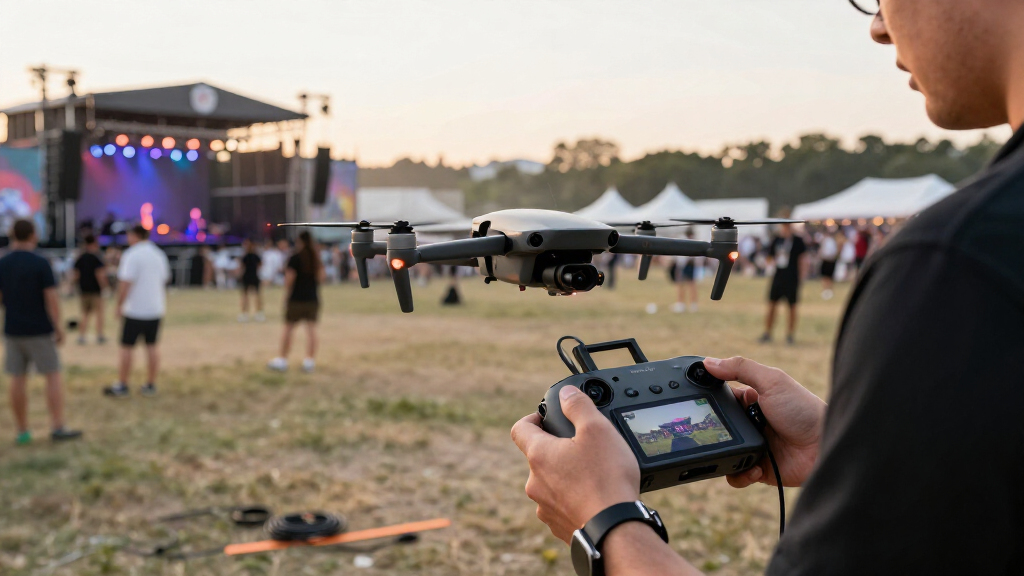
How We Picked
I evaluated these thirteen drones by prioritizing their utility in specific commercial workflows rather than generic consumer features. The ranking logic places specialized enterprise tools like the Matrice series above versatile prosumer models like the Mavic, because business use often demands reliability and specific sensor integration over ease of use. I weighed factors such as regulatory burden (weight class), sensor diversity (thermal, zoom, wide-angle), and environmental resilience (wind resistance, IP ratings) to determine suitability for professional tasks.
Value was assessed not by price alone, but by the cost of ownership relative to operational downtime. Models with robust ecosystem support, such as those compatible with enterprise software and extended care plans, ranked higher than standalone units. This approach ensures that the recommendations reflect real-world deployment scenarios, where a drone’s ability to return data safely in variable weather matters more than its peak video resolution in calm conditions.
Factors to Consider When Choosing Drones For Business Use
Choosing a commercial drone involves more than picking the highest camera resolution. You must align the aircraft’s physical and digital capabilities with your specific industry requirements and regulatory environment.Regulatory Weight Classes And Compliance
The most immediate decision factor for many businesses is the 249-gram threshold. Drones under this weight, such as the DJI Mini 4K and DJI Mini 5 Pro, often bypass specific registration or licensing requirements in certain jurisdictions, though local laws vary strictly. This regulatory advantage allows for faster deployment and reduced administrative overhead. However, if your business requires flying over people or at night, weight class may not exempt you from all regulations. Larger drones like the Matrice 4TD demand stricter compliance but offer the stability and payload capacity that small drones cannot match. Evaluate your local aviation authority’s rules before deciding if the convenience of a sub-250g drone is worth the compromise in sensor capability.
Sensor Versatility And Data Quality
Business applications rarely rely on visible-light video alone. Thermal imaging is critical for energy audits, search and rescue, and agricultural health checks, a feature exclusive to the Matrice 4T and 4TD in this lineup. The Mavic 4 Pro offers a hybrid approach with its tri-camera system, allowing simultaneous wide, medium, and telephoto capture, which is ideal for cinematography and detailed infrastructure inspection. When choosing, ask whether your deliverables require raw data fidelity or polished visual output. A drone with a high-megapixel sensor but poor low-light performance will fail in early morning or late afternoon inspections, while a thermal sensor is useless for branding videos. Match the sensor suite to your primary data output.
Environmental Durability And Reliability
Commercial operations rarely wait for perfect weather. The Matrice 4TD features IP55 certification and anti-ice propellers, distinguishing it from consumer-grade models that risk damage in light rain or humidity. For construction sites, mining, or maritime inspections, this durability reduces downtime and replacement costs. In contrast, the DJI Neo and Mini series are best suited for controlled environments or fair-weather operations. Investing in ruggedized hardware pays off if your team operates in unpredictable conditions. Consider the average climate of your operational zones; if you frequently fly in coastal or high-altitude areas, the higher upfront cost of enterprise-grade airframes minimizes long-term maintenance issues.
Ecosystem Integration And Workflow Efficiency
A drone is only as good as the software that processes its data. The DJI Mavic 4 Pro Creator Combo and Matrice Enterprise models integrate seamlessly with professional mapping and inspection software, offering features like automated flight paths and cloud-based data processing. Standalone drones like the Ruko U11MINI may offer lower entry costs but often lack robust third-party SDK support or enterprise-grade telemetry. For teams managing multiple aircraft, the ability to sync flights, manage geofences, and share live feeds across a network is vital. Assess whether your current software stack supports the drone’s API before purchasing. A drone that cannot export standardized data formats like GeoTIFF or DXF will hinder your workflow, regardless of its camera quality.
Total Cost Of Ownership And Support
The sticker price is only part of the equation. Care plans and replacement part availability significantly impact operational continuity. The DJI Mavic 4 Pro 512GB Creator Combo with 1-Year Care Plan offers peace of mind for high-value equipment, covering accidental damage that could otherwise halt operations for weeks. Cheaper alternatives like the DJI Mini 4K may seem cost-effective, but without a care plan, a single crash can equal the drone’s entire value. For businesses, downtime costs money. Calculate the cost of a single lost day against the premium of a care plan or enterprise support contract. Often, the ‘expensive’ option is cheaper over a two-year period when factoring in risk mitigation and reduced maintenance labor.
Frequently Asked Questions
Do I need a specific license to fly these drones for business?
Yes, commercial operations typically require a remote pilot certificate, such as the FAA Part 107 in the US or equivalent local licenses. While sub-249g drones like the DJI Mini 4K may have relaxed registration rules, they are not exempt from commercial pilot certification requirements if used for hire. Always verify local aviation authority regulations, as flying for business without proper licensing can result in severe fines and legal liability. Some enterprise drones also require additional waivers for night operations or flying over people.
Is thermal imaging worth the extra cost for my business?
Thermal imaging is only worth the investment if your workflow specifically requires heat detection, such as solar panel inspection, building energy audits, or search and rescue. Models like the DJI Matrice 4T command a premium because they integrate specialized sensors that visible-light drones cannot replicate. If your primary need is high-resolution video or mapping, a standard RGB camera on the Mavic 4 Pro provides better value. However, for industries like electrical maintenance or firefighting, thermal data is irreplaceable and justifies the higher acquisition cost.
Can I use a consumer drone like the DJI Mini for commercial work?
Yes, you can legally use consumer drones like the DJI Mini 4K or Mini 5 Pro for commercial purposes, provided you hold the necessary pilot license and comply with local airspace rules. The main limitation is not legal but functional; these drones lack the payload capacity for heavy sensors, have lower wind resistance, and shorter flight times compared to enterprise models. They are excellent for real estate photography or light inspection tasks but may struggle in demanding industrial environments where reliability and specialized data capture are critical.
How does the Mavic 4 Pro compare to the Matrice series for inspections?
The DJI Mavic 4 Pro excels in portability and versatility, making it ideal for solo operators or teams that need to move quickly between sites. Its tri-camera system offers excellent detail but lacks the ruggedness and specialized sensors of the Matrice series. The Matrice 4T/4TD is built for durability, with IP55 ratings and thermal capabilities, making it better suited for harsh environments and specialized inspections like power lines or solar farms. Choose the Mavic for visual inspections and marketing; choose the Matrice for technical, safety-critical, or adverse-weather operations.
What is the benefit of buying a ‘Fly More’ or ‘Creator’ combo?
Combos like the DJI Mavic 4 Pro Fly More Combo or Creator Combo provide essential accessories such as extra batteries, charging hubs, and carrying cases, which are critical for maintaining flight time during a business day. Buying these items separately often costs more and requires more logistical effort. For businesses, having multiple charged batteries ensures continuous operation without waiting for recharge cycles. Additionally, some combos include care plans or premium remotes that enhance operational efficiency, making the bundled package a smarter financial choice for active commercial users.
Conclusion
Selecting the right drone depends entirely on your operational scale and technical requirements. For best overall performance in demanding industrial environments, the DJI Matrice 4TD is the superior choice due to its thermal imaging and weather resistance. If you need versatility and high-quality visual data with a balance of portability, the DJI Mavic 4 Pro offers the best tri-camera capabilities. For small businesses or beginners looking to minimize regulatory hurdles and startup costs, the DJI Mini 4K or Mini 5 Pro provides reliable 4K capture in a sub-249g form factor. Ultimately, match the drone’s sensors and durability to your specific workflow to maximize return on investment.