For most buyers seeking drones with a 4K camera, I’d start with the DJI Mini 4K Fly More Combo: its 3-axis gimbal gives it a stronger foundation for steady video than camera resolution alone. The DJI Mini 4K Camera Drone Combo and Holy Stone HS175D are alternatives for shoppers weighing a familiar compact setup against GPS-assisted features. The central tradeoff is between reliable footage and flight control on one side, and bundles promising screens, extra batteries, or more flight modes on the other. A 4K label does not tell you how smooth, consistent, or easy-to-frame the video will be. Read on for the full breakdown of where each model fits and what to check before choosing.

Get audio and creator gear delivered free with Prime
- Fast, free delivery on millions of items
- Prime Video, Amazon Music and more included
- Member-only deals all year
Complete the kit


Key Takeaways
- The DJI Mini 4K Fly More Combo leads on video stability because its 3-axis gimbal addresses camera shake, a bigger practical distinction than 4K labeling alone.
- The three DJI Mini 4K listings are not interchangeable by name: compare the exact combo contents and included batteries before choosing between them.
- Screen-equipped controllers appear across several listings, including Ruko U11MINI and multiple generic foldable GPS models, but a built-in display is a convenience feature, not proof of better footage.
- GPS and return functions matter for recovery and control; they should not be confused with obstacle avoidance or guaranteed safe flight.
- The Ruko F11PRO 2 advertises 6K photos and 4K video, while the Bwine F7GIM highlights a 3-axis gimbal—buyers should compare the specific video and stabilization claims rather than headline resolution.
| Ruko U11MINI 4K Camera Drone with 5.5-Inch Touchscreen Controller |  | Best for Beginners Who Want a Built-In Screen | Camera sensor: 1/2-inch CMOS | Video: 4K at 30 fps | Still photos: 8K; 48 MP effective resolution | VIEW ON AMAZON | See Our Full Breakdown |
| MSMV 4K Camera Drone, Mini FPV with Carry Bag, Dual 4K Cameras, Adjustable 90° Lens, 2 Batteries, Altitude Hold, One-Key Takeoff & 360° Flip |  | Best for Casual, Playful Flying | Camera: Dual cameras; 4K video capture listed | Lens adjustment: Manual 90-degree adjustment | Flight controls: One-key takeoff, altitude hold, headless mode | VIEW ON AMAZON | See Our Full Breakdown |
| Holy Stone HS175D GPS Drone with 4K Camera |  | Best for GPS Flight Modes on a Beginner Budget | Video resolution: 4K, 3840 × 2160 | Lens: 110-degree wide-angle; 90-degree adjustable | Flight time: Up to 46 minutes with two batteries; 23 minutes also listed | VIEW ON AMAZON | See Our Full Breakdown |
| DJI Mini 4K Fly More Combo Drone with 4K UHD Camera, 3‑Axis Gimbal, 10 km Transmission, 93‑min Flight Time |  | Best Overall for Stable 4K Video | Camera: 4K Ultra HD | Gimbal: 3-axis stabilization | Weight: Under 249 g | VIEW ON AMAZON | See Our Full Breakdown |
| Foldable GPS Drone with 4K Camera, 4.5-Inch Controller Screen, and Three Batteries |  | Best for Buyers Who Want a Screen and Long Combined Runtime | Camera wording: 4K UHD camera listed | Video capture: 2K | Effective still resolution: 8.3 MP | VIEW ON AMAZON | See Our Full Breakdown |
| Bwine F7GIM GPS Camera Drone with 3-Axis Gimbal |  | Best for GPS-Guided Camera Control | Video: 4K at 30 fps | Photo resolution: 18 MP; listed as 6K | Gimbal: 3-axis brushless | VIEW ON AMAZON | See Our Full Breakdown |
| PLEGBLE PL-715 GPS Drone with 4K Camera |  | Best for Beginner Practice | Camera resolution: 4K | Lens: 120-degree wide-angle | Camera angle: Adjustable up to 90 degrees | VIEW ON AMAZON | See Our Full Breakdown |
| 4K GPS Drone with Foldable Design and 4.5″ Screen Controller |  | Best for Phone-Free FPV Viewing | Camera: 4K UHD | Controller screen: 4.5 inches | Connectivity: Wi-Fi | VIEW ON AMAZON | See Our Full Breakdown |
| HK33 Drone with 4K Camera, Auto Follow, Long Runtime, LED Light, Tap Fly, Circle Fly, One-Key Start – Under 249 g |  | Best for Multi-Battery Sessions | Camera resolution: 4K | Still photo resolution: 8 MP | Gimbal: 2-axis | VIEW ON AMAZON | See Our Full Breakdown |
| DJI Mini 4K Camera Drone Combo |  | Best Overall for Stabilized 4K Video | Camera: 4K Ultra HD | Gimbal: 3-axis stabilization | Weight: Under 249 g | VIEW ON AMAZON | See Our Full Breakdown |
| Ruko F11PRO 2 GPS Drone with 6K Camera and 4K Video | 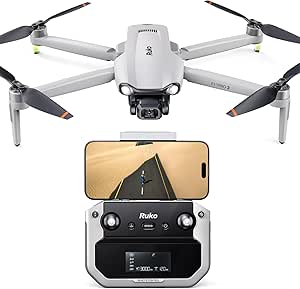 | Best for Stabilized, Feature-Rich Footage | Video resolution: 4K | Video frame rate: 30 fps | Effective still resolution: 19 MP | VIEW ON AMAZON | See Our Full Breakdown |
| 4K UHD GPS Drone N11 Pro – 90 Min Flight Time, Auto Return, Follow Me, Long Range, Brushless Motor, 5G FPV Quadcopter for Beginners |  | Best for Extended Practice Sessions | Advertised camera resolution: 4K | Listed video dimensions: 2048 × 1080 | Effective still resolution: 8.3 MP | VIEW ON AMAZON | See Our Full Breakdown |
| 4K GPS Drone with 4.5-Inch Screen Controller |  | Best for Phone-Free Framing | Video resolution: 4K | Effective still resolution: 8.3 MP | Controller display: 4.5 inches | VIEW ON AMAZON | See Our Full Breakdown |
| DJI Mini 4K Drone with 4K UHD Camera |  | Best Overall for Reliable 4K Video | Camera: 4K UHD | Gimbal: 3-axis | Weight: Under 249 g | VIEW ON AMAZON | See Our Full Breakdown |
| 4K GPS Foldable Drone with Auto Return, Follow Me, Circle Fly, Waypoint, Optical Flow, Brushless Motor – Under 250g |  | Best for Automated Flight Modes | Video capture resolution: 4K | Camera mount: Electrically adjustable | Connectivity: Wi-Fi, including 5GHz FPV transmission | VIEW ON AMAZON | See Our Full Breakdown |
| drones with 4k camera | Weight |
|---|---|
| Ruko U11MINI 4K Camera Drone w | Under 249 g |
| MSMV 4K Camera Drone | — |
| Holy Stone HS175D GPS Drone wi | — |
| DJI Mini 4K Fly More Combo Dro | Under 249 g |
| Foldable GPS Drone with 4K Cam | 193 g |
| Bwine F7GIM GPS Camera Drone w | — |
| PLEGBLE PL-715 GPS Drone with | Under 250 g |
| 4K GPS Drone with Foldable Des | 220 g |
| HK33 Drone with 4K Camera | 249 g |
| DJI Mini 4K Camera Drone Combo | Under 249 g |
| Ruko F11PRO 2 GPS Drone with 6 | — |
| 4K UHD GPS Drone N11 Pro | 181 g |
| 4K GPS Drone with 4.5-Inch Scr | 220 g |
| DJI Mini 4K Drone with 4K UHD | Under 249 g |
| 4K GPS Foldable Drone with Aut | — |
More Details on Our Top Picks
Ruko U11MINI 4K Camera Drone with 5.5-Inch Touchscreen Controller
The Ruko U11MINI pairs a 4K-at-30-fps camera with a 3-axis mechanical gimbal, giving it a stronger stabilization case than the MSMV’s dual-camera setup, whose description does not list a gimbal. Its 5.5-inch touchscreen controller also removes the need to mount a phone for viewing, a useful simplification for first-time flyers. GPS, positioning sensors, AI takeoff and landing, and return functions add help with control and recovery. Two batteries are listed for up to 64 minutes of total flight time, though actual time will vary. The advertised 20,000-foot range depends on open-field conditions, and the suggested separate charger adds another accessory decision. Choose it for the built-in display and supported flight aids; the DJI Mini 4K Fly More Combo is the stronger fit for buyers prioritizing a longer combined battery session.
Pros:- Built-in 5.5-inch touchscreen displays the flight view without a phone.
- Three-axis mechanical gimbal supports steadier 4K footage.
- Two batteries are specified for up to 64 minutes of combined flight time.
- GPS, positioning sensors, and return functions support easier recovery.
Cons:- The stated 20,000-foot transmission range depends on open-field conditions.
- The product description recommends a separate PD65W charger for optimal charging.
Best for: First-time drone buyers who want a phone-free controller screen, stabilized 4K video, and GPS-assisted return features.
Not ideal for: Travel filmmakers who prioritize a well-documented range and established flight ecosystem, or buyers who want a complete charging setup without checking for a separate charger.
- Camera sensor:1/2-inch CMOS
- Video:4K at 30 fps
- Still photos:8K; 48 MP effective resolution
- Gimbal:3-axis mechanical brushless
- Controller:5.5-inch 1080P touchscreen
- Flight time:Up to 64 minutes with two batteries
- Maximum range:Up to 20,000 feet
- Weight:Under 249 g
Our verdict“Choose the U11MINI if a built-in display and beginner-oriented flight aids matter more to you than a clearly bounded range claim.”
MSMV 4K Camera Drone, Mini FPV with Carry Bag, Dual 4K Cameras, Adjustable 90° Lens, 2 Batteries, Altitude Hold, One-Key Takeoff & 360° Flip
The MSMV is the most recreation-focused pick here: its dual 4K cameras and manually adjustable 90-degree lens offer framing flexibility, while one-key takeoff, altitude hold, headless mode, and flips keep the controls approachable. A carry bag and two batteries make it easier to bring along than a setup built around a larger screen controller, such as the Ruko U11MINI. But the listing provides little evidence for serious aerial video work: it does not specify a gimbal, GPS, obstacle avoidance, or flight time. That leaves less help for stable footage and recovery than the GPS-equipped Holy Stone HS175D. I’d treat the MSMV as a casual flying toy with camera options, not as the best choice for repeatable landscape shots or precise route planning.
Pros:- Two camera units and a 90-degree adjustable lens provide framing options.
- One-key takeoff, altitude hold, and headless mode lower the learning curve.
- Two rechargeable batteries are included.
- Carry bag supports easier transport.
Cons:- No GPS or obstacle-avoidance features are listed.
- The description does not specify a gimbal or flight time, limiting confidence for planned video sessions.
- Plastic construction may be less reassuring than a more substantial camera-drone build.
Best for: Casual beginners and families who want simple controls, camera-angle flexibility, and a bagged kit for recreational outings.
Not ideal for: Buyers seeking GPS-assisted recovery, stabilized cinematic footage, or clearly specified range and flight-time performance.
- Camera:Dual cameras; 4K video capture listed
- Lens adjustment:Manual 90-degree adjustment
- Flight controls:One-key takeoff, altitude hold, headless mode
- Additional flight feature:360-degree flips
- Batteries:Two rechargeable Li-Poly batteries
- Connectivity:Wireless
- Dimensions:9.06 × 7.09 × 2.96 inches
- Material:Plastic
Our verdict“Pick the MSMV for accessible recreational flying and flexible camera angles, but choose the Holy Stone HS175D or Ruko U11MINI for GPS support and more defined filming features.”
Holy Stone HS175D GPS Drone with 4K Camera
The Holy Stone HS175D makes a practical case for buyers who want more than basic takeoff and landing: GPS auto return, Follow Me, Waypoint Flight, Point of Interest, and Circle Fly give it a broader set of guided-flight options than the simpler MSMV. Its foldable design, adjustable 90-degree camera, and 110-degree wide-angle lens also suit travel and varied framing. The listing specifies 4K video but does not mention a gimbal, so I would not rank it ahead of the Ruko U11MINI for stabilized footage. Battery information is also mixed: the headline says up to 46 minutes with two batteries, while another specification lists 23 minutes. Treat the longer figure as a combined maximum, not a guaranteed single-flight duration.
Pros:- GPS auto return supports recovery when battery is low or signal is lost.
- Follow Me, Waypoint Flight, Point of Interest, and Circle Fly add guided shooting options.
- Foldable design and adjustable wide-angle camera support travel-friendly framing.
- Two batteries are listed for up to 46 minutes of combined flight time.
Cons:- The battery details are inconsistent: 23 minutes is listed alongside a 46-minute two-battery maximum.
- No gimbal is specified, so footage may be less stabilized than the Ruko U11MINI’s.
- The listed maximum range is 500 meters, shorter than the long-range claims of some alternatives.
Best for: Newer pilots who want GPS return and automated flight modes in a foldable drone for travel and casual 4K filming.
Not ideal for: Creators who need confirmed gimbal stabilization or a clearly stated flight-time figure before planning a shoot.
- Video resolution:4K, 3840 × 2160
- Lens:110-degree wide-angle; 90-degree adjustable
- Flight time:Up to 46 minutes with two batteries; 23 minutes also listed
- Maximum range:500 meters
- Flight modes:Follow Me, Waypoint Flight, Point of Interest, Circle Fly
- Return feature:GPS auto return
- Motors:Brushless
- Weight class:Under 249 g
Our verdict“Choose the HS175D for GPS-assisted flying modes and a foldable travel design, provided you can accept the unclear battery figures and lack of a specified gimbal.”
DJI Mini 4K Fly More Combo Drone with 4K UHD Camera, 3‑Axis Gimbal, 10 km Transmission, 93‑min Flight Time
The DJI Mini 4K Fly More Combo earns the lead for buyers who put dependable-looking 4K footage and session flexibility first. Its 3-axis gimbal gives the camera a clear stabilization advantage over the Holy Stone HS175D and MSMV, which do not specify a gimbal. Three included batteries provide up to 93 minutes of combined flight time, so you can keep filming by swapping batteries rather than waiting for a recharge. The sub-249-gram weight and one-tap takeoff, landing, and Return-to-Home features make the package approachable, while the listed 10 km transmission range supports outings beyond close-range practice. That range and flight time are maximum figures, not promises for every flight. Android users should also note that the DJI Fly app requires a manual download from DJI rather than Google Play.
Pros:- Three-axis gimbal stabilizes 4K video more directly than the listed camera setups on the HS175D and MSMV.
- Three included batteries offer up to 93 minutes of combined maximum flight time.
- Sub-249-gram weight and beginner-oriented takeoff, landing, and Return-to-Home functions.
- Shoulder bag and two-way charging hub support organized travel and battery rotation.
Cons:- The 93-minute figure depends on using multiple batteries and swapping them during a session.
- Android users must download the DJI Fly app from DJI’s website rather than Google Play.
- The 10 km transmission figure is a maximum and should not be treated as a guaranteed usable distance.
Best for: Travel and hobby filmmakers who want stabilized 4K footage, several batteries in one kit, and simple return-to-home controls.
Not ideal for: Android users who only want to install apps through Google Play, or buyers who need one uninterrupted flight rather than battery swaps.
- Camera:4K Ultra HD
- Gimbal:3-axis stabilization
- Weight:Under 249 g
- Maximum combined flight time:Up to 93 minutes with three batteries
- Transmission range:Up to 10 km (32,800 ft) HD video
- Wind resistance:Level 5, up to 38 kph
- Included batteries:Three
- Included charging and carry accessories:Two-way charging hub and shoulder bag
Our verdict“Choose this DJI combo if stabilized 4K video and a multi-battery filming kit outweigh the app-installation step and the need to swap batteries.”
Foldable GPS Drone with 4K Camera, 4.5-Inch Controller Screen, and Three Batteries
This foldable GPS drone looks appealing on paper for buyers who want a built-in viewing screen and several batteries: its 4.5-inch controller display and three-battery kit make a more self-contained package than the phone-dependent Holy Stone HS175D. But the camera wording needs close attention. Although the product is presented as a 4K camera drone, the specifications list 2K video capture and 3.7 MP video output, so I would not choose it when recorded 4K footage is the main requirement. Its up-to-90-minute total flight time is also a combined figure, and the listed 3,280-foot range is more modest than the DJI Mini 4K’s 10 km claim. GPS return, Follow Me, Circle Fly, and EIS add useful tools, but do not erase the resolution mismatch.
Pros:- Built-in 4.5-inch HD controller display shows live video without relying on a phone.
- Three batteries are listed for up to 90 minutes of combined flight time.
- GPS auto return, Follow Me, and Circle Fly offer guided flying and recovery features.
- Foldable 193 g design and included 32 GB SD card support portable use.
Cons:- The specifications list 2K video capture, not 4K recording.
- The 3,280-foot maximum control range is shorter than the DJI Mini 4K’s stated 10 km transmission range.
- The 90-minute figure is total time across three batteries, not a single uninterrupted flight.
Best for: Buyers who value a built-in controller screen, GPS flight modes, and extended combined battery time more than native 4K video capture.
Not ideal for: Creators who specifically need recorded 4K video; the listed capture resolution is 2K despite the 4K camera wording.
- Camera wording:4K UHD camera listed
- Video capture:2K
- Effective still resolution:8.3 MP
- Controller display:4.5-inch HD screen
- Maximum control range:3,280 feet
- Total flight time:Up to 90 minutes with three batteries
- Weight:193 g
- Storage included:32 GB SD card
Our verdict“Consider this model only if its screen and battery bundle matter more than true 4K recording; for confirmed 4K video, the DJI Mini 4K is the clearer pick.”
Bwine F7GIM GPS Camera Drone with 3-Axis Gimbal
The Bwine F7GIM earns its place through a practical combination of 3-axis gimbal stabilization and GPS flight modes. The gimbal can help keep 4K footage steadier than the HK33’s 2-axis setup, while Follow, Orbit, and waypoint planning give pilots more ways to frame a shot without constant manual steering. Its advertised 70 minutes covers two flights, not one uninterrupted session, but the 35-minute maximum per flight is useful for planned outings. Beginner controls such as one-key takeoff and auto return soften the learning curve. The tradeoff is a wired digital transmission connection, which is less convenient than a phone-based wireless setup, and the supplied details do not say a microSD card is included. Choose it for guided shooting; skip it if phone-free simplicity is your priority.
Pros:- Three-axis brushless gimbal supports steadier 4K video.
- GPS modes include Follow, Orbit, and waypoint planning.
- Up to 35 minutes per flight, with two flights advertised for up to 70 minutes total.
- Includes a carrying case and built-in FAA-compliant Remote ID module.
Cons:- Digital transmission requires a wired connection rather than Wi-Fi.
- MicroSD card inclusion is not specified.
- The 70-minute figure is combined across two flights, not a single continuous flight.
Best for: Newer pilots who want stabilized 4K footage, GPS-assisted shot modes, and a carrying case for planned outdoor flights.
Not ideal for: Buyers who want wireless phone connectivity or need a confirmed included memory card for recording straight away.
- Video:4K at 30 fps
- Photo resolution:18 MP; listed as 6K
- Gimbal:3-axis brushless
- Flight time:Up to 35 minutes per flight; 70 minutes total across two flights
- Maximum range:3 km
- Battery:3200 mAh
- Storage:MicroSD; under 128 GB recommended
- Remote ID:Built-in FAA-compliant module
Our verdict“Pick the Bwine F7GIM if stabilized footage and GPS-guided shots matter more than wireless convenience.”
PLEGBLE PL-715 GPS Drone with 4K Camera
The PLEGBLE PL-715 is the practice-friendly pick in this group: Beginner Mode limits the flight radius, while GPS Auto Return adds a useful fallback as a new pilot learns. Its 120-degree lens and adjustable camera angle offer flexible framing, although a wide view can capture more surroundings than a tighter composition. Compared with the Bwine F7GIM, the PL-715 is lighter and foldable, but it does not list a gimbal, so buyers seeking more deliberate stabilization should favor the Bwine’s three-axis setup. The advertised 46 minutes spans two batteries, and takeoff depends on compass calibration and at least nine GPS satellites. That setup requirement can delay flights, especially when the sky view is poor.
Pros:- Beginner Mode limits flight radius during practice.
- 120-degree wide-angle camera has adjustable tilt up to 90 degrees.
- GPS features include Auto Return, Follow Me, waypoint flight, and Circle Fly.
- Foldable design and included carrying case make transport easier.
Cons:- The 46-minute total is divided across two batteries.
- Requires compass calibration and at least nine GPS satellites before flight.
- No gimbal is listed, making it less suited to buyers prioritizing stabilized footage.
Best for: First-time pilots who want a foldable 4K drone with a restricted practice radius, GPS return, and two batteries.
Not ideal for: Buyers who need gimbal-based stabilization, quick launches in GPS-poor locations, or 46 minutes on a single battery.
- Camera resolution:4K
- Lens:120-degree wide-angle
- Camera angle:Adjustable up to 90 degrees
- Video transmission:5GHz FPV
- Batteries:2 × 2700 mAh lithium-ion
- Maximum total flight time:46 minutes across two batteries
- Maximum flight range:1,968 feet
- Weight:Under 250 g
Our verdict“Choose the PL-715 for guided beginner practice and flexible framing, but not for gimbal-stabilized video.”
4K GPS Drone with Foldable Design and 4.5″ Screen Controller
This foldable 4K GPS drone stands out for its built-in 4.5-inch controller screen, letting pilots view the live feed without mounting a smartphone. That direct viewing setup is a clearer fit for phone-free operation than the PLEGBLE PL-715, whose listed FPV transmission does not include a screen controller. GPS auto-return and the under-250-gram weight also suit casual travel, while two batteries are advertised for up to 60 minutes combined. The tradeoff is that the camera’s stabilization details are not specified, so I would not choose it over the DJI Mini 4K when smooth footage is the main goal; DJI lists a three-axis gimbal. This model also relies on Wi-Fi and has limited obstacle avoidance, making careful open-area flying the safer match.
Pros:- Built-in 4.5-inch screen provides FPV viewing without a smartphone.
- GPS auto-return supports recovery if the drone strays.
- Two batteries are listed for up to 60 minutes of combined flight time.
- Weighs 220 g and has a foldable design for travel.
Cons:- Limited obstacle avoidance makes cluttered environments a poor fit.
- Wi-Fi connectivity may affect transmission stability.
- Camera stabilization details are not provided.
Best for: Casual travelers who want a lightweight 4K drone and an onboard controller screen instead of relying on a phone for FPV.
Not ideal for: Video-focused pilots who need documented gimbal stabilization or people who fly in cluttered areas with obstacles nearby.
- Camera:4K UHD
- Controller screen:4.5 inches
- Connectivity:Wi-Fi
- Flight time:Up to 60 minutes across two batteries
- Weight:220 g
- Dimensions:12.28 × 8.27 × 3.15 inches
- Battery type:Lithium-ion
- Motor:Brushless
Our verdict“Pick this model for phone-free FPV convenience, not for a documented gimbal system or obstacle-aware flight.”
HK33 Drone with 4K Camera, Auto Follow, Long Runtime, LED Light, Tap Fly, Circle Fly, One-Key Start – Under 249 g
The HK33 suits pilots who value repeated outings more than a long single flight: its three batteries are listed for 50–60 minutes total. A 110-degree lens gives the 4K camera a broad view, and the two-axis gimbal offers some stabilization, though it is a step below the DJI Mini 4K’s three-axis system for reducing camera movement. GPS Return Home, Follow, route planning, and Fly Around add automated options for newer pilots. Its 249 g listed weight appeals to recreational flyers seeking a compact aircraft, but weight alone does not resolve every local flying rule. The main limitation is the lack of obstacle avoidance; smart modes do not remove the need to steer clear of trees, buildings, and other hazards.
Pros:- Three included batteries provide up to 50–60 minutes of combined flight time.
- Two-axis gimbal supports steadier footage than an unlisted or no-gimbal setup.
- GPS modes include Return Home, Follow, route planning, and Fly Around.
- Listed weight is 249 g.
Cons:- No obstacle avoidance sensors are listed.
- Flight time is spread across three batteries, so each flight is shorter than the total suggests.
- Two-axis stabilization is less capable than the DJI Mini 4K’s three-axis gimbal.
Best for: Recreational pilots who want multiple battery swaps, GPS-assisted flight modes, and a sub-250-gram 4K drone.
Not ideal for: Pilots filming near obstacles or anyone who prioritizes three-axis stabilization and longer individual flights.
- Camera resolution:4K
- Still photo resolution:8 MP
- Gimbal:2-axis
- Batteries:3 included
- Total flight time:50–60 minutes across all batteries
- Weight:249 g
- Video transmission:300 m (985 ft)
- Connectivity:5G Wi-Fi
Our verdict“Choose the HK33 for flexible, multi-battery sessions, but favor the DJI Mini 4K for stronger listed stabilization.”
DJI Mini 4K Camera Drone Combo
The DJI Mini 4K takes the lead for buyers who put dependable-looking 4K footage first. Its three-axis gimbal is a stronger stabilization setup than the two-axis gimbal listed for the HK33, and the stated Level 5 wind resistance gives it a clearer case for outdoor filming than the screen-controller drone, whose wind rating is not specified. DJI also lists up to 10 km of HD video transmission and QuickShots, giving pilots more room for framed, automated clips. The 62-minute figure applies to two batteries, not one continuous flight. There is also a practical Android caveat: the DJI Fly app is not on Google Play and must be downloaded from DJI’s website. This is the most camera-focused choice here, but app setup may be less convenient for some phone owners.
Pros:- Three-axis gimbal helps stabilize 4K Ultra HD footage.
- Up to 62 minutes of flight time is listed across two batteries.
- QuickShots and one-tap takeoff and landing simplify planned clips.
- Level 5 wind resistance is listed at up to 38 kph.
Cons:- DJI Fly must be downloaded from DJI’s website rather than Google Play.
- The 62-minute maximum is combined across two batteries.
- Android platform compatibility and app setup may be inconvenient for some users.
Best for: Travel and hobby pilots who want stabilized 4K video, automated camera moves, and a lightweight drone with a two-battery flight kit.
Not ideal for: Android users who want app installation directly through Google Play, or buyers who need the longest single-battery flight.
- Camera:4K Ultra HD
- Gimbal:3-axis stabilization
- Weight:Under 249 g
- Maximum flight time:62 minutes across two batteries
- HD video transmission:Up to 10 km
- Wind resistance:Level 5, up to 38 kph
- Remote controller:DJI RC-N1C
- Included accessories:Shoulder bag, propeller holder, and spare propellers
Our verdict“Choose the DJI Mini 4K if three-axis stabilization and camera-focused flight features outweigh the Android app setup extra step.”
Ruko F11PRO 2 GPS Drone with 6K Camera and 4K Video
The Ruko F11PRO 2 earns its place for buyers who want 4K/30fps video with a 3-axis mechanical gimbal and guided flight features in one package. That gimbal is the key distinction: compared with the N11 Pro’s adjustable camera, it is designed to steady footage as the drone moves, rather than mainly offering framing flexibility. Two batteries are listed for up to 70 minutes combined flight time, giving more time for repeated shots before packing up. GPS return-to-home and Follow, Orbit, and Waypoint modes also make it more approachable than a basic camera drone. The tradeoffs are a potentially confusing controller connection setup and a mismatch between the advertised 6K photo capture and the stated 19 MP effective resolution. Choose it for stabilized video and flight modes, not for unambiguous high-resolution photo claims.
Pros:- 3-axis mechanical gimbal supports steadier video
- Two batteries provide up to 70 minutes of combined flight time
- GPS return-to-home and beginner-oriented controls
- Follow, Orbit, and Waypoint modes add shooting options
Cons:- The 6K photo claim differs from the listed 19 MP effective still resolution
- Separate controller charging and data ports may be confusing
- The 70-minute figure is combined across two batteries, not a single flight
Best for: Newer pilots who want gimbal-stabilized 4K clips, GPS assistance, and multiple creative flight modes.
Not ideal for: Buyers focused on still-image resolution or those who want a simple controller setup without separate charging and data ports.
- Video resolution:4K
- Video frame rate:30 fps
- Effective still resolution:19 MP
- Gimbal:3-axis mechanical
- Combined flight time:Up to 70 minutes with two batteries
- Battery capacity:3200 mAh
- Maximum transmission range:10,000 feet
- Video format:MP4
Our verdict“Choose the F11PRO 2 if stabilized 4K video and guided flight modes matter more to you than a clear-cut still-photo specification.”
4K UHD GPS Drone N11 Pro – 90 Min Flight Time, Auto Return, Follow Me, Long Range, Brushless Motor, 5G FPV Quadcopter for Beginners
The N11 Pro is the endurance pick for pilots who want 4K video and a three-battery flight kit for a longer outing. Its stated 90 minutes is combined across three batteries, with each one providing about 30 minutes; that means swapping packs, not flying continuously. Compared with the Ruko F11PRO 2, the N11 Pro offers more listed total airtime, while the Ruko has a 3-axis mechanical gimbal for more explicit camera stabilization. The N11 Pro instead supplies a 100° wide-angle lens and 90° adjustable tilt, useful for changing the view without choosing a different camera position. GPS modes, optical-flow positioning indoors, and brushless motors broaden its use, but its listed video dimensions are 2048 × 1080, which do not match a typical 4K video frame. Check the camera specification carefully if 4K video output is your main reason to buy.
Pros:- Three batteries provide up to 90 minutes of combined listed flight time
- 100° wide-angle lens and adjustable tilt offer framing flexibility
- GPS flight modes include Follow Me, Tap Fly, and Point of Interest
- Optical-flow positioning is listed for indoor flying
Cons:- Each battery provides about 30 minutes, so the full flight-time claim requires swaps
- Listed video dimensions of 2048 × 1080 do not substantiate the 4K video label
- No mechanical gimbal is specified
Best for: Beginners who want multiple batteries for a long practice session and value GPS-assisted modes and adjustable camera framing.
Not ideal for: Buyers who require clearly specified 4K video dimensions or want gimbal-based stabilization rather than an adjustable camera angle.
- Advertised camera resolution:4K
- Listed video dimensions:2048 × 1080
- Effective still resolution:8.3 MP
- Lens angle:100° wide-angle
- Camera tilt:90° adjustable
- Combined flight time:Up to 90 minutes across three batteries
- Maximum range:3,328 feet
- Weight:181 g
Our verdict“Pick the N11 Pro for its three-battery practice setup, but verify the video output details before choosing it specifically for 4K footage.”
4K GPS Drone with 4.5-Inch Screen Controller
This foldable model stands out for a specific convenience: its 4.5-inch controller screen displays live footage without requiring a phone. That makes it a more direct fit for pilots who do not want to mount a smartphone for every flight. The DJI Mini 4K offers a clearer camera-stability advantage with its specified 3-axis gimbal, while this drone’s appeal is the built-in display, GPS features, and optical-flow hovering. Two batteries are listed for up to 60 minutes combined, although each flight lasts no more than about 30 minutes before a swap. The 4K video claim and flight performance are presented in the listing without independent evidence, so I would treat those claims cautiously. Its 220 g weight and foldable design help with carrying, but this is not the pick for buyers prioritizing a documented gimbal or uninterrupted long flights.
Pros:- Built-in 4.5-inch controller display works without a smartphone
- Two batteries provide up to 60 minutes of combined flight time
- GPS return modes and optical-flow hovering support assisted flight
- Foldable design and 220 g listed weight aid portability
Cons:- Each battery provides up to about 30 minutes before a swap
- No mechanical gimbal is specified
- The 4K video and flight-performance claims lack independent evidence in the product details
Best for: Casual pilots who want to view live camera footage on a dedicated controller screen rather than attaching a smartphone.
Not ideal for: Buyers seeking specified mechanical gimbal stabilization, independently verified 4K performance, or more than about 30 minutes per battery.
- Video resolution:4K
- Effective still resolution:8.3 MP
- Controller display:4.5 inches
- Combined flight time:Up to 60 minutes with two batteries
- Battery:Two 7.4V 1600mAh lithium-ion batteries
- Weight:220 g
- Positioning:GPS and optical flow
- Motors:Brushless
Our verdict“Choose this drone if avoiding a phone-mounted display matters more than having the DJI Mini 4K’s specified 3-axis gimbal.”
DJI Mini 4K Drone with 4K UHD Camera
The DJI Mini 4K is the strongest all-around choice here for buyers whose priority is well-stabilized 4K footage. Its 3-axis gimbal gives it a clearer video-stability case than the N11 Pro, whose listing emphasizes an adjustable camera tilt instead. At under 249 g, it is also a compact option, while GPS Return to Home and QuickShots help newer pilots manage basic flight and create repeatable camera moves. The stated 31 minutes per battery is more modest than the Ruko F11PRO 2’s combined 70 minutes, and this package lists one battery, so extended sessions call for additional packs. There is also a setup wrinkle: DJI Fly must be downloaded from DJI’s website rather than Google Play. I’d rank it first for a buyer who values a defined stabilization system and an established flight-feature set over bundled airtime.
Pros:- 3-axis gimbal is specified for stabilized 4K UHD footage
- Under-249 g weight makes it a lightweight option
- GPS Return to Home supports a simpler recovery process
- QuickShots provide automated camera moves for newer pilots
Cons:- Included setup lists one battery with up to 31 minutes of flight time
- DJI Fly must be downloaded from DJI’s official website rather than Google Play
- Longer outings require extra batteries
Best for: First-time and travel-focused pilots who want compact 4K video with a specified 3-axis gimbal and GPS return features.
Not ideal for: Buyers who want multiple batteries included, the longest bundled flight time, or an app installation entirely through Google Play.
- Camera:4K UHD
- Gimbal:3-axis
- Weight:Under 249 g
- Maximum flight time:31 minutes per battery
- Maximum transmission range:10 km (32,800 ft)
- Wind resistance:38 kph (Level 5)
- Maximum takeoff altitude:4,000 m
- Included:Drone, 1 battery, RC-N1C controller
Our verdict“For a compact drone with a specified gimbal and beginner-friendly 4K features, the DJI Mini 4K is the most balanced pick in this group.”
4K GPS Foldable Drone with Auto Return, Follow Me, Circle Fly, Waypoint, Optical Flow, Brushless Motor – Under 250g
This foldable drone is aimed at pilots who want GPS-guided flight modes and an adjustable 4K camera without moving up to the DJI Mini 4K’s more clearly specified 3-axis gimbal. Follow Me, Waypoint, Circle Fly, and auto-return give it a wider set of automated flight options than a basic camera drone, while the electrically adjustable mount lets you change the camera angle remotely. Two modular batteries are listed for up to 32 minutes total, so the advertised runtime depends on swapping packs during a session. Its sub-250 g description is useful for buyers seeking a light carry, but the supplied specification also states a weight of 16 ounces, which is inconsistent with that claim. The product requires a smartphone app for many functions, making the built-in-screen option in the 4.5-Inch Screen Controller model a more convenient alternative for phone-free flying.
Pros:- GPS auto-return, Follow Me, Waypoint, and Circle Fly modes
- Electrically adjustable camera mount supports remote reframing
- Two modular batteries are listed for up to 32 minutes of combined flight time
- Foldable design and brushless motor
Cons:- Listed weight of 16 ounces conflicts with the under-250 g description
- Many functions require a smartphone app
- No mechanical gimbal is specified for camera stabilization
Best for: Pilots who want automated GPS flight patterns, remote camera-angle adjustment, and a foldable design for occasional outdoor filming.
Not ideal for: Buyers who need clearly consistent weight information, a specified mechanical gimbal, or flight controls that do not depend on a smartphone app.
- Video capture resolution:4K
- Camera mount:Electrically adjustable
- Connectivity:Wi-Fi, including 5GHz FPV transmission
- Combined flight time:Up to 32 minutes with two modular batteries
- Listed weight:16 ounces
- Dimensions:8.2 × 7.87 × 2.17 inches
- Positioning:GPS and optical flow
- Battery chemistry:Lithium polymer
Our verdict“Choose this model for its automated flight modes and adjustable camera angle, but skip it if verified weight or gimbal-stabilized footage is a must.”

How We Picked
I judged these 15 options by how convincingly they meet the promise of a usable 4K camera drone, not by the resolution printed in a product name. I prioritized stabilization, camera adjustment, GPS functions, controller and app usability, flight-time claims, portability, and bundle contents. I also looked at whether the listing describes video capability clearly: for example, the Ruko F11PRO 2 distinguishes 6K stills from 4K video, while the DJI Mini 4K Fly More Combo explicitly lists a 3-axis gimbal.
The ranking favors models with clearer camera and flight-control advantages over listings built mainly around bundles or feature-heavy names. That puts the DJI Mini 4K Fly More Combo first for its stabilization and stated transmission and flight-time package, with the standard DJI Mini 4K options serving buyers who want a simpler bundle. GPS-equipped options such as the Holy Stone HS175D and Bwine F7GIM earn attention for different flight and camera priorities; screen-controller and multi-battery listings rank lower when their descriptions offer less evidence about footage quality. I treat advertised range and flight time as claims, not promises: wind, battery condition, settings, and local rules affect real use.
Factors to Consider When Choosing Drones With 4k Camera
Choosing a drone with 4K video takes more than sorting by resolution. I’d first decide what footage you need, then match the camera support, control system, and carrying setup to how you plan to fly.
Separate 4K Resolution From Smooth Footage
Resolution describes image detail; stabilization describes motion. A drone may record 4K video yet still produce shaky footage if its camera lacks a gimbal or other effective stabilization. A 3-axis gimbal, as listed on the DJI Mini 4K Fly More Combo and Bwine F7GIM, is a more direct clue about smooth video than a larger resolution number. Check whether a listing specifies 4K video or only high-resolution photos; the Ruko F11PRO 2, for example, names 6K stills and 4K video separately. Also look for camera tilt control, since it affects whether you can frame a subject without changing the drone’s position. If your priority is polished moving footage, do not let accessory count outweigh stabilization details.
Treat Flight-Time and Range Numbers as Conditions-Dependent
Advertised flight time is not the same as usable filming time. Wind, temperature, flight speed, and keeping a reserve for a safe return can shorten a session. Bundles with two or three batteries may be more useful than a single long-runtime claim, but check whether the batteries are included and how they charge. Transmission range also depends on signal conditions and rules where you fly; it is not a sensible target for every flight. Choose a setup that lets you bring the drone back comfortably rather than planning around its maximum claim. This matters especially for models advertising long runtime or long-range control, including several GPS listings in this roundup.
Understand What GPS and Return-to-Home Can—and Cannot—Do
GPS can support positioning and return functions, which can make a drone easier to manage than a basic toy-style flyer. Return-to-home is still dependent on a reliable signal, a correctly set home point, adequate battery, and an unobstructed route. It does not mean the drone can detect and avoid every tree, wire, or building. New pilots should learn the controls in an open area and verify how return behavior works before flying farther away. Follow Me, circle flight, and waypoint modes can reduce manual input, but they do not replace active supervision. Buy these features as assistance, not as a guarantee against a crash or flyaway.
Choose a Controller Setup That Fits Your Flying
A built-in screen can simplify setup by reducing dependence on a phone, but it can also add bulk and may have limits on brightness, app support, or update options. Phone-based controllers are familiar to many users, though they require a compatible device, a charged phone, and a clear view of the display. Before buying a screen-controller bundle, check what information appears on the display and whether camera feed and controls work without additional equipment. A touchscreen controller such as the one listed with the Ruko U11MINI may suit someone who values an all-in-one kit. If compact packing matters more, a phone-based setup can be the better compromise.
Check Weight, Local Rules, and Actual Portability
“Under 249 g” or “under 250 g” is a listing claim, not a substitute for checking the flying weight. Accessories, guards, or other additions can change a drone’s weight, and aviation rules differ by location and use. Confirm the complete ready-to-fly weight and review current local requirements before flying. Foldable arms help with storage, but the controller, batteries, charger, and bag also determine how portable the complete kit is. A compact drone is useful only if the camera and controls suit your needs once it is in the air. Buyers who travel should compare the packed kit, not just the folded aircraft.
Read Bundles as a Cost in Complexity, Not Just Extras
More accessories do not automatically make a better camera drone. Spare batteries can extend a filming session, while a bag and screen may make transport and setup easier. At the same time, every extra component adds charging, storage, and compatibility questions. Check exactly what a “combo” includes, since names alone do not guarantee identical battery counts or accessories across the DJI Mini 4K listings. For a first drone, straightforward controls and clearly described camera performance may be more useful than a long list of flips, flight modes, or app features. Match the bundle to how often you will fly and what you need to carry.
Frequently Asked Questions
Is a drone advertised with a 4K camera guaranteed to record 4K video?
No—check the camera specification carefully. Some listings use “4K camera” broadly, while others distinguish video resolution from still-photo resolution. The Ruko F11PRO 2, for instance, identifies 6K photos and 4K video as separate capabilities. Look for an explicit video recording resolution and, if listed, frame rates and stabilization details. If the listing is vague, do not assume its headline describes the recorded video format.
Should I choose a 3-axis gimbal or a drone with more batteries?
Choose based on whether footage quality or session length is your main limitation. A 3-axis gimbal helps reduce camera movement in recorded video, while spare batteries let you fly longer before returning to charge. For moving scenery or smooth camera pans, stabilization is usually the more direct improvement. For short practice flights or repeated takes, extra batteries may be more useful. Check whether the drone’s camera and flight controls are suitable before treating either feature as a deciding factor.
Are screen-controller drones better for beginners than phone-controlled models?
Not automatically. A built-in screen can make the setup feel more self-contained, while a phone-based controller may be simpler if you already use a compatible device. Ease of flying depends more on clear controls, stable positioning, understandable return functions, and a useful live camera feed. Screen brightness, app compatibility, and how the controller handles updates can also affect day-to-day use. Compare the complete control experience rather than assuming a screen makes a drone easier to fly.
Can I rely on GPS return-to-home if the battery or signal gets low?
Use return-to-home as a safety aid, not a rescue guarantee. It may depend on a recorded home point, adequate battery, a usable GPS signal, and a clear route back. Obstacles, signal loss, wind, or incorrect settings can affect what happens. Learn the model’s return behavior in a safe, open area and leave battery reserve for manual control. GPS return also does not replace checking local flight rules or keeping the aircraft in sight where required.
What should I verify before choosing one of the DJI Mini 4K listings?
Compare the exact package contents, not only the shared model name. This roundup includes a Fly More Combo, a Camera Drone Combo, and a standalone DJI Mini 4K Drone listing; battery counts and included accessories may differ. Confirm the controller, charging gear, spare batteries, and carrying case included with the specific version you plan to buy. Also check that the camera and gimbal specifications match your intended use. Bundle details can change, so rely on the current listing rather than assuming every version ships with the same kit.
Conclusion
For the best overall balance in this lineup, I’d choose the DJI Mini 4K Fly More Combo for its stated 3-axis gimbal and fuller flight package. The best value direction is the standard DJI Mini 4K Camera Drone Combo if you want the DJI platform without needing every Fly More accessory; verify the included kit before deciding. For a premium feature set, the Bwine F7GIM deserves a look if its 3-axis gimbal and GPS camera setup match your priorities, while the Ruko F11PRO 2 suits buyers drawn to its 6K still-photo claim alongside 4K video. Beginners who want GPS-oriented features can compare the Holy Stone HS175D with the PLEGBLE PL-715, focusing on control clarity and return functions. If an integrated display is your specific need, consider the Ruko U11MINI or screen-controller foldable options—but choose them for controller convenience, not as evidence of better 4K footage.