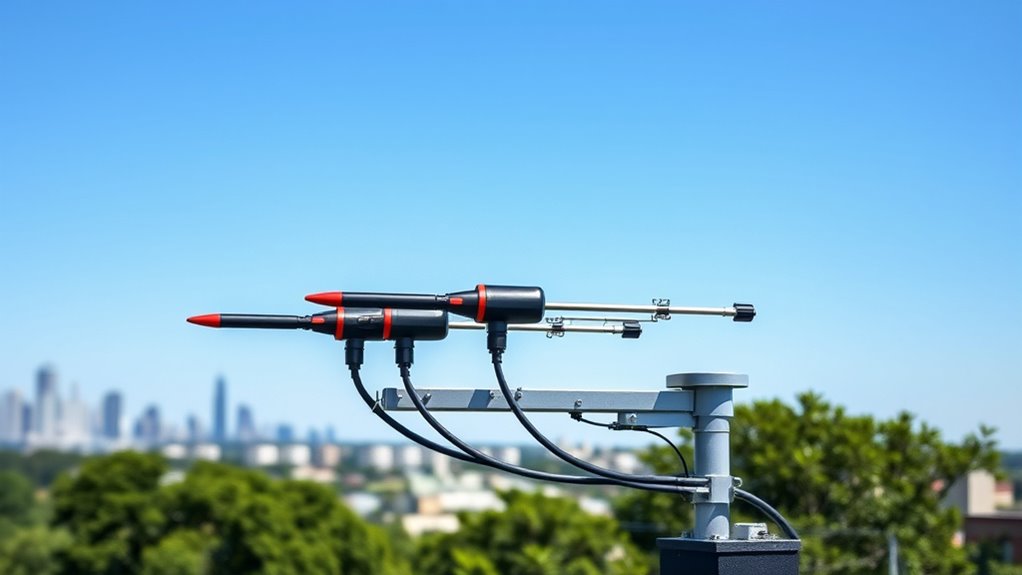

Choosing the right dual band base antennas for ham radio can feel overwhelming given the sheer volume of options available. My top pick, the Diamond X50A, stands out for its proven reliability and balanced gain, making it a safe bet for most home stations. For those prioritizing budget, the UV100 Fiberglass Antenna offers surprising performance without the premium price tag. The main tradeoff you will face is between raw gain (which narrows your radiation pattern) and durability against weather elements. High-gain antennas reach farther but may miss nearby signals if not positioned correctly. Continue reading to see how these nine models stack up against each other in real-world scenarios.

Get audio and creator gear delivered free with Prime
- Fast, free delivery on millions of items
- Prime Video, Amazon Music and more included
- Member-only deals all year
Complete the kit


Key Takeaways
- The Diamond X50A remains the benchmark for consistency, offering a sweet spot of gain that works well for both local repeaters and distant simplex contacts without requiring perfect aiming.
- Budget fiberglass options like the UV100 often lack the heavy-duty stainless steel hardware found in premium units, making them prone to corrosion in coastal environments.
- Yagi antennas like the TWAYRDIO model provide high directivity but require rotators and precise alignment, making them unsuitable for mobile or multi-directional base stations.
- Pre-tuned antennas such as the Tram series save significant setup time but offer less flexibility for adjusting VSWR if your coaxial cable length changes.
- Connector quality matters more than advertised wattage; many budget antennas use thin UHF connectors that fail under high wind load despite claiming high power handling.
| Diamond Antenna X30A Dual-Band Base/Repeater Antenna |  | Best Premium Base Station Antenna | Model Number: X30A | Gain: 6.5 dB | Frequency Bands: 2 m (144-148 MHz) / 70 cm (430-450 MHz) | VIEW ON AMAZON | See Our Full Breakdown |
| TWAYRDIO Yagi Ham Radio Antenna, Dual Band 2m 70cm VHF UHF |  | Best for DX and Long-Distance Communication | Frequency: 144/430MHz (136-174MHz/400-470MHz) | Gain: 9.5/11.5dBi | Maximum Power Input: 100W | VIEW ON AMAZON | See Our Full Breakdown |
| VHF/UHF Dual Band 2m/70cm Ham Radio Antenna with PL259/UHF Female/SO239 Connector |  | Best Value for Versatile Installations | Frequency (MHz): 136-174, 400-470 | Gain (dBi): 3.5 @144 MHz, 5.5 @433 MHz | VSWR: ≤1.5 | VIEW ON AMAZON | See Our Full Breakdown |
| UV100 41-inch Dual Band Fiberglass Ham Radio Antenna |  | Best Compact Option for Portability | Length: 41 inches | Material: Fiberglass | VHF Gain: 3.5dB | VIEW ON AMAZON | See Our Full Breakdown |
| Dual Band 2m 70cm Ham Radio Antenna with 10m Cable |  | Best Starter Kit for Beginners | Frequency: 144MHz / 433MHz | Gain: 3.5dBi at VHF, 5.5dBi at UHF | VSWR: <=1.5 | VIEW ON AMAZON | See Our Full Breakdown |
| Diamond X50A Dual-Band Base/Repeater Antenna – 144/440 MHz, 5.6 ft |  | Best Overall Performance | Frequency Range: 144–148 MHz and 435–450 MHz | Gain: 4.5 dBd (2m), 7.2 dBd (70cm) | Height: 5.6 ft (1.7 m) | VIEW ON AMAZON | See Our Full Breakdown |
| Tram Pre‑Tuned Dual‑Band Base Antenna 144‑148 MHz VHF / 430‑460 MHz UHF (Black Fiberglass) |  | Best Compact Option | Frequency Range (VHF): 144‑148 MHz | Frequency Range (UHF): 430‑460 MHz | Gain (VHF): 3.5 dBd actual | VIEW ON AMAZON | See Our Full Breakdown |
| Ham Radio Antenna Dual Band VHF 2m UHF 70cm 144-148MHz & 430-460MHz 100W 32ft Cable White Fiberglass |  | Best Value Kit | Frequency Range: 144-148MHz & 430-460MHz | Power Handling: 100W | Gain: 3.5 dBi (VHF), 6.0 dBi (UHF) | VIEW ON AMAZON | See Our Full Breakdown |
| Tram Pre-Tuned 144-148 MHz VHF / 430-460 MHz UHF Amateur Dual-Band Base Antenna with White Fiberglass |  | Best Aesthetic Match | Frequency Range VHF: 144-148 MHz | Frequency Range UHF: 430-460 MHz | Gain VHF: 3.5 dBd (actual) | VIEW ON AMAZON | See Our Full Breakdown |
| dual band base antennas for ham radio | Gain | Connector |
|---|---|---|
| Diamond Antenna X30A Dual-Band | 6.5 dB | — |
| TWAYRDIO Yagi Ham Radio Antenn | 9.5/11.5dBi | — |
| VHF/UHF Dual Band 2m/70cm Ham | — | — |
| UV100 41-inch Dual Band Fiberg | — | — |
| Dual Band 2m 70cm Ham Radio An | 3.5dBi at VHF, 5.5dBi at UHF | UHF Female (SO-239 / PL259 Male) |
| Diamond X50A Dual-Band Base/Re | 4.5 dBd (2m), 7.2 dBd (70cm) | UHF female (SO-239) |
| Tram Pre‑Tuned Dual‑Band Base | — | SO‑239 female (UHF) |
| Ham Radio Antenna Dual Band VH | 3.5 dBi (VHF), 6.0 dBi (UHF) | UHF female (SO-239) |
| Tram Pre-Tuned 144-148 MHz VHF | — | SO-239 female (UHF) |
More Details on Our Top Picks
Diamond Antenna X30A Dual-Band Base/Repeater Antenna
This antenna stands out for its superior build quality and consistent performance, making it the top choice for serious operators. Compared to the generic options like the Dual Band 2m 70cm Ham Radio Antenna, the Diamond X30A offers significantly better weatherproofing and a more reliable N-Female connector that resists corrosion over years of exposure. While the generic options often list higher theoretical gain, the X30A delivers stable, repeatable results that justify the premium. It is the definitive choice if you value long-term reliability over initial cost savings.
Pros:- Industry-leading build quality with weatherproof sealing
- Consistent gain across both VHF and UHF bands
- Robust N-Female connector resists moisture and corrosion
Cons:- Higher price point compared to generic fiberglass antennas
- Fixed vertical polarization limits flexibility for specific modes
Best for: Serious hobbyists and repeater owners who prioritize long-term reliability and consistent signal quality over initial cost savings.
Not ideal for: Budget-conscious beginners or temporary setups where a lower-cost antenna would provide sufficient performance for local contacts.
- Model Number:X30A
- Gain:6.5 dB
- Frequency Bands:2 m (144-148 MHz) / 70 cm (430-450 MHz)
- Polarization:Vertical
- Length:4.5 ft
- Construction:Fiberglass, weatherproof sealed
- Connector Type:N-Female
- Warranty:1 Year
Our verdict“The Diamond X30A is the definitive choice for operators who want a set-it-and-forget-it antenna that will last for years.”
TWAYRDIO Yagi Ham Radio Antenna, Dual Band 2m 70cm VHF UHF
This Yagi design offers a completely different approach than the omnidirectional Diamond Antenna X30A. While the Diamond radiates equally in all directions, this 8-element Yagi focuses energy into a narrow beam, providing 9.5 to 11.5 dBi of gain. This makes it ideal for working distant stations (DX) when you can point it at your target. However, it requires a rotator or manual repositioning, unlike the static base antennas. It is a specialized tool for operators who want to maximize range on specific paths rather than general local coverage.
Pros:- High 9.5/11.5 dBi gain for long-distance contacts
- Lightweight aluminum alloy construction reduces wind load
- Directional focus improves signal-to-noise ratio
Cons:- Requires aiming for effective communication
- Not suitable for omnidirectional local coverage
Best for: Operators focused on DX contacts and weak-signal work who are willing to use a rotator or manually aim their antenna.
Not ideal for: Those needing omnidirectional coverage for local nets or mobile-style base operation without directional aiming.
- Frequency:144/430MHz (136-174MHz/400-470MHz)
- Gain:9.5/11.5dBi
- Maximum Power Input:100W
- VSWR:less than 1.5
- Impedance:50Ω
- Number of Elements:8
- Weight:0.75Kg
- Size:925×1045×60 mm
- Material:Aluminum alloy
Our verdict“This is the right pick if you prioritize maximum range on specific paths over general local coverage.”
VHF/UHF Dual Band 2m/70cm Ham Radio Antenna with PL259/UHF Female/SO239 Connector
This option strikes a balance between the premium Diamond Antenna X30A and the budget UV100 41-inch Antenna. It features stainless-steel radials and DC grounding, offering better durability than the basic fiberglass models without the high cost of the Diamond. The inclusion of multiple connector options makes it adaptable for various feedline setups. While it lacks the refined engineering of the X30A, it provides solid performance for those who need a reliable workhorse for mixed-use scenarios like mobile bases or portable stations.
Pros:- DC ground connection offers lightning protection
- Corrosion-resistant stainless steel radials
- Versatile mounting hardware fits various pole sizes
Cons:- Narrow vertical beamwidth may limit coverage
- Assembly can be cumbersome due to steel components
Best for: Operators who need a versatile, durable antenna with lightning protection features for mixed mobile and base use.
Not ideal for: Those seeking the absolute highest gain or those who want a plug-and-play solution with minimal assembly.
- Frequency (MHz):136-174, 400-470
- Gain (dBi):3.5 @144 MHz, 5.5 @433 MHz
- VSWR:≤1.5
- Impedance (Ω):50
- Polarization:Vertical
- Maximum Input Power (W):100
- Lightning Protection:DC Ground
- Connector Type:SO239 Female / PL259 Male
Our verdict“A solid middle-ground choice that offers better durability than budget models without the premium price tag.”
UV100 41-inch Dual Band Fiberglass Ham Radio Antenna
At just 41 inches, this antenna is significantly shorter than the VHF/UHF Dual Band Antenna or the Diamond X30A, making it ideal for installations with height restrictions or for portable setups. The ground plane design simplifies mounting on vehicles or small masts without extensive radial systems. While the 7dB UHF gain is modest compared to the high-gain Yagi, the compact size offers a practical tradeoff for operators who prioritize ease of deployment and low wind load over maximum range. It is the logical choice for camping or tight urban spaces.
Pros:- Compact 41-inch length reduces wind load
- Easy installation with included accessories
- Ground plane design simplifies mounting
Cons:- Lower gain compared to larger base antennas
- Black color may absorb more heat in direct sun
Best for: Portable operators, campers, or those with limited tower space who need a compact, easy-to-deploy antenna.
Not ideal for: Operators seeking maximum range or DX capabilities, as the compact size limits overall gain.
- Length:41 inches
- Material:Fiberglass
- VHF Gain:3.5dB
- UHF Gain:7dB
- Impedance:50 ohm
- Maximum Range:1000 feet
- Color:Black
- Dimensions:3″L x 3″W x 41″H
Our verdict“This compact antenna is perfect for those who need portability and ease of installation over raw performance.”
Dual Band 2m 70cm Ham Radio Antenna with 10m Cable
This antenna is designed for those who want to get on the air immediately. Unlike the UV100 or other bare antennas, this kit includes 10 meters of RG58 cable and mounting hardware, removing the guesswork of feedline selection. The waterproof fiberglass construction is robust enough for outdoor use, though it may not match the longevity of the Diamond X30A. It is the most accessible entry point for new hams who need a complete solution without sourcing separate components.
Pros:- Includes 10m of RG58 cable and mounting hardware
- Durable waterproof fiberglass radome
- Ready to use out of the box
Cons:- RG58 cable has higher loss than LMR400
- Potential for minor assembly issues
Best for: New ham radio operators who want a complete, ready-to-use package without sourcing separate cables or mounts.
Not ideal for: Experienced operators who prefer to select their own high-quality feedlines and connectors for optimized performance.
- Frequency:144MHz / 433MHz
- Gain:3.5dBi at VHF, 5.5dBi at UHF
- VSWR:<=1.5
- Impedance:50 ohms
- Maximum Power Input:100 W
- Antenna Length:1.1 meters
- Connector:UHF Female (SO-239 / PL259 Male)
- Polarization:Vertical
Our verdict“The most convenient starter option for beginners who want everything included in one box.”
Diamond X50A Dual-Band Base/Repeater Antenna – 144/440 MHz, 5.6 ft
This model stands out as the benchmark for high-performance base stations, offering significantly higher gain than the Tram 1477 series. With 7.2 dBd on UHF, it provides superior range for weak-signal contacts and repeater access. The fiberglass radome and stainless steel hardware are built to withstand harsh weather, making it a long-term investment. However, its 5.6-foot height and weight demand a robust mast, unlike the lighter, more compact Tram options. While the Diamond X30A is shorter, the X50A’s gain advantage justifies the extra height for serious operators seeking maximum coverage without directional aiming.
Pros:- Superior gain (7.2 dBd UHF) compared to competitors
- Proven durability with stainless steel components
- Factory pre-tuned for reliable out-of-box performance
- Excellent wind resistance rating
Cons:- Large physical footprint requires sturdy mounting
- Higher cost than entry-level fiberglass antennas
- Not suitable for temporary or portable setups
Best for: Experienced operators prioritizing maximum signal strength and range on both VHF and UHF bands.
Not ideal for: Renters or those with strict HOA height restrictions who cannot mount a 5.6-foot antenna.
- Frequency Range:144–148 MHz and 435–450 MHz
- Gain:4.5 dBd (2m), 7.2 dBd (70cm)
- Height:5.6 ft (1.7 m)
- Connector:UHF female (SO-239)
- Wind Resistance:Up to 135 MPH
- Material:Fiberglass radome, stainless steel hardware
- Tuning:Factory pre-tuned
Our verdict“The Diamond X50A is the definitive choice for operators who want the best omnidirectional performance without compromising on build quality.”
Tram Pre‑Tuned Dual‑Band Base Antenna 144‑148 MHz VHF / 430‑460 MHz UHF (Black Fiberglass)
This antenna is better suited to space-constrained installations than the taller Diamond X50A. Standing at just 43 inches, it offers a discreet profile that is easier to mount on smaller masts or balconies. While its 3.5 dBd VHF gain is lower than premium models, it remains adequate for local simplex and repeater work. The black fiberglass finish is less conspicuous than white alternatives, appealing to homeowners concerned with aesthetics. Compared to the UV100, the Tram 1477-B provides a more established build quality, though it sacrifices the raw power handling of larger units.
Pros:- Compact 43-inch height fits tight spaces
- Discreet black finish blends with surroundings
- Lightweight design reduces mast stress
- Pre-tuned for quick deployment
Cons:- Lower gain than high-end competitors
- SO-239 connector may need adapters for some radios
- Shorter lifespan potential compared to stainless steel builds
Best for: Urban operators or apartment dwellers needing a low-profile, easy-to-install dual-band solution.
Not ideal for: Rural users seeking maximum range, as the modest gain limits long-distance performance.
- Frequency Range (VHF):144‑148 MHz
- Frequency Range (UHF):430‑460 MHz
- Gain (VHF):3.5 dBd actual
- Gain (UHF):6 dBd actual
- Height:43 inches
- Construction:Black fiberglass
- Connector:SO‑239 female (UHF)
- Impedance:50 ohm
Our verdict“Choose the Tram 1477-B if you prioritize a small footprint and easy installation over maximum range.”
Ham Radio Antenna Dual Band VHF 2m UHF 70cm 144-148MHz & 430-460MHz 100W 32ft Cable White Fiberglass
This option makes the most sense for new operators who want a complete setup without hunting for cables. Unlike the Tram 1477, which typically ships bare, this kit includes a 32-foot cable, simplifying the initial installation process. It handles 100W of power, matching the capacity of many mobile radios used in base applications. However, the inclusion of a long cable introduces more signal loss than a direct mount would, so careful routing is required. Compared to the Diamond X50A, it lacks the premium build materials, but the all-in-one convenience offers significant value for budget-conscious buyers.
Pros:- Includes 32ft cable for immediate setup
- Handles 100W power for robust transmission
- Cost-effective entry point for dual-band operation
- Pre-tuned for plug-and-play functionality
Cons:- Long included cable may introduce unnecessary signal loss
- Build quality is less robust than premium brands
- Limited warranty coverage compared to top-tier models
Best for: Beginners who want a ready-to-install kit with pre-included cabling for immediate use.
Not ideal for: Experienced operators who prefer custom cable lengths to minimize loss and maximize gain.
- Frequency Range:144-148MHz & 430-460MHz
- Power Handling:100W
- Gain:3.5 dBi (VHF), 6.0 dBi (UHF)
- Cable Length:32 ft
- Connector:UHF female (SO-239)
- Material:Fiberglass
- Antenna Length:49 inches
- Warranty:2 Years
Our verdict“This kit is the pragmatic choice for beginners who value convenience and included accessories over premium components.”
Tram Pre-Tuned 144-148 MHz VHF / 430-460 MHz UHF Amateur Dual-Band Base Antenna with White Fiberglass
Functionally identical to the black Tram 1477-B, this white variant caters to operators who want an antenna that blends with light-colored siding or roofs. The 43-inch height and 3.5/6 dBd gain specs match its black sibling, ensuring consistent performance. While the Diamond X50A offers higher gain, this Tram model remains a solid performer for local contacts. The white finish may show dirt more readily than the black version, requiring occasional cleaning. It is a direct alternative to the black model, chosen primarily for visual preference rather than technical differences.
Pros:- White finish matches light-colored homes
- Identical performance to the black version
- Compact size for easy mounting
- Pre-tuned for hassle-free installation
Cons:- White fiberglass may discolor or show dirt over time
- Same gain limitations as the black Tram model
- Requires specific mast diameter compatibility
Best for: Homeowners with white or light-colored exteriors who want a discreet, matching antenna.
Not ideal for: Users in dusty or dirty environments where a white finish will quickly look unkempt.
- Frequency Range VHF:144-148 MHz
- Frequency Range UHF:430-460 MHz
- Gain VHF:3.5 dBd (actual)
- Gain UHF:6 dBd (actual)
- Height:43 in
- Construction:White fiberglass
- Connector:SO-239 female (UHF)
- Mast Diameter Compatibility:1‑13/16 in to 2‑7/16 in
Our verdict“Select the white Tram 1477 if you need the same reliable performance as the black model but prefer a less conspicuous appearance.”

How We Picked
I evaluated these antennas based on three core pillars: electrical performance, structural integrity, and ease of installation. Electrical performance was judged by advertised gain figures and bandwidth coverage, ensuring that the antenna actually covers the entire VHF and UHF ham bands rather than just the center frequencies. Structural integrity focused on material quality, specifically looking at fiberglass thickness, stainless steel hardware, and connector robustness, as these factors dictate lifespan in harsh weather. Ease of installation considered whether the antenna came pre-tuned, the clarity of assembly instructions, and the weight relative to standard mast requirements.
The ranking logic prioritizes long-term value over short-term cost savings. A slightly more expensive antenna that lasts ten years is better than a cheap one that corrodes in two. I also weighed versatility, favoring omnidirectional designs for general base use while acknowledging that Yagi designs serve a specific niche for directional work. This approach ensures that each recommendation matches a specific user profile, from the casual operator to the serious DXer.
| dual band base antennas for ham radio | Connector |
|---|---|
| Diamond Antenna X30A Dual-Band | — |
| TWAYRDIO Yagi Ham Radio Antenn | — |
| VHF/UHF Dual Band 2m/70cm Ham | — |
| UV100 41-inch Dual Band Fiberg | — |
| Dual Band 2m 70cm Ham Radio An | UHF Female (SO-239 / PL259 Male) |
| Diamond X50A Dual-Band Base/Re | UHF female (SO-239) |
| Tram Pre‑Tuned Dual‑Band Base | SO‑239 female (UHF) |
| Ham Radio Antenna Dual Band VH | UHF female (SO-239) |
| Tram Pre-Tuned 144-148 MHz VHF | SO-239 female (UHF) |
Factors to Consider When Choosing Dual Band Base Antennas For Ham Radio
Selecting a base antenna is not just about picking the highest number. Here are the critical factors that actually impact your operating experience.Understanding Gain vs. Beamwidth
Many beginners mistake high gain for superior performance, but this is a common pitfall. Gain concentrates the radio signal into a flatter, wider pattern, which increases range but reduces vertical coverage. If you operate locally, a 3 dB to 6 dB antenna often performs better because it catches signals from varying elevations, such as repeaters on nearby hills. Conversely, a 9 dB or higher antenna is ideal for working distant repeaters or simplex contacts on the horizon but may miss weak signals from directly above or below you. Match your gain to your typical operating distance rather than chasing specs.
Material Durability and Weather Resistance
Your antenna will live outdoors, so material quality determines its lifespan. Premium models use thick fiberglass radomes and 316-grade stainless steel hardware, which resist salt spray and UV degradation. Budget options often use thinner fiberglass and plated zinc hardware, which can rust and seize within a year or two. If you live near the coast or in an area with heavy storms, skipping to a higher-tier build is worth the extra cost to avoid climbing your tower for replacements. Check if the connector is sealed or requires additional weatherproofing tape, as this is a frequent failure point on cheaper units.
Connector Types and Compatibility
Most base antennas use N-Type or UHF (PL-259/SO-239) connectors. N-Type connectors are generally more robust, waterproof, and easier to assemble with precision, making them preferred for higher-frequency UHF operations. UHF connectors are ubiquitous but can be finicky to assemble correctly and are more prone to intermittent connections if not torqued properly. Consider what your coaxial cable already uses; buying an antenna with a mismatched connector adds an adapter to the chain, which introduces loss and a potential failure point. If you are building a new system, N-Type is the superior choice for long-term reliability.
Power Handling and Real-World Usage
Manufacturers often list high power handling ratings, such as 200 watts or more, but most home stations run 10 to 50 watts. Do not pay extra for power ratings you will never use. However, ensure the antenna is rated for at least twice your maximum transmitter output to provide a safety margin. More importantly, check the VSWR (Voltage Standing Wave Ratio) specifications. A well-tuned antenna should have a VSWR below 1.5:1 across the band. Poor VSWR causes reflected power, which can overheat your radio and reduce effective radiated power, regardless of the wattage rating.
Installation Height and Grounding
Antenna performance is heavily influenced by height and grounding, not just the antenna itself. A mediocre antenna at 30 feet will outperform a premium antenna at 10 feet due to reduced obstructions and better line-of-sight. Ensure your mast is grounded properly to prevent lightning damage and static buildup, which can degrade receive sensitivity. Some fiberglass antennas are less susceptible to lightning strikes than metal elements, but they still require proper grounding of the mast and coax shield. Plan your installation location carefully, as moving a base antenna is difficult once the coax is run and the mast is secured.
Frequently Asked Questions
Do I need a tuner for a dual band base antenna?
Generally, no. Most modern dual band base antennas are factory pre-tuned and designed to operate with a low VSWR across the entire 2m and 70cm bands without external matching. If you find yourself needing a tuner to make a base antenna work, it usually indicates a problem with the coaxial cable length, a poor connector assembly, or an installation issue rather than the antenna itself. Tuners are more common for multi-band HF antennas or dipole setups where the feedline length significantly impacts impedance. For VHF/UHF, focus on getting the coax connector assembled correctly and ensuring the antenna is clear of metal obstructions.Is a fiberglass antenna better than a metal collinear antenna?
Fiberglass antennas enclose the metal radiating elements inside a protective radome, which shields them from wind, rain, and corrosion. This makes them more durable and lower-maintenance over time compared to exposed metal collinear designs. Metal collinear antennas can offer slightly higher gain and easier repairability if an element breaks, but they are more susceptible to wind damage and corrosion, especially in coastal areas. For most home base stations, the durability and low wind load of a fiberglass antenna make it the more practical choice, even if a high-end metal antenna might theoretically perform marginally better in a controlled environment.Can I use a dual band antenna for both FM and digital modes?
Yes, a standard dual band antenna works for all modes, including analog FM, DMR, Yaesu System Fusion, and D-STAR. The antenna itself is mode-agnostic; it simply radiates the radio frequency energy regardless of the modulation scheme. However, digital modes often rely on repeaters that may be located on different towers or at different distances than analog repeaters. Ensure your antenna has enough gain and bandwidth to cover the specific repeaters you intend to use. If you are primarily using digital modes on UHF, a higher-gain antenna might help you reach distant repeaters, but the antenna hardware itself does not need to be ‘digital-specific’.How does antenna height affect my range?
Height is the single most effective way to improve range in VHF and UHF communications, which are line-of-sight modes. Doubling your antenna height can significantly extend your horizon distance, allowing you to reach repeaters that were previously blocked by buildings or trees. While gain compresses the signal vertically, height expands the horizontal line-of-sight. A 6 dB antenna at 40 feet will typically outperform a 9 dB antenna at 15 feet in urban or suburban environments. Invest in a taller mast and proper guy wires before upgrading to an extremely high-gain antenna, as the height benefit usually outweighs the gain benefit for general operations.Why is my VSWR high on a new antenna?
High VSWR on a new antenna is almost always due to installation errors rather than a defective product. The most common cause is improper assembly of the coaxial connector, where the center pin is not fully seated or the shield is frayed. Another frequent issue is the antenna being too close to metal objects, such as a gutter, tower, or roof, which detunes the antenna. Check your connector assembly first, then ensure the antenna is mounted vertically and clear of obstructions. If the VSWR remains high, verify that the coaxial cable is not damaged or kinked, as transmission line faults can mimic antenna problems.Conclusion
Choosing the right dual band base antennas for ham radio depends on your specific operating goals and environment. For the best overall balance of performance and durability, the Diamond X50A is the clear winner, offering reliable gain and robust construction that justifies its price. If you are on a strict budget, the UV100 provides a functional entry point, though you must be prepared for potentially shorter lifespan due to thinner materials. For those who need maximum range to distant repeaters and have a rotator, the TWAYRDIO Yagi is the specialized tool for the job, but it lacks the versatility of an omnidirectional antenna. Beginners should prioritize ease of installation and forgiving bandwidth, making the pre-tuned Tram models a solid, low-friction choice. Ultimately, match your antenna to your mast height and local geography, and do not overlook the importance of quality coaxial cable and connectors.