

In 2026, creating a more sustainable smart home means choosing gadgets that balance energy efficiency, privacy, and ease of use. My top picks include the Home Assistant Green for its seamless automation hub, the Refoss Energy Monitor for detailed energy insights, and the Tapo Smart Plug for simple power management. Each offers unique benefits but also involves tradeoffs—such as setup complexity, device compatibility, or capacity limits—that influence their suitability for different lifestyles. Let’s explore these options to find the best fit for your sustainable home goals.

Get audio and creator gear delivered free with Prime
- Fast, free delivery on millions of items
- Prime Video, Amazon Music and more included
- Member-only deals all year
Complete the kit


Key Takeaways
- The Home Assistant Green provides advanced automation with low energy consumption, ideal for tech-savvy users seeking centralized control.
- The Refoss Energy Monitor excels at circuit-level insights, perfect for detailed energy management but may require electrical expertise.
- The Tapo Smart Plug offers broad compatibility and easy installation, making it suitable for those new to smart home energy savings.
- Tradeoffs include capacity limits for energy monitors and the need for stable Wi-Fi or Ethernet connections for optimal operation.
- Choosing the right gadget depends on your technical comfort, existing systems, and specific energy-saving goals.
| Home Assistant Green | Smart Home Hub with Advanced Automation |  | Best Overall Central Control for Sustainable Living | RAM: 4 GB | Storage Capacity: 32 GB | Connectivity Technology: Ethernet, USB | VIEW ON AMAZON | See Our Full Breakdown |
| Refoss Smart Home Energy Monitor with Open API, Home Assistant, No Cloud |  | Best for Detailed, Privacy-Focused Energy Tracking | Model: EM16P | Weight: 4.24 pounds | Dimensions: 4.5 x 3.5 x 1.1 inches | VIEW ON AMAZON | See Our Full Breakdown |
| Tapo Smart Plug, Matter Compatible, Energy Monitoring, P110M (4-Pack) |  | Best Smart Plug for Convenience and Compatibility | Compatibility: Matter, Alexa, Apple HomeKit, Google | Energy Monitoring: Yes | Number of Devices: 4-Pack | VIEW ON AMAZON | See Our Full Breakdown |
| GHome WiFi Smart Plug with Alexa and Google Assistant Compatibility | 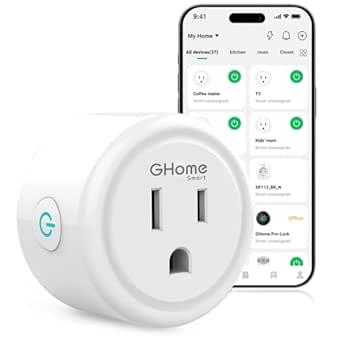 | Best Compact Smart Plug for Easy Voice Control | Operation Mode: ON-OFF-ON | Current Rating: 10 A | Operating Voltage: 120 volts | VIEW ON AMAZON | See Our Full Breakdown |
| Meross Smart Home Energy Monitor, Real-Time Power & Cost Tracking |  | Best for Energy Cost Awareness and Circuit-Level Monitoring | Certification: ETL, UL 61010 | Supported Systems: single-phase 2-wire, 3-phase | Max Main Circuits: 200A | VIEW ON AMAZON | See Our Full Breakdown |
More Details on Our Top Picks
Home Assistant Green | Smart Home Hub with Advanced Automation
The Home Assistant Green stands out for its ability to centralize smart home controls while maintaining a low power footprint. Its fanless, fanless design keeps noise levels minimal, and its support for Z-Wave, Zigbee, and Thread makes it compatible with a wide range of devices. Compared with other hubs, it’s easier to set up and reliably supports automation routines that can reduce overall energy use. However, this hub is primarily for automation control and doesn’t directly monitor energy consumption, which might limit its appeal for users focused solely on energy tracking. It’s best suited for those who want a reliable, eco-friendly control center that’s simple to operate.
Pros:- Easy to set up with pre-installed Home Assistant OS
- Compact, fanless, and silent
- Supports multiple connectivity options including Z-Wave, Zigbee, and Thread
- Low energy consumption
Cons:- Limited to automation control; no direct energy monitoring
- Requires Ethernet for best performance
- No built-in Wi-Fi connectivity
Best for: Tech-savvy users seeking centralized smart home automation with energy-conscious design.
Not ideal for: Users who want detailed energy monitoring or wireless connectivity without Ethernet.
- RAM:4 GB
- Storage Capacity:32 GB
- Connectivity Technology:Ethernet, USB
- Operating System:Home Assistant OS
- Wireless Compatibility:Bluetooth
- Compatible Devices:Smart Home Devices
Our verdict“A reliable, eco-friendly smart hub ideal for automating your home efficiently, but not for energy monitoring.”
Refoss Smart Home Energy Monitor with Open API, Home Assistant, No Cloud
The Refoss EM16P offers precise circuit-level energy data, making it a strong choice for those who want to maximize energy efficiency without sacrificing privacy. Its local-control design ensures data stays on your network, a significant advantage over cloud-dependent models. Compared to other energy monitors, it provides high accuracy (±1%) and supports solar energy integration, helping users cut bills through informed energy use. However, installation can be complex and may require electrical expertise, which could be daunting for less experienced users. This monitor is particularly effective for homeowners committed to detailed energy analysis and privacy.
Pros:- Local control and data privacy
- Seamless integration with Home Assistant and OpenClaw AI
- High accuracy and circuit-level insights
- Supports solar energy optimization
Cons:- Installation may be complex for novices
- Limited to sensors measuring up to 200A
- Some users find app features could be more detailed
Best for: Energy-conscious homeowners who value detailed data and local control.
Not ideal for: Users uncomfortable with electrical installations or seeking plug-and-play solutions.
- Model:EM16P
- Weight:4.24 pounds
- Dimensions:4.5 x 3.5 x 1.1 inches
- Current Sensors:2 main sensors (2–200A), 16 branch sensors (1–60A)
- Connectivity:Built-in Web UI, Open API, MQTT
- Accuracy:±1%” (200A), ±2% at low current
Our verdict“An excellent choice for privacy-focused, detailed energy monitoring, though installation complexity may deter casual users.”
Tapo Smart Plug, Matter Compatible, Energy Monitoring, P110M (4-Pack)
The Tapo P110M smart plug offers an easy way to monitor and control energy use across multiple outlets. Its Matter certification ensures broad compatibility with Alexa, Google, and Apple HomeKit, making it accessible to most users. The detailed energy insights help estimate bills and prevent overcharging. Compared to more advanced energy monitors, it’s less focused on circuit-level data but makes up for it with ease of use and integration. However, its 15A limit means it’s not suitable for high-power appliances. This pick is ideal for those seeking straightforward energy management without complex installation.
Pros:- Compatible with major smart home platforms
- Provides detailed energy consumption insights
- Supports voice commands and remote control
- Easy to set up
Cons:- Limited to 15A capacity
- Wi-Fi connection required for operation
- Less suitable for high-power devices
Best for: Homeowners who want simple, compatible smart outlets for energy awareness.
Not ideal for: Power users needing advanced circuit-level data or high-current devices.
- Compatibility:Matter, Alexa, Apple HomeKit, Google
- Energy Monitoring:Yes
- Number of Devices:4-Pack
- Current:15A
Our verdict“A user-friendly, versatile smart plug for basic energy monitoring and control, perfect for beginners.”
GHome WiFi Smart Plug with Alexa and Google Assistant Compatibility
The GHome WiFi Smart Plug offers a straightforward way to control devices remotely and with voice commands, supporting Alexa and Google Assistant. Its scheduling and group control features make managing multiple devices simple. Unlike dedicated energy monitors, it doesn’t provide detailed consumption data but excels in convenience and quick setup. Its reliance on a stable 2.4GHz WiFi network can be a downside, especially in larger homes with WiFi dead zones. This plug is well-suited for those who want quick, hassle-free control with basic energy awareness.
Pros:- Supports voice control with Alexa and Google
- Remote control via app with scheduling
- Easy to install and connect
- Supports group control
Cons:- Requires stable Wi-Fi
- Limited to indoor use
- No detailed energy consumption data
Best for: Users seeking easy, voice-controlled power management for everyday appliances.
Not ideal for: Those needing circuit-level energy data or high-current support.
- Operation Mode:ON-OFF-ON
- Current Rating:10 A
- Operating Voltage:120 volts
- Connectivity Protocol:Wi-Fi, Bluetooth
Our verdict“A convenient, simple smart plug for basic remote control and scheduling, suitable for casual users.”
Meross Smart Home Energy Monitor, Real-Time Power & Cost Tracking
The Meross Energy Monitor is designed for homeowners who want detailed insights into their energy consumption and costs. Its ability to support various electrical configurations makes it flexible for different systems. With circuit-level monitoring, it helps identify energy hogs and reduce bills. The local data storage enhances privacy and reduces reliance on cloud services. However, its setup can be complex, especially for those unfamiliar with electrical work, and connectivity issues have been reported by some users. This device makes the most sense for users committed to granular energy management and privacy.
Pros:- Supports detailed circuit-level energy monitoring
- Integrates with Home Assistant
- Local data storage for privacy
- Easy clamp-on installation
Cons:- Complex setup for novices
- Limited to US electrical systems
- Connectivity issues reported by some users
Best for: Energy-aware households wanting detailed control and privacy-focused data management.
Not ideal for: Casual users or those without electrical experience seeking plug-and-play solutions.
- Certification:ETL, UL 61010
- Supported Systems:single-phase 2-wire, 3-phase
- Max Main Circuits:200A
- Branch Circuits:16 circuits up to 60A
- Data Storage:Up to 5 years
- Connectivity:WiFi, Open API, Web Control
Our verdict“A powerful, privacy-centric energy monitor suited for dedicated energy management, but not for casual users.”

How We Picked
Our selection process focused on gadgets that prioritize sustainability, privacy, and compatibility with popular smart home ecosystems. We evaluated energy efficiency, ease of setup, connectivity options, and smart automation capabilities. Tradeoffs were considered carefully, emphasizing how each product aligns with different user needs—from tech enthusiasts to newcomers—and how they support genuine energy savings and environmental impact.
Factors to Consider When Choosing Eco Friendly Smart Home Gadgets For Sustainable Living
Selecting eco friendly smart home gadgets involves balancing energy efficiency, user-friendliness, privacy, and compatibility. Consider your technical skills, existing devices, and specific goals—whether it’s automating routines, monitoring detailed energy data, or simple remote control. Each product in this list caters to different priorities, so understanding your home’s needs helps in making the right choice.Centralized Automation Hubs
Devices like the Home Assistant Green excel at providing a smart control center with minimal energy use. They’re best for users who want to streamline automation routines and reduce overall energy waste without cluttering their space with multiple devices. Keep in mind, these hubs often require wired connections and technical setup, which might not suit everyone.
Detailed Energy Monitoring
Energy monitors like the Refoss EM16P and Meross Energy Monitor provide circuit-level insights, helping you identify energy hogs and optimize usage. They are ideal for users committed to deep energy analysis and privacy, but installation can be complex. If you prefer plug-and-play solutions, these might be less appealing due to setup requirements.
Smart Plugs for Convenience
Smart plugs such as the Tapo P110M and GHome are great for everyday appliances, offering remote control and basic energy monitoring. They’re straightforward to install and compatible with major platforms, making them perfect for beginners or casual users focused on convenience rather than detailed data.
Frequently Asked Questions
How do eco friendly smart home gadgets reduce energy consumption?
These gadgets help reduce energy use by automating routines, monitoring device consumption, and providing insights for smarter energy decisions. For example, smart plugs can schedule devices to turn off when not needed, while energy monitors identify high-consumption circuits, enabling targeted savings. Together, they promote mindful usage that lowers overall environmental impact.
Is installation of energy monitors complicated?
Installation complexity varies: some devices like the Refoss EM16P or Meross Energy Monitor may require electrical knowledge and circuit access, making setup more involved. Others, like smart plugs, are plug-and-play and suitable for most users. Assess your comfort level and technical skills before choosing a model that matches your home setup.
Can these gadgets work with my existing smart home system?
Most products in this list are compatible with popular ecosystems such as Alexa, Google Assistant, and Apple HomeKit. For instance, the Tapo P110M has broad platform support, ensuring seamless integration. Always verify compatibility before purchase, especially if you rely on a specific smart home hub or automation platform.
Do energy monitors provide real-time data?
Yes, devices like the Refoss EM16P and Meross Energy Monitor deliver real-time power, voltage, and current data, helping you track energy use instantly. This immediate feedback can inform your decisions, such as adjusting appliance usage or scheduling, leading to more effective energy savings.
Are these gadgets environmentally friendly beyond energy savings?
Many of these products are designed with energy efficiency in mind, reducing overall power consumption and carbon footprint. Additionally, local data control and low energy operation support a greener lifestyle. However, consider the manufacturing and lifecycle impacts of each device to assess their full environmental footprint.
Conclusion
If you’re a tech enthusiast wanting a central control hub, the Home Assistant Green offers automation with minimal energy use. For those committed to detailed energy insights and privacy, the Refoss Energy Monitor or Meross provide in-depth data. If simplicity and broad compatibility matter most, the Tapo P110M or GHome plug are excellent choices. Tailor your pick to your technical comfort, existing systems, and sustainability goals for a greener, smarter home in 2026.
Halloween Picks
halloween
As an affiliate, we earn on qualifying purchases.