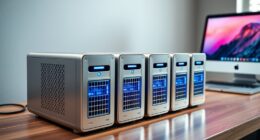
For most buyers seeking a whole-home surge protection device, the Square D HEPD80 is my best overall pick because its 80kA rating and familiar panel-mounted format make it a practical starting point for residential surge protection. The Bad Wolf HSD240V stands out for its listed 260kA rating, while the EMP Shield Home is aimed at buyers specifically seeking EMP and lightning protection rather than a conventional surge protector alone. The central tradeoff is choosing between standard surge protection, claims of EMP-specific protection, and installation or certification details that fit your panel. These products are not interchangeable, and product ratings alone do not establish how well a device protects every home or connected system. Read on for the full breakdown and guidance on matching a device to your electrical setup.

Get audio and creator gear delivered free with Prime
- Fast, free delivery on millions of items
- Prime Video, Amazon Music and more included
- Member-only deals all year
Complete the kit


Key Takeaways
- Conventional whole-home surge protection and EMP-specific protection are different buying goals. Most devices here are described as surge protective devices; EMP Shield models are specifically marketed for EMP and lightning protection.
- Large kA figures do not settle the ranking by themselves. The Bad Wolf HSD240V lists 260kA, but buyers should also check the device’s listing, installation requirements, and compatibility with their panel.
- Device type and placement shape the decision. Type 1 and Type 2 devices can have different installation contexts, so panel location and electrician guidance matter more than choosing by headline numbers alone.
- Enclosure and environment narrow the field. Rainproof or IP-rated designs may better suit exposed locations, while an indoor-only fit can simplify installation where the panel is protected.
- Some picks serve narrower systems rather than the whole house. The inverter protection device targets inverter equipment, while the generator EMP shields address generator-related needs rather than acting as direct substitutes for panel SPDs.


| emp surge protectors for whole home system | Voltage | Warranty |
|---|---|---|
| Square D HEPD80 Universal Whol | 120/240V | 5 years |
| HSPD Square Whole Home Surge P | 120/240VAC | — |
| Bad Wolf HSD240V Whole House L | 120/240V split phase | 5-year limited |
| EVOSPD2SUPER Whole House Surge | 120/240V | — |
| Leviton Type 1 Surge Protectiv | 120/240VAC | — |
| FHSPD100 Whole House Surge Pro | 120/240V | — |
| EMP Shield Home EMP & Lightnin | — | 10 years |
| Intermatic IG1200RC3 Surge Pro | — | 3 years |
| ORBLIGHT Whole House Surge Pro | 120/240V | 5 years |
| EMP Generator Protection Devic | — | 1 year |
| EMP Shield Whole Home Generato | — | 10-year limited lifetime warranty |
| Siemens Boltshield FSPD140 Lev | 120/240V | — |
| Bad Wolf SP240V200KA Whole Hou | 120/240V split-phase | — |
More Details on Our Top Picks
Square D HEPD80 Universal Whole House Surge Protection Device, 1-Phase, 3-Wire for 120/240V, 80kA
The Square D HEPD80 is my balanced pick for homeowners seeking a dedicated whole-home protection device without relying on an unusually high capacity claim. Its 80kA rating, 120/240V compatibility, and UL 1449 Type 1 listing make it a clear fit for common residential systems. The NEMA 4X enclosure supports indoor or outdoor placement, while the LED indicator gives a quick connection-status check. Compared with the Bad Wolf HSD240V, it has a lower stated surge capacity, but the HEPD80 offers a more established, clearly specified installation profile, including a 25,000-amp SCCR. It is not an EMP-specific shield, and neither its rating nor the listing alone promises protection from every EMP effect. Professional installation is also part of the tradeoff.
Pros:- 80kA surge-current rating for residential whole-home protection
- UL 1449 Type 1 and CSA certifications
- NEMA 4X enclosure is rated for indoor or outdoor use
- LED indicator helps check connection status
Cons:- Professional installation is needed for safe panel connection
- Lower stated surge capacity than the 260kA Bad Wolf HSD240V
- Does not claim dedicated EMP shielding
Best for: Homeowners with a standard 120/240V residential panel who want a clearly specified, indoor/outdoor Type 1 surge protection device.
Not ideal for: Buyers seeking a dedicated EMP shielding system or a device with a stated capacity above 80kA; the HEPD80 is conventional surge protection, not a complete EMP solution.
- Phase:1-phase
- Wiring:3-wire
- Voltage:120/240V
- SCCR:25,000A
- Certifications:CSA; UL 1449 3rd Edition Type 1
- Enclosure:NEMA 4X, indoor/outdoor rated
- Warranty:5 years
Our verdict“Choose the HEPD80 for a well-specified residential surge protection device with indoor/outdoor flexibility, not as a standalone EMP shield.”
HSPD Square Whole Home Surge Protective Device, Type 1 SPD, 120/240VAC
The HSPD Square stands out for homeowners who need a Type 1 protection device that is described as compatible with breakers from various brands. That flexibility may help when a panel setup does not match a single-brand accessory, though buyers should confirm the fit and installation requirements before ordering. Its stated 25/50/80kA capacity options offer a choice of ratings, unlike the fixed 80kA Square D HEPD80. The tradeoff is that the provided product details do not identify which capacity applies to the specific unit, or list certifications, SCCR, or an indicator. That makes it harder to compare on documented safety details than the Square D. It is intended for ordinary voltage-surge protection; the supplied information does not establish dedicated EMP shielding.
Pros:- Described as compatible with circuit breakers across brands
- Type 1 SPD design for whole-home installation
- 120/240VAC rating fits common residential service
- Indoor and outdoor use is specified
Cons:- The supplied details do not clarify which 25/50/80kA rating applies to the unit
- No certification, SCCR, or status-indicator details are provided
- Professional installation is recommended
Best for: Homeowners or electricians working with a residential panel where breaker-brand flexibility is a priority and the exact device rating can be verified before purchase.
Not ideal for: Buyers who need clearly documented certifications, a confirmed single-unit surge rating, or product details showing dedicated EMP protection.
- Device type:Type 1 SPD
- Voltage:120/240VAC
- Surge capacity options:25kA, 50kA, or 80kA; specific unit rating not stated
- Breaker compatibility:Described as compatible with any brand
- Installation location:Indoor or outdoor
Our verdict“Consider the HSPD Square when breaker-brand flexibility matters, but verify its exact capacity and certifications before choosing it over the better-documented Square D HEPD80.”
Bad Wolf HSD240V Whole House Lightning & EMP Surge Protector 260kA, ETL Listed, FCC Certified, Type 1 SPD, 120/240V Split Phase
The Bad Wolf HSD240V is the capacity-led choice here, with a stated 260kA rating for 120/240V split-phase residential panels. It is listed as a Type 1 SPD and is described for lightning and electromagnetic surge defense, giving it a closer fit to EMP-focused searches than conventional products such as the Leviton R2120-B. That wording should not be read as proof of comprehensive EMP shielding: the supplied information does not specify test conditions or a shielding standard. The unit is hardwired, so panel installation may call for an electrician, and its listed single-outlet design is less intuitive than a panel-mounted protector’s whole-home role. Its compact 5-by-4-inch dimensions can help with space, but buyers should confirm that the installation method suits their panel.
Pros:- 260kA stated surge capacity
- Type 1 SPD with ETL listing
- Specified for 120/240V split-phase residential systems
- Compact listed dimensions of 5 by 4 inches
Cons:- Hardwired connection may require professional installation
- Supplied details do not explain EMP test methods or shielding performance
- Single-outlet listing can make the whole-panel installation role less clear
Best for: Homeowners prioritizing a high stated surge-current rating and seeking a hardwired Type 1 device described for lightning and electromagnetic surges.
Not ideal for: Buyers who want a documented EMP shielding system, detailed installation instructions, or a simple plug-in device; this product is hardwired and its EMP claims are not detailed in the supplied data.
- Device type:Type 1 SPD
- Voltage:120/240V split phase
- Surge capacity:260,000A
- Connection:Hardwired; no plug
- Listing and certification:ETL listed; FCC certified
- Dimensions:5 × 4 inches
- Enclosure material:Polycarbonate
- Warranty:5-year limited
Our verdict“Pick the Bad Wolf HSD240V for its high stated surge capacity, while treating it as a surge protector rather than a verified whole-home EMP shield.”
EVOSPD2SUPER Whole House Surge Protector for 108,000 Amps/Phase, 2820 Joules, 120/240V
The EVOSPD2SUPER is the lineup’s Type 2 alternative for buyers who value a visible status check and thermally protected MOVs. Its LED indicator can make it easier to spot whether the device is reporting normal operation, while thermal protection addresses a key component-safety concern. The stated 108kA per phase and 2,820-joule rating give useful comparison points, though those figures do not establish EMP shielding. Unlike the Type 1 Square D HEPD80 or Bad Wolf HSD240V, this unit is specified as Type 2, so buyers should check panel placement and installation requirements rather than choosing by capacity alone. It is limited to 120/240V single-phase systems, and its documentation here does not list certifications or an enclosure rating.
Pros:- 108kA stated per-phase discharge capacity
- Thermally protected MOV components
- LED status indicator supports quick visual checks
- 2,820-joule total energy rating is specified
Cons:- Type 2 design differs from the Type 1 options in this roundup
- Limited to 120/240V single-phase systems
- Supplied details do not state certifications or enclosure rating
Best for: Homeowners with a 120/240V single-phase system who want a Type 2 SPD with thermally protected MOVs and a visible operating-status indicator.
Not ideal for: Buyers who specifically need a Type 1 device, a listed EMP shielding product, or documented enclosure and certification details.
- Voltage:120/240V
- Phase:Single phase
- Surge protection type:Type 2
- Per-phase discharge current:108kA
- Nominal discharge current:20kA
- Total energy:2,820 joules
- Protection components:Thermally protected MOVs
- Status indicator:LED
Our verdict“Choose the EVOSPD2SUPER if you want a Type 2 residential surge device with thermal protection and status monitoring, not a dedicated EMP shield.”
Leviton Type 1 Surge Protective Panel, Residential Home Surge Protection, 120/240 VAC, Split Phase, 36kA per Phase, R2120-B SPD, Gray
The Leviton R2120-B suits buyers looking for a compact, residential Type 1 panel protector with a defined 36kA per-phase rating. Its stated NEC compliance for dwelling units gives it a clear residential purpose, while the 120/240VAC split-phase specification fits common home service. Compared with the Square D HEPD80, Leviton offers a lower stated capacity and the supplied description gives fewer enclosure and durability details; in return, it is framed as a compact, straightforward residential panel option. It may be a practical match when space and a Type 1 format matter more than a high capacity figure. The product data does not describe dedicated EMP shielding, and installation still calls for professional electrical work.
Pros:- Type 1 SPD for residential applications
- 36kA per-phase capacity is clearly stated
- 120/240VAC split-phase specification fits common home systems
- Compact design is described as easy to install
Cons:- Lower stated per-phase capacity than the Square D HEPD80’s overall 80kA rating
- Supplied details do not specify enclosure rating or expected lifespan
- Professional installation is required
Best for: Homeowners with a standard 120/240VAC split-phase system who want a compact, residential Type 1 panel protector with a stated per-phase rating.
Not ideal for: Buyers seeking high stated surge capacity, detailed enclosure or lifespan information, or a product specifically documented as an EMP shielding system.
- Model:R2120-B
- Device type:Type 1 SPD
- Application:Residential
- Voltage:120/240VAC
- Phase:Split phase
- Surge capacity:36kA per phase
- Color:Gray
- Compliance:NEC requirements for dwelling units and certain hotel areas
Our verdict“Choose the Leviton R2120-B for a compact, residential Type 1 surge device, but look elsewhere for higher stated capacity or documented EMP shielding.”
FHSPD100 Whole House Surge Protector – 100,000 Amps, Indoor/Outdoor, 120/240V
The FHSPD100 is a panel-level surge protection device for buyers who want a clear whole-home role without paying for EMP-specific claims. Its 100,000-amp-per-phase capacity and 120/240V compatibility suit residential service, while indoor/outdoor use gives an electrician flexibility when choosing a mounting location. Compared with the ORBLIGHT 260kA, it lists less surge capacity, but the FHSPD100’s stated compatibility with all circuit-breaker brands may make it a more adaptable fit across panels. That does not make installation universal: the product data warns that grounding matters, and incorrect grounding can compromise protection. I’d choose it as a practical protection device for ordinary whole-home surge coverage, not as a documented EMP defense; the supplied specifications do not identify EMP protection or a warranty.
Pros:- 100,000 amps per phase is specified for whole-home surge protection.
- Rated for common 120/240V residential service.
- Indoor/outdoor compatibility offers installation-location flexibility.
- Listed as compatible with all circuit breaker brands.
Cons:- Professional installation may be needed, particularly to confirm correct grounding.
- No EMP-specific protection claim or certification is provided in the supplied product data.
- Warranty and connected-equipment coverage are not specified.
Best for: Homeowners seeking a residential 120/240V panel protection device with indoor or outdoor placement flexibility and broad breaker-brand compatibility.
Not ideal for: Buyers specifically seeking documented EMP, CME, or lightning protection claims, or anyone unable to arrange qualified installation and grounding checks.
- Surge capacity:100,000 amps per phase
- Voltage:120/240V
- Frequency:60Hz
- Installation environment:Indoor or outdoor
- Status indication:LED indicators
- Breaker compatibility:Compatible with all circuit breaker brands
Our verdict“Choose the FHSPD100 for a straightforward whole-home protection device with flexible placement, but not for a specifically documented EMP defense.”
EMP Shield Home EMP & Lightning Protection for Breaker Box (SP-120-240-RL/Concealed Model)
Among these picks, the EMP Shield Home is the clearest match for shoppers seeking a protection device explicitly described for EMP, lightning, CME, and over-voltage. Its stated maximum current of 228,000 amps per phase is higher than the FHSPD100’s 100,000 amps, though surge capacity alone does not establish how a device performs against every threat. The 10-year warranty and stated $25,000 damage insurance policy add support absent from the supplied FHSPD100 details. The tradeoff is installation and fit: professional installation is recommended, and the product information gives limited detail about breaker-box compatibility. Its three-circuit, three-phase listing also deserves confirmation with an electrician for a particular residential panel. I’d shortlist it for buyers prioritizing the stated EMP coverage, not for those who only need basic surge protection.
Pros:- Product description explicitly names EMP, lightning, CME, and over-voltage protection.
- Maximum current is specified as 228,000 amps per phase.
- Includes a stated 10-year warranty.
- Description lists a $25,000 damage insurance policy.
Cons:- Professional installation is recommended.
- Breaker-box compatibility details are limited in the supplied information.
- The three-circuit and three-phase specifications should be checked against the home’s electrical service.
Best for: Homeowners prioritizing a breaker-box protection device with stated EMP, lightning, CME, and over-voltage coverage, plus warranty and insurance terms.
Not ideal for: Owners of smaller homes seeking basic surge protection, or buyers whose electrician cannot confirm compatibility with their specific panel and service configuration.
- Maximum current:228,000 A per phase
- Circuits:3
- Type:Three phase
- Material:Metal
- Warranty:10 years
- Damage insurance policy:$25,000
- Listed protection claims:EMP, lightning, CME, and over-voltage
Our verdict“Pick the EMP Shield Home when explicit EMP-related protection claims matter more than simpler installation or a basic surge-only device.”
Intermatic IG1200RC3 Surge Protector with TPMOV Technology, Rainproof Design, 3-Year Warranty
The Intermatic IG1200RC3 stands apart through specification detail rather than a headline current figure: it lists TPMOV technology, a Type 3R rainproof enclosure, CSA and ANSI/UL 1449 5th edition certifications, and connected-equipment coverage. That makes its documentation more concrete than the FHSPD100’s, whose supplied data focuses on capacity and placement. The Intermatic also names a three-year warranty and $7,500 in connected-equipment protection, giving buyers terms to check before installation. However, no surge-current capacity or voltage is included in the provided specifications, so I can’t rank it against the ORBLIGHT 260kA on capacity. Its rainproof housing supports outdoor placement, but installation still needs to be handled correctly. I’d favor it when enclosure and certification details matter more than a stated high-kA figure.
Pros:- TPMOV technology is specifically identified.
- Type 3R rainproof enclosure supports outdoor use.
- CSA and ANSI/UL 1449 5th edition certifications are listed.
- Includes a three-year warranty and $7,500 connected-equipment coverage.
Cons:- The supplied specifications do not state surge-current capacity or voltage.
- Proper installation is needed for safe operation.
- Its stated connected-equipment coverage is limited to $7,500.
Best for: Homeowners comparing installation environments and documented certifications who want a rainproof surge device with stated equipment coverage.
Not ideal for: Buyers who need a specified surge-current capacity or clear 120/240V rating before selecting a panel protection device.
- Technology:TPMOV
- Enclosure:Type 3R rainproof
- Warranty:3 years
- Connected-equipment protection:$7,500
- Certifications:CSA; ANSI/UL 1449 5th edition
- Installation environment:Indoor or outdoor
- Status indication:Status indicator
Our verdict“Choose the Intermatic when rainproof construction and named certifications are more useful to your decision than a published high-kA rating.”
ORBLIGHT Whole House Surge Protector, 260kA SPD for 120/240V Electrical Panels, Type 2, IP67, LED Indicator
The ORBLIGHT makes the strongest stated-capacity case among the conventional panel surge devices here: its listing claims 260kA for 120/240V panels and identifies it as a Type 2 SPD. That is well above the FHSPD100’s 100,000-amp figure and higher than the EMP Shield Home’s stated 228,000 amps per phase, although the supplied descriptions do not establish that these ratings use identical measurement conditions. Its IP67 housing, LED status indicator, and five-year warranty make the installation and monitoring details easy to compare. Unlike the EMP Shield, though, the ORBLIGHT description does not claim EMP or CME protection; it is presented for surges and lightning. I’d place it ahead of lower-capacity options for buyers prioritizing a high stated rating, but professional panel installation remains a real part of the purchase.
Pros:- Lists 260kA surge capacity for residential electrical panels.
- Type 2 design and 120/240V rating are specified.
- IP67 weather-resistant housing supports indoor or outdoor use.
- Includes an LED status indicator and five-year warranty.
Cons:- Professional installation is recommended.
- The description claims surge and lightning protection but does not specify EMP or CME protection.
- Use is described as residential and light commercial, limiting its stated application.
Best for: Homeowners seeking a Type 2, panel-mounted 120/240V surge protection device with a high stated capacity, weather-resistant housing, and visible status monitoring.
Not ideal for: Buyers who require explicitly stated EMP or CME protection, or who cannot arrange professional installation for a panel-mounted device.
- Surge capacity:260kA
- Voltage:120/240V
- SPD type:Type 2
- Installation:Panel-mounted
- Warranty:5 years
- Status indication:LED indicator
Our verdict“Choose the ORBLIGHT for a high-capacity Type 2 panel protection device, and choose the EMP Shield instead if explicit EMP claims are your priority.”
EMP Generator Protection Device, Inverter Surge Protector & Surge Guard for Inverter, Portable Inverter Protection Device, Lightning Solar Flare Shield for Home Backup, Emergency, Off Grid
This compact generator and inverter protection device fills a different job from the breaker-box units: its description targets portable generators and inverters used for backup, camping, or off-grid power. That makes it a possible companion to whole-home panel protection, not a substitute for it. The FHSPD100 is designed around the home’s 120/240V electrical system, while this product is presented as an easy-to-install device for individual portable equipment. Its listed 5,000-watt output gives buyers a stated limit to check against their generator or inverter, but the product data does not provide a surge-current rating, connection details, or evidence of protection across a home’s circuits. Compared with the EMP Shield Home, its portability is the appeal; its one-year warranty and sparse durability information are the compromises.
Pros:- Designed for portable generators and inverters rather than only panel installation.
- Compact listed dimensions of 1 × 1 × 1 inch support portable use.
- Product description claims easy installation without professional help.
- One-year warranty is specified.
Cons:- It is not described as a breaker-box or whole-home protection device.
- The supplied data does not include a surge-current rating or detailed connection specifications.
- Durability and service-life information is limited.
Best for: Generator and inverter owners who want a compact protection device for portable backup power at home, campsites, or off-grid locations.
Not ideal for: Homeowners seeking a breaker-box device for whole-home coverage, or anyone whose equipment needs exceed the listed 5,000-watt output.
- Output wattage:5,000 watts
- Wattage:5,000 watts
- Recommended use:Residential
- Listed fuel types:Diesel; gasoline
- Power source:Solar powered
- Dimensions:1 × 1 × 1 inch
- Color:Black
- Warranty:1 year
Our verdict“Choose this as a portable backup-equipment protection device, not as the primary surge protector for a whole-home electrical system.”
EMP Shield Whole Home Generator EMP Shielding and Lightning Protection for Residential Use
This pick is aimed at homeowners who want an EMP-focused protection device for a residential generator, rather than a surge protector selected mainly for its published surge-current rating. The listing describes whole-home EMP and lightning protection, but its 120-watt specification does not provide a comparable surge-current figure, so I would not rank it against the Siemens Boltshield FSPD140 or Bad Wolf SP240V200KA on surge capacity. Those models publish ratings of 140,000 amps and 200kA, respectively, while this EMP Shield listing leaves that comparison unanswered. Its compact metal construction and stated safety-standard compliance may suit a targeted installation, but the product data does not explain system compatibility or how coverage changes with home size. I would choose it for the EMP-and-generator emphasis only after confirming installation fit with a qualified electrician.
Pros:- Product description explicitly targets residential generator EMP and lightning protection
- Compact 5.2-by-3.4-by-2.3-inch dimensions may suit installations with limited space
- Steel, aluminum, and copper are among the listed materials
- Listing states U.S. manufacture by a veteran-owned company and safety-standard compliance
Cons:- The 120-watt figure is not a surge-current rating, leaving protection capacity difficult to compare with the Siemens FSPD140 or Bad Wolf SP240V200KA
- Product data does not specify electrical compatibility or explain how whole-home coverage is achieved
- Installation requirements and limitations for larger homes are not clearly detailed
Best for: Homeowners prioritizing stated EMP and lightning protection for a residential generator who can verify compatibility with their electrical setup before purchase
Not ideal for: Buyers who need a clearly specified whole-panel surge-current rating, documented fit for a large home, or a device selected primarily for conventional surge capacity
- Wattage:120 watts
- Power source:AC power
- Recommended use:Residential
- Dimensions:5.2 × 3.4 × 2.3 inches
- Weight:1.17 kg
- Color:Silver
- Materials:Steel, aluminum, copper, plastic, and rubber
- Warranty:10-year limited lifetime warranty
Our verdict“Choose this EMP-focused generator protection device only if its installation and coverage are confirmed for your system; buyers comparing published surge capacity should look at the Siemens or Bad Wolf instead.”
Siemens Boltshield FSPD140 Level 2 Whole House Surge Protection Device, 140,000 Amps, 120/240V
The Siemens Boltshield FSPD140 is the clearest fit here for buyers seeking a conventional whole-house surge protection device with a stated capacity: its 140,000-amp rating is easier to compare with the Bad Wolf SP240V200KA’s 200kA figure than the EMP Shield’s 120-watt specification. Its visual and audible replacement alerts also give homeowners a practical cue when the device needs attention, while thermal-protected MOVs and an outdoor-rated enclosure support flexible placement. The tradeoff is that this is a Level 2 unit requiring professional installation, and the provided product data says little about compatibility with existing panels or systems. Compared with the Bad Wolf, it offers less stated surge current but includes explicit audible alerts; compared with the EMP Shield, it is more straightforward to evaluate as a surge device, not an EMP-specific solution.
Pros:- Publishes a 140,000-amp surge-current rating
- Visual and audible alerts indicate when replacement is needed
- Outdoor-rated enclosure allows a wider range of installation locations
- Thermal-protected MOVs are specified for the device
Cons:- Level 2 installation requires professional electrical work
- Product details provide limited compatibility guidance for existing systems
- Its stated surge-current rating is lower than the Bad Wolf SP240V200KA’s 200kA figure
Best for: Homeowners with a 120/240V residential system who want a published surge-current rating, replacement alerts, and an electrician-led installation
Not ideal for: DIY buyers, shoppers specifically seeking documented EMP protection, or anyone unable to confirm compatibility with their electrical panel
- Device type:Level 2 whole-house surge protection device
- Surge current:140,000 amps
- Voltage:120/240V
- Enclosure:Outdoor-rated
- Surge components:Thermal-protected MOVs
- Status alerts:Visual and audible replacement alerts
Our verdict“Pick the Siemens for a conventional 120/240V whole-house surge protection device with clear replacement alerts, provided an electrician confirms panel compatibility.”
Bad Wolf SP240V200KA Whole House Surge Protector, 200kA, Type 1 SPD, 120/240V Split-Phase, NEMA 4X, UL 1449 5th Ed, CSA C22.2
For buyers comparing conventional panel-mounted protection, the Bad Wolf SP240V200KA has the strongest stated surge-current figure in this three-product group: 200kA, versus 140,000 amps for the Siemens FSPD140. Its Type 1 design, 120/240V split-phase specification, and NEMA 4X/IP67 enclosure make it the more clearly described choice for a main-panel installation exposed to outdoor conditions. LED status indicators provide a quick visual check, and listed UL and CSA standards add useful compliance details. This is still a hardwired device, so the stated easy installation should not be read as a DIY recommendation; a qualified electrician may be needed. Unlike the EMP Shield, it does not claim EMP-focused protection, and the listing gives limited guidance on compatibility with newer systems.
Pros:- Highest stated surge-current capacity in this batch at 200kA
- Type 1 SPD specified for 120/240V split-phase systems and main-panel hardwiring
- NEMA 4X/IP67 enclosure supports indoor or outdoor placement
- LED indicators and listed UL 1449 5th Edition and CSA compliance provide useful status and standards information
Cons:- Hardwired main-panel installation may require a licensed electrician
- Product information provides limited compatibility detail for newer electrical systems
- Does not claim EMP-specific protection, unlike the EMP Shield
Best for: Homeowners or property managers with a compatible 120/240V split-phase system who want a high-capacity Type 1 SPD in a weather-resistant enclosure
Not ideal for: Renters, DIY shoppers avoiding main-panel electrical work, or buyers whose priority is specifically documented EMP protection rather than surge protection
- Surge current:200kA
- Voltage:120/240V split-phase
- SPD type:Type 1
- Protection modes:6
- Enclosure:NEMA 4X/IP67
- Installation:Hardwired at main panel
- Leads:36-inch, 10 AWG
- Compliance:UL 1449 5th Edition; CSA C22.2 No. 269.1/269.2
Our verdict“Choose the Bad Wolf for high stated surge capacity and rugged main-panel protection on a compatible split-phase system, not as an EMP-specific device.”

How We Picked
I compared the 13 products by the job a homeowner expects them to do: provide whole-home surge protection at or near the electrical panel, address EMP or lightning concerns where explicitly claimed, or protect a narrower system such as an inverter or generator. I weighed the stated voltage and phase compatibility, SPD type, published surge ratings, enclosure details, and listed standards or certifications where the product information supplied them. I also separated devices marketed for conventional electrical surges from those marketed for EMP shielding, since those labels describe different buyer expectations.
The order favors products with a clear residential panel-protection role and useful, stated fit information; it does not treat the largest advertised rating as proof of better real-world performance. Products with distinct uses remain in the roundup, but they rank lower for the core whole-home panel-protection query when their stated purpose is narrower or less directly comparable. Since the supplied product details do not establish compatibility with every panel or independently verify performance claims, I recommend confirming the current documentation and having a qualified electrician assess installation.
Factors to Consider When Choosing Emp Surge Protectors For Whole Home Systems
Before choosing a device, decide what you mean by “EMP protection” and what part of the home you want protected. A whole-home SPD, an EMP-shielding product, and a device for an inverter or generator may overlap in marketing language, but they do not automatically serve the same role. These checks help prevent a mismatch between the protection you expect and the equipment you buy.
Separate Surge Protection From EMP-Specific Claims
Start by identifying the threat you want to address: common electrical surges, lightning-related surges, or a specific EMP concern. A product described as a surge protective device should not be assumed to provide the same function as a product marketed for EMP shielding. Read the manufacturer’s documentation for the protection scope, installation method, and limitations rather than relying on the product title. Ask an electrician whether the device complements any existing panel protection or leaves equipment-specific gaps. If you need EMP protection for a generator or communications equipment, a panel SPD alone may not match that goal. Treat clear, verifiable documentation as more useful than broad claims without stated test conditions.
Match the Device to Your Panel and Installation
Confirm your service voltage, phase, panel arrangement, and available installation location before comparing models. A device listed for 120/240V split-phase service may fit many homes, but that does not mean it is compatible with every panel or installation method. Type 1 and Type 2 designations can affect where a device is installed and how it connects to the electrical system, so use the manufacturer’s instructions and local code guidance. Avoid buying first and asking an electrician to make it fit later; panel space, wiring path, and service configuration can change the scope of work. Ask who is qualified to install the unit and whether professional installation is recommended or required. Compatibility is a more meaningful first filter than a higher amperage figure.
Read Surge Ratings in Context
Published kA ratings can help compare devices, but they are not a standalone measure of how much protection a home will receive. Manufacturers may present ratings using different configurations, and the supplied product information does not establish that every figure is directly comparable. Look for the full specification sheet, the applicable product standard, and details about the device’s protection modes and status indication. Do not assume a higher number makes an otherwise incompatible or poorly documented device the better choice. If two options appear close, prioritize recognized listing information and installation fit over a dramatic headline rating. This reduces the risk of choosing on marketing shorthand alone.
Choose an Enclosure for the Actual Location
Think about where the device will be mounted, not just whether the product is labeled whole-house. An indoor panel location has different exposure demands from an outdoor or damp installation, where rainproof or ingress-protection details may matter. Check the enclosure rating and manufacturer guidance for the intended location, including any limits on direct weather exposure. A weather-rated enclosure can expand placement options, but it does not replace correct wiring or code-compliant installation. Conversely, paying for an outdoor-rated design may add little value if the unit will sit in a protected indoor panel. Match the enclosure to the site to avoid both under-protection and unnecessary complexity.
Plan for the Equipment Beyond the Main Panel
A whole-home panel device is only one part of a protection plan, especially when the home has a generator, solar equipment, an inverter, or sensitive electronics. The inverter-focused product in this roundup illustrates why system-specific protection can be a separate purchase rather than a substitute for a panel SPD. Generator EMP shields also have a more focused purpose than a conventional whole-home surge device. Map the equipment you want protected and ask the installer whether additional protection is needed at the equipment connection. Do not assume that a device installed at the main panel automatically covers every connected system in every scenario. This system-level check helps buyers spend on the gaps that matter to their setup.
Compare Maintenance, Indicators, and Replacement Terms
Protection devices can require attention after a surge or as components age, so check how the product communicates its operating status. An LED indicator or remote monitoring feature can make a fault easier to spot, but buyers should learn what each signal means and what action follows. Read the warranty and replacement terms, including any conditions tied to installation or connected equipment. A warranty does not prove that a device will prevent every form of damage, and coverage terms can differ sharply between manufacturers. Ask who will inspect the device and how often, especially if the panel is difficult to access. A modestly rated, clearly documented device may be a better fit than a higher-rated model with unclear upkeep expectations.
Frequently Asked Questions
Does a whole-home surge protector also protect against an EMP?
Not automatically. Whole-home surge protectors are generally sold as SPDs for electrical surges, while some products in this roundup are explicitly marketed for EMP shielding. The product name alone is not enough to establish the protection scope or performance against a particular EMP scenario. Read the manufacturer’s technical documentation and ask an electrician how the device fits with your service and connected equipment. If EMP protection is your main goal, compare products specifically intended for that purpose rather than treating every panel SPD as equivalent.
Should I choose Type 1 or Type 2 for my home?
The right type depends on the device’s intended installation point, your service setup, and local electrical requirements. Type labels do not, by themselves, tell you which product is best for every home or which offers broader protection. Check the manufacturer’s installation instructions and ask a qualified electrician to confirm placement and compatibility with your panel. The products in this roundup include different types, so compare them by installation fit rather than assuming one label is universally superior. If your panel configuration is unusual, get that confirmed before ordering.
Is the highest kA rating the safest choice?
No single published kA figure can establish that a device is the safest or best match for a particular home. Ratings may not be directly comparable across manufacturers, and the supplied listings do not provide a common test basis for every model. Check the full specification sheet, applicable certifications, voltage fit, SPD type, and installation requirements. A device that is incompatible with your panel or intended location is not a good choice even if its headline rating is high. Use the rating as one comparison point, not as the decision by itself.
Can I install one of these devices myself?
Panel-mounted surge devices connect to household electrical equipment, so installation can involve dangerous voltages and local code requirements. Whether a particular model permits owner installation depends on its instructions, your electrical system, and applicable rules. Have a qualified electrician confirm compatibility and installation requirements before buying, especially if the device is Type 1 or your panel has limited space. Ask whether the work requires a permit or inspection in your area. This step can prevent a device mismatch and reduce the risk of unsafe wiring.
Do I need separate protection for a generator or inverter?
Possibly, because a main-panel SPD and a device intended for an inverter or generator can serve different points in an electrical system. This roundup includes products specifically described for inverter protection and generator EMP shielding, which are not direct substitutes for every whole-home panel device. The right setup depends on how the equipment connects to the home and what type of protection you want. Ask the electrician or equipment installer to map the connections and identify any protection gaps. Avoid assuming that protection at the main panel covers every operating mode of backup or off-grid equipment.
Conclusion
For the best overall whole-home protection-device starting point, I’d choose the Square D HEPD80 when its specifications and installation fit the home. Buyers seeking a higher stated surge rating can compare the Bad Wolf HSD240V, while the Bad Wolf SP240V200KA is a premium-leaning alternative for those who value its stated enclosure and standard details. For a simpler entry into a familiar residential SPD format, the Square D or Siemens Boltshield may be easier to shortlist, subject to panel compatibility and electrician guidance. The EMP Shield Home is the more specific choice for buyers seeking a product marketed for home EMP and lightning protection; generator owners should compare the generator-focused EMP Shield, and inverter users should assess the inverter protection device separately. I would not choose any model on its headline rating alone: match the protection goal, panel, installation location, and documentation before making the final call.
Halloween Picks
halloween
As an affiliate, we earn on qualifying purchases.