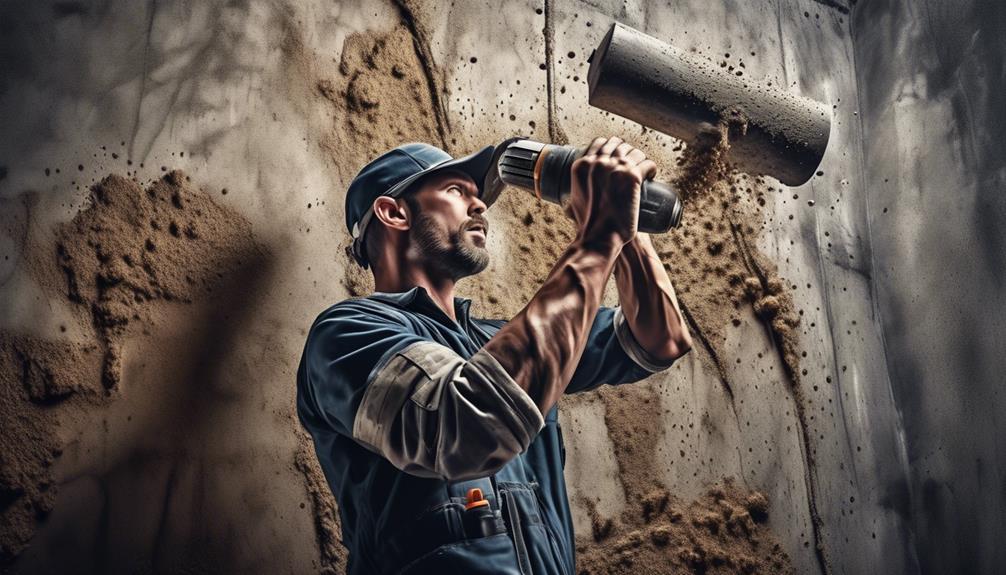
For drilling into concrete, my best overall pick is the Bosch 11255VSR Bulldog Xtreme, an SDS-Plus rotary hammer suited to repeated masonry work. The ENEACRO 1-1/4-inch SDS-Plus is a corded alternative for buyers who want a heavy-duty tool, while the DEWALT DCH133B offers cordless convenience for users already invested in its battery platform. The main choice is between rotary-hammer impact performance for tough or frequent concrete drilling and the lighter, more versatile feel of a standard hammer drill for occasional small holes. Corded models avoid battery limits; cordless models trade runtime for mobility. Read on for the full comparison and guidance on choosing the right type for your concrete work.

Get audio and creator gear delivered free with Prime
- Fast, free delivery on millions of items
- Prime Video, Amazon Music and more included
- Member-only deals all year
Complete the kit

Key Takeaways
- SDS-Plus rotary hammers lead this lineup for demanding concrete work: Bosch, ENEACRO, and the DEWALT DCH133B are in a different tool class from the standard 1/2-inch hammer drills.
- Tool category matters more than a large accessory bundle: a rotary hammer is generally the stronger fit for repeated masonry holes, while included bits do not turn a conventional hammer drill into one.
- Corded picks suit stationary, extended work: the ENEACRO and other corded SDS-Plus options avoid battery interruptions, but add cord management and restrict reach.
- Battery-platform fit is a real deciding factor: the DEWALT and Milwaukee cordless rotary hammers make more sense for buyers who already own compatible batteries and chargers.
- Several listings have overlapping names but different configurations: compare motor class, chuck or SDS-Plus interface, included adapter, and accessory set rather than relying on a headline that says “concrete.”


| hammer drill for concrete | Power source | Maximum rotational speed | Voltage | Weight |
|---|---|---|---|---|
| 1" SDS-Plus Lightweight Rotary | Corded electric | 1,100 rpm | 120 V | 7.19 lb |
| ENEACRO 1-1/4 Inch SDS-Plus 13 | Corded electric | 820 rpm | 120 V | 12.58 lb |
| DEKOPRO 6-Amp 1/2-Inch Hammer | Corded electric | 3,000 rpm | 120 V | — |
| DEWALT 20V MAX XR Brushless Co | Battery powered | 2,000 rpm | — | — |
| Seesii 9 Amp SDS-Plus Lightwei | Corded electric | 1,300 rpm | 110 V | 6.8 lb |
| Bosch 11255VSR Bulldog Xtreme | Corded electric | 1,300 rpm | — | 10.4 lb |
| Milwaukee M18 Brushless SDS Pl | Battery powered | 1,270 rpm | — | 5.3 lb |
| DEWALT 20V MAX SDS Plus 1 Inch | Battery powered | 1,500 rpm | — | — |
| Skil 7.5-Amp 1/2-Inch Corded H | Corded electric | 3,000 rpm | 120 V | 5.2 lb |
| DEWALT 20V MAX SDS Rotary Hamm | Battery powered | 1,100 rpm | — | 6.4 lb |
| Skil 7.5 Amp 1/2-in Corded Ham | Corded electric | 3,000 rpm | 120 V | — |
| 1" SDS-Plus Lightweight Concre | Corded electric | 1,100 rpm | 120 V | 7.2 lb |
| Hammerhead 7.5-Amp 1/2 Inch Va | Corded electric | 3,000 rpm | 120 V | 5.2 lb |
| 1-1/4 Inch SDS-Plus Rotary Ham | Corded electric | 1,000 rpm | 120 V | — |
| DCA 20V Brushless Hammer Drill | Battery powered | 1,800 rpm | 20 V | — |
More Details on Our Top Picks
1″ SDS-Plus Lightweight Rotary Hammer Drill for Concrete/Masonry
For concrete drilling where a lighter tool matters more than demolition muscle, this 7.19-pound SDS-Plus rotary hammer is the most manageable corded option in this group. Its 9-amp motor delivers 3 joules of impact energy, with four modes for drilling, hammering, and positioning a chisel. That makes it more suited to regular anchor holes and occasional tile removal than the heavier ENEACRO, whose 7.4-joule rating better fits demanding concrete work. The supplied bits, chisels, depth gauge, and case make it practical for a DIYer starting from scratch. The tradeoff is firm: it accepts SDS-Plus bits only, and its own description rules out heavy-duty demolition. Choose it for controlled, moderate work; skip it if you need a tool for frequent large holes or sustained breaking.
Pros:- At 7.19 pounds, it is easier to manage overhead than the 12.58-pound ENEACRO.
- Four modes cover concrete drilling, light rotary drilling, hammer-only work, and chisel-angle adjustment.
- SDS-Plus fittings allow tool-less bit changes and the kit includes bits, chisels, a depth gauge, and a case.
- Safety clutch and vibration control add useful protection and comfort for typical DIY sessions.
Cons:- SDS-Plus-only compatibility excludes regular drill bits and SDS-Max accessories.
- Its 3-joule impact energy is a poor fit for sustained heavy demolition.
- The cord limits movement around a site and requires access to mains power.
Best for: DIYers drilling modest numbers of anchor holes in concrete or masonry, especially for overhead or downward work, who want a corded SDS-Plus tool with included accessories.
Not ideal for: Contractors doing frequent large-diameter concrete drilling or heavy demolition, and buyers who already own standard round-shank or SDS-Max bits.
- Power source:Corded electric
- Motor:9 A
- Voltage:120 V
- Impact energy:2.21 ft-lb (3 J)
- Maximum rotational speed:1,100 rpm
- Impact rate:5,300 bpm
- Weight:7.19 lb
- Bit compatibility:SDS-Plus only
Our verdict“Choose this lightweight SDS-Plus hammer for moderate concrete drilling and occasional chiseling, not heavy demolition.”
ENEACRO 1-1/4 Inch SDS-Plus 13 Amp Heavy Duty Rotary Hammer Drill
When concrete capacity takes priority over handling ease, the ENEACRO leads this group: its 13-amp motor and 7.4 joules of impact energy are substantially more suited to demanding drilling and chiseling than the 3-joule lightweight Deshuo. The stated concrete drilling capacity reaches 1.25 inches, giving it room for larger holes than a conventional half-inch hammer drill such as the DEKOPRO. Four functions, a safety clutch, and vibration control make it more versatile than a drill-only choice, while the included bits, chisels, and case provide a useful starting kit. That performance comes with a clear cost in handling: at 12.58 pounds, it is the heaviest option reviewed here, and the cord restricts range. I’d reserve it for substantial, repeated concrete work rather than brief household jobs or overhead drilling.
Pros:- The 7.4-joule impact rating is the strongest stated concrete-focused output among these five products.
- Rated for concrete drilling up to 1.25 inches, beyond the capacity class of the DEKOPRO half-inch hammer drill.
- Four functions support drilling and chiseling tasks, with clutch protection and vibration control.
- Includes drill bits, chisels, and a carrying case.
Cons:- At 12.58 pounds, it can tire the user during extended sessions or overhead drilling.
- The cord limits mobility and requires access to mains power.
- Its size and power are excessive for many small, occasional household drilling jobs.
Best for: DIY renovators and trade users who regularly drill larger holes or chisel concrete and can work near a power outlet.
Not ideal for: Buyers prioritizing overhead comfort, portability, or a compact tool for occasional small anchor holes; its 12.58-pound weight and cord are substantial drawbacks.
- Power source:Corded electric
- Motor:13 A
- Voltage:120 V
- Impact energy:7.4 J
- Impact rate:4,200 bpm
- Maximum rotational speed:820 rpm
- Maximum concrete drilling capacity:1.25 in
- Weight:12.58 lb
Our verdict“Pick the ENEACRO for larger, demanding concrete jobs when impact strength matters more than weight and mobility.”
DEKOPRO 6-Amp 1/2-Inch Hammer Drill with Variable Speed and 12 Bits
The DEKOPRO is the conventional drill-style choice here, best for people who need to work across wood, steel, and occasional masonry rather than focus on concrete alone. Its half-inch keyed chuck accepts compatible standard-shank bits, unlike the SDS-Plus systems on the Deshuo and ENEACRO. Variable speed and a rotating side handle help users control the tool across materials, while the included 12-bit set adds flexibility. But its 6-amp motor and stated 48,000-bpm impact rate do not make it equivalent to a rotary hammer: for repeated or larger holes in concrete, the ENEACRO’s 7.4-joule impact energy is a much better match. The DEKOPRO is therefore a sensible multipurpose DIY pick, not my recommendation for concrete-heavy work. It is also corded, and its keyed chuck takes more effort to change bits than SDS-Plus fittings.
Pros:- Standard half-inch keyed chuck works with compatible conventional drill bits rather than requiring SDS-Plus accessories.
- Hammer and drill modes support mixed-material household tasks.
- Variable speed and a 360-degree adjustable handle help with control and positioning.
- Includes 12 bits for a range of common drilling jobs.
Cons:- It lacks the stated impact-energy rating and dedicated SDS-Plus action of the rotary hammers in this lineup.
- Keyed chuck changes are less convenient than tool-less SDS-Plus bit swaps.
- Corded power limits movement, and the listed product information gives no weight for judging handling.
Best for: Home DIYers who mostly drill wood or metal and need to make occasional small holes in masonry using standard-shank bits.
Not ideal for: People regularly drilling larger holes in concrete or doing chiseling work; a dedicated SDS-Plus rotary hammer such as the ENEACRO is better suited.
- Power source:Corded electric
- Motor:6 A
- Voltage:120 V
- Maximum rotational speed:3,000 rpm
- Impact rate:48,000 bpm
- Chuck size:1/2 in keyed metal chuck
- Modes:Hammer and drill
- Included bits:12
Our verdict“Choose the DEKOPRO for mixed-material household drilling with occasional masonry holes, not regular concrete work.”
DEWALT 20V MAX XR Brushless Cordless 1/2 in. Hammer Drill (Tool Only) (DCD806B)
The DEWALT DCD806B earns its place for jobsite mobility, not for matching a rotary hammer’s concrete-boring action. Its brushless 20V motor, two-speed gearbox, and variable trigger give users control without a cord, while the anti-rotation system and work light are practical when drilling in awkward spaces. The listing states up to 175 holes per charge, though the tool is sold bare, so actual use depends on adding a compatible battery. For small masonry holes and mixed applications, this is easier to move around than the corded ENEACRO. For repeated concrete drilling, though, the ENEACRO’s dedicated rotary-hammer design and 7.4-joule impact rating are the stronger match. The DEWALT’s half-inch chuck also points to conventional bits rather than SDS-Plus accessories. Buy it for cordless versatility; skip it if concrete is the main workload.
Pros:- Cordless design makes it easier to work away from outlets than either corded rotary hammer.
- Brushless motor and two-speed control support varied drilling tasks.
- Anti-rotation protection and an LED work light support safer handling and visibility.
- Half-inch metal ratcheting chuck is designed to hold compatible bits securely.
Cons:- Battery and charger are not included.
- A conventional hammer drill is less suited to sustained concrete drilling than the ENEACRO rotary hammer.
- Only two speed settings are listed, and no SDS-Plus bit compatibility is provided.
Best for: DEWALT 20V MAX owners who need a portable hammer drill for occasional masonry holes alongside wood and metal drilling.
Not ideal for: Buyers without compatible DEWALT batteries or anyone drilling concrete frequently; it is a bare tool and lacks the stated impact energy and SDS-Plus system of the rotary hammers.
- Power source:Battery powered
- Battery platform:20V MAX
- Motor:Brushless
- Maximum rotational speed:2,000 rpm
- Chuck size:1/2 in metal ratcheting chuck
- Number of speeds:2
- Variable speed:Yes
- Included battery and charger:Not included; tool only
Our verdict“Pick this bare-tool DEWALT for cordless convenience and occasional masonry drilling if you already own compatible batteries.”
Seesii 9 Amp SDS-Plus Lightweight Rotary Hammer Drill for Concrete and Masonry
Among the lighter SDS-Plus choices, the Seesii pairs a stated 6.8-pound weight with four modes for drilling, hammering, chiseling, and chisel-angle adjustment. Its listed 9-amp motor and 3-joule impact energy put it in a similar output class to the Deshuo, while the lower listed weight may appeal to buyers who prioritize maneuverability. Compared with the 12.58-pound ENEACRO, it gives up substantial impact energy and is less suitable for heavy concrete work, but it should be easier to handle for moderate drilling and occasional chiseling. The included bits and chisels make it more ready for a range of home tasks. It remains corded, and the listing’s stated half-inch capacity applies to metal, not concrete, so I would not assume a concrete drilling limit from that figure.
Pros:- Listed weight of 6.8 pounds favors maneuverability compared with the heavier ENEACRO.
- Four modes include drilling, hammering, chiseling, and Vario-Lock chisel positioning.
- The 9-amp motor and stated 3-joule impact energy suit moderate concrete and masonry tasks.
- Includes drill bits and chisels for a range of home projects.
Cons:- Its 3-joule impact energy is well below the ENEACRO’s 7.4 joules for demanding concrete work.
- Corded operation restricts movement around a worksite.
- The supplied maximum-capacity figure is for metal, so the product data does not establish a concrete drilling limit.
Best for: DIYers who want a lighter SDS-Plus tool for moderate concrete and masonry drilling, with occasional chiseling and a supplied accessory set.
Not ideal for: Users tackling frequent large holes or heavy demolition, or anyone who needs cordless freedom; its listed 3-joule impact energy and cord make those jobs a weaker fit.
- Power source:Corded electric
- Motor:9 A
- Voltage:110 V
- Motor power:850 W
- Impact energy:3 J
- Maximum rotational speed:1,300 rpm
- Weight:6.8 lb
- Modes:Drilling, hammering, chiseling, and Vario-Lock
Our verdict“Choose the Seesii for lighter handling and four-mode versatility on moderate concrete jobs, not heavy-duty drilling or demolition.”
Bosch 11255VSR Bulldog Xtreme SDS-Plus Rotary Hammer
I’d choose the Bosch Bulldog Xtreme for repeated anchor holes and masonry work where steady corded power matters more than portability. Its SDS-Plus chuck makes bit changes simpler than the keyed chuck on the Skil 7.5-Amp hammer drill, while three operating modes add a chipping option that a conventional hammer drill does not provide. Variable speed and a D-handle also support controlled work when the bit meets resistance. The tradeoff is substantial: at 10.4 pounds, it is heavier than the cordless Milwaukee M18, and the cord limits movement around a jobsite. I’d favor this Bosch for sustained concrete tasks near an outlet, but not for overhead drilling or a punch-list that calls for frequent room-to-room mobility.
Pros:- SDS-Plus system supports quick, tool-free bit changes
- Three modes cover drilling, hammer drilling, and chipping
- Variable speed helps manage starts and bit control
- D-handle supports a stable two-handed grip
Cons:- At 10.4 pounds, it can tire the arms during extended or overhead use
- Corded power restricts movement and requires access to an outlet
- Bulkier and less convenient for small, occasional holes than cordless options
Best for: DIY renovators and tradespeople drilling repeated anchor holes in concrete near reliable power
Not ideal for: Users doing overhead work or moving frequently between locations who need a light, cordless tool
- Power source:Corded electric
- Motor current:7.08 A listed; product description cites a 7.5 A motor
- Maximum rotational speed:1,300 rpm
- Impact rate:5,800 BPM
- Chuck system:SDS-Plus
- Operating modes:3
- Weight:10.4 lb
- Dimensions:22.5 × 11.25 × 4.75 in
Our verdict“Choose the Bosch for sustained concrete drilling and light chipping near an outlet; skip it if weight and cordless freedom matter more.”
Milwaukee M18 Brushless SDS Plus D-Handle Rotary Hammer
For concrete drilling where carrying a corded rotary hammer is impractical, I’d put the Milwaukee M18 Brushless ahead of the heavier Bosch Bulldog Xtreme. Its listed 5.3-pound weight, cordless format, and anti-vibration system suit mobile work and repeated small holes, while the brushless motor is intended to use battery power efficiently. The supplied description highlights drilling up to 3/8-inch holes quickly and comfortably, so I’d treat it as a practical choice for smaller anchors rather than a substitute for a larger rotary hammer on demanding concrete work. It has only one speed, and the battery is not included; users without M18 batteries need to account for that separately. Compared with the DEWALT DCH133B, this Milwaukee is lighter by its listed weight, but the DEWALT provides stated impact energy and three modes.
Pros:- Cordless design makes it easier to move around work areas
- Listed 5.3-pound weight helps reduce fatigue compared with the Bosch Bulldog Xtreme
- Brushless motor is designed for efficient battery use
- Anti-vibration feature supports comfort during repeated drilling
Cons:- Battery is not included
- One speed offers less control over varied materials and tasks
- Product description emphasizes holes up to 3/8 inch rather than larger concrete work
Best for: M18-tool owners drilling frequent small concrete holes while moving around a site or building
Not ideal for: Buyers tackling large-diameter or heavy-duty concrete drilling who need multiple speeds or a clearly stated impact-energy rating
- Power source:Battery powered
- Battery platform:18V Milwaukee M18 lithium-ion
- Motor:Brushless
- Maximum rotational speed:1,270 rpm
- Maximum torque:1.95 ft-lb
- Number of speeds:1
- Weight:5.3 lb
- Chuck system:SDS-Plus
Our verdict“Pick the Milwaukee for mobile work and smaller concrete holes if you already have M18 batteries; choose a higher-capacity rotary hammer for tougher drilling.”
DEWALT 20V MAX SDS Plus 1 Inch Cordless Rotary Hammer with D-Handle, Bare Tool Only (DCH133B)
The DEWALT DCH133B makes more sense than the Milwaukee M18 when cordless concrete work calls for a stated impact-energy figure and a chipping mode. Its 2.6 joules of impact energy and three-position dial cover drilling, hammer drilling, and chipping, giving it more task range than the Milwaukee’s one-speed setup. The brushless motor and cordless platform suit installation work away from outlets, while the included side handle and depth rod help with control and repeatable hole depth. This is still a bare tool, so the battery and charger are not included. Its listing describes a 1-inch rotary hammer, but the provided specs do not give a concrete drilling capacity; I would not infer that every bit size is suitable for every concrete job. Compared with the corded Bosch, it trades continuous outlet power for mobility.
Pros:- 2.6 joules of stated impact energy for concrete drilling
- Three modes include a chipping setting
- Brushless motor supports efficient cordless operation
- Includes a 360-degree side handle and depth rod
Cons:- Bare tool only; battery and charger are not included
- Cordless runtime can interrupt long or demanding work
- Provided specs do not state a concrete drilling-capacity limit
Best for: DEWALT 20V MAX owners who need a cordless rotary hammer with drilling and light chipping modes for installation work
Not ideal for: Buyers without compatible batteries or those who need documented concrete capacity and uninterrupted power for long drilling sessions
- Power source:Battery powered
- Battery platform:20V MAX lithium-ion
- Impact energy:2.6 J
- Maximum rotational speed:1,500 rpm
- Chuck size:20 mm maximum listed
- Operating modes:Drill, hammer drill, and chip
- Motor:Brushless
- Included accessories:360-degree side handle and depth rod
- Tool configuration:Bare tool; battery and charger not included
Our verdict“Choose the DCH133B for mobile DEWALT-platform work that benefits from its 2.6-joule output and chipping mode, provided you already have batteries.”
Skil 7.5-Amp 1/2-Inch Corded Hammer Drill
I’d recommend the Skil 7.5-Amp hammer drill to someone who needs one corded tool for occasional concrete holes as well as wood and metal drilling. Its conventional 1/2-inch keyed chuck accepts regular round-shank bits, unlike the SDS-Plus systems on the Bosch Bulldog Xtreme and DEWALT DCH133B, so it is a more familiar fit for mixed-material household work. The side assist handle and variable-speed trigger help maintain control, but this is not a rotary hammer: for repeated or larger concrete holes, I’d move up to an SDS-Plus model with dedicated hammer action and chipping capability. The Skil’s 5.2-pound weight is easier to manage than the Bosch’s, though it still needs an outlet and the keyed chuck takes more effort to change bits. Its listed concrete capacity is not provided.
Pros:- Conventional 1/2-inch keyed chuck accepts common drill bits
- Variable-speed trigger supports controlled starts
- Side assist handle gives added leverage and control
- Lighter than the Bosch Bulldog Xtreme
Cons:- Not an SDS-Plus rotary hammer, making it less suited to sustained concrete drilling
- Keyed chuck changes bits less conveniently than tool-free SDS-Plus systems
- Corded operation limits mobility
Best for: Homeowners making occasional small concrete holes who also want a conventional drill for wood and metal
Not ideal for: Tradespeople or renovators drilling many or large holes in concrete who need SDS-Plus performance or a chipping mode
- Power source:Corded electric
- Voltage:120 V
- Motor current:7.5 A
- Maximum rotational speed:3,000 rpm
- Chuck:1/2-inch keyed; 13 mm maximum listed
- Operating modes:Drilling and hammer drilling
- Number of speeds:2
- Weight:5.2 lb
Our verdict“Choose the Skil for occasional concrete holes and general household drilling, but step up to an SDS-Plus rotary hammer for frequent masonry work.”
DEWALT 20V MAX SDS Rotary Hammer Drill, Cordless, 3 Application Modes, Bare Tool Only (DCH273B)
The DEWALT DCH273B stands apart for users who spend long stretches drilling mounting holes and value vibration control as much as cordless convenience. Its SHOCKS Active Vibration Control is designed to reduce vibration felt at the handles, while the brushless motor, 2.1-joule impact energy, and three modes support drilling, hammer drilling, and chipping. Compared with the DCH133B, it has lower stated impact energy—2.1 J versus 2.6 J—but the vibration-control feature makes it the more targeted choice for repeated installation tasks. It is also lighter on the listed specs than the Bosch Bulldog Xtreme, though the Bosch avoids battery-runtime limits with corded power. This DEWALT is a bare tool, and the stated OSHA Table 1 compliance applies only when paired with the specified DWH303DH extractor.
Pros:- Active vibration control is designed to reduce vibration at the handles
- Three modes include a chipping option
- Brushless motor supports cordless efficiency
- OSHA Table 1 compliance is specified when paired with the DWH303DH extractor
Cons:- Its 2.1 J impact energy is lower than the DCH133B’s stated 2.6 J
- Bare tool only, so compatible battery and charger are needed
- The required extractor for the stated OSHA compliance is separate
Best for: DEWALT 20V MAX users doing repeated attachment and mounting work who prioritize reduced handle vibration
Not ideal for: Buyers needing the highest stated impact energy in this DEWALT group or an included battery and dust extractor
- Power source:Battery powered
- Battery platform:20V MAX
- Impact energy:2.1 J
- Maximum rotational speed:1,100 rpm
- Motor:Brushless
- Operating modes:Drill, hammer drill, and chip
- Weight:6.4 lb
- Dimensions:13 × 4.2 × 8.6 in
- Dust extraction compatibility:DWH303DH extractor; required for stated OSHA Table 1 compliance
Our verdict“Choose the DCH273B for repeated cordless installation drilling where vibration reduction matters more than maximum impact energy.”
Skil 7.5 Amp 1/2-in Corded Hammer Drill with 100-Piece Bit Set
I’d choose this Skil when concrete drilling is one part of a broader home project, not the main event. Its 7.5-amp motor, two speeds, and variable-speed trigger provide useful control for occasional masonry holes, while the 100-piece bit set gives it wider out-of-the-box utility than the more concrete-focused SDS-Plus models here. The keyed 1/2-inch chuck can accept conventional bits, but this is still a standard hammer drill: it lacks the impact energy and chiseling modes of the 1-inch SDS-Plus Lightweight Concrete Rotary Hammer Drill. That makes it a less suitable choice for repeated, larger holes in dense concrete. The cord also restricts movement, and its weight may tire users during extended overhead work. I’d treat it as a versatile workshop drill that can handle modest masonry tasks, rather than a dedicated concrete tool.
Pros:- 7.5-amp corded motor supports demanding general drilling tasks.
- Two speeds and variable-speed trigger offer control across different materials.
- 100-piece bit set broadens its usefulness for mixed household projects.
- Keyed 1/2-inch chuck accommodates conventional larger bits.
Cons:- Standard hammer-drill action is less suited to repeated concrete drilling than SDS-Plus rotary hammers.
- Cord limits mobility and requires access to an outlet.
- Weight can become tiring during prolonged or overhead work.
Best for: DIYers who need one corded drill for occasional small masonry holes as well as wood, metal, and plastic projects.
Not ideal for: Anyone drilling many or wide holes in dense concrete, or needing cordless access around a jobsite; an SDS-Plus rotary hammer is better suited to that workload.
- Power source:Corded electric
- Voltage:120 V
- Motor current:7.08 A (listed)
- Maximum rotational speed:3,000 rpm
- Speed settings:2
- Maximum chuck size:13 mm (1/2 in.)
- Maximum torque:300 in-lb
- Maximum power:900 W
Our verdict“Pick this Skil for mixed-material DIY and occasional masonry holes, but choose an SDS-Plus rotary hammer for sustained concrete work.”
1″ SDS-Plus Lightweight Concrete Rotary Hammer Drill w/ 1/2″ Adapter
This corded Deshuo is the more concrete-oriented choice than the Skil and Hammerhead standard hammer drills: its SDS-Plus system transfers impact energy through compatible masonry bits, and its four modes add hammer-only chiseling for light tile removal. At 7.19 pounds with 3 joules of impact energy, it is presented as manageable for overhead or downward drilling, though it is not intended for heavy demolition. The included 1/2-inch adapter expands bit options, but the listing specifically limits it to regular drill bits in drill-only mode; it is not a substitute for SDS-Plus bits during hammer drilling. Compared with the more powerful 12.5-amp, 5.5-joule DEKOPRO rotary hammer in this roundup, this model favors lighter handling over force. Its 1,100-rpm ceiling and corded design also make it a specialized, outlet-dependent tool.
Pros:- SDS-Plus chuck supports fast, tool-less changes for compatible masonry bits.
- Four modes cover hammer drilling, rotary drilling, hammer-only work, and chisel-angle adjustment.
- Listed 7.19-pound weight suits users prioritizing manageable handling.
- Safety clutch and vibration-control system are designed to help during binding and extended use.
Cons:- Its 3-joule impact energy is below the listed 5.5-joule DEKOPRO rotary hammer.
- Not positioned for heavy-duty demolition work.
- The 1/2-inch adapter is for regular bits in drill-only mode, not hammer drilling.
Best for: DIYers who need SDS-Plus impact drilling for moderate concrete jobs and value a lighter rotary hammer for overhead work.
Not ideal for: Users tackling heavy demolition, frequent large-diameter holes, or jobs far from an outlet; the higher-impact DEKOPRO is better equipped for demanding work.
- Power source:Corded electric
- Voltage:120 V
- Motor current:9 A
- Maximum rotational speed:1,100 rpm
- Impact rate:Up to 5,300 BPM
- Impact energy:2.21 ft-lb (3 J)
- Weight:7.2 lb
- Modes:4
Our verdict“Choose this Deshuo for moderate concrete drilling and light chiseling when handling matters more than maximum impact force.”
Hammerhead 7.5-Amp 1/2 Inch Variable Speed Hammer Drill with 6pcs Bit
The Hammerhead suits buyers who want a conventional corded drill with a hammer setting for occasional masonry, without stepping up to an SDS-Plus tool. Its 7.5-amp motor, variable speed, and two operating modes cover routine wood and metal drilling alongside lighter concrete tasks. The key limitation is explicit: it is not suitable for reinforced concrete walls. That boundary matters more here than the included six bits, since a standard 1/2-inch chuck and hammer-drill mechanism are less specialized for concrete than the Deshuo SDS-Plus rotary hammer. Compared with the Skil 7.5-Amp model, this Hammerhead offers a keyless metal chuck for easier bit changes but a much smaller bit assortment. At 5.2 pounds, it is also not a particularly light choice for long overhead sessions. I’d keep it to modest masonry jobs and general drilling, not demanding concrete work.
Pros:- 7.5-amp motor supports general household drilling tasks.
- Two modes let users switch between rotation and hammer drilling.
- Keyless 1/2-inch metal chuck makes bit changes straightforward.
- Adjustable side handle adds leverage and control.
Cons:- Product description rules out use in reinforced concrete walls.
- Standard hammer-drill design is less suited to demanding concrete work than SDS-Plus models.
- At 5.2 pounds, it may feel heavy during extended overhead drilling.
Best for: Homeowners who already need a general-purpose corded drill and expect only occasional, modest masonry drilling.
Not ideal for: People drilling reinforced concrete or making frequent, larger holes in masonry; an SDS-Plus rotary hammer is the more appropriate tool.
- Power source:Corded electric
- Voltage:120 V
- Motor current:7.5 A
- Maximum rotational speed:3,000 rpm
- Chuck size:1/2 in.
- Weight:5.2 lb
- Drilling capacity in wood:25 mm
- Drilling capacity in metal:12 mm
Our verdict“Buy the Hammerhead for general drilling with occasional light masonry work, not reinforced or heavy concrete drilling.”
1-1/4 Inch SDS-Plus Rotary Hammer Drill, 12.5Amp Electric Heavy Duty Hammer Drill Corded with 4 Functions, Demolition Hammer for Concrete with Drill Bits and Chisels, Safety Clutch & Vibration Control
Among these five, this DEKOPRO is the strongest fit for demanding concrete drilling: its listed 5.5 joules of impact energy and SDS-Plus chuck are better matched to larger masonry holes and chiseling than the standard Skil or Hammerhead hammer drills. Four modes cover rotary drilling, hammer drilling, hammer-only chiseling, and chisel positioning, so it can take on more than drilling alone. The tradeoff is a corded, substantial tool that is less convenient for scattered jobs or prolonged overhead use than the lighter Deshuo SDS-Plus model. Its stated concrete capacity is 1-1/4 inches, but buyers should still match bit size and workload to the tool rather than treat that figure as a promise of effortless drilling in every concrete mix. The included bits and chisels add practical flexibility, though this is more tool than occasional small-hole users need.
Pros:- Listed 5.5-joule impact energy is suited to more demanding concrete work than standard hammer drills.
- SDS-Plus chuck and four modes support drilling and chiseling tasks.
- Safety clutch is designed to help protect the user and tool if a bit binds.
- Includes SDS-Plus drill bits, chisels, depth gauge, handle, and carrying case.
Cons:- Corded operation limits mobility around a jobsite.
- More power and capacity are unnecessary for users who only drill occasional small holes.
- Likely less convenient for extended overhead work than the lighter Deshuo model.
Best for: DIY renovators and property-maintenance users who regularly drill larger holes in concrete or need a corded tool for light chiseling.
Not ideal for: People who mainly make small masonry holes, need cordless mobility, or prioritize a lighter tool for overhead tasks; the Deshuo is the more manageable SDS-Plus option.
- Power source:Corded electric
- Voltage:120 V
- Motor current:12.5 A
- Maximum rotational speed:1,000 rpm
- Impact rate:Up to 4,600 BPM
- Impact energy:5.5 J (4.1 ft-lb)
- Maximum concrete drilling capacity:1-1/4 in.
- Modes:4
Our verdict“Choose this DEKOPRO when concrete drilling and light chiseling are regular tasks and you can work near an outlet.”
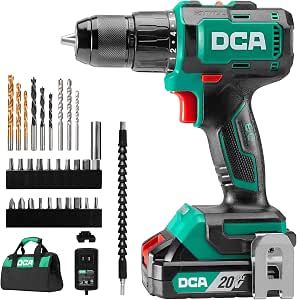
DCA 20V Brushless Hammer Drill Cordless, 492 in-lb Torque Impact Drill, 1/2″ All-Metal Keyless Chuck,18+1+1, (0-450/0-1800RPM), 27000 IPM, Compact Design with 2.0Ah Battery & Charger,ADJZ2055i
The DCA is the mobility pick in this group: its 20V battery platform, compact listed weight of 1.3 kg, and brushless motor suit repairs where a cord is awkward or unavailable. Its impact mode is specified for masonry and brick, with a 27,000-BPM rate, but this is still a conventional 1/2-inch hammer drill—not an SDS-Plus rotary hammer. That makes it a better match for lighter holes than the DEKOPRO 12.5-amp model, which offers 5.5 joules of impact energy and dedicated chiseling modes. The DCA’s two speeds and 18+1+1 settings also help with driving and general drilling, giving it broader cordless utility. Its included battery is 2.0 Ah, so runtime may limit sustained work, and the supplied data does not list a concrete drilling capacity. I’d choose it for portability, not heavy concrete drilling.
Pros:- Cordless 20V design works where outlets and extension cords are inconvenient.
- Brushless motor and two-speed gearing support varied drilling and driving tasks.
- 18+1+1 settings offer adjustment for fastening as well as drilling.
- Includes a 2.0-Ah battery, charger, bits, and carrying bag.
Cons:- Conventional hammer-drill design is less suited to heavy concrete work than SDS-Plus rotary hammers.
- Included 2.0-Ah battery may constrain runtime during sustained work.
- Product data does not specify a concrete drilling capacity.
Best for: Homeowners and mobile repair workers who need cordless convenience for occasional holes in brick or light masonry, plus screwdriving and general drilling.
Not ideal for: Users regularly drilling large or deep holes in dense concrete or doing chiseling; a corded SDS-Plus rotary hammer offers more suitable impact capability.
- Power source:Battery powered
- Voltage:20 V
- Battery capacity:2.0 Ah
- Motor type:Brushless
- Maximum rotational speed:1,800 rpm
- Speed settings:2
- Maximum torque:492 in-lb
- Impact rate:Up to 27,000 BPM
Our verdict“Pick the DCA for portable, light masonry work and general repairs, but choose an SDS-Plus rotary hammer for regular concrete drilling.”

How We Picked
I ranked these 15 tools by how well their stated design fits actual concrete drilling, separating SDS-Plus rotary hammers from standard hammer drills instead of treating them as interchangeable. The main factors were drilling mechanism and capacity, power source, handling and control features, build details such as a safety clutch or vibration control when listed, and how clearly each tool’s configuration supports the intended job. I also weighed versatility: drilling-only models, tools with multiple modes, and bundles with bits or chisels serve different buyers.
The ranking favors tools that appear better suited to repeated or larger masonry holes, then accounts for convenience, flexibility, and entry-level tasks. Cordless tools gain value when mobility or an existing battery platform matters; corded tools gain value for longer sessions without battery changes. Standard 1/2-inch hammer drills remain useful for occasional small holes and mixed-material projects, but rank below rotary hammers for sustained concrete work. Where product names do not specify key details, I avoid assuming performance beyond the listed features.
| hammer drill for concrete | Power source |
|---|---|
| 1" SDS-Plus Lightweight Rotary | Corded electric |
| ENEACRO 1-1/4 Inch SDS-Plus 13 | Corded electric |
| DEKOPRO 6-Amp 1/2-Inch Hammer | Corded electric |
| DEWALT 20V MAX XR Brushless Co | Battery powered |
| Seesii 9 Amp SDS-Plus Lightwei | Corded electric |
| Bosch 11255VSR Bulldog Xtreme | Corded electric |
| Milwaukee M18 Brushless SDS Pl | Battery powered |
| DEWALT 20V MAX SDS Plus 1 Inch | Battery powered |
| Skil 7.5-Amp 1/2-Inch Corded H | Corded electric |
| DEWALT 20V MAX SDS Rotary Hamm | Battery powered |
| Skil 7.5 Amp 1/2-in Corded Ham | Corded electric |
| 1" SDS-Plus Lightweight Concre | Corded electric |
| Hammerhead 7.5-Amp 1/2 Inch Va | Corded electric |
| 1-1/4 Inch SDS-Plus Rotary Ham | Corded electric |
| DCA 20V Brushless Hammer Drill | Battery powered |
Factors to Consider When Choosing Hammer Drill For Concrete
Before choosing, match the tool class to the hole size, concrete, and frequency of your work. A familiar “hammer drill” label can describe tools with very different impact mechanisms, bit interfaces, and working limits. These distinctions affect speed, effort, comfort, and the bits you can use.
Choose a Rotary Hammer for Repeated Concrete Drilling
A standard hammer drill adds a rapid tapping action to the rotation of a conventional chuck, which can handle occasional small holes in masonry. An SDS-Plus rotary hammer uses a different mechanism and accepts SDS-Plus bits, making it better suited to repeated or more demanding concrete work. The difference matters most as hole size, drilling frequency, or material hardness increases. A common mistake is buying a conventional hammer drill for a job that calls for many anchor holes, then blaming the bit when progress is slow. For occasional small holes, though, a rotary hammer may be bulkier and more tool than the task needs. Choose by the work you expect to repeat, not by the word “hammer” on the product name.
Match Bit Interface and Hole Size Before Buying
Check whether the tool uses a standard chuck, SDS-Plus, or an included adapter, then confirm the bits you need match that system. SDS-Plus bits are designed for rotary hammers, while ordinary round-shank masonry bits fit standard chucks. An adapter can widen a tool’s uses, but it does not change the tool’s drilling mechanism or make it equivalent to a dedicated SDS-Plus setup. Think through the largest hole you need and whether the listed capacity covers that task in concrete, not just a different material. Buyers often focus on the number of included bits and miss that the wrong shank makes them unusable without an adapter. If your work includes both concrete and regular drilling, check how easily the tool handles each mode and bit type.
Decide Whether Corded Power or Battery Mobility Fits the Job
Corded tools suit work near an outlet and longer sessions where swapping or recharging batteries would interrupt the job. Cordless tools are easier to move around a site, climb ladders with, or use where an extension cord would get in the way. Their practical value depends on battery compatibility, the batteries you already own, and how many holes you need to drill per charge. Bare-tool listings can look like a complete solution but may require a separate battery and charger. If you are buying into a battery platform for one tool alone, include those extra components in your decision. For fixed workshop or renovation work, a corded model may be simpler; for scattered tasks, mobility can outweigh uninterrupted runtime.
Treat Modes, Clutch, and Vibration Control as Job-Matching Features
Multiple operating modes can help a rotary hammer handle more than one task, but only when the listed modes match your work. A drilling-only tool is a sensible fit for anchor holes; a model that also supports hammer-only operation may suit light chiseling if that function is explicitly included. A safety clutch can help limit sudden tool reaction if a bit binds, while vibration control can make longer sessions more manageable. These features do not replace correct grip, eye and hearing protection, or a firm stance. Avoid paying attention to a mode count without checking what each mode actually does. If you only drill occasional holes, control and straightforward setup may matter more than extra functions.
Plan for Dust, Anchors, and Overhead Work
Concrete drilling creates fine dust, so plan for dust collection or a suitable cleanup method before starting, especially indoors. For anchor installation, hole diameter and depth must match the fastener maker’s instructions; drilling a hole is only one part of getting a secure result. Overhead drilling adds fatigue, making tool weight, grip, and manageable vibration more important than raw power alone. A larger rotary hammer may advance faster through demanding work but can be tiring for small holes above shoulder height. Keep the bit clear of hidden wiring and plumbing, and use appropriate protective equipment. If the work location is cramped or elevated, a smaller cordless setup may be the more practical choice even when a corded model offers longer operation.
Buy Accessories for Compatibility, Not Bundle Size
Included bits and chisels can get a project started, but the useful value of a bundle depends on shank type, sizes, and the condition and quality of the accessories. A large set for a standard chuck does not help much if the tool you choose is SDS-Plus, and a small starter kit may omit the diameter your anchors require. Check whether the listing includes a side handle, depth stop, case, battery, or charger rather than assuming those items come in the box. For frequent drilling, suitable bits and dust control can matter more than a long accessory list. If you already own quality bits, prioritize a tool interface that works with them or account for the cost and hassle of replacing them. Verify the exact package contents before purchase because similar product names can refer to different configurations.
Frequently Asked Questions
Is a standard hammer drill enough for drilling anchor holes in concrete?
It can be enough for occasional small holes, especially when the concrete is not especially demanding and the bit is suitable for the job. For repeated holes, larger diameters, or harder concrete, an SDS-Plus rotary hammer is generally the more suitable class of tool. The lineup includes both types, so compare the drilling mechanism rather than treating every “hammer drill” as equivalent. Check the anchor maker’s required hole size and depth before choosing. If you expect the work to grow beyond a few small holes, buying for the repeated task may save time and strain.
Can I use my regular masonry bits in an SDS-Plus rotary hammer?
Only if the tool’s setup accepts that bit shank, often through a compatible chuck or adapter. SDS-Plus rotary hammers are designed around SDS-Plus bits, while conventional masonry bits usually have a round shank for a standard chuck. An adapter can add compatibility, but it does not give a regular bit the same fit as a purpose-made SDS-Plus bit. Confirm the adapter is included or sold for that exact tool, and check that it suits the intended operation. For frequent concrete drilling, using compatible SDS-Plus bits is the more direct approach.
Should I choose a corded rotary hammer or a cordless one?
Choose corded if you work near power, drill for extended periods, and prefer not to plan around battery runtime. Cordless is a better fit for mobile jobs, elevated work, or sites where managing a cord is awkward. Battery-platform compatibility can shift the decision: a bare tool is more appealing when you already own its batteries and charger. If you do not, factor those components into the full setup you need. For occasional work in several locations, convenience may matter more than uninterrupted operation.
Does an included adapter make a lightweight rotary hammer a replacement for a regular drill?
An adapter can let a rotary hammer accept certain non-SDS bits, but it does not automatically make the tool as convenient as a standard drill for every material or task. Rotary hammers are built around impact drilling and may feel heavier or less suited to delicate work. Check whether the specific model supports the mode you need and whether its chuck or adapter is included. For mixed household jobs, a separate drill may offer better control for wood, metal, and small fasteners. An adapter is best treated as added flexibility, not proof that one tool replaces every other drill.
What should I prioritize if I only drill concrete a few times a year?
Start with the size and number of holes you actually expect to make, then decide whether a standard hammer drill is sufficient or an SDS-Plus tool would prevent unnecessary effort. For a small number of modest holes, a basic corded hammer drill may be easier to justify than a heavier rotary hammer. If the work involves larger holes, repeated anchors, or tougher concrete, the rotary-hammer class is a better match even for occasional use. Check included accessories and whether the tool is bare or complete with power components. You can also compare borrowing or renting a larger tool against buying one for a single project.
Conclusion
For most buyers planning regular concrete drilling, I recommend the Bosch 11255VSR Bulldog Xtreme as the best overall pick in this lineup because it is a dedicated SDS-Plus rotary hammer. The DEKOPRO 6-Amp or Skil 7.5-Amp corded hammer drill makes more sense as a value-focused choice for occasional small holes, not sustained heavy work. For a premium cordless route, compare the Milwaukee M18 Brushless SDS Plus and DEWALT DCH273B around your existing battery platform and preferred features. Beginners tackling light household masonry may find a standard corded hammer drill simpler to handle; those starting with repeated concrete holes should choose an SDS-Plus model and compatible bits. For heavy-duty corded work, look to the ENEACRO 1-1/4-inch; for mobile jobs, consider the DEWALT or Milwaukee cordless rotary hammers. Match the tool to the holes you will actually drill, then verify the exact bit interface and package contents.
Fall Picks

DJI Osmo Action 4 Essential Combo Waterproof 4K Action Camera
As an affiliate, we earn on qualifying purchases.