
Searching for the right headphone cable usually comes down to one question: do you want to add a microphone for calls and gaming, or upgrade the sound quality of an audiophile headphone? My top overall pick, the 8-Strand German Copper Monitor Headphone Cable for Hifiman models, wins because it balances build quality, comfort, and audible improvement for a reasonable price. If your priority is voice chat rather than fidelity, the FAAEAL Boom Microphone Cable is the better-value route, while the 4-Strand Cotton Yarn Balanced Cable for Sennheiser HD490 PRO sits at the premium end for studio work. The main tradeoffs in this category are between mic functionality and pure audio quality, between single-ended and balanced connectors, and between budget copper and higher-purity conductor materials. Keep reading for the full breakdown, including which cables fit which headphones and which products you should skip entirely.

Get audio and creator gear delivered free — and shop member deals
- Fast, free delivery on millions of items
- Access to Prime Big Deal Days deals on October 6–7
- Prime Video, Amazon Music and more included
Complete the kit


Key Takeaways
- Connector compatibility is the single biggest deciding factor in this roundup — most upgrade cables fit only one family of headphones (dual 3.5mm for Hifiman, 4-pin mini XLR or 2-pin for Sennheiser), so a great cable for the wrong headphone is worthless.
- Boom microphone cables like the HD598 Coiled Spring and FAAEAL models offer the best value-per-dollar because they add a whole feature (voice chat) rather than an incremental sound improvement.
- The 8-strand German copper monitor cables deliver the most meaningful sonic upgrade in the lineup, but their thicker, heavier construction makes them less comfortable for long desk sessions than lighter 4-strand alternatives.
- Four products in this list — the Numark HF125, JBL Tune 310C, SARLAR VR headphones, and iClever BTH20 — are not actually headphone cables; they only make sense if you’d rather replace the whole headphone than upgrade its wire.
- Cotton yarn braiding (featured on both Sennheiser balanced cables) reduces microphonics and cable noise noticeably more than standard rubber or PVC jackets, which matters most for recording and quiet-listening environments.
| HD598 Boom Microphone Coiled Spring Gaming Cable | 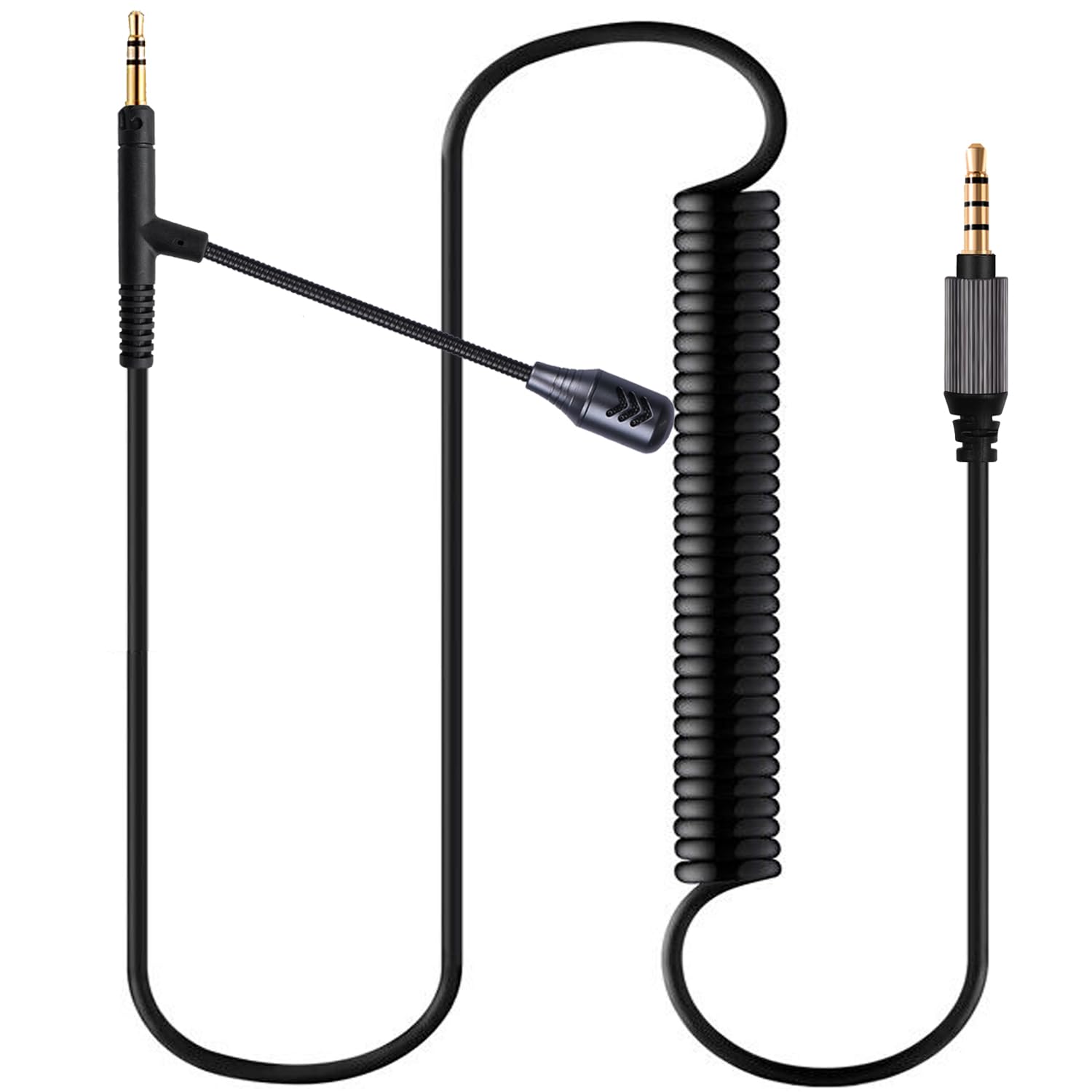 | Best Gaming Voice Upgrade | Connector: 3.5mm to 2.5mm | Cable Length: 8 ft coiled | Microphone: Aluminum alloy boom mic | VIEW LATEST PRICE | See Our Full Breakdown |
| FAAEAL Boom Microphone Cable for Sony and Audio-Technica Wireless Models |  | Best for Wireless-First Headphones | Connector: 3.5mm to 3.5mm | Microphone: Aluminum alloy boom mic | Conductor: High-purity oxygen-free copper | VIEW LATEST PRICE | See Our Full Breakdown |
| Fezzlo Balanced Upgrade Cable for Sennheiser HD490 PRO (4-Pin Mini XLR) |  | Best Audiophile Upgrade | Connector: 4-Pin Mini XLR | Cable Length: 4.9 ft | Conductor: 4-strand OFC German copper | VIEW LATEST PRICE | See Our Full Breakdown |
| Numark HF125 Closed-Back DJ Headphones |  | Best Budget One-Ear Monitoring Set | Driver Size: 40mm | Cord Length: 6 feet, tangle-resistant | Connector: 1/8-inch TRS with 1/4-inch adapter | VIEW LATEST PRICE | See Our Full Breakdown |
| JBL Tune 310C Wired USB-C In-Ear Headphones |  | Best Cable-Simplifying Daily Driver | Connectivity: USB-C wired | Driver Size: 9mm | Cable Type: Flat, tangle-free | VIEW LATEST PRICE | See Our Full Breakdown |
| Fezzlo Monitor Headphone Cable, 8-Strand German Copper AUX Cord, Dual 3.5mm Plug |  | Best Overall Upgrade Cable | Conductor: 8-strand German copper hybrid core | Headphone Connector: Dual 3.5mm | Plug Options: 3.5mm, 4.4mm balanced, XLR-4 pin | VIEW LATEST PRICE | See Our Full Breakdown |
| Fezzlo Balanced Upgrade Cable, 4-Strand Soft Cotton Yarn Cover, Sennheiser HD490/HD480 |  | Best Value Upgrade Cable | Conductor: 4-strand OFC German copper hybrid | Jacket: Soft cotton yarn over PVC | Headphone Connector: Sennheiser HD490/HD480 specific | VIEW LATEST PRICE | See Our Full Breakdown |
| Fezzlo Monitor Headphone Cable, Dual 3.5mm 8-Strand Litz AUX Cord |  | Best for Litz Construction Purists | Conductor: 8-strand German copper, 784-core Litz | Headphone Connector: Dual 3.5mm | Construction: Twisted multi-core Litz design | VIEW LATEST PRICE | See Our Full Breakdown |
| SARLAR VR Gaming Headphones for Quest 2 and Quest 3 |  | Best for VR Audio | Drivers: 45mm large-aperture | Cable: Custom-length 3.5mm plus extended cable | Ear Pads: Memory protein, noise-isolating | VIEW LATEST PRICE | See Our Full Breakdown |
| iClever BTH20 Active Noise Cancelling Headphones for Kids |  | Best for Kids’ Travel | Model: BTH20 | Connectivity: Bluetooth 5.4 and 3.5mm wired | Noise Reduction: Active + passive up to 40dB | VIEW LATEST PRICE | See Our Full Breakdown |
| headphone cable | Conductor | Compatibility |
|---|---|---|
| HD598 Boom Microphone Coiled S | Oxygen-free copper, PVC jacket | Sennheiser HD518–HD599, HD560S, HD620S; ATH-M40x/M50x/M60x/M70x |
| FAAEAL Boom Microphone Cable f | High-purity oxygen-free copper | Sony WH-1000XM2–XM5, Beats Solo/Studio, Marshall Major/Monitor, ATH-M50xBT series |
| Fezzlo Balanced Upgrade Cable | 4-strand OFC German copper | Sennheiser HD490 PRO, HD490 PRO Plus, HD480 PRO, HD480 PRO Plus |
| Numark HF125 Closed-Back DJ He | — | — |
| JBL Tune 310C Wired USB-C In-E | — | — |
| Fezzlo Monitor Headphone Cable | 8-strand German copper hybrid core | Hifiman, Meze, Denon, Beyerdynamic, Final, Sony, FiiO |
| Fezzlo Balanced Upgrade Cable | 4-strand OFC German copper hybrid | — |
| Fezzlo Monitor Headphone Cable | 8-strand German copper, 784-core Litz | Hifiman, Meze (incl. 99 Classics), Denon, Beyerdynamic, Sony, FiiO |
| SARLAR VR Gaming Headphones fo | — | Oculus Quest 2 and Quest 3 |
| iClever BTH20 Active Noise Can | — | — |
More Details on Our Top Picks
HD598 Boom Microphone Coiled Spring Gaming Cable
This pick makes the most sense for anyone who already owns Sennheiser HD5xx-series headphones and wants to turn them into a gaming headset without buying new cans. The aluminum alloy boom microphone and coiled spring design keep the mic positioned exactly where you want it, while the 8-foot reach handles couch-to-console distances better than the straight FAAEAL cable further down this list. Compared with that option, this one trades a wider headphone compatibility list for a tighter, better-integrated fit with Sennheiser and Audio-Technica wired models. The included Y-adapter adds flexibility for dual-port PC setups.
The tradeoff is honesty about sound: oxygen-free copper is a baseline, not an audiophile feature, so don’t expect the clarity gains of the balanced Fezzlo HD490 cable. It’s a utility purchase, and a good one.
Pros:- Boom mic instantly converts wired headphones into a full headset
- Coiled spring design resists tangles and manages its own length
- 8-foot reach suits console controllers and couch setups
- Y-adapter included for separate mic/headphone jacks
Cons:- Compatibility limited to specific Sennheiser and Audio-Technica wired models
- No volume or mute controls on the cable itself
Best for: Sennheiser HD598/HD599 owners who game and stream and want a boom mic on headphones they already love
Not ideal for: Owners of Bluetooth-first headphones like the Sony WH-1000XM5 — the connector won’t fit; look at the FAAEAL cable instead
- Connector:3.5mm to 2.5mm
- Cable Length:8 ft coiled
- Microphone:Aluminum alloy boom mic
- Conductor:Oxygen-free copper, PVC jacket
- Included Accessory:Dual 3.5mm Y-adapter (3.3 ft)
- Compatibility:Sennheiser HD518–HD599, HD560S, HD620S; ATH-M40x/M50x/M60x/M70x
Our verdict“If you game on Sennheiser HD-series headphones, this is the cheapest way to get a proper boom mic without replacing your headset.”
FAAEAL Boom Microphone Cable for Sony and Audio-Technica Wireless Models
Where the HD598 coiled cable assumes you own wired Sennheisers, this FAAEAL option targets a different crowd entirely: people with Sony WH-1000XM-series, Beats Solo/Studio, or Audio-Technica M50xBT headphones who occasionally want a wired connection with a mic. The 3.5mm-to-3.5mm straight design and soft cotton yarn cover make it lighter and more pocketable than the coiled alternative, which matters if you’re plugging into a phone for calls on the go. Placement flexibility is its real strength — one cable covers a long list of headphone brands.
The tradeoff is precision: because it’s a generic 3.5mm fit rather than a model-specific 2.5mm locking connector, it lacks the secure fit of the Sennheiser-targeted pick. And note the fine print — it does not work with wired ATH-M40x/M50x models, which trips up plenty of buyers.
Pros:- Broad compatibility across Sony, Beats, Marshall, and Bluetooth Audio-Technica models
- Cotton yarn cover stays tangle-free and feels premium in hand
- Boom mic works for gaming, VoIP, and podcasting
- Lightweight straight cable is easier to travel with than coiled designs
Cons:- Generic 3.5mm plug fits less securely than model-specific connectors
- Confusing compatibility list — wired Audio-Technica models are excluded
Best for: Owners of Sony WH-1000XM5/XM4, Beats, or M50xBT headphones who need wired listening with call capability
Not ideal for: Wired Audio-Technica M40x/M50x owners — the connector is explicitly incompatible with those models
- Connector:3.5mm to 3.5mm
- Microphone:Aluminum alloy boom mic
- Conductor:High-purity oxygen-free copper
- Jacket:Soft cotton yarn cover
- Compatibility:Sony WH-1000XM2–XM5, Beats Solo/Studio, Marshall Major/Monitor, ATH-M50xBT series
- Use Cases:Gaming, VoIP, calls, podcasting
Our verdict“The right choice if your headphones are Bluetooth-first models with a 3.5mm port and you want wired mode with a mic.”
Fezzlo Balanced Upgrade Cable for Sennheiser HD490 PRO (4-Pin Mini XLR)
This option stands out for a completely different job than the two boom-mic cables above: it’s about sound quality, not voice chat. The 4-strand OFC copper architecture and 4-pin mini XLR connector target Sennheiser HD490 PRO and HD480 PRO owners who want smoother highs, deeper bass, and better instrument separation from studio monitoring or critical listening. The choice of a 3.5mm or 4.4mm plug matters more than it sounds — the 4.4mm balanced option pairs with portable DAC/amps for lower noise, something none of the other cables in this roundup can do.
Be realistic about the tradeoffs. Connector compatibility is narrow, and mini XLR plugs demand careful handling — yank one and you risk damage. If you need a mic for gaming, the HD598 coiled cable is the better tool; this one is purely for listening.
Pros:- Balanced 4.4mm plug option reduces noise with compatible amps
- Cotton yarn cover is durable and tangle-resistant
- Noticeably improves treble smoothness and bass depth over stock cables
- Premium 24K-metal plugs and CNC aluminum hardware
Cons:- Only fits Sennheiser HD490/HD480 PRO and Plus models
- Mini XLR connectors need gentle handling to avoid damage
Best for: HD490 PRO or HD480 PRO owners using balanced DAC/amp setups for mixing or audiophile listening
Not ideal for: Gamers and streamers — there’s no microphone, and it only fits four Sennheiser models
- Connector:4-Pin Mini XLR
- Cable Length:4.9 ft
- Conductor:4-strand OFC German copper
- Jacket:Soft cotton yarn cover, PVC
- Plug Options:3.5mm or 4.4mm balanced
- Compatibility:Sennheiser HD490 PRO, HD490 PRO Plus, HD480 PRO, HD480 PRO Plus
Our verdict“A focused, well-built upgrade for HD490 PRO listeners who want balanced output — pointless for anyone with different headphones.”
Numark HF125 Closed-Back DJ Headphones
This entry reframes the question: sometimes the cheapest path to a better cable experience is a complete inexpensive headset rather than an upgrade cable. The HF125’s 7-position rotating ear cups are the feature that matters for DJs — one-ear cueing is impossible with most consumer headphones, and no cable in this roundup fixes that. The 6-foot tangle-resistant cord and included 1/4-inch adapter plug straight into mixers and controllers without dongles.
Compared with putting a boom-mic cable like the FAAEAL on better headphones, you’re accepting noticeably weaker bass and plasticky build in exchange for convenience and a rock-bottom price. For learning to mix, that trade is reasonable; for anything beyond casual DJing or monitoring, it will hold you back. The sound is functional, not enjoyable.
Pros:- Rotating, 7-position adjustable ear cups enable one-ear DJ cueing
- Ultra-lightweight design stays comfortable through long sessions
- Includes 1/8-inch to 1/4-inch adapter for mixers and controllers
- Tangle-resistant 6-foot cord with good passive isolation
Cons:- Bass response is thin compared with higher-end DJ headphones
- Plastic build feels basic and won’t survive rough professional use
Best for: Beginner DJs and home producers who need cheap, swiveling one-ear monitoring headphones for practice
Not ideal for: Anyone buying for music enjoyment or detailed mixing — bass response and build quality fall short of studio standards
- Driver Size:40mm
- Cord Length:6 feet, tangle-resistant
- Connector:1/8-inch TRS with 1/4-inch adapter
- Design:Closed-back, over-ear
- Adjustability:7-position independently adjustable ear cups
- Weight:Ultra-lightweight
Our verdict“A sensible starter tool for DJ practice where swivel cups matter more than sound quality — upgrade later, not now.”
JBL Tune 310C Wired USB-C In-Ear Headphones
Rather than upgrading a cable, the Tune 310C eliminates the analog jack entirely with a USB-C connection — no dongles, no adapters, and Hi-Res certification to boot. For phones and laptops that dropped the headphone jack, this solves a problem none of the 3.5mm cables in this roundup can touch. The flat tangle-free cable and 3-button remote with mic handle calls and music control cleanly, and JBL’s Pure Bass tuning gives the 9mm drivers genuine low-end punch.
The tradeoff cuts both ways: USB-C-only means older devices with 3.5mm jacks are locked out, so unlike the FAAEAL cable it can’t double as a spare for legacy gear. And as in-ears, fit is personal — some ears will reject them within an hour. Think of this as the zero-fuss commuter pick, not a HiFi endpoint like the Fezzlo balanced cable.
Pros:- USB-C connection works directly with modern phones, PCs, and handhelds
- Hi-Res certified audio with JBL Pure Bass tuning
- Flat tangle-free cable resists knots in pockets and bags
- 3-button remote with mic controls calls and playback
Cons:- Useless on devices without a USB-C port
- In-ear fit causes fatigue for some users
- No wireless fallback if the cable is damaged
Best for: Commuters and students with USB-C-only phones or laptops who want plug-and-play wired sound with call controls
Not ideal for: Owners of legacy 3.5mm-only devices or anyone who finds in-ear tips uncomfortable
- Connectivity:USB-C wired
- Driver Size:9mm
- Cable Type:Flat, tangle-free
- Remote:3-button with microphone
- Sound:Pure Bass, Hi-Res Audio certified
- Warranty:1 year
Our verdict“The simplest wired option for USB-C-only devices — buy it for convenience and bass, skip it if you need 3.5mm compatibility.”
Fezzlo Monitor Headphone Cable, 8-Strand German Copper AUX Cord, Dual 3.5mm Plug
This option stands out for broad headphone compatibility paired with three termination choices — 3.5mm single-ended, 4.4mm balanced, and XLR-4 pin — which immediately puts it ahead of the Sennheiser-focused Fezzlo HD490 cable that locks you into two plug options and one headphone family. The 8-strand German copper architecture is aimed at listeners who want a fuller, more spacious presentation from planar magnetics like the Hifiman Edition XS or Sundara, and the 2m length gives enough slack for desktop amp setups where shorter cables force awkward posture. Compared with the similar Fezzlo HE4XX cable lower on this list, this model adds the extended reach and the full trio of terminations, making it the more future-proof buy if your gear might grow into balanced outputs. The tradeoff: 8-strand construction means a thicker, heavier cable that can transmit microphonics, and it’s priced above basic OFC replacements.
Pros:- Three termination options (3.5mm, 4.4mm balanced, XLR-4 pin) for future-proofing
- Very broad compatibility across Hifiman, Meze, Denon, Sony, and FiiO models
- 8-strand conductor layout for improved detail and dynamics over stock cables
- 2m length suits desktop and studio positioning
Cons:- Thick 8-strand cable is heavier and less portable than 4-strand alternatives
- Premium price for what is still a subtle sonic upgrade over stock wiring
Best for: Audiophiles with planar magnetic headphones (Hifiman, Meze, Denon) who want balanced or XLR connectivity from a desktop stack
Not ideal for: Owners of Sennheiser HD5xx or HD6xx series headphones — the dual 3.5mm connector won’t fit those cups
- Conductor:8-strand German copper hybrid core
- Headphone Connector:Dual 3.5mm
- Plug Options:3.5mm, 4.4mm balanced, XLR-4 pin
- Length:2m / 6.5ft
- Compatibility:Hifiman, Meze, Denon, Beyerdynamic, Final, Sony, FiiO
- Intended Use:Studio monitor and HiFi headphones
Our verdict“If you own dual-3.5mm planars and want one cable that covers every output you’ll ever own, this is the one to buy.”
Fezzlo Balanced Upgrade Cable, 4-Strand Soft Cotton Yarn Cover, Sennheiser HD490/HD480
Where the 8-strand Fezzlo monitor cable chases maximum resolution with bulk to match, this 4-strand design wrapped in a soft cotton yarn jacket prioritizes everyday usability — it coils without tangles, resists kinks, and disappears into a gear bag. That makes it the smarter pick for commuters and tight desk setups, especially paired with the Sennheiser HD490 PRO where its shorter 4.9ft run is actually an advantage rather than a limitation. The machined aluminum 24K-plated plugs give it a finished feel that belies the price, and the choice of 3.5mm or 4.4mm balanced termination keeps it relevant for portable DAC/amps like the FiiO units this roundup’s other cables target. The honest tradeoff against the XLR-4 pin version of this same family: no desktop amplifier termination, and the 4-strand conductor count means it won’t resolve quiet passages quite as sharply as the 8-strand flagship.
Pros:- Tangle-resistant cotton yarn jacket ideal for travel and bags
- More affordable than 8-strand alternatives while keeping balanced 4.4mm option
- Premium machined aluminum 24K-plated connectors
- Right-sized 4.9ft length for desks and portable rigs
Cons:- Limited strictly to Sennheiser HD490/HD480 series headphones
- 4-strand conductors give up some refinement versus 8-strand cables
Best for: HD490 PRO or HD480 PRO owners who commute or game at compact desks with a portable DAC/amp
Not ideal for: Studio users with XLR-4 pin headphone amps — this cable tops out at 4.4mm balanced
- Conductor:4-strand OFC German copper hybrid
- Jacket:Soft cotton yarn over PVC
- Headphone Connector:Sennheiser HD490/HD480 specific
- Plug Options:3.5mm or 4.4mm balanced
- Length:4.9ft / 1.5m
- Hardware:24K metal plug, CNC aluminum housing
Our verdict“The sensible middle ground: premium build and balanced option without the 8-strand price or bulk, as long as you own the right Sennheiser cans.”
Fezzlo Monitor Headphone Cable, Dual 3.5mm 8-Strand Litz AUX Cord
This model shares its sibling’s broad dual-3.5mm compatibility list — Hifiman, Meze, Denon, Sony — but differentiates itself with 784-core Litz construction, twisting many individually insulated strands to reduce skin-effect losses and clean up the noise floor. Compared with the Fezzlo 8-strand Monitor Cable, which costs more mainly for its extra length and termination variety, this one delivers nearly identical conductor quality at a friendlier price, making it the better buy for listeners who sit close to their amp and only need a standard plug. It also notably supports the Meze 99 Classics, which the pricier sibling explicitly excludes — a small detail that matters a lot if that’s your headphone. The drawbacks mirror its family: it’s stiff, heavy, and the audiophile gains over stock cables are real but modest rather than transformative.
Pros:- 784-core Litz construction lowers noise floor and improves power transfer
- Includes Meze 99 Classics compatibility the pricier sibling omits
- Same 8-strand German copper quality as the flagship for less money
- Machined aluminum 24K-plated connectors resist wear
Cons:- Stiff, heavy cable that’s awkward for portable use
- Fewer termination options than the top-pick Fezzlo monitor cable
Best for: Meze 99 Classics or Hifiman owners who want Litz-stranded conductor quality at a mid-tier price
Not ideal for: Anyone wanting XLR-4 pin desktop termination — this model keeps things basic
- Conductor:8-strand German copper, 784-core Litz
- Headphone Connector:Dual 3.5mm
- Construction:Twisted multi-core Litz design
- Hardware:24K metal plug, CNC aluminum
- Compatibility:Hifiman, Meze (incl. 99 Classics), Denon, Beyerdynamic, Sony, FiiO
- Use Case:Musicians and audiophiles with desktop rigs
Our verdict“A near-flagship conductor package at a mid price — the smart choice if you don’t need the extra length or plug variety.”
SARLAR VR Gaming Headphones for Quest 2 and Quest 3
This pick plays a different game entirely from the HiFi cables in this roundup: it’s a complete headphone plus cable solution built around one job — spatial audio for Meta Quest headsets. Its custom-length 3.5mm cable is sized specifically so it doesn’t dangle or snag during movement, solving a problem generic long cables like the 6.5ft Fezzlo monitor cable actively worsen. The 45mm large-aperture drivers and memory protein ear pads push immersion in games where directional audio cues matter, and the bundled extended cable, lens cover, and case give it unusual accessory value. Compared with something like the Numark HF125 DJ headphones, the SARLAR is less versatile but far better integrated for VR. The real limitation is obvious: it’s a one-ecosystem product. Outside a Quest 2 or 3, you’re carrying extra gear you don’t need, and it can’t compete sonically with dedicated audiophile headphones at this price.
Pros:- Purpose-built cable length eliminates snagging during VR movement
- 45mm drivers deliver strong directional audio for gaming
- Noise-isolating memory protein pads improve immersion
- Includes extended cable, lens cover, and carrying case
Cons:- Locked to Quest 2/3 — useless as a general headphone
- Wired only; adds another cable to manage versus the headset’s built-in audio
Best for: Quest 2 or Quest 3 owners who want immersive wired spatial audio without dangling cable clutter
Not ideal for: Anyone without a Meta Quest headset — its custom cable and design make no sense elsewhere
- Drivers:45mm large-aperture
- Cable:Custom-length 3.5mm plus extended cable
- Ear Pads:Memory protein, noise-isolating
- Compatibility:Oculus Quest 2 and Quest 3
- Included Accessories:Extended cable, lens cover, carrying case
Our verdict“Buy it only if you own a Quest 2 or 3 and want a plug-and-play audio upgrade; everyone else should look at the headphone cables proper.”
iClever BTH20 Active Noise Cancelling Headphones for Kids
In a roundup otherwise about squeezing fidelity out of cables, this entry earns its place by solving a parental problem: 40dB of combined active and passive noise reduction in a package safe and durable enough for children as young as three. The 60-hour battery (ANC off) and 10-minute fast charge delivering 5 hours of playback matter more on a long flight than any conductor grade, and its 3.5mm wired fallback connects it — loosely — to the cable conversation, letting it run cable-free or plugged into a seatback screen. Compared with the SARLAR VR headphones, the iClever covers far more everyday scenarios but none with audiophile ambition; its volume limiting is a feature here, not a limitation. The notable catch: ANC only works in wireless mode, so wired use on a plane means switching to passive isolation only, and the sound quality is tuned for small ears, not critical listening.
Pros:- 40dB combined active and passive noise reduction for travel
- 60-hour battery (ANC off) with fast 10-minute charging
- Reinforced, BPA/PVC-free build that survives kid handling
- Both Bluetooth 5.4 wireless and 3.5mm wired modes
Cons:- ANC unavailable when using the wired connection
- Volume limiting and kid-focused tuning sacrifice sound quality
Best for: Parents who need durable, volume-limited, noise-cancelling headphones for kids on planes and long car rides
Not ideal for: Audio enthusiasts — the kid-safe tuning and volume cap deliberately limit fidelity
- Model:BTH20
- Connectivity:Bluetooth 5.4 and 3.5mm wired
- Noise Reduction:Active + passive up to 40dB
- Battery Life:60 hours (ANC off), 35 hours (ANC on)
- Fast Charge:10 minutes for 5 hours
- Bluetooth Range:10 meters
- Age Range:3 years and up
Our verdict“The right pick if the listener is under ten and the destination is an airplane — not for anyone chasing hi-fi sound.”
How We Picked
I ranked these options by connector compatibility first, because a cable that doesn’t physically fit your headphones is disqualified no matter how well it’s built. From there, I evaluated conductor material and strand count — oxygen-free copper and multi-strand braided designs generally offer lower resistance and better flexibility than basic copper wiring, which translates to cleaner signal transfer and a cable that survives daily coiling.
Build quality, strain relief, and microphonics (that annoying noise a stiff cable makes when it brushes your clothing) separated the mid-tier picks from the premium ones. Finally, I weighted value: a boom mic cable that turns existing headphones into a gaming headset earns a higher ranking than a marginal audio upgrade at triple the price. Products that aren’t cables at all were kept at the bottom and judged strictly as alternatives for buyers who might be solving the wrong problem.
| headphone cable | Compatibility |
|---|---|
| HD598 Boom Microphone Coiled S | Sennheiser HD518–HD599, HD560S, HD620S; ATH-M40x/M50x/M60x/M70x |
| FAAEAL Boom Microphone Cable f | Sony WH-1000XM2–XM5, Beats Solo/Studio, Marshall Major/Monitor, ATH-M50xBT series |
| Fezzlo Balanced Upgrade Cable | Sennheiser HD490 PRO, HD490 PRO Plus, HD480 PRO, HD480 PRO Plus |
| Numark HF125 Closed-Back DJ He | — |
| JBL Tune 310C Wired USB-C In-E | — |
| Fezzlo Monitor Headphone Cable | Hifiman, Meze, Denon, Beyerdynamic, Final, Sony, FiiO |
| Fezzlo Balanced Upgrade Cable | — |
| Fezzlo Monitor Headphone Cable | Hifiman, Meze (incl. 99 Classics), Denon, Beyerdynamic, Sony, FiiO |
| SARLAR VR Gaming Headphones fo | Oculus Quest 2 and Quest 3 |
| iClever BTH20 Active Noise Can | — |
Factors to Consider When Choosing Headphone Cable
Before buying any headphone cable, it helps to understand what actually changes when you swap wires — and what marketing would have you believe changes. The sections below cover the decisions that matter most, including several mistakes I saw repeated across this category while comparing these ten products.
Match the Connector Before Anything Else
The most common and expensive mistake in this category is buying a cable with the wrong plug. Headphone manufacturers have never standardized connectors: Sennheiser’s HD490 PRO and HD480 PRO use a mini XLR-style interface, Hifiman planars use dual 3.5mm entry plugs, and older Sennheiser models like the HD598 use a proprietary twist-lock 2-pin design. A cable listed as “compatible with Hifiman Edition XS” will simply not attach to an ATH-M50x, regardless of how good its conductors are. Always check both ends: the headphone-side connector and whether the source end is 3.5mm single-ended or balanced. If you own multiple headphones from different brands, budget for separate cables rather than hunting for a universal one — that product barely exists in this category.
Single-Ended vs. Balanced: Know What Your Gear Supports
Several cables in this roundup are described as balanced, and that word only matters if your amplifier or DAC has a balanced output. A balanced cable on a single-ended source delivers zero benefit — you’re paying for capability you can’t use. The real advantage appears with high-impedance or planar-magnetic headphones (like the Hifiman models these monitor cables target), where balanced drive can deliver more power and lower noise. If your setup is a phone or laptop headphone jack, a standard 3.5mm single-ended cable is the correct choice, and spending more on balanced wiring is wasted money. This is one of the clearest pay-more-only-when-it-matters situations in headphone accessories.
Conductor Material: Where Marketing Outpaces Reality
Cable listings are full of terms like “oxygen-free copper,” “German copper,” and “high purity,” and the honest truth is that differences between decent copper cables are subtle compared with differences between headphones. That said, conductor quality does affect durability and flexibility more reliably than it affects sound. Multi-strand braided designs (4-strand or 8-strand) resist kinking and internal breakage far better than thin single-conductor wires, which is why they dominate the premium end of this list. My advice: treat exotic conductor claims skeptically, but treat strand count and jacket material seriously, because those are the specs that predict whether the cable still works in two years.
Boom Mic Cables: The Smart Budget Alternative to a Headset
If you’ve already got decent headphones, a boom microphone cable like the HD598 Coiled Spring or FAAEAL option is one of the best value plays in audio. For a fraction of a gaming headset’s price, you gain voice chat while keeping the sound quality your headphones already deliver — usually better than any headset microphone combo under $100. The tradeoff is inline control: most boom cables have basic or no volume adjustment, and the detachable mic boom can feel flimsy compared with an integrated headset design. Also check whether your headphones’ connector even supports a mic cable; these only exist for a handful of popular models. If yours is on the compatibility list, this route beats buying a cheap headset almost every time.
Cable Length, Coiling, and Daily Comfort
Length is the most overlooked spec. A coiled cable like the HD598 spring design stays tidy at a desk but pulls on the headphones if you lean back; a long straight cable is freedom at home but a tangled mess in a bag. For studio or desk monitoring, 2 to 3 meters of straight cable is the sweet spot, and the soft cotton yarn braiding on the Sennheiser balanced cables reduces tangle and friction noise considerably. Microphonics — the thumping you hear when a stiff cable bumps your desk or chest — is genuinely annoying during quiet listening or recording, and jacket material is the main predictor. Lighter cables with fabric covers win here, while thick 8-strand designs trade that comfort for ruggedness and maximum conductivity.
When You Shouldn’t Buy a Cable at All
Part of choosing well is recognizing when a cable upgrade isn’t the answer. If your headphones cost under $50, have a fixed non-detachable cable, or already sound fatiguing, no wire will fix that — which is why this roundup includes complete products like the JBL Tune 310C earphones and Numark HF125 DJ headphones as alternatives. Similarly, if you’re buying for kids or VR use, purpose-built products like the iClever BTH20 or SARLAR VR headphones solve problems (fit, durability, wireless freedom) that cables create rather than solve. A good rule: upgrade the cable only when the headphones are worth keeping and the connector supports it. Otherwise, redirect that budget toward the headphones themselves.
Frequently Asked Questions
Will an upgrade cable actually make my headphones sound better?
Honestly, the improvement is usually modest and depends heavily on what you’re starting with. On revealing planar-magnetic headphones like the Hifiman Edition XS, a higher-quality cable with better conductors can marginally tighten bass and reduce noise, especially in a balanced setup. On mid-range headphones, the difference may be barely audible, and you’re mostly paying for durability and comfort. The cables in this roundup that deliver the clearest audible gains are the 8-strand monitor cables paired with appropriate amplification. If pure sound improvement is your only goal, make sure the rest of your chain (source and amp) justifies the purchase first.
Can I use a boom mic cable for gaming on console as well as PC?
It depends on how your controller or console handles input. Boom mic cables like the HD598 Coiled Spring and FAAEAL model terminate in a single 3.5mm TRRS plug, which works directly with PlayStation and Xbox controllers that have a 3.5mm headset jack, and with PCs that have a combined audio/mic port. If your PC has separate headphone and microphone jacks, you’ll need an inexpensive TRRS splitter to use both the audio and mic functions. On Nintendo Switch in handheld mode, it works fine through the console’s combined port. The mic quality on these cables is serviceable for chat but not comparable to a dedicated USB microphone for streaming or recording.
Are balanced cables worth it if I only listen from a phone or laptop?
No — and this is one of the most common wasted purchases in the category. Balanced cables only provide benefit when the source device has a balanced output, which phones and standard laptop jacks do not. The extra conductors in a balanced cable simply go unused, and you may even need an adapter to physically connect it. Balanced configurations matter when you’re driving demanding headphones from a dedicated balanced amplifier, where the design allows more power delivery and potentially lower noise floors. If your entire setup is portable and single-ended, spend the difference on a well-built single-ended cable with good strain relief instead.
Why are some of the products in this list full headphones instead of cables?
Because a meaningful share of people searching for a headphone cable are actually trying to solve a broader problem, like a broken headphone, a tangled wire, or a need for a mic — and sometimes replacing the headphone is the smarter fix. If your current headphones have a non-detachable cable, no upgrade wire exists for them, and options like the JBL Tune 310C or Numark HF125 address that situation directly. VR users and parents shopping for kids have needs (wireless freedom, safe volume limits, small fit) that cables can’t solve, which is why the SARLAR and iClever products appear here. I’ve ranked them at the bottom because they only fit those specific scenarios, but for those buyers they’re the right answer rather than a compromise.
How do I stop my headphone cable from tangling and wearing out?
Cable failures almost always happen at the strain reliefs — the points where the wire meets the plug and the headphone — so look for cables with molded or braided strain relief rather than thin bare exits. Fabric-braided jackets like the cotton yarn covering on the Sennheiser balanced cables resist knots better than smooth rubber, and flat cables like the JBL Tune 310C’s are specifically designed to resist tangle. For storage, coil the cable loosely in a loop about the size of your palm rather than wrapping it tightly around your device, which stresses the copper over time. Avoid yanking the cable to unplug it; grip the connector body instead. Following these habits, even a mid-priced cable typically outlasts the headphones it’s attached to.
Conclusion
For best overall, the 8-Strand German Copper Monitor Cable for Hifiman models takes the top spot because it delivers the most complete package: real build quality, compatibility with demanding planars, and balanced-ready wiring at a fair price. The best value pick is the FAAEAL Boom Microphone Cable, which converts headphones you already own into a functional gaming and call headset for very little money. For premium buyers, the 4-Strand Cotton Yarn Balanced Cable for the Sennheiser HD490 PRO pairs studio-grade construction with a tangle-resistant fabric jacket that suits professional monitoring work.
Beginners should start with the HD598 Coiled Spring Boom Mic Cable — it’s inexpensive, forgiving, and an easy way to learn whether a cable upgrade even matters to you before spending more. For specific needs: Hifiman HE4XX owners on a budget get a dedicated option in the dual 3.5mm 8-strand cable, VR users should choose the SARLAR Quest 2/3 headphones, kids need the volume-limited iClever BTH20, and anyone whose old headphones have a fixed cable should consider the JBL Tune 310C or Numark HF125 instead of hunting for a wire that doesn’t exist. Match the connector, match the use case, and the right pick becomes obvious.
Halloween Picks
halloween
As an affiliate, we earn on qualifying purchases.