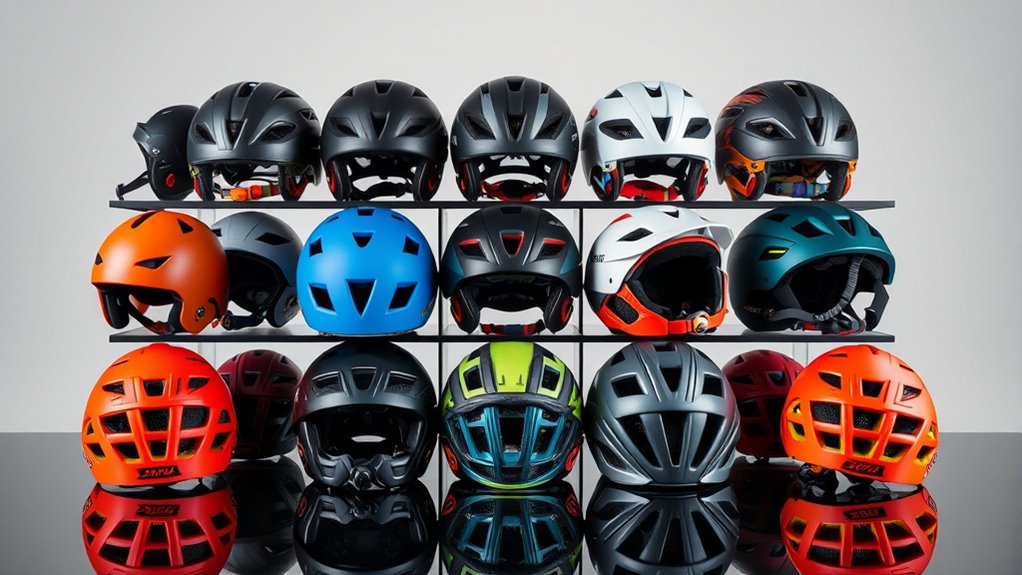

For a premium climbing helmet, my best overall pick is the Petzl Meteor for its balance of low weight, ventilation, and versatility. The Petzl Sirocco is the standout for climbers prioritizing minimal weight, while the Petzl BOREO suits buyers who value durable, broad-coverage protection across climbing and caving. The main tradeoffs are weight versus durability, ventilation versus coverage, and a precise climbing fit versus a more versatile work-style design. Fit and intended use matter as much as the name on the shell. Read on for the full breakdown of all 10 options and how I’d match them to different climbing needs.

Get audio and creator gear delivered free with Prime
- Fast, free delivery on millions of items
- Prime Video, Amazon Music and more included
- Member-only deals all year
Complete the kit


Key Takeaways
- The Petzl Meteor leads as an all-rounder: it balances light weight and ventilation without narrowing its appeal to only ultralight-focused climbers.
- The Sirocco prioritizes weight savings: that makes it a more specialized pick than the Meteor for buyers who want the lightest-feeling setup.
- The BOREO favors durability and broader coverage: it makes more sense for varied activities than for a climber focused chiefly on minimal pack weight.
- Premium choices are not all purpose-built the same way: the Mammut Wall Rider and Black Diamond Capitan offer different routes to a climbing-focused helmet, while the Half Dome emphasizes accessible adjustability and ventilation.
- Versatility has limits: the Tontron’s work-and-caving positioning differs from dedicated climbing models, so buyers should confirm its fit and use case before choosing it for regular rock climbing.
| Petzl Meteor Rock Climbing Helmet |  | Best for Lightweight Ventilation | Weight: 225 g (S/M); 240 g (M/L) | Size options: Small-Medium; Medium-Large | Outer material: Polycarbonate (PC) | VIEW ON AMAZON | See Our Full Breakdown |
| Land Helmets ClimbPro Helmet EN 12492 Vented for Rock Climbing |  | Best for Certified Versatility | Certification: EN 12492 | Shell material: Polypropylene | Core material: EPS foam | VIEW ON AMAZON | See Our Full Breakdown |
| Petzl Sirocco Climbing Helmet |  | Best for Ultralight-Focused Climbers | Shell material: EPP foam | Crown material: EPS foam-injected | Weight: Listed as lightweight; numeric weight not provided | VIEW ON AMAZON | See Our Full Breakdown |
| Mammut Wall Rider Climbing Helmet – Dark Jade 52-57cm |  | Best for a Secure, Adjustable Fit | Size: 52–57 cm | Weight: 15.2 ounces | Color: Dark Jade | VIEW ON AMAZON | See Our Full Breakdown |
| Black Diamond Capitan Rock Climbing Helmet – Adjustable Fit, Dual Foam |  | Best for Extended Side and Back Coverage | Weight: 325 g | Size: Medium/Large, 23–25 inches | Outer material: ABS | VIEW ON AMAZON | See Our Full Breakdown |
| Tontron Adult Hiking Climbing Caving Work Helmet |  | Best for Multi-Activity Use | Shell: High-impact ABS | Liner: High-density EPS | Certification: CE EN12492 | VIEW ON AMAZON | See Our Full Breakdown |
| Petzl BOREO Durable Helmet with Enhanced Protection for Climbing, Caving, Via Ferrata |  | Best for Extended Coverage | Shell: Hard ABS | Liner: EPP/EPS | Certifications: CE EN 12492, UKCA, UIAA | VIEW ON AMAZON | See Our Full Breakdown |
| Mammut Skywalker 3.0 Climbing Helmet Nebla |  | Best for Low-Profile Comfort | Model: Skywalker 3.0 | Outer material: ABS | Inner material: Expanded polystyrene; description also specifies EPP/EPS foam | VIEW ON AMAZON | See Our Full Breakdown |
| OutdoorMaster Rock Climbing Helmet, Lightweight Ventilated Adjustable |  | Best Lightweight Pick | Weight: 290 g | Size range: 20.86–24 inches | Materials: Polycarbonate and expanded polystyrene | VIEW ON AMAZON | See Our Full Breakdown |
| Black Diamond Half Dome Rock Climbing Helmet – Adjustable Fit, Ventilated |  | Best for Warm-Weather Versatility | Size: Medium/Large, 23–25 inches | Weight: 350 g | Outer material: Polycarbonate | VIEW ON AMAZON | See Our Full Breakdown |
| helmet climbing premium | Weight | Ventilation | Size | Outer material |
|---|---|---|---|---|
| Petzl Meteor Rock Climbing Hel | 225 g (S/M); 240 g (M/L) | Large ports | — | Polycarbonate (PC) |
| Land Helmets ClimbPro Helmet E | 400 g | 10 zones | One size, adjustable | — |
| Petzl Sirocco Climbing Helmet | Listed as lightweight; numeric weight not provided | — | Small-Medium | — |
| Mammut Wall Rider Climbing Hel | 15.2 ounces | — | 52–57 cm | Polycarbonate |
| Black Diamond Capitan Rock Cli | 325 g | — | Medium/Large, 23–25 inches | ABS |
| Tontron Adult Hiking Climbing | — | Side vent holes | — | — |
| Petzl BOREO Durable Helmet wit | 1.1 pounds | Large air-circulation holes | M/L, 53–61 cm | — |
| Mammut Skywalker 3.0 Climbing | 1.2 pounds | Nine fixed vents | One Size | ABS |
| OutdoorMaster Rock Climbing He | 290 g | Vented design | — | — |
| Black Diamond Half Dome Rock C | 350 g | Large ventilation ports | Medium/Large, 23–25 inches | Polycarbonate |
More Details on Our Top Picks
Petzl Meteor Rock Climbing Helmet
I’d choose the Petzl Meteor when low weight and airflow matter more than a hard-shell build. At 225 g in S/M, it is lighter than the Black Diamond Capitan at 325 g and the Land Helmets ClimbPro at 400 g, which can make long approaches and extended climbing sessions feel less encumbered. Its large ventilation ports, EPS liner, and polycarbonate shell suit warm-weather climbing, while extended TOP and SIDE coverage adds protection around the head. Headlamp clips and an adjustable band also support all-day use. The tradeoff is specialization: the Meteor is listed as a CE ski touring helmet but does not meet the EN 1077 alpine ski helmet standard. I’d pick it for climbing and touring, not for buyers who need that specific alpine-ski certification.
Pros:- Very low listed weight: 225 g in S/M and 240 g in M/L
- Large ventilation ports support airflow during strenuous climbs
- Extended TOP and SIDE protection covers the front, sides, and rear
- Headlamp clips and an adjustable band add practical versatility
Cons:- Does not meet the EN 1077 alpine ski helmet standard
- Lightweight construction may not suit buyers seeking a more substantial hard-shell feel
Best for: Climbers and ski tourers who prioritize low helmet weight, strong ventilation, and headlamp compatibility for long days outside.
Not ideal for: Buyers who need an EN 1077 alpine ski helmet or prefer the more substantial feel of the Black Diamond Capitan’s dual-density foam construction.
- Weight:225 g (S/M); 240 g (M/L)
- Size options:Small-Medium; Medium-Large
- Outer material:Polycarbonate (PC)
- Inner material:Expanded Polystyrene (EPS)
- Certification:CE ski touring helmet
- Ventilation:Large ports
- Headlamp clips:Two front clips and one rear elastic band
- Warranty:3 years
Our verdict“Choose the Meteor for lightweight, well-ventilated climbing and ski touring, but not when EN 1077 certification is required.”
Land Helmets ClimbPro Helmet EN 12492 Vented for Rock Climbing
The Land Helmets ClimbPro is the most clearly specified pick here for buyers who want an EN 12492-certified helmet that can also serve mountaineering, rescue, and industrial tasks. Its polypropylene shell, EPS core, adjustable fit, and accessory slots put versatility ahead of the ultralight focus of the Petzl Meteor. Ten ventilation zones help manage heat, though its 400 g listed weight is notably higher than the Meteor’s 225 g in S/M and the Black Diamond Capitan’s 325 g. The one-size adjustable format may suit shared-use settings, but it offers less sizing choice for people whose fit falls outside its range. I’d also factor in the lack of chin-strap padding and the single listed color. This is a practical multi-purpose choice, not the lightest option for dedicated climbing days.
Pros:- EN 12492 certification is specified for climbing and professional use
- Polypropylene outer shell and EPS foam core
- Ten ventilation zones help limit heat buildup
- Accessory slots support customization for different tasks
Cons:- At 400 g, it is heavier than the Meteor and Capitan
- One-size sizing may not provide a comfortable fit for every head
- No chin-strap padding is included, and only black is listed
Best for: Climbers, mountaineers, and work-at-height users who want EN 12492 certification, accessory slots, and one adjustable helmet for several activities.
Not ideal for: Weight-conscious climbers or buyers who need multiple size and color options; the Meteor is substantially lighter, while the ClimbPro is listed in one size and black only.
- Certification:EN 12492
- Shell material:Polypropylene
- Core material:EPS foam
- Weight:400 g
- Size:One size, adjustable
- Ventilation:10 zones
- Color:Black
- Dimensions:10 x 8.5 x 6 inches
Our verdict“Pick the ClimbPro for certified, multi-activity use and accessory flexibility, but choose a lighter model for weight-sensitive climbing.”
Petzl Sirocco Climbing Helmet
The Petzl Sirocco is the specialist choice in this group for climbers who want a lightweight, ventilated helmet with an adjustable fit and headlamp attachment. Its EPP foam shell with an EPS foam-injected crown differs from the Meteor’s polycarbonate-shell-and-EPS construction, so buyers are choosing between two distinct lightweight designs rather than simply a lighter and heavier version of the same build. The Petzl Meteor has a stated weight of 225 g in S/M, but no numeric weight is supplied for the Sirocco here, so I would not assume a direct weight advantage. The Sirocco’s standout tradeoff is limited choice: only S/M sizing and black are listed. Compared with the broader size options of the Meteor and the Capitan, that makes fit flexibility a weaker point. I’d favor it for buyers whose fit matches the listed size and who value ventilation and low-bulk comfort.
Pros:- EPP foam shell with an EPS foam-injected crown
- Ventilation is designed for comfort during extended activity
- Adjustable strap supports a more secure fit
- Headlamp attachment helps with early starts and low-light climbing
Cons:- Only Small-Medium sizing is listed
- Only black is listed as a color
- The supplied product data gives no numeric weight for direct comparison with the Meteor
Best for: Climbers and mountaineers seeking an EPP-and-EPS helmet with ventilation, an adjustable strap, and a headlamp attachment, provided S/M fits.
Not ideal for: Buyers needing a choice of sizes or colors, or those who want a clearly stated numeric weight before comparing it with the Meteor.
- Shell material:EPP foam
- Crown material:EPS foam-injected
- Weight:Listed as lightweight; numeric weight not provided
- Size:Small-Medium
- Color:Black
- Dimensions:11.42 x 8.27 x 6.3 inches
- Features:Ventilation, adjustable strap, headlamp attachment
- Warranty:3 years
Our verdict“Choose the Sirocco if its listed S/M fit works and you want a ventilated foam helmet with a headlamp attachment; skip it if sizing flexibility is a priority.”
Mammut Wall Rider Climbing Helmet – Dark Jade 52-57cm
The Mammut Wall Rider earns its place for climbers who want a lightweight hybrid design with a fit system that can be adjusted across the listed 52–57 cm range. Its multi-adjustment system and headlamp clips make it more customizable for an individual wearer than the Land Helmets ClimbPro’s one-size format, while large ventilation holes favor airflow over a more enclosed feel. At 15.2 ounces, it weighs more than the Petzl Meteor at 225 g in S/M, so I’d choose the Meteor for a weight-first approach. The Wall Rider’s hybrid EPP-core and hard-shell description gives it a different construction emphasis, but the supplied data also cautions that its impact protection is limited compared with full hard-shell helmets. Its Dark Jade color and distinctive design may not appeal to everyone. This is a fit-and-ventilation pick, not a maximum-coverage choice.
Pros:- Multi-adjustment system supports a more tailored fit within the 52–57 cm range
- Large ventilation holes promote airflow
- Headlamp clips are included
- Hybrid construction is designed to keep weight down
Cons:- At 15.2 ounces, it is heavier than the Meteor’s listed S/M weight
- Impact protection is described as limited compared with full hard-shell helmets
- Distinctive design may not suit buyers who prefer a traditional helmet look
Best for: Climbers whose head fits the 52–57 cm range and who want adjustable fit, ventilation, and headlamp clips in a lightweight hybrid helmet.
Not ideal for: Buyers seeking the lightest option or a full hard-shell style with greater impact protection; the Meteor weighs less, and the listed product data flags this limitation.
- Size:52–57 cm
- Weight:15.2 ounces
- Color:Dark Jade
- Construction:Hybrid design with EPP core and hard shell
- Outer material:Polycarbonate
- Inner material:Nylon
- Fit system:Multi-adjustment system
- Additional features:Ventilation and headlamp clips
Our verdict“Choose the Wall Rider for adjustable fit and airflow within its 52–57 cm range, but look elsewhere if minimum weight or full hard-shell coverage leads your priorities.”
Black Diamond Capitan Rock Climbing Helmet – Adjustable Fit, Dual Foam
The Black Diamond Capitan is the coverage-focused choice for climbers who prefer dual-density EPS foam and an adjustable rear dial over the lower weight of the Petzl Meteor. At 325 g, it sits between the Meteor’s 225 g in S/M and the Land Helmets ClimbPro at 400 g, making its extra mass a clear tradeoff rather than an incidental detail. Its extended side and back coverage, rear dial, ventilation ports, and headlamp clips support a secure, practical setup for varied climbing days. The Capitan is also the only option here with a stated Medium/Large range of 23–25 inches, but that is a limitation if you need a smaller size. I’d favor it when coverage and quick fit adjustment matter more than minimizing weight; buyers seeking the lightest feel should compare it with the Meteor instead.
Pros:- Dual-density EPS foam is paired with extended side and back coverage
- Rear dial enables quick fit adjustments
- Ventilation ports support airflow
- Integrated headlamp clips add hands-free lighting compatibility
Cons:- At 325 g, it is heavier than the Meteor
- Only Medium/Large sizing is listed
- The listed 23–25 inch range may not suit smaller head sizes
Best for: Medium/Large climbers who want dual-density foam, extended side and back coverage, and a rear dial for fit adjustment.
Not ideal for: Climbers who need a smaller size or want to minimize weight; the Meteor is lighter, and the Capitan is listed only in Medium/Large.
- Weight:325 g
- Size:Medium/Large, 23–25 inches
- Outer material:ABS
- Inner material:Expanded Polystyrene (EPS) foam
- Foam design:Dual-density EPS foam
- Color:Astral-Black
- Fit adjustment:Adjustable rear dial
- Additional features:Ventilation ports and integrated headlamp clips
Our verdict“Choose the Capitan if its Medium/Large fit suits you and you value extended coverage and a rear dial more than the Meteor’s lower weight.”
Tontron Adult Hiking Climbing Caving Work Helmet
The Tontron makes sense for climbers who want one hard-shell helmet for climbing, caving, and other outdoor work rather than a specialized lightweight option. Its ABS shell and high-density EPS liner are paired with CE EN12492 certification, while side vents and an adjustable rear closure cover the basics for fit and airflow. Compared with the Petzl BOREO, which specifies expanded coverage and multiple certifications, the Tontron’s appeal is its straightforward mix of activities and two listed size ranges. The tradeoff is a more basic feature set: the product information gives no padding details, and it does not specify weight. I’d favor it for versatility and fit range, but choose a more clearly detailed model if comfort refinements or documented extra coverage are priorities.
Pros:- High-impact ABS shell paired with a high-density EPS liner
- CE EN12492 certification is specified
- Two listed size ranges cover 49–60 cm heads
- Side vents and headlamp buckles support practical outdoor use
Cons:- No weight or padding details are provided for judging long-wear comfort
- Its feature set is comparatively basic beside the Petzl BOREO’s specified enhanced coverage and multiple certifications
Best for: Climbers and cavers who want a certified ABS helmet with listed sizing for both smaller and larger head ranges.
Not ideal for: Buyers prioritizing a low-profile or explicitly lightweight helmet, since weight and padding details are not provided.
- Shell:High-impact ABS
- Liner:High-density EPS
- Certification:CE EN12492
- Ventilation:Side vent holes
- Fit adjustment:Adjustable back closure
- Headlamp compatibility:Buckles suitable for universal headlamps
- Size ranges:Small: 49–55 cm; Large: 55–60 cm
Our verdict“Choose the Tontron for a straightforward, multi-activity ABS helmet with two size ranges, not for a low-weight or feature-rich design.”
Petzl BOREO Durable Helmet with Enhanced Protection for Climbing, Caving, Via Ferrata
The BOREO is the protection-led choice here: its hard ABS shell, EPP/EPS liner, and stated extended coverage suit climbers who want a rugged helmet for routes, caving, and via ferrata. It also lists CE EN 12492, UKCA, and UIAA certifications, plus large vents and four headlamp clips, giving it a more fully specified safety-and-use package than the simpler Tontron. That extra coverage comes with a meaningful tradeoff: at 1.1 pounds, it may feel heavier than a lighter in-mold option such as the OutdoorMaster Rock Climbing Helmet, listed at 290 g. The BOREO’s M/L fit covers 53–61 cm, so it is not the most flexible pick for smaller heads. I’d put it ahead of lighter designs when durability and coverage matter more than minimizing weight.
Pros:- Hard ABS shell with EPP/EPS liner construction
- CE EN 12492, UKCA, and UIAA certifications are listed
- Extended coverage and large ventilation holes suit varied outdoor use
- Four headlamp clips and a three-year warranty are specified
Cons:- Listed weight of 1.1 pounds may be a drawback on long climbs
- Only an M/L size range is provided
Best for: Climbers, cavers, and via ferrata users who prioritize rugged construction, extended coverage, and multiple listed certifications.
Not ideal for: Weight-conscious climbers or buyers outside the 53–61 cm M/L size range.
- Shell:Hard ABS
- Liner:EPP/EPS
- Certifications:CE EN 12492, UKCA, UIAA
- Ventilation:Large air-circulation holes
- Headlamp compatibility:Four clips
- Weight:1.1 pounds
- Size:M/L, 53–61 cm
- Warranty:Three years
Our verdict“Pick the BOREO when coverage and a rugged, broadly certified build matter more than a lighter feel or wider sizing.”
Mammut Skywalker 3.0 Climbing Helmet Nebla
The Skywalker 3.0 earns its place for climbers who want a low-profile shape without giving up a substantial shell-and-foam construction. Its hybrid ABS shell and EPP/EPS foam are designed to balance impact protection and weight, while the rear thumb dial offers more precise fit adjustment than the Tontron’s described back closure. Nine fixed vents and integrated headlamp clips make it a practical choice for warm climbs and routes that run into low light. Unlike the Black Diamond Half Dome, which lists a defined M/L range, Mammut gives this model as one size, so buyers have less sizing detail to check before choosing. The fixed vents also cannot be closed in cold or windy conditions. I’d choose it for a streamlined fit and airflow, not for adjustable ventilation or clearly specified sizing.
Pros:- Low-profile design is suited to tight climbing situations
- Hybrid ABS shell and EPP/EPS foam construction
- Nine vents and integrated headlamp clips are specified
- Rear thumb dial allows fit adjustment
Cons:- Fixed vents cannot be closed in cold or windy weather
- One Size is listed without a head-circumference range
- Listed weight is 1.2 pounds, which may not suit weight-focused climbers
Best for: Climbers who prefer a low-profile helmet with a rear thumb dial, fixed ventilation, and integrated headlamp clips.
Not ideal for: People who climb in cold or windy conditions and want closable vents, or buyers who need a clearly listed head-size range.
- Model:Skywalker 3.0
- Outer material:ABS
- Inner material:Expanded polystyrene; description also specifies EPP/EPS foam
- Size:One Size
- Weight:1.2 pounds
- Ventilation:Nine fixed vents
- Fit adjustment:Rear thumb dial
- Headlamp compatibility:Integrated attachment clips
Our verdict“Choose the Skywalker 3.0 for a low-profile, well-ventilated fit, provided its one-size listing works for your head.”
OutdoorMaster Rock Climbing Helmet, Lightweight Ventilated Adjustable
At a listed 290 g, the OutdoorMaster is the lightest clearly quantified option in this batch, making it a sensible pick for climbers who want to keep helmet weight down on longer outings. Its PC+EPS in-mold construction, adjustable fit, ventilation, and headlamp clips cover everyday climbing needs, while the specified EN 12492:2012 certification adds a clear standard to compare against. The tradeoff is a narrower stated fit range of 20.86–24 inches and a less protective-looking feature brief than the Petzl BOREO, which explicitly describes extended coverage and a hard ABS shell. That does not establish a performance gap, but it does make the BOREO the better-documented choice for buyers focused on coverage. I’d favor the OutdoorMaster when low weight and simple adjustment lead the decision.
Pros:- Listed weight of 290 g is low among the products with stated weights
- PC+EPS in-mold construction
- One-hand adjustable fit system is specified
- EN 12492:2012 certification and headlamp clips are listed
Cons:- Stated fit range may exclude very small or large heads
- Product details do not describe extended coverage or advanced impact features
- Ventilation is listed, but vent count or design details are not provided
Best for: Climbers seeking a lightweight, adjustable helmet with headlamp clips for extended sessions and general outdoor use.
Not ideal for: Buyers with heads outside the 20.86–24-inch range or those seeking explicitly described extended coverage.
- Weight:290 g
- Size range:20.86–24 inches
- Materials:Polycarbonate and expanded polystyrene
- Construction:PC+EPS in-mold
- Certification:EN 12492:2012
- Fit adjustment:One-hand adjustable system
- Ventilation:Vented design
- Headlamp compatibility:Integrated clips
Our verdict“Choose the OutdoorMaster if a low listed weight and straightforward adjustability matter more than detailed coverage features.”
Black Diamond Half Dome Rock Climbing Helmet – Adjustable Fit, Ventilated
The Half Dome is a straightforward choice for climbers who want a ventilated polycarbonate-and-EPS helmet with a defined fit range and practical headlamp clips. Its M/L sizing covers 23–25 inches, and the adjustable low-profile suspension is useful for getting a secure fit without relying on a one-size label. Compared with the Mammut Skywalker 3.0, which lists nine vents and a low-profile design, Black Diamond gives less detail about vent count but offers a clear size range and a 350 g listed weight. The main limitation is sizing: only M/L is provided, so this is a poor match for smaller heads. It also weighs more than the OutdoorMaster’s listed 290 g. I’d choose it for a familiar, adjustable setup on warm climbs, not when minimum weight or broader size choice is the priority.
Pros:- Polycarbonate shell and EPS foam liner
- Adjustable low-profile suspension and chin strap
- Large ventilation ports and integrated headlamp clips
- Defined M/L fit range of 23–25 inches
Cons:- Only an M/L size range is listed
- At 350 g, it is heavier than the OutdoorMaster’s stated 290 g
- Ventilation details are less specific than the Mammut Skywalker 3.0’s nine-vent listing
Best for: Climbers with 23–25-inch heads seeking an adjustable, ventilated helmet with headlamp clips for warm-weather routes.
Not ideal for: Climbers with smaller heads or weight-focused buyers who prefer a lighter listed option such as the OutdoorMaster.
- Size:Medium/Large, 23–25 inches
- Weight:350 g
- Outer material:Polycarbonate
- Inner material:Expanded polystyrene foam
- Dimensions:11 x 9 x 6 inches
- Fit system:Adjustable low-profile suspension
- Ventilation:Large ventilation ports
- Headlamp compatibility:Integrated clips
Our verdict“Pick the Half Dome if its 23–25-inch range fits and you want an adjustable, ventilated helmet rather than the lightest option.”

How We Picked
I compared these helmets by the factors that affect real climbing decisions: fit and adjustment, ventilation, weight priorities, construction and stated protection features, and usefulness across different activities. A helmet that looks premium on a feature list is not automatically the right choice; its shape, retention system, and coverage need to suit the wearer and the climbing environment.
The ranking favors well-rounded climbing use first, then gives distinct credit to models with a clear specialty, such as low weight, durability, or broader activity coverage. The Meteor takes the overall spot for its balanced profile; the Sirocco ranks as a more weight-focused alternative, while the BOREO earns a place for buyers who put durability and versatility ahead of minimum weight. The remaining models offer useful alternatives, but their best fit depends more strongly on preference, activity, or intended use. I treat product names and feature claims as starting points, not substitutes for checking certification, sizing, and fit.
| helmet climbing premium | Outer material | Inner material | Headlamp compatibility |
|---|---|---|---|
| Petzl Meteor Rock Climbing Hel | Polycarbonate (PC) | Expanded Polystyrene (EPS) | — |
| Land Helmets ClimbPro Helmet E | — | — | — |
| Petzl Sirocco Climbing Helmet | — | — | — |
| Mammut Wall Rider Climbing Hel | Polycarbonate | Nylon | — |
| Black Diamond Capitan Rock Cli | ABS | Expanded Polystyrene (EPS) foam | — |
| Tontron Adult Hiking Climbing | — | — | Buckles suitable for universal headlamps |
| Petzl BOREO Durable Helmet wit | — | — | Four clips |
| Mammut Skywalker 3.0 Climbing | ABS | Expanded polystyrene; description also specifies EPP/EPS foam | Integrated attachment clips |
| OutdoorMaster Rock Climbing He | — | — | Integrated clips |
| Black Diamond Half Dome Rock C | Polycarbonate | Expanded polystyrene foam | Integrated clips |
Factors to Consider When Choosing Helmet Climbing Premium
Choosing a premium climbing helmet is less about collecting features and more about matching the helmet to your climbing. I’d start with fit and use, then weigh protection style, ventilation, and weight against how often you’ll wear it.
Fit Is More Important Than a Model’s Reputation
A helmet only helps if it sits securely and comfortably on your head, so start by checking the manufacturer’s size range against your measurement. Try it with the headwear you commonly climb in, and confirm the adjustment system can hold the helmet level without pinching. A loose fit can shift during movement, while an overly tight fit can make you leave the helmet behind on long days. Hair volume, head shape, and the placement of straps can change how the same size feels. Avoid choosing by a friend’s fit or a familiar brand alone. If possible, test the fit before committing, especially when comparing models with different shell shapes.
Match the Protection Style to Your Climbing
Climbing helmets use different construction approaches, and a low-weight design may not provide the same feel or coverage as a more robust all-round model. Think about whether your main concern is falling rock, impacts during a fall, or frequent contact with walls and equipment. Crag climbing, alpine routes, via ferrata, and caving can place different demands on coverage and durability. Read the specific manufacturer’s protection description and certification rather than assuming that a product marketed for several activities covers every risk equally. A helmet intended for work or hiking should not be treated as interchangeable with a climbing helmet just because its name includes climbing. Choose for your actual activity, and check that the model meets the requirements for it.
Decide How Much Weight Savings Matter
Weight becomes more noticeable on long approaches, multi-pitch routes, and alpine days when every item stays on your head or in your pack for hours. That can make a lightweight model like the Sirocco appealing, but the lightest option is not automatically the best purchase for every climber. If most of your climbing is short crag sessions, you may prefer a helmet whose fit, coverage, or durability suits you better. Compare the complete setup rather than focusing on a single advertised number: adjustment hardware and how the helmet carries can affect its practical feel. Ask how often you will benefit from lower weight, then decide whether that priority justifies giving up other qualities you value.
Balance Ventilation With Coverage
Ventilation can make a helmet more comfortable on hot approaches and strenuous routes, but large openings may not suit every buyer’s preferred protection style or climate. If you climb in cold or windy conditions, consider how much time you spend exposed and whether you routinely wear a hat beneath the helmet. A well-ventilated helmet can still feel uncomfortable if its suspension or shell shape does not suit your head. Conversely, a more enclosed design may be a better match for some activities even if it feels warmer. Compare airflow alongside coverage and fit instead of treating vent count as a quality score. Comfort across the conditions you actually face is the useful measure.
Look at Adjustability and Compatibility
Adjustment systems vary in how easily they accommodate different head shapes, hair, and thin headwear. Check whether the fit mechanism is simple to use with cold hands and whether the chin strap stays secure without irritating your skin. If you plan to attach a headlamp, verify that the helmet has suitable attachment points and that the lamp sits securely. Do not assume every accessory will fit every shell. A helmet that adjusts quickly can be especially useful when several people share gear, while a simple system may suit a dedicated personal helmet. Treat accessory compatibility as a practical check, not a bonus you can safely infer from the brand.
Know When to Pay for a Specialty
A premium price is easiest to justify when a specific feature solves a recurring problem, such as carrying less weight on long routes or choosing a more durable helmet for frequent use across activities. If you climb occasionally at a single crag, a straightforward adjustable model may cover your needs without paying for a specialty you rarely use. Consider how often the helmet will be exposed to abrasion, packed tightly, or used on trips beyond rock climbing. Also check the care and replacement guidance from the manufacturer; helmets are protective equipment, not lifelong accessories. Spend more for a clear match to your habits, not for a feature list that does not change your day on the wall.
Frequently Asked Questions
Should I choose the Petzl Meteor or the Sirocco for regular climbing?
I’d choose the Meteor if you want a balanced helmet for a mix of climbing days, and the Sirocco if minimizing weight is your main priority. Their appeal differs more by use than by a simple good-versus-better distinction. Consider how much you notice helmet weight on your typical routes and whether you value an all-round profile more. Fit should decide the close call: a lighter helmet that sits poorly is a worse choice. Check the size range and adjustment before buying either model.
Is a more durable helmet a better choice for a beginner?
Durability can be helpful for a beginner who expects frequent use, shared gear, or rough handling, but it should not outweigh fit and correct use. A beginner should be able to adjust the helmet securely and wear it comfortably for a full session. The Petzl BOREO’s durable, broad-use positioning may appeal to someone who wants one helmet for several activities, while a lighter model may suit a climber focused on long routes. Check that the helmet is certified for the intended activity. No construction style compensates for a poor fit or damage.
Can I use a hiking or work-style helmet for rock climbing?
Do not assume that a helmet marketed for hiking, work, or multiple activities is suitable for climbing. Check the exact model’s certification and the manufacturer’s stated uses, then compare those with the activity you plan to do. The Tontron is presented for several uses, which makes verification especially relevant rather than automatic. A product title alone does not establish that it meets climbing requirements. If the documentation is unclear, choose a model explicitly intended and certified for climbing.
How should I choose between ventilation and more coverage?
Start with the conditions and hazards you encounter most often. Ventilation may matter more for hot approaches and strenuous climbing, while coverage and a more protective-feeling design may suit buyers who climb in varied environments or use the helmet across activities. These features are not a simple trade where more of one always means less of the other, so check the actual construction and manufacturer guidance for each model. Try the helmet on with any hat or headwear you regularly use. Comfort and a stable fit are more useful than choosing by vent count alone.
When should I replace a climbing helmet?
Follow the manufacturer’s care, inspection, and retirement guidance for the specific model. Replace a helmet after a significant impact if the manufacturer directs it, and retire it if you find cracks, deformation, damaged straps, or other signs of compromise. A helmet can also age through exposure, storage, and repeated use, even when visible damage is not obvious. Avoid buying used protective gear if you cannot verify its impact and storage history. Record the purchase date and inspect the helmet regularly so its condition does not become guesswork.
Conclusion
For most climbers seeking one premium helmet, I’d start with the Petzl Meteor as best overall for its balanced profile. Choose the Petzl Sirocco as best premium weight-focused pick if low weight matters most on long or demanding routes, and the Petzl BOREO as best for durability and broader use when climbing is only part of your activity mix. For a first dedicated climbing helmet, the Black Diamond Half Dome is my beginner-friendly pick thanks to its adjustable, ventilated positioning; the OutdoorMaster is a value-oriented alternative for buyers drawn to a lightweight, adjustable design. Climbers considering the Tontron for work or caving alongside climbing should verify its certification and intended use before choosing it. Whichever model you favor, let a secure, comfortable fit make the final call.