A mesh system for a multi-story VR home needs to do more than cover every room: it should keep latency and connection drops in check as a headset or PC moves between floors. My best overall pick is the TP-Link Deco X55 AX3000 3-Pack, which offers a practical balance of multiple nodes, Wi-Fi 6, and placement flexibility. For high-demand homes with newer devices, the Deco 7 Pro BE14000 stands out for its tri-band Wi-Fi 7 design, while the DBIT AC1200 2-Pack is a simpler, lower-spec option for less demanding setups. The main tradeoff is between newer wireless capacity and the node count or wired connections needed to serve several floors reliably. Read on for the full comparison and help matching the system to your home layout, VR setup, and budget.

Get audio and creator gear delivered free with Prime
- Fast, free delivery on millions of items
- Prime Video, Amazon Music and more included
- Member-only deals all year
Complete the kit


Key Takeaways
Node count matters as much as Wi-Fi generation. The X55 3-Pack ranks ahead of its 2-Pack and 1-Pack versions for multi-floor flexibility, even though all three share the same Wi-Fi 6 family.
Wi-Fi 7 is not a substitute for good placement. The Deco 7 Pro BE14000 offers a stronger feature set for newer, busy networks, but a node placed poorly across thick floors can still limit the connection.
Tri-band models suit demanding wireless backhaul better than basic dual-band choices. They can dedicate more radio capacity to mesh traffic, while dual-band options such as the BE25 or DBIT AC1200 may fit lighter workloads or wired-node homes.
More advanced specifications do not automatically make a system the best fit. The Deco XE75 Pro 3-Pack has Wi-Fi 6E capability but is renewed, so buyers should weigh that condition against newer Wi-Fi 7 alternatives.
Legacy and entry-level systems call for realistic expectations. The Deco S4 and renewed Linksys Velop AC1300 can suit basic coverage needs, but they are less compelling choices for a busy VR household than newer Wi-Fi 6 or Wi-Fi 7 systems.
| TP-Link Deco X55 AX3000 WiFi 6 Mesh System (2-Pack) |  | Best Overall for Multi-Story VR Homes | Wi-Fi standard: Wi-Fi 6 (802.11ax) | Coverage: Up to 4,500 sq. ft. | Units: 2 | VIEW ON AMAZON | See Our Full Breakdown |
| DBIT AC1200 Whole Home Mesh WiFi System, 2-Pack |  | Best Value for Wired Backhaul | Wi-Fi generation: Wi-Fi 5 | Listed speed: 1,200 Mbps | Coverage: Up to 4,000 sq. ft. | VIEW ON AMAZON | See Our Full Breakdown |
| Deco 7 Pro BE14000 Tri-Band Wi-Fi 7 Whole Home Mesh System |  | Best Premium Wireless Performance | Wi-Fi generation: Wi-Fi 7 | Total bandwidth: 14 Gbps | Coverage: 3,100 sq. ft. | VIEW ON AMAZON | See Our Full Breakdown |
| TP-Link Deco AXE5400 Tri-Band WiFi 6E Mesh System (Deco XE75 Pro) – 3-Pack (Renewed) | 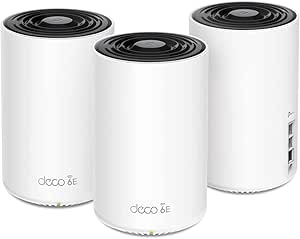 | Best for Large, Multi-Floor Coverage | Model: Deco XE75 Pro | Condition: Renewed | Wi-Fi generation: Wi-Fi 6E | VIEW ON AMAZON | See Our Full Breakdown |
| TP-Link Deco S4 2-Pack Whole Home Mesh WiFi System |  | Best Entry-Level Family Mesh | Wi-Fi generation: Wi-Fi 5 | Wi-Fi speed class: AC1900 | Coverage: Up to 3,800 sq. ft. | VIEW ON AMAZON | See Our Full Breakdown |
| Deco 7 BE25 Dual-Band WiFi 7 Mesh System, 5 Gbps |  | Best Value Wi-Fi 7 Pick | Wi-Fi standard: Wi-Fi 7 (802.11be), with 802.11ax/ac/g/n support | Frequency bands: Dual-band: 2.4 GHz and 5 GHz | Maximum speed: 5 Gbps | VIEW ON AMAZON | See Our Full Breakdown |
| TP-Link Deco 7 Pro BE14000 Tri-Band Wi-Fi 7 Whole Home Mesh System |  | Best for High-Capacity VR Homes | Wi-Fi generation: Wi-Fi 7 | Bands: Tri-band | Total bandwidth: Up to 14 Gbps | VIEW ON AMAZON | See Our Full Breakdown |
| Deco 7 Pro Tri-Band WiFi 7 BE10000 Whole Home Mesh System 6-Stream 10 Gbps |  | Best for the Largest Homes | Wi-Fi standard: Wi-Fi 7 | Bands: Tri-band, 6-stream | Maximum speed: Up to 10 Gbps | VIEW ON AMAZON | See Our Full Breakdown |
| NETGEAR Orbi 370 Series WiFi 7 Mesh System, 3 Pack |  | Best Three-Unit Wi-Fi 7 Kit | Wi-Fi technology: Wi-Fi 7 | Maximum speed: Up to 5 Gbps | Coverage: Up to 6,000 sq. ft. | VIEW ON AMAZON | See Our Full Breakdown |
| TP-Link Deco X55 AX3000 WiFi 6 Mesh System (3-Pack) |  | Best Wi-Fi 6 Value for Wired VR | Wi-Fi standard: Wi-Fi 6 (802.11ax) | Bands: Dual-band: 2.4 GHz and 5 GHz | Maximum data transfer rate: 3,000 Mbps | VIEW ON AMAZON | See Our Full Breakdown |
| Deco 7 Dual-Band BE5000 WiFi 7 Mesh System, 4-Stream, 5 Gbps |  | Best Overall for Multi-Story VR Homes | Wi-Fi standard: Wi-Fi 7 (802.11.be) | Frequency bands: Dual-band | Maximum speed: 5 Gbps | VIEW ON AMAZON | See Our Full Breakdown |
| Deco 7 Pro Tri-Band Wi-Fi 7 Mesh System, 10Gbps Internet, 3 Pack |  | Best for Large, Device-Dense Homes | Wi-Fi technology: Wi-Fi 7 | Bands: Tri-band | Total bandwidth: 14 Gbps | VIEW ON AMAZON | See Our Full Breakdown |
| TP-Link Deco 7 Pro BE63 Tri-Band WiFi 7 Whole Home Mesh System |  | Best for Wired VR Backhaul | Wi-Fi standards: Wi-Fi 7 (802.11.be), 802.11ac, 802.11ax, 802.11g | Bands: Tri-band | Maximum Wi-Fi speed: Up to 10 Gbps | VIEW ON AMAZON | See Our Full Breakdown |
| TP-Link Deco X55 AX3000 WiFi 6 Mesh System (1-Pack) | 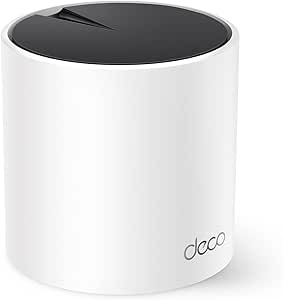 | Best Starter Node for Incremental Coverage | Wi-Fi standard: Wi-Fi 6 (802.11ax) | Frequency bands: Dual-band, 2.4 GHz and 5 GHz | Maximum data rate: 3,000 Mbps | VIEW ON AMAZON | See Our Full Breakdown |
| Linksys Velop Mesh WiFi System (Renewed) – White, Dual-Band AC1300 |  | Best for Small Homes on a Legacy Budget | Model: WHW0101-RM2 | Wi-Fi generation: Wi-Fi 5 | Frequency bands: Dual-band | VIEW ON AMAZON | See Our Full Breakdown |
| mesh system for multi story vr home | Coverage | Security | Frequency bands | Ports |
|---|---|---|---|---|
| TP-Link Deco X55 AX3000 WiFi 6 | Up to 4,500 sq. ft. | WPA3, WPA2, WPA | Dual-band | — |
| DBIT AC1200 Whole Home Mesh Wi | Up to 4,000 sq. ft. | WPA3-SAE | Dual-band | — |
| Deco 7 Pro BE14000 Tri-Band Wi | 3,100 sq. ft. | — | Tri-band | 1 x 10 Gbps WAN, 1 x 2.5 Gbps WAN/LAN, 1 x USB 3.0 |
| TP-Link Deco AXE5400 Tri-Band | Up to 7,200 sq. ft. | TP-Link HomeShield | Tri-band: 2.4 GHz, 5 GHz, 6 GHz | — |
| TP-Link Deco S4 2-Pack Whole H | Up to 3,800 sq. ft. | WPA2-PSK | Dual-band | — |
| Deco 7 BE25 Dual-Band WiFi 7 M | Up to 4,600 sq. ft. | WPA3, WPA2, WPA | Dual-band: 2.4 GHz and 5 GHz | 2 ports, each up to 2.5 Gbps |
| TP-Link Deco 7 Pro BE14000 Tri | Up to 6,000 sq. ft. | WPA-PSK, WPA2-PSK, WPA3 | — | 4 ports: 10 Gbps, 2.5 Gbps, and 1 Gbps speeds |
| Deco 7 Pro Tri-Band WiFi 7 BE1 | Up to 7,600 sq. ft. | — | — | — |
| NETGEAR Orbi 370 Series WiFi 7 | Up to 6,000 sq. ft. | — | — | — |
| TP-Link Deco X55 AX3000 WiFi 6 | Up to 6,500 sq. ft. | WPA3, WPA2, WPA | — | — |
| Deco 7 Dual-Band BE5000 WiFi 7 | Up to 6,600 sq. ft. | WPA3, WPA2, WPA-Personal | Dual-band | 2 |
| Deco 7 Pro Tri-Band Wi-Fi 7 Me | Up to 8,100 sq. ft. | TP-Link HomeShield | — | 1x 10 Gbps WAN, 1x 2.5 Gbps WAN/LAN, 1x USB 3.0 |
| TP-Link Deco 7 Pro BE63 Tri-Ba | Up to 5,800 sq. ft. | — | — | Four 2.5G WAN/LAN ports, USB 3.0 |
| TP-Link Deco X55 AX3000 WiFi 6 | Up to 2,500 sq. ft. | WPA, WPA2, WPA3 | Dual-band, 2.4 GHz and 5 GHz | 3 Gigabit Ethernet |
| Linksys Velop Mesh WiFi System | Up to 1,500 sq. ft. | — | Dual-band | 1 |
More Details on Our Top Picks
TP-Link Deco X55 AX3000 WiFi 6 Mesh System (2-Pack)
For a multi-story VR home, I rank the Deco X55 first because its two nodes cover a stated 4,500 sq. ft., and the system supports Ethernet backhaul if you can wire between floors. That wired option can help keep a headset’s connection steadier when the nodes are separated by floors and walls. Wi-Fi 6 and support for up to 150 devices also make it a more capable shared network than the Wi-Fi 5 DBIT AC1200 or Deco S4. Its six Gigabit Ethernet ports give consoles and stationary PCs useful wired alternatives. The tradeoff is dual-band Wi-Fi: it lacks the extra band found on the Deco XE75 Pro, and the two-pack may not place as easily across a complicated home as a three-node kit. I’d choose it for balanced coverage and practical wired options, not maximum wireless throughput.
Pros:- Stated coverage of up to 4,500 sq. ft. from a two-unit system
- Wi-Fi 6 and support for up to 150 devices
- Ethernet backhaul support can help connect nodes across floors
- Six Gigabit Ethernet ports provide wired connection options
Cons:- Dual-band design has fewer bands than the tri-band Deco XE75 Pro
- Two units may be harder to position for coverage in homes with multiple separated floors
- Requires a separate modem for most internet service
Best for: Households with a VR play area on one floor and a wired route between floors, plus several other connected devices.
Not ideal for: Homes that need three or more strategically placed nodes or want a dedicated 6 GHz band for compatible devices.
- Wi-Fi standard:Wi-Fi 6 (802.11ax)
- Coverage:Up to 4,500 sq. ft.
- Units:2
- Frequency bands:Dual-band
- Maximum data transfer rate:4,804 Mbps
- Ethernet ports:6 total; 3 per unit
- Ethernet backhaul:Supported
- Supported devices:Up to 150
- Security:WPA3, WPA2, WPA
Our verdict“Choose the Deco X55 if you want a capable Wi-Fi 6 mesh with broad stated coverage and the option to wire nodes between floors.”
DBIT AC1200 Whole Home Mesh WiFi System, 2-Pack
The DBIT AC1200 earns a place for buyers who care more about placing wired access points on different floors than about the newest wireless standard. Each unit has four Gigabit Ethernet ports, giving this two-pack a total of eight ports for a wired PC, console, or node connection. That can suit a VR setup with Ethernet already available between floors, though the product data does not specify Ethernet backhaul support, so I would confirm that function before buying. Its stated coverage is up to 4,000 sq. ft., but Wi-Fi 5 and a listed 1,200 Mbps speed put it behind the Wi-Fi 6 Deco X55 for newer, busy device mixes. Compared with the Deco S4, it offers more ports and WPA3 security; its main compromise is older wireless technology, not a shortage of wired sockets.
Pros:- Four Gigabit Ethernet ports on each unit
- Stated coverage of up to 4,000 sq. ft.
- WPA3-SAE security
- App and push-button control options
Cons:- Wi-Fi 5 is an older generation than the Deco X55’s Wi-Fi 6
- Listed 1,200 Mbps speed is lower than the faster systems in this group
- Ethernet backhaul support is not specified in the supplied product data
Best for: VR households with Ethernet cabling between floors that want several wired ports at each mesh unit and do not need Wi-Fi 6.
Not ideal for: Buyers relying on a wireless connection between floors for demanding VR use or seeking Wi-Fi 6 or Wi-Fi 7.
- Wi-Fi generation:Wi-Fi 5
- Listed speed:1,200 Mbps
- Coverage:Up to 4,000 sq. ft.
- Units:2
- Frequency bands:Dual-band
- Ethernet ports:8 total; 4 per unit
- Supported devices:Over 90
- Security:WPA3-SAE
Our verdict“Pick the DBIT AC1200 when abundant Ethernet ports and existing wired floor links matter more than newer Wi-Fi features.”
Deco 7 Pro BE14000 Tri-Band Wi-Fi 7 Whole Home Mesh System
When a VR home has fast internet, newer client devices, and heavy traffic across several floors, the Deco 7 Pro BE14000 brings the strongest stated wireless hardware in this group. Its tri-band Wi-Fi 7 design includes a 6 GHz band and up to 14 Gbps total bandwidth, while support for over 200 devices leaves more room for a busy connected home than the Deco X55. A 10 Gbps WAN port and 2.5 Gbps WAN/LAN port also suit multi-gig internet or fast wired equipment. But its listed coverage is only 3,100 sq. ft., below the two-pack X55 and far below the three-unit Deco XE75 Pro. That makes placement and home layout especially important; premium radios cannot compensate for a node that cannot reach the next floor well. I’d favor it for performance headroom, not the broadest stated coverage.
Pros:- Tri-band Wi-Fi 7 with a dedicated 6 GHz band
- Up to 14 Gbps total bandwidth listed
- 10 Gbps WAN and 2.5 Gbps WAN/LAN ports
- Supports over 200 devices
Cons:- Listed coverage of 3,100 sq. ft. is lower than the Deco X55 and Deco XE75 Pro
- Advanced hardware may be unnecessary for homes with Wi-Fi 5 or Wi-Fi 6 devices and standard-speed internet
- Setup may be challenging for less technical buyers
Best for: Owners of Wi-Fi 7-capable VR and gaming equipment with multi-gig internet and a compact or carefully planned multi-story layout.
Not ideal for: Large homes needing broad coverage from a small number of nodes, or households whose devices cannot use newer Wi-Fi features.
- Wi-Fi generation:Wi-Fi 7
- Total bandwidth:14 Gbps
- Coverage:3,100 sq. ft.
- Frequency bands:Tri-band
- Maximum 6 GHz band speed:8,647 Mbps
- Maximum 5 GHz band speed:4,324 Mbps
- Maximum 2.4 GHz band speed:688 Mbps
- Ports:1 x 10 Gbps WAN, 1 x 2.5 Gbps WAN/LAN, 1 x USB 3.0
- Supported devices:Over 200
Our verdict“Choose this premium Wi-Fi 7 system for multi-gig headroom and compatible devices, provided its stated coverage fits your floor plan.”
TP-Link Deco AXE5400 Tri-Band WiFi 6E Mesh System (Deco XE75 Pro) – 3-Pack (Renewed)
The Deco XE75 Pro three-pack is my coverage-first pick for a multi-story VR home: its stated 7,200 sq. ft. coverage and three units give you more placement flexibility than the two-node Deco X55. Its tri-band Wi-Fi 6E design adds a 6 GHz band, which can give compatible devices a less crowded connection, while the 2.5 Gbps port supports a faster internet connection or wired device. Compared with the Wi-Fi 7 Deco 7 Pro BE14000, it has an older wireless generation, but the extra node and higher stated coverage better match a sprawling floor plan. The key caveat is its renewed condition, which may not suit buyers who want a new unit. Also, 6 GHz signals can be more affected by walls and floors, so node placement still matters; the band is not a substitute for a wired link between levels.
Pros:- Three units offer more placement flexibility than two-node systems
- Stated coverage of up to 7,200 sq. ft.
- Tri-band Wi-Fi 6E includes a 6 GHz band
- 2.5 Gbps WAN/LAN port supports multi-gig connectivity
Cons:- Renewed condition may not fit buyers seeking a new system
- Wi-Fi 6E is an older generation than the Wi-Fi 7 Deco 7 Pro
- 6 GHz coverage can be limited by walls and floors
Best for: Owners of large, multi-level homes who want three mesh units, Wi-Fi 6E, and a multi-gigabit port for a compatible connection.
Not ideal for: Buyers who require a new system, need Wi-Fi 7, or expect 6 GHz to pass easily through several floors and walls.
- Model:Deco XE75 Pro
- Condition:Renewed
- Wi-Fi generation:Wi-Fi 6E
- Frequency bands:Tri-band: 2.4 GHz, 5 GHz, 6 GHz
- Coverage:Up to 7,200 sq. ft.
- Units:3
- Maximum speed:5,400 Mbps
- Ports per unit:1 x 2.5G WAN/LAN, 2 x 1G LAN
- Security:TP-Link HomeShield
Our verdict“Choose the renewed XE75 Pro three-pack when broad stated coverage and flexible node placement matter more than having Wi-Fi 7.”
TP-Link Deco S4 2-Pack Whole Home Mesh WiFi System
The Deco S4 is the straightforward choice for a smaller multi-story home where basic whole-home roaming and parental controls matter more than newer wireless capabilities. Its two units cover a stated 3,800 sq. ft., and Ethernet backhaul support gives owners a way to wire nodes if a floor-to-floor connection is available. That is a meaningful advantage over assuming a wireless link will perform equally well through walls. Still, its Wi-Fi 5 standard and WPA2-PSK security make it less future-facing than the Wi-Fi 6 Deco X55 or Wi-Fi 6E Deco XE75 Pro. Two Ethernet ports per unit are useful, but fewer than the DBIT AC1200’s four per unit. I’d choose the S4 for simple, modest household needs—not as the first pick for a demanding VR setup with many active devices.
Pros:- Stated coverage of up to 3,800 sq. ft.
- Supports Ethernet backhaul
- Two Ethernet ports per unit for wired devices
- Parental controls and single-network roaming
Cons:- Wi-Fi 5 is older than the Deco X55’s Wi-Fi 6
- WPA2-PSK security is less current than WPA3 options in this group
- Two ports per unit are fewer than the DBIT AC1200 provides
Best for: Families with a modestly sized multi-level home, basic Wi-Fi needs, and an interest in parental controls or wired node connections.
Not ideal for: VR households seeking Wi-Fi 6 or newer, WPA3 security, or more Ethernet ports for wired equipment.
- Wi-Fi generation:Wi-Fi 5
- Wi-Fi speed class:AC1900
- Coverage:Up to 3,800 sq. ft.
- Units:2
- Frequency bands:Dual-band
- Ethernet ports:2 per unit
- Ethernet backhaul:Supported
- Security:WPA2-PSK
- Maximum upstream data rate:950 Mbps
Our verdict“Choose the Deco S4 for basic mesh coverage and family controls, but move to the Deco X55 for a more capable VR-centered network.”
Deco 7 BE25 Dual-Band WiFi 7 Mesh System, 5 Gbps
For a multi-story VR home, I’d choose the Deco BE25 when broad coverage and Wi-Fi 7 matter more than a dedicated third band. Its stated coverage of up to 4,600 sq. ft. and support for over 150 devices suit a busy home, while Multi-Link Operation can help compatible devices maintain a steadier connection. Compared with the tri-band Deco 7 Pro BE10000, this dual-band model has less bandwidth headroom for a heavily loaded network, but its 2.5 Gbps ports offer a practical wired option for a VR PC or a strategically placed node. The Deco app is aimed at straightforward setup; still, placement between floors has a major effect on wireless backhaul, and the system requires a separate modem. I’d skip it if your layout needs the greatest possible coverage or you want tri-band mesh.
Pros:- Wi-Fi 7 and Multi-Link Operation support compatible devices seeking a more stable connection.
- Listed coverage reaches up to 4,600 sq. ft. and capacity exceeds 150 devices.
- Two 2.5 Gbps ports provide faster wired connections than basic Gigabit ports.
- Deco app setup and management are designed to be straightforward.
Cons:- Dual-band design has less capacity headroom than the tri-band Deco 7 Pro models.
- Wireless backhaul between floors can limit real-world performance, making node placement important.
- Requires a separate modem for internet service.
Best for: Households seeking Wi-Fi 7 for VR, streaming, and many connected devices across a moderately large, multi-story home, especially if they can use Ethernet for a key gaming device or node.
Not ideal for: Owners of very large or unusually challenging multi-story homes who need the listed coverage of the Deco 7 Pro BE10000, or buyers who want tri-band mesh for more wireless capacity.
- Wi-Fi standard:Wi-Fi 7 (802.11be), with 802.11ax/ac/g/n support
- Frequency bands:Dual-band: 2.4 GHz and 5 GHz
- Maximum speed:5 Gbps
- Coverage:Up to 4,600 sq. ft.
- Device capacity:Over 150 devices
- Ports:2 ports, each up to 2.5 Gbps
- Security:WPA3, WPA2, WPA
Our verdict“Choose the BE25 for a more approachable Wi-Fi 7 mesh with useful multi-gig wiring, but pick a tri-band Deco if your floors and device load demand more backhaul capacity.”
TP-Link Deco 7 Pro BE14000 Tri-Band Wi-Fi 7 Whole Home Mesh System
The Deco 7 Pro BE14000 is the strongest fit here for a large, device-heavy home where several floors need to support VR, streaming, and wired equipment at once. Its tri-band Wi-Fi 7 design and listed 14 Gbps total bandwidth give it more network capacity than the dual-band Deco BE25, while coverage is listed at up to 6,000 sq. ft. Four ports, including 10 Gbps and 2.5 Gbps options, also make it easier to connect a VR PC, switch, or fast internet gateway without relying on Wi-Fi for every link. That does not guarantee a clean wireless path between floors: building materials and node placement still matter. I’d rank it above the BE25 for capacity, but its setup may be more involved, and the supplied details leave some feature specifics unclear.
Pros:- Tri-band Wi-Fi 7 provides more capacity than the dual-band Deco BE25.
- Listed coverage reaches up to 6,000 sq. ft. for larger homes.
- Four ports include 10 Gbps, 2.5 Gbps, and 1 Gbps options for varied wired devices.
- Supports over 200 connected devices.
Cons:- Setup may be more complex for buyers unfamiliar with mesh networking.
- Actual inter-floor coverage depends on construction and node placement.
- Available product details do not specify every performance or management feature.
Best for: Households with multiple floors, many active devices, and wired VR or gaming equipment that can make use of multi-gig ports and tri-band capacity.
Not ideal for: Buyers with a smaller home, basic internet needs, or little interest in configuring a more involved mesh system; the Deco BE25 is a simpler fit for lighter demands.
- Wi-Fi generation:Wi-Fi 7
- Bands:Tri-band
- Total bandwidth:Up to 14 Gbps
- Coverage:Up to 6,000 sq. ft.
- Device capacity:Over 200 devices
- Ports:4 ports: 10 Gbps, 2.5 Gbps, and 1 Gbps speeds
- Security:WPA-PSK, WPA2-PSK, WPA3
- Dimensions:4.23 × 4.23 × 6.93 inches
Our verdict“Pick the BE14000 if your multi-story VR home needs more capacity and faster wired connections than the dual-band BE25 can provide.”
Deco 7 Pro Tri-Band WiFi 7 BE10000 Whole Home Mesh System 6-Stream 10 Gbps
When floor area is the main problem, I’d favor the Deco 7 Pro BE10000: its listed coverage of up to 7,600 sq. ft. is the largest in this batch, and its tri-band design gives a VR-heavy network more room than the dual-band Deco BE25. The four 2.5G WAN/LAN ports can serve wired access points, a gaming PC, or a switch, which is useful when a wireless link between floors is unreliable. It also lists support for over 200 devices and includes AI-Roaming and VPN support. The tradeoff is that coverage figures do not promise identical signal quality in every room; dense walls and poor node placement can still affect VR performance. It also requires a separate modem, and some HomeShield features may require a subscription.
Pros:- Largest listed coverage in this batch at up to 7,600 sq. ft.
- Tri-band Wi-Fi 7 offers more capacity than the dual-band Deco BE25.
- Four 2.5G WAN/LAN ports support fast wired connections around the home.
- Lists support for over 200 devices, AI-Roaming, and VPN support.
Cons:- Requires a separate modem for internet service.
- Actual coverage and performance depend on home construction and node placement.
- Some HomeShield features may require a subscription.
Best for: Owners of large, multi-story homes who need extensive mesh coverage, have many connected devices, and can use wired links to support a VR room or inter-floor backhaul.
Not ideal for: People in smaller homes or buyers who want the simplest, lowest-feature setup; its wide coverage and advanced tools may exceed their needs.
- Wi-Fi standard:Wi-Fi 7
- Bands:Tri-band, 6-stream
- Maximum speed:Up to 10 Gbps
- Coverage:Up to 7,600 sq. ft.
- Device capacity:Over 200 devices
- Band speeds:6 GHz: 5,188 Mbps; 5 GHz: 4,324 Mbps; 2.4 GHz: 574 Mbps
- WAN/LAN ports:Four 2.5G ports
- Additional features:AI-Roaming, VPN support, parental controls, TP-Link HomeShield
Our verdict“Choose the BE10000 when a large multi-story footprint and wired flexibility matter more than keeping the system simple.”
NETGEAR Orbi 370 Series WiFi 7 Mesh System, 3 Pack
The Orbi 370 three-pack makes sense for buyers who want a ready-made set of three nodes to distribute across floors, rather than choosing a system around high-speed wired ports. Its listed coverage reaches 6,000 sq. ft., and Wi-Fi 7 speeds are specified up to 5 Gbps. For a VR home, the included units give you placement options to address weak spots, although coverage claims cannot account for every wall or stairwell. Compared with the Deco 7 Pro BE14000, Orbi offers a lower stated maximum speed and its supplied details do not list multi-gig port options; the Deco is the clearer choice for wired network builds. Orbi’s app-based setup is a plus, but Armor security features require a subscription, and Wi-Fi 7 may be unnecessary for a home with only basic network demands.
Pros:- Three included units offer flexibility for placing mesh nodes on different floors.
- Listed coverage reaches up to 6,000 sq. ft.
- Wi-Fi 7 supports newer devices, with maximum speed listed up to 5 Gbps.
- Orbi app supports setup and management; the system works with any internet provider.
Cons:- Maximum speed is lower than the listed 14 Gbps Deco 7 Pro BE14000.
- Supplied specifications do not detail port speeds for wired VR or backhaul setups.
- NETGEAR Armor security features require a subscription.
Best for: Households that want a three-unit Wi-Fi 7 kit for distributing coverage across floors and prefer app-led setup over building around multi-gig wired connections.
Not ideal for: VR enthusiasts who need specified multi-gig Ethernet ports or the higher listed bandwidth of the Deco 7 Pro BE14000, and basic-use households unlikely to benefit from Wi-Fi 7.
- Wi-Fi technology:Wi-Fi 7
- Maximum speed:Up to 5 Gbps
- Coverage:Up to 6,000 sq. ft.
- Package:3 units
- Provider compatibility:Works with any internet provider
- Expandable coverage:Up to 2,000 sq. ft. per additional satellite
- Management:Orbi app
Our verdict“Choose the Orbi 370 three-pack if you want three Wi-Fi 7 nodes for floor-by-floor coverage, but look to the Deco 7 Pro BE14000 for stronger documented wired options and bandwidth.”
TP-Link Deco X55 AX3000 WiFi 6 Mesh System (3-Pack)
The Deco X55 three-pack is the sensible pick for a multi-story VR home that values broad listed coverage and Ethernet ports more than having the newest Wi-Fi generation. It covers up to 6,500 sq. ft. on paper and provides three Ethernet ports per unit, making it easier to wire a VR PC or connect nodes where cabling is available. That wired flexibility can matter more than a Wi-Fi 7 label when the headset’s room has a dependable Ethernet route. Against the Deco BE25, however, the X55 is Wi-Fi 6 and has a lower listed maximum transfer rate, so it offers less headroom for newer wireless devices. It also needs a separate modem, and the listed six-port total conflicts with three ports per unit across a three-pack, so I’d verify the port count before buying.
Pros:- Listed coverage of up to 6,500 sq. ft. suits a broad multi-story footprint.
- Three Ethernet ports per unit give wired devices and node connections flexibility.
- Supports up to 150 devices and includes WPA3 security.
- Deco app provides setup and management.
Cons:- Wi-Fi 6 and 3,000 Mbps maximum transfer rate offer less wireless headroom than the Wi-Fi 7 options.
- Requires a separate modem for most internet service providers.
- The product data lists three ports per unit but six total ports for a three-pack, so total port count is unclear.
Best for: Budget-conscious households with a three-floor or large home, a VR PC that can connect by Ethernet, and a preference for a mature Wi-Fi 6 mesh over paying for Wi-Fi 7 capabilities.
Not ideal for: Buyers seeking Wi-Fi 7, the highest wireless capacity for newer devices, or a clearly documented total port count across all three units.
- Wi-Fi standard:Wi-Fi 6 (802.11ax)
- Bands:Dual-band: 2.4 GHz and 5 GHz
- Maximum data transfer rate:3,000 Mbps
- Coverage:Up to 6,500 sq. ft.
- Package:3 units
- Device capacity:Up to 150 devices
- Ethernet ports:3 per unit; product data also lists 6 total
- Security:WPA3, WPA2, WPA
Our verdict“Choose the X55 if you want broad Wi-Fi 6 coverage and plentiful per-unit Ethernet for a wired VR setup, but select the BE25 for Wi-Fi 7 and newer wireless capacity.”
Deco 7 Dual-Band BE5000 WiFi 7 Mesh System, 4-Stream, 5 Gbps
For a multi-story VR home, I’d put the Deco 7 BE5000 ahead of older Wi-Fi 6 or Wi-Fi 5 mesh options because its Wi-Fi 7 support and stated 6,600-square-foot coverage give it room to serve a large home and connected devices. It supports over 150 devices, which suits households combining VR equipment, phones, TVs, and smart-home gear. Its dual-band design is the key compromise: unlike the tri-band Deco 7 Pro BE63, it has less band flexibility for carrying traffic between mesh nodes and client devices. That may matter when a headset is far from the primary unit across floors. The two 2.5 Gbps ports help with wired connections, but I’d plan node placement carefully and expect a separate modem. Some advanced features may also require a subscription.
Pros:- Wi-Fi 7 support and stated coverage up to 6,600 sq. ft. suit larger homes.
- Supports more than 150 connected devices.
- Two 2.5 Gbps ports allow faster wired links for compatible equipment.
- App-based setup and management can simplify mesh administration.
Cons:- Dual-band operation offers less backhaul flexibility than the tri-band Deco 7 Pro BE63.
- A separate modem is needed for internet service.
- Some advanced features may require a subscription.
Best for: Households with a VR headset, multiple floors, and many connected devices that want Wi-Fi 7 coverage without moving to a tri-band system.
Not ideal for: VR users who cannot place mesh nodes strategically or need tri-band capacity for a demanding wireless backhaul between floors.
- Wi-Fi standard:Wi-Fi 7 (802.11.be)
- Frequency bands:Dual-band
- Maximum speed:5 Gbps
- Coverage:Up to 6,600 sq. ft.
- Device capacity:Over 150 devices
- Ports:2
- Port speed:2.5 Gbps
- Security:WPA3, WPA2, WPA-Personal
Our verdict“Choose the Deco 7 BE5000 for broad Wi-Fi 7 coverage across a large VR home, but pick the tri-band BE63 if wireless backhaul capacity is your priority.”
Deco 7 Pro Tri-Band Wi-Fi 7 Mesh System, 10Gbps Internet, 3 Pack
The three-unit Deco 7 Pro BE67 is the strongest fit here for a sprawling, device-heavy VR home: its stated 8,100-square-foot coverage, tri-band Wi-Fi 7, and support for over 200 devices give it more room to spread traffic than the dual-band Deco 7 BE5000. The extra band can help a mesh system manage communication across nodes while serving headsets and other clients, though real results still depend on floor materials and node placement. Its 10 Gbps WAN port and additional 2.5 Gbps WAN/LAN port offer more wired flexibility than the Deco 7 Pro BE63’s listed ports. That capacity comes with added setup complexity, and a separate modem is required. For a smaller home, the coverage and port options may be more system than needed.
Pros:- Tri-band Wi-Fi 7 provides more band flexibility than the dual-band Deco 7 BE5000.
- Three units and stated coverage up to 8,100 sq. ft. suit large homes.
- Supports over 200 devices.
- 10 Gbps WAN and 2.5 Gbps WAN/LAN ports offer multi-gigabit wired options.
Cons:- Setup may be more involved for people unfamiliar with mesh networking.
- A separate modem is required.
- Its extensive coverage and port capacity may go unused in smaller homes.
Best for: Owners of large multi-story homes with several VR or gaming devices, many smart-home clients, and room to place all three mesh units.
Not ideal for: People in compact homes or buyers seeking a simple, low-complexity mesh kit with few connected devices.
- Wi-Fi technology:Wi-Fi 7
- Bands:Tri-band
- Total bandwidth:14 Gbps
- Coverage:Up to 8,100 sq. ft.
- Units:3
- Device capacity:Over 200 devices
- Ports:1x 10 Gbps WAN, 1x 2.5 Gbps WAN/LAN, 1x USB 3.0
- Security:TP-Link HomeShield
Our verdict“Choose the BE67 three-pack when a large, busy home needs tri-band Wi-Fi 7 and substantial wired connectivity, not when simplicity or a smaller footprint matters more.”
TP-Link Deco 7 Pro BE63 Tri-Band WiFi 7 Whole Home Mesh System
I’d favor the Deco 7 Pro BE63 when a multi-story VR home can use Ethernet between rooms or floors. Its four 2.5G WAN/LAN ports give it unusually flexible wired connections compared with the Deco 7 BE5000, which lists two ports, and the BE67, which provides a 10 Gbps WAN plus a 2.5 Gbps WAN/LAN port. Tri-band Wi-Fi 7 and support for over 200 devices also suit busy networks, while the stated 5,800-square-foot coverage is more modest than the BE67’s 8,100 square feet. That makes this a more focused choice than the larger three-pack, especially where wired links can take pressure off wireless mesh connections. Coverage and VR stability can still vary with walls, floor construction, and placement; a modem is required.
Pros:- Four 2.5G WAN/LAN ports provide flexible multi-gigabit wired connections.
- Tri-band Wi-Fi 7 is better suited to busy mesh traffic than dual-band options.
- Supports over 200 devices.
- Includes AI roaming, HomeShield security, and VPN support.
Cons:- Its stated 5,800 sq. ft. coverage is below the BE67’s 8,100 sq. ft.
- A separate modem is required.
- Performance can vary with layout and obstacles, so the coverage figure is not a guarantee for every multi-story home.
Best for: VR households with Ethernet available between floors that want multiple 2.5G wired connections alongside tri-band Wi-Fi 7.
Not ideal for: Buyers needing the broadest stated coverage in this lineup or homes where mesh nodes must rely entirely on wireless backhaul over long distances.
- Wi-Fi standards:Wi-Fi 7 (802.11.be), 802.11ac, 802.11ax, 802.11g
- Bands:Tri-band
- Maximum Wi-Fi speed:Up to 10 Gbps
- Coverage:Up to 5,800 sq. ft.
- Device capacity:Over 200 devices
- Ports:Four 2.5G WAN/LAN ports, USB 3.0
- Features:Mesh, AI roaming, HomeShield security, VPN support
Our verdict“Pick the BE63 if you can use its four 2.5G ports to wire key VR areas; choose the BE67 instead when wider stated coverage is the priority.”
TP-Link Deco X55 AX3000 WiFi 6 Mesh System (1-Pack)
The Deco X55 one-pack is the practical entry point for a VR home that already has a compatible Deco mesh or needs to cover one problem area before expanding. It lists 2,500-square-foot coverage and three Gigabit Ethernet ports, but unlike the Wi-Fi 7 Deco 7 models, it uses dual-band Wi-Fi 6 and comes as a single unit. That distinction matters in a multi-story home: one node can improve coverage in a room, but it does not create a multi-node path between floors by itself. Compared with the three-unit Deco 7 Pro BE67, the X55 is a much smaller commitment, but it lacks tri-band capacity and multi-gigabit ports. The supplied data also identifies Tenda OS despite the Deco branding, so I’d verify platform compatibility before mixing it with an existing network.
Pros:- Can function as a standalone router or as part of a mesh network.
- Three Gigabit Ethernet ports support wired devices.
- App and voice control are listed for network management.
- Wi-Fi 6 provides a newer standard than the Wi-Fi 5 Linksys Velop.
Cons:- One unit alone does not provide a multi-node mesh path across several floors.
- Dual-band Wi-Fi 6 lacks the tri-band flexibility of the Deco 7 Pro BE63.
- The listed 2,500 sq. ft. coverage may not translate to reliable coverage across a multi-story layout.
Best for: VR users who already own compatible Deco units or want to add coverage to a specific floor without replacing their whole network.
Not ideal for: Buyers building a new multi-story VR mesh from scratch, or those who need Wi-Fi 7, tri-band operation, or multi-gigabit ports.
- Wi-Fi standard:Wi-Fi 6 (802.11ax)
- Frequency bands:Dual-band, 2.4 GHz and 5 GHz
- Maximum data rate:3,000 Mbps
- Coverage:Up to 2,500 sq. ft.
- Ports:3 Gigabit Ethernet
- Security:WPA, WPA2, WPA3
- Control:App, voice
- Warranty:2 years
Our verdict“Choose this X55 as an incremental node or single-area router, but start with a multi-unit tri-band kit if you need whole-home VR coverage across floors.”
Linksys Velop Mesh WiFi System (Renewed) – White, Dual-Band AC1300
The renewed Linksys Velop AC1300 is the most limited fit for a multi-story VR home in this group, but it can make sense for a compact apartment or a small home where the VR headset stays close to the router. Its Wi-Fi 5, dual-band design and stated coverage up to 1,500 square feet fall well behind the Wi-Fi 6 Deco X55 and Wi-Fi 7 Deco 7 options for future-facing capacity. The single listed port also leaves fewer options for wired equipment than the X55’s three Gigabit Ethernet ports or the Deco 7 Pro BE63’s four 2.5G ports. It offers app-based setup, yet the supplied security detail is basic WPS rather than a broader protocol listing. Renewed condition adds another variable, so I’d skip it for a demanding headset spread across floors.
Pros:- Stated coverage up to 1,500 sq. ft. suits compact homes.
- Linksys app setup can simplify initial configuration.
- Wi-Fi may be adequate for everyday browsing and nearby streaming.
- The renewed format can suit buyers willing to accept refurbished condition.
Cons:- Wi-Fi 5 and dual-band operation trail the Wi-Fi 6 X55 and Wi-Fi 7 Deco systems.
- Only one port is listed, limiting wired connection options.
- Basic WPS security details and renewed condition may not suit buyers seeking a modern, clearly specified setup.
Best for: Apartment residents or small-home VR users whose headset and other high-demand devices stay near the mesh unit.
Not ideal for: Multi-story households needing reliable VR coverage across floors, many wired connections, or newer Wi-Fi standards.
- Model:WHW0101-RM2
- Wi-Fi generation:Wi-Fi 5
- Frequency bands:Dual-band
- Maximum data transfer rate:1,200 Mbps
- Coverage:Up to 1,500 sq. ft.
- Antennas:3
- Ports:1
- Security protocol:WPS
Our verdict“Choose the renewed Velop only for a small home with nearby VR use; for a multi-floor headset setup, the Deco X55 or a Wi-Fi 7 multi-unit system is a stronger fit.”

How We Picked
I ranked these systems for the specific challenge of carrying a stable home network across multiple floors while supporting VR play, downloads, and other household traffic. The main factors were wireless generation and band design, the number of included nodes, wired Ethernet options where stated, and how much flexibility a system gives a buyer when placing nodes around stairs, walls, and play areas. I treated mesh coverage claims as a starting point rather than proof that any kit will perform equally in every building; floor materials, distance, and node placement can change results sharply.
The ranking favors a useful balance of coverage flexibility and capability over the largest headline throughput figure. That puts the Deco X55 3-Pack near the top as a practical multi-floor starting point, while tri-band Wi-Fi 7 kits rank higher for households seeking more capacity and newer hardware. Lower-spec dual-band and older-generation options remain relevant for simpler or wired setups, but rank lower for wireless VR demands. Renewed products also receive a more cautious position because condition and included coverage can differ from a new, clearly configured kit.
| mesh system for multi story vr home | Frequency bands |
|---|---|
| TP-Link Deco X55 AX3000 WiFi 6 | Dual-band |
| DBIT AC1200 Whole Home Mesh Wi | Dual-band |
| Deco 7 Pro BE14000 Tri-Band Wi | Tri-band |
| TP-Link Deco AXE5400 Tri-Band | Tri-band: 2.4 GHz, 5 GHz, 6 GHz |
| TP-Link Deco S4 2-Pack Whole H | Dual-band |
| Deco 7 BE25 Dual-Band WiFi 7 M | Dual-band: 2.4 GHz and 5 GHz |
| TP-Link Deco 7 Pro BE14000 Tri | — |
| Deco 7 Pro Tri-Band WiFi 7 BE1 | — |
| NETGEAR Orbi 370 Series WiFi 7 | — |
| TP-Link Deco X55 AX3000 WiFi 6 | — |
| Deco 7 Dual-Band BE5000 WiFi 7 | Dual-band |
| Deco 7 Pro Tri-Band Wi-Fi 7 Me | — |
| TP-Link Deco 7 Pro BE63 Tri-Ba | — |
| TP-Link Deco X55 AX3000 WiFi 6 | Dual-band, 2.4 GHz and 5 GHz |
| Linksys Velop Mesh WiFi System | Dual-band |
Factors to Consider When Choosing Mesh System For Multi Story Vr Homes
For multi-story VR, choosing a mesh kit is only part of the network decision. I would first map the headset’s play area, the computer or console connection, and the likely route between floors; then match the system’s node count and backhaul options to that layout.
Plan Around the VR Computer and Play Area
Start by identifying where the VR computer, console, or streaming source will sit, then note where the headset will be used. If the source can connect by Ethernet to a nearby mesh node, that can reduce reliance on a wireless hop for that device. Wireless PC VR depends on a clean local connection between the computer and headset, so whole-home internet coverage alone does not guarantee a good play session. Avoid placing the only nearby node behind a television, inside a cabinet, or at the far end of a room. A system with many features cannot compensate for a weak signal at the actual play area. If play stays on one floor, prioritize a strong local link there before chasing coverage across every corner of the home.
Choose Node Count for Floor Layout, Not Square Footage Alone
Advertised coverage figures rarely describe how a particular house’s floors, walls, and stairwell affect signal. Dense materials, long hallways, and a router tucked into one corner can leave dead zones even in a home that appears to fit a kit’s coverage claim. More nodes can help, but placing them too close together may add little useful coverage, while spacing them too far apart can leave the mesh backhaul weak. A central landing or open stair area can be a better placement point than a room at the edge of a floor. If the layout is uncertain, a kit with additional nodes or room to expand gives more placement options. Do not assume the largest listed coverage number is the best guide to a multi-floor home.
Decide Whether Wireless or Wired Backhaul Fits Your Home
Backhaul is the connection that carries traffic between mesh nodes, and it can shape performance as much as the Wi-Fi connection to a device. Wireless backhaul is easier to set up, but the signal must cross the same floors and obstacles that challenge regular client connections. Ethernet backhaul can give nodes a more dependable path when the home already has network cabling or a practical route for adding it. Buyers should check which ports are available on each unit and whether their internet plan or local network can make use of them. A dual-band system may make sense when nodes can be wired, while tri-band models can be more attractive when wireless links must carry heavy traffic. Paying for a faster mesh kit is less useful if the node-to-node link remains the bottleneck.
Match Wi-Fi Generation to Devices and Upgrade Plans
Wi-Fi 7 can offer newer capabilities and more headroom for compatible devices, but a household’s current client devices may not use them. Wi-Fi 6 systems can still make sense when most phones, computers, and headsets do not support newer standards and the home has modest traffic. Wi-Fi 6E adds access to the 6 GHz band for compatible devices, though its range through obstacles may make node placement especially relevant. Before paying for a new generation, check the specifications of the headset and VR computer rather than relying on a general future-proofing claim. A newer router also will not make an older wireless headset connect at a standard it does not support. Choose for the devices and layout you have, with a sensible allowance for planned upgrades.
Think About Household Traffic During VR Sessions
VR may share the network with video calls, streaming, game downloads, and smart-home devices, so the busiest hour can matter more than a quiet speed test. A tri-band system can offer more radio capacity for mesh traffic, but it does not remove congestion from every source or guarantee low latency. Large downloads can compete for bandwidth, and a wired connection for a stationary gaming PC may keep its traffic off Wi-Fi. Consider whether the home needs broad simultaneous capacity or whether the main goal is a stable connection in one dedicated play area. Buyers should also look for management features that make it easy to see connected devices and handle guest access. Do not treat a high maximum throughput specification as a promise of smooth VR under every household load.
Compare New, Renewed, and Expandable Kits Carefully
A renewed kit can offer a route to a particular model, but its condition and included accessories may differ from a new package. Check that the listing includes the number of nodes you expect, power adapters, and any required cables, and review the available return or warranty terms before buying. Also verify whether extra units can be added from the same product family; not every mesh line mixes freely across generations or models. A one-node kit may suit a small or wired setup, but it can leave a multi-floor buyer needing another purchase. Spending more on a multi-node package can be more sensible than starting with too few units and trying to fix coverage later. For VR use, prioritize a reliable layout and compatible expansion over a bargain that leaves key floors underserved.
Frequently Asked Questions
Will a mesh system make wireless PC VR smooth on every floor?
No mesh system can promise smooth wireless VR on every floor, because performance depends on the headset, PC, radio conditions, building materials, and node placement. A mesh kit can improve the network path across a home, but the headset still needs a strong, stable connection to its source device. Put a node near the play area and, when practical, connect the VR computer to that node by Ethernet. Test the intended route between floors before deciding that a higher Wi-Fi generation alone will fix a weak link. If the PC and headset are separated by several floors, relocating the setup or adding wired backhaul may help more than replacing the entire system.
Should I choose a three-pack over a two-pack for a two-story house?
Not automatically: the right count depends on the floor plan, wall materials, and where the main router can sit. A three-pack gives you more placement options and may help in a spread-out home, but a poorly placed extra node can add complexity without improving the signal. A two-pack may be enough for an open layout, especially if the nodes can use Ethernet backhaul. Think through the connection path from the internet gateway to the VR room, not just the number of floors. The X55 comparison in this roundup shows why the three-pack is the more flexible starting point, while the smaller kits may fit compact or wired homes.
Is Wi-Fi 7 worth choosing if my VR headset does not support it?
It can still be useful if other household devices support Wi-Fi 7 or if you want more network headroom for future upgrades, but it will not change the headset’s own supported connection standard. A Wi-Fi 7 mesh system can serve older devices using compatible standards, so it does not require an all-new device lineup. The value depends on the rest of the network: node placement, backhaul quality, and household congestion still affect results. If your current devices are mostly older and the VR computer can be wired, a Wi-Fi 6 kit may be a more balanced choice. Compare the actual device support and home layout before treating Wi-Fi 7 as a requirement.
Can Ethernet backhaul matter more than buying a faster mesh system?
Yes, especially when wireless links between floors are weak or obstructed. Ethernet backhaul gives mesh nodes a wired route to exchange traffic, which can free wireless capacity for devices and avoid some of the obstacles that affect floor-to-floor radio links. It is most useful when the home already has Ethernet runs or when adding cabling is practical. A faster mesh system may still help with compatible devices and busy networks, but it cannot remove a poor wireless path between nodes. Check the ports on each unit and plan the cable route before choosing a system based only on its advertised wireless speed.
Is a renewed mesh kit a sensible choice for a VR home?
It can be, provided the kit includes the right number of working nodes and the buyer is comfortable checking its condition and support terms. The renewed Deco XE75 Pro 3-Pack in this roundup brings Wi-Fi 6E and three nodes, but its renewed status makes package contents and condition worth verifying. Compare it with new Wi-Fi 7 options by looking at device compatibility, bands, node count, and backhaul—not the generation label alone. Confirm that power adapters and other needed parts are included, and review return coverage before purchase. If an interrupted VR setup would be especially frustrating, a new kit with clear support may be the safer choice.
Conclusion
For most multi-story VR households, I would start with the TP-Link Deco X55 AX3000 3-Pack as the best overall balance of node count and capable Wi-Fi 6. The DBIT AC1200 2-Pack is the best value-minded choice for lighter use or a home with wired nodes, while the Deco 7 Pro BE14000 is the best premium pick for buyers who want tri-band Wi-Fi 7 capacity. For beginners, the X55 2-Pack offers a simpler entry into mesh than the more advanced Wi-Fi 7 systems, though a larger home may call for the three-pack. For a home with compatible 6 GHz devices or interest in renewed hardware, compare the Deco XE75 Pro 3-Pack carefully against new alternatives. If your main problem is a weak floor-to-floor link, prioritize node placement and Ethernet backhaul before paying more for headline speed.