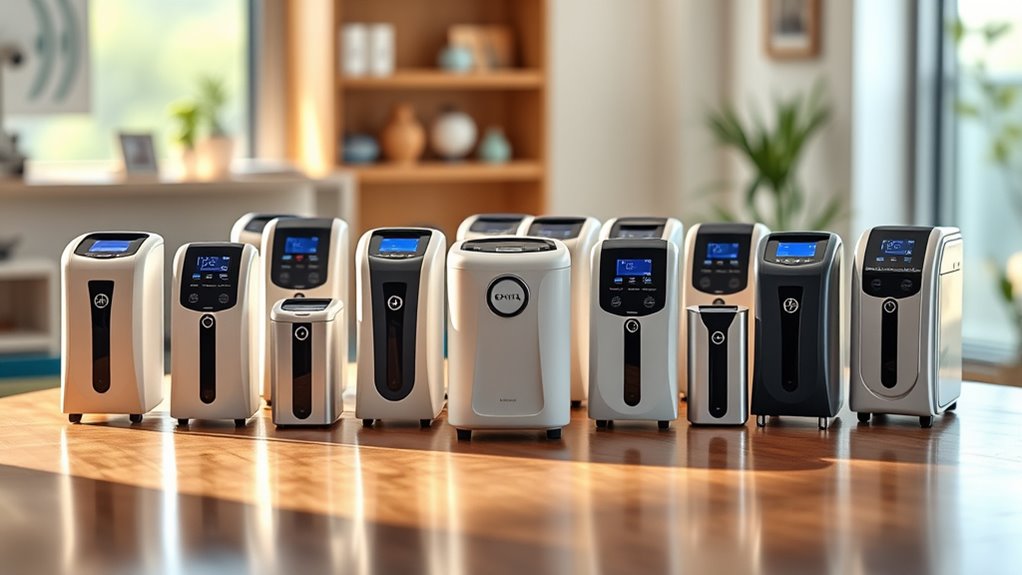

My first finding changes how this comparison should be read: neither product is a true portable oxygen concentrator. A concentrator draws ambient air, removes much of the nitrogen, and supplies oxygen repeatedly while it has power. The Portable Oxygen Canister – 12L stores a finite supply of oxygen, while the 0-15 LPM Oxygen Regulator controls flow from a separate compatible cylinder. Buyers seeking prescribed oxygen therapy should shop for an FDA-cleared concentrator through a qualified medical supplier, not treat either product as a substitute.

Get audio and creator gear delivered free — and shop member deals
- Fast, free delivery on millions of items
- Access to Prime Big Deal Days deals on October 6–7
- Prime Video, Amazon Music and more included
Within this two-product lineup, I rank the 12L canister first for ready-to-use portability. It weighs seven ounces, includes a mask, and requires no separate cylinder, so it makes more sense for short, non-medical use during travel, recreation, or altitude adjustment. The regulator takes second place because it is an accessory rather than an oxygen source. Its adjustable 0-15 LPM flow range and pressure gauge offer more control, but only for a buyer who already has the correct CGA870 cylinder and knows how to assemble an oxygen system safely.
The main choice is not simply compact versus durable. It is convenience versus system-level control. The canister is self-contained but disposable and limited to an advertised 450 inhalations. The regulator can support longer or higher-flow setups when paired with the right cylinder, yet the complete system will be heavier, more complicated, and potentially subject to prescription or local supply requirements. My ranking favors what most shoppers mean by portable: an option that can actually be carried and used without buying several additional parts.
Complete the kit


Key Takeaways
- The 12L canister ranks first because it contains oxygen and includes a mask; the regulator cannot supply oxygen on its own.
- Neither product concentrates ambient air, so neither should be confused with a battery-powered medical portable oxygen concentrator.
- The canister favors lightweight, short-duration convenience, but its oxygen supply runs out and the container must then be replaced.
- The regulator favors adjustable flow and reusable hardware, but it requires a compatible CGA870 cylinder, tubing, and careful leak checks.
- Anyone prescribed supplemental oxygen should select equipment based on clinician-directed flow, delivery mode, and regulatory status, not portability claims alone.
| Portable Oxygen Canister – 12L, Up to 450 Inhalations, Includes Mask |  | Best Overall for Ready-to-Use Portability | Capacity: 12 liters | Advertised Inhalations: Up to 450 | Listed Weight: 7 oz | VIEW ON AMAZON | See Our Full Breakdown |
| Oxygen Regulator with Adjustable Flow 0-15 LPM, Portable and Durable Brass Design |  | Best for Buyers Who Already Own a Compatible Cylinder | Connection: CGA870 | Flow Range: 0-15 LPM | Inlet Pressure: 300-3000 PSI | VIEW ON AMAZON | See Our Full Breakdown |
| portable oxygen concentrator | Capacity | Advertised Inhalations | Listed Weight | Advertised Oxygen Purity |
|---|---|---|---|---|
| Portable Oxygen Canister | 12 liters | Up to 450 | 7 oz | 99% |
| Oxygen Regulator with Adjustab | — | — | — | — |
More Details on Our Top Picks
Portable Oxygen Canister – 12L, Up to 450 Inhalations, Includes Mask
The Portable Oxygen Canister – 12L earns first place because it is the only product here that arrives with an oxygen supply. At a listed seven ounces, it is far easier to place in suitable travel or outdoor gear than a regulator attached to a pressurized cylinder. The included mask also lowers the setup burden. For a buyer seeking brief, non-medical access to canned oxygen during recreation or altitude adjustment, this is the more direct purchase.
Its advantage over the regulator is simplicity, not endurance. The seller advertises up to 450 controlled inhalations, but actual duration depends on how each inhalation is taken and how frequently the canister is used. Once depleted, it cannot keep producing oxygen from surrounding air. A real portable concentrator can operate for as long as its battery or power source permits; this model has a fixed 12-liter reserve and creates an ongoing replacement cost.
I would also separate convenience from clinical capability. The listed 99% oxygen purity may sound comparable to medical equipment, yet purity alone does not tell a buyer the delivered dose, flow pattern, or suitability for a prescription. Compared with the adjustable regulator, this canister offers little control and no pressure gauge. That makes it approachable for short incidental use, but poorly matched to anyone who needs measured continuous flow or pulse-dose delivery.
The supplied mask is useful, although a single included interface will not fit every face comfortably. Storage deserves care as well: this is a pressurized oxygen product that should be kept away from heat, flames, smoking materials, oils, and grease. I rank it above the regulator for self-contained portability, while stopping well short of recommending it as a medical concentrator or emergency treatment device.
Pros:- Contains its own finite oxygen supply and needs no separate cylinder
- Seven-ounce listed weight is easier to carry than a cylinder-and-regulator setup
- Includes a mask for a simpler initial setup
- Advertised capacity of up to 450 controlled inhalations
Cons:- Finite 12-liter supply must be replaced after depletion
- No adjustable LPM control, pressure gauge, or remaining-capacity display
- Single included mask may provide a poor fit for some users
Best for: Travelers and outdoor users seeking a very light, self-contained canister for brief, non-medical use where permitted.
Not ideal for: People with prescribed oxygen needs, buyers requiring adjustable measured flow, or anyone expecting a refillable battery-powered concentrator.
- Capacity:12 liters
- Advertised Inhalations:Up to 450
- Listed Weight:7 oz
- Advertised Oxygen Purity:99%
- Product Format:Single-use portable oxygen canister
- Included Accessory:One mask
- Flow Adjustment:No LPM adjustment listed
- Power Requirement:None
Our verdict“My first choice for brief recreational portability, but it is canned oxygen rather than a medical portable oxygen concentrator.”
Oxygen Regulator with Adjustable Flow 0-15 LPM, Portable and Durable Brass Design
The 0-15 LPM Oxygen Regulator is the more capable control device, yet it ranks second because it contains no oxygen. Its job is to reduce high cylinder pressure and provide an adjustable outlet flow. A buyer must add a compatible CGA870 oxygen cylinder, suitable tubing or delivery hardware, and any other required components. That difference makes it less convenient than the 12L canister and much farther from a complete portable purchase.
For the right setup, the regulator offers flexibility the canister cannot match. Its 0-15 LPM adjustment range permits a user to select among multiple flow settings, while the pressure gauge helps track cylinder pressure. The aluminum and brass construction balances durability with a compact regulator body. Buyers assembling a permitted portable-cylinder system may prefer this reusable hardware over repeatedly buying small canisters.
Those benefits come with more responsibility. A regulator must match the cylinder valve, and the listed CGA870 connection should be verified before purchase. The 300-3000 PSI inlet rating also signals that this component handles high pressure. Incorrect installation, damaged seals, contamination with oil or grease, or loose connections can produce leaks and fire hazards. Compared with the first-ranked canister, there are more points where compatibility or setup can go wrong.
Portability is also relative. The regulator itself measures only 4.65 by 2.4 by 1.38 inches, but the attached cylinder determines total weight and runtime. It is not a pocket substitute for the seven-ounce canister, and it does not approach the convenience of a powered concentrator that draws oxygen from ambient air. I would choose this model only when the buyer already understands the planned cylinder system and needs adjustable flow rather than instant standalone use.
Pros:- Adjustable 0-15 LPM flow provides more control than the canister
- Pressure gauge gives a visible cylinder-pressure reading
- Compact aluminum and brass body is designed for repeated use
- Dual brass barb outlets support secure compatible connections
Cons:- Supplies no oxygen without a separate compatible cylinder
- Complete setup is heavier and more complicated than the 12L canister
- Improper connections or handling can lead to oxygen leaks
Best for: Experienced buyers who already have a compatible CGA870 oxygen cylinder and need a compact regulator with adjustable flow.
Not ideal for: Shoppers seeking a complete oxygen source, casual travelers wanting minimal setup, or prescribed users without professional equipment guidance.
- Connection:CGA870
- Flow Range:0-15 LPM
- Inlet Pressure:300-3000 PSI
- Outlet Pressure:50 PSI
- Dimensions:4.65 × 2.4 × 1.38 inches
- Materials:6061-T6 anodized aluminum and brass
- Outlet Configuration:Dual brass barb outlets
- Gauge:Integrated pressure gauge
Our verdict“My second pick suits an established CGA870 cylinder setup, but it is a regulator component rather than a portable oxygen concentrator.”

How We Picked
I ordered these products by asking which one most closely answers the search for portable oxygen. My highest-weighted factors were whether the product supplies oxygen by itself, how much extra equipment it needs, carrying convenience, clarity of operation, and the limits a buyer could miss from the listing. That framework places the canister first because it is the only complete oxygen-containing option in the lineup. The regulator ranks second because its portability has little value until it is attached to a compatible cylinder.
I also compared control against simplicity. The regulator provides a broad 0-15 LPM adjustment range and a visible pressure gauge, giving a properly equipped buyer more control than the fixed canister arrangement. The tradeoff is added weight, connection compatibility, leak risk, and the need to understand cylinder pressure. The canister removes most of that setup but gives the buyer far less information about remaining usable oxygen.
Finally, I separated advertised specifications from medical suitability. Claims such as 99% purity and up to 450 inhalations describe the seller’s stated product characteristics; they do not establish that the canister matches a prescription or treats a health condition. I gave preference to transparent buyer outcomes and penalized both options for being easy to mistake for actual concentrators.
Factors to Consider When Choosing Portable Oxygen Concentrators
I would begin by identifying the type of product needed, because the word portable appears on several very different oxygen devices. A concentrator, filled canister, cylinder, and regulator solve separate problems. Choosing by size or purity claim alone can leave a buyer with equipment that cannot deliver the required oxygen.
Concentrator, Canister, or Regulator?
A portable oxygen concentrator filters ambient air and needs electrical power or a charged battery. A canister contains a limited stored supply and becomes unusable when empty. A regulator has no oxygen inside; it manages gas from a separate pressurized cylinder. In this lineup, the 12L product is a canister and the 0-15 LPM product is a regulator. I would not buy either one when the goal is a true powered concentrator.
Flow Rate and Delivery Mode
Medical oxygen equipment may provide continuous flow, pulse-dose delivery, or both. A number such as 15 LPM describes maximum regulator flow, not how long a cylinder will last or whether that setting matches a prescription. The canister does not publish comparable adjustable-flow settings. If oxygen has been prescribed, I would match the device to the exact delivery mode and setting supplied by the clinician.
Runtime and Replacement Cost
The canister’s advertised 450 inhalations is a finite allowance, not unlimited runtime. Frequent use means frequent replacement. A regulator is reusable, but runtime comes from the size, fill pressure, and selected flow of the attached cylinder. Powered concentrators shift the recurring burden toward charging, battery replacement, filters, and servicing. I would compare the full system cost rather than the purchase price of one component.
Total Carrying Weight
The first product lists a seven-ounce weight, making it the lighter complete option here. The regulator’s small dimensions tell only part of its portability story because the cylinder adds most of the bulk. For regular travel, I would compare the weight of every required part, including batteries, cart, tubing, charger, cylinder, case, and spare supplies.
Travel, Storage, and Fire Safety
Oxygen supports rapid combustion even though it is not itself flammable. I would keep oxygen equipment away from flames, cigarettes, sparks, petroleum products, oils, and grease. Pressurized canisters and cylinders also face carrier and destination restrictions, especially during air travel. A buyer should confirm current airline, transport, and local rules before packing either product.
Compatibility and Medical Support
The regulator’s CGA870 fitting must match the cylinder valve; visual similarity is not enough. Tubing, seals, outlet hardware, and delivery interfaces must also be compatible and approved for oxygen service. For prescribed use, I would work with a medical equipment provider that can verify settings, servicing, replacement parts, and device approval. That support matters more than a broad purity or portability claim.
Frequently Asked Questions
Are either of these products true portable oxygen concentrators?
No. The 12L product is a filled oxygen canister, and the second product is a regulator that attaches to a separate cylinder. A true portable concentrator draws in ambient air, filters out much of the nitrogen, and delivers concentrated oxygen while it has power. I would shop through a qualified medical supplier if that powered function is what the buyer needs.
Can the 12L oxygen canister replace prescribed oxygen?
I would not use it as a replacement for prescribed oxygen. Its 99% purity claim does not specify a therapeutic dose, stable flow rate, pulse sensitivity, or suitability for a medical condition. The limited canister can also run out without providing the monitoring found on many medical devices. A prescribed user should follow the clinician’s delivery setting and equipment instructions.
Does the oxygen regulator include a cylinder?
The supplied description identifies the product as a regulator and does not list an included cylinder. That means the buyer should expect to need a separate CGA870-compatible oxygen cylinder, plus suitable delivery accessories. I would verify the package contents and every connection before ordering, since the regulator cannot produce or store oxygen by itself.
Which option is easier to carry while traveling?
The seven-ounce canister is easier to carry because it is self-contained and includes a mask. The regulator body is compact, but a working setup adds a pressurized cylinder and other hardware. Travel permission is a separate issue from physical size, so I would check carrier rules before bringing canned or cylinder oxygen on a flight, train, or other shared transport.
How long will these oxygen products last?
The canister advertises up to 450 controlled inhalations, with real duration affected by use pattern. The regulator has no independent runtime because it relies on cylinder capacity, starting pressure, and selected LPM flow. A higher flow setting drains a cylinder faster. I would calculate duration from the complete system and keep a professionally approved backup when oxygen availability is medically required.
Conclusion
For a recreational buyer who wants the smallest self-contained option, I recommend the Portable Oxygen Canister – 12L. It ranks first because it includes oxygen, weighs only seven ounces, and needs less assembly. Its role remains narrow: short, non-medical use with a finite supply and no adjustable measured flow.
For a buyer who already owns a compatible cylinder and needs greater flow control, the 0-15 LPM Oxygen Regulator is the better fit. It provides reusable hardware, a pressure gauge, and more adjustment, but the complete setup is heavier and demands careful compatibility checks. For anyone seeking prescribed portable oxygen, my recommendation is neither product: choose an approved concentrator or cylinder system through a clinician and qualified medical equipment provider.
Fall Picks
fall essentials
As an affiliate, we earn on qualifying purchases.