For a balanced mix of speed, capacity, and outdoor protection, I’d make the SanDisk 1TB Extreme Portable SSD my best overall pick. The Samsung T9 stands out for buyers with compatible USB 3.2 Gen 2×2 devices who need higher peak speeds, while the Samsung T7 is a simpler fit for everyday transfers and backups. Across these portable SSDs, the main tradeoffs are capacity versus portability, rugged protection versus a simpler design, and advertised speed versus what your computer can actually support. A faster drive won’t reach its full potential through a slower port, and larger capacities may be unnecessary for routine files. Read on for the full comparison and a guide to choosing by workload.

Get audio and creator gear delivered free with Prime
- Fast, free delivery on millions of items
- Prime Video, Amazon Music and more included
- Member-only deals all year
Complete the kit


Key Takeaways
The SanDisk Extreme range offers the broadest capacity choice in this lineup, from a 500GB option through an 8TB model, so buyers can match storage to their workload without changing product families.
The Samsung T9’s headline speed depends on host compatibility. Its USB 3.2 Gen 2×2 connection can separate it from the T7, but a computer without that interface may limit the advantage.
The Samsung T7 is the straightforward everyday alternative among the named Samsung models: its advertised read speed is up to 1,050MB/s, below the T9’s stated peak but adequate for many transfer and backup routines.
SanDisk’s Extreme and standard Portable models serve different priorities. Extreme models are the clearer fit when rugged protection matters, while standard Portable choices can suit buyers who mainly need compact external storage.
Several entries are duplicate or near-duplicate listings. The 2TB Extreme appears twice, and the 4TB Extreme appears in two listings, so check the exact capacity, interface, and protection details rather than treating each listing as a distinct design.
| SanDisk 4TB Extreme Portable SSD |  | Best for Rugged, High-Capacity Storage | Capacity: 4 TB | Advertised read speed: Up to 2,000 MB/s | Advertised data transfer rate: Up to 2,000 MB/s | VIEW ON AMAZON | See Our Full Breakdown |
| SanDisk 2TB Extreme Portable SSD |  | Best for Rugged Everyday Carry | Capacity: 2 TB | Read speed: Up to 1,050 MB/s | Write speed: Up to 1,000 MB/s | VIEW ON AMAZON | See Our Full Breakdown |
| SanDisk 500GB Portable SSD |  | Best Compact Starter SSD | Capacity: 500 GB | Read speed: Up to 1,000 MB/s | Connectivity: USB-C | VIEW ON AMAZON | See Our Full Breakdown |
| SanDisk 1TB Portable Drive, Up to 600MB/s Read Speeds – Black |  | Best for Simple 1TB Storage | Capacity: 1 TB | Read speed: Up to 600 MB/s | Data transfer rate: Up to 600 MB/s | VIEW ON AMAZON | See Our Full Breakdown |
| Samsung T9 Portable SSD 4TB USB 3.2 Gen 2×2 External Solid State Drive | 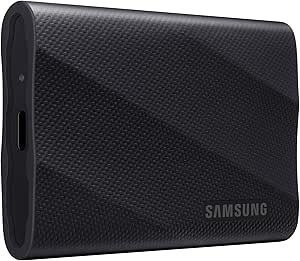 | Best Premium-Speed 4TB SSD | Capacity: 4 TB | Advertised read/write speed: Up to 2,000 MB/s | USB speed requirement for maximum performance: USB 3.2 Gen 2×2 | VIEW ON AMAZON | See Our Full Breakdown |
| SanDisk 1TB Extreme Portable SSD | | Best for Rugged High-Speed Transfers | Capacity: 1 TB | Advertised read speed: Up to 2000 MB/s | Connectivity: USB Type-C | VIEW ON AMAZON | See Our Full Breakdown |
| Samsung T7 Portable SSD 2TB Titan Gray, USB 3.2 Gen 2, Up to 1,050MB/s | 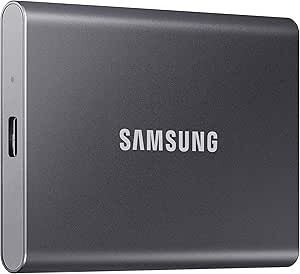 | Best for Everyday 2TB Storage | Capacity: 2 TB | Interface: USB 3.2 Gen 2 | Advertised read speed: Up to 1050 MB/s | VIEW ON AMAZON | See Our Full Breakdown |
| SanDisk 1TB Portable SSD, Up to 1000MB/s Read Speeds, Black | | Best Compact Everyday Pick | Capacity: 1 TB | Read speed: Up to 1000 MB/s | Write speed: Lower than 1000 MB/s | VIEW ON AMAZON | See Our Full Breakdown |
| Samsung T7 Portable SSD 1TB Titan Gray, USB 3.2 Gen 2, Up to 1,050MB/s | | Best for Secure Cross-Device Use | Capacity: 1 TB | Interface: USB 3.0; USB 3.2 Gen 2 support is needed for maximum speed | Read speed: Up to 1050 MB/s | VIEW ON AMAZON | See Our Full Breakdown |
| SanDisk 4TB Extreme Portable SSD, Up to 1050MB/s, USB-C, IP65 Water and Dust Resistance | | Best for High-Capacity Rugged Storage | Capacity: 4 TB | Read speed: Up to 1050 MB/s | Write speed: Up to 1000 MB/s | VIEW ON AMAZON | See Our Full Breakdown |
| SanDisk 2TB Extreme Portable SSD | | Best Overall | Storage capacity: 2 TB | Listed read speed: Up to 2,000 MB/s | Data transfer rate: Up to 2,000 MB/s | VIEW ON AMAZON | See Our Full Breakdown |
| SanDisk 8TB Extreme Portable SSD | | Best for Maximum Capacity | Storage capacity: 8 TB | Read speed: Up to 1,050 MB/s | Write speed: Up to 1,000 MB/s | VIEW ON AMAZON | See Our Full Breakdown |
| SSK Portable SSD 500GB External Solid State Drive USB-C Up to 1050MB/s |  | Best Compact Starter Drive | Capacity: 500 GB | Read speed: Up to 1,050 MB/s | Write speed: Up to 1,000 MB/s | VIEW ON AMAZON | See Our Full Breakdown |
| Samsung T9 Portable SSD 1TB, USB 3.2 Gen 2×2 External SSD, Up to 2,000 MB/s | | Best for High-Speed Workflows | Storage capacity: 1 TB | Interface: USB 3.2 Gen 2×2 | Maximum read speed: Up to 2,000 MB/s | VIEW ON AMAZON | See Our Full Breakdown |
| portable ssd | Capacity | Connectivity | Read speed |
|---|---|---|---|
| SanDisk 4TB Extreme Portable S | 4 TB | USB-C | — |
| SanDisk 2TB Extreme Portable S | 2 TB | — | Up to 1,050 MB/s |
| SanDisk 500GB Portable SSD | 500 GB | USB-C | Up to 1,000 MB/s |
| SanDisk 1TB Portable Drive | 1 TB | USB-C | Up to 600 MB/s |
| Samsung T9 Portable SSD 4TB US | 4 TB | — | — |
| SanDisk 1TB Extreme Portable S | 1 TB | USB Type-C | — |
| Samsung T7 Portable SSD 2TB Ti | 2 TB | USB | — |
| SanDisk 1TB Portable SSD | 1 TB | USB Type-C | Up to 1000 MB/s |
| Samsung T7 Portable SSD 1TB Ti | 1 TB | — | Up to 1050 MB/s |
| SanDisk 4TB Extreme Portable S | 4 TB | USB-C | Up to 1050 MB/s |
| SanDisk 2TB Extreme Portable S | — | USB Type-C | — |
| SanDisk 8TB Extreme Portable S | — | — | Up to 1,050 MB/s |
| SSK Portable SSD 500GB Externa | 500 GB | USB | Up to 1,050 MB/s |
| Samsung T9 Portable SSD 1TB | — | — | — |
More Details on Our Top Picks
SanDisk 4TB Extreme Portable SSD
I’d choose this SanDisk when capacity and outdoor protection matter as much as transfer speed. Its 4TB capacity and advertised speeds up to 2,000MB/s suit large video libraries, project archives, and frequent backups; IP65 water and dust resistance and drop protection up to 3 meters add reassurance when it travels between locations. Compared with the SanDisk 2TB Extreme Portable SSD, this model gives you twice the listed storage and a higher stated top speed, but the smaller drive is still a capable choice if your files take up less space. One caveat: actual performance depends on the host device, and password protection requires a software download. I’d also check device compatibility before counting on the full speed, since the specification does not name a particular USB generation.
Pros:- 4TB capacity accommodates large media collections and project backups
- Advertised transfer speeds reach up to 2,000MB/s
- IP65 water and dust resistance with drop protection up to 3 meters
- 256-bit AES encryption adds an option for securing stored files
Cons:- Actual transfer performance varies with the host device and operating conditions
- Password protection requires a software download
- Maximum listed speed may not be available on every compatible device
Best for: Video creators, field workers, and frequent travelers who need several terabytes of portable storage with water, dust, and drop protection.
Not ideal for: Buyers with modest storage needs or devices that cannot make use of high transfer speeds; a lower-capacity or slower SSD may fit their setup better.
- Capacity:4 TB
- Advertised read speed:Up to 2,000 MB/s
- Advertised data transfer rate:Up to 2,000 MB/s
- Connectivity:USB-C
- Water and dust resistance:IP65
- Drop protection:Up to 3 meters
- Encryption:256-bit AES
- Compatible platforms:Mac and PC
Our verdict“Choose this SanDisk if you need 4TB of fast, rugged portable storage and can confirm your device supports its advertised performance.”
SanDisk 2TB Extreme Portable SSD
The SanDisk 2TB Extreme Portable SSD is a practical middle ground for people who want a tough drive without stepping up to 4TB. Its listed read and write speeds—up to 1,050MB/s and 1,000MB/s—are suited to regular photo, video, and work-file transfers, while IP65 protection and 3-meter drop protection make it more travel-ready than a basic portable SSD. The carabiner loop gives it a useful way to attach to a bag, a detail the listed SanDisk 500GB Portable SSD does not share. That smaller drive is lighter on storage but offers similar stated read speed, so it may suit lighter loads. Here, the main tradeoff is that speeds depend on the host device, and some security features require software; the supplied interface data also deserves a compatibility check before purchase.
Pros:- 2TB capacity balances a substantial file library with a portable format
- Listed read speed up to 1,050MB/s and write speed up to 1,000MB/s
- IP65 water and dust resistance plus drop protection up to 3 meters
- Carabiner loop supports easy attachment to a bag
Cons:- Performance depends on the host device
- Some features require software downloads
- Listed interface details should be checked against the intended device and cable
Best for: Photographers, field staff, and commuters who carry a 2TB working library and want added protection and a bag-attachment loop.
Not ideal for: People needing 4TB for large video archives, or anyone who needs guaranteed top speed from a device whose USB connection is unclear.
- Capacity:2 TB
- Read speed:Up to 1,050 MB/s
- Write speed:Up to 1,000 MB/s
- Water and dust resistance:IP65
- Drop protection:Up to 3 meters
- Encryption:256-bit AES hardware encryption
- Compatibility:Desktop, laptop, tablet, and game consoles
- Supported operating systems:Windows 8/10 and macOS v10.9 or later
Our verdict“Pick this model for a rugged 2TB carry drive with a carabiner loop, rather than paying for capacity you do not need.”
SanDisk 500GB Portable SSD
For a light daily carry, I’d favor the SanDisk 500GB Portable SSD over a larger drive that spends most of its time holding unused space. It weighs 1.12 ounces, fits easily into a pocket, and lists read speeds up to 1,000MB/s, making it a good match for transferring current photo sets, documents, and smaller video projects. The advertised protection against drops, water, and dust adds useful resilience for travel, though the supplied specifications do not state an IP rating or a drop distance. Compared with the SanDisk 1TB Portable Drive, this model lists a higher read speed but offers half the capacity. That makes its role clear: prioritize compactness and speed for a smaller working set, and choose the 1TB drive if file volume matters more than peak listed speed.
Pros:- Lightweight at 1.12 ounces and small enough for pocket carry
- Listed read speed reaches up to 1,000MB/s
- USB-C connectivity supports compatible computers, phones, and tablets
- Description states protection against drops, water, and dust
Cons:- 500GB capacity limits room for large media libraries
- Write speed is not specified and may be lower than read speed
- The supplied data does not give a protection rating or drop distance
Best for: Students, mobile photographers, and laptop or phone users who need a lightweight drive for a smaller active file collection.
Not ideal for: Video editors with large source files or anyone who wants a sizable archive on one drive; 500GB can fill quickly.
- Capacity:500 GB
- Read speed:Up to 1,000 MB/s
- Connectivity:USB-C
- Interface:USB 3.0
- Weight:1.12 ounces
- Dimensions:1.77 × 3.35 × 0.39 inches
- Compatible devices:Desktop, laptop, smartphone, and tablet
- Hardware platforms:Mac and PC
Our verdict“Choose this SanDisk for a compact, speed-oriented everyday drive if 500GB is enough for your active files.”
SanDisk 1TB Portable Drive, Up to 600MB/s Read Speeds – Black
This SanDisk 1TB Portable Drive is the straightforward pick for buyers who want a full terabyte for backups and everyday files, without prioritizing the fastest transfers in this group. Its listed read speed of up to 600MB/s is below the 1,000MB/s figure for the SanDisk 500GB Portable SSD, but the extra capacity gives you more room for photos, work folders, and general-purpose storage. The compact 1.12-ounce design and drop-resistant build make it easy to carry between a desk and a bag. It is a more modest choice than the rugged SanDisk 2TB Extreme, which adds stated IP65 protection, higher speeds, and a carabiner loop. Here, the specification lists USB-C connectivity, so check that it fits your devices; write speed and a formal water- or dust-resistance rating are not provided.
Pros:- 1TB capacity provides more room than the listed SanDisk 500GB Portable SSD
- Compact 1.12-ounce design is convenient for everyday carry
- USB-C connectivity is listed for compatible devices
- Drop-resistant design adds protection for routine travel
Cons:- Listed read speed tops out at 600MB/s, below faster options in this roundup
- Write speed is not specified
- No formal water or dust resistance rating is provided
Best for: Everyday laptop, tablet, and phone users who want 1TB of portable backup space and do not need near-gigabyte-per-second read speeds.
Not ideal for: Creators moving large files on a tight schedule or people working outdoors who need stated water and dust protection.
- Capacity:1 TB
- Read speed:Up to 600 MB/s
- Data transfer rate:Up to 600 MB/s
- Connectivity:USB-C
- Weight:1.12 ounces
- Dimensions:2.95 × 1.77 × 0.39 inches
- Compatible devices:Desktop, laptop, smartphone, and tablet
- Hardware platforms:Mac and PC
Our verdict“Choose this drive for simple 1TB portable storage when capacity matters more than transfer speed or rugged weather protection.”
Samsung T9 Portable SSD 4TB USB 3.2 Gen 2×2 External Solid State Drive
The Samsung T9 4TB pairs a large capacity with advertised read and write speeds up to 2,000MB/s, making it the performance-focused 4TB option here. Dynamic Thermal Guard manages heat during demanding transfers, while 256-bit hardware encryption adds protection for business and personal files. Compared with the SanDisk 4TB Extreme Portable SSD, the T9 also lists speeds up to 2,000MB/s but emphasizes thermal management and broad device compatibility; the SanDisk explicitly specifies IP65 water and dust resistance and drop protection, details not included in the T9 data. The important catch is USB 3.2 Gen 2×2: devices and cables must support that connection to reach the advertised speed. I’d choose the T9 for compatible creator or workstation setups, not simply for its capacity alone.
Pros:- 4TB capacity suits large creative projects and media archives
- Advertised read and write speeds reach up to 2,000MB/s
- Dynamic Thermal Guard manages heat during demanding use
- 256-bit AES hardware encryption and compatibility with listed computers, tablets, phones, and consoles
Cons:- Maximum speed depends on USB 3.2 Gen 2×2 support and a suitable cable
- The supplied product data does not state an IP water or dust rating
- Listed interface information is less specific than the USB 3.2 Gen 2×2 speed requirement
Best for: Creators and professionals with USB 3.2 Gen 2×2-capable computers who need 4TB, fast transfers, and hardware encryption.
Not ideal for: Buyers whose devices lack USB 3.2 Gen 2×2 support, or travelers who need a clearly specified water- and dust-resistance rating.
- Capacity:4 TB
- Advertised read/write speed:Up to 2,000 MB/s
- USB speed requirement for maximum performance:USB 3.2 Gen 2×2
- Thermal management:Dynamic Thermal Guard
- Encryption:256-bit AES hardware encryption
- Form factor:Portable
- Compatible devices:Gaming console, Mac, PC, tablet, and iPhone 15/16
- Listed console compatibility:Xbox Series S/X and PlayStation 5
Our verdict“Choose the Samsung T9 4TB if your device supports USB 3.2 Gen 2×2 and you want fast, thermally managed storage with encryption.”
SanDisk 1TB Extreme Portable SSD
The SanDisk 1TB Extreme Portable SSD is the speed-focused choice here: its advertised transfer rate reaches 2000 MB/s, ahead of the Samsung T7 models and the SanDisk 4TB Extreme Portable SSD, which is listed at up to 1050 MB/s read. That extra headroom can shorten transfers of large project folders, though the host device and connection affect real-world performance. Its water-, dust-, and shock-resistant design suits work that takes a drive out of the office, while its 1TB capacity keeps the package light and compact. The tradeoff is less room than the 2TB Samsung T7, and password protection requires a software download. I’d choose this when speed and rugged portability matter more than capacity or plug-and-play simplicity.
Pros:- Advertised speeds up to 2000 MB/s can reduce large-file transfer times on a compatible host.
- Water-, dust-, and shock-resistant features suit travel and field work.
- Compact 1.6-ounce design is easy to carry.
- Password protection with 256-bit AES encryption adds a security option.
Cons:- The maximum speed depends on the host device and connection, so some setups will not reach it.
- Its 1TB capacity is smaller than the 2TB Samsung T7.
- Password protection requires a software download.
Best for: Photographers, video editors, and mobile professionals who move large files on compatible USB-C equipment and want a compact, rugged 1TB drive.
Not ideal for: Buyers needing 2TB or more, or anyone who wants password protection without downloading additional software.
- Capacity:1 TB
- Advertised read speed:Up to 2000 MB/s
- Connectivity:USB Type-C
- Compatibility:Desktop, laptop, smartphone, and tablet
- Protection:Water-, dust-, and shock-resistant
- Security:256-bit AES encryption; password protection requires software
- Dimensions:3.35 × 2 × 0.39 inches
- Weight:1.6 ounces
Our verdict“Choose this SanDisk when high advertised speed and rugged 1TB portability matter more than extra capacity or effortless setup.”
Samsung T7 Portable SSD 2TB Titan Gray, USB 3.2 Gen 2, Up to 1,050MB/s
With 2TB of capacity, the Samsung T7 is the practical pick for buyers who carry a sizable photo library, video archive, or work files without stepping up to the 4TB SanDisk Extreme Portable SSD. Its advertised speed of up to 1050 MB/s is well below the 2000 MB/s claim of the SanDisk 1TB Extreme, but it remains a faster class of portable storage than a basic drive and gives more room than that SanDisk. Drop resistance up to six feet and the included USB-C-to-C and USB-C-to-A cables make it straightforward to pair with a range of devices. The T7’s tradeoffs are its reliance on USB 3.2 Gen 2 support for peak performance and less explicit water and dust protection than the rugged SanDisk models.
Pros:- 2TB capacity holds more files than either 1TB model reviewed here.
- Advertised transfer speeds reach up to 1050 MB/s.
- Drop resistance is specified up to six feet.
- Includes USB-C-to-C and USB-C-to-A cables for flexible connections.
Cons:- Maximum performance depends on USB 3.2 Gen 2 support from the host.
- No water or dust-resistance rating is specified in the product data.
- Its advertised speed is lower than the SanDisk 1TB Extreme Portable SSD.
Best for: Laptop users, students, and content creators who want 2TB for everyday transfers and backups across USB-C and USB-A devices.
Not ideal for: Field users who need stated water and dust resistance, or buyers seeking the highest listed speed in this group.
- Capacity:2 TB
- Interface:USB 3.2 Gen 2
- Advertised read speed:Up to 1050 MB/s
- Encryption:256-bit AES hardware encryption
- Drop resistance:Up to 6 feet
- Included cables:USB Type-C-to-C and USB Type-C-to-A
- Connectivity:USB
Our verdict“Pick the 2TB T7 for roomy, everyday portable storage and broad cable compatibility rather than peak speed or rugged weather protection.”
SanDisk 1TB Portable SSD, Up to 1000MB/s Read Speeds, Black
The standard SanDisk 1TB Portable SSD suits buyers who want a light, pocketable drive for routine file transfers and backups, without paying for the more rugged positioning or higher speed claim of the SanDisk 1TB Extreme Portable SSD. Its read speed is listed up to 1000 MB/s, close to the Samsung T7’s 1050 MB/s figure, but its write speed is explicitly lower than its read speed, so repeated large-file saves may take longer than the headline number suggests. The IP65 water and dust rating and shock resistance add useful protection for a drive carried between home, work, and travel. It weighs just 1.12 ounces. The main compromise is that the available warranty details are limited, and actual performance varies by device.
Pros:- Light 1.12-ounce body is convenient for everyday carry.
- Read speeds are listed up to 1000 MB/s.
- IP65 water and dust resistance plus shock resistance add protection on the go.
- USB-C connectivity supports compatible computers and mobile devices.
Cons:- Write speeds are lower than the stated maximum read speed.
- Performance depends on the connected device.
- Warranty details provided are limited.
Best for: Commuters and students who need a lightweight 1TB USB-C drive for documents, photos, and everyday media transfers.
Not ideal for: Users who frequently write very large files and need specified write speeds, or buyers who want fuller warranty information before choosing.
- Capacity:1 TB
- Read speed:Up to 1000 MB/s
- Write speed:Lower than 1000 MB/s
- Connectivity:USB Type-C
- Water resistance:IP65
- Dust resistance:Yes
- Dimensions:1.77 × 3.35 × 0.39 inches
- Weight:1.12 ounces
Our verdict“Choose this model for a lightweight, weather-resistant 1TB drive for everyday use, not for predictable high-speed writes.”
Samsung T7 Portable SSD 1TB Titan Gray, USB 3.2 Gen 2, Up to 1,050MB/s
This 1TB Samsung T7 is a balanced choice for buyers who want hardware encryption, solid transfer speeds, and a familiar compact drive for several devices. Its read speed reaches up to 1050 MB/s, with write speeds listed up to 1000 MB/s; that makes its performance claims more evenly matched than the standard SanDisk 1TB Portable SSD, whose write speed is described only as lower than its read speed. The T7 also specifies drop protection up to six feet and compatibility across PC, Mac, Android, and gaming consoles. Compared with the 2TB T7, this version gives up half the storage, while the SanDisk 1TB Extreme offers a higher peak-speed claim and water and dust resistance. The T7’s limit is that peak speeds depend on USB 3.2 Gen 2 support.
Pros:- Read speeds up to 1050 MB/s and write speeds up to 1000 MB/s are specified.
- 256-bit AES hardware encryption provides a built-in security feature.
- Drop protection is specified up to six feet.
- Designed for compatibility with PC, Mac, Android, and gaming consoles.
Cons:- Maximum speeds require a USB 3.2 Gen 2-capable host.
- Its 1TB capacity is half that of the 2TB Samsung T7.
- No water or dust-resistance rating is specified.
Best for: People who move files among a PC, Mac, Android device, or console and want 1TB storage with hardware encryption.
Not ideal for: Buyers who need 2TB or more, explicit water and dust protection, or the highest advertised speed in this roundup.
- Capacity:1 TB
- Interface:USB 3.0; USB 3.2 Gen 2 support is needed for maximum speed
- Read speed:Up to 1050 MB/s
- Write speed:Up to 1000 MB/s
- Encryption:256-bit AES hardware encryption
- Drop protection:Up to 6 feet
- Shock resistance:Yes
Our verdict“Choose the 1TB T7 for secure, well-rounded transfers across devices when 1TB is enough and weather resistance is not a priority.”
SanDisk 4TB Extreme Portable SSD, Up to 1050MB/s, USB-C, IP65 Water and Dust Resistance
For buyers who need to keep a large working archive on one portable drive, the SanDisk 4TB Extreme Portable SSD offers four times the capacity of the 1TB Samsung T7 and standard 1TB SanDisk Portable SSD. Its listed speeds—up to 1050 MB/s read and 1000 MB/s write—are useful for frequent transfers, though they do not match the 2000 MB/s claim of the SanDisk 1TB Extreme. The distinction is clear: this model prioritizes capacity and outdoor protection over peak speed. IP65 water and dust resistance, drop protection up to three meters, and a carabiner loop support travel and field use. The capacity also means more data in one place, so it may not be the right fit for buyers seeking the smallest, lightest setup or a simple low-capacity carry drive.
Pros:- 4TB capacity stores substantially more data than the 1TB models in this batch.
- Read and write speeds are listed up to 1050 MB/s and 1000 MB/s.
- IP65 water and dust resistance plus drop protection up to three meters suit field use.
- Carabiner loop provides a convenient way to attach the drive.
Cons:- Its 1050 MB/s read claim is below the 2000 MB/s listed for the SanDisk 1TB Extreme Portable SSD.
- Real-world speeds depend on the host device and conditions.
- The listed 3.5-inch form factor may not suit buyers seeking the smallest carry option.
Best for: Photographers, production teams, and travelers who need a 4TB portable archive with stated water, dust, and drop protection.
Not ideal for: Buyers who prioritize the highest advertised transfer rate, need only a small everyday drive, or want a particularly compact setup.
- Capacity:4 TB
- Read speed:Up to 1050 MB/s
- Write speed:Up to 1000 MB/s
- Connectivity:USB-C
- Water and dust resistance:IP65
- Drop protection:Up to 3 meters
- Additional feature:Carabiner loop
- Listed form factor:3.5 inches
Our verdict“Pick this SanDisk when 4TB capacity and rugged protection matter more than the highest speed claim or the smallest footprint.”
SanDisk 2TB Extreme Portable SSD
I’d make this the most balanced pick for people who want a portable SSD for both large transfers and travel. Its listed 2,000 MB/s speed is a higher ceiling than the SanDisk 8TB Extreme Portable SSD’s 1,050 MB/s read speed, while its 2TB capacity leaves more room for active projects than the SSK 500GB drive. IP65 water and dust resistance, drop protection, and a compact body add reassurance when the drive leaves a desk. The tradeoff is that speed depends on the host device and connection, so older hardware may not approach the advertised rate. The encryption feature also requires a software download, adding setup rather than working as a completely plug-and-go security option.
Pros:- Listed transfer speeds reach up to 2,000 MB/s.
- 2TB capacity supports sizable project files and backups.
- IP65 water and dust resistance plus drop protection suit travel use.
- Compact design and password-protection features add portability and security.
Cons:- Actual performance depends on the host device and operating conditions.
- Encryption features require a software download.
- Its 2TB capacity is less suited to very large archives than the 8TB SanDisk Extreme.
Best for: Traveling photographers, video editors, and laptop owners who want a fast 2TB drive with environmental protection for regular file transfers.
Not ideal for: People with older USB hardware who expect the full listed speed, or buyers who need several terabytes for a large archive.
- Storage capacity:2 TB
- Listed read speed:Up to 2,000 MB/s
- Data transfer rate:Up to 2,000 MB/s
- Connectivity:USB Type-C
- Water and dust resistance:IP65
- Security:Hardware encryption and password protection features
- Compatible devices:Desktop, laptop, smartphone, and tablet
- Color:Black
Our verdict“Choose this SanDisk for a strong balance of speed, capacity, and travel protection, provided your devices can make use of its performance.”
SanDisk 8TB Extreme Portable SSD
For buyers who need a large working library in one portable drive, I’d put this SanDisk ahead of the smaller-capacity options. Its 8TB capacity is the standout: it can hold far more footage, audio, and backups than the 2TB SanDisk Extreme or the 1TB Samsung T9. The tradeoff is speed: its listed 1,050 MB/s read and 1,000 MB/s write rates are below the T9’s 2,000 MB/s ceiling, so it is better suited to carrying and backing up large collections than chasing the fastest transfers. An IP65 rating, drop protection up to 3 meters, and a carabiner loop make it a practical travel companion. Some security features may require software and compatibility checks.
Pros:- 8TB capacity holds large media libraries and backup sets.
- Listed read and write speeds reach 1,050 MB/s and 1,000 MB/s.
- IP65 water and dust resistance with drop protection up to 3 meters.
- Carabiner loop makes it easier to attach the drive during travel.
Cons:- Listed speeds are lower than the 2,000 MB/s Samsung T9 and SanDisk 2TB Extreme.
- Some security features require software downloads and compatibility checks.
- Its high capacity may be unnecessary for buyers with modest storage needs.
Best for: Video and audio creators, frequent travelers, and backup-focused users who need to carry several terabytes on one rugged portable SSD.
Not ideal for: Professionals prioritizing the fastest listed transfer speeds, or users who need only a small drive for everyday document transfers.
- Storage capacity:8 TB
- Read speed:Up to 1,050 MB/s
- Write speed:Up to 1,000 MB/s
- Interface:USB 3.2 Gen 2
- Connector:USB Type-C
- Water and dust resistance:IP65
- Drop protection:Up to 3 meters
- Dimensions:3.97 × 2.07 × 0.38 inches
- Warranty:5 years
Our verdict“Pick this model when carrying up to 8TB matters more than matching the highest transfer speeds in the roundup.”
SSK Portable SSD 500GB External Solid State Drive USB-C Up to 1050MB/s
The SSK is the capacity-conscious choice for buyers who want a small, quick drive for current projects rather than a portable archive. Its 500GB capacity is a fraction of the SanDisk 2TB Extreme’s, but its listed 1,050 MB/s read and 1,000 MB/s write speeds make it capable on a suitable USB-C or USB 3.2 Gen 2 connection. The aluminum enclosure offers a sturdy-feeling alternative to simply choosing by capacity, and compatibility includes phones as well as computers. Still, the low capacity can fill quickly with high-resolution video, and the 30-day return policy listed here is a notable limitation compared with the SanDisk 8TB Extreme’s five-year warranty. I’d choose it for active files, not as a long-term backup destination.
Pros:- Listed read and write speeds reach 1,050 MB/s and 1,000 MB/s.
- 500GB capacity keeps the drive suited to smaller project collections.
- Aluminum enclosure supports heat dissipation and a durable portable design.
- Compatibility includes computers, smartphones, tablets, and iPhone.
Cons:- 500GB can run short for large video projects or extensive backups.
- The listed return policy is only 30 days.
- Optimal performance requires a USB-C or USB 3.2 Gen 2 port.
Best for: Students, mobile creators, and phone users who need a compact drive for transferring or carrying a few hundred gigabytes of active files.
Not ideal for: Photographers and video editors building large archives, or buyers who want a longer stated warranty and ample room for future projects.
- Capacity:500 GB
- Read speed:Up to 1,050 MB/s
- Write speed:Up to 1,000 MB/s
- Connectivity:USB
- Enclosure material:Aluminum
- Compatible devices:Desktop, laptop, smartphone, tablet, and iPhone
- Color:Grey
- Listed return policy:30 days
Our verdict“Choose the SSK for fast, portable handling of smaller file sets, but step up to the SanDisk 2TB Extreme if your projects are growing.”
Samsung T9 Portable SSD 1TB, USB 3.2 Gen 2×2 External SSD, Up to 2,000 MB/s
I’d choose the Samsung T9 for users whose workflow benefits from fast transfers and who have a matching port. Its USB 3.2 Gen 2×2 interface and listed 2,000 MB/s read and write speeds give it a higher performance ceiling than the SanDisk 8TB Extreme, though that SanDisk offers eight times the capacity. The T9’s thermal management is aimed at sustained, demanding use, while AES 256-bit hardware encryption and drop resistance add practical protections. Its main limitation is compatibility: without Gen 2×2 support, a host may not reach the advertised speeds. At 1TB, it also holds less than the SanDisk 2TB Extreme, so buyers handling large media libraries may prefer capacity over speed. The enclosure material is not specified in the supplied details.
Pros:- Listed read and write speeds reach 2,000 MB/s.
- USB 3.2 Gen 2×2 targets fast transfers on compatible hosts.
- AES 256-bit hardware encryption adds a security option.
- Thermal management and drop resistance suit demanding portable use.
Cons:- Maximum speed requires USB 3.2 Gen 2×2 support.
- 1TB capacity is smaller than the SanDisk 2TB and 8TB options.
- Detailed enclosure material information is not provided.
Best for: Editors and professionals with USB 3.2 Gen 2×2 computers who move large files often and want hardware encryption in a compact drive.
Not ideal for: Users with only standard USB connections, or anyone who needs more than 1TB of portable storage for large projects and archives.
- Storage capacity:1 TB
- Interface:USB 3.2 Gen 2×2
- Maximum read speed:Up to 2,000 MB/s
- Maximum write speed:Up to 2,000 MB/s
- Encryption:AES 256-bit hardware encryption
- Drop resistance:Up to 9.8 feet
- Form factor:2.5-inch
- Compatibility:Mac, PC, tablet, iPhone 15/16, Xbox Series S/X, PlayStation 4/5
Our verdict“Choose the Samsung T9 for high-speed work on a Gen 2×2 host, but favor a higher-capacity option if storage space comes first.”

How We Picked
I compared the listed drives by the factors that change a portable SSD purchase: stated transfer speed, capacity range, connection standard, protection details where specified, and likely fit for everyday carrying or demanding workloads. I gave more weight to a balanced combination of useful speed, practical capacity, and clear use-case fit than to a large advertised speed number on its own. I also treated port compatibility as part of performance: a drive’s rated ceiling matters only when the host device and cable can support it.
The order prioritizes broadly useful options first, then models that make sense for narrower needs such as higher-capacity storage, an entry-level budget, or a compatible high-speed workstation. The listed products include multiple capacities and repeated SanDisk Extreme variants, so I distinguish them by capacity and stated specifications rather than implying that duplicate names represent different designs. Where details are absent from the supplied product names, I avoid assuming them.
| portable ssd | Connectivity | Read speed |
|---|---|---|
| SanDisk 4TB Extreme Portable S | USB-C | — |
| SanDisk 2TB Extreme Portable S | — | Up to 1,050 MB/s |
| SanDisk 500GB Portable SSD | USB-C | Up to 1,000 MB/s |
| SanDisk 1TB Portable Drive | USB-C | Up to 600 MB/s |
| Samsung T9 Portable SSD 4TB US | — | — |
| SanDisk 1TB Extreme Portable S | USB Type-C | — |
| Samsung T7 Portable SSD 2TB Ti | USB | — |
| SanDisk 1TB Portable SSD | USB Type-C | Up to 1000 MB/s |
| Samsung T7 Portable SSD 1TB Ti | — | Up to 1050 MB/s |
| SanDisk 4TB Extreme Portable S | USB-C | Up to 1050 MB/s |
| SanDisk 2TB Extreme Portable S | USB Type-C | — |
| SanDisk 8TB Extreme Portable S | — | Up to 1,050 MB/s |
| SSK Portable SSD 500GB Externa | USB | Up to 1,050 MB/s |
| Samsung T9 Portable SSD 1TB | — | — |
Factors to Consider When Choosing Portable Ssds
I’d choose a portable SSD by starting with the files and devices it needs to serve, then checking capacity, connection, and protection against that use. These choices can matter more than comparing headline speeds in isolation.
Match Capacity to the Files You Keep
Estimate the space your current files occupy, then leave room for growth and working copies rather than buying a drive that is nearly full on day one. Photos, video projects, game libraries, and device backups can expand quickly, while documents and occasional transfers may fit comfortably on a smaller drive. Larger capacities in this roundup reach 8TB, but extra capacity only helps if you have a real use for it or want fewer drives to manage. For critical files, a single large SSD should not become the only copy; keep a second backup in another location or on another device. A common mistake is counting the drive’s advertised capacity as fully available, since formatting and system use reduce usable space.
Check the Port Before Paying for Speed
Advertised sequential speeds describe a best-case ceiling, not a promise for every laptop, desktop, or cable. The Samsung T9 lists USB 3.2 Gen 2×2, a connection that many devices do not support, so it may not outperform a compatible T7 on a host limited to a slower USB standard. Check the specifications for the exact port on the computer you plan to use, not just its USB-C shape: connector shape and data speed are different things. Also account for the cable, since a charge-only or lower-spec cable can bottleneck transfers. If most of your work involves smaller files or occasional backups, reliable compatibility may matter more than pursuing the highest stated rate.
Decide Whether Rugged Protection Fits Your Routine
Protection features earn their place when a drive travels in a bag, works outside, or sits near dust and splashes. The SanDisk Extreme listings specify IP65 protection, which gives buyers a clearer durability signal than a product name alone; still, a rating is not permission to treat any drive as indestructible. Check the manufacturer’s exact limits and care instructions, and use a protective case if the SSD may be dropped or crushed. A simpler portable model may be a sensible choice for a desk-bound backup drive that rarely leaves home. Paying for ruggedness makes more sense when it reduces a real exposure risk than when the drive will remain in a drawer or on a desk.
Think Through Portability and Daily Handling
Portable storage is only convenient if the drive is easy to carry, connect, and keep track of. Compare the physical dimensions, weight, cable arrangement, and any attachment point listed by the manufacturer rather than assuming every SSD is pocket-friendly. A compact drive can be easier to take between workspaces, while a larger-capacity model may reduce the number of devices you need to carry. If the SSD will stay connected to a console or desktop, handling and cable reach may matter more than its size in a pocket. Don’t confuse a rugged shell with security: use device encryption or a secure backup process if the files are sensitive.
Choose for Your Workload, Not a Speed Label
Large video files and repeated project transfers can benefit from a fast interface, while ordinary document storage may show little practical difference between models. Sustained performance can also differ from a brief peak, so check independent workload-focused testing if you regularly write hundreds of gigabytes at a time. Heavy transfers may create heat and affect performance, and the product names alone do not establish how each drive behaves during long sessions. For backups, consider how often the drive will be connected and whether your backup software supports scheduled copies or version history. A portable SSD is useful for quick access, but it is not a substitute for a separate backup plan.
Compare Exact Listings and Warranty Terms
Several SanDisk Extreme entries here repeat the same capacity, while other listings distinguish models by stated speed or protection details. Verify the exact model number, capacity, included cable, interface, and warranty before ordering; similar product titles can conceal different versions or listing details. Read the warranty terms for coverage length, exclusions, and the process for a claim, especially if the drive will hold work files. Keep purchase records and avoid making an SSD your sole archive, since warranty replacement does not recover lost data. When two listings appear identical, choose based on verifiable specifications and seller support rather than assuming one has a different internal design.
Frequently Asked Questions
Will the Samsung T9 be faster than the Samsung T7 on my laptop?
Only if your laptop supports the T9’s USB 3.2 Gen 2×2 interface and you use a suitable cable. If the laptop has a slower USB connection, the drive will operate within that connection’s limits, so the T9’s higher advertised peak may not translate into quicker transfers. Check the exact port specification in your computer’s manual or manufacturer support page; USB-C by itself does not identify the data rate. For everyday backups, the T7 may be the more straightforward match if your device cannot use the T9’s faster interface. Choose the T9 for a workload that benefits from its speed and a host that can deliver it.
Is 500GB enough for a portable SSD, or should I choose 1TB or more?
500GB can work well for documents, a modest photo collection, or moving selected files between devices. If you keep video projects, large game files, or several years of photos together, 1TB or more gives you more breathing room and reduces frequent cleanup. Estimate the size of your existing library and the amount you expect to add over the next few years, then leave spare capacity for new work and temporary copies. Remember that a drive should not be filled to its listed capacity if you expect to keep adding files. For a primary work drive, choosing extra headroom is often more convenient than juggling multiple small drives.
Does IP65 mean I can use a SanDisk Extreme SSD underwater?
No. IP65 indicates protection against dust and water jets under specified test conditions, not immersion or underwater use. The rating can help when a drive faces dust or splashes, but it does not make the device immune to drops, pressure, or every kind of liquid exposure. Check the manufacturer’s precise guidance before relying on the rating, and dry the drive before connecting it if it gets wet. For outdoor work, a protective case and a separate backup remain useful safeguards. If your SSD will stay indoors, a rugged rating may matter less than capacity and device compatibility.
Should I buy one 4TB SSD or two smaller portable SSDs?
One 4TB drive is easier to carry and manage when you want a single working library, but it concentrates your files in one device. Two smaller drives can separate active work from backups or divide personal and professional files, and one can serve as a second copy stored elsewhere. The tradeoff is more devices, cables, and upkeep, along with the need to keep both copies current. If the data is important, redundancy matters more than simply buying a larger SSD. Choose one large drive for convenience, or split capacity when separation and backup resilience are part of your plan.
Can I use these portable SSDs with a phone, tablet, or game console?
Compatibility depends on the device’s operating system, USB support, file system, and available power, so the connector alone is not enough to confirm it will work. Check the phone, tablet, or console documentation for external storage support and any file-system requirements before buying. Some devices may need a compatible cable or adapter, and phones may not provide enough power for every external drive in every setup. Consoles can also restrict how external storage is formatted or used, so confirm whether the SSD can store media, games, or only backups. If you plan to move the drive between devices, verify that each one supports the same file system or plan for reformatting, which erases existing files.
Conclusion
For the best all-around balance in this lineup, I’d choose the SanDisk 1TB Extreme Portable SSD, especially when portable use and the listed rugged protection matter. The SanDisk 500GB Portable SSD is my value-minded choice for lighter storage needs, while the Samsung T9 4TB is the premium pick for large transfers on a device that supports USB 3.2 Gen 2×2. Beginners who want a clear everyday option can start with the Samsung T7 1TB, whose stated speed and capacity suit common backup and transfer tasks without chasing the T9’s higher ceiling. For the specific need of carrying a very large library, the SanDisk 8TB Extreme offers the largest listed capacity; for a simpler, less demanding storage role, compare the standard SanDisk Portable models. Before choosing, confirm your device’s port, the exact listing specifications, and whether your files need a second backup.