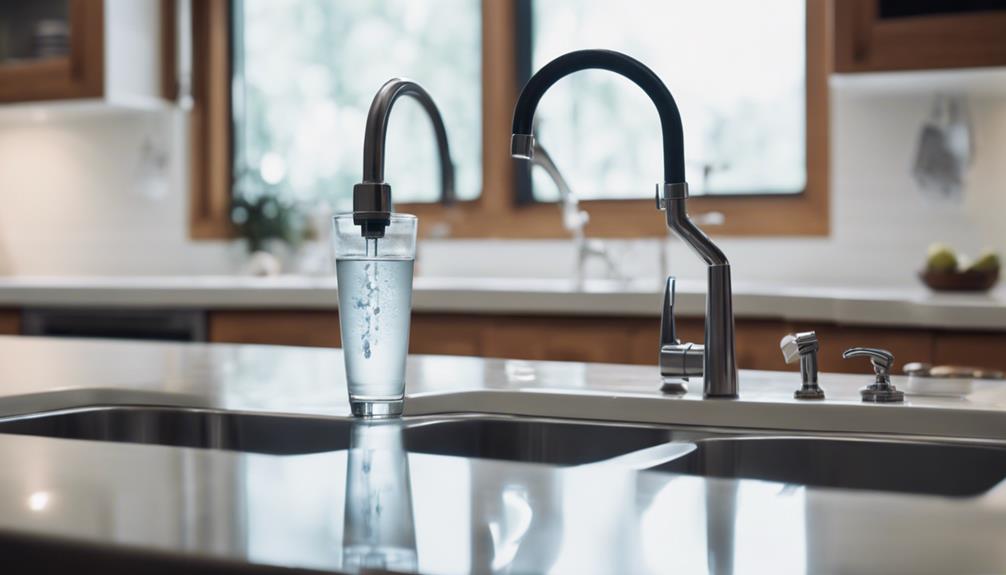
Reverse osmosis systems are a popular choice for those seeking pure, great-tasting water straight from the tap. The best models balance filtration performance, ease of maintenance, and affordability, but they vary widely in features and capacity. The iSpring RCC7AK-BN stands out as the best overall for its balanced six-stage filtration and NSF certification, while the Waterdrop G2 offers impressive tankless design and high flow rates for busy households. However, tradeoffs include maintenance complexity, initial cost, and water waste. Continue reading for a detailed comparison to find the system that fits your needs best.

Get audio and creator gear delivered free with Prime
- Fast, free delivery on millions of items
- Prime Video, Amazon Music and more included
- Member-only deals all year
Complete the kit


Key Takeaways
- The top-ranking systems excel in filtration quality and certification, ensuring safe, clean water.
- Tankless models like Waterdrop G2 and G3P800 offer higher flow rates and space-saving designs, ideal for busy homes.
- Systems with mineral enhancement or remineralization features add beneficial minerals but often come at higher costs.
- Maintenance frequency and ease of filter replacement are critical factors affecting long-term satisfaction.
- Higher capacity units tend to be more expensive but are better suited for large households or commercial use.


| reverse osmosis system | Flow Rate |
|---|---|
| iSpring RCC7AK-BN NSF Certifie | 75 GPD |
| APEC Water ROES-PH75 6-Stage U | 75 GPD |
| Waterdrop G2 Reverse Osmosis S | 400 GPD |
| Express Water 10-Stage Under S | 0.8 gpm |
| GLACIER FRESH GFU03 Electric-F | 800 GPD |
| iSpring RCC7AK-UV 7-Stage Reve | 75 gallons per day |
| iSpring RCC7AK-BLK 6-Stage Rev | — |
| Waterdrop G3P800 Tankless Reve | Filters one cup in 5 seconds |
| APEC Water ROES-50 5-Stage Und | 0.03 gpm |
| APEC Water RO-90 5-Stage Under | 90 GPD |
| iSpring RCC7-BN NSF Certified | 75 gallons per day |
| Waterdrop G5P500A Reverse Osmo | 500 GPD |
| Waterdrop G3P600 Tankless Reve | — |
More Details on Our Top Picks
iSpring RCC7AK-BN NSF Certified 75 GPD 6-Stage Reverse Osmosis Water Filter System with pH+ Remineralization
The iSpring RCC7AK-BN stands out for its combination of effective contaminant removal and water remineralization, which adds back healthy minerals and balances pH. Compared with the Waterdrop G2, it offers a more straightforward installation process and transparent housing for easy monitoring, though it requires more maintenance and filter costs over time. Its 6-stage design ensures thorough filtration, making it ideal for those seeking both purity and mineral content in their drinking water. The remineralization feature is especially beneficial for consumers concerned about mineral deficits from standard RO systems, but the setup may be challenging for those unfamiliar with plumbing. Overall, this model makes the most sense for households prioritizing healthy, mineralized water without sacrificing filtration quality.Pros:- Remineralizes water with healthy minerals and balanced pH
- Easy top-mounted installation from above
- Transparent filter housing for monitoring filter status
- NSF/ANSI 58 certified for effective contaminant reduction
Cons:- Installation may require some plumbing knowledge
- Filter replacements can be costly over time
Best for: Homeowners who want a comprehensive, easy-to-monitor system that produces mineral-rich water
Not ideal for: Renters or those with limited plumbing skills who prefer plug-and-play solutions
- Flow Rate:75 GPD
- Certification:NSF/ANSI 58
- Stages:6
- Remineralization:Yes
- Installation:Top-mounted, DIY-friendly
- Filter Life:F4AK (6 months), F9K (1 year), F19K75 (2 years), F28K75 (3 years)
Our verdict“Ideal for those seeking a reliable, health-focused RO system with mineral enhancement.”
APEC Water ROES-PH75 6-Stage Under Sink Reverse Osmosis System with Alkaline Mineral Enhancement
The APEC Water ROES-PH75 excels in delivering near-perfect purity by removing up to 99% of impurities, including heavy metals and VOCs, which makes it a strong choice for health-conscious households. Its alkaline filter adds calcium minerals, improving taste and alkalinity, a feature not found in the Waterdrop G2, which focuses on high flow and space-saving design. While the system is durable with high-quality components, its higher initial cost and the need for regular filter changes may deter budget-conscious buyers. It’s particularly suitable for those who need a dependable, long-lasting system that emphasizes contaminant removal and mineral enhancement. This system makes the most sense for families who prioritize ultimate purity and mineral balance over installation ease.Pros:- Removes up to 99% of impurities for pure water
- Adds beneficial calcium minerals for taste and alkalinity
- WQA certified for quality assurance
- Durable, high-quality components
Cons:- Requires regular filter replacements
- Installation may need plumbing adjustments
- Higher upfront cost
Best for: Health-focused households wanting maximum impurity removal with mineral enhancement
Not ideal for: Users seeking a budget-friendly or extremely compact system with minimal maintenance
- Flow Rate:75 GPD
- Number of Stages:6
- Max TDS:2000 ppm
- Feed Water Pressure:40-85 psi
- Certification:WQA
- Remineralization:Alkaline filter with calcium
Our verdict“Best suited for those prioritizing water purity and mineral content with a focus on long-term quality.”
Waterdrop G2 Reverse Osmosis System, 400 GPD Tankless RO Water Filtration
The Waterdrop G2 offers a remarkable 400 GPD flow rate with a compact, tankless design that appeals to space-conscious users. Its 7-stage filtration provides thorough purification, comparable to bulkier systems like the APEC ROES-PH75, but with the advantage of eliminating the need for a storage tank—saving space and reducing the risk of bacterial growth. However, it relies on electrical power and may require a dedicated outlet, unlike the Glacier Fresh GFU03, which operates purely on water pressure. This system is ideal for busy households that need quick access to large amounts of purified water and prefer a sleek, modern look. It makes the most sense for those with limited under-sink space or who want a high-capacity, low-maintenance solution.Pros:- High flow rate of 400 GPD for quick water access
- Tankless, space-saving design
- Easy twist-and-pull filter replacements
- Low water waste with 1:1 drain ratio
Cons:- Requires electrical outlet and drilling for installation
- Installation may take up to 30 minutes
- Limited TDS support up to 300 ppm
Best for: Families or offices needing rapid, abundant water without taking up extra space
Not ideal for: Users without electrical outlets or those who prefer simpler, tank-based systems
- Certification:NSF/ANSI 372
- Flow Rate:400 GPD
- Drain Ratio:1:1
- Filtration Stages:7
- Dimensions:17.3″L x 5.9″W x 14″H
- Maximum Flow Rate:0.28 gpm
Our verdict“Perfect for high-demand environments needing fast, large-volume purified water in a compact footprint.”
Express Water 10-Stage Under Sink Reverse Osmosis Water Filtration System with Alkaline Filter, 100 GPD
The Express Water 10-stage system provides thorough purification, removing up to 99.99% of contaminants including lead, fluoride, and bacteria, making it ideal for health-conscious users. Its 10-stage process surpasses many competitors like the APEC ROES-PH75, offering extra layers of filtration and UV sterilization. The inclusion of an alkaline filter enhances taste and adds essential minerals, though its manual operation and 100-gallon capacity mean it’s less suitable for those wanting minimal maintenance or very high volume. It’s best for households that prioritize highly purified, mineral-enriched water and can accommodate the slightly more complex installation process. This model makes the most sense for those seeking maximum filtration depth and upgrade options.Pros:- Removes up to 99.99% of contaminants including bacteria
- Includes an alkaline filter for mineral and taste improvement
- Supports upgrades and additional filtration options
- Easy-to-install with quick-connect fittings
Cons:- Requires manual operation and maintenance
- Limited to 100 gallons capacity before filter change
- Bulky under sink depending on available space
Best for: Families who want the highest level of filtration with mineral enhancement and are comfortable with installation and maintenance
Not ideal for: Small households or those with limited space who prefer a simple, less involved system
- Filtration Stages:10
- Flow Rate:0.8 gpm
- Maximum Temperature:100°F
- Supported Water TDS Level:1000 ppm
- Capacity:100 gallons
- Material:BPA Free
Our verdict“Best for households desiring comprehensive filtration with mineral support and room for maintenance.”
GLACIER FRESH GFU03 Electric-Free Reverse Osmosis Water Filter 800 GPD
The Glacier Fresh GFU03 distinguishes itself by operating without electricity, relying solely on water pressure to function. Its 800 GPD flow rate makes it one of the fastest options, comparable to the Waterdrop G2, but with the advantage of silent, electric-free operation. Its 5-stage filtration provides good purification, though its 3:1 pure-to-waste ratio is less efficient than some electric models like the G2. The system’s compact design and quick 30-minute installation appeal to those with limited space and a desire for straightforward setup. However, it requires a sink hole for installation and adequate water pressure, which could be a challenge in low-pressure homes. This makes it ideal for users wanting high capacity without added complexity or noise.Pros:- Electric-free, silent operation
- High flow rate of 800 GPD
- Quick 30-minute installation
- Space-saving, tankless design
Cons:- Requires drilling a sink hole
- Flow rate depends on inlet water pressure
- Water waste ratio of 3:1
Best for: Homeowners seeking a large-volume, silent, and space-efficient RO system without electrical dependency
Not ideal for: People with low water pressure or limited space for drilling a sink hole
- Type:Tankless RO
- Flow Rate:800 GPD
- Filtration Stages:5
- Water Waste Ratio:3:1
- Installation Time:30 minutes
- Dimensions:13.58″ x 8.27″ x 16.54″
Our verdict“Ideal for those wanting high-capacity, quiet, and space-efficient water purification without electrical components.”
iSpring RCC7AK-UV 7-Stage Reverse Osmosis Water Filter System with Alkaline and UV Filter
The iSpring RCC7AK-UV stands out as the most complete system in this lineup, combining 7-stage filtration with UV sterilization, making it ideal for households that prioritize safety and water quality. Its layered filtration approach effectively removes over 1000 contaminants, including bacteria and viruses, surpassing simpler systems like the APEC ROES-50, which focuses primarily on impurities. The addition of UV sterilization enhances safety but adds complexity and a slight increase in water temperature during operation. While the system’s setup might challenge first-timers, its built-in UV lamp and mineral enhancement provide peace of mind for large families or those with well water. However, regular filter changes—every 6 months to 3 years—are necessary to maintain performance. This pick is best suited for users seeking maximum contaminant removal with supplementary sterilization, despite its more involved installation.
Pros:- Removes over 1000 contaminants including bacteria and viruses
- Includes mineral boost for healthier water taste
- Built-in UV sterilization adds an extra safety layer
- Transparent filter housing for easy monitoring
Cons:- Initial setup can be complex for beginners
- Requires regular filter replacements every 6 months to 3 years
- UV sterilization may cause slight water temperature increase
Best for: Large households or users with well water needing comprehensive filtration and sterilization
Not ideal for: Small apartments or users seeking a quick, plug-and-play setup without UV features
- System Certification:NSF/ANSI 58&372
- Filtration Stages:7
- UV Sterilization:Yes, 11W Philips UV lamp
- Flow Rate:75 gallons per day
- Tank Capacity:3.2 gallons
- Filter Replacement Schedule:6 months to 3 years
- Water Source:City or well water
- Max TDS:2000 ppm
Our verdict“This system is ideal for households demanding the highest level of water safety and purity, despite its complexity.”
iSpring RCC7AK-BLK 6-Stage Reverse Osmosis System with Alkaline Remineralization and Black Faucet
The iSpring RCC7AK-BLK offers a streamlined 6-stage filtration that emphasizes mineral restoration, making it a standout for those who prefer alkaline water and a sleek look. Compared with the Waterdrop G3P800, which excels in high capacity and space-saving design, this model focuses on improving taste and health benefits by adding essential minerals back into purified water. Its DIY-friendly setup and leak protection make it accessible for most homeowners, but it does require space under the sink for multiple filters and periodic maintenance. The higher initial cost reflects its advanced remineralization feature, which appeals to health-conscious consumers. This system makes the most sense for users who want improved flavor and mineral content without sacrificing full contaminant removal—though it’s less suited for those needing maximum capacity or space efficiency.
Pros:- Restores alkalinity and essential minerals for better taste
- Reduces over 1,000 harmful contaminants effectively
- Easy DIY installation with leak protection
- Visual filter inspection for maintenance
Cons:- Requires under-sink space for multiple filters
- Maintenance involves periodic filter replacements
- Higher upfront cost compared to basic systems
Best for: Homeowners prioritizing better taste and mineral content in their drinking water
Not ideal for: Small kitchens with limited under-sink space or users on a tight budget
- Type:Reverse Osmosis System
- Number of Stages:6
- Filter Material:Polypropylene
- Capacity:75 gallons
- Item Dimensions:15.5″L x 16″W x 18″H
- Item Weight:12.5 kg
- Supported Water TDS Level:97 PPM
- Certifications:NSF/ANSI 58
Our verdict“This system is ideal for those who want healthier, better-tasting water with mineral benefits, despite needing more space and higher initial investment.”
Waterdrop G3P800 Tankless Reverse Osmosis Water Filter System, 800 GPD
The Waterdrop G3P800 stands out for its impressive 800 GPD capacity and tankless design, making it an excellent choice for large families or commercial settings. Its 10-stage filtration efficiently reduces heavy metals, fluoride, and PFAS, outperforming most standard systems like the APEC RO-90 in flow rate and continuous supply. The tankless setup saves space and reduces bacterial buildup, while the smart LED faucet offers real-time water quality updates. However, installation can be more involved, especially for those unfamiliar with advanced plumbing. Its high initial cost reflects the sophisticated filtration and capacity, but for busy households needing rapid, continuous supply, the investment pays off. This makes it ideal for users seeking robust, high-volume filtration with modern features, though beginners may face setup challenges.
Pros:- High capacity of 800 GPD for continuous use
- Tankless, space-saving design
- Multi-stage filtration reduces a wide range of contaminants
- Smart faucet with LED indicators for water quality
Cons:- Installation may be complex for non-experts
- Higher initial cost compared to standard RO units
- LED lifespan of 50 years may be overly long for typical needs
Best for: Large families or small commercial spaces needing high flow and capacity
Not ideal for: Small apartments or users with limited under-sink room who prefer simpler systems
- Filtration Stages:10
- Capacity:800 gallons per day
- Flow Rate:Filters one cup in 5 seconds
- Drain Ratio:3:1 pure to drain
- Certification:NSF/ANSI 42, 53, 58, 372; IAPMO R&T NSF/ANSI 58
- Material:Lead-free
- Design:Tankless
Our verdict“Ideal for large households needing high-volume, continuous filtration, despite the complex setup and higher price point.”
APEC Water ROES-50 5-Stage Under Sink Reverse Osmosis System, 50 GPD
The APEC ROES-50 offers a straightforward 5-stage filtration process, focusing on dependable performance for everyday households. Its proven design and simple DIY installation make it appealing to users who want reliable purity without extra bells and whistles. Compared with the Waterdrop G3P800, which emphasizes high capacity and space efficiency, the ROES-50 prioritizes ease of use and maintenance, making it a better fit for moderate water needs. While the system’s plastic construction is less durable than metal counterparts, its long-standing reputation for durability and consistent performance makes it a favorite among budget-conscious homeowners. The main tradeoff is its lower capacity and slower flow rate, which can become noticeable in busier households. This model suits users seeking proven, uncomplicated filtration with minimal fuss.
Pros:- Removes over 99.99% of impurities for ultra-pure water
- Easy DIY installation with quick connect fittings
- Includes all components with low-maintenance filters
- Trusted performance historically
Cons:- Flow rate may be slow for large households
- Lower capacity limits continuous high demand
- Plastic construction may be less durable long-term
Best for: Moderate household use where dependability and simplicity matter most
Not ideal for: High-demand households or those needing high flow rates and capacity
- Capacity:50 gallons
- Flow Rate:0.03 gpm
- Maximum Water TDS Level:2000 ppm
- Filter Life Cycle:6 months
- Item Dimensions:15.5″L x 5.25″W x 17″H
- Item Weight:11.3 kg
Our verdict“A dependable choice for average households that value simplicity and proven filtration, despite slower flow and capacity limits.”
APEC Water RO-90 5-Stage Under Sink Reverse Osmosis System 90 GPD
The APEC RO-90 is tailored for homes with high water demands, offering 90 GPD and durable, high-quality components. Its five-stage filtration system effectively removes nearly all impurities, including heavy metals and fluoride, delivering reliably pure water for daily use. Compared with the APEC ROES-50, the RO-90 provides almost double the flow rate and capacity, making it suitable for busy families or small offices. Its quick-install design and tested components make maintenance manageable, but the system’s size can limit fitting in smaller under-sink spaces. Although the initial setup might be slightly more complex, its robustness provides long-term performance. This unit makes sense for users who need high throughput without sacrificing filtration quality—though space and plumbing knowledge are considerations.
Pros:- Removes nearly all impurities for safe, great-tasting water
- High capacity and flow rate for busy households
- Durable components tested by WQA
- Quick, easy installation
Cons:- Installation may require some plumbing expertise
- System size can be bulky for small spaces
- Initial setup can be complex for beginners
Best for: Large households or offices requiring high volume, fast filtration
Not ideal for: Small kitchens or users with limited under-sink space seeking a compact system
- Flow Rate:90 GPD
- Number of Stages:5
- Tank Dimensions:11 x 11 x 15 inches
- Maximum Feed Water Pressure:85 psi
- Filter Stages:Sediment, Carbon Block, Reverse Osmosis Membrane, Coconut Shell Carbon
Our verdict“Best suited for large households or busy environments needing fast, high-volume filtration, despite larger size and installation complexity.”
iSpring RCC7-BN NSF Certified 5-Stage Reverse Osmosis Water Filter with Brushed Nickel Faucet
This model stands out for its proven ability to effectively remove over 1,000 contaminants, including lead and fluoride, making it ideal for households prioritizing purity. Compared with the Waterdrop G5P500A, it offers a more traditional tank system, which some users find simpler to install and maintain, though it lacks the space-saving benefits of tankless designs. Its 75 GPD flow rate is suitable for most families, but the absence of a powered pump means water pressure can limit performance in low-pressure scenarios. The durable, leak-free design with a lead-free faucet ensures long-term reliability, yet filter replacements can become costly over time. Overall, this system makes the most sense for those seeking proven filtration without complex setup or high ongoing costs.
Pros:- Effectively removes over 1,000 contaminants for clean drinking water
- Easy to install with a leak-free, low-maintenance design
- Includes a high-quality, lead-free faucet and durable components
Cons:- No included power source, limiting flow in low-pressure conditions
- Filter replacement costs can add up over time
Best for: Homeowners needing dependable, high-capacity filtration with minimal tech fuss
Not ideal for: Small kitchens with limited under-sink space or users wanting a tankless system
- Capacity:75 GPD
- Certification:NSF/ANSI 58
- Faucet Material:Brushed Nickel
- Filter Stages:5
- Flow Rate:75 gallons per day
Our verdict“This system suits households that prioritize proven filtration reliability and straightforward installation over space-saving features.”
Waterdrop G5P500A Reverse Osmosis System, 8-Stage RO Filtration, Alkaline
The Waterdrop G5P500A excels with its tankless design and 8-stage filtration, making it ideal for busy households that need a high flow of purified water—up to 500 GPD. Unlike the iSpring model, which relies on a traditional tank, this unit’s space-efficient setup offers a modern aesthetic and immediate access to water, though the complex installation process and need for drilling might challenge DIY users. It also enriches water with minerals, enhancing taste, which is an advantage over simpler systems. Its higher upfront cost may deter budget-conscious buyers, and the requirement for a dedicated power source adds complexity. This pick makes the most sense for those seeking a sleek, high-capacity system with mineral enhancements and space efficiency.
Pros:- Effective 8-stage filtration reduces a wide range of contaminants
- Tankless design saves space and offers a modern look
- High flow rate provides immediate access to purified water
- Mineral enrichment improves taste and water quality
Cons:- Requires drilling for faucet installation, which can be challenging
- More expensive than traditional tank systems
- Installation complexity may be daunting for some users
Best for: Large families or small commercial setups needing rapid, continuous access to filtered water
Not ideal for: Renters or those with limited under-sink space who prefer simple, no-drill setups
- Filtration stages:8
- Flow rate:500 GPD
- Pure to drain ratio:2:1
- Dimensions:16.69″ L x 5.69″ W x 13.9″ H
- Material:BPA-Free
- Supported water TDS:up to 500 ppm
Our verdict“This system is ideal for space-conscious households that want high flow rates and mineral-enriched water without the bulk of a tank.”
Waterdrop G3P600 Tankless Reverse Osmosis Water Filter System, 600 GPD
The Waterdrop G3P600 offers a robust 600 GPD capacity with a smart display faucet that monitors water quality and filter status—features that set it apart from both the iSpring and G5P500A. Its tankless design maximizes under-sink space, making it suitable for tight kitchens. While the high flow rate is a major advantage, the system’s need for an electrical connection under the sink can be a hurdle in some setups. Its comprehensive certifications, including NSF and EU standards, attest to its safety and efficiency. However, understanding the digital interface and maintaining the system may be more complex for less tech-savvy users. This model makes the most sense for those who want high output with real-time monitoring and space efficiency.
Pros:- High filtration capacity of 600 GPD for large demands
- Tankless design saves space and simplifies filter changes
- Smart display faucet provides real-time water quality and filter life info
- Low drain ratio reduces water waste
Cons:- Requires an electrical outlet under the sink
- Measuring cabinet space is necessary for fit
- System complexity may challenge non-technical users
Best for: Tech-savvy households or small commercial spaces needing high capacity and system monitoring
Not ideal for: Renters or users with limited under-sink electrical outlets who prefer simple, manual systems
Our verdict“This system is suited for households seeking high capacity, smart monitoring, and space-efficient design in a modern package.”

How We Picked
This list of reverse osmosis systems was curated based on several key factors including filtration performance, build quality, ease of installation, maintenance requirements, capacity, and overall value. Certification from agencies like NSF adds an extra layer of trust, ensuring the system meets industry standards. I prioritized models that balance advanced features with user-friendly design, making them suitable for different household sizes and budgets. The ranking reflects a combination of these criteria, highlighting which systems provide the best overall experience for most consumers while also offering specialized options for specific needs.Factors to Consider When Choosing Reverse Osmosis Systems
Choosing the right reverse osmosis system involves understanding several important factors that go beyond basic features. A well-chosen system should fit your household size, water quality, and budget, while also considering long-term maintenance and efficiency. Being aware of these broader considerations helps avoid common pitfalls like overspending on unnecessary features or selecting a system that’s too small for your household.Capacity and Water Production Rate
Capacity, typically measured in gallons per day (GPD), determines how much purified water your system can produce. For small households or occasional use, a 50-75 GPD system may suffice, but larger families benefit from models offering 100 GPD or more. Overspending on a high-capacity unit when you only need minimal daily water is unnecessary, while underestimating your needs can lead to frequent filter changes and inconvenience. Consider your household size, water usage habits, and whether you want a system that can handle peak demands without slowing down.
Filtration Stages and Certification
Most reverse osmosis systems include multiple filtration stages, often 5 or 6, removing contaminants such as lead, chlorine, fluoride, and bacteria. Systems with NSF certification or equivalent standards provide assurance of performance and safety. Be cautious of models with fewer stages or unverified claims, as they may not filter out all harmful substances. Investing in a certified system ensures your water quality remains high, especially in areas with poor tap water quality or known contaminants.
Ease of Installation and Maintenance
Ease of setup can vary significantly, with some systems designed for DIY installation and others requiring professional help. Maintenance involves replacing filters and membranes periodically—some models make this straightforward with quick-change cartridges, while others require more effort. Consider how much time you’re willing to dedicate to upkeep, and look for features like clear indicator lights or tool-free filter replacements. A system that’s difficult to maintain can lead to neglect and reduced performance over time.
Water Waste and Efficiency
Reverse osmosis systems typically waste some water during filtration, with efficiency measured as the ratio of purified water to wastewater. More efficient models produce less waste, which can be important in areas with water restrictions or high water costs. Tankless systems often have better efficiency but may require higher initial investment. Weigh the importance of sustainability and ongoing water costs against upfront expenses to select an environmentally friendly option.
Additional Features and Cost Considerations
Extra features like remineralization, UV sterilization, or sleek design can enhance your water quality and user experience. However, these features often increase the purchase price and complexity. Balance your desire for advanced features with your budget and actual needs. Remember that high-end systems tend to have higher maintenance costs, so consider the total cost of ownership over the lifespan of the unit.
Frequently Asked Questions
How often do I need to replace filters in a reverse osmosis system?
The frequency of filter replacement depends on the model and water usage, but generally, pre-filters should be replaced every 6-12 months, and membranes every 2-3 years. Regular maintenance ensures optimal filtration performance and prevents buildup of contaminants. Some systems include indicator lights or alerts to remind you when replacements are due, making upkeep more straightforward. Neglecting filter changes can lead to reduced water flow and compromised water quality.
Is a tankless reverse osmosis system better than traditional tank models?
Tankless RO systems often provide higher flow rates and save space, which is advantageous in compact kitchens. They also tend to be more water-efficient, wasting less during filtration. However, they usually come with a higher initial price and may require more precise installation. If you need rapid access to large volumes of water regularly, a tankless model offers clear benefits, but for casual use, a traditional tank system may be more cost-effective and simpler to maintain.
Can reverse osmosis systems remove all contaminants from tap water?
While reverse osmosis is highly effective at removing a wide range of contaminants, including heavy metals, chlorine, and many chemicals, it may not eliminate 100% of all pollutants. Certain volatile organic compounds (VOCs) or bacteria may require additional filtration stages like UV sterilization. Combining RO with other treatment methods can provide comprehensive purification, especially in areas with particularly poor water quality or specific health concerns.
Are reverse osmosis systems safe for long-term use?
Yes, when properly maintained, reverse osmosis systems are safe and provide consistent filtration of tap water. Regular filter and membrane replacements are essential to prevent bacterial growth and ensure removal of contaminants. Some systems include remineralization stages to restore essential minerals, which can be beneficial for health. Following manufacturer guidelines for maintenance is key to maintaining water purity and system longevity.
What is the typical lifespan of a reverse osmosis system?
The core components, including filters and membranes, usually last between 2-3 years, but the system itself can last much longer with proper care. High-quality models with durable construction often reach 10+ years of service. Regular maintenance, correct installation, and using high-quality replacement parts help extend the lifespan. Investing in a reliable system with good support can save money and hassle over the long run.
Conclusion
For most households, the iSpring RCC7AK-BN offers the best balance of performance, certification, and value, making it an excellent choice for general use. Those seeking a space-saving, high-flow system might prefer the Waterdrop G2, especially if quick access to large quantities of water matters. Budget-conscious buyers should consider the APEC Water ROES-50, which provides solid filtration at a lower cost. For premium features like remineralization or UV sterilization, the iSpring RCC7AK-UV or Waterdrop G5P500A are worth the investment. Ultimately, your choice should reflect your household size, water quality concerns, and budget priorities.
Halloween Picks
halloween
As an affiliate, we earn on qualifying purchases.