If you’re searching for a solar power bank with an AC outlet, you’re likely looking for a portable power solution that combines solar recharging with the ability to power household devices. The Portable Power Station, 146Wh stands out as the best overall, offering a solid balance of capacity and portability. The Anker SOLIX C300 is a top choice for camping enthusiasts who need higher capacity and reliable solar input. However, tradeoffs often include size, weight, and price. Continue reading for a detailed comparison of these options and more, to find the best fit for your power needs.

Get audio and creator gear delivered free with Prime
- Fast, free delivery on millions of items
- Prime Video, Amazon Music and more included
- Member-only deals all year
Complete the kit


Key Takeaways
- Top picks balance between capacity, portability, and solar recharge speed, with no single product excelling in all areas.
- Higher wattage AC outlets generally come with increased size and weight, affecting portability for outdoor use.
- solar input quality and wattage are critical for faster recharging, especially when relying on solar panels in remote settings.
- Battery chemistry (LiFePO4 vs. standard lithium-ion) impacts safety, lifespan, and overall durability over time.
- Many units include multiple outputs, but choosing one depends on your device load and whether portability or capacity is your priority.
| Portable Power Station, 146Wh 100W Solar Powered Power Bank with AC Outlet | 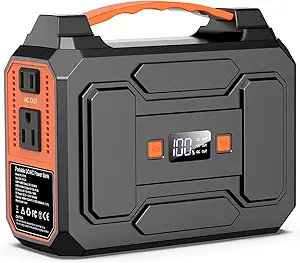 | Best Lightweight and Versatile Emergency Companion | Capacity: 146Wh / 39600mAh | Weight: 3.3 lbs | Outputs: 2x110V AC, 2xUSB 5V/3.1A, 1xUSB Quick Charge 3.0, 1xDC 12V | VIEW ON AMAZON | See Our Full Breakdown |
| Anker SOLIX C300 Portable Power Station, 288Wh Solar Generator for Camping |  | Best for High Capacity and Long-Term Outdoor Power | Capacity: 288Wh | Power Output: 300W (600W Surge) | Charging Ports: 3x AC, 2x USB-C, 1x USB-A, car socket | VIEW ON AMAZON | See Our Full Breakdown |
| Portable Power Station 300W, 110V Solar Generator 280Wh (Without Solar Panel) | 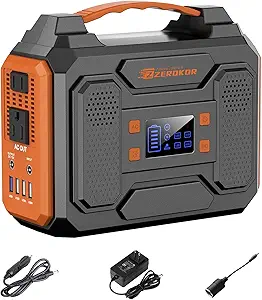 | Best Compact and Affordable Power Backup | Power: 300W | Battery Capacity: 280Wh | AC Outlets: 2 | VIEW ON AMAZON | See Our Full Breakdown |
| Portable Solar Generator 300W with 60W Solar Panel | 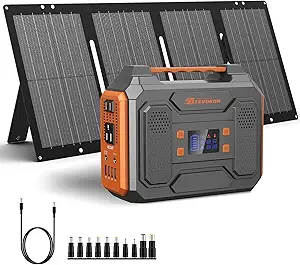 | Best for Off-Grid Camping and Emergency Power | Power Capacity: 300W | Solar Panel: 60W monocrystalline | AC Outlets: 2 x 300W Max | VIEW ON AMAZON | See Our Full Breakdown |
| Portable Power Station 300W, 220Wh Solar Generator Backup Battery Pack |  | Best for Compact, All-in-One Emergency Power | Power Output: 300W (Peak 600W) | Battery Capacity: 220Wh / 60000mAh | Outputs: 2x110V AC, 3x USB, 1 DC | VIEW ON AMAZON | See Our Full Breakdown |
| Daran Portable Power Station 89.6Wh LiFePO4 Battery with 100W Output |  | Best Overall for Portable, Reliable Power | Capacity: 89.6Wh | Battery Type: LiFePO4 | Weight: 2.54 pounds | VIEW ON AMAZON | See Our Full Breakdown |
| Portable Solar Power Bank with AC Outlet 65W 110V |  | Best for Compact, Multi-Device Charging on the Go | Battery Capacity: 24000mAh | AC Output: 65W | DC Output: 9V~12.6V/10A MAX | VIEW ON AMAZON | See Our Full Breakdown |
| Takki Solar Generator 120W Peak Portable Power Station with 21W Solar Panel, 88.8Wh Battery, 110V AC Outlet |  | Best for Camping and Emergency Backup with Moderate Power | Battery Capacity: 88.8Wh | Peak Power: 120W | Weight: 2.29 lbs | VIEW ON AMAZON | See Our Full Breakdown |
| solar power bank with ac outlet | Battery Capacity |
|---|---|
| Portable Power Station | — |
| Anker SOLIX C300 Portable Powe | — |
| Portable Power Station 300W | 280Wh |
| Portable Solar Generator 300W | — |
| Portable Power Station 300W | 220Wh / 60000mAh |
| Daran Portable Power Station 8 | — |
| Portable Solar Power Bank with | 24000mAh |
| Takki Solar Generator 120W Pea | 88.8Wh |
More Details on Our Top Picks
Portable Power Station, 146Wh 100W Solar Powered Power Bank with AC Outlet
This compact power station excels in portability, weighing just 3.3 lbs, making it ideal for outdoor adventures or emergency preparedness where mobility is key. Compared with larger options like the Anker SOLIX C300, it offers less capacity but trades that for a lighter weight and easier handling. Its multiple outputs—including dual AC outlets, USB, and DC—cover a range of devices, though the 100W AC limit restricts high-power appliances. The inclusion of dual LED flashlights with emergency modes enhances its usefulness during outages. However, the absence of a solar panel means you must buy one separately, which could add to the overall cost. Its limited capacity suits small to medium devices but falls short for high-wattage tools or prolonged power needs. Best for campers, hikers, or emergency kits where portability outweighs high capacity.
Pros:- Extremely lightweight at 3.3 lbs, easy to carry
- Multiple charging options including solar, AC, and car
- Includes dual LED flashlights with emergency modes
Cons:- Solar panel not included, additional purchase needed
- Limited to 100W AC output, restricting high-power devices
Best for: Outdoor enthusiasts and emergency preparedness kits needing lightweight power backup
Not ideal for: Users requiring high-capacity power for appliances over 100W or extended use without recharging
- Capacity:146Wh / 39600mAh
- Weight:3.3 lbs
- Outputs:2x110V AC, 2xUSB 5V/3.1A, 1xUSB Quick Charge 3.0, 1xDC 12V
- Recharging Options:AC wall adapter, car charging, solar panel (not included)
Our verdict“This power station makes the most sense for those prioritizing portability and emergency use over high capacity.”
Anker SOLIX C300 Portable Power Station, 288Wh Solar Generator for Camping
The Anker SOLIX C300 stands out for its substantial 288Wh capacity and long cycle life, making it suitable for extended outdoor stays or emergency situations where sustained power is needed. Its 300W continuous output provides enough to run multiple small appliances or devices simultaneously, outperforming smaller units like the Portable Power Station 300W, 280Wh. The fast recharge time—80% in just 50 minutes—supports quick turnaround between uses. Its LiFePO4 batteries ensure safer, longer-lasting power, although some solar panels like the Anker SOLIX PS30 may not be compatible. The 3,000 cycle lifespan means reliability over years, but the higher capacity and robust build come with a slightly higher price point. Best suited for serious outdoor users or backup power with a focus on longevity.
Pros:- High-capacity 288Wh battery with long cycle life
- Multiple versatile ports including AC, USB-C, and car socket
- Fast recharging with wall outlet and solar options
Cons:- Not compatible with all solar panels (e.g., some Anker models)
- Higher price point compared to smaller units
Best for: Campers, outdoor workers, or emergency preppers needing reliable, long-term power
Not ideal for: Casual users who only need occasional, low-power charging or are on a tight budget
- Capacity:288Wh
- Power Output:300W (600W Surge)
- Charging Ports:3x AC, 2x USB-C, 1x USB-A, car socket
- Recharging Time:80% in 50 minutes
Our verdict“This model is best for those seeking durable, long-lasting power with high capacity for outdoor or backup needs.”
Portable Power Station 300W, 110V Solar Generator 280Wh (Without Solar Panel)
This lightweight 300W power station with 280Wh capacity offers a practical balance for outdoor use and emergency scenarios, especially for those who want a simple, portable device without extra bulk. Its multiple outlets—including AC, USB, and DC—make it versatile for small devices, but the 300W limit restricts larger appliances. Compared to larger models like the Anker SOLIX C300, it sacrifices some capacity and features for a smaller size and lower cost, though the solar panel must be purchased separately. Its built-in protections and cooling system help ensure safe operation, but the device’s overall power ceiling makes it unsuitable for high-wattage equipment or long-term continuous use. Ideal for infrequent, small-scale outdoor power needs or as a backup for essential devices.
Pros:- Lightweight at about 5 lbs, easy to carry
- Multiple charging options including AC, solar, and car
- Built-in safety features and cooling system
Cons:- Limited to 300W power output, restricting larger devices
- Solar panel sold separately, increasing initial investment
Best for: Hikers, campers, or light emergency users seeking a compact, affordable power source
Not ideal for: People needing to power high-wattage appliances or run devices for extended periods
- Power:300W
- Battery Capacity:280Wh
- AC Outlets:2
- Protection Features:short circuit, over-current, over-voltage, overload
Our verdict“This pick is well-suited for light outdoor use and emergency backup where portability and affordability are priorities.”
Portable Solar Generator 300W with 60W Solar Panel
The Portable Solar Generator 300W with 60W solar panel integrates a 300W capacity with a foldable solar panel, making it highly suitable for off-grid camping and quick emergency setups. Its 20.5% solar conversion efficiency ensures effective recharging during sunny days, outperforming less efficient panels. The multiple outlets—including AC, USB, and DC—cover most small device needs, though it’s not designed for high-wattage appliances. The device’s safety features and cooling system support durability in outdoor conditions, but the junction box isn’t waterproof, and performance can decline if not regularly used. Compared with larger stations like the Anker SOLIX C300, this unit prioritizes portability and solar integration over sheer capacity. This is perfect for users who value renewable energy and lightweight design in outdoor contexts.
Pros:- Portable and lightweight with foldable solar panel
- High solar efficiency at 20.5% for fast recharging
- Multiple charging options including AC, solar, and car
Cons:- Not suitable for devices over 300W
- Junction box not waterproof, limiting outdoor durability
Best for: Campers, hikers, and outdoor adventurers needing portable solar charging
Not ideal for: Users requiring sustained high-wattage power or long-term backup without regular sunlight
- Power Capacity:300W
- Solar Panel:60W monocrystalline
- AC Outlets:2 x 300W Max
- Conversion Efficiency:20.5%
Our verdict“This solar generator is ideal for those prioritizing renewable energy, portability, and outdoor use over high capacity.”
Portable Power Station 300W, 220Wh Solar Generator Backup Battery Pack
This 220Wh capacity power station offers a compact and lightweight solution for small device charging and emergency backup, weighing just 5 lbs. Its ability to support up to 7 devices simultaneously across AC, USB, and DC ports makes it versatile for quick power needs. While the 300W output supports many small appliances, the limited capacity might fall short for extended use or high-wattage appliances. The device’s built-in LED light enhances its utility during outages or outdoor adventures. Compared to larger models like the Anker SOLIX C300, it sacrifices capacity for size and weight, making it perfect for short-term or low-power applications. The battery supports over 1000 cycles, promising durability, but its small size means it’s not suitable for extensive power demands. This is best for short trips, camping, and emergency use where size and weight are critical.
Pros:- Lightweight at 5 lbs, highly portable
- Supports multiple devices simultaneously
- Built-in LED light for darkness
Cons:- Limited to 220Wh capacity, restricting prolonged use
- Not suitable for high-wattage appliances or continuous operation
Best for: Campers, home backup users, and outdoor hobbyists needing a lightweight, portable power source
Not ideal for: Those needing to run high-wattage appliances or power tools for extended periods
- Power Output:300W (Peak 600W)
- Battery Capacity:220Wh / 60000mAh
- Outputs:2x110V AC, 3x USB, 1 DC
- Recharging Options:AC, solar, car
Our verdict“This backup battery works best for quick, low-power needs in outdoor or emergency scenarios where size matters.”
Daran Portable Power Station 89.6Wh LiFePO4 Battery with 100W Output
This compact power station excels in portability and long-lasting performance, thanks to its LiFePO4 battery offering over 3500 cycles—far surpassing the durability of the Takki Solar Generator. Its multiple fast-charging options, including solar, make it flexible for outdoor use, and its quiet operation is a plus for discreet power needs. Compared to the Takki, it provides a higher cycle count and more diverse output ports, though it’s limited to devices under 100W and doesn’t include a solar panel. Its safety features and built-in LED flashlight add to its appeal for outdoor adventurers and emergency prep.
Pros:- Compact and lightweight for easy portability
- Multiple fast charging options including solar
- Long-lasting LiFePO4 battery with over 3500 cycles
- Built-in LED flashlight with safety protections
Cons:- Limited to devices within 100W power draw
- Solar panel sold separately, increasing total cost
Best for: Campers, outdoor enthusiasts, and emergency prepper who need a lightweight, durable power source with multiple charging options.
Not ideal for: Users needing to power high-wattage appliances or requiring a solar panel included—its 100W limit and solar panel not included may be restrictive.
- Capacity:89.6Wh
- Battery Type:LiFePO4
- Weight:2.54 pounds
- Dimensions:6.5×3.3×4 inches
- Output Power:100W (200W Peak)
- Ports:2 AC sockets, 2 USB-C, 2 USB-A, DC5521
- Charging Methods:AC wall socket, USB-C PD, car charging, solar panel (not included)
- Cycle Life:3500+ cycles
- Safety Features:Advanced BMS with 12 protections
Our verdict“This pick is ideal for those seeking a portable, durable power station with versatile charging options for outdoor use.”
Portable Solar Power Bank with AC Outlet 65W 110V
This power bank strikes a balance between portability and power, with a 24,000mAh battery capable of charging laptops, phones, and tablets, and a 65W AC outlet that handles small appliances. It’s more portable than the Takki, fitting easily into a bag for outdoor trips or emergency kits. Compared to the Daran, it offers a lower capacity but includes a solar panel, providing a renewable recharging method—though the AC output requires manual activation, which could be inconvenient. Its multiple USB ports and safety features make it suitable for everyday use, but its limited 65W output restricts larger appliances.
Pros:- Powerful 65W AC outlet suitable for laptops
- Multiple recharging options including solar
- Compact and lightweight for portability
- Built-in BMS for safety and protection
Cons:- AC outlet requires manual activation
- Junction box on solar panel not waterproof
- Limited to devices under 65W
Best for: Hikers, travelers, and emergency users who need a portable power source capable of charging multiple devices with a small appliance-friendly AC outlet.
Not ideal for: People needing to power devices over 65W or expecting to run high-power appliances—its 65W limit and manual AC activation may fall short.
- Battery Capacity:24000mAh
- AC Output:65W
- DC Output:9V~12.6V/10A MAX
- USB Ports:5V/2.4A Max, Quick Charge 5V/3A 9V/2A MAX
- Solar Panel:30W
- Size:6.89 x 3.98 x 1.89 inches
- Folded Solar Panel Size:12.7 x 8.4 x 0.3 inches
Our verdict“This device suits users seeking a portable, multi-device charging solution with renewable recharging options for outdoor and emergency use.”
Takki Solar Generator 120W Peak Portable Power Station with 21W Solar Panel, 88.8Wh Battery, 110V AC Outlet
The Takki Solar Generator offers a slightly higher peak power at 120W, suitable for small appliances up to 80W, making it a good option for camping or short-term outages. Its 88.8Wh battery is smaller than the Daran’s but paired with a foldable 21W solar panel, it supports quick recharging in outdoor contexts. Compared to the other two, it is very lightweight and portable but sacrifices some capacity and power for easier handling. It’s best for users who need a simple, reliable backup for small devices but isn’t suited for high-power or extended use given its limited battery capacity and power output.
Pros:- Lightweight and portable for outdoor use
- Supports multiple charging options including solar and AC
- Supports a variety of small devices and appliances
- Built-in LED flashlight with SOS mode
Cons:- Limited battery capacity for extended use
- Not suitable for high-power appliances over 80W
- Charging while powering reduces battery lifespan
Best for: Campers, outdoor enthusiasts, and emergency users looking for a lightweight, easy-to-carry power source for small devices and quick recharges.
Not ideal for: Those needing to power larger appliances or expecting prolonged outages—its 88.8Wh capacity and 80W device limit are restrictive.
- Battery Capacity:88.8Wh
- Peak Power:120W
- Weight:2.29 lbs
- Dimensions:5.7 x 4.13 x 3 inches
- Solar Panel Power:21W
- Charging Time (AC):2 hours to 80%
- Charging Time (Solar):5-7 hours to 80%
Our verdict“This generator is suited for outdoor users needing a compact, versatile backup for small devices and quick recharges.”

How We Picked
Our evaluation focused on key factors that matter most to users seeking a solar power bank with an AC outlet. Performance was assessed based on capacity, wattage, and recharging speed, especially via solar input. Usability considerations included weight, size, and interface design. Build quality and safety features, like battery chemistry and protection circuits, also influenced rankings. Finally, value was considered by comparing price against features and performance, ensuring recommendations suit different budgets and needs. Products were ordered to highlight the best overall, best value, and specialized options for various scenarios.
Factors to Consider When Choosing Solar Power Bank With Ac Outlet
Choosing the right solar power bank with an AC outlet involves weighing several important factors. Capacity determines how long your devices can run, while wattage affects what you can power and how quickly it charges. Size and weight influence portability, especially if you plan to carry it outdoors. Solar input quality affects how fast it recharges in sunlight, which is critical in remote situations. Battery chemistry impacts longevity and safety, making it worth considering for long-term use. Understanding these factors helps prevent common mistakes like overestimating capacity or ignoring solar input efficiency.Capacity and Power Output
Capacity, measured in watt-hours (Wh), indicates how much energy the power bank can store. A higher capacity allows longer use of devices, but often results in increased size and weight. Power output, especially the AC outlet wattage, determines what appliances you can run. For example, a 100W outlet suits small electronics, while a 300W outlet can handle larger devices like mini fridges or power tools. Matching capacity and wattage to your typical device load prevents underperformance or damage.
Portability vs. Capacity
Many users struggle balancing size and power. Larger capacity units tend to be heavier and less portable, making them less ideal for backpacking or camping. Conversely, smaller units are lightweight but may only support limited device use or quick recharges. Consider your primary use case: if portability is key, opt for compact units with moderate capacity. For home backup or longer trips, larger models are worth the extra weight. Recognizing this tradeoff helps avoid frustration and ensures your power bank meets your mobility needs.
Solar Charging Efficiency
Solar input quality varies greatly between models. Higher wattage solar inputs enable faster recharging, which is vital if you rely on solar power in remote locations. Panels with better efficiency and appropriate wattage ratings reduce recharge time, ensuring your device remains ready when needed. Be wary of units with underpowered solar inputs that can take days to recharge fully—something that defeats the purpose of having solar capability. Always check the solar input specs and consider adding extra panels if rapid recharge is a priority.
Battery Chemistry and Longevity
Battery chemistry impacts safety, lifespan, and performance. LiFePO4 batteries, found in some premium models, offer longer cycle life and better thermal stability, making them safer for repeated use. Standard lithium-ion batteries are lighter and cheaper but tend to degrade faster. Investing in a unit with advanced chemistry can pay off over time, especially if you expect frequent recharges or long-term storage. Weigh the safety and durability benefits against initial cost and weight considerations.
Additional Features and Outputs
Beyond capacity and solar input, consider the number and types of outputs. Multiple USB ports, car sockets, and additional AC outlets increase versatility. Some models include features like LED displays, built-in flashlights, or wireless charging. However, adding these features can increase cost and complexity. Focus on what you’ll need most—if you primarily charge phones and small gadgets, a simpler design may suffice. For more extensive device support, look for models with higher wattage and multiple outlets.
Frequently Asked Questions
Can I rely solely on solar charging for my power bank?
While many solar power banks can recharge via sunlight, relying solely on solar charging depends on sunlight availability and panel wattage. Smaller units with low solar input may take days or even weeks to fully recharge under typical conditions, which isn’t practical for urgent needs. If you plan to depend on solar as your main source, choose a model with high solar input capacity and consider supplementing with grid charging when possible. This approach ensures your devices stay powered regardless of sunlight conditions.
How long will a solar power bank with an AC outlet run my device?
The runtime depends on the capacity of the power bank and the wattage of the device. For example, a 200Wh unit powering a 50W device could theoretically run for around 4 hours, but actual time may be reduced by efficiency losses. Larger capacity units extend this duration, but weight and size also increase. Always check the Wh rating and compare it with your device’s wattage to estimate runtime accurately, and consider safety margins for real-world use.
Are higher wattage AC outlets worth the extra cost?
Higher wattage outlets offer the ability to power larger or more demanding devices, which can be a significant advantage in emergencies or outdoor work. However, they often come with increased size, weight, and price. If your primary needs involve charging phones, tablets, or small electronics, a lower wattage outlet may be sufficient and more portable. For heavy-duty or multiple device use, investing in higher wattage outlets makes sense, but evaluate whether the added bulk aligns with your portability requirements.
What should I look for in the solar input port?
The solar input port’s wattage rating indicates how much solar power the unit can accept for recharging. A higher wattage input allows faster recharging times, especially important when sunlight is limited or during critical moments. Compatibility with standard solar panels and the presence of MC4 connectors can simplify setup. Avoid units with very low solar input ratings if you expect to rely heavily on solar recharging, as this can lead to prolonged downtimes.
Is battery chemistry important for long-term use?
Yes, the type of battery chemistry significantly influences lifespan, safety, and performance. LiFePO4 batteries, used in some premium models, offer longer cycle life and better thermal stability, reducing the risk of overheating or failure. Standard lithium-ion batteries are lighter and less expensive but tend to degrade faster after repeated recharges. For long-term reliability, especially if you plan frequent use or long storage periods, opting for a unit with advanced chemistry can provide peace of mind and better durability.
Conclusion
For most users seeking a reliable, all-around solution, the Portable Power Station, 146Wh offers a solid balance of capacity, portability, and price. If you prioritize camping or outdoor adventures with higher device loads, the Anker SOLIX C300 shines due to its larger capacity and faster solar recharge capabilities. Budget-conscious buyers or those new to solar power should consider smaller, simpler models like the Portable Solar Power Bank 65W. For long-term or heavy-duty use, investing in units with LiFePO4 batteries and higher AC wattage makes sense. Tailor your choice to your specific needs—whether for emergencies, outdoor trips, or long-term backup—to find the best fit.
Halloween Picks
halloween
As an affiliate, we earn on qualifying purchases.