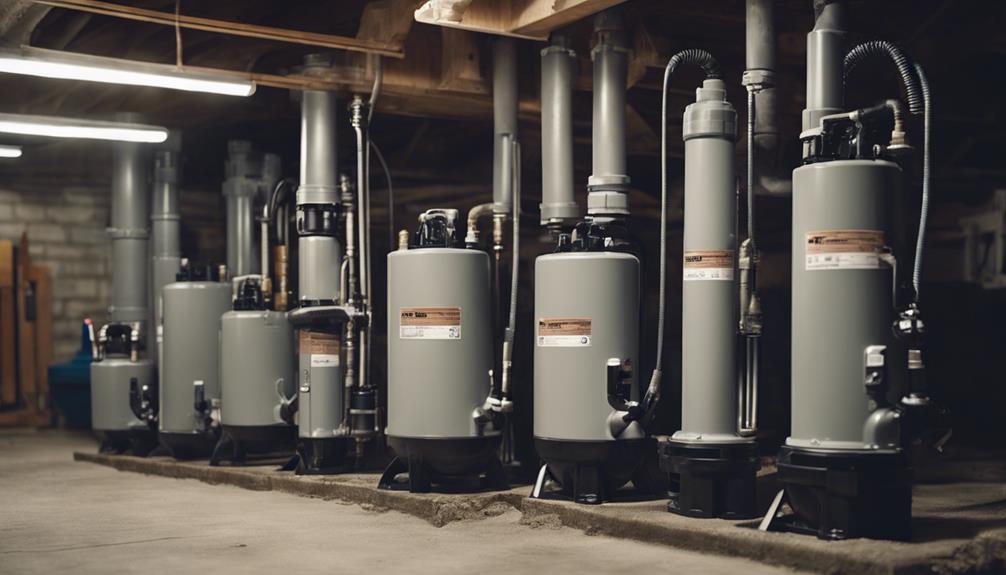

For most basements, I rank the WAYNE CDU800 as the best overall sump pump because its 1/2 HP motor, vertical float, and permanent-pit design strike the strongest balance. The Zoeller M98 Flow-Mate is my durability-focused alternative, while the WAYNE CDU1000 is the premium choice for demanding water loads. The main choice is between an automatic pump built for continuous sump-pit duty and a portable utility model intended for occasional drainage. Buyers also need to weigh horsepower, switch clearance, construction, discharge capacity, and backup planning. Continue reading for the full breakdown of all 13 options and the buyer each one suits best.

Get audio and creator gear delivered free with Prime
- Fast, free delivery on millions of items
- Prime Video, Amazon Music and more included
- Member-only deals all year
Complete the kit


Key Takeaways
- The WAYNE CDU800 leads the ranking because it combines adequate 1/2 HP capacity with an integrated vertical switch and a design intended for permanent sump-pit installation.
- The Zoeller M98 and WAYNE CDU1000 serve different premium buyers: the M98 emphasizes cast-iron construction, while the CDU1000 offers 1 HP output, a listed 6,100 GPH capacity, and a five-year warranty.
- The WAYNE CDU790 and Zoeller M53 show why 1/3 HP still matters. They suit ordinary residential pits where dependable cycling is more useful than paying for maximum motor power.
- Seven entries are primarily utility pumps rather than conventional sump pumps. Their portability and high advertised flow suit pools, covers, flooded floors, and temporary drainage, but most rank below automatic permanent-pit models.
- Headline GPH does not settle the comparison. Switch design, lift height, pit dimensions, outlet compatibility, and expected duty cycle can change which pump will work reliably in a particular basement.
| WAYNE CDU800 1/2 HP Submersible Sump Pump |  | Best Overall | Horsepower: 1/2 HP | Maximum flow rate: 5,100 GPH | Construction: Cast iron and stainless steel | VIEW ON AMAZON | See Our Full Breakdown |
| Lanchez 1/2 HP Submersible Water Pump |  | Best Portable Cleanup Pump | Horsepower: 1/2 HP | Maximum flow rate: 2,450 GPH | Maximum lift: 31 feet | VIEW ON AMAZON | See Our Full Breakdown |
| Zoeller M98 Flow-Mate Sump Pump |  | Best Heavy-Duty Build | Horsepower: 1/2 HP | Maximum flow rate: 4,320 GPH | Voltage: 115V | VIEW ON AMAZON | See Our Full Breakdown |
| WAYNE CDU1000 1 HP Submersible Sump Pump |  | Best for Maximum Storm Capacity | Horsepower: 1 HP | Maximum flow rate: 6,100 GPH | Construction: Cast iron and stainless steel | VIEW ON AMAZON | See Our Full Breakdown |
| WAYNE CDU980E 3/4 HP Submersible Sump Pump |  | Best Capacity-to-Power Balance | Horsepower: 3/4 HP | Maximum flow rate: 5,490 GPH | Construction: Cast iron and stainless steel | VIEW ON AMAZON | See Our Full Breakdown |
| AQUASTRONG 1 HP Submersible Water Pump |  | Best for Fast Water Removal | Motor power: 1 HP | Maximum flow: 4,500 GPH | Maximum lift: 30 ft | VIEW ON AMAZON | See Our Full Breakdown |
| FOTING 1HP Submersible Water Pump |  | Best for Hose Versatility | Motor power: 1 HP | Maximum flow: 4,600 GPH (76 GPM) | Maximum lift: 31 ft | VIEW ON AMAZON | See Our Full Breakdown |
| Acquaer 1/3 HP Automatic Submersible Water Pump |  | Best Automatic Utility Pick | Motor power: 1/3 HP | Voltage: 115V | Maximum flow: 2,160 GPH | VIEW ON AMAZON | See Our Full Breakdown |
| Superior Pump 91250 Submersible Utility Pump |  | Best Light-Duty Pick | Motor power: 1/4 HP | Maximum flow: 1,800 GPH | Maximum lift: 25 ft | VIEW ON AMAZON | See Our Full Breakdown |
| PANRANO 1HP Submersible Water Pump |  | Best for Low-Level Manual Draining | Motor power: 1 HP | Voltage: 115V | Rated flow: 3,700 GPH at 5 ft | VIEW ON AMAZON | See Our Full Breakdown |
| Submersible Utility Water Pump 1/3HP 2450 GPH |  | Best Portable Utility Pump | Motor power: 1/3 HP | Maximum flow rate: 2,450 GPH | Maximum lift: 28 feet | VIEW ON AMAZON | See Our Full Breakdown |
| Zoeller M53 Mighty-mate Submersible Sump Pump, 1/3 HP |  | Best for Heavy-Duty Construction | Motor power: 1/3 HP | Activation: Float activated | Impeller design: Non-clogging vortex | VIEW ON AMAZON | See Our Full Breakdown |
| WAYNE CDU790 1/3 HP Submersible Cast Iron and Stainless Steel Sump Pump |  | Best High-Flow 1/3 HP Pick | Motor power: 1/3 HP | Maximum flow rate: 4,600 GPH | Housing materials: Cast iron and stainless steel | VIEW ON AMAZON | See Our Full Breakdown |
| sump pump | Motor power | Maximum flow rate |
|---|---|---|
| WAYNE CDU800 1/2 HP Submersibl | — | 5,100 GPH |
| Lanchez 1/2 HP Submersible Wat | — | 2,450 GPH |
| Zoeller M98 Flow-Mate Sump Pum | — | 4,320 GPH |
| WAYNE CDU1000 1 HP Submersible | — | 6,100 GPH |
| WAYNE CDU980E 3/4 HP Submersib | — | 5,490 GPH |
| AQUASTRONG 1 HP Submersible Wa | 1 HP | — |
| FOTING 1HP Submersible Water P | 1 HP | — |
| Acquaer 1/3 HP Automatic Subme | 1/3 HP | — |
| Superior Pump 91250 Submersibl | 1/4 HP | — |
| PANRANO 1HP Submersible Water | 1 HP | — |
| Submersible Utility Water Pump | 1/3 HP | 2,450 GPH |
| Zoeller M53 Mighty-mate Submer | 1/3 HP | — |
| WAYNE CDU790 1/3 HP Submersibl | 1/3 HP | 4,600 GPH |
More Details on Our Top Picks
WAYNE CDU800 1/2 HP Submersible Sump Pump
I rank the WAYNE CDU800 first because its 5,100 GPH output, durable metal body, and automatic vertical switch form the best all-around balance for a typical basement. It moves more water than the Zoeller M98 despite sharing the same 1/2 HP rating, while avoiding the extra power and bulk of the 1 HP WAYNE CDU1000. The top-suction intake also draws water without collecting as much debris from the pit floor, which can mean fewer blockage problems. Its million-cycle-tested float switch adds confidence for unattended operation. The tradeoff is weight: cast iron is harder to lower into a pit than the thermoplastic Lanchez. Buyers facing unusually severe inflow may also prefer the CDU1000, but for most permanent installations, the CDU800 provides the strongest mix of capacity, durability, and value.
Pros:- 5,100 GPH capacity handles demanding residential water removal
- Cast-iron and stainless-steel construction supports long service life
- Vertical float switch is tested for one million cycles
- Top-suction intake reduces debris-related clogging
Cons:- Metal construction makes installation and removal physically demanding
- Provides less peak capacity than the 1 HP WAYNE CDU1000
- Permanent installation requires correct discharge plumbing and switch clearance
Best for: Homeowners seeking a durable automatic pump for a standard basement sump pit with moderate-to-heavy storm inflow
Not ideal for: Buyers who need a lightweight portable drain pump or the highest available output for severe groundwater intrusion
- Horsepower:1/2 HP
- Maximum flow rate:5,100 GPH
- Construction:Cast iron and stainless steel
- Discharge size:1-1/2-inch NPT
- Switch type:Vertical float switch
- Intake design:Top suction
- Warranty:3 years
Our verdict“The CDU800 is my default choice for buyers who want dependable automatic basement protection without stepping up to a 1 HP pump.”
Lanchez 1/2 HP Submersible Water Pump
The Lanchez 1/2 HP pump earns a place here for buyers who need one unit for basements, pools, ponds, and other temporary draining jobs. Its thermoplastic housing is lighter and easier to reposition than the cast-iron WAYNE CDU800 or Zoeller M98, and the 31-foot lift rating helps when water must travel uphill. That flexibility comes with a major distinction: at 2,450 GPH, it moves less than half the water of the CDU800, and its utility-pump format is less compelling as a dedicated, unattended sump system. The 1-inch outlet is also smaller than the standard 1-1/2-inch connections on the WAYNE models. I see this as a versatile water-removal tool, not the first choice for round-the-clock flood defense. Its debris-resistant inlet and corrosion-proof body make it appealing when portability matters more than peak capacity.
Pros:- Thermoplastic body is easier to carry than cast-iron alternatives
- 31-foot maximum lift suits uphill or elevated discharge routes
- Debris-resistant inlet protects internal pump components
- Useful across basements, pools, ponds, and other draining tasks
Cons:- 2,450 GPH output is far below the similarly powered WAYNE CDU800
- Utility-pump design is less suited to permanent unattended sump duty
- One-inch discharge may require adapters for existing sump plumbing
Best for: Renters and homeowners who need a movable pump for occasional basement flooding, pool draining, ponds, or other cleanup jobs
Not ideal for: Homes needing a permanently installed, high-output automatic sump pump for unattended storm protection
- Horsepower:1/2 HP
- Maximum flow rate:2,450 GPH
- Maximum lift:31 feet
- Construction:Thermoplastic
- Motor type:Oil-filled
- Discharge size:1 inch
- Cord length:10 feet
- Dimensions:9.45-inch diameter x 14.4-inch height
Our verdict“I would choose the Lanchez for portable cleanup work, but not as the primary defense for a basement with recurring water intrusion.”
Zoeller M98 Flow-Mate Sump Pump
The Zoeller M98 Flow-Mate is my durability-focused pick, pairing a cast-iron housing with stainless-steel hardware and a vortex impeller. That impeller design gives debris more room to pass than tighter conventional designs, making this model better suited to pits where small solids may reach the intake. Its 4,320 GPH maximum is substantial, but the WAYNE CDU800 pumps up to 5,100 GPH with the same 1/2 HP rating. In return, the Zoeller offers a rugged, corrosion-resistant build aimed at demanding sump duty. Automatic float operation makes it suitable for permanent installation, though the nine-foot cord is shorter than the Lanchez cord and may restrict outlet placement. The product data also gives no noise rating. I would prioritize the M98 for construction quality and debris handling, while choosing the CDU800 when higher flow per horsepower matters more.
Pros:- Cast-iron housing is built for demanding permanent installations
- Vortex impeller is well suited to water containing small debris
- Stainless-steel hardware resists corrosion
- Automatic float switch supports unattended operation
Cons:- Lower maximum flow than the 1/2 HP WAYNE CDU800
- Nine-foot cord can limit placement relative to the outlet
- No noise rating is supplied in the product data
Best for: Homeowners with demanding sump pits who prioritize cast-iron durability and a vortex impeller over class-leading flow
Not ideal for: Buyers who need the highest 1/2 HP output, a long power cord, or documented low-noise performance
- Horsepower:1/2 HP
- Maximum flow rate:4,320 GPH
- Voltage:115V
- Housing material:Cast iron
- Impeller type:Vortex
- Hardware:Stainless steel
- Switch type:Automatic float switch
- Cord length:9 feet
Our verdict“The M98 makes the most sense when I would trade some pumping speed for a stout build and debris-friendly vortex design.”
WAYNE CDU1000 1 HP Submersible Sump Pump
I place the WAYNE CDU1000 above the other high-capacity choices for homes that face fast-rising groundwater or repeated major storms. Its 1 HP motor reaches 6,100 GPH, giving it a clear margin over the 5,490 GPH CDU980E and 5,100 GPH CDU800. That extra headroom can help a pit recover faster when inflow overwhelms a smaller pump. The integrated vertical switch fits narrower pits than a wide-swing tethered float, while top suction limits debris intake and removes the need for a weep hole. Yet this is not my universal recommendation: 1 HP is excessive for mild seepage, and the cast-iron and stainless-steel body will be cumbersome during installation. Its five-year warranty is longer than the CDU800 warranty. For high-risk basements, though, the CDU1000 delivers the lineup’s strongest permanent pumping capacity.
Pros:- 6,100 GPH output leads the reviewed permanent sump pumps
- Vertical float switch accommodates relatively narrow sump pits
- Top-suction anti-airlock design reduces clogging and simplifies installation
- Five-year warranty provides longer coverage than the CDU800
Cons:- One-horsepower output is excessive for many low-inflow basements
- Cast-iron and stainless-steel construction is heavy to maneuver
- Higher capacity offers little benefit if the discharge plumbing cannot carry the added flow
Best for: Owners of flood-prone basements with rapid pit inflow who want maximum automatic pumping capacity and a long warranty
Not ideal for: Homes with occasional light seepage, where a smaller and easier-to-handle 1/2 HP model can meet the demand
- Horsepower:1 HP
- Maximum flow rate:6,100 GPH
- Construction:Cast iron and stainless steel
- Switch type:Integrated vertical float switch
- Discharge size:1-1/2-inch NPT
- Intake design:Top suction
- Airlock provision:Anti-airlock design; no weep hole required
- Assembly:Assembled in the USA
- Warranty:5 years
Our verdict“I recommend the CDU1000 for severe water loads where the extra capacity justifies its weight and oversized motor.”
WAYNE CDU980E 3/4 HP Submersible Sump Pump
The WAYNE CDU980E occupies the useful middle ground between the 1/2 HP CDU800 and the 1 HP CDU1000. Its 5,490 GPH flow adds capacity for heavy storms without moving all the way to the largest motor in this group, so I see it as the smart step-up choice for basements with above-average inflow. Cast iron and stainless steel give it the same durable character as the other WAYNE models, and its vertical float starts and stops the pump automatically without requiring a broad swing path. The top-suction anti-airlock layout also limits debris problems near the pit floor. Compared with the CDU1000, however, it gives up 610 GPH, so buyers facing extreme flooding should move higher. It is also heavy, and the pit must accommodate the housing and switch movement. The five-year warranty helps distinguish it from the CDU800’s shorter coverage, making this the balanced high-output option.
Pros:- 5,490 GPH output provides strong capacity for heavy residential inflow
- Three-quarter-horsepower motor bridges the gap between 1/2 HP and 1 HP models
- Vertical float switch supports automatic operation in narrower pits
- Five-year warranty exceeds the coverage supplied with the CDU800
Cons:- Falls short of the CDU1000 when maximum storm capacity is needed
- Heavy metal construction complicates installation and servicing
- Housing and vertical switch still require adequate sump-pit clearance
Best for: Homeowners with frequent heavy rain or strong groundwater inflow who want more capacity than a 1/2 HP pump without moving to 1 HP
Not ideal for: Very small sump pits or severe flood zones where the CDU1000’s higher output would provide a better capacity margin
- Horsepower:3/4 HP
- Maximum flow rate:5,490 GPH
- Construction:Cast iron and stainless steel
- Switch type:Integrated vertical float switch
- Operation:Automatic
- Intake design:Top-suction anti-airlock
- Warranty:5 years
Our verdict“The CDU980E is my pick for buyers who need a meaningful capacity upgrade but cannot justify the CDU1000’s full 1 HP output.”
AQUASTRONG 1 HP Submersible Water Pump
I rank the AQUASTRONG 1 HP as the strongest choice here for buyers prioritizing fast, portable drainage. Its 4,500 GPH rating gives it much more clearing power than the 1,800 GPH Superior Pump 91250, while the 30-foot lift supports longer vertical runs from basements, pools, or wells.
The FOTING 1HP edges it by 100 GPH and one foot of lift, but AQUASTRONG offers a similarly capable package with reinforced thermoplastic construction and filtering for solids up to 1/5 inch. I would still treat it as a utility pump rather than permanent sump protection: it lacks an automatic float switch and requires manual power control. The 10-foot cord may also restrict placement, and water containing larger debris calls for a more tolerant pump.
Pros:- Moves up to 4,500 gallons per hour for rapid drainage
- Lifts water as high as 30 feet
- Reinforced thermoplastic housing resists corrosion and abrasion
- Filters and passes solids up to 1/5 inch
Cons:- No automatic float switch for standby sump service
- Cannot handle debris larger than 1/5 inch
- Ten-foot cord may require a nearby dedicated outlet
Best for: Homeowners who need to clear substantial clean or lightly dirty water from basements, pools, ponds, or wells quickly
Not ideal for: Buyers seeking unattended basement protection, since it does not provide automatic water-level operation
- Motor power:1 HP
- Maximum flow:4,500 GPH
- Maximum lift:30 ft
- Discharge:1-1/4-inch NPT
- Power cord:10 ft
- Housing:Reinforced thermoplastic
- Solids handling:Up to 1/5 inch
Our verdict“I recommend this model for high-volume manual drainage, but not as a substitute for an automatic sump installation.”
FOTING 1HP Submersible Water Pump
The FOTING 1HP earns its position through a useful combination of 4,600 GPH output and broad hose compatibility. It slightly outruns the AQUASTRONG 1 HP and includes adapters for several common hose sizes, making it easier to move between pool, pond, and basement jobs without rebuilding the discharge setup.
I place it behind automatic options for sump duty because manual plug-in operation demands someone be present. The pump must also be submerged at an angle for roughly 30 seconds to release trapped air, adding a setup step that the sensor-driven Acquaer avoids. Its thermoplastic body is corrosion-resistant and easier to carry than cast-iron models such as the Zoeller M98, but it offers less physical toughness for a permanent pit. The three-year warranty adds reassurance, provided the intended job is portable water transfer rather than unattended flood defense.
Pros:- Highest stated flow rate among these five products at 4,600 GPH
- Multiple included adapters accommodate several hose sizes
- Rounded carrying handle supports portable use
- Three-year warranty provides longer coverage than many utility pumps
Cons:- Manual operation provides no unattended flood protection
- Pump must be angled during submersion to purge trapped air
- Thermoplastic construction is less rugged than cast-iron sump pumps
Best for: DIY homeowners who regularly switch between garden hoses and larger discharge hoses for pool, pond, or basement drainage
Not ideal for: Households needing a pump that starts and stops by itself during storms or prolonged absences
- Motor power:1 HP
- Maximum flow:4,600 GPH (76 GPM)
- Maximum lift:31 ft
- Main discharge:1-1/2-inch NPT
- Included adapters:3/4-inch NPT, 1-inch NPT, 1-inch and 1-1/2-inch hose
- Power cord:10 ft
- Housing:Thermoplastic
- Warranty:3 years
Our verdict“I favor the FOTING for buyers who value fast drainage and flexible hose connections more than automatic operation.”
Acquaer 1/3 HP Automatic Submersible Water Pump
I give the Acquaer 1/3 HP Automatic a distinct place because its electronic water sensor starts the pump at 1-1/2 inches and stops it below 1/4 inch. That makes it better suited to pool covers, hot tubs, and recurring shallow seepage than the manual AQUASTRONG or FOTING models.
The compromise is speed: at 2,160 GPH, Acquaer moves less than half the water claimed by FOTING. I would choose it when reducing supervision matters more than clearing a major flood rapidly. Its bottom-suction design leaves little standing water, while thermal control helps protect the motor during low-water conditions. A garden-hose adapter and check valve simplify small drainage jobs, though a narrow hose can restrict output. This remains lighter-duty than an installed sump pump such as the WAYNE CDU800, which has a mechanical float and construction intended for permanent pit service.
Pros:- Automatically starts at 1-1/2 inches of water
- Stops below 1/4 inch to limit standing water
- Thermal protection reduces the risk of dry-running damage
- Tool-free removable strainer simplifies debris cleanup
Cons:- Much slower than the 1 HP AQUASTRONG and FOTING pumps
- Electronic sensor is not equivalent to a permanent sump-pit float system
- Garden-hose use can reduce practical flow
Best for: Homeowners managing pool covers, hot tubs, or shallow recurring water where automatic start and low-level removal matter
Not ideal for: Buyers clearing large flooded basements quickly, since its 2,160 GPH output trails the 1 HP models
- Motor power:1/3 HP
- Voltage:115V
- Maximum flow:2,160 GPH
- Automatic start level:1-1/2 inches
- Automatic stop level:Below 1/4 inch
- Main discharge:1-inch NPT
- Hose adapter:3/4-inch garden hose with check valve
- Power cord:10 ft, three-prong
- Warranty:3 years
Our verdict“I recommend the Acquaer when automatic shallow-water cleanup is more valuable than maximum pumping speed.”
Superior Pump 91250 Submersible Utility Pump
The Superior Pump 91250 is my light-duty choice for buyers who do not need the weight, output, or energy draw of a 1 HP pump. Its 1/4 HP motor moves 1,800 GPH, enough for draining water heaters, small flooded areas, and other occasional household jobs while remaining easier to handle than higher-powered alternatives.
Compared with the Acquaer, it is slower and lacks automatic sensing, so it requires closer supervision and leaves less reason to choose it for recurring seepage. The included garden-hose adapter does make it straightforward for basic transfers, and its 25-foot lift is respectable for the motor size. I rank it below the faster models for basement emergencies because large volumes will take longer to clear. Its 1/8-inch solids limit is also the narrowest in this group, making clean-water use the safer match rather than silty or debris-filled runoff.
Pros:- Modest 1/4 HP motor suits occasional household drainage
- Moves up to 1,800 gallons per hour
- Garden-hose adapter supports common home setups
- Thermoplastic body resists corrosion
Cons:- Slowest flow rate in this five-product group
- No automatic start or shutoff
- Handles solids only up to 1/8 inch
Best for: Apartment residents and homeowners needing an uncomplicated pump for water heaters, small leaks, or occasional clean-water transfer
Not ideal for: Buyers facing fast-rising basement water or debris-heavy runoff, where its lower flow and 1/8-inch solids limit become restrictive
- Motor power:1/4 HP
- Maximum flow:1,800 GPH
- Maximum lift:25 ft
- Discharge:1-1/4 inch
- Power cord:10 ft
- Solids handling:Up to 1/8 inch
Our verdict“I would choose the Superior Pump 91250 for occasional clean-water jobs, not rapid flood response or unattended sump duty.”
PANRANO 1HP Submersible Water Pump
I select the PANRANO 1HP for buyers who want strong manual drainage with water removal down to 1/3 inch. Its 3,700 GPH rating at five feet trails the AQUASTRONG and FOTING pumps, but the non-return valve helps limit backflow after shutdown, leaving less water behind.
This model also handles solids up to 1/5 inch and includes several adapters, making it more flexible than the Superior Pump 91250 for lightly dirty water. The tradeoff is that plugging in starts the pump and unplugging stops it; despite its low-water features, it does not provide automatic start and stop. I would reserve it for attended pool, hot-tub, rain-barrel, or basement cleanup rather than permanent storm protection. Its thermoplastic casing resists corrosion, yet it cannot match the long-term pit durability of a cast-iron Zoeller model. The air-purging setup step also adds work before pumping.
Pros:- Drains water down to approximately 1/3 inch
- Non-return valve limits backflow after shutdown
- Handles solids up to 1/5 inch
- Includes adapters for garden hoses and larger discharge hoses
Cons:- Rated flow is lower than the AQUASTRONG and FOTING 1 HP pumps
- No automatic start or stop function
- Requires angled submersion before use to purge trapped air
Best for: Homeowners who want to drain pools, hot tubs, rain barrels, or shallow basement water close to the floor
Not ideal for: Anyone seeking automatic overnight sump protection, because operation requires plugging and unplugging the pump manually
- Motor power:1 HP
- Voltage:115V
- Rated flow:3,700 GPH at 5 ft
- Maximum lift:30 ft
- Main discharge:1-1/2-inch NPT
- Additional adapters:3/4-inch GHT, 1-inch, 1-1/4-inch and 1-inch NPT
- Minimum water level:Approximately 1/3 inch
- Solids handling:Up to 1/5 inch
- Housing:Impact-resistant thermoplastic
Our verdict“I recommend the PANRANO for attended low-level drainage when reduced backflow matters more than automatic flood protection.”
Submersible Utility Water Pump 1/3HP 2450 GPH
I rank the Submersible Utility Water Pump as the portable choice for buyers who need to drain pools, ponds, or occasional basement flooding. Its 2,450 GPH flow rate offers more removal speed than the 1,800 GPH Superior Pump 91250, while the removable debris filter and included hose adapter make it flexible across temporary jobs. Unlike the Zoeller M53, however, this is not a dedicated automatic sump-basin solution; it needs manual placement and may require angled submersion to release trapped air. The 28-foot lift capacity helps when water must travel upward, but the 10-foot cord can restrict positioning. I would choose it for mobile water removal, while buyers wanting unattended basement protection should favor an automatic float-switch model.
Pros:- Moves up to 2,450 gallons per hour
- Handles vertical discharge runs up to 28 feet
- Includes a 3/4-inch hose adapter and removable debris filter
- Corrosion-resistant thermoplastic body is easy to move between jobs
Cons:- May need to be submerged at an angle to release trapped air
- Accepts solids only up to 1/8 inch
- Ten-foot power cord can limit placement around larger pools or yards
Best for: Homeowners who need one portable pump for pool draining, pond maintenance, and occasional basement water removal
Not ideal for: Buyers seeking unattended sump-basin protection, since placement and trapped-air release may require manual attention
- Motor power:1/3 HP
- Maximum flow rate:2,450 GPH
- Maximum lift:28 feet
- Discharge size:1-1/4″ NPT
- Hose adapter:3/4″
- Power cord length:10 feet
- Dimensions:8.66 x 7.1 x 12.2 inches
- Housing material:Thermoplastic
Our verdict“I recommend this model for versatile manual draining jobs, not as a set-and-forget basement sump pump.”
Zoeller M53 Mighty-mate Submersible Sump Pump, 1/3 HP
The Zoeller M53 Mighty-mate earns its place through rugged construction rather than headline flow figures. Its cast-iron switch case, motor housing, and pump housing give it a sturdier foundation than thermoplastic utility pumps, while the float-activated operation suits permanent basement installations better than the manually positioned 2,450 GPH utility model. A non-clogging vortex impeller also reduces the chance that small debris will interrupt drainage. Compared with the WAYNE CDU790, though, the supplied product data does not state a flow rate, making direct capacity planning less certain. The plastic base is another compromise in an otherwise cast-iron design, and its 1/3 HP motor offers less reserve than the Zoeller M98’s 1/2 HP motor. I favor the M53 for dependable automatic operation over raw pumping speed.
Pros:- Cast-iron switch case, motor housing, and pump housing
- Float switch supports automatic sump-basin operation
- Vortex impeller is designed to resist clogging
- Purpose-built for permanent sump installations
Cons:- No flow-rate figure is included in the supplied product data
- Plastic base is less robust than the cast-iron upper assembly
- One-third horsepower provides less pumping reserve than the Zoeller M98
Best for: Homeowners fitting a permanent basement sump basin who prioritize cast-iron durability and automatic float activation
Not ideal for: Buyers who need a published high-flow capacity or extra power for severe water intrusion, where a 1/2 HP or 1 HP model offers more margin
- Motor power:1/3 HP
- Activation:Float activated
- Impeller design:Non-clogging vortex
- Switch case material:Cast iron
- Motor housing material:Cast iron
- Pump housing material:Cast iron
- Base material:Plastic
Our verdict“I would pick the M53 for a durable automatic basement installation when construction quality matters more than a published maximum flow figure.”
WAYNE CDU790 1/3 HP Submersible Cast Iron and Stainless Steel Sump Pump
I place the WAYNE CDU790 ahead of the other 1/3 HP choices when pumping volume is the main concern. Its 4,600 GPH maximum flow nearly doubles the 2,450 GPH rating of the portable utility pump, giving a basement more capacity during rapid inflow. Cast iron and stainless steel also provide a more durable permanent-installation package than thermoplastic alternatives, while top suction helps limit clogging without relying on a bottom screen. The vertical float switch makes it better suited to a sump basin than a manual transfer pump, and the stated 15-minute installation target may appeal to capable DIY buyers. Its limits are clear: indoor basement use only, less power reserve than WAYNE’s CDU800 or CDU1000, and no stated shutoff details in the supplied data. I see it as the performance-focused 1/3 HP option.
Pros:- Maximum 4,600 GPH output is strong for a 1/3 HP pump
- Cast-iron and stainless-steel construction resists corrosion
- Top-suction design reduces clogging and air-lock risk
- Vertical float switch supports automatic basin operation
Cons:- Designed only for indoor sump-pump applications
- Offers less power reserve than the WAYNE CDU800 and CDU1000
- Supplied data does not describe shutoff behavior or warranty coverage
Best for: Homeowners with an indoor basement sump basin who want high flow without moving up to a larger 1/2 HP or 1 HP pump
Not ideal for: Outdoor drainage users or homes facing extreme inflow and long discharge runs, where a higher-horsepower pump provides more reserve
- Motor power:1/3 HP
- Maximum flow rate:4,600 GPH
- Housing materials:Cast iron and stainless steel
- Switch type:Vertical float switch
- Suction design:Top suction
- Power source:Electric
- Application:Indoor basement sump pumping
- Stated installation time:About 15 minutes
Our verdict“I recommend the CDU790 for buyers who want unusually high flow from a durable 1/3 HP indoor sump pump.”
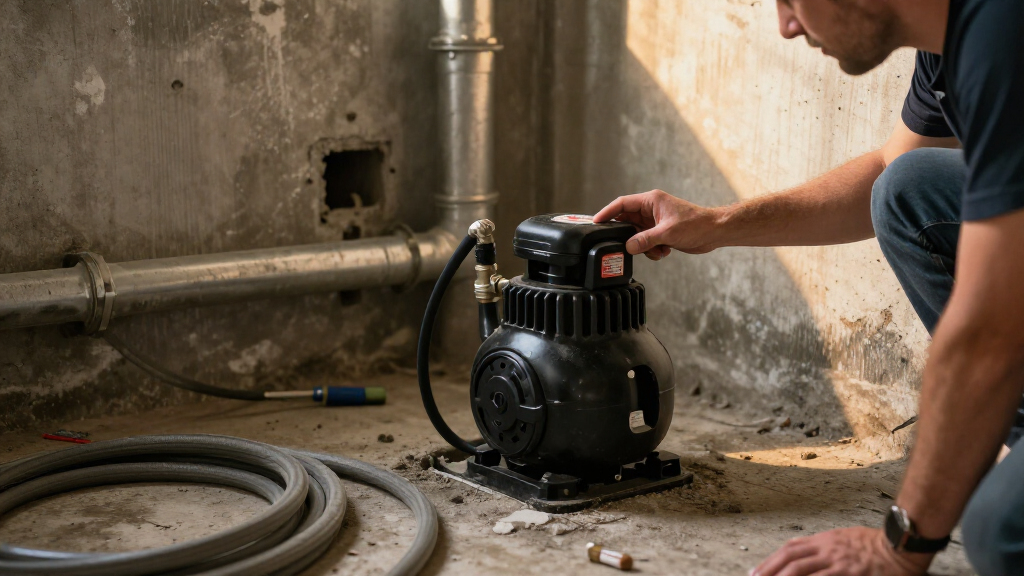
How We Picked
I ranked these products by how well they address the main job promised by this roundup: automatic basement sump-pit protection. My criteria were pumping capacity under realistic lift, switch reliability, pit compatibility, housing materials, installation demands, maintenance access, warranty coverage, and value for the intended use. I gave more weight to automatic models designed for permanent installation than to portable pumps that require manual placement or monitoring. Horsepower and advertised GPH helped separate capacity tiers, but neither automatically earned a high position. A balanced residential pump ranks above an oversized utility model when it offers better switching and installation suitability.
The role map makes that hierarchy visible. The WAYNE CDU800 is the balanced overall pick, the Zoeller M98 is the cast-iron durability choice, the WAYNE CDU1000 is the premium high-capacity model, and the WAYNE CDU980E fills the 3/4 HP middle ground. The Zoeller M53 covers traditional 1/3 HP duty, while the WAYNE CDU790 is the value-oriented permanent pump. Among temporary-drainage choices, the Acquaer is the automatic beginner option, the Superior Pump 91250 is the budget utility pick, the Lanchez is the portable 1/2 HP choice, the AQUASTRONG targets high-flow removal, and the FOTING suits pool or pond work. The blue 1 HP model fills a portable backup role, while the 1/3 HP 2450 GPH utility pump is the compact alternative.
Factors to Consider When Choosing Sump Pump
I would begin by deciding whether the pump will live in a sump basin or come out only when water needs removing. That distinction affects switching, installation, durability, and the amount of supervision required. A permanent sump pump protects automatically, while a utility pump offers portability for broader drainage jobs. The following factors help separate those two use cases and prevent paying for specifications that do not solve the actual problem.
Permanent Sump Pump or Portable Utility Pump
A true sump pump remains connected to a fixed discharge line and starts without someone standing nearby. I favor this type for basement protection because automatic response matters more than portability when water can enter overnight or during an outage. A portable utility pump makes more sense for draining a pool cover, hot tub, shallow flood, or construction area. Many utility models advertise impressive flow, yet they may lack the switch geometry, base stability, or duty profile needed for an unattended pit. An automatic utility pump can bridge the gap for occasional basement cleanup, but I would not treat every automatic label as approval for permanent service. Buyers who confuse these categories may gain motor power while losing reliable hands-off operation.
Horsepower, Flow Rate, and Lift Height
Horsepower describes motor capacity, while gallons per hour describe water movement under a stated test condition. I would not compare GPH figures without checking the vertical lift between the pit and the discharge outlet, since flow falls as lift increases. A 1/3 HP pump often handles a modest residential pit, and 1/2 HP provides added margin for faster inflow or a longer discharge run. A 3/4 HP or 1 HP model fits heavier water loads, greater lift, or larger piping, but excess capacity can empty a small basin too quickly and promote repeated cycling. Pipe elbows, narrow hose, and restrictive fittings also reduce delivered flow. The better target is enough capacity at the actual head height, not the largest number printed on the listing.
Switch Type and Sump-Basin Clearance
The switch determines when an automatic pump starts and stops, making it one of the most consequential parts of the system. A vertical float uses limited horizontal space, which suits narrow basins and reduces the chance of contacting the pit wall. Tethered floats allow a wider pumping range but need more room to swing freely. Electronic or sensor-based switches remove the moving float, though mineral buildup and dirty water can interfere with some designs. I recommend measuring basin diameter, pump footprint, inlet height, and switch travel before buying. A powerful pump with a blocked float provides less protection than a smaller model with clear, repeatable switch movement.
Housing Materials and Expected Duty
Cast iron adds weight, helps the pump remain stable, and manages motor heat well during frequent cycling. Stainless-steel components can add corrosion resistance, while thermoplastic keeps a pump lighter and easier to carry. I prefer metal-bodied construction for permanent, demanding service, especially in basements with regular groundwater entry. Thermoplastic is a sensible choice for occasional drainage because portability and lower replacement cost may matter more than long-term pit duty. Material alone does not predict lifespan; switch quality, motor protection, debris exposure, and cycle frequency also shape wear. Paying more for a heavy housing has the clearest value when the pump will face frequent or prolonged operation.
Discharge Plumbing and Debris Handling
A pump must match the existing discharge diameter or use an adapter that does not choke flow. I would check whether the installation needs rigid pipe, a garden-hose connection, or both, because hose-friendly utility pumps and fixed sump systems serve different jobs. Permanent installations normally benefit from a check valve that stops discharged water from falling back into the basin after each cycle. The valve should sit in the position specified by the pump or plumbing instructions and remain accessible for service. Buyers dealing with sediment should also review intake openings and the maximum particle size allowed, rather than assuming every submersible model can pass debris. Correct plumbing protects more usable flow than chasing a small difference in advertised free-flow capacity.
Backup Protection, Maintenance, and Long-Term Value
No mains-powered pump can protect a basement during an outage unless another power source or backup system is available. I would pair a primary pump with a battery backup, water-powered backup, or generator plan when flooding risk is high. A high-water alarm adds an early warning if inflow exceeds capacity, the outlet freezes, or the switch fails. Maintenance should include clearing the basin, checking the float, inspecting the valve, and running water into the pit before the wet season. Warranty length has value, but access to replacement switches, adapters, and local service can matter just as much. The best long-term purchase is the model that fits a realistic protection plan, not merely the pump with the lowest purchase price.
Frequently Asked Questions
Is a 1/3 HP or 1/2 HP sump pump enough for a typical basement?
A 1/3 HP pump is often suitable when the pit fills at a moderate rate and the discharge run is short. I would move to 1/2 HP for faster inflow, greater lift, or added capacity margin. The WAYNE CDU790 and Zoeller M53 occupy the lower-power tier, while the WAYNE CDU800 provides the more flexible middle ground. Buyers should compare flow at their expected lift rather than relying on horsepower alone. A correctly sized 1/3 HP model can be a better fit than an oversized pump that creates short, frequent cycles.
Can I use a portable utility pump as my permanent sump pump?
I would reserve most portable utility pumps for temporary water removal unless the manufacturer explicitly approves permanent automatic sump service. These pumps may require manual starting, use hose-oriented outlets, or have sensors designed for shallow surface drainage. A conventional sump pump includes switching and mounting suited to a basin, which makes it the safer category for unattended protection. The Acquaer offers automatic operation for convenient cleanup, but that does not make every installation equivalent to a fixed WAYNE or Zoeller setup. A utility model works well as a secondary tool; it is a weaker primary choice when water can enter without warning.
Is a 1 HP sump pump always better than a smaller model?
No, a 1 HP pump is better only when the water load, lift, and plumbing can use its capacity. I would choose that power tier for rapid inflow, a demanding discharge route, or a property with a history of the primary pump falling behind. In a small basin, excess output can cause rapid cycling, which places more starts on the switch and motor. The WAYNE CDU1000 earns its premium role from its complete permanent-pump design, not from horsepower alone. A 1/2 HP model such as the WAYNE CDU800 remains the more balanced choice for buyers who need capacity without unnecessary oversizing.
Should I choose a vertical float or an electronic water sensor?
I favor a vertical float when the basin is narrow and the buyer wants a familiar mechanical switching system. It moves in a compact path, but the float still needs clearance from the wall, pipe, and power cord. An electronic sensor can operate in shallow water and has no swinging float, making it useful for utility drainage. Sensor surfaces may need cleaning when water contains sediment or mineral deposits. The decision comes down to pit geometry, water cleanliness, and intended duty, with vertical floats generally better aligned with permanent sump installations and sensors better suited to shallow temporary removal.
Do I need a battery backup if I buy a powerful primary pump?
A stronger primary pump cannot run when household power is unavailable, so motor size does not replace backup protection. I recommend a backup when outages commonly accompany storms, the basement contains costly equipment, or water enters the pit quickly. A separate battery-powered pump offers redundancy if the primary motor or switch fails, while a generator helps only if it starts and receives fuel in time. A high-water alarm is also useful, though it warns rather than removes water. Buyers with low flood exposure may accept a simpler setup, but high-risk homes gain more from two independent pumping paths than from upgrading the primary motor alone.
What are the best most durable sump pump?
The best most durable sump pump depends on your specific needs and setup. The picks above are selected for their reliable construction, long-lasting materials, and proven performance in demanding conditions. Look for models with sturdy casings, high-quality motors, and corrosion-resistant components to ensure longevity. It’s also helpful to consider features like automatic operation and reliable float switches. While the specific choice may vary, these options are recognized for their durability and ability to protect your basement effectively over time.
What are the best sump pumps for basements?
The best sump pumps for basements are those that offer reliable performance and durability to keep your basement dry. The picks above include various types and features suited for different needs, such as submersible and pedestal models. When choosing a sump pump, consider factors like capacity, power source, and ease of maintenance. These options are designed to handle water efficiently and prevent flooding, making them ideal for protecting your basement. Always select a sump pump that matches the specific requirements of your space to ensure optimal protection and longevity.
Conclusion
For the widest range of residential basements, I recommend the WAYNE CDU800 as the best overall choice. Its 1/2 HP motor and vertical float place it between lower-capacity models and expensive high-output pumps. The WAYNE CDU790 is my best-value permanent pick for buyers whose water load does not demand more than 1/3 HP. For a heavier build, the Zoeller M98 is the durability-focused choice, particularly when cast-iron construction carries more weight than portability.
I would choose the WAYNE CDU1000 as the premium option for demanding inflow, longer discharge routes, or buyers who want its listed 6,100 GPH capacity and five-year warranty. Beginners handling occasional water removal may find the automatic Acquaer utility pump easier to deploy, while the Superior Pump 91250 fills the simpler budget utility role. The WAYNE CDU980E suits buyers wanting a 3/4 HP middle step, and the Zoeller M53 fits lower-flow homes seeking a traditional 1/3 HP sump model. For pools and ponds, I would favor the FOTING, while the AQUASTRONG makes more sense when high-flow portable drainage is the priority. The final choice should follow the installation: permanent WAYNE or Zoeller models for unattended pit protection, and portable utility pumps for supervised drainage elsewhere.
Fall Picks
fall essentials
As an affiliate, we earn on qualifying purchases.