My Wi-Fi 7 mesh router review puts the TP-Link Deco 7 Pro Tri-Band BE10000 first for buyers who want more capacity and a tri-band system, while the Deco 7 BE23 3-Pack is a simpler fit for extending coverage across multiple rooms. The NETGEAR Orbi 370 4-Pack stands out for shoppers who need several mesh nodes, and the eero 7 2-Pack offers a compact route into Wi-Fi 7 mesh. The main tradeoff is between dual-band systems that keep things simpler and tri-band models that devote more radio capacity to busy networks. Coverage claims, wired ports, and subscription-linked features also vary, so the best choice depends on your home layout and devices. Read on for the full breakdown and a buying guide that helps match each system to your needs.

Get audio and creator gear delivered free with Prime
- Fast, free delivery on millions of items
- Prime Video, Amazon Music and more included
- Member-only deals all year
Complete the kit


Key Takeaways
- The Deco 7 Pro tri-band models stand apart on capacity: their BE10000/10 Gbps class and six-stream design target busier networks than the dual-band options.
- Node count changes the coverage equation: the Orbi 370 4-Pack offers more placement points than its 3-Pack counterpart, but extra nodes only help when they can communicate well with the main unit.
- Many picks are dual-band: the Deco BE23, BE25, BE3600, BE5000, and eero 7 models suit common household needs, but do not offer the same tri-band capacity as the Deco 7 Pro systems.
- Single routers and mesh kits solve different problems: the Nighthawk RS90 and one-unit eero 7 are easier to place, while multi-unit kits are better suited to homes with coverage gaps.
- Model naming and bundle details matter: the roundup includes similar Deco, Orbi, and eero families in different configurations, so check the exact node count, model, and condition before choosing.
| NETGEAR Orbi 370 Series WiFi 7 Mesh System, 4 Pack |  | Best for Large Homes | Wi-Fi generation: Wi-Fi 7 | System configuration: 1 router and 3 satellites | Maximum stated Wi-Fi speed: Up to 5 Gbps | VIEW ON AMAZON | See Our Full Breakdown |
| Deco 7 BE25 Dual-Band WiFi 7 Mesh System (5 Gbps, 240 MHz) |  | Best for Device-Dense Homes | Wi-Fi generation: Wi-Fi 7 (802.11be) | Maximum stated speed: Up to 5 Gbps | Supported devices: Over 150 | VIEW ON AMAZON | See Our Full Breakdown |
| Eero 7 Dual-Band Mesh Wi-Fi 7 Router (2-Pack) |  | Best for Simple Setup | Wi-Fi standard: Wi-Fi 7 (IEEE 802.11a/b/g/n/ac/ax/be) | System configuration: 2 routers | Supported internet plans: Up to 2.5 Gbps | VIEW ON AMAZON | See Our Full Breakdown |
| NETGEAR Nighthawk WiFi 7 Router RS90, Up to 2,000 sq ft, 3.6 Gbps |  | Best Compact Non-Mesh Router | Wi-Fi generation: Wi-Fi 7 | Maximum stated speed: Up to 3.6 Gbps | Maximum devices: Up to 50 | VIEW ON AMAZON | See Our Full Breakdown |
| TP-Link Deco 7 BE3600 Whole Home Mesh WiFi 7 System (Renewed) |  | Best Renewed Three-Unit Mesh | Model: Deco 7 BE3600 | Condition: Renewed | Wi-Fi technology: Wi-Fi 7 (802.11be) | VIEW ON AMAZON | See Our Full Breakdown |
| TP-Link Deco 7 BE23 Dual-Band WiFi 7 Mesh Wi-Fi System, 3-Pack |  | Best for Broad Coverage on a Dual-Band Setup | Wi-Fi standard: Wi-Fi 7 | Maximum speed: Up to 3.6 Gbps | Coverage: Up to 6,500 sq. ft. | VIEW ON AMAZON | See Our Full Breakdown |
| Deco 7 Dual-Band BE5000 WiFi 7 Mesh Wi-Fi System 4-Stream 5 Gbps, 240 MHz |  | Best for Higher Stated Speed in a Dual-Band Deco | Wi-Fi standard: Wi-Fi 7 (802.11be) | Frequency bands: Dual-band | Maximum speed: Up to 5 Gbps | VIEW ON AMAZON | See Our Full Breakdown |
| eero 7 Dual-Band Mesh Wi-Fi 7 Router (3-Pack) |  | Best for eero Ecosystem Households | Wi-Fi standard: Wi-Fi 7 (IEEE 802.11a/b/g/n/ac/ax/be) | Coverage: Up to 6,000 sq. ft. | Device support: 120+ devices | VIEW ON AMAZON | See Our Full Breakdown |
| Deco 7 Pro Tri-Band WiFi 7 BE10000 Whole Home Mesh System 6-Stream 10 Gbps |  | Best Tri-Band Upgrade for Large Homes | Wi-Fi bands: Tri-band | Wi-Fi standards: 802.11be, 802.11ax, 802.11ac, 802.11g | Maximum speed: Up to 10 Gbps | VIEW ON AMAZON | See Our Full Breakdown |
| Deco 7 Pro Tri-Band Wi-Fi 7 Mesh System, 10Gbps Internet, 3 Pack |  | Best for Maximum Listed Speed and Coverage | Wi-Fi technology: Wi-Fi 7 | Total bandwidth: Up to 14 Gbps | Coverage: Up to 8,100 sq. ft. | VIEW ON AMAZON | See Our Full Breakdown |
| Eero 7 Dual-Band Mesh Wi-Fi 7 Router – Supports Internet Plans up to 2.5 Gbps, Coverage up to 2,000 sq. ft., 1-Pack |  | Best for Existing Eero Households | Wi-Fi standard: Wi-Fi 7 (IEEE 802.11a/b/g/n/ac/ax/be) | Coverage: Up to 2,000 sq. ft. | Supported devices: 120+ | VIEW ON AMAZON | See Our Full Breakdown |
| NETGEAR Orbi 360 Series WiFi 7 Mesh System, 3 Pack |  | Best for Simple Large-Home Coverage | Wi-Fi generation: Wi-Fi 7 | Coverage: Up to 6,000 sq. ft. | Wi-Fi speed: Up to 5 Gbps | VIEW ON AMAZON | See Our Full Breakdown |
| NETGEAR Orbi 770 Series WiFi 7 Mesh System, 3 Pack |  | Best for Maximum Coverage and Capacity | Wi-Fi generation: Wi-Fi 7 | Coverage: Up to 8,000 sq. ft. | Wi-Fi speed: Up to 11 Gbps | VIEW ON AMAZON | See Our Full Breakdown |
| TP-Link Deco 7 BE23 Dual-Band WiFi 7 Mesh Router |  | Best for High Device Counts in a Mid-Size Home | Wi-Fi standard: Wi-Fi 7 | Maximum speed: 3.6 Gbps | Coverage: Up to 2,500 sq. ft. | VIEW ON AMAZON | See Our Full Breakdown |
| NETGEAR Orbi 370 Series WiFi 7 Mesh System, Up to 6,000 sq ft., 3 Pack | | Best for Balanced Whole-Home Mesh | Wi-Fi generation: Wi-Fi 7 | Coverage: Up to 6,000 sq. ft. | Wi-Fi speed: Up to 5 Gbps | VIEW ON AMAZON | See Our Full Breakdown |
| wi fi 7 mesh router review | Coverage |
|---|---|
| NETGEAR Orbi 370 Series WiFi 7 | — |
| Deco 7 BE25 Dual-Band WiFi 7 M | — |
| Eero 7 Dual-Band Mesh Wi-Fi 7 | — |
| NETGEAR Nighthawk WiFi 7 Route | — |
| TP-Link Deco 7 BE3600 Whole Ho | — |
| TP-Link Deco 7 BE23 Dual-Band | Up to 6,500 sq. ft. |
| Deco 7 Dual-Band BE5000 WiFi 7 | Up to 6,600 sq. ft. |
| eero 7 Dual-Band Mesh Wi-Fi 7 | Up to 6,000 sq. ft. |
| Deco 7 Pro Tri-Band WiFi 7 BE1 | Up to 7,600 sq. ft. |
| Deco 7 Pro Tri-Band Wi-Fi 7 Me | Up to 8,100 sq. ft. |
| Eero 7 Dual-Band Mesh Wi-Fi 7 | Up to 2,000 sq. ft. |
| NETGEAR Orbi 360 Series WiFi 7 | Up to 6,000 sq. ft. |
| NETGEAR Orbi 770 Series WiFi 7 | Up to 8,000 sq. ft. |
| TP-Link Deco 7 BE23 Dual-Band | Up to 2,500 sq. ft. |
| NETGEAR Orbi 370 Series WiFi 7 | Up to 6,000 sq. ft. |
More Details on Our Top Picks
NETGEAR Orbi 370 Series WiFi 7 Mesh System, 4 Pack
The Orbi 370 four-pack is the coverage-first choice here: its stated reach of up to 8,000 sq. ft. and one router plus three satellites suit homes where a two-unit setup may leave distant rooms struggling. It also supports up to 70 devices and Wi-Fi 7 speeds up to 5 Gbps, making it a stronger fit for broad coverage than the eero 7 two-pack, which is rated for up to 4,000 sq. ft. The tradeoff is dual-band operation, so it lacks a dedicated wireless backhaul band, and actual coverage depends on walls and placement. Setup is app-led, while the included security features may involve a paid Armor subscription after the trial. Choose it for a large footprint, not simply for the newest Wi-Fi standard.
Pros:- One router and three satellites are rated to cover up to 8,000 sq. ft.
- Supports up to 70 connected devices.
- Wi-Fi 7 speeds are rated up to 5 Gbps.
- Orbi app provides setup and network management.
Cons:- Dual-band design has no dedicated wireless backhaul band.
- Listed port count is one, limiting wired-device options.
- NETGEAR Armor security may require a subscription after its trial.
Best for: Owners of large or multi-level homes who want a four-unit mesh and need coverage across many rooms.
Not ideal for: People in apartments or smaller homes, or buyers seeking extensive wired connections; its coverage capacity may be unnecessary, and the listed port count is limited.
- Wi-Fi generation:Wi-Fi 7
- System configuration:1 router and 3 satellites
- Maximum stated Wi-Fi speed:Up to 5 Gbps
- Supported devices:Up to 70
- Frequency band:Dual-band
- Security protocol:WPA3
- Control method:Orbi app
Our verdict“Choose the Orbi 370 four-pack when broad coverage across a large home matters more than extra Ethernet ports or a dedicated backhaul band.”
Deco 7 BE25 Dual-Band WiFi 7 Mesh System (5 Gbps, 240 MHz)
The Deco BE25 is the most compelling choice in this group for a household with many connected devices: it is rated for over 150 devices, while the Orbi 370 four-pack lists support for 70. Its stated coverage is up to 4,600 sq. ft., and two 2.5 Gbps Ethernet ports per unit give wired gear more flexibility than the Orbi’s listed single port. AI-Roaming is intended to keep devices connected as people move around, though walls and satellite placement still affect real performance. The system is dual-band, so it does not offer the dedicated wireless backhaul of a tri-band alternative. A separate modem is required, and app setup and updates may be part of using its advanced features. Pick it for device capacity and wired options rather than maximum stated coverage.
Pros:- Rated to support over 150 connected devices.
- Coverage is listed up to 4,600 sq. ft.
- Two 2.5 Gbps Ethernet ports per unit support wired connections.
- AI-Roaming is designed to maintain connectivity as devices move between units.
Cons:- Requires a separate modem for internet service.
- Dual-band design does not include a dedicated wireless backhaul band.
- Performance depends on obstacles, unit placement, and network setup.
Best for: Busy households with many phones, computers, cameras, and streaming devices that also want multi-gig wired ports at each unit.
Not ideal for: Buyers who need the widest stated coverage in this group or want a mesh system with a dedicated wireless backhaul band.
- Wi-Fi generation:Wi-Fi 7 (802.11be)
- Maximum stated speed:Up to 5 Gbps
- Supported devices:Over 150
- Frequency band:Dual-band
- Channel width:240 MHz
- Ethernet ports:2 x 2.5 Gbps per unit
- Security protocols:WPA3, WPA2, WPA
Our verdict“Choose the Deco BE25 if your main challenge is supporting a crowded household with useful multi-gig Ethernet on every unit.”
Eero 7 Dual-Band Mesh Wi-Fi 7 Router (2-Pack)
The eero 7 two-pack is the straightforward option for buyers who want Wi-Fi 7 without building a more elaborate system. Its app-based setup, backward compatibility, and coverage rating of up to 4,000 sq. ft. make it easier to place as a compact home mesh than the four-unit Orbi 370. Two auto-sensing 2.5 GbE ports on each router also allow wired connections, and the system supports internet plans up to 2.5 Gbps. That lower plan ceiling and smaller stated coverage make it less suited to very large homes or faster-than-2.5-Gbps service than the Deco BE25, which advertises up to 5 Gbps and 4,600 sq. ft. Advanced security features may require a subscription, and Wi-Fi 7 gains depend on compatible devices.
Pros:- Rated to cover up to 4,000 sq. ft. as a two-pack.
- Supports internet plans up to 2.5 Gbps.
- Two auto-sensing 2.5 GbE ports on each router.
- App-based setup and compatibility with previous eero models.
Cons:- Coverage rating is lower than the Orbi 370 four-pack and Deco BE25.
- Advanced security features may require a subscription.
- Wi-Fi 7 benefits depend on compatible client devices.
Best for: Households seeking a compact, app-managed Wi-Fi 7 mesh for a moderate-sized home and an internet plan up to 2.5 Gbps.
Not ideal for: Owners of very large homes, households needing support for more than 150 devices, or subscribers with internet service above 2.5 Gbps.
- Wi-Fi standard:Wi-Fi 7 (IEEE 802.11a/b/g/n/ac/ax/be)
- System configuration:2 routers
- Supported internet plans:Up to 2.5 Gbps
- Frequency band:Dual-band
- Ethernet ports:Two auto-sensing 2.5 GbE ports per router
- Network security:WPA3 and WPA2
- Warranty:3-year limited
Our verdict“Choose the eero 7 two-pack for app-led simplicity and moderate coverage, but select the Deco BE25 or Orbi 370 for greater capacity or reach.”
NETGEAR Nighthawk WiFi 7 Router RS90, Up to 2,000 sq ft, 3.6 Gbps
The Nighthawk RS90 is the only single-router option here, so it makes sense for a home that needs a central Wi-Fi 7 upgrade rather than multiple mesh nodes. Its rated 2,000 sq. ft. coverage and support for up to 50 devices suit a smaller footprint, while four Ethernet ports and a 2.5 Gbps WAN port offer more wired flexibility than the eero 7 two-pack’s listed port configuration. It is rated for up to 3.6 Gbps, below the 5 Gbps claims for the Deco BE25 and Orbi 370. More importantly, it does not include satellite units: rooms separated by dense walls or distant floors may need additional hardware. It also requires a modem or gateway, and some gateway setups may call for bridge mode.
Pros:- Single-router design avoids placing and managing mesh satellites.
- Rated to cover up to 2,000 sq. ft. and support up to 50 devices.
- Four Ethernet ports provide wired connection options.
- 2.5 Gbps WAN port supports a multi-gig internet connection.
Cons:- Coverage is substantially lower than the multi-unit Orbi 370 and Deco BE25 systems.
- Requires a separate modem or gateway.
- Some gateway installations may require bridge mode, and security services may involve a subscription.
Best for: People in smaller homes or apartments who want one Wi-Fi 7 router, several wired connections, and no mesh satellites to place.
Not ideal for: Residents of large or multi-story homes with dead zones, or anyone specifically seeking a multi-unit mesh system.
- Wi-Fi generation:Wi-Fi 7
- Maximum stated speed:Up to 3.6 Gbps
- Maximum devices:Up to 50
- Frequency bands:Dual-band
- Ethernet ports:4
- WAN port:2.5 Gbps
- Security protocols:WPA2, WPA3
Our verdict“Choose the RS90 for a smaller home that needs a capable single router and wired ports, not for whole-home mesh coverage.”
TP-Link Deco 7 BE3600 Whole Home Mesh WiFi 7 System (Renewed)
This renewed Deco 7 BE3600 is the option for buyers who want a three-unit mesh layout but do not need the BE25’s higher stated 5 Gbps speed or its specific 240 MHz channel specification. Its 3,600 Mbps rating, AI-driven mesh optimization, and parental-control features target everyday whole-home use across multiple floors. Unlike the single-unit Nighthawk RS90, three units can extend coverage beyond one router’s placement, though the product data does not state a coverage area or device limit, so I would not choose it based on a particular square-footage claim. The main compromise is its renewed condition and 90-day limited warranty, shorter than the eero 7 two-pack’s listed three-year warranty. Buyers should also check the seller’s renewed-product details before ordering.
Pros:- Three-unit mesh design can distribute access points around a home.
- Wi-Fi 7 speed is listed up to 3,600 Mbps.
- Includes AI-driven mesh optimization and parental controls.
- HomeShield security features are listed.
Cons:- Renewed condition comes with a 90-day limited warranty.
- Product data does not specify coverage area or maximum device count.
- Its listed speed is below the Deco BE25 and Orbi 370 systems’ 5 Gbps claims.
Best for: Buyers who specifically want a renewed three-unit mesh with app-compatible parental controls for everyday household connections.
Not ideal for: People who need a stated coverage figure, a long warranty, or a documented device-capacity limit before choosing a Wi-Fi 7 mesh.
- Model:Deco 7 BE3600
- Condition:Renewed
- Wi-Fi technology:Wi-Fi 7 (802.11be)
- Maximum stated speed:3,600 Mbps
- Number of units:3
- Number of ports:6
- Additional features:AI-driven mesh optimization, parental control, TP-Link HomeShield security
- Warranty:90-day limited
Our verdict“Choose this renewed Deco if a three-unit layout and built-in household controls matter more than a longer warranty or clearly stated coverage.”
TP-Link Deco 7 BE23 Dual-Band WiFi 7 Mesh Wi-Fi System, 3-Pack
The Deco 7 BE23 3-pack is a sensible fit for a large home that needs several mesh nodes and Wi-Fi 7 without moving to a tri-band system. Its listed coverage of up to 6,500 sq. ft. and support for 150-plus devices make it better suited to spread-out family use than a single router or compact mesh kit. Each node has two 2.5 Gbps WAN/LAN ports, giving wired devices a useful connection option. Compared with the tri-band Deco 7 Pro BE10000, the BE23 offers less bandwidth headroom, but its dual-band design may be enough for everyday streaming, calls, and smart-home traffic. The tradeoff is that a dual-band mesh system has fewer bands available to manage wireless traffic, and setup or HomeShield options may take more effort for less technical households.
Pros:- Three nodes are specified for coverage up to 6,500 sq. ft.
- Supports more than 150 devices, suiting busy family networks.
- Two 2.5 Gbps WAN/LAN ports on each unit support wired devices.
- WPA3 and HomeShield provide security features alongside AI roaming.
Cons:- Dual-band design offers less wireless traffic capacity than the tri-band Deco 7 Pro models.
- Requires a separate modem for most internet service.
- Setup and advanced security features may be less straightforward for non-technical users.
Best for: Households in large, multi-room homes that want three Wi-Fi 7 nodes, wired connections, and capacity for many everyday devices.
Not ideal for: Homes with demanding multi-gig wireless workloads or buyers seeking tri-band performance; the Deco 7 Pro BE10000 has more stated bandwidth and coverage.
- Wi-Fi standard:Wi-Fi 7
- Maximum speed:Up to 3.6 Gbps
- Coverage:Up to 6,500 sq. ft.
- Units:3
- Device support:150+ devices
- Antennas:4 high-gain antennas per node
- Ports:Two 2.5 Gbps WAN/LAN ports per unit
- Security:TP-Link HomeShield, WPA3
Our verdict“Choose the BE23 3-pack for broad, device-heavy home coverage if dual-band capacity is sufficient for your household.”
Deco 7 Dual-Band BE5000 WiFi 7 Mesh Wi-Fi System 4-Stream 5 Gbps, 240 MHz
The Deco 7 BE5000 stands out among these dual-band options for its stated 5 Gbps maximum speed and coverage up to 6,600 sq. ft. That makes it a candidate for buyers who want more listed throughput than the Deco 7 BE23, while keeping to a dual-band mesh system. AI roaming is intended to keep devices connected as people move around, and the app-based setup gives less technical owners a familiar management route. The comparison has limits: the product data does not specify a unit count, while the BE23 is explicitly a three-pack, so buyers should verify the package configuration before planning coverage. It also remains dual-band, unlike the tri-band Deco 7 Pro BE10000, and its performance can vary with walls and placement.
Pros:- Lists maximum speed up to 5 Gbps.
- Coverage is specified up to 6,600 sq. ft.
- AI roaming supports continuity as devices move through the home.
- Deco app management and 2.5 Gbps Ethernet ports provide convenient setup and wired connectivity.
Cons:- The provided product data does not state the number of units in the system.
- Dual-band design has less traffic separation than the tri-band Deco 7 Pro BE10000.
- Coverage and performance can be affected by obstacles and the home environment.
Best for: Deco app users who want a dual-band Wi-Fi 7 mesh system with a higher stated speed and broad listed coverage.
Not ideal for: Buyers who need a clearly specified multi-node package or greater wireless capacity for sustained heavy traffic; consider a model with confirmed unit count or tri-band design.
- Wi-Fi standard:Wi-Fi 7 (802.11be)
- Frequency bands:Dual-band
- Maximum speed:Up to 5 Gbps
- Coverage:Up to 6,600 sq. ft.
- Streams:4-stream
- Ethernet ports:2.5 Gbps ports; two ports listed
- Security:WPA-Personal, WPA2-Personal, WPA3-Personal
- Management:Deco app, remote, and voice control
Our verdict“Consider the BE5000 if its higher stated speed suits your needs, but confirm the included node count before choosing it over the clearly listed three-pack BE23.”
eero 7 Dual-Band Mesh Wi-Fi 7 Router (3-Pack)
The eero 7 3-pack is the natural pick for households already using eero equipment: it supports backward compatibility with previous eero models and lists Thread, Zigbee, and Matter alongside Wi-Fi features. Its coverage rating of 6,000 sq. ft. and support for more than 120 devices suit homes with a mix of phones, computers, and connected-home gear. The two 2.5 GbE ports on each unit can also serve wired equipment, though the data does not specify a dedicated high-speed wireless backhaul. Compared with the Deco 7 BE23, this eero has a smaller stated coverage area and lower device count, but its smart-home protocol support may make it a better match for eero-centered setups. The tradeoff is that some security features require a subscription, and it is still a dual-band system.
Pros:- Backward compatibility with previous eero models helps extend an existing network.
- Supports Thread, Zigbee, Matter, and Bluetooth Low Energy 5.0.
- Coverage is listed at up to 6,000 sq. ft. for the three-pack.
- Two 2.5 GbE ports per unit provide wired connection options.
Cons:- Some security features require an optional subscription.
- Listed coverage and device capacity are lower than the Deco 7 BE23.
- Dual-band operation offers less wireless traffic capacity than tri-band mesh alternatives.
Best for: Existing eero users and smart-home households that value compatibility with eero devices, Thread, Zigbee, and Matter.
Not ideal for: Buyers seeking the broadest stated coverage, higher device capacity, or security features without optional subscription services.
- Wi-Fi standard:Wi-Fi 7 (IEEE 802.11a/b/g/n/ac/ax/be)
- Coverage:Up to 6,000 sq. ft.
- Device support:120+ devices
- Ethernet:Two 2.5 GbE ports
- Smart-home technologies:Thread, Zigbee, Matter, Bluetooth Low Energy 5.0
- Processor:1.1 GHz quad-core
- Memory:1,024 MB
- Warranty:3 years
Our verdict“Choose the eero 7 3-pack if you already use eero or want its smart-home protocol support, rather than maximum listed coverage or capacity.”
Deco 7 Pro Tri-Band WiFi 7 BE10000 Whole Home Mesh System 6-Stream 10 Gbps
The Deco 7 Pro BE10000 is the step-up choice for buyers whose home network is pushing beyond what a dual-band system can comfortably handle. Its tri-band, six-stream design and listed speed up to 10 Gbps give it more bandwidth headroom than the BE23 and BE5000, while coverage reaches up to 7,600 sq. ft. The stated capacity of more than 200 devices also suits busy homes with streaming, gaming, and smart-home traffic happening at once. Four 2.5G WAN/LAN ports and USB 3.0 give it more wired flexibility than the eero 7 3-pack. This added capacity is the reason to choose it, not a guarantee that every device will reach the headline speed. It still needs a separate modem, and its advanced options may be more than a smaller or simpler household needs.
Pros:- Tri-band, six-stream design provides more bandwidth capacity than the dual-band Deco options.
- Coverage is listed up to 7,600 sq. ft. with speed up to 10 Gbps.
- Supports more than 200 devices.
- Four 2.5G WAN/LAN ports and USB 3.0 offer flexible wired connections.
Cons:- Requires a separate modem for internet service.
- Advanced network features can add setup and management complexity.
- Its stated capacity may be unnecessary for homes with modest coverage and device needs.
Best for: Owners of large homes with many active devices who want tri-band Wi-Fi 7, multiple multi-gig wired connections, and room for network growth.
Not ideal for: Small households or buyers whose internet and device demands are modest; the dual-band Deco 7 BE23 is a simpler fit if its lower stated capacity is enough.
- Wi-Fi bands:Tri-band
- Wi-Fi standards:802.11be, 802.11ax, 802.11ac, 802.11g
- Maximum speed:Up to 10 Gbps
- Coverage:Up to 7,600 sq. ft.
- Streams:6-stream
- Ethernet ports:Four 2.5G WAN/LAN ports
- USB:USB 3.0
- Features:AI roaming, HomeShield security, VPN support, mesh compatibility
Our verdict“Pick the BE10000 when a large, device-heavy home can use tri-band capacity and multi-gig ports, not just the headline speed.”
Deco 7 Pro Tri-Band Wi-Fi 7 Mesh System, 10Gbps Internet, 3 Pack
Among these five systems, the Deco 7 Pro BE67 3-pack has the largest stated coverage and speed figures: up to 8,100 sq. ft. and 14 Gbps. Its tri-band Wi-Fi 7 design, Multi-Link Operation, and support for more than 200 devices position it for large homes with demanding concurrent use. The listed 10 Gbps WAN port gives it a stronger wired-networking ceiling than the BE10000, whose listed Ethernet ports are 2.5G. Both are tri-band Deco Pro options, but the BE67 is the more ambitious choice on paper; real results still depend on the internet plan, device capabilities, and home layout. It also costs more to justify and brings a USB 3.0 port rather than a broad collection of multi-gig LAN ports, so buyers should match its features to their actual wired setup.
Pros:- Highest stated speed in this batch at up to 14 Gbps.
- Coverage is listed up to 8,100 sq. ft. for the three-pack.
- Tri-band Wi-Fi 7 with Multi-Link Operation supports demanding concurrent traffic.
- Supports over 200 devices and includes a 10 Gbps WAN port.
Cons:- Requires a separate modem.
- Its high stated capacity may be excessive for smaller homes or slower internet plans.
- The listed wired ports include one 2.5 Gbps WAN/LAN port, fewer multi-gig LAN options than the BE10000.
Best for: Owners of very large homes with many connected devices, a fast internet plan, and a need for a 10 Gbps WAN connection.
Not ideal for: Smaller homes, modest internet plans, or buyers who need several multi-gig Ethernet ports; the BE10000 lists four 2.5G WAN/LAN ports.
- Wi-Fi technology:Wi-Fi 7
- Total bandwidth:Up to 14 Gbps
- Coverage:Up to 8,100 sq. ft.
- Units:3
- Device support:Over 200 devices
- Ports:1 × 10 Gbps WAN, 1 × 2.5 Gbps WAN/LAN, 1 × USB 3.0
- Dimensions:4.23 × 4.23 × 6.93 inches
Our verdict“Choose the BE67 3-pack for the broadest listed coverage and highest stated speed, provided your internet plan and wired setup can make use of them.”
Eero 7 Dual-Band Mesh Wi-Fi 7 Router – Supports Internet Plans up to 2.5 Gbps, Coverage up to 2,000 sq. ft., 1-Pack
For a buyer who wants to add Wi-Fi 7 without replacing an existing Eero setup, this single Eero 7 is the most targeted pick in this group. It covers up to 2,000 sq. ft., supports more than 120 devices, and can join previous Eero models, so an upgrade can build on existing equipment rather than start with a three-unit kit. Its two 2.5 GbE ports also give faster wired connections than a basic gigabit-only setup. Compared with the three-unit NETGEAR Orbi 370, though, this is one router, not a whole-home mesh bundle; coverage depends on your layout and placement. The dual-band design keeps the package straightforward, but it lacks the listed tri-band specification of the Orbi 770 and is not the pick for sprawling homes that need multiple nodes.
Pros:- Compatible with previous Eero models for gradual network upgrades
- Coverage listed up to 2,000 sq. ft. from one router
- Two auto-sensing 2.5 GbE ports support faster wired links
- Supports more than 120 connected devices
Cons:- Single-router package may leave coverage gaps in larger or obstructed homes
- Dual-band design offers fewer listed frequency bands than the tri-band Orbi 770
- Full Wi-Fi 7 benefits depend on compatible client devices
Best for: Eero owners who want a Wi-Fi 7-capable router for a modest-size home or an addition to their existing Eero network.
Not ideal for: People outfitting a large or multi-storey home from scratch, since this one-router package offers less distributed coverage than the Orbi three-packs.
- Wi-Fi standard:Wi-Fi 7 (IEEE 802.11a/b/g/n/ac/ax/be)
- Coverage:Up to 2,000 sq. ft.
- Supported devices:120+
- Internet speed support:Up to 2.5 Gbps
- Ethernet ports:2 auto-sensing 2.5 GbE
- Dimensions:5.12 x 5.12 x 2.52 inches
- Processor:1.1 GHz quad-core
- Warranty:3 years
Our verdict“Choose the Eero 7 if you want a compact Wi-Fi 7 addition to an Eero network, but pick a multi-unit Orbi kit for broader whole-home coverage.”
NETGEAR Orbi 360 Series WiFi 7 Mesh System, 3 Pack
The Orbi 360 three-pack puts whole-home reach ahead of device capacity or headline speed: the listed coverage is up to 6,000 sq. ft., with support for up to 70 devices and Wi-Fi 7 speeds up to 5 Gbps. Three units can distribute the signal more effectively than the single Eero 7 when a home has distant rooms, though real coverage will vary with walls and placement. Setup and management run through the Orbi app, which suits buyers who prefer guided controls over detailed manual configuration. Compared with the Orbi 770, this series has a lower listed speed ceiling and supports fewer devices, making it a less ambitious choice for dense households or demanding local networks. Its 2.5 Gbps LAN bandwidth is useful, but the supplied data lists only one port, limiting wired-device flexibility. NETGEAR Armor also requires a subscription after its trial for continued service.
Pros:- Three-unit mesh system rated for coverage up to 6,000 sq. ft.
- Wi-Fi 7 speed listed up to 5 Gbps
- App-based setup and management
- Supports up to 70 devices with WPA2 and WPA3 security protocols
Cons:- Listed device capacity and speed are below the Orbi 770 Series
- Only one port is listed, limiting wired connections
- Continued NETGEAR Armor security requires a subscription after the trial
Best for: Households seeking a three-unit Wi-Fi 7 system for broad coverage, with a moderate number of connected devices and app-based setup.
Not ideal for: Homes with more than 70 active devices or buyers needing many wired connections; the Orbi 770 supports more devices, while this model lists one port.
- Wi-Fi generation:Wi-Fi 7
- Coverage:Up to 6,000 sq. ft.
- Wi-Fi speed:Up to 5 Gbps
- Supported devices:Up to 70
- Pack:3 units
- Port count:1 listed
- LAN port bandwidth:2,500 Mbps
- Security protocols:WPA2, WPA3
Our verdict“Pick the Orbi 360 if broad three-unit coverage and app-led setup matter more than maximum speed, device capacity, or port count.”
NETGEAR Orbi 770 Series WiFi 7 Mesh System, 3 Pack
Among these five options, the Orbi 770 three-pack has the strongest stated combination of reach, speed, and device capacity: coverage up to 8,000 sq. ft., Wi-Fi 7 speeds up to 11 Gbps, and support for 100 devices. That makes it a better fit than the Orbi 360 or Orbi 370 for a large home with many simultaneous users and bandwidth-heavy activity. Its tri-band design also distinguishes it from the dual-band Eero 7 and Deco 7 BE23. The tradeoff is scale: a smaller home is unlikely to need this much coverage or capacity, and the supplied data does not give a specific internet speed support figure. The seven listed ports offer more wired options than the single port listed for the Orbi 360. NETGEAR Armor has subscription-dependent features, and satellite placement still affects actual coverage.
Pros:- Highest listed coverage in this batch at up to 8,000 sq. ft.
- Wi-Fi 7 speed listed up to 11 Gbps
- Supports up to 100 devices, more than the Orbi 360 and Orbi 370
- Seven listed ports and a tri-band configuration
Cons:- Likely excessive for smaller homes with fewer connected devices
- Full NETGEAR Armor features require a subscription
- Actual coverage and performance depend on the layout and satellite placement
Best for: Large-household buyers with a broad or multi-storey home, up to 100 connected devices, and a need for higher stated mesh speed and wired flexibility.
Not ideal for: Apartment dwellers or smaller households who do not need coverage near 8,000 sq. ft. or capacity for 100 devices.
- Wi-Fi generation:Wi-Fi 7
- Coverage:Up to 8,000 sq. ft.
- Wi-Fi speed:Up to 11 Gbps
- Supported devices:Up to 100
- Frequency bands:Tri-band
- Pack:3 units
- Port count:7
- Security protocol:WPA3
Our verdict“Choose the Orbi 770 for a large, device-dense home that can use its greater stated coverage and capacity; skip it if a smaller mesh kit will suffice.”
TP-Link Deco 7 BE23 Dual-Band WiFi 7 Mesh Router
The Deco 7 BE23 is the device-capacity pick: it supports more than 150 devices, exceeding the listed limits of the Eero 7 and both Orbi systems in this batch. That headroom suits a home with many smart devices alongside phones, computers, and streaming gear, while its 2,500 sq. ft. coverage and 3.6 Gbps maximum speed keep the scale below the Orbi three-packs. Two 2.5 Gbps WAN/LAN ports support faster wired links, and the product data lists wired and wireless backhaul. Multi-Link Operation and AI-driven roaming are intended to help compatible devices maintain useful connections as they move around. Unlike the tri-band Orbi 770, this Deco is dual-band, so it is a more restrained fit for large homes where extra mesh units and broader coverage matter most. Wi-Fi 7 features also depend on compatible clients.
Pros:- Supports more than 150 devices, the highest stated capacity in this batch
- Coverage listed up to 2,500 sq. ft.
- Two 2.5 Gbps WAN/LAN ports
- Multi-Link Operation, AI roaming, and wired or wireless backhaul are listed
Cons:- Dual-band design has fewer listed bands than the tri-band Orbi 770
- Coverage is lower than the three-unit Orbi systems
- Compatible Wi-Fi 7 devices are needed to use Wi-Fi 7 features
Best for: Smart-home households in a mid-size home that need capacity for many connected devices and want two multi-gig WAN/LAN ports.
Not ideal for: Buyers covering a large or multi-storey home from a single unit, or those seeking a listed tri-band mesh system like the Orbi 770.
- Wi-Fi standard:Wi-Fi 7
- Maximum speed:3.6 Gbps
- Coverage:Up to 2,500 sq. ft.
- Supported devices:150+
- Ports:2 x 2.5 Gbps WAN/LAN
- Dimensions:5.9 x 5.9 x 2.44 inches
- Memory:512 MB RAM, 128 MB flash
- Power supply:12V DC / 1.5A
Our verdict“The Deco 7 BE23 makes the most sense for a mid-size, device-heavy home that values connection capacity and multi-gig ports over expansive multi-unit coverage.”
NETGEAR Orbi 370 Series WiFi 7 Mesh System, Up to 6,000 sq ft., 3 Pack
The Orbi 370 three-pack is a balanced whole-home option for buyers who need mesh coverage beyond a single router but do not need the Orbi 770’s stated 8,000 sq. ft. reach and 11 Gbps speed. It covers up to 6,000 sq. ft., supports up to 70 devices, and lists Wi-Fi 7 speeds up to 5 Gbps, putting it in the same broad coverage and speed class as the Orbi 360. The listed 10 ports and 2.5 Gbps LAN bandwidth distinguish it from the Orbi 360, which lists one port, and can appeal to homes with several wired devices. Still, the Orbi 770 is the stronger choice for more devices or higher stated speed. The three-unit system’s real reach depends on placement and construction, and ongoing NETGEAR Armor security requires a subscription after its trial.
Pros:- Three-unit mesh coverage listed up to 6,000 sq. ft.
- Wi-Fi 7 speed listed up to 5 Gbps
- Ten listed ports and 2.5 Gbps LAN bandwidth
- Supports up to 70 devices and app-based management
Cons:- Lower stated coverage, speed, and device capacity than the Orbi 770
- NETGEAR Armor security requires a subscription after the trial
- Actual coverage varies with home construction and unit placement
Best for: Families with a larger or multi-storey home who want three mesh units, up to 6,000 sq. ft. of stated coverage, and several wired connections.
Not ideal for: Households needing the higher stated speed and capacity of the Orbi 770, or buyers with a small home that does not call for three mesh units.
- Wi-Fi generation:Wi-Fi 7
- Coverage:Up to 6,000 sq. ft.
- Wi-Fi speed:Up to 5 Gbps
- Supported devices:Up to 70
- Pack:3 units
- Port count:10
- LAN port bandwidth:2.5 Gbps
- Security protocols:WPA3, WPA2-PSK
Our verdict“Choose the Orbi 370 for broad three-unit coverage and a higher listed port count than the Orbi 360, but move up to the Orbi 770 if you need more capacity.”
How We Picked
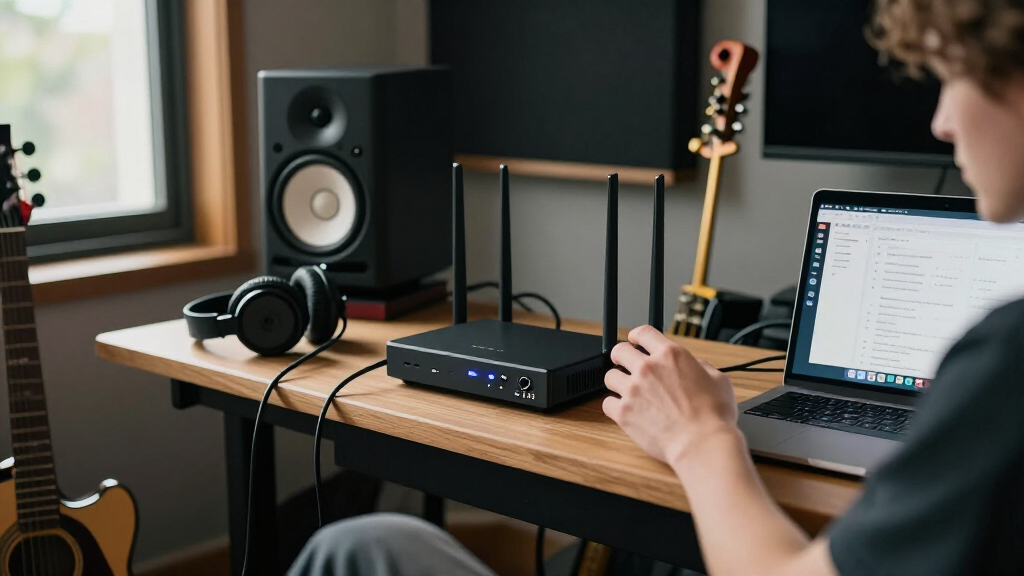
I ranked these 15 options by how well their design matches a clear buyer need, rather than treating the biggest speed number as an automatic win. My main criteria were band configuration and Wi-Fi 7 capacity, the number of included nodes, stated coverage or throughput claims, and whether the product is a standalone router or a mesh kit. I also weighed setup and day-to-day usability, wired connectivity where specified, and practical fit for different home sizes and device loads.
The tri-band Deco 7 Pro systems rank highest for demanding, device-heavy homes because their design offers more capacity than the dual-band majority. The Deco BE23 3-Pack and eero 7 bundles rate well for buyers prioritizing straightforward mesh coverage, while Orbi bundles offer alternatives with different node counts and tiers. Single-unit products rank lower for whole-home coverage because they do not include satellite nodes, and the renewed Deco entry ranks lower for buyers who prefer a new system. Product names and bundle specifications can be similar, so I treat each listed configuration separately and recommend checking the exact package before purchase.
Factors to Consider When Choosing Wi Fi 7 Mesh Router Review
Before choosing a model, I would match the network to the home rather than buying by the Wi-Fi 7 label alone. These decisions have a larger effect on everyday results than a headline speed figure.
Match the system to your floor plan, not just square footage
Coverage figures are estimates, not guarantees for every floor plan. Dense walls, multiple levels, long corridors, and router placement can all change how far a usable signal reaches. A larger number of nodes can help fill gaps, but adding a node in a weak-signal dead zone may simply extend a poor connection. Place mesh units where they still receive a strong signal from the main router, and think about vertical connections between floors. For a compact home, a single router may be enough; for a spread-out home, a multi-node kit is usually the more relevant comparison. If possible, check whether Ethernet backhaul can connect nodes and reduce reliance on wireless links.
Decide whether tri-band capacity solves a real problem
Tri-band is most useful when many devices compete for airtime or when the network carries demanding traffic across several rooms. It is not a guaranteed speed boost for every device, and an older client cannot use Wi-Fi 7 features it does not support. Dual-band systems can be a sensible choice for everyday browsing, streaming, and connected-home devices, especially when the internet plan and client devices are the limiting factors. A common mistake is paying for a higher-capacity system while the bottleneck is a slow plan, weak placement, or older devices. Compare the whole network, including the router-to-node connection, rather than focusing only on the class number. The Deco 7 Pro entries are the clearest tri-band choices in this roundup; most alternatives are dual-band.
Check wired ports against your internet plan and home equipment
Wi-Fi performance is only one part of a home network, so check the port speeds and layout on the exact configuration you plan to buy. A fast internet plan can be constrained if the router’s WAN connection or a wired device link cannot support the plan’s speed. Wired connections also matter for desktop computers, game consoles, network storage, and mesh backhaul. If you use several wired devices, count the available ports before deciding whether you need a separate switch. Do not assume two products in the same family have identical ports or capabilities. Match the system’s wired limits to your actual service and equipment, not a future upgrade you may never make.
Choose node count with placement and upgrade plans in mind
A 2-, 3-, or 4-pack describes the number of units, not a promise that every home needs that many. More nodes can provide more placement options, but they also need power, space, and a sensible route back to the main unit. Start by identifying where coverage fails and whether a wired connection can reach that area. A smaller kit may be easier to manage and can leave room to add a compatible node later, but compatibility and expansion rules vary by brand and model. Compare the included bundle carefully: this roundup has Orbi 370 configurations in both three- and four-unit packs, plus eero 7 in one-, two-, and three-unit forms. Avoid buying extra units solely because a package lists a larger coverage estimate.
Account for setup, controls, and ongoing service requirements
Mesh systems differ in how much control they offer through their companion apps and whether some security or management features depend on an ongoing service. Before choosing, check what parental controls, device management, and network security tools are included without a subscription. Simple app-led setup can be convenient, but buyers who want detailed network settings should verify that the controls they need are available. Consider who will manage the home network and how often settings are likely to change. A system that is easy for the household to maintain may be a better fit than one with more features that go unused. Read the current feature and service terms for the precise model, since software offerings can change.
Treat Wi-Fi 7 as an investment only if your devices can use it
A Wi-Fi 7 router can support a mix of newer and older devices, but the older devices will not gain Wi-Fi 7-specific capabilities. The upgrade makes more sense when you already own compatible phones, laptops, or other high-demand equipment, or expect to add them soon. Otherwise, better placement or an additional mesh node may fix the problem more effectively than a higher-spec router. Check whether the devices that matter most support the Wi-Fi 7 features you want, and remember that internet service speed still sets a ceiling for online downloads. For local transfers and heavy simultaneous use, the home network’s wireless and wired links matter too. This helps separate a genuine capacity upgrade from a purchase that mainly changes the label on the router.
Frequently Asked Questions
Should I choose a dual-band Wi-Fi 7 mesh kit or a tri-band system?
I would choose tri-band when several people and devices place steady demands on the network, or when wireless mesh links need more capacity to serve distant rooms. In this roundup, the Deco 7 Pro BE10000 options are the clearest match for that priority. A dual-band kit can be a better fit for ordinary household use if coverage is the main issue and the device load is moderate. Check whether your clients can take advantage of Wi-Fi 7 before paying for capacity they cannot use. Also compare node placement and wired backhaul options, since those can matter more than band count in a challenging home.
Is a three-pack always better than a two-pack for a mesh network?
No. A third unit helps only if it fills a real coverage gap and can maintain a solid link to the rest of the system. In a smaller or open-plan home, two units may provide better coverage with less equipment to place and manage. This lineup includes eero 7 in both two- and three-unit bundles, as well as several three-node Deco and Orbi choices, so match the bundle to your layout rather than assuming more is better. If you can connect a remote node with Ethernet, that can improve its backhaul without adding another unit. Sketching the locations of the router, walls, and dead zones can help you estimate the right count.
Can I use a single Wi-Fi 7 router instead of a mesh system?
Yes, if one well-positioned router can reach the rooms and devices that matter in your home. The Nighthawk RS90 and the one-unit eero 7 are the standalone choices in this roundup, while the multi-unit products are designed to distribute coverage. A single router avoids extra nodes and can be simpler to set up, but it cannot place additional access points around a large or obstructed home. Check whether the router’s stated coverage fits your layout, keeping in mind that walls and floors can reduce range. If you already know certain rooms have weak signal, a mesh bundle is usually the more direct solution.
Will a Wi-Fi 7 mesh system improve internet speed if my plan is slower?
It can improve wireless coverage and local network performance, but it cannot make your internet connection exceed the speed supplied by your provider. A newer router may help devices connect more reliably or share capacity better, especially in a busy home, yet the plan remains a limit for internet downloads and uploads. Before upgrading, compare the speed near the main router with the speed in rooms where service feels slow. If the issue appears only far from the router, placement or additional mesh coverage may help more than a higher speed tier. If performance is slow even beside the router, check the service plan, modem, cables, and device before blaming the mesh system.
What should I verify before buying a renewed or similarly named mesh kit?
Check the exact model number, whether the listing is for a new or renewed unit, and how many routers or nodes are included. This roundup contains several closely named Deco and Orbi products with different bands, capacities, and bundle sizes, so a family name alone is not enough to identify the configuration. Confirm the included power supplies and any other accessories, along with the seller’s return and warranty terms. For renewed equipment, also verify the condition policy and support eligibility. Those checks can prevent a mismatch between the system you expect and the package you receive.
Conclusion
My best overall pick is the TP-Link Deco 7 Pro Tri-Band BE10000 for households that want more network capacity than the dual-band majority provides. For best value-oriented coverage, I would start with the Deco 7 BE23 3-Pack, especially when multiple nodes matter more than tri-band capacity. The best premium fit is the tri-band Deco 7 Pro, while the best choice for beginners is the eero 7 2-Pack for a straightforward multi-unit setup. For buyers who need several placement points, compare the Orbi 370 4-Pack with the three-pack bundles; for a smaller home that needs only one router, consider the Nighthawk RS90 or one-unit eero 7. I would make the final choice by matching node count, band design, and wired needs to the home rather than buying the most ambitious specification.
Halloween Picks
halloween
As an affiliate, we earn on qualifying purchases.