
Executive Summary
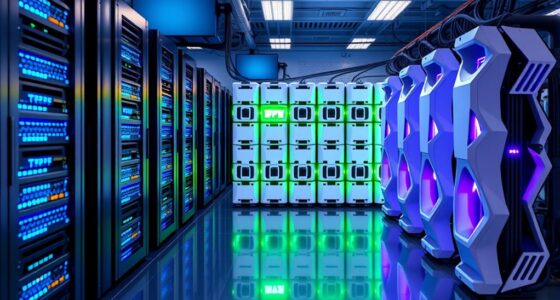
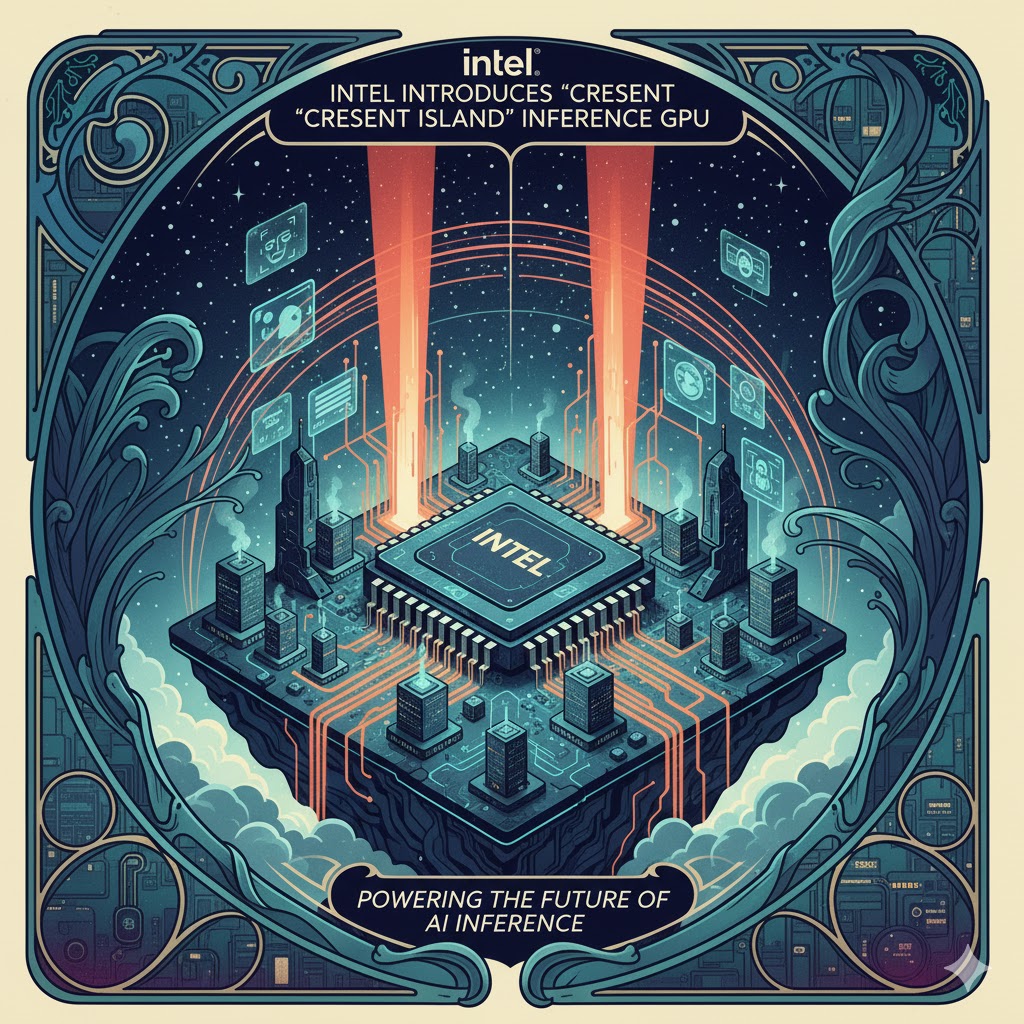
Intel’s new Crescent Island GPU targets inference workloads with Xe3P architecture and ultra-efficient design—signaling a pivot toward sustainable AI compute.
Engineering for Inference
Crescent Island, built on Xe3P architecture, delivers 160 GB LPDDR5X memory and optimized tensor cores for quantized model performance. It prioritizes air-cooled energy efficiency, ideal for enterprise inference clusters.
Strategic Pivot
While Nvidia dominates training, Intel is betting on inference—the phase where models serve billions of real-time queries daily. Crescent Island aims to undercut high-end GPUs on cost-per-token metrics.
Deployment Roadmap
Sampling begins in late 2026, with production servers scheduled for early 2027. The GPU will anchor Intel’s expanded Gaudi platform for AI inference scaling.
Market Implications
This move strengthens Intel’s relevance in the post-training era, where efficiency and sustainability define competitive advantage.

AI Systems Performance Engineering: Optimizing Model Training and Inference Workloads with GPUs, CUDA, and PyTorch
As an affiliate, we earn on qualifying purchases.
As an affiliate, we earn on qualifying purchases.

The NVIDIA Rubin CPX GPU Architecture: Transforming AI Inference Infrastructure for High-Performance Computing and Generative Applications
As an affiliate, we earn on qualifying purchases.
As an affiliate, we earn on qualifying purchases.

Apple 2026 MacBook Pro Laptop with Apple M5 Pro chip with 18-core CPU and 20-core GPU: Built for AI, 14.2-inch Liquid Retina XDR Display, 24GB Unified Memory, 2TB SSD, Wi-Fi 7; Space Black
FAST RUNS IN THE FAMILY — The 14-inch MacBook Pro with the M5 Pro or M5 Max chip…
As an affiliate, we earn on qualifying purchases.
As an affiliate, we earn on qualifying purchases.

SCCCF Graphics Card Cooler with Dual 90mm & 92mm PWM Fans – PCI Slot Mountable VGA/GPU Cooling System, High Airflow Quiet Cooling
[Easy to Install]: Equipped with 3 92MM long-life double ball fans, PCI design, easy to assemble and use.
As an affiliate, we earn on qualifying purchases.
As an affiliate, we earn on qualifying purchases.