Balancing MIDI timing with human feel means knowing when to tighten rhythms with quantization and when to embrace natural groove variations. Too much quantizing makes your music sound stiff and robotic, while keeping some timing deviations adds life and authenticity. Subtle adjustments, swing settings, and humanized techniques help preserve that organic feel. If you want your music to sound both precise and lively, understanding these nuances will help you craft better performances—there’s more to discover if you keep exploring.
Key Takeaways
- Human feel introduces intentional timing variations like swing and microtiming, making performances more expressive and less robotic.
- Quantization enforces strict rhythmic precision, which can strip groove and reduce musical authenticity if overused.
- Balancing human feel and quantization involves subtle timing adjustments, using groove templates, and avoiding rigid grid snapping.
- Tools like groove quantize, swing settings, and timing offsets help blend rhythmic consistency with natural human timing.
- The ideal approach depends on musical genre and goals: tight for electronic, loose for jazz or funk, emphasizing either precision or expressiveness.
MIDI groove quantize plugin
As an affiliate, we earn on qualifying purchases.
As an affiliate, we earn on qualifying purchases.
Understanding MIDI Timing: How Human Feel and Quantization Interact
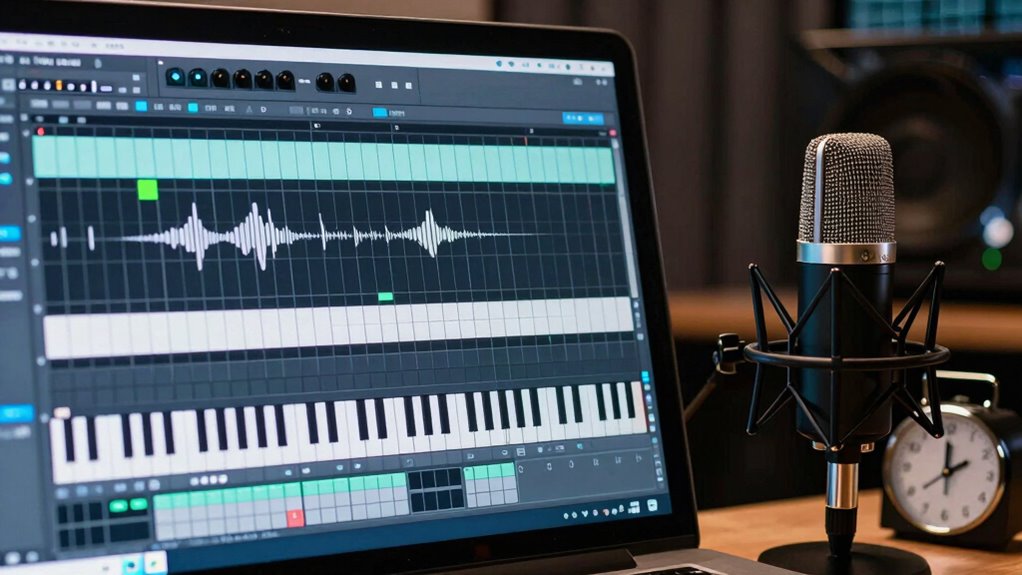
Understanding MIDI timing involves more than just precise clock signals; it also depends on how human musicians interpret and perform rhythms. When you add swing nuances and expressive timing, the rhythm becomes more dynamic and lively. These subtle variations reflect a performer’s feel, making the music groove naturally. Quantization can lock rhythms perfectly, but it may strip away this human expressiveness. Instead, you can intentionally incorporate slight timing shifts to enhance the groove. Recognizing the interplay between strict MIDI timing and human feel helps you create more authentic performances. Whether you’re editing or performing live, understanding how swing nuances influence timing allows you to balance technical accuracy with expressive freedom, resulting in music that feels more alive and emotionally engaging. Incorporating musical style into your approach can further emphasize the expressive qualities that make performances resonate. Appreciating the importance of Free Floating timing techniques can help you achieve a more natural and expressive sound in your compositions. Exploring timing variability can also deepen your understanding of how subtle adjustments contribute to a more human and engaging performance. Additionally, understanding quantization effects can illuminate how rigid timing may sometimes hinder the natural feel of a performance, especially when combined with human feel techniques.
humanize MIDI timing software
As an affiliate, we earn on qualifying purchases.
As an affiliate, we earn on qualifying purchases.
When Should You Quantize, and When Is It Better to Keep the Groove Loose?
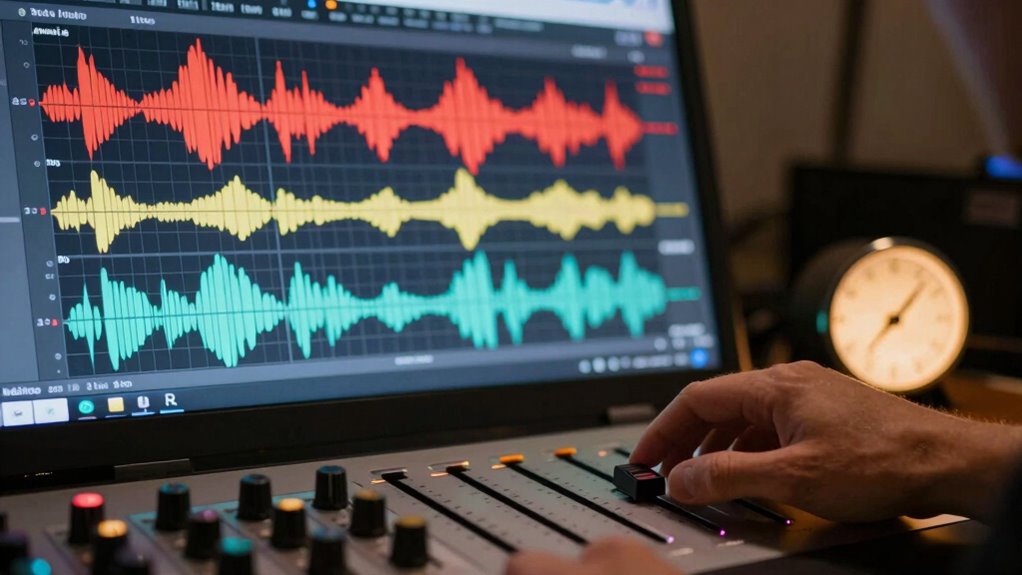
Deciding when to quantize or keep your groove loose depends on your musical goals and the context of the performance. If you aim for a tight, polished sound, groove quantization can help tighten timing and emphasize swing timing. However, in genres like jazz or funk, keeping the groove loose adds human feel and spontaneity. Use the table below to decide:
| Goal | Approach |
|---|---|
| Tight, precise rhythm | Quantize for consistent timing |
| Human feel, swing nuances | Keep groove loose, embrace swing timing |
| Expressive improvisation | Use subtle quantization or none at all |
Understanding how European cloud servers support sustainable and secure solutions can inform your approach to digital music production and storage, ensuring your projects align with modern, energy-efficient practices.

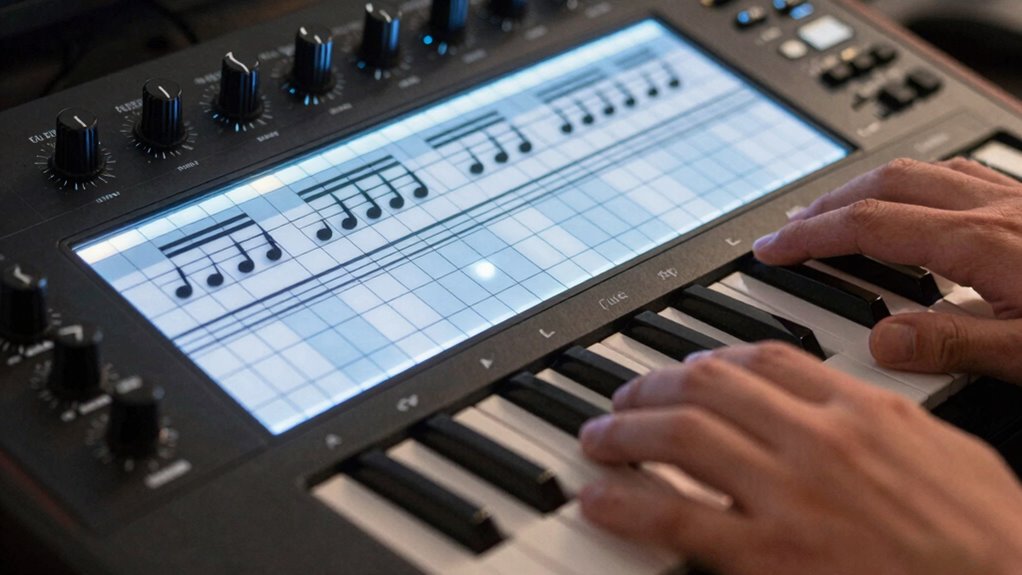
Behringer SWING 32-Key USB MIDI Controller Keyboard with 64-Step Polyphonic Sequencing, Chord and Arpeggiator Modes
32 compact-sized keys for expressive velocity and after-touch functionality
As an affiliate, we earn on qualifying purchases.
As an affiliate, we earn on qualifying purchases.
Why Human Timing Adds Feel and Groove to Your Music
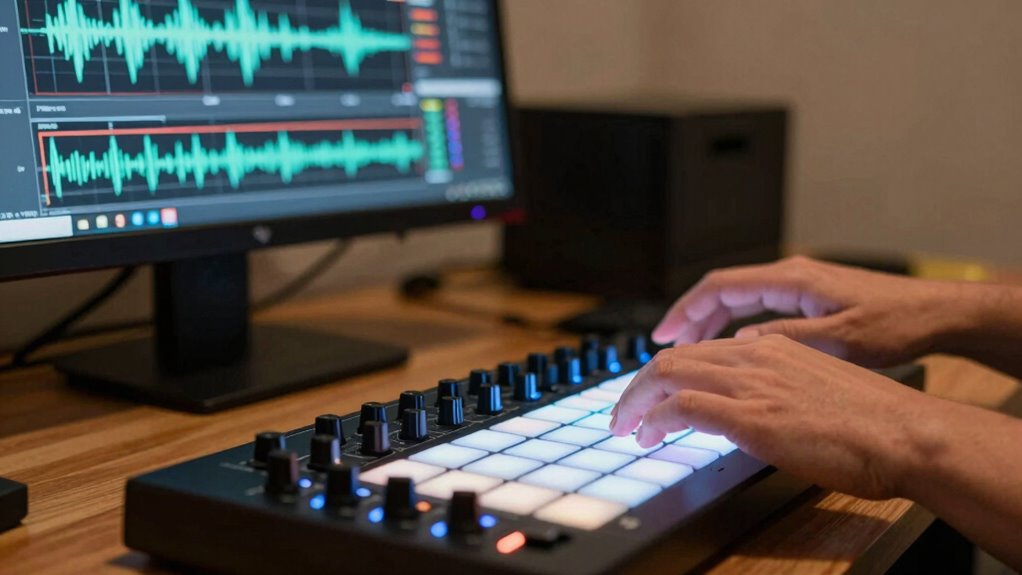
Human timing brings a lively, expressive quality to your music that digital quantization often can’t replicate. This natural variability, known as timing variation, creates a sense of groove that feels more organic and engaging. By intentionally incorporating swing complexity, you add subtle shifts in timing that make rhythms breathe and sway. These small deviations prevent your music from sounding robotic, giving it a human touch. When you embrace human timing, you allow the music to develop a unique feel, emphasizing the emotional and rhythmic nuances that make it compelling. This groove is what listeners connect with emotionally, as it reflects real human expression. Mastering the balance between precision and timing variation enhances musical authenticity, allowing you to unlock the true potential of your music’s feel and groove. Recognizing the importance of timing variation can help you craft performances that resonate more deeply with your audience, especially when you understand how human feel influences listener perception. Incorporating natural rhythmic fluctuation and timing variability into your performances makes your music more relatable and emotionally impactful.
![WavePad Audio Editing Software - Professional Audio and Music Editor for Anyone [Download]](https://m.media-amazon.com/images/I/B1fcLEGCs6S._SL500_.png "MIDI Timing Truth: Human Feel vs Quantization 7")
WavePad Audio Editing Software – Professional Audio and Music Editor for Anyone [Download]
Full-featured professional audio and music editor that lets you record and edit music, voice and other audio recordings
As an affiliate, we earn on qualifying purchases.
As an affiliate, we earn on qualifying purchases.
Common Mistakes When Over-Quantizing and How to Avoid Them
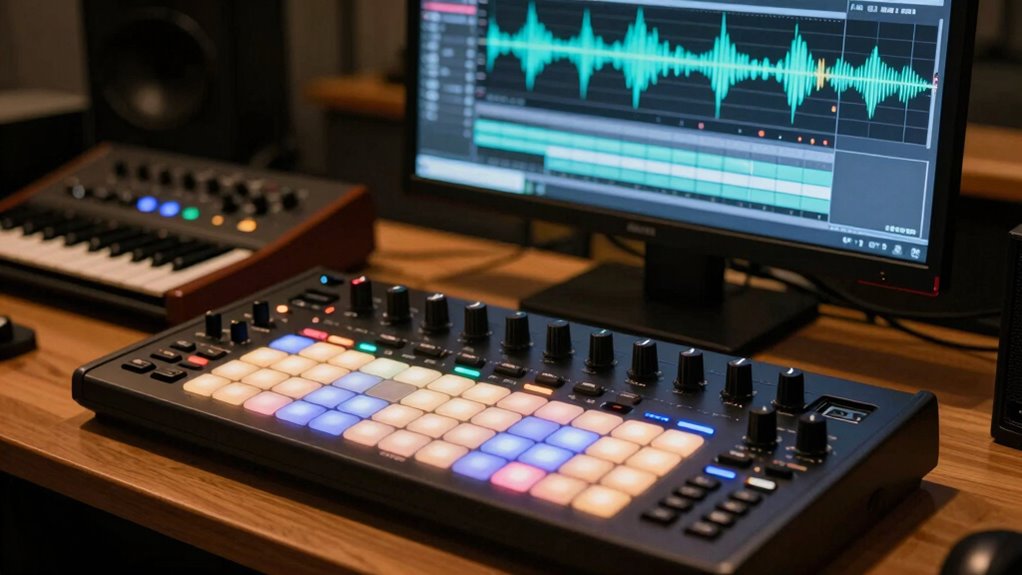
Over-quantizing can strip your music of its natural feel, making it sound stiff and robotic. One common mistake is aiming for perfect timing at the expense of groove preservation, which can lead to noticeable timing inconsistency. When you tighten everything too much, you lose the subtle human imperfections that give a track its groove. To avoid this, don’t set the grid too rigid; instead, subtly retain some natural timing variations. Over-quantizing can also cause your performance to lose its dynamic feel, resulting in mechanical-sounding music. Keep in mind that small, intentional timing deviations often enhance groove and musical interest. Striking a balance between quantization and human feel helps maintain the authenticity of your performance while ensuring rhythmic accuracy.
Techniques for Balancing MIDI Precision and Human Feel

To strike the right balance between precision and human feel, you should embrace slight timing variations instead of rigid quantization. Using humanized quantization settings can add natural groove, while combining looping with groove templates helps maintain a lively feel. These techniques let you keep your MIDI tight without sacrificing expressiveness. Additionally, listening carefully to performances can help you identify where slight timing deviations enhance the musical feel and where tighter timing is necessary for clarity. Incorporating adaptive timing can further refine your MIDI to better emulate human nuance and dynamics. Understanding contrast ratio and its impact on perceived sharpness can also influence how you synchronize MIDI elements for a more natural sound. Recognizing the importance of timing variability allows for more authentic and emotionally engaging performances. Furthermore, experimenting with quantization sensitivity can help you find the optimal setting for different musical contexts, balancing precision with expressiveness.
Embrace Slight Timing Variations
Achieving a natural feel in your MIDI performances often means allowing for slight timing variations rather than insisting on perfect quantization. This approach enhances groove authenticity and provides the timing flexibility needed for a lively, human-like performance. Instead of rigidly aligning every note, subtly shift some notes off the grid to mimic human imperfections. Use gentle humanized adjustments or loosen quantization settings to retain a sense of groove. Here’s a quick overview:
| Technique | Effect |
|---|---|
| Slight timing shifts | Adds groove authenticity |
| Loosen quantization | Increases timing flexibility |
| Randomized offsets | Mimics human variations |
| Varying note velocities | Enhances expressiveness |
| Human feel adjustments | Balances precision and feel |
Embrace these techniques to foster a more expressive, dynamic MIDI performance.
Use Humanized Quantization Settings
Adjusting your MIDI quantization settings with humanized options lets you fine-tune the balance between precision and natural feel. Start by tweaking swing settings to introduce subtle timing variations that mimic human rhythm, giving your performance more groove. Use humanize parameters to add randomness to note timing and velocity, preventing it from sounding too rigid or mechanical. Small adjustments here can make a significant difference, making your MIDI sequences feel more expressive and lively. Don’t overdo it—moderate changes preserve musical intent while enhancing authenticity. Experiment with different swing strengths and humanize levels until you find a natural feel that complements your style. This approach helps you maintain tight timing where needed, while still capturing the organic imperfections that give your music human warmth.
Combine Looping With Groove Templates
Combining looping with groove templates offers a powerful way to strike a balance between MIDI precision and a natural, human feel. By applying looping techniques alongside groove templates, you can create repeating patterns that retain the subtle timing variations of live performance. Use groove templates to add swing or microtiming adjustments, making the loop feel more organic. When you loop sections, incorporate groove templates directly into the looped region to preserve a consistent groove throughout the piece. This approach allows you to fine-tune the rhythm, blending precise MIDI data with human-like timing nuances. Experiment with different groove templates within your loops to achieve the desired groove, ensuring your MIDI performance maintains an authentic, lively feel without sacrificing rhythmic accuracy. Adjusting timing techniques can further enhance the natural feel of your MIDI performances.
Practical Tips for Preserving Groove During MIDI Recording
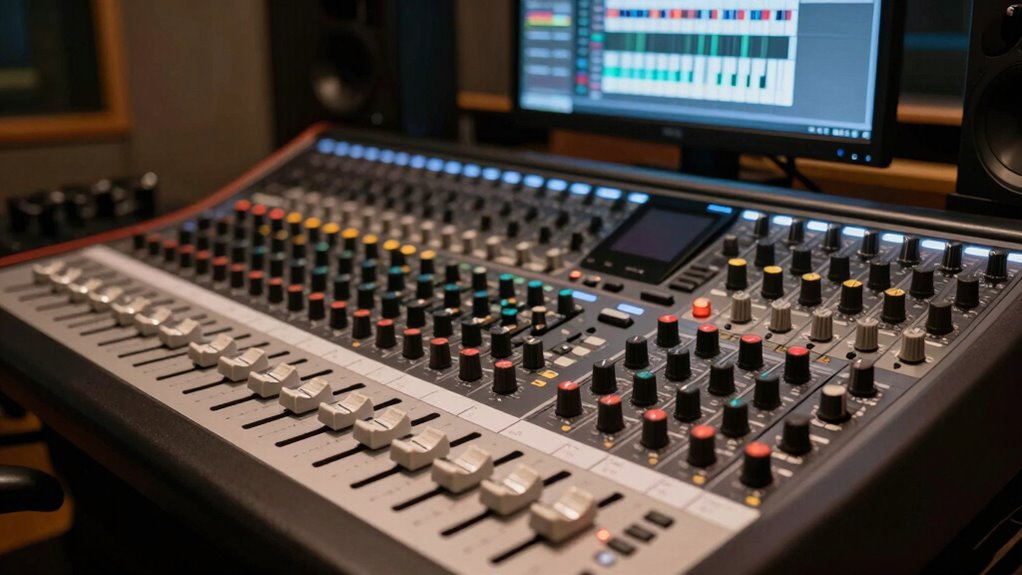
Preserving groove during MIDI recording hinges on capturing the natural feel of your performance rather than just the precise notes. To achieve this, embrace slight timing variance that mimics human feel. Focus on maintaining a consistent swing rhythm, which naturally introduces subtle delays between off-beats. Use a metronome set to accentuate the groove, but don’t be afraid to intentionally vary your timing slightly to enhance the feel. Record in real time rather than quantizing immediately, so your performance retains its organic quality. Additionally, listen back critically and identify moments where your timing adds character. Small adjustments, like shifting a few notes slightly ahead or behind the beat, can preserve the groove without sacrificing musicality. Remember, the goal is to maintain a natural, human feel throughout your MIDI performance. Incorporating eco-friendly crafting practices into your setup or workspace can also inspire a more relaxed, creative approach to recording. Furthermore, understanding human timing variations can help you intentionally incorporate organic imperfections that enhance the musical feel. Recognizing the importance of timing variability can help you develop more expressive and authentic performances. Being aware of human feel and how it influences musical expression allows you to balance technical precision with emotional authenticity. Additionally, exploring lifevest advisors resources can provide insights into maintaining authenticity in complex musical projects.
Best Tools and Plugins to Adjust MIDI Timing and Feel
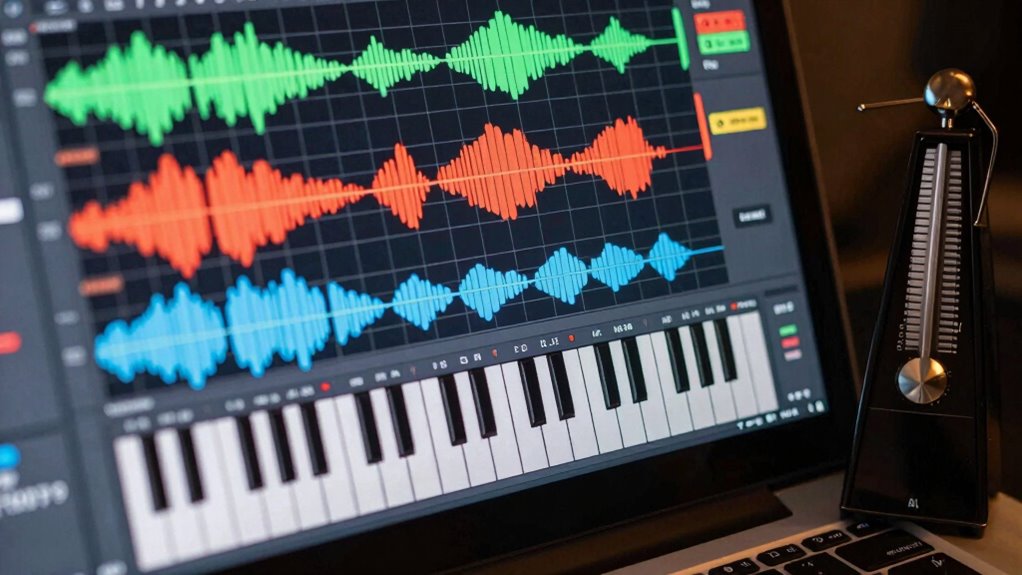
To effectively shape the feel of your MIDI performances, you’ll want to leverage tools and plugins designed specifically for timing correction and groove enhancement. Quantization plugins like Ableton’s Groove Pool or Logic’s Quantize function let you subtly adjust timing, preserving natural human feel while tightening performance. Groove templates help you introduce swing and rhythmic nuances, enhancing the groove. For nuanced dynamics, velocity layering plugins can emphasize natural variation, making performances feel more expressive. When working with chords, plugins that assist with chord voicing and spacing ensure your MIDI sounds lively and realistic. These tools enable you to maintain rhythmic authenticity while crafting expressive performances, giving you control over timing, velocity, and voicing—crucial elements for delivering compelling MIDI-based music. Additionally, understanding the importance of affiliate disclosure and privacy settings can help you choose compatible plugins and tools that align with your workflow and privacy preferences. Mastering human feel and subtle timing adjustments can significantly elevate your musical expression, making your MIDI performances more engaging and authentic. Exploring craftsmanship in your MIDI editing can further refine the emotional impact of your performances, and incorporating performance nuances can help bridge the gap between digital and live performances. Incorporating proper maintenance practices ensures your tools remain reliable, which is vital for consistent creative work.
How Pro Producers Use Human Feel and Quantization in Their Work
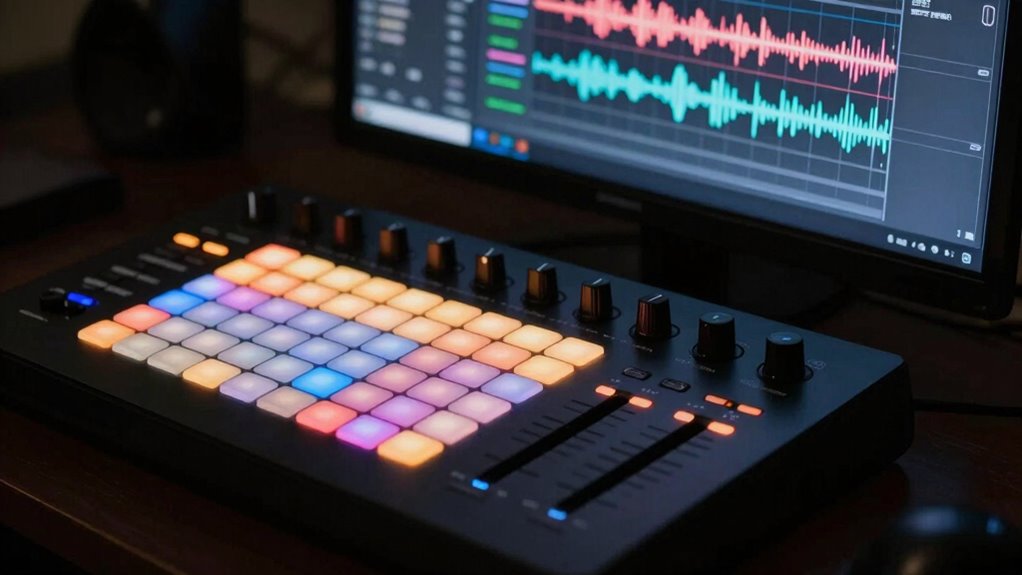
Producers often strike a balance between tight timing and natural human feel by carefully applying quantization techniques. They use expressive timing and groove variability to keep performances lively and emotionally engaging. Instead of rigidly snapping everything to a grid, they subtly adjust note placements to preserve the natural swing of a performance. This approach creates a more human feel while maintaining rhythmic accuracy. Leveraging passive voice detection tools can help identify areas where subtle adjustments maintain authenticity.
Next Steps: Improving MIDI Timing and Making Your Music Feel Alive
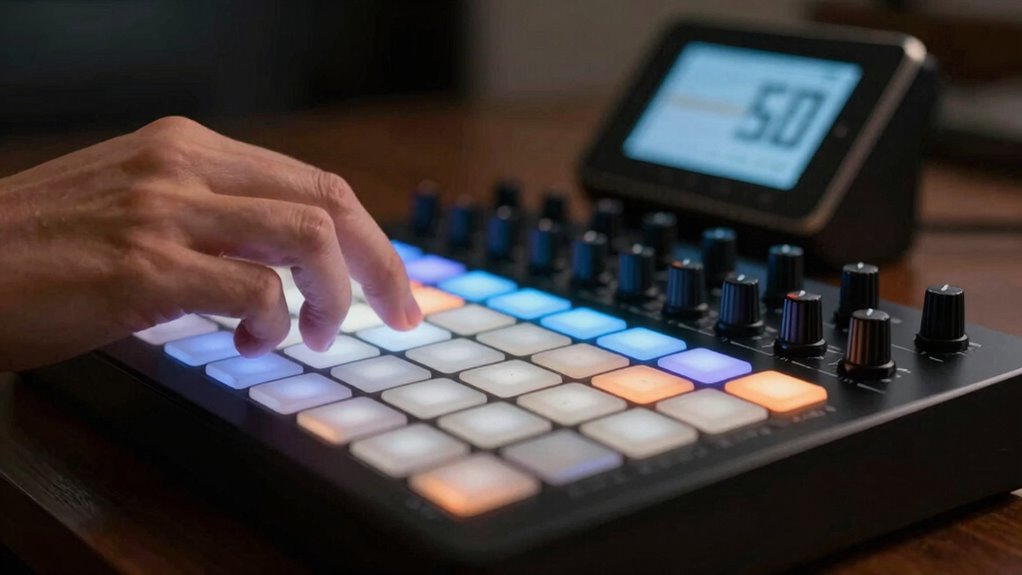
Enhancing MIDI timing to make your music feel alive involves more than just tightening notes; it requires intentional adjustments that breathe human expression into digital performances. One effective approach is applying swing timing, which subtly shifts certain notes to create a natural, grooves-rich feel. Experiment with varying swing levels to find the right groove consistency that matches your song’s vibe. Avoid rigid quantization and instead introduce slight timing variations to emulate human playing. Use your DAW’s swing or groove features thoughtfully, and listen carefully to how the timing impacts the overall groove. Incorporating human-like timing variations can significantly elevate the expressiveness of your MIDI performances. These small, deliberate tweaks can transform cold, mechanical MIDI into a lively, engaging performance that resonates with listeners. Understanding the science behind timing helps you better grasp how subtle shifts influence the listener’s perception. Paying attention to timing accuracy and how it affects emotional expression is also essential in crafting music that feels alive. Ultimately, mastering swing timing is key to making your music feel alive.
Final Tips for Achieving the Perfect Balance of Tightness and Groove
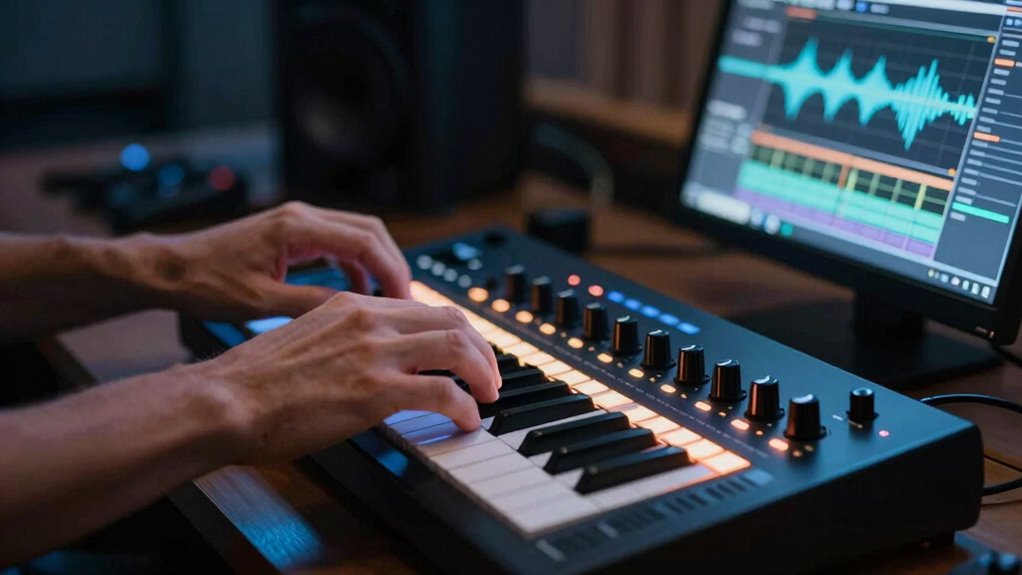
To find the right balance between tightness and groove, start by adjusting your quantization settings to tighten up your timing without losing feel. Then, consider incorporating subtle human imperfections to make your performance more lively and natural. Small tweaks in both areas can help you achieve a more compelling and authentic rhythm.
Adjust Quantization Settings
Adjusting quantization settings is a essential step in finding the right balance between tight timing and a natural groove. Start by experimenting with swing settings to add a human feel, making the rhythm groove more naturally. Subtle swing adjustments can make straight beats feel more relaxed and less robotic. Additionally, tweak timing offsets to fine-tune the placement of notes, allowing for slight shifts that add groove without losing precision. Use your DAW’s quantization strength to set how strictly notes snap to grid—less strength creates a more human feel, while more keeps things tight. Remember, small tweaks can have a big impact. Aim for a mix that maintains rhythmic consistency but still feels lively and expressive. Adjust these settings until you find the perfect balance for your groove.
Incorporate Human Feel
Achieving a natural human feel in your MIDI grooves often involves subtle variations that break the mechanical feel of perfectly quantized notes. To do this, focus on incorporating swing feel and groove variance. Slightly shifting off-beat notes can add a laid-back or energetic vibe, making your groove more organic. Experiment with adjusting the swing feel, which can range from subtle to pronounced, depending on the style you want. Groove variance involves introducing small timing differences between repeated patterns, giving your performance more life and unpredictability. Use your MIDI editor to manually nudge notes or apply groove templates that emulate human timing quirks. This approach helps balance tightness with groove, ensuring your MIDI feels both precise and human.
Frequently Asked Questions
How Does MIDI Timing Influence Listener Emotional Response?
MIDI timing considerably influences your listener’s emotional response by adding expressive timing and emotional nuance. When you incorporate subtle variations and human-like imperfections, it creates a more engaging and authentic feel, evoking deeper emotional reactions. Rigid, quantized timing can make music sound sterile, while expressive timing makes it feel alive and relatable. By embracing these nuances, you help your audience connect emotionally, making your music more impactful and memorable.
Can Human Feel Be Accurately Simulated With MIDI Quantization?
While MIDI quantization aims to replicate human feel, it’s not perfect. You might find that groove preservation and timing variability are challenging to fully capture with strict quantization. Human timing has subtle nuances that add warmth and emotion, which digital tools often smooth out. So, no, human feel can’t be accurately simulated with MIDI quantization alone, but careful adjustments can bring you closer to that authentic, lively groove.
What Genres Benefit Most From Looser MIDI Timing?
You’ll find that looser timing benefits genres like jazz, blues, and funk, where groove and feel matter more than strict precision. These styles thrive with genre flexibility, allowing performers’ natural rhythms to shine through. Looser MIDI timing captures that human feel, making your music sound more authentic and lively. It’s perfect for creating a relaxed, expressive vibe, emphasizing groove over rigid quantization.
How Do Different MIDI Controllers Impact Timing Accuracy?
Your MIDI controller acts like a skilled drummer, shaping your groove with swing feel and velocity sensitivity. When you use a controller with high timing accuracy, like a MIDI keyboard with tight timing, your recordings stay tight. But if your controller has jittery timing or limited velocity sensitivity, your groove can feel more human and relaxed. So, choose one that matches your style for better timing accuracy and expressive performance.
Are There AI Tools That Enhance Human Feel in MIDI Recordings?
Yes, AI tools can enhance human feel in MIDI recordings by applying expressive techniques and managing timing variability. These tools analyze your performance and subtly adjust note timing and velocity, making the playback sound more natural and emotional. By mimicking human nuances, AI helps preserve the expressive qualities you want, giving your MIDI recordings a more authentic, lively feel without sacrificing precision.
Conclusion
Think of your MIDI timing like a dance partner—you want precision but also the freedom to move naturally. By balancing quantization with human feel, you create music that’s tight yet alive. Don’t be afraid to loosen the reins sometimes; it’s in those imperfections that your groove truly shines. Master this delicate dance, and your tracks will pulse with energy, making listeners want to move with every beat you lay down.