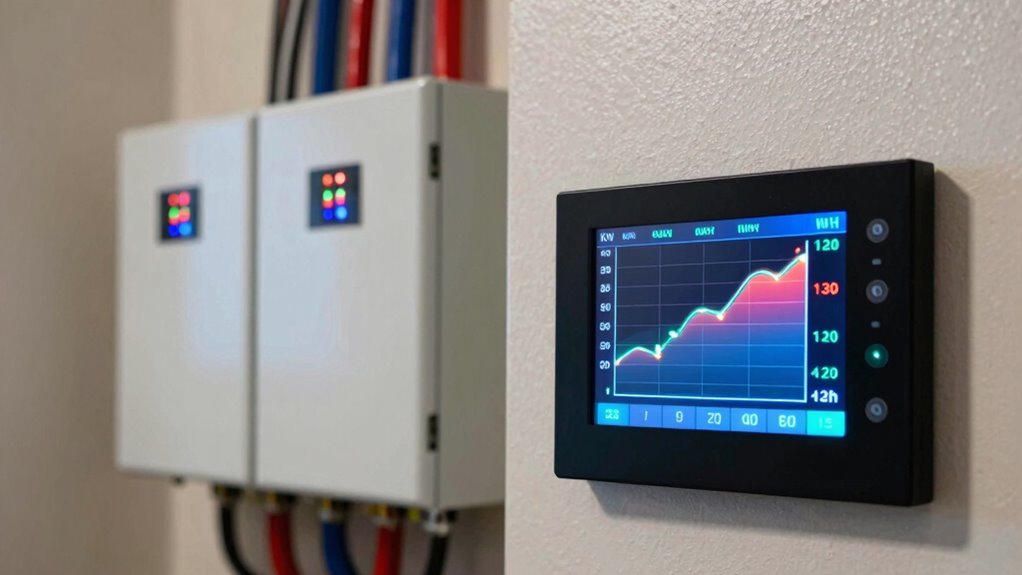

Understanding the difference between kW and kWh is key to sizing your backup power. Kilowatts (kW) measure your home’s instant power needs, while kilowatt-hours (kWh) show total energy used over time. To keep critical devices running during outages, you must estimate your peak power demands and daily energy consumption. Properly balancing these guarantees your system is reliable and efficient. Keep exploring to learn how to determine what size system really fits your home.
Key Takeaways
- kW measures instantaneous power capacity needed to run devices during outages, while kWh indicates total energy used over time.
- Proper backup sizing requires understanding your home’s critical appliance wattage and daily energy consumption.
- Generator ratings often show surge power; ensure continuous wattage meets your essential device demands.
- Balancing system capacity (kW) and storage (kWh) extends backup runtime and ensures reliable power during outages.
- Prioritize energy-efficient appliances and regular maintenance to optimize backup power needs and system longevity.
As an affiliate, we earn on qualifying purchases.
What Are kW and kWh? Understanding Power and Energy Basics
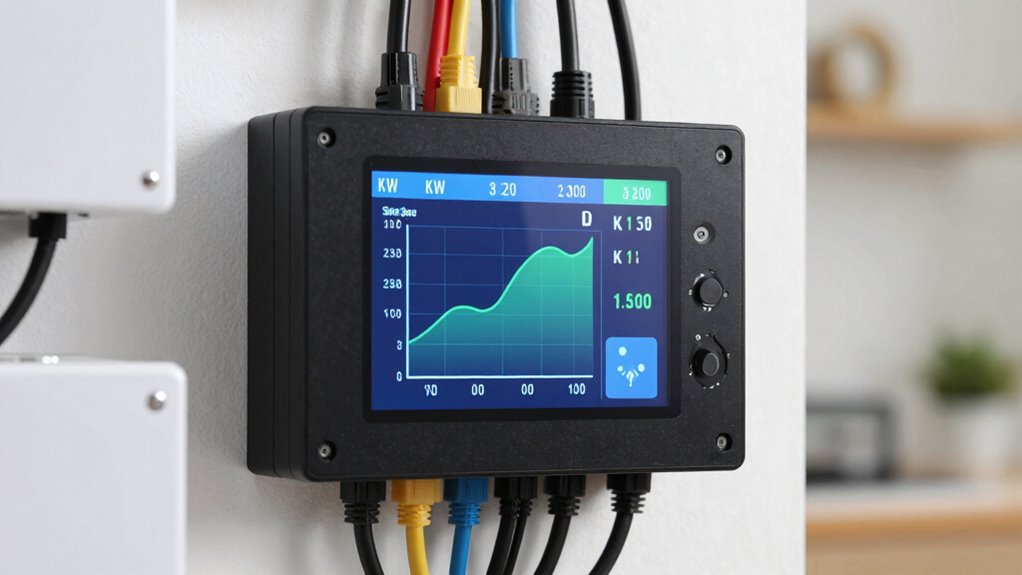
Understanding the difference between kilowatts (kW) and kilowatt-hours (kWh) is essential when it comes to backup power. These terms are energy units that help you comprehend how power is measured and used. Kilowatts measure the rate of power flow at a specific moment—think of it as the instantaneous power your devices draw or supply. On the other hand, kilowatt-hours represent the total energy consumed or produced over time, such as how much energy your system uses in a day. Knowing this distinction helps you evaluate your backup power needs more accurately. Power measurement in kW shows how much power a system can deliver at once, while energy units in kWh indicate overall capacity and usage. Mastering these basics ensures you select the right backup solution for your home. Understanding energy units can empower you to make better decisions about your home’s power needs and ensure reliable backup during outages. Recognizing power capacity is crucial for sizing backup systems appropriately to meet your household’s demands. Additionally, understanding the relationship between power and energy helps you optimize your backup system for efficiency and reliability. For example, knowing how power consumption impacts your daily energy use can help you choose a system that balances capacity and runtime effectively, especially when considering energy efficiency and its impact on long-term operational costs.
Why kW Is Important for Instant Power During Outages
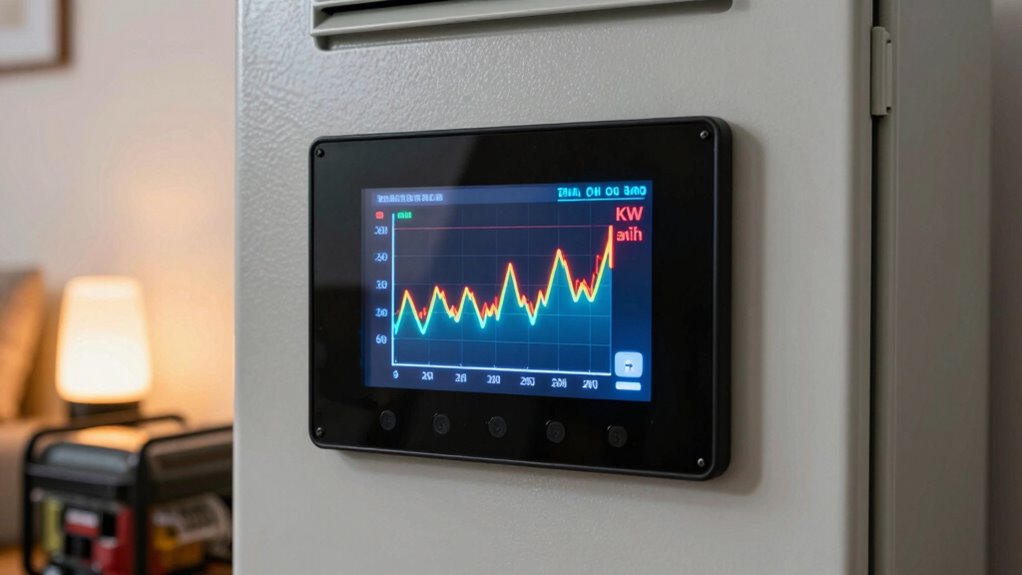
Knowing the difference between power and energy helps you choose the right backup system, but during a power outage, the immediate concern is how much power your devices need at once. That’s where kW becomes essential. Your generator must provide enough instant power to run vital appliances without overload. Proper generator maintenance ensures it performs reliably when needed most. Selecting a generator with the right kW rating prevents overloads and reduces wear, improving fuel efficiency and longevity. If your generator isn’t adequately sized, it could struggle to supply the necessary power, leading to potential damage or failure. Ensuring your system has proper ventilation and wiring is crucial for safe operation during outages. Additionally, understanding power capacity helps you plan for future energy needs and avoid costly upgrades. Properly sizing your system based on power requirements ensures your home gets the immediate power it needs during outages, keeping critical systems running smoothly and efficiently. Recognizing the distinction between power and energy is vital for selecting the most suitable backup solution.
How to Calculate Your Home’s Critical Power Needs
| Appliance | Wattage | Usage Duration |
|---|---|---|
| Refrigerator | 150W | 24 hours |
| Medical device | 200W | 12 hours |
| Lights | 60W | 8 hours |
| Laptop | 50W | 8 hours |
Balancing battery longevity and fuel efficiency is key. Proper calculation guarantees your backup system meets your needs without wasting power or draining batteries prematurely. Understanding load calculations helps ensure your system is appropriately sized for your household needs.
How Much Energy Does Your Home Use in a Day (kWh)?
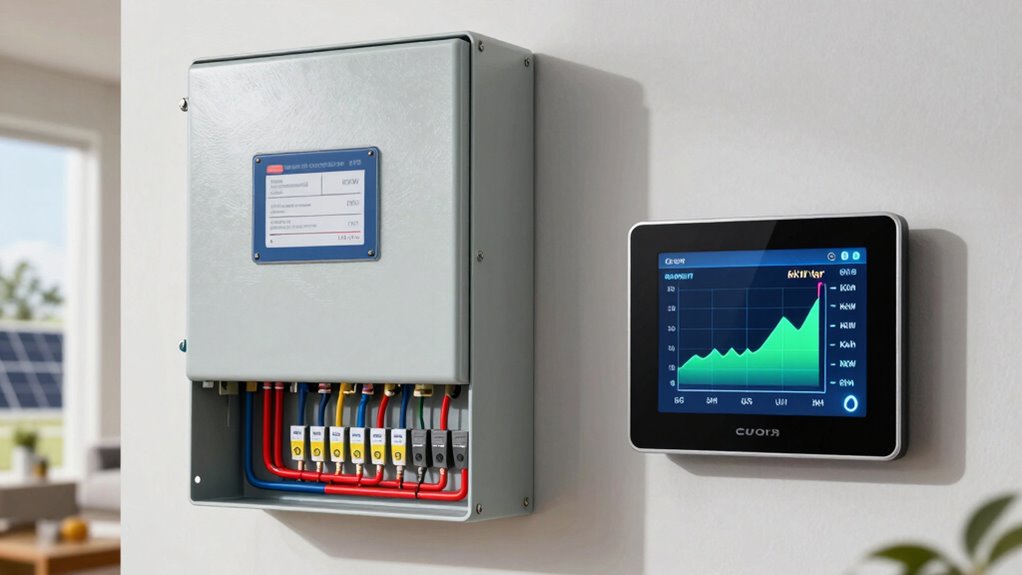
Understanding your home’s daily energy use helps you plan for backup power effectively. Your consumption varies based on routines, appliances, and seasonal factors. By estimating your needs, you can determine the right size of a backup system to keep essential devices running smoothly. Knowing your daily energy consumption also allows you to compare different backup options and choose the most reliable and efficient solution for your home. Additionally, understanding energy usage patterns can help optimize your overall power management and savings. Monitoring your energy consumption regularly can reveal opportunities to reduce waste and improve efficiency, ensuring your backup power system is both cost-effective and dependable. Recognizing the impact of seasonal changes on your energy needs can further refine your backup power planning and ensure year-round reliability. Being aware of best appliances for backup power can help you select the most critical devices to prioritize during outages.
Typical Daily Consumption Patterns
Have you ever wondered how much energy your home uses in a typical day? Your daily consumption varies based on activities and appliances, but understanding patterns helps plan backup power. Typically, mornings see lower use, with peaks during cooking and heating. Evenings often have the highest demand due to lighting, entertainment, and climate control. Your home’s energy use depends on appliances, insulation, and habits, influencing how much power you need from the grid or renewable sources. For a more comprehensive understanding, consider how energy consumption patterns can influence your routine and energy needs throughout the day. Recognizing these daily variations can help optimize your backup power system to ensure reliability during outages. Additionally, being aware of peak demand times allows for better management of energy resources and system efficiency.
Factors Influencing Usage
Your home’s energy consumption in a day depends on several key factors. One major influence is your level of solar integration; a solar system can offset daytime usage, reducing your overall kWh needs. Additionally, seeking grid independence through battery storage can increase your daily consumption, especially if you rely on backup power during outages. The number and efficiency of appliances, heating and cooling systems, and your lifestyle habits also play significant roles. Homes with energy-efficient devices tend to use less power overall. Seasonal changes impact usage too—hot summers and cold winters often lead to higher energy demands. Understanding these factors helps you gauge your actual energy needs, ensuring your backup power system is appropriately sized to cover your typical daily use. Energy management strategies can further optimize your consumption and reduce reliance on backup power. Recognizing the importance of power consumption patterns can help in designing more effective backup solutions tailored to your household’s specific needs. Additionally, considering water-related energy use, such as the energy required for heating water, can further refine your understanding of your total energy footprint. Monitoring energy meters can provide real-time insights into your household’s consumption, enabling more precise adjustments.
Estimating Your Home Needs
To accurately estimate your home’s energy needs, start by tracking your daily electricity consumption. This helps you understand how much energy you use in a typical day and identify areas for energy conservation. Keep a detailed record of your usage over a week to account for variations. Focus on improving appliance efficiency, which can reduce overall consumption. Consider these points:
- Review your utility bills for monthly averages
- Identify high-energy appliances and limit their use
- Implement energy-saving habits, like turning off unused devices
- Upgrade to energy-efficient appliances when possible
Common Misconceptions About Generator Power Ratings
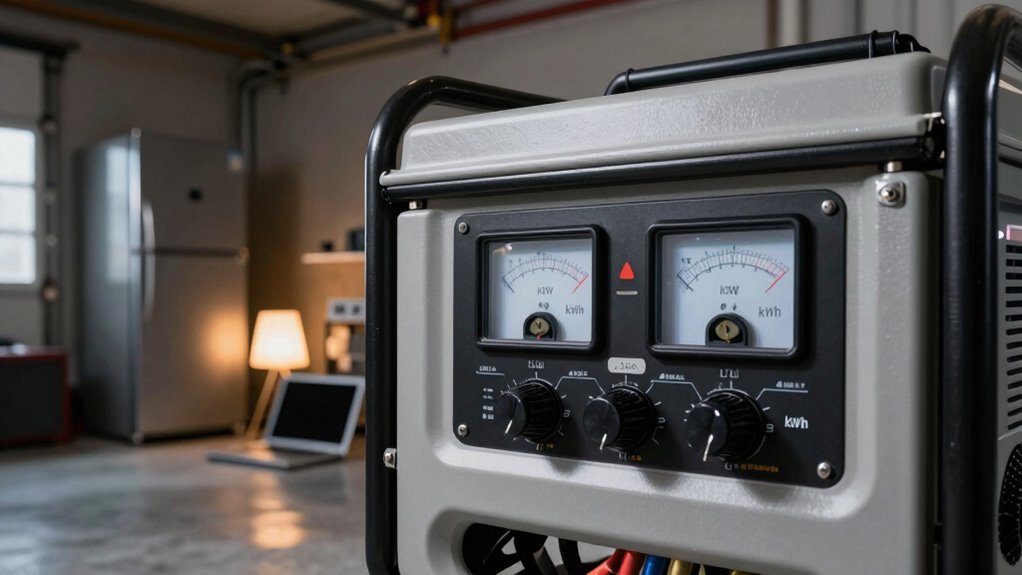
Many people assume that a generator’s rated wattage directly reflects its true power capacity, but this isn’t always the case. The labeled wattage often highlights peak or surge power, not continuous output, leading to misconceptions about what the generator can handle long-term. Additionally, a higher wattage rating doesn’t guarantee better fuel efficiency or easier generator maintenance. Some units may have inflated ratings but perform poorly over time or consume more fuel. It’s essential to understand the difference between surge and running wattage. Proper generator maintenance ensures your unit operates efficiently and maintains fuel efficiency, preventing surprises during power outages. Understanding rated wattage can also be affected by how the power output is rated, especially since cooking changes the volume and weight of foods. Don’t rely solely on wattage ratings—consider overall performance, durability, and how well the generator meets your actual energy needs. Being aware of vetted specifications can help you select a generator that truly fits your household requirements. A thorough knowledge of power ratings can also prevent overspending on a unit that exceeds your actual needs. Additionally, understanding the regulatory standards can ensure the generator you choose complies with safety and efficiency guidelines.
How to Size Your Backup Generator Correctly
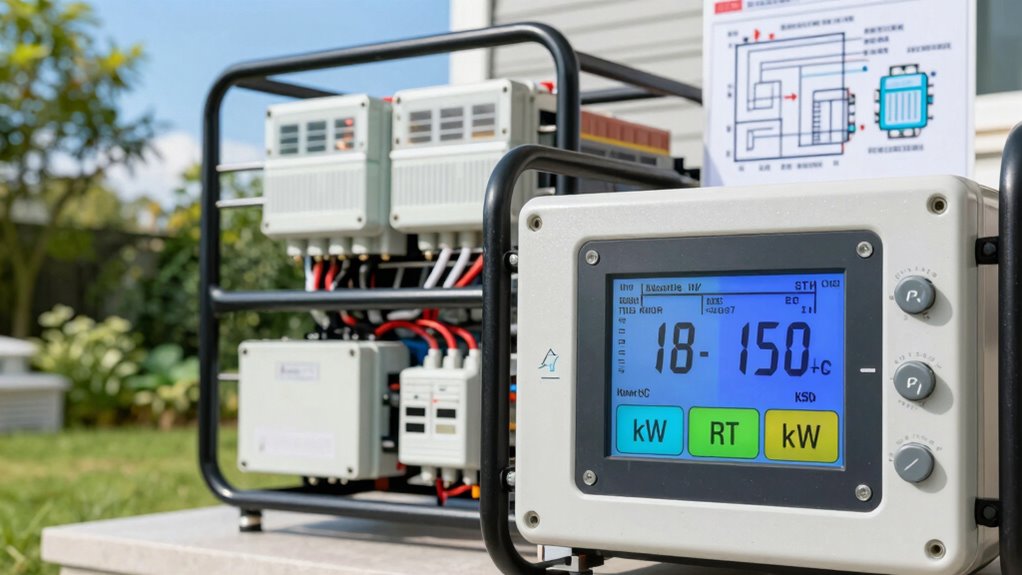
To size your backup generator properly, you need to assess your power needs and estimate the total wattage of the appliances and systems you’ll run. Make sure to calculate starting loads, which are often higher than running loads, to avoid overloads. Also, consider any future expansions so your generator can handle additional equipment down the line. For the most accurate sizing, understanding inverter generator capabilities can help match your needs efficiently. Additionally, utilizing load‑planning tools can help you create an accurate power profile tailored to your household. Recognizing common slang terms used in electrical specifications can also improve your understanding of generator features and limits.
Assess Power Needs
Wondering how to guarantee your backup generator can handle your power needs? First, list essential appliances and their wattage to determine your total load. Think about starting loads that require extra power, like refrigerators or well pumps. To ensure reliable operation, consider generator maintenance and fuel storage—both are crucial for preparedness.
Keep these points in mind:
- Prioritize critical appliances to avoid overloads
- Add a buffer to your total wattage for safety
- Regularly check generator maintenance routines
- Stock enough fuel storage for extended outages
Calculate Starting Loads
Calculating starting loads is vital to make certain your backup generator can handle the surge power needed when appliances turn on. This step involves understanding the initial power draw, which often exceeds the running load, especially for motors and compressors. To guarantee proper load balancing, you need to identify the highest startup wattage of each device and sum these for critical appliances. Proper inverter sizing is also essential; your inverter must handle these starting surges without overloads. By accurately calculating starting loads, you prevent under-sizing your generator, which can cause failure during power outages. Remember, accurately assessing these surges helps you choose a generator that provides reliable backup power while maintaining efficiency and longevity.
Consider Future Expansion
Planning for future expansion is essential to guarantee your backup generator remains dependable as your power needs grow. Long term planning helps you avoid costly upgrades later. When sizing your generator, consider potential additions like appliances, HVAC systems, or additional circuits. This foresight ensures your system can handle increased loads without compromise. Keep in mind that expanding your backup power capacity now can save money and prevent outages down the line.
Some key points for future expansion include:
- Evaluating your home’s evolving power requirements
- Choosing a generator with extra capacity
- Planning for possible new appliances or tech
- Consulting an expert for scalable solutions
What Is Surge Power, and Why Does It Matter?
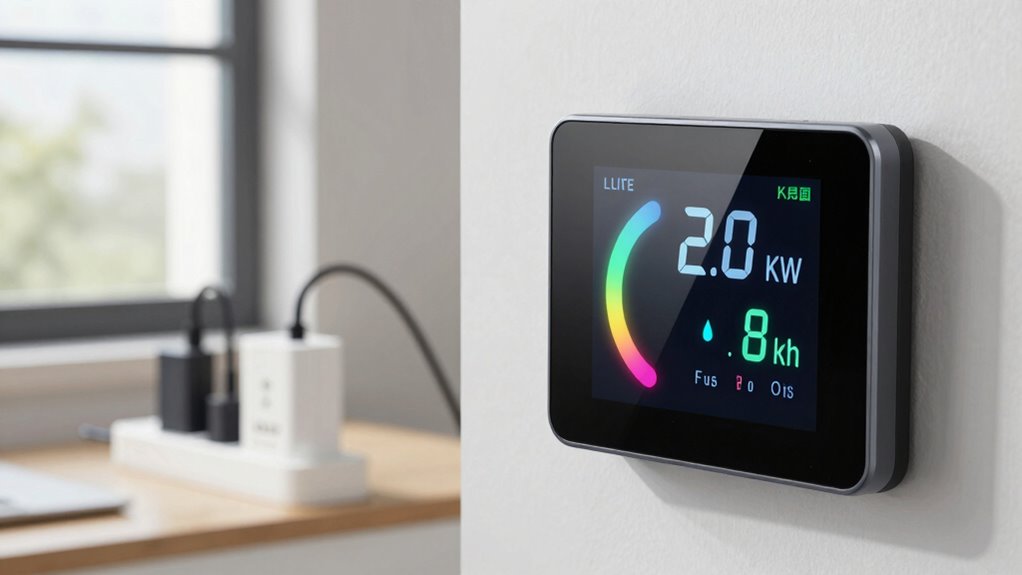
Have you ever experienced a sudden flicker or shutdown of your electronics during a storm or power surge? That’s a moment when surge power becomes important. Surge power is the extra burst of energy your devices need when they first turn on, especially large appliances or electronics with motors. Power surges, which are sudden increases in voltage, can happen during storms, outages, or even when turning on heavy equipment. If your backup system doesn’t provide enough surge power, your devices might not start properly or could get damaged. Understanding surge power helps you select a generator or backup power source that can handle these initial energy spikes. This ensures your electronics stay protected and fully operational during outages or electrical disturbances.
How to Match Your Generator’s Capacity to Your Home’s Loads
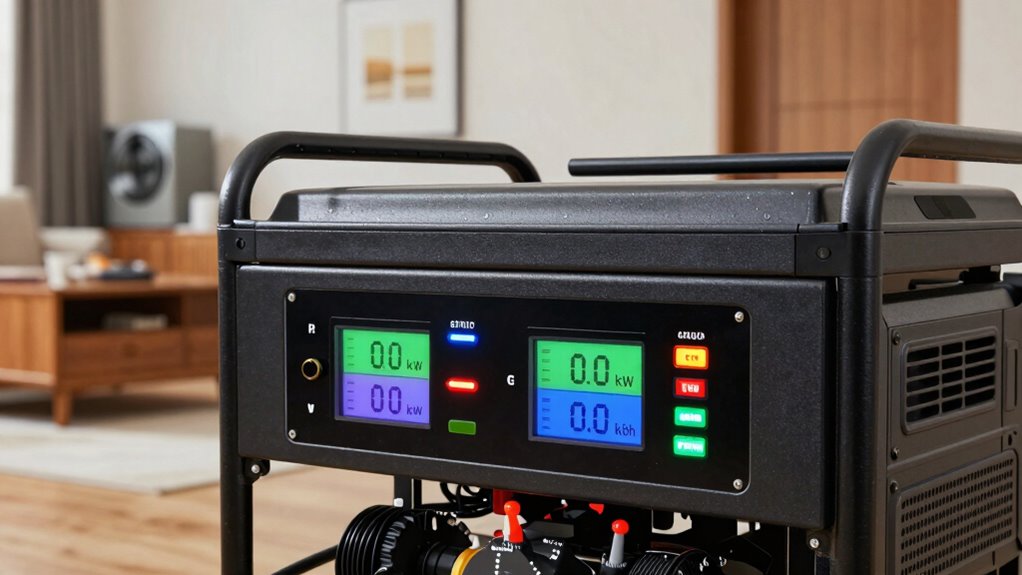
Choosing the right generator requires more than just picking a model at random; it’s about matching its capacity to what your home needs. To do this, evaluate your essential loads and determine their total power requirements in kW. Contemplate your energy storage options—like batteries—that can help manage fluctuations and backup longer during outages. Also, think about fuel types, as they influence generator size, runtime, and maintenance.
Selecting a generator that matches your home’s needs ensures reliable backup power during outages.
Key points to ponder include:
- Matching continuous power output to your essential loads
- Accounting for surge power needs during startup
- Selecting fuel types (gas, propane, diesel) suitable for your location
- Ensuring the generator’s capacity aligns with your energy storage capacity
This approach ensures reliable backup power tailored to your home’s specific demands.
Estimating Your Home’s Daily Energy Consumption in kWh
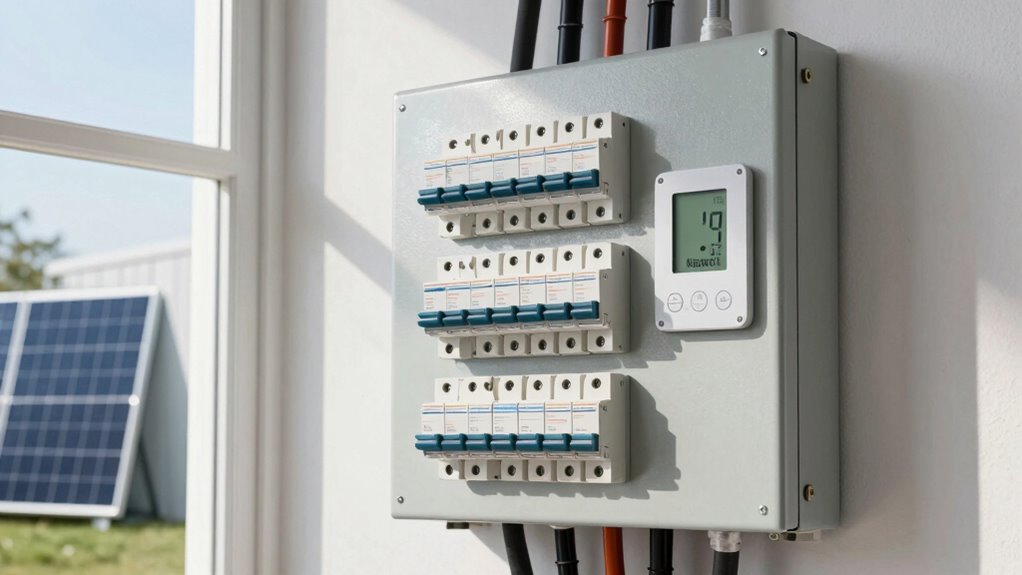
Ever wondered how much energy your home uses daily? To estimate this, start by reviewing your energy bills or conducting an energy audit. Focus on appliance efficiency, as older or less efficient devices consume more power. List all major appliances and estimate their daily usage hours. For example, if your fridge runs 24 hours and consumes 1 kWh per day, include that in your calculations. Add up the energy consumption of all appliances to determine your total daily usage in kilowatt-hours (kWh). Knowing this helps you select a backup power system that provides enough energy for your essential needs. Regularly monitoring and adjusting your estimates guarantees your backup system is both sufficient and efficient, keeping your home powered during outages.
Tips for Saving Energy and Extending Your Backup Runtime
You can extend your backup runtime by optimizing how you use appliances and focusing on essential devices. Prioritizing these devices helps conserve energy and keeps critical systems running longer. Implementing energy-efficient strategies makes a noticeable difference in maximizing your backup power.
Optimize Appliance Use
To maximize your backup power’s runtime, it’s vital to use appliances strategically and efficiently. Proper appliance maintenance ensures they run smoothly and consume less energy, extending backup duration. Be mindful of energy conservation by limiting use of high-energy devices during outages.
- Use appliances during off-peak hours when possible
- Turn off devices when not in use
- Opt for energy-efficient models and settings
- Regularly maintain appliances for peak performance
Prioritize Essential Devices
During a power outage, focusing on essential devices can substantially extend your backup power’s runtime. Start by identifying critical appliances like your refrigerator, medical devices, and communication tools. Prioritize devices with lower power demands and consider their battery chemistry; some batteries, such as lithium-ion, provide longer-lasting power and faster charging. When choosing an inverter, opt for types like pure sine wave inverters, which handle sensitive electronics more efficiently and protect your devices. By selectively powering only essential devices, you reduce overall energy consumption, making your backup system last longer. Keep in mind that balancing device priority with your inverter’s capacity ensures reliable operation without overloading your system. This strategic approach maximizes your backup power’s effectiveness during outages.
Implement Energy-Efficient Strategies
Implementing energy-efficient strategies is essential for maximizing your backup power’s runtime. By lowering your overall energy consumption, you can extend the duration your system can support critical devices. Consider integrating renewable energy sources like solar panels, which can supplement backup power and reduce dependence on stored energy. Take advantage of government incentives to offset installation costs and upgrade to energy-efficient appliances. Simple steps include:
- Using LED lighting instead of incandescent bulbs
- Sealing leaks and improving insulation
- Installing smart thermostats to optimize heating and cooling
- Prioritizing energy-efficient devices and electronics
These strategies not only conserve energy but also help you make the most of your backup power system, especially during extended outages. Combining efficiency with renewable energy options can markedly enhance your home’s resilience.
Choosing Between Generators, Batteries, and Solar for Backup Power
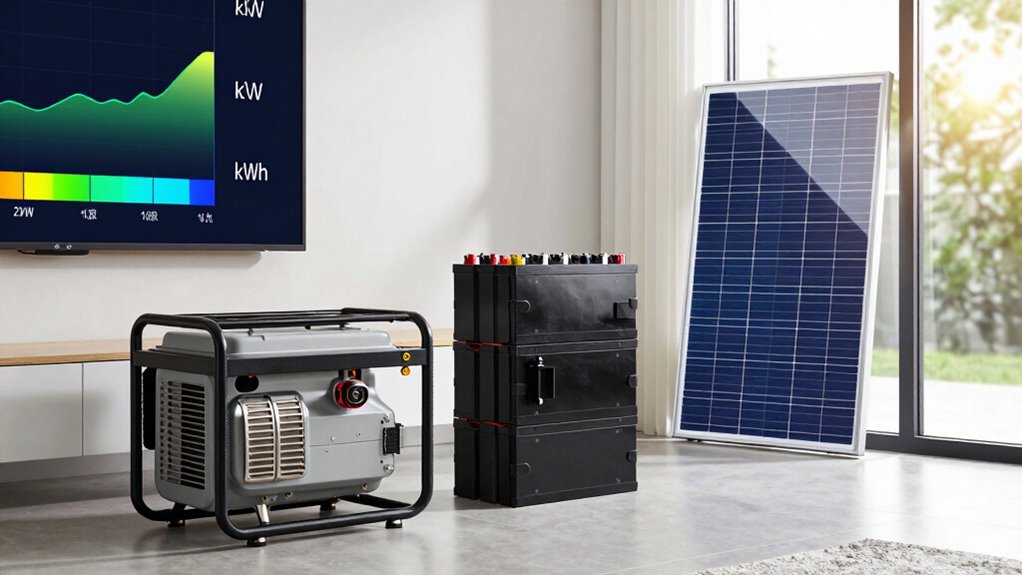
When choosing a backup power source, it’s important to weigh the benefits and limitations of generators, batteries, and solar systems. Battery storage offers quick startup, silent operation, and easy integration with renewable energy sources. It’s ideal for short-term outages and balancing energy use with renewable integration. Generators provide robust, high-power output suitable for longer outages but can be noisy and require fuel. Solar systems, combined with battery storage, create a clean, sustainable backup option, reducing reliance on fossil fuels and lowering emissions. Your choice depends on your power needs, budget, and environmental priorities. For seamless, eco-friendly backup, a system combining solar with battery storage might be the best fit. Consider your home’s energy demands and the type of outages you face to make the right decision.
Avoid These Mistakes When Selecting Your Backup Power System
Choosing the right backup power system can seem straightforward, but making common mistakes can leave you unprepared when outages happen. One mistake is neglecting to consider power surges, which can damage equipment. Failing to plan for generator maintenance may cause unexpected failures during outages. Overestimating your system’s capacity can lead to unnecessary costs, while underestimating may leave your essential devices unpowered. Additionally, choosing a system based solely on initial cost without considering long-term reliability can be costly in the long run. To avoid these pitfalls, assess your power needs carefully, prioritize quality over price, and ensure regular generator maintenance. Being mindful of these mistakes helps you select a backup system that’s dependable when you need it most.
How to Incorporate Solar and Batteries Into Your Backup Plan
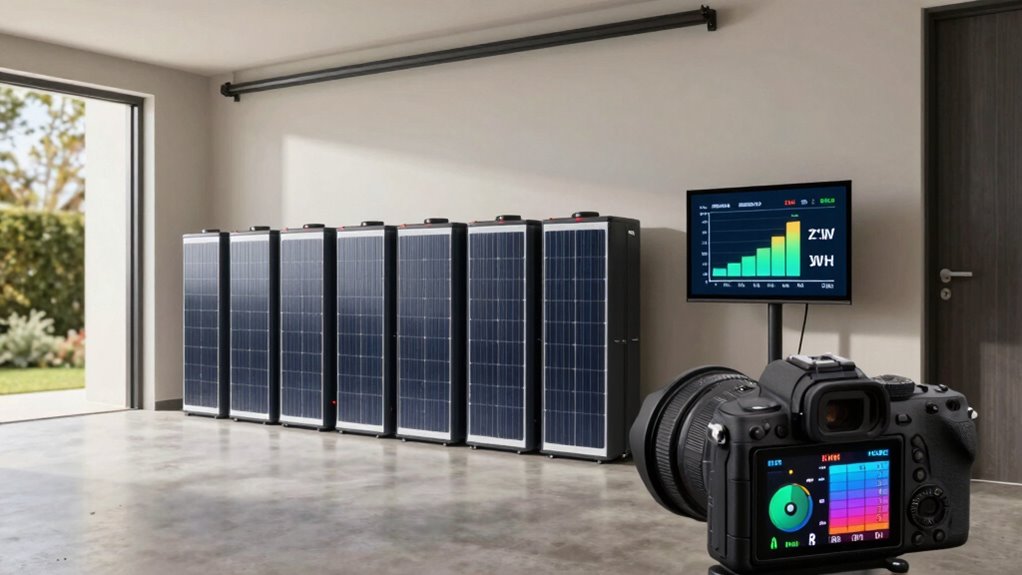
Integrating solar panels and battery storage into your backup plan can considerably enhance your energy resilience. Solar integration allows you to generate power even during outages, reducing reliance on external sources. Start by evaluating your energy needs to determine proper battery sizing, ensuring your system can support essential devices without overinvestment. Proper battery sizing involves calculating your critical load requirements and choosing a battery capacity that can handle them efficiently. Combining solar energy with appropriately sized batteries creates a hybrid system that maximizes independence and minimizes downtime. Focus on selecting quality components and working with professionals to design a seamless setup. This approach not only provides reliable backup power but also promotes sustainability by leveraging renewable energy sources.
Factors to Consider When Planning for Power Outages
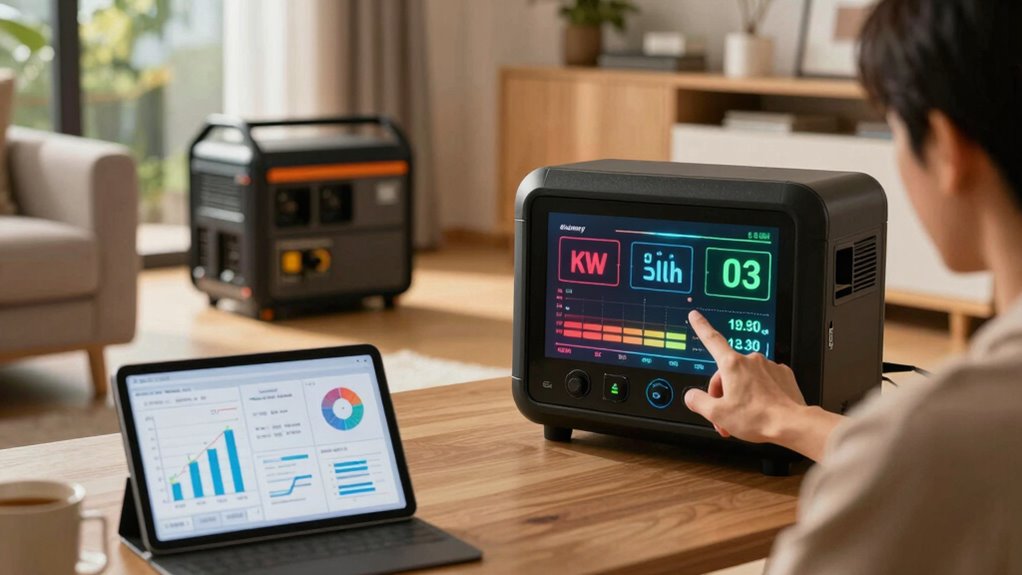
Planning for power outages requires careful consideration of your specific needs and potential risks. You should assess what essential appliances and systems need to stay operational during utility outages or storms. Think about your storm preparedness and how long you might be without power.
Key factors include:
- The duration of typical utility outages in your area
- The total kWh your essential devices consume
- Your budget for backup power solutions
- The reliability and maintenance needs of your backup system
Understanding these elements helps ensure you select a backup power setup that matches your household’s needs. This way, you’re better prepared for storm-related disruptions and long-term utility outages, minimizing stress and inconvenience during emergencies.
Practical Steps to Prepare Your Home for Power Losses
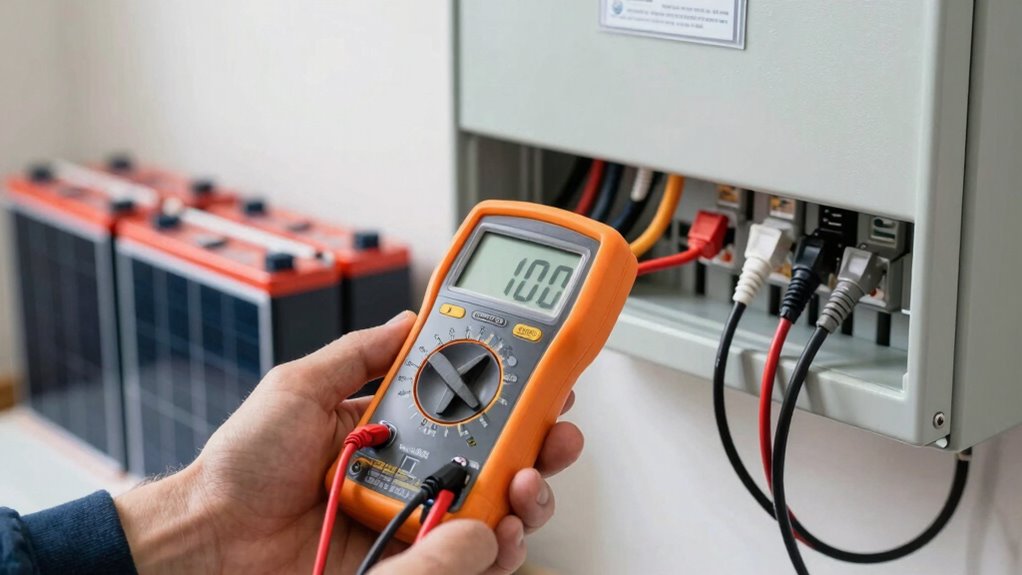
To get your home ready for power outages, start by creating an emergency supplies checklist so you have essentials on hand. Next, assess your power capacity needs to determine the right backup system for your household. Taking these steps guarantees you’re prepared when the lights go out.
Emergency Supplies Checklist
Have you stocked enough supplies to get through a power outage? Preparing an emergency supplies checklist is vital, especially with home automation and smart appliances relying on consistent power. Make certain you have essentials to stay safe and comfortable. Consider keeping:
- Battery-powered or hand-crank radio for updates
- Extra batteries for flashlights and devices
- Non-perishable food and water for at least three days
- Portable charger or power bank for your smartphones and smart appliances
Smart devices and home automation systems can help streamline your response, but they still need backup power sources. Having these supplies on hand means you’re ready to manage a power loss effectively, keeping your home safe and connected until power is restored.
Power Capacity Planning
Preparing your home for power outages starts with evaluating your energy needs and ensuring your backup systems can handle typical disruptions. To plan effectively, determine the essential appliances and their power requirements. Consider integrating renewable sources like solar to enhance grid independence, reducing reliance on utility power. This approach not only boosts resilience but also fosters a sustainable lifestyle. Use the table below to visualize your priorities:
| Essential Devices | Power Needs (kW) | Backup Duration (hours) |
|---|---|---|
| Refrigerator | 0.1 | 24 |
| Lights | 0.2 | 8 |
| Medical Devices | 0.5 | 12 |
| Charging Devices | 0.05 | 24 |
How to Ensure Your Backup Power System Is Reliable and Safe
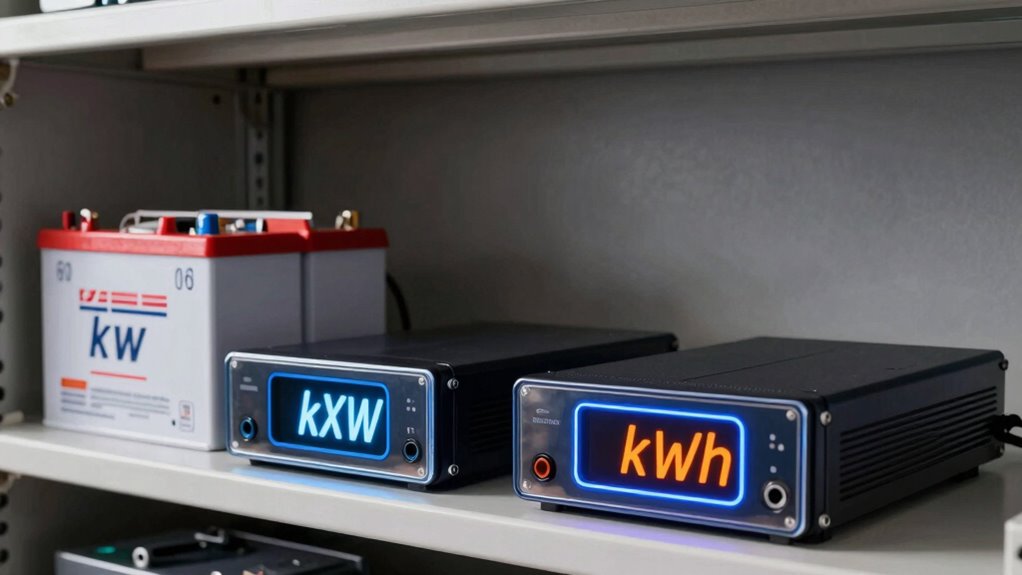
Ensuring your backup power system is reliable and safe requires regular inspections and maintenance. You should check connections, test the system periodically, and keep software updated if you use home automation controls. Incorporate renewable energy sources carefully, guaranteeing they integrate properly with your backup system to prevent safety issues. Regularly inspecting batteries, inverters, and generators helps prevent failures during outages. Also, stay compliant with safety standards to protect your home and loved ones. To maintain reliability, consider these key points:
- Schedule professional inspections annually
- Use quality, certified equipment
- Keep backup systems clean and dry
- Educate household members on emergency procedures
Consistent upkeep ensures your backup power works when needed and remains safe for everyone.
Making Smarter Backup Power Decisions for Your Home
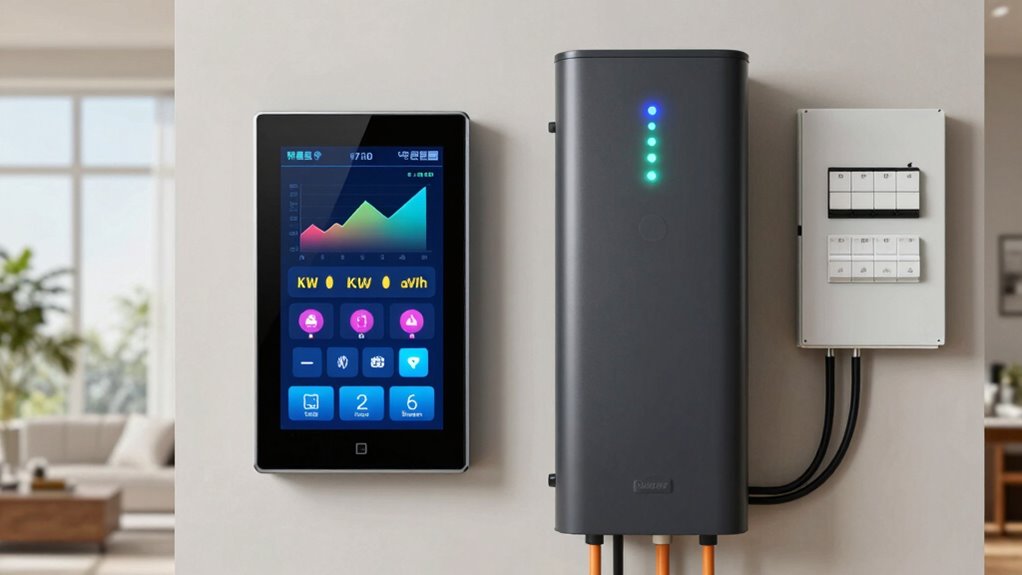
Making smarter backup power decisions starts with understanding your home’s specific energy needs and potential risks. Assess your typical power consumption and identify essential appliances to determine the right size system. Regular battery maintenance is vital to guarantee your backup power source functions reliably when needed. This includes checking connections, monitoring charge levels, and replacing batteries as recommended. Additionally, consider fuel efficiency if you’re choosing a generator; a more fuel-efficient model saves money and reduces environmental impact. By evaluating these factors, you can select a system that balances capacity with efficiency, avoiding over- or under-provisioning. Making informed choices helps you optimize reliability, minimize operational costs, and ensure your home stays powered during outages.
Frequently Asked Questions
Can a Generator Handle Simultaneous High-Power and Energy Demands?
Yes, a generator can handle simultaneous high-power and energy demands if it’s properly sized. You should consider power surges and load balancing to prevent overloading the system. Properly managing your load guarantees the generator supplies enough power without risking damage or interruptions. Always choose a generator with sufficient capacity and implement load balancing strategies to handle peak demands smoothly and maintain reliable backup power.
How Does Altitude Affect Generator Performance and Capacity?
When they say “what goes up must come down,” they’re reminding you altitude effects can impact your generator performance. Higher altitudes reduce oxygen levels, causing your generator to produce less power. This means capacity and efficiency drop, so you might need a generator rated for higher altitude operation. Always check your model’s specifications and consider altitude adjustments to make certain of reliable backup power when you need it most.
Are There Eco-Friendly Backup Power Options Suitable for Homes?
Yes, you can choose eco-friendly backup power options for your home. Solar charging systems harness sunlight to generate electricity, reducing your carbon footprint. Additionally, generators powered by eco-friendly fuels like propane or biodiesel emit fewer pollutants than traditional gas generators. These options provide sustainable energy during outages, helping you stay powered while caring for the environment. Combining solar with eco-friendly fuels offers an efficient, green backup solution tailored to your needs.
What Maintenance Is Required to Keep Backup Systems Reliable?
To keep your backup system reliable, you need to monitor its battery lifespan regularly and schedule maintenance accordingly. Check for corrosion, clean connections, and guarantee ventilation if applicable. Replace batteries when they near the end of their lifespan to prevent failures. Regular inspections help identify issues early, ensuring your backup power stays ready when you need it. Consistent maintenance keeps your system efficient and extends its overall lifespan.
How Do Weather Conditions Impact Backup Power System Effectiveness?
Weather conditions can substantially impact your backup power system’s effectiveness. Heavy storms, snow, or extreme heat can challenge its weather resilience, reducing performance or causing damage. If your system is solar-compatible, cloudy or rainy days lower energy generation, so consider additional storage or hybrid setups. To stay reliable, make certain your system is rated for local weather conditions, perform regular maintenance, and protect components from harsh elements.
Conclusion
Remember, planning your backup power is like tending a garden—you need the right tools and knowledge to keep everything thriving. By understanding the differences between kW and kWh, and evaluating your home’s needs, you can make smarter choices. Don’t wait until the storm hits; preparedness is key. As the saying goes, “A stitch in time saves nine.” Taking proactive steps now ensures your home stays safe and powered when it matters most.