
To see if your rack can handle AI workloads, focus on its power density—how much electrical power it can deliver per rack or square foot. Higher power needs generate more heat, so effective cooling is essential. If your cooling isn’t up to par, hardware risks overheating and failure. Understanding these basics helps guarantee your setup stays efficient and scalable. Keep going to discover how to better manage power and cooling for AI success.

Get audio and creator gear delivered free with Prime
- Fast, free delivery on millions of items
- Prime Video, Amazon Music and more included
- Member-only deals all year
Key Takeaways
- Ensure your rack’s power capacity matches the high demands of AI workloads to prevent overloads.
- Higher power density increases heat, requiring effective cooling solutions to maintain hardware reliability.
- Proper thermal management extends hardware lifespan and prevents overheating-related failures.
- Planning for future AI expansion involves assessing current power and cooling capabilities carefully.
- Balancing power delivery with energy-efficient cooling optimizes performance and reduces operational costs.
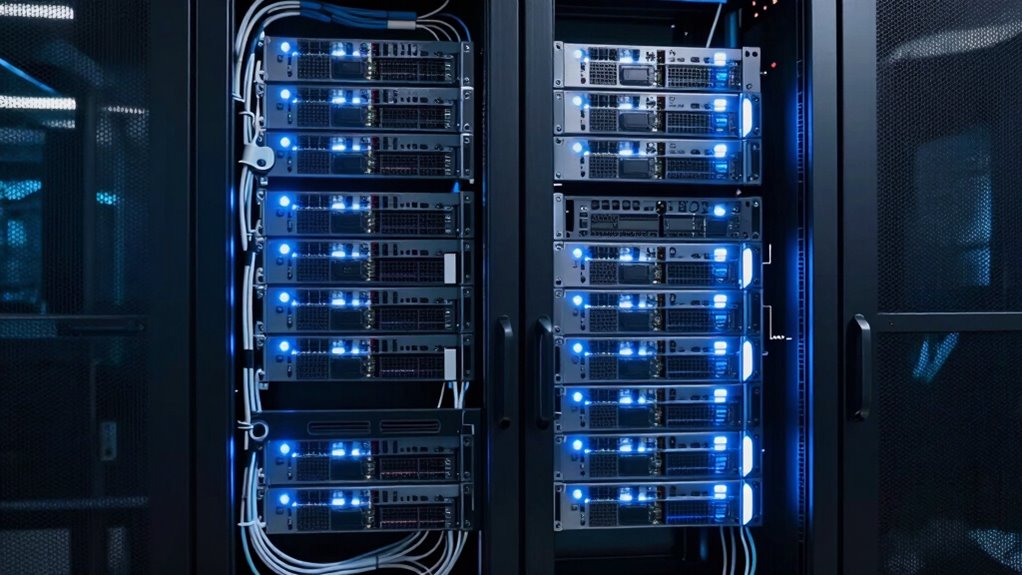
Have you ever wondered how efficiently a device or system can deliver power in a given space? When it comes to data racks, especially those handling AI workloads, understanding power density is critical. Power density refers to the amount of electrical power a rack can provide within a specific volume, usually measured in kilowatts per rack or per square foot. The challenge isn’t just about having enough power but guaranteeing that this power is used effectively and managed properly. If your rack isn’t designed with proper cooling techniques, high power density can lead to overheating, which compromises performance and longevity.
High power density in data racks requires effective cooling to prevent overheating and ensure optimal performance.
Cooling techniques are essential here. As your rack’s power density increases, so does the heat generated. Without effective cooling, this heat can cause hardware failures, reduce system reliability, and increase energy consumption. You need to evaluate whether your current cooling methods—air cooling, liquid cooling, or a combination—are sufficient for the power density you aim for. Proper cooling doesn’t just prevent thermal issues; it also impacts energy efficiency. When cooling systems are optimized, they use less energy to maintain stable operating temperatures, reducing overall power consumption and operational costs. Recognizing the importance of thermal management helps in designing more efficient systems. Additionally, advancements in cooling technologies can enable higher power densities without sacrificing reliability. A well-designed cooling strategy can also help in future scalability, ensuring your infrastructure remains adaptable as demands grow.
Understanding your rack’s power density also helps you plan for future expansion. If you’re considering scaling up AI workloads, you need to know whether your existing infrastructure can handle increased power demands without sacrificing cooling performance. High power density racks demand more sophisticated cooling solutions, sometimes even custom-designed to keep temperatures in check. Ignoring these needs can lead to inefficient energy use, unnecessary downtime, or even hardware damage. Additionally, awareness of filter sizing/flow considerations ensures your cooling system remains effective as demands increase. It’s also crucial to consider power distribution efficiency to prevent losses during energy transfer, which can impact overall system performance.
Energy efficiency goes hand in hand with managing power density. The goal isn’t just to pack more power into a rack but to do so without wasting energy. Efficient power delivery and cooling techniques minimize losses, helping you lower your electricity bills and carbon footprint. When selecting hardware, look for components that are designed for high efficiency and low heat output. This way, you maximize your rack’s performance while keeping energy costs in check.
Ultimately, whether your rack can really handle AI workloads depends on your understanding and management of power density. It’s about balancing power delivery, effective cooling techniques, and energy efficiency. If you neglect any of these aspects, you risk overheating, increased energy costs, and hardware failure. By staying informed and proactive, you can guarantee your system’s design aligns with your performance needs, helping you run AI applications smoothly and sustainably.
data center rack cooling solutions
As an affiliate, we earn on qualifying purchases.
As an affiliate, we earn on qualifying purchases.
Frequently Asked Questions
How Do I Measure My Rack’s Current Power Capacity Accurately?
To measure your rack’s current power capacity accurately, start by checking the power consumption of all equipment installed. Use a power meter or monitor to track real-time load, ensuring you account for peak usage. Focus on load balancing to prevent overloading circuits. Regularly monitor these readings to identify if your rack can handle AI workloads, helping you avoid power issues and optimize performance safely.
What Are the Signs My Rack Is Overheating Due to High Power Density?
You notice the rack’s temperature rising unexpectedly, an ominous sign of overheating. You should immediately check temperature monitoring tools to confirm. If temperatures climb too high, it indicates high power density causing heat buildup. To prevent damage, optimize airflow—add fans or reorganize components. Ignoring these signs risks hardware failure, so stay vigilant, monitor consistently, and adjust airflow to keep your rack cool and safe.
Can Existing Cooling Solutions Handle Increased AI Power Demands?
Existing cooling solutions might struggle with increased AI workload demands, especially if they weren’t designed for high power density. As your AI workload grows, cooling efficiency becomes vital to prevent overheating and maintain peak performance. You’ll need to evaluate if your current cooling system can handle the heat output. Upgrading to more advanced cooling methods or optimizing airflow can help guarantee your rack keeps up with the rising power demands.
How Does Power Density Impact Rack Deployment Planning?
Power density directly impacts your rack deployment planning by determining how much AI workload it can support efficiently. Higher power density means more AI processing in a smaller space, but it also challenges cooling efficiency. You need to carefully evaluate your cooling capabilities and plan for adequate airflow and power distribution. This ensures your rack handles increased AI demands without overheating or compromising performance, keeping your deployment scalable and reliable.
What Safety Concerns Arise From High-Density AI Racks?
Sure, high-density AI racks seem like a dream—until you realize the fire hazard they pose. Overloading electrical circuits can lead to dangerous sparks, risking electrical safety and potentially causing fires. The irony? In trying to maximize space and performance, you might overlook critical safety measures. Ensuring proper cooling, circuit protection, and fire suppression is essential to keep your data center safe and compliant. Don’t let ambition outpace safety!
Conclusion
Understanding power density isn’t just a technical detail; it’s the backbone of reliable AI operations. Think of your rack as the heart of a bustling city—if it can’t handle the flow, everything stalls. By grasping these basics, you guarantee your setup isn’t just running, but thriving. Keep your power density in check, and your AI ambitions won’t just take flight—they’ll soar like an eagle in the open sky.
Evergreen bestsellers Picks
bestsellers
As an affiliate, we earn on qualifying purchases.