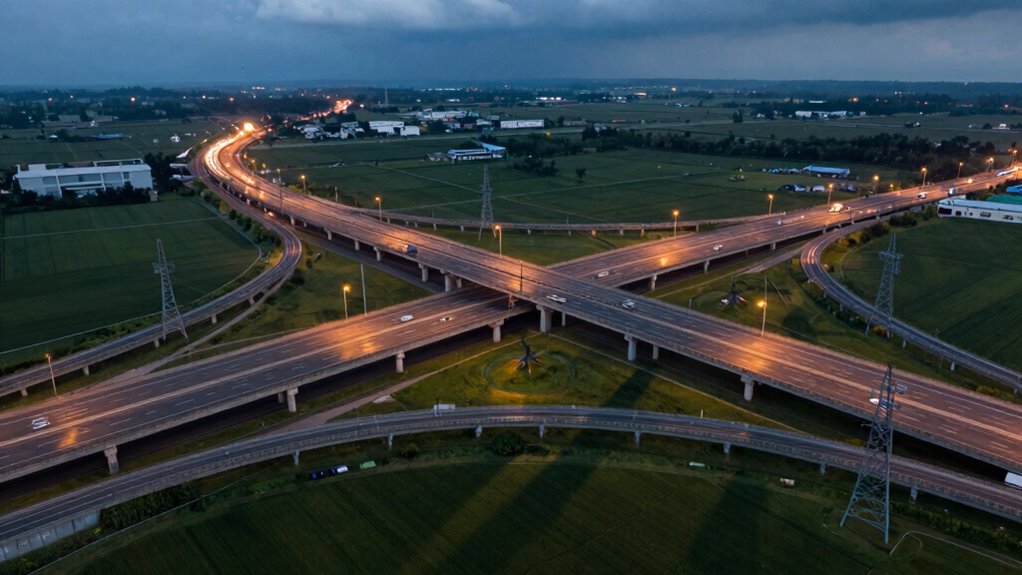

You might think infrastructure spending is optional, especially when budgets are tight, but ignoring it can lead to costly problems later. Delaying repairs or upgrades may save money today, but over time, outdated roads, bridges, and systems cause congestion, safety issues, and higher repair costs. Technology upgrades become more urgent and expensive if neglected. Choosing to invest early can prevent crises and save money long-term. Keep going to discover how these choices shape our future.
Key Takeaways
- Infrastructure spending often seems optional until deterioration causes costly emergency repairs and safety hazards.
- Delayed investments lead to outdated systems that hinder economic growth and increase long-term maintenance costs.
- Neglecting infrastructure impacts urban safety, congestion, pollution, and residents’ quality of life.
- Reactive fixes are more expensive than proactive upgrades that prevent future setbacks and service disruptions.
- Upgrading digital infrastructure early ensures system resilience, security, and competitiveness, avoiding costly failures later.

Infrastructure spending often seems like a choice—something you can delay or skip without immediate consequences. At first glance, it might appear as a luxury rather than a necessity, especially when budgets are tight or priorities seem elsewhere. But the reality is that neglecting infrastructure investment can quietly erode the foundation of your community’s growth and efficiency. When you overlook urban development projects or technological upgrades, the effects don’t happen overnight but build up steadily. Over time, outdated roads, bridges, and transit systems hinder mobility, slow economic activity, and increase costs for everyone involved. Similarly, failing to invest in technological upgrades leaves your city vulnerable to obsolescence, cybersecurity threats, and inefficiencies that could have been addressed early on.
As you focus on short-term savings, you’re risking long-term setbacks. Urban development isn’t just about aesthetics or modernity; it’s about creating a resilient environment where people can live, work, and thrive. When infrastructure isn’t maintained or upgraded, congestion worsens, pollution increases, and public safety diminishes. These issues directly impact your quality of life and the local economy. If you delay investing in smarter, more sustainable urban development, you’ll find yourself fighting an uphill battle to catch up later. The costs of reactive fixes—emergency repairs, traffic delays, and health hazards—far outweigh the expenses of proactive investments. Additionally, technological upgrades are essential for maintaining operational efficiency and security within urban systems.
Technological upgrades are equally critical. Today’s infrastructure relies on digital systems for everything from traffic management to energy distribution. Without timely upgrades, these systems become vulnerable to failures and security breaches, risking significant disruptions. If you don’t prioritize modernizing your infrastructure with technologies like smart grids or efficient data networks, you’re leaving yourself exposed to higher operational costs and reduced service quality. The longer you wait, the more expensive these upgrades become, and the greater the risk of falling behind other cities that recognize the importance of staying ahead of the curve. Recognizing the importance of digital infrastructure is essential for maintaining competitiveness in today’s interconnected world.
smart city digital infrastructure upgrades
As an affiliate, we earn on qualifying purchases.
As an affiliate, we earn on qualifying purchases.
Frequently Asked Questions
How Do Infrastructure Investments Impact Local Economies Long-Term?
Investing in infrastructure boosts urban development, creating jobs and attracting businesses, which strengthens your local economy long-term. These investments enhance transportation, utilities, and public services, making your community more resilient to economic shocks. As infrastructure improves, property values rise, and economic resilience grows, ensuring sustainable growth. Long-term, your community benefits from increased competitiveness, better quality of life, and a more robust economy that can adapt to future challenges.
What Are Common Signs That Infrastructure Spending Is Urgently Needed?
When cracks start appearing in your roads, and traffic slows to a crawl, it’s a red flag. Budget overruns and maintenance neglect often whisper that your infrastructure is crying out for help. If bridges wobble or utilities falter, it’s a clear sign urgent investment is needed. Ignoring these signs turns a small leak into a flood, forcing costly repairs later. Act now before small issues drown your community in chaos.
How Do Governments Prioritize Infrastructure Projects During Budget Constraints?
During budget constraints, you prioritize infrastructure projects by focusing on those that attract private funding and foster technological innovation. You assess projects based on their long-term economic impact, essential services, and potential for public-private partnerships. By targeting initiatives that leverage private investments and incorporate cutting-edge technology, you guarantee critical infrastructure gets funded, even with limited public resources, making your efforts both strategic and sustainable in tough financial times.
What Role Does Public Opinion Play in Infrastructure Funding Decisions?
Public opinion plays a vital role in infrastructure funding decisions because policymakers often respond to voter preferences and community needs. Your feedback can influence policy influence, prompting governments to prioritize projects that gain public support. When residents voice concerns or endorse specific initiatives, officials are more likely to allocate funds accordingly, recognizing that ignoring public opinion could undermine political stability and project success.
How Can Infrastructure Failures Lead to Unexpected Economic Disruptions?
When infrastructure fails, expect chaos that hits your wallet hard. You might think technological resilience and environmental sustainability are optional extras, but their absence can cause unexpected economic disruptions—think supply chain breakdowns or power outages. Skimping on these essentials leaves communities vulnerable. Without proper investment, your economy becomes a fragile house of cards, ready to topple at the first storm, proving that neglecting infrastructure isn’t just short-sighted—it’s costly.
Conclusion
You might think infrastructure spending is a choice, like a distant melody you can ignore. But when the storm hits or the roads crack, it’s the foundation that holds everything together. Skipping out now feels like skipping steps on a ladder—dangerous and unwise. So, invest wisely today, because neglecting it turns a silent promise of progress into a thunderous echo of regret tomorrow. The choice is yours—build strong or break later.