
You might still feel uncomfortable with high refresh rates because your eyes and brain can be overwhelmed by rapid motion, causing fatigue or even motion sickness. Improper calibration, bright lighting, and your individual sensitivity also play a big role. Plus, your body needs time to adapt, and prolonged exposure can worsen these effects. If you want to understand how to reduce these issues and improve your experience, there’s more to take into account that can make a difference.
Key Takeaways
- Individual sensitivity and pre-existing conditions can cause discomfort despite high refresh rates.
- Improper calibration or unsuitable ambient lighting may enhance visual fatigue.
- Rapid motion or intense visuals can overwhelm the visual system, leading to discomfort.
- Sensory mismatch between visual input and inner ear balance can trigger nausea or dizziness.
- Extended exposure without breaks increases the likelihood of eye strain and fatigue.
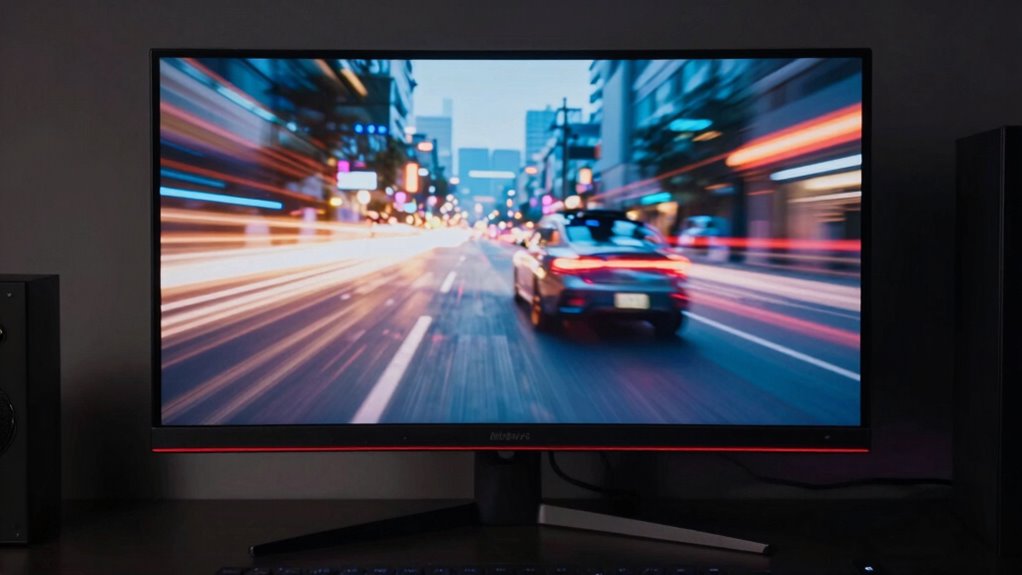
Even though high refresh rates promise smoother visuals and a better gaming experience, they don’t always deliver perfection. You might notice that, instead of feeling immersed and comfortable, you sometimes experience discomfort or even nausea. This is often due to issues like motion sickness and visual fatigue, which many people overlook when upgrading their screens. High refresh rates, such as 120Hz or 144Hz, are designed to make motion appear fluid by updating the image more frequently. But if your eyes aren’t used to this rapid change, or if your brain struggles to process the increased data, it can lead to feelings of disorientation.
High refresh rates can improve visuals but may cause discomfort if your eyes or brain aren’t adapted.
When you’re exposed to high refresh rates for extended periods, your visual system may become overwhelmed. Rapid image changes can cause your eyes to strain, especially if your display isn’t properly calibrated or if your viewing environment isn’t ideal. This strain results in visual fatigue, where your eyes feel tired, dry, or sore after a short session. It’s a clear sign that your visual system is struggling to keep up with the fast-paced motion. Over time, this fatigue can lead to headaches or blurred vision, making the high refresh rate experience less enjoyable and more uncomfortable. Additionally, improper calibration or unsuitable ambient lighting can intensify these effects, further contributing to discomfort. Ensuring your display is correctly calibrated and that your environment’s lighting is optimal can help minimize these issues.
Motion sickness is another common issue, especially for gamers or viewers who are sensitive to rapid movements on screen. When the images update too quickly or inconsistently, your brain gets conflicting signals—your eyes see fast motion, but your inner ear and proprioceptive system may not interpret it the same way. This sensory mismatch can cause nausea, dizziness, or a general feeling of unease. It’s similar to what you experience on a roller coaster or during car rides, just triggered by visual stimuli instead of physical movement.
Your individual sensitivity plays a significant role in how you perceive high refresh rates. Some people adapt quickly and enjoy the smoother experience, while others find it unsettling. Factors like your age, existing vision conditions, or even fatigue levels can influence your response. To mitigate these issues, try adjusting your display settings, reducing motion intensity, or taking regular breaks. Ensuring your environment has proper lighting and limiting exposure time can also help reduce the risk of motion sickness and visual fatigue. Proper display calibration and ambient lighting can significantly improve your viewing comfort, helping to minimize the negative effects of high refresh rates. Being aware of your own reactions and adjusting settings accordingly is key to enjoying these advances in display technology.
In the end, high refresh rates aren’t a one-size-fits-all solution. While they can enhance your visual experience, they might also introduce discomfort if your eyes or brain aren’t prepared. Recognizing these signs and adjusting your setup accordingly will help you enjoy smoother visuals without suffering the downsides.
As an affiliate, we earn on qualifying purchases.
Frequently Asked Questions
Can High Refresh Rates Cause Eye Strain Over Time?
Yes, high refresh rates can cause eye fatigue and visual discomfort over time. If your eyes struggle to adapt, you might experience headaches, blurred vision, or dry eyes. To reduce these symptoms, take regular breaks, adjust brightness, and guarantee your monitor’s refresh rate is compatible with your eyes. Listening to your body is key—if discomfort persists, consider lowering the refresh rate or consulting an eye specialist.
Do High Refresh Rates Drain Battery Faster?
Yes, high refresh rates can drain your battery faster because they increase power consumption. When your device’s screen refreshes more frequently, it requires more energy, which can reduce battery longevity over time. However, many devices optimize power management, allowing you to turn down the refresh rate when needed. If you want to extend battery life, consider adjusting your settings or using adaptive refresh rate features that balance performance and power efficiency.
Are Some Games Optimized for High Refresh Rates?
Like a master sculptor shaping raw marble, some games are meticulously optimized for high refresh rates, seamlessly integrating features like frame interpolation and refresh rate conversion. These enhancements guarantee fluid visuals, making gameplay feel smooth and responsive. However, not all titles are refined this way; some still struggle with synchronization issues, causing discomfort. Your experience depends on the game’s optimization, but in well-tuned titles, high refresh rates truly shine.
How Does Screen Size Affect Perceived Smoothness?
Larger screen sizes can enhance visual perception, making smooth motion more noticeable and immersive. However, on smaller screens, the same refresh rate might seem less impactful because your eyes don’t perceive the fluidity as strongly. Your perception of smoothness depends on screen size; bigger screens amplify the benefits of high refresh rates, creating a more seamless experience, while smaller ones may require higher refresh rates for similar perceived smoothness.
Is a Higher Refresh Rate Always Better for Gaming?
Like the hare in Aesop’s fable, a higher refresh rate isn’t always the winner. While it boosts motion clarity, it’s not a guarantee for better gaming if your hardware or game settings can’t keep pace. You might experience tearing or stuttering. So, a higher refresh rate can help, but only if your system can fully leverage it. Otherwise, it’s not necessarily better for your gaming experience.
Conclusion
Even with a high refresh rate, you might still experience discomfort or lag. For instance, if your graphics card isn’t powerful enough or your monitor isn’t properly calibrated, everything can feel off. Imagine playing a fast-paced shooter where the gameplay seems smooth but suddenly stutters—it’s frustrating, right? Remember, a high refresh rate is just one part of the equation. Ensuring your entire setup is optimized can make all the difference for a truly seamless experience.