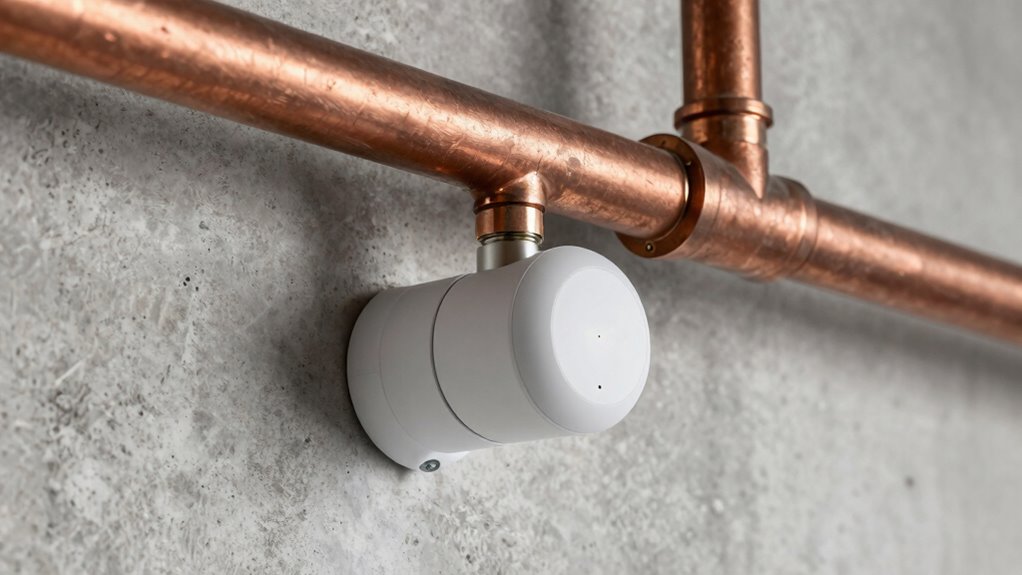
To save real money with leak sensors, focus on placing them in high-risk spots like near appliances, under sinks, along pipes, and in basements or attics. Position sensors close to water pressure zones, vulnerable pipe materials, and common leak points, ensuring they’re discreet and properly calibrated. Avoid neglecting critical areas, as missing the right spots can lead to costly water damage. Keep these placement rules in mind—your home can stay safer and cheaper to maintain if you follow the best strategies.
Key Takeaways
- Place sensors near high-pressure zones, vulnerable pipes, and frequently used fixtures for early leak detection.
- Focus on critical areas like bathrooms, kitchens, basements, and attic plumbing to prevent costly water damage.
- Regularly calibrate and test sensors to reduce false alarms and ensure reliable leak detection.
- Use home layout and risk zoning (red, yellow, green) to prioritize sensor placement effectively.
- Install sensors discreetly in hidden or hard-to-reach areas to maintain system effectiveness without increasing costs.
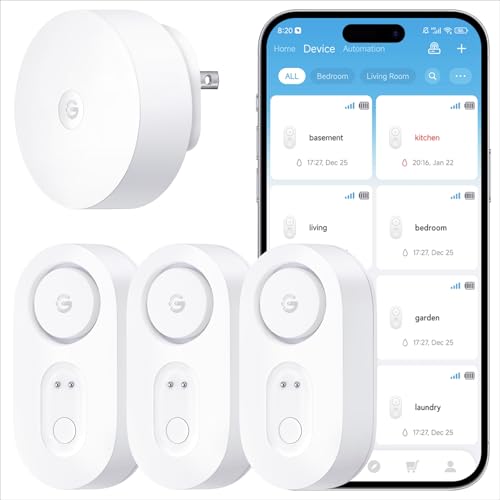
GoveeLife Upgraded Smart Water Leak Detector 1s with 1804 ft Ultra-Long Range, WiFi Water Sensor with SMS/Email/APP Push and Sound Alarm, 5-Year Battery Life, Suit for Home, Basement, Kitchen, 3 Pack
- Extended Connectivity Range: Up to 1804 feet through walls
- Multiple Alert Methods: SMS, Email, App notifications, Sound alarm
- User-Friendly App Features: Instant alerts, Find device, Share notifications
As an affiliate, we earn on qualifying purchases.
As an affiliate, we earn on qualifying purchases.
Why Proper Leak Sensor Placement Protects Your Home
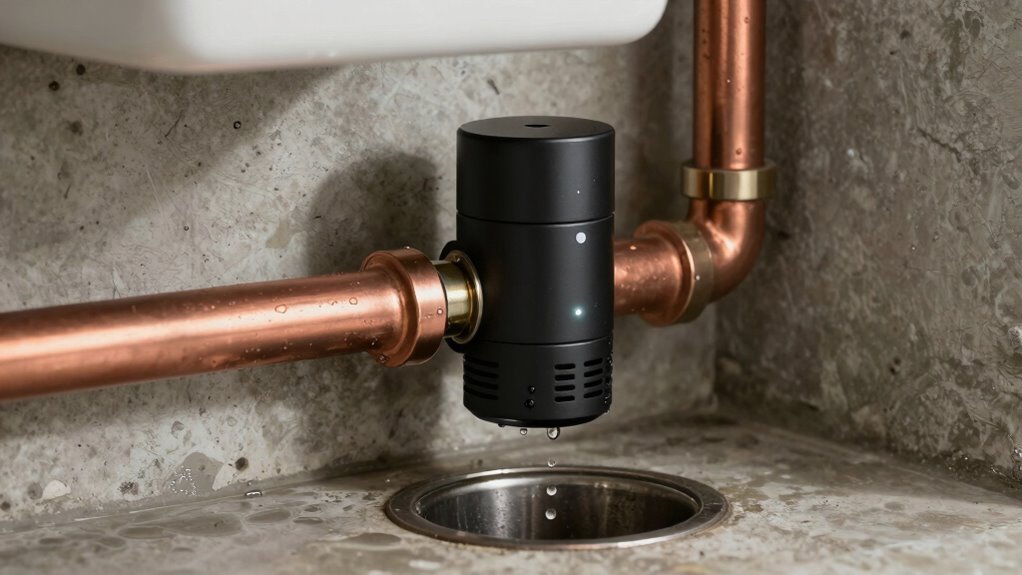
Have you ever wondered how a simple leak sensor can prevent costly water damage? Proper placement is key. When installed near pipes with high water pressure, sensors can detect leaks early, preventing pressure buildup that could burst pipes. Additionally, positioning sensors close to areas with inadequate pipe insulation helps catch leaks caused by temperature fluctuations before they worsen. If pipes aren’t well insulated, water can freeze and cause cracks or bursts, leading to extensive damage. By strategically placing sensors in these vulnerable spots, you’re actively protecting your home from hidden leaks that might go unnoticed. Implementing proper sensor placement can greatly enhance your leak detection system’s effectiveness. This proactive approach saves you money, reduces water waste, and minimizes costly repairs. Understanding early detection signs can further enhance your leak prevention strategy. Proper sensor placement isn’t just about detection; it’s about home safety and safeguarding your entire home. Ensuring sensors are in accessible locations also helps with regular maintenance and battery checks, keeping the system reliable over time. Additionally, being aware of common leak indicators can help homeowners respond promptly to potential issues before they escalate.
How Water Flows and Leak Pathways Influence Sensor Location
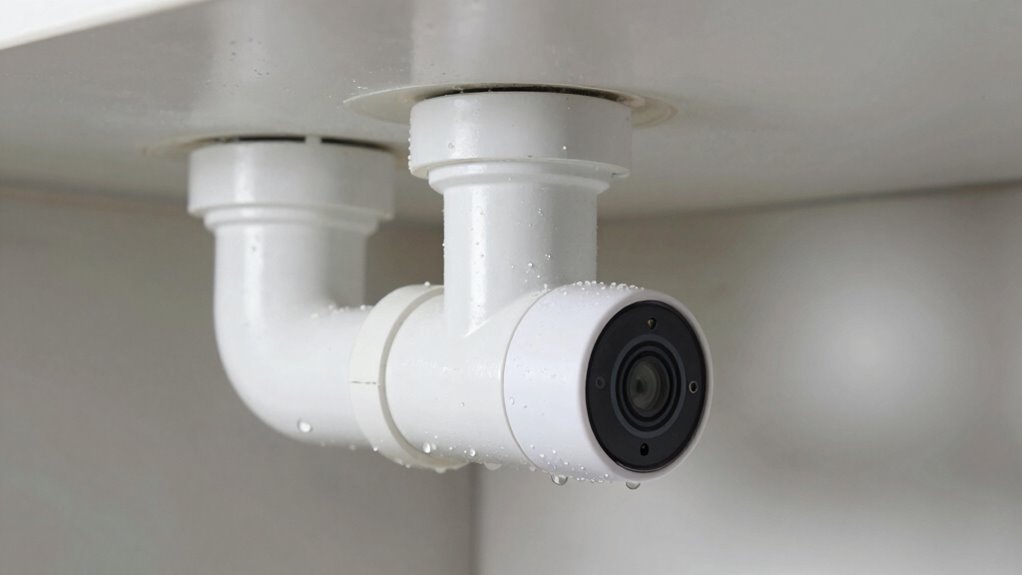
Understanding how water moves through your plumbing helps you choose the best spots for leak sensors. Water pressure influences leak pathways, pushing water through pipes and creating potential leak points, especially at weak spots. Pipe materials also matter; flexible pipes like PEX are more resistant to cracking, while metal pipes may develop corrosion or pinhole leaks. To optimize placement, focus on areas where water pressure is highest or where pipe joints and fittings are located. Recognizing support vs boundaries in your plumbing system can help you identify critical leak points and prevent water damage. Additionally, being aware of water flow dynamics can aid in predicting where leaks are most likely to occur over time. Understanding how water pressure impacts leak development can further improve your sensor placement strategy, especially when considering pressure fluctuations that occur during usage.
Where Are the Most Vulnerable Spots for Leaks?
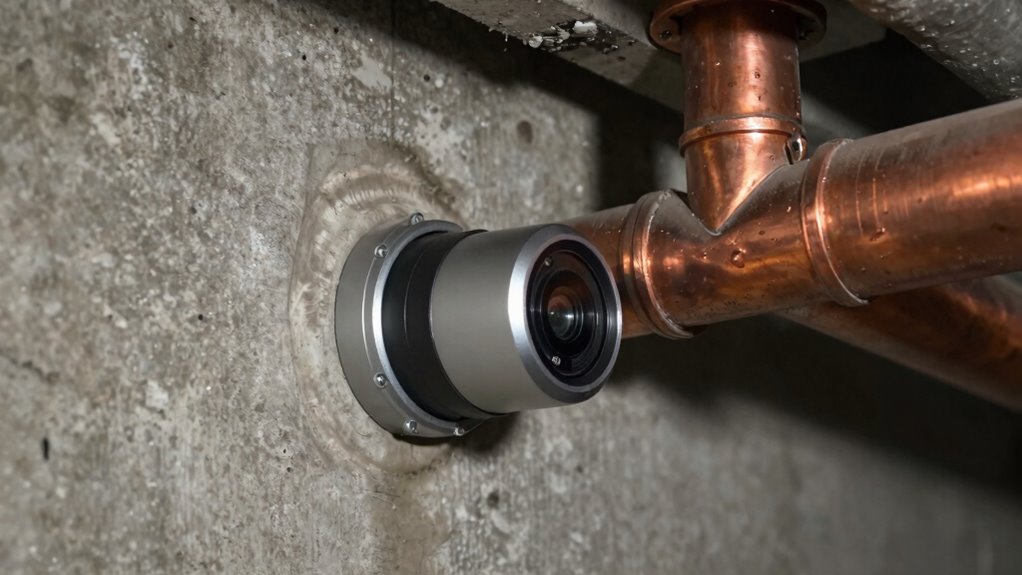
You should focus on common leak-prone areas like under sinks, around pipes, and behind appliances. These spots often have hidden risks that can cause leaks without obvious signs. Knowing where these vulnerable points are helps you place sensors more effectively. Additionally, paying attention to common leak-prone areas can prevent costly water damage and improve overall home safety. Recognizing potential water hazards can further enhance your leak prevention strategy and save you money in the long run. Incorporating free-floating inspection techniques can also aid in identifying less obvious leak sources before they escalate, especially by monitoring temperature fluctuations that might indicate hidden leaks or pipe issues. Being aware of water pressure changes can provide early clues to developing leaks or pipe failures.
Common Leak Susceptible Areas
Certain areas in your home are more prone to leaks because of their exposure to water pressure and frequent use. These spots are vulnerable without proper monitoring. To achieve effective advanced detection, you need to focus on key locations. Proper sensor calibration guarantees accurate alerts and reduces false alarms. Vulnerable spots include:
- Under sinks and around plumbing fixtures
- Near water heaters and appliances
- Basement or crawl space areas
- Behind toilets and along supply lines
Placing sensors in these areas helps catch leaks early, saving you money. Regularly calibrate sensors to maintain precision. Understanding where leaks are most likely to occur allows you to prioritize sensor placement, ensuring reliable detection and avoiding costly damage. Additionally, being aware of essential safety tips can help you prevent water-related issues from escalating.
Hidden Leak Risks
While obvious leak-prone areas are important to monitor, hidden spots can pose just as much risk. Rain gutters often overflow or clog without immediate visible signs, causing water to seep into your walls or foundation over time. A properly maintained drainage system can significantly reduce these hidden risks. Sewer backups are another hidden danger, lurking unnoticed until significant damage occurs, especially if you don’t have sensors in place. These issues can lead to mold, structural damage, and costly repairs. You might not see leaks from rain gutters or sewer backups right away, but early detection can prevent disaster. Installing leak sensors near these vulnerable spots alerts you quickly before minor issues turn into major problems. Protect your home by paying attention to these hidden leak risks, and save money on repairs down the line. Monitoring indoor air quality can also help detect moisture issues early, preventing mold growth and maintaining a healthier environment. Understanding leak detection technology is essential for choosing the right sensors and safeguarding your property effectively. Regular inspections of hidden water sources can reveal potential issues before they become severe, further enhancing your leak prevention strategy. Incorporating advanced sensors that detect subtle changes in moisture levels can provide an extra layer of protection against unseen leaks.
How to Position Leak Sensors for Maximum Effectiveness
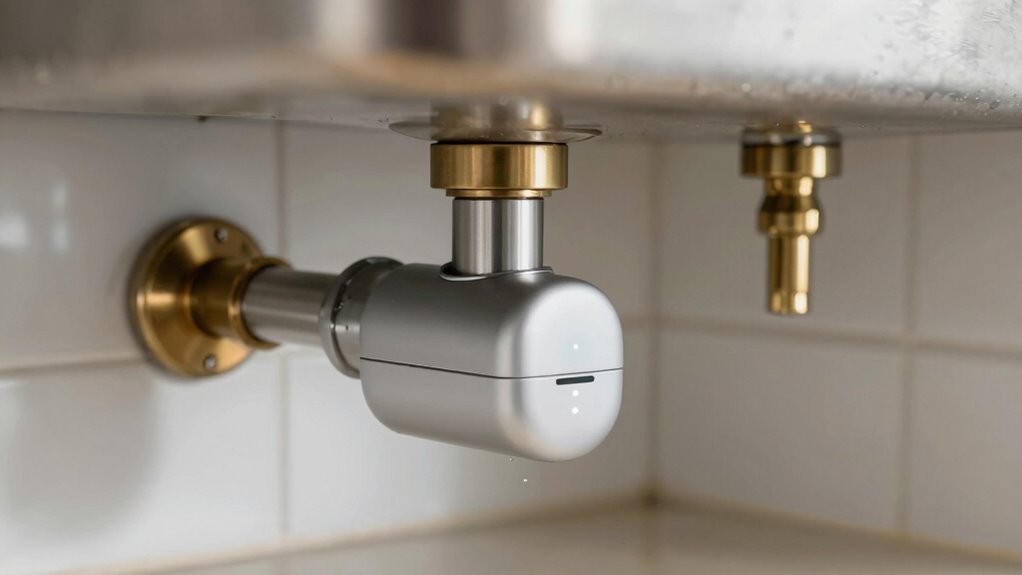
Where should leak sensors be placed to catch leaks early and prevent damage? Focus on strategic locations where water might escape, such as near appliances, under sinks, or along pipes. Proper sensor calibration is essential; verify sensors are sensitive enough to detect small leaks without false alarms. Also, consider water pressure, as high pressure can cause leaks or pipe bursts, making placement in high-pressure zones vital. Using water pressure considerations to understand your water usage patterns can help identify areas at higher risk of leaks. To maximize effectiveness:
Place leak sensors near appliances, under sinks, and along pipes to detect leaks early and prevent costly water damage.
- Position sensors close to water sources prone to leaks
- Place sensors on the floor, not just walls
- Avoid areas with frequent water splashes
- Regularly check and calibrate sensors for accurate detection
Additionally, staying aware of household water usage patterns can help you anticipate potential leak points before issues occur. Recognizing water flow dynamics can aid in identifying the most vulnerable spots to monitor, especially since understanding water pressure helps in assessing which areas are more likely to develop leaks.
Prioritizing Sensor Placement in Different Areas of Your Home
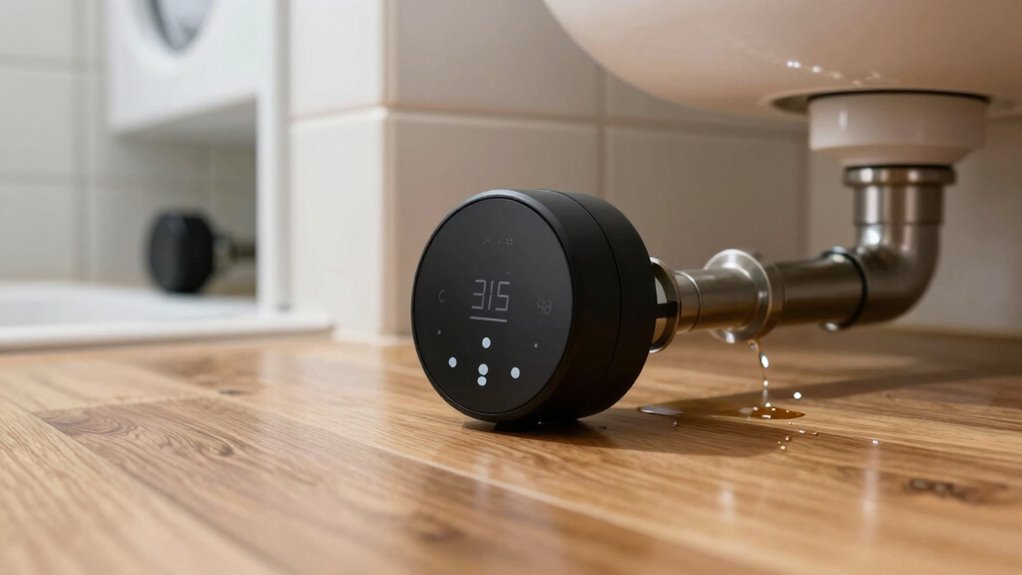
To effectively protect your home from water damage, you need to prioritize sensor placement based on the specific risks in each area. Use color coding to identify zones with high, medium, and low risk — for example, red for bathrooms and kitchens, yellow for laundry rooms, and green for storage areas. Proper sensor calibration is essential to avoid false alarms and guarantee sensitivity matches each zone’s risk level. Here’s a quick guide:
| Zone | Risk Level | Sensor Calibration Tips |
|---|---|---|
| Bathroom | High | Calibrate for quick response to small leaks |
| Kitchen | High | Adjust sensitivity for sink and appliance |
| Storage | Low | Set for minimal false alarms |
Prioritize high-risk areas first, then calibrate sensors accordingly.
Using Floor Plans to Plan Leak Sensor Setup
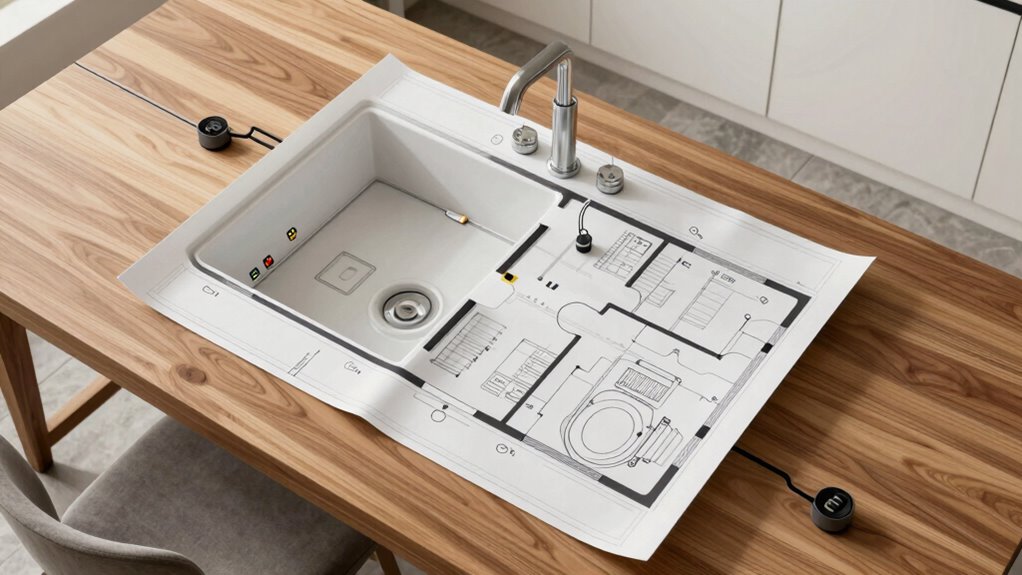
Have you considered how your home’s floor plan can streamline leak sensor placement? By studying your layout, you can identify high-risk spots and optimize sensor locations. Focus on areas with sensitive pipes or those with higher water pressure, which are more prone to leaks. Use your floor plan to:
- Mark pipes made from vulnerable materials like polybutylene or old copper
- Identify zones with complex plumbing or multiple fixtures
- Locate areas where water pressure peaks, increasing leak risk
- Plan sensor placement near appliances or fixtures with frequent use
This strategic approach helps you target the most vulnerable spots, reducing false alarms and ensuring early leak detection. A well-planned setup based on your floor plan makes leak detection more effective, saving you time and money in the long run.
Tips for Installing Leak Sensors Discreetly and Effectively
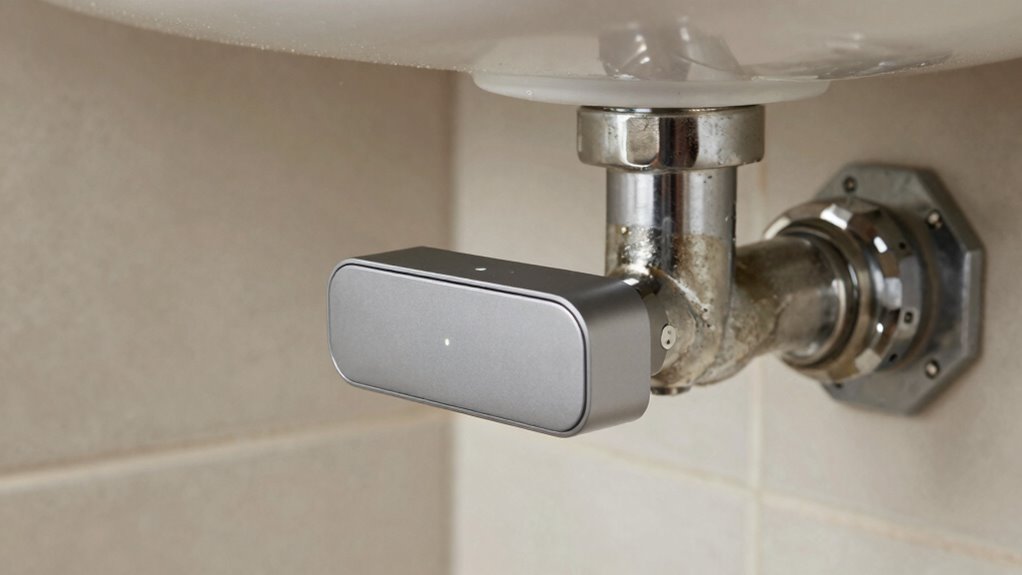
Installing leak sensors discreetly guarantees they blend seamlessly into your home environment while still providing reliable detection. To achieve this, choose low-profile sensors that can be installed behind furniture or along baseboards. Guarantee proper sensor calibration so they respond accurately to leaks without false alarms. When installing, consider wireless connectivity; opt for sensors with strong signals to avoid blind spots or connectivity issues. Keep sensors out of sight but accessible for maintenance or testing. Use discreet mounting options like adhesive strips or small brackets to prevent visual clutter. Regularly test sensor functions and recalibrate as needed to maintain accuracy. Discreet placement combined with proper calibration and reliable wireless connectivity ensures your leak sensors work effectively without compromising your home’s aesthetics.
Common Mistakes to Avoid When Placing Leak Sensors
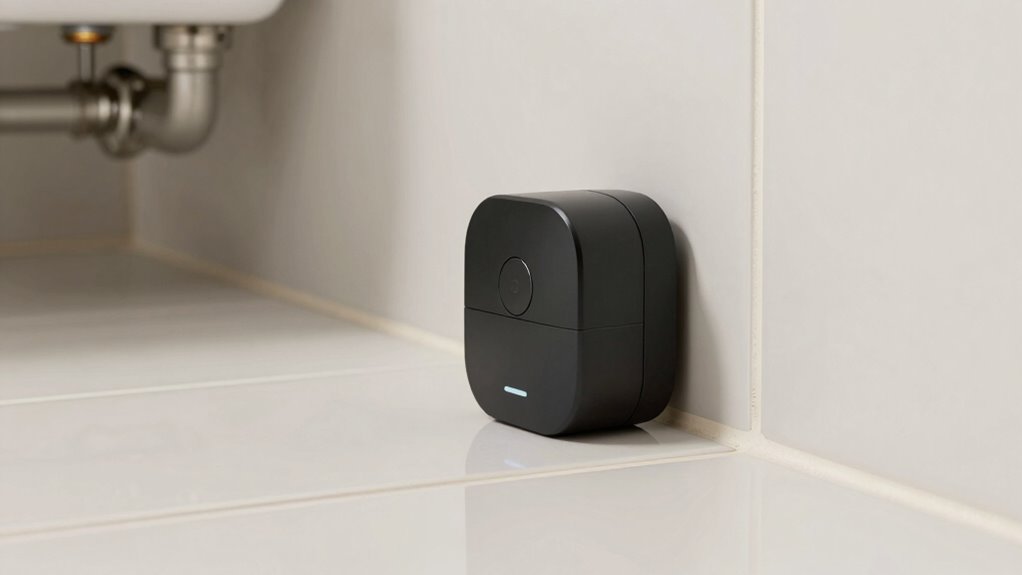
One common mistake is overlooking critical areas where leaks are most likely to occur, which can leave you unprotected. Ignoring sensor placement guidelines often leads to sensors being ineffective or misplaced. To maximize your system’s reliability, you need to pay close attention to these key points.
Overlooking Critical Areas
Failing to place leak sensors in critical areas can lead to missed detections and costly water damage. You might overlook spots where leaks are most likely to cause significant problems. For example, neglecting areas near plumbing fixtures, where drips can go unnoticed, or ignoring rainwater runoff zones that can cause hidden leaks and mold. Sensor placement should target these high-risk zones to prevent extensive damage. Consider these common oversight areas:
- Beneath sinks and around plumbing fixtures
- Near sump pumps and water heaters
- Along exterior walls vulnerable to rainwater runoff
- In crawl spaces or basements prone to hidden leaks
Proper placement in these locations guarantees early detection, saving money and minimizing damage. Don’t underestimate the importance of covering all critical areas in your leak prevention strategy.
Ignoring Sensor Placement Guidelines
Even when you know where leaks are likely to occur, ignoring the specific placement guidelines for sensors can render your efforts ineffective. Proper sensor placement is vital for accurate leak detection, as misaligned sensors may miss early signs of leaks or trigger false alarms. Neglecting sensor calibration can also impair leak detection, causing sensors to respond improperly to small leaks or environmental changes. Follow manufacturer recommendations for placement height, proximity to potential leak sources, and obstacles that could block sensor signals. Regularly calibrate sensors to guarantee they’re functioning correctly and providing reliable leak detection. Skipping these steps reduces the sensor’s ability to catch leaks early, leading to costly damages and inefficient monitoring. Proper placement and calibration are essential for maximizing leak detection effectiveness and saving money.
How Good Sensor Placement Can Save You Money
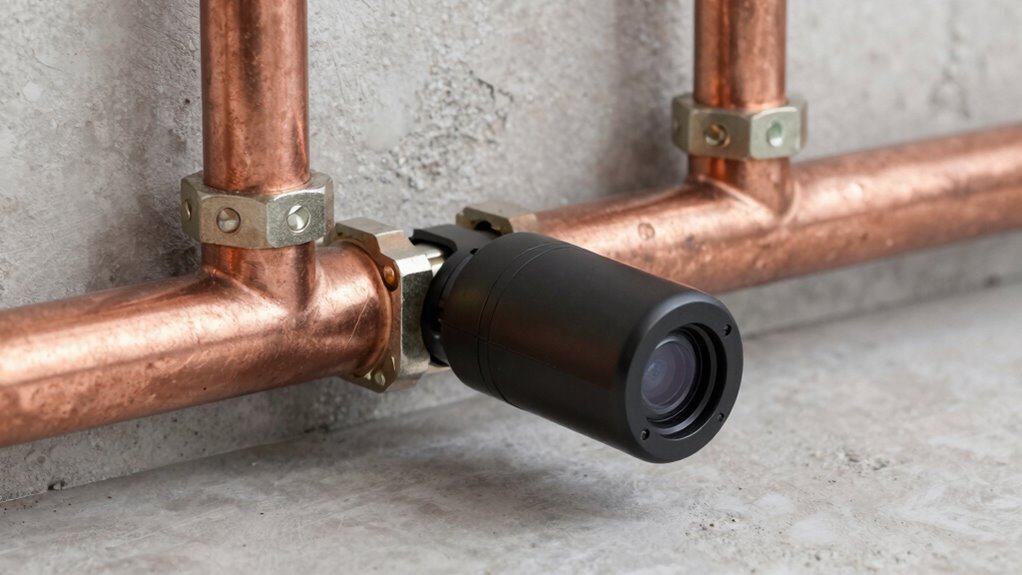
Proper sensor placement is essential because it directly impacts your ability to detect leaks early and prevent costly damage. When sensors are strategically positioned, you can catch issues before water causes extensive harm. Consider how water pressure varies in different areas, affecting leak likelihood, and how pipe materials—like copper or PVC—respond differently to leaks. Good placement minimizes false alarms and guarantees quick detection. To optimize savings, focus on:
Strategic sensor placement ensures early leak detection, reducing damage and false alarms for maximum savings.
- Installing sensors near high-pressure zones
- Placing them at pipe joints and fittings
- Positioning sensors close to vulnerable pipe materials
- Avoiding areas with fluctuating water pressure that cause false alerts
Adapting Leak Sensor Placement for Different Home Types
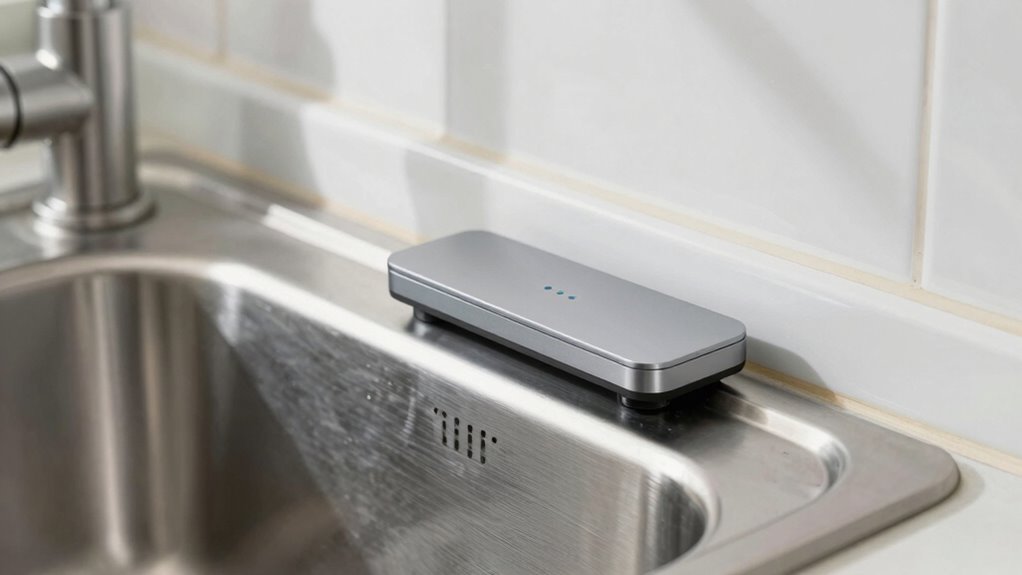
Your home’s layout influences where you should place leak sensors to maximize coverage. Multi-story homes require strategic placement on each level, especially near plumbing fixtures and appliances. Understanding your home’s design helps you adjust sensor placement strategies effectively to prevent leaks.
Home Layout Considerations
Different home layouts require tailored leak sensor placement to maximize detection and minimize false alarms. For homes with basements, place sensors near basement waterproofing points and sump pumps to catch leaks early. If you have garden irrigation, position sensors around outdoor hose connections and sprinkler systems to prevent unnoticed leaks. In multi-story homes, install sensors on upper floors near bathrooms and laundry areas to detect leaks before they cause damage below. Consider the layout’s flow to avoid false alarms from appliances or plumbing fixtures. You might also add sensors near utility areas where water lines run. Key areas include:
- Basement waterproofing zones
- Garden irrigation connections
- Upper-floor bathrooms
- Utility and laundry rooms
Sensor Placement Strategies
To effectively protect your home from leaks, tailoring sensor placement to your specific layout is key. Consider areas with high water pressure, such as under sinks, near appliances, or along pipes prone to stress. Position sensors where leaks could cause significant damage or mold growth. Make certain the sensors are durable enough to withstand humidity and occasional water exposure; sensor durability is essential for long-term reliability. For smaller homes, placing sensors near the water main and vulnerable fixtures often suffices. In larger or complex layouts, spread sensors throughout critical zones to ensure early detection. Regularly check sensor placement and functionality, especially in high-pressure zones, to maximize protection and minimize false alarms. Proper placement saves money by catching leaks early and preventing costly water damage.
Addressing Multi-Story Homes
Have you considered how the vertical layout of a multi-story home impacts leak sensor placement? You need to prioritize areas prone to leaks across different levels. For example:
- Place sensors near garage insulation, where moisture buildup can go unnoticed.
- Install sensors close to roof ventilation points to catch leaks or condensation early.
- Position sensors on each floor’s plumbing lines, especially in bathrooms and kitchens.
- Consider the attic and basement, where hidden leaks often develop unnoticed.
Frequently Asked Questions
Can Leak Sensors Detect Slow Leaks or Only Sudden Bursts?
Leak sensors can detect both slow leaks and sudden bursts if they’re properly calibrated. When you adjust the sensor calibration, it can pick up subtle changes in water pressure that indicate slow leaks, preventing hidden damage. Sudden bursts trigger the sensor quickly due to rapid pressure drops. Regularly checking and adjusting your sensor guarantees it remains sensitive enough to catch any leak, whether gradual or sudden.
How Often Should I Test My Leak Sensors for Reliability?
You should test your leak sensors monthly to make sure they’re reliable. Regular sensor calibration is essential for accurate detection, so follow the manufacturer’s instructions for testing procedures. Keep an eye on battery lifespan, replacing batteries as needed to prevent false alarms or missed leaks. Consistent testing helps you catch potential issues early, maintaining peace of mind and preventing costly water damage.
Are There Specific Sensor Types Best for Certain Home Materials?
Yes, certain sensor types work better with specific home materials. For example, water sensors with good material compatibility are ideal for areas with wood or drywall, as they won’t corrode easily. In high-moisture zones, choose sensors with superior durability to withstand humidity. Look for sensors designed for your home’s materials and environment, ensuring reliable performance and long-lasting protection against leaks.
Do Smart Leak Sensors Require Wi-Fi or Other Connectivity?
You’ve got to stay connected, so smart leak sensors usually require wireless connectivity like Wi-Fi or Zigbee to work effectively. This guarantees real-time alerts and easy sensor installation without cumbersome wiring. Without proper connectivity, your sensors might be as useful as a screen door on a submarine. So, before buying, check the device’s requirements to make sure your home’s network supports it, making leak detection smooth sailing.
How Do Weather Conditions Affect Outdoor Leak Sensor Performance?
Weather impact can influence outdoor leak sensor performance, especially during extreme conditions like heavy rain, snow, or freezing temperatures. These elements can cause false alarms or hinder sensor durability over time. To guarantee reliable detection, you should choose sensors designed for outdoor use, with weather-resistant features. Regularly inspect and maintain your sensors, especially after severe weather, to keep them functioning correctly and extend their lifespan.
Conclusion
By mastering the art of leak sensor placement, you’re not just protecting your home—you’re safeguarding your peace of mind. The right spots can catch trouble before it worsens, saving you money and stress. But remember, even the best placement isn’t foolproof. What if the next hidden leak is lurking where you least expect? Stay vigilant, keep learning, and your home’s safety depends on it—because sometimes, the smallest oversight can lead to the biggest disaster.