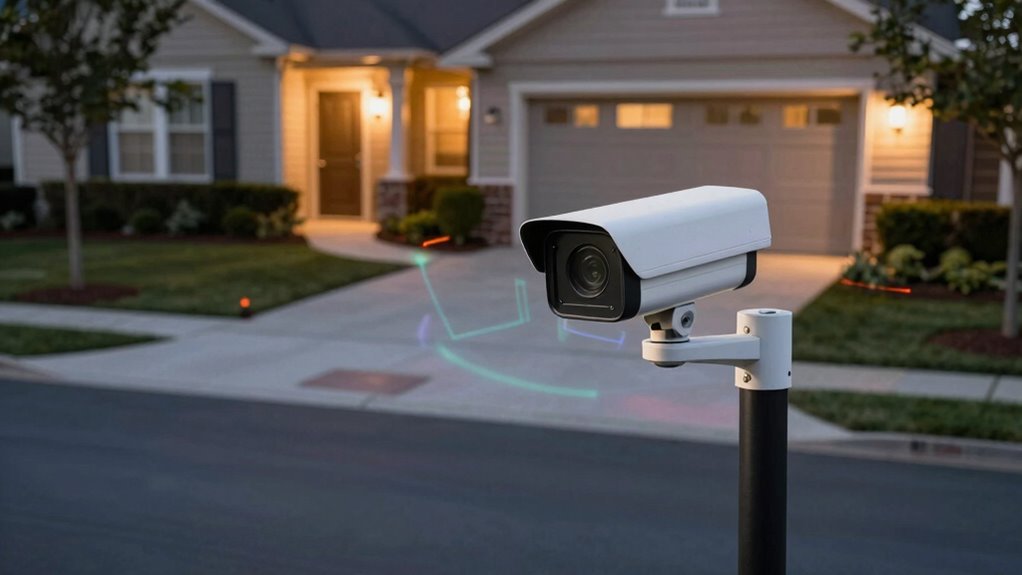
To reduce false motion alerts around your driveway and front door, start by adjusting your camera’s sensitivity and setting up specific detection zones to focus only on critical areas. Make sure your cameras are properly positioned, avoiding shadows, trees, or objects that can trigger false alarms. Regularly update your system’s firmware and explore advanced features like AI filters. For more tips on fine-tuning your security setup, continue exploring effective strategies to keep your alerts accurate.
Open a free Amazon Business account
Business pricing, bulk buying and tax-exempt orders.
As an affiliate, we earn on qualifying purchases.
Key Takeaways
- Adjust motion sensitivity settings to filter out small or distant movements near driveways and doors.
- Focus detection zones on specific areas to ignore irrelevant motion, like trees or shadows.
- Reposition cameras to avoid direct sunlight, reflections, or environmental triggers causing false alerts.
- Regularly calibrate sensors and clean camera lenses for consistent detection performance.
- Incorporate physical barriers like fences or landscaping to block non-threatening movement in sensitive zones.
motion detection security camera with adjustable sensitivity
As an affiliate, we earn on qualifying purchases.
As an affiliate, we earn on qualifying purchases.
Understanding Why False Motion Alerts Happen
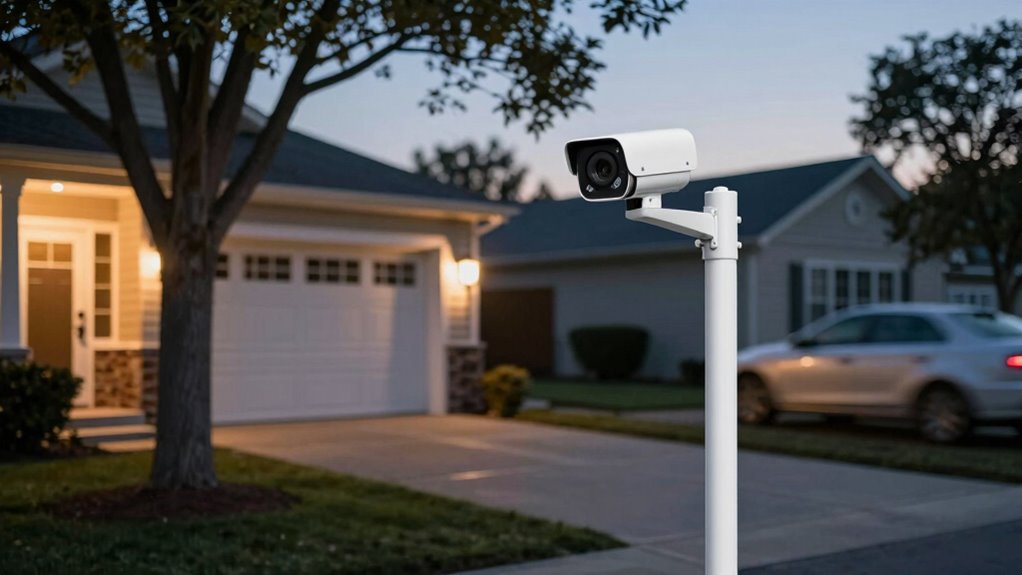
False motion alerts often happen because motion detection sensors pick up on non-threatening movements, such as moving trees, shadows, or pets. These sensors rely on proper calibration to distinguish between actual threats and harmless activity. If your sensor isn’t calibrated correctly, it may interpret minor changes in the environment as motion, leading to false alerts. Additionally, privacy considerations can influence sensor sensitivity, as overly sensitive settings might detect irrelevant movements. To reduce false alarms, you need to assure your sensors are calibrated accurately, adjusting their detection zones and sensitivity levels. This calibration process often involves understanding sensor technology to better interpret environmental cues and prevent unnecessary alerts triggered by background movements or shadows. Being mindful of privacy concerns also encourages you to set boundaries that limit the sensor’s scope, reducing the chance of false alarms while respecting privacy. Proper sensor calibration is essential for ensuring the device accurately detects genuine motion and minimizes false positives. Understanding how environmental factors influence sensor performance can also help you optimize your setup for fewer false alerts.
How to Adjust Camera Settings to Reduce False Alarms
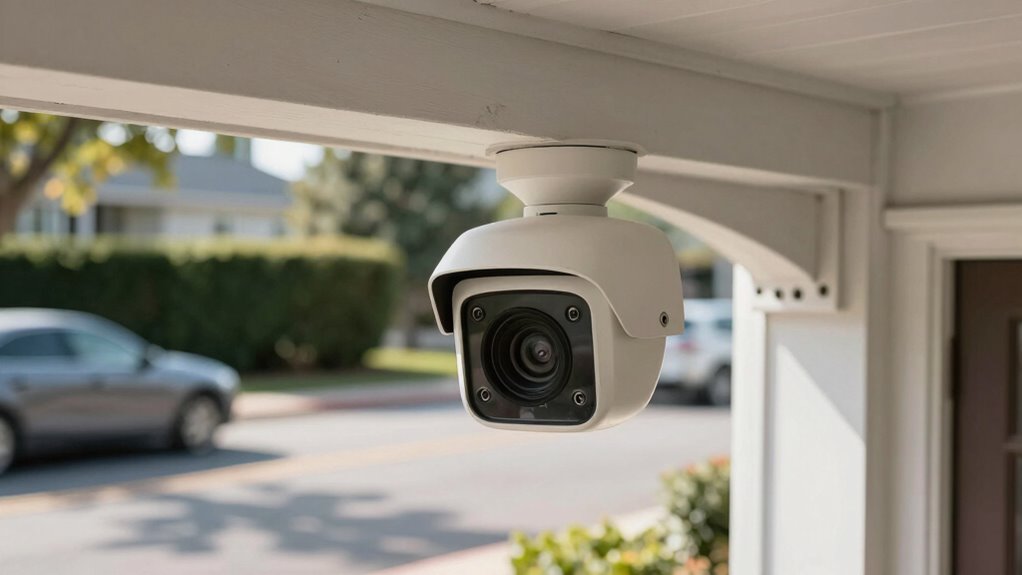
Adjusting your camera settings can considerably reduce unnecessary alerts caused by environmental changes or minor movements. Start by tweaking motion sensitivity to avoid alerts from small or distant movements. Next, adjust the detection zone to focus only on critical areas like your driveway or front door, reducing false alarms from irrelevant zones. Ultimately, consider camera placement—position cameras to minimize direct exposure to changing lighting conditions, such as sunlight or shadows, which often trigger false alerts. Proper camera placement helps prevent environmental factors from confusing motion detection. Additionally, adjusting settings like IR illumination or day/night mode can improve accuracy. Incorporating smart security features into your setup allows for better customization and reduces false alarms, ensuring your system responds only to genuine threats. Being aware of environmental conditions can further help you fine-tune your camera settings for optimal performance. Understanding sensor sensitivity and how it interacts with your environment can also significantly impact false alarm reduction, especially when combined with proper camera placement.
Where to Place Your Security Camera for Better Accuracy
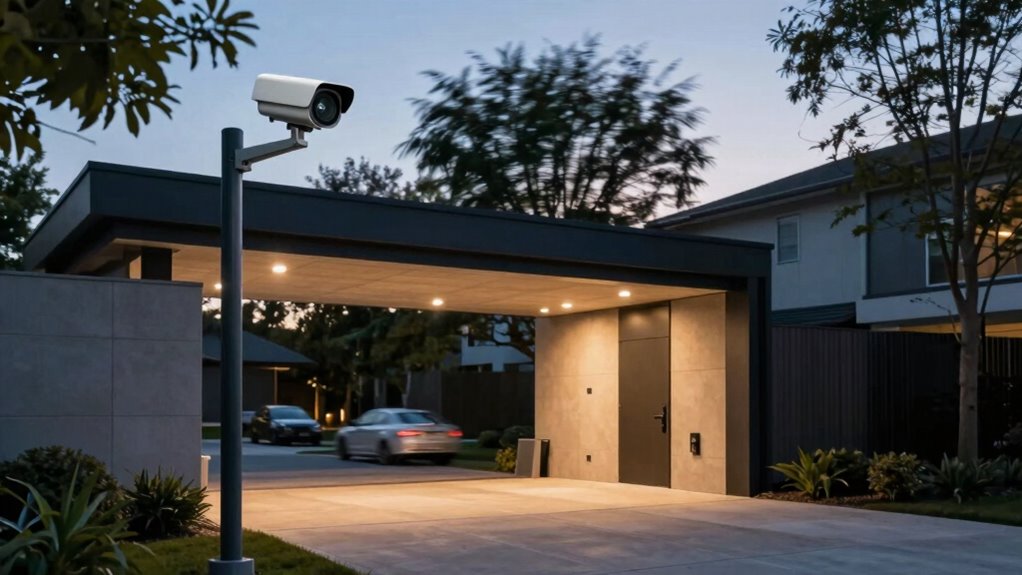
Choosing the right location for your security camera is essential for capturing accurate footage and reducing false alerts. Proper camera placement helps guarantee you monitor the intended areas without unnecessary triggers. Position your camera where it has a clear line of sight to driveways or front doors, avoiding obstructions like trees or fences. Consider lighting conditions; place cameras where they’re not directly facing bright lights or shadows, as extreme lighting can cause false motion detection. If possible, mount cameras at a height that minimizes the chance of animals or moving objects triggering alerts. Keep the lens clean and focused on the target area, and test different angles to find the most reliable position. Thoughtful camera placement notably improves accuracy and reduces false alarms. Additionally, understanding dog breeds overview can help in recognizing which animals might inadvertently trigger motion sensors and adjusting accordingly. Regularly inspecting and maintaining your camera setup, including verifying heat buffering and cleaning residues, ensures consistent performance and reduces the likelihood of false alerts. Properly calibrating motion detection settings based on exposure to light can further enhance reliability. Ensuring that your camera is shielded from signal interference can help maintain a stable connection and improve detection accuracy.
Setting Up Motion Detection Zones to Avoid Unwanted Triggers
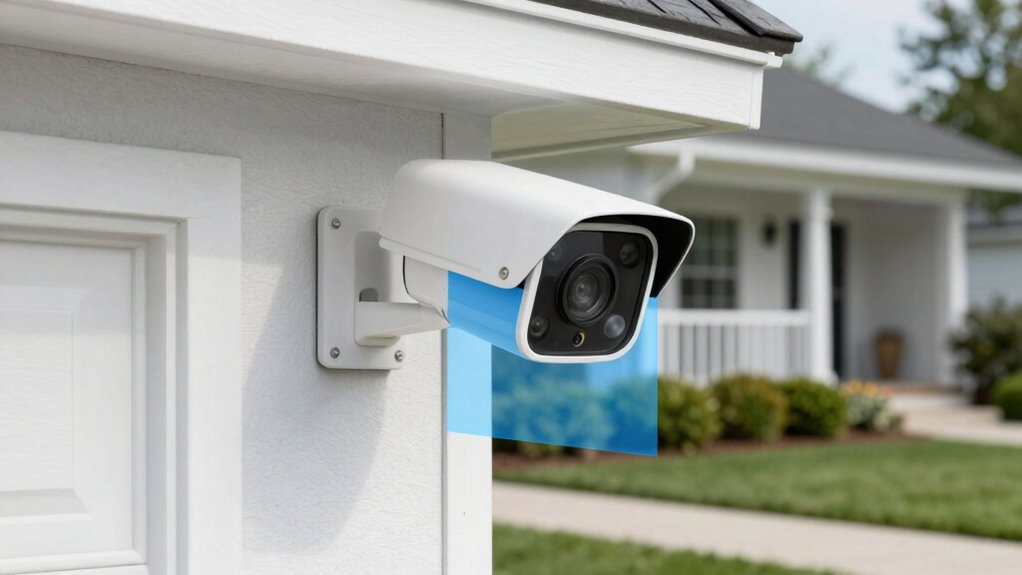
Once you’ve optimized your camera placement, the next step is to fine-tune its detection capabilities by setting up motion detection zones. This helps prevent false alerts caused by irrelevant movement. Start with these steps:
After optimizing your camera, fine-tune detection zones to reduce false alerts and improve accuracy.
- Adjust your camera angle to focus on the most critical areas, ensuring it covers your driveway or front door precisely.
- Use the camera’s motion sensor calibration feature to define specific zones where motion triggers alerts, excluding areas with trees or passing cars.
- Regularly review and refine these zones, especially after adjusting the camera angle, to maintain accurate detection and avoid unnecessary alerts. Additionally, understanding security camera features can help you make more informed adjustments.
- Be aware of ethical considerations when configuring security features, ensuring your setup respects the privacy of neighbors and passersby.
- Familiarizing yourself with privacy rights related to security camera use can also guide responsible setup and use. Incorporating motion detection technology effectively can further enhance your camera’s accuracy and reduce false alerts. To optimize performance, consider exploring detection zone customization options available on most modern security systems.
Using Software Features to Filter Out Animals, Shadows, and Passing Cars
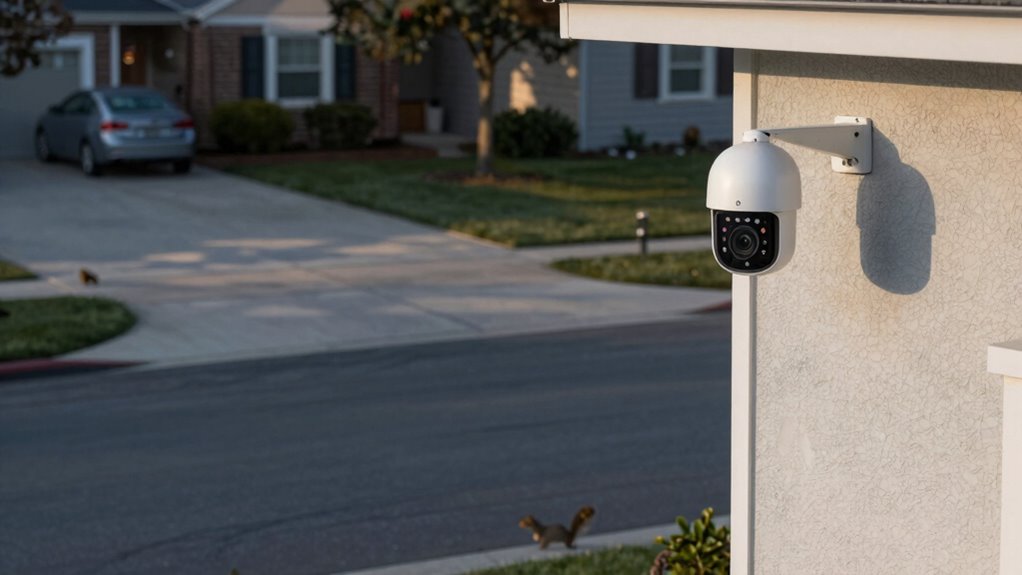
You can reduce false alerts by adjusting your software settings, like setting specific motion detection zones to ignore areas with animals or shadows. Fine-tuning sensitivity levels helps prevent minor movements from triggering alerts unnecessarily. By customizing these features, you guarantee your camera focuses only on the important movements. Incorporating lighting options can further enhance detection accuracy, ensuring your system responds only to relevant activity.
Custom Motion Detection Zones
- Define the precise boundaries of your driveway or front door.
- Exclude regions where animals or trees frequently cause false alerts.
- Adjust zones to ignore moving shadows or passing vehicles.
- Incorporate landscaping elements that naturally reduce visual distractions and help your camera focus on relevant motion. Additionally, selecting cameras with reputable color accuracy features can ensure your security system maintains durability and reliability over time. Proper zone configuration can also prevent unintentional coverage of areas prone to false triggers, making your system more efficient.
- Understanding how shipwreck preservation techniques relate to environmental factors can help you choose more resilient camera placements that withstand natural elements and reduce false alarms.
Using these zones, you can customize your camera’s focus, decreasing false alarms while maintaining security. This targeted approach ensures your smart home remains private and alert-only to real threats.
Sensitivity Adjustment Settings
Adjusting your camera’s sensitivity settings allows you to fine-tune its response to motion, helping to filter out false alerts caused by animals, shadows, or passing cars. Use motion sensor calibration to set the proper sensitivity level—lowering it reduces reactions to minor movements like shadows or small animals, while increasing it guarantees detection of larger objects. Camera angle optimization also plays a key role; positioning your camera to minimize areas prone to false triggers, like busy roads or tree branches, improves accuracy. Many security systems offer software features to customize sensitivity, so explore these options to find the right balance. Regularly testing and adjusting these settings ensures your camera detects genuine activity without constant false alarms, maintaining reliable security around your driveway and front door. Additionally, understanding the effectiveness of soundproofing can help reduce external noise distractions that might interfere with your camera’s performance.
Physical Barriers and Landscaping Tips to Minimize False Alerts
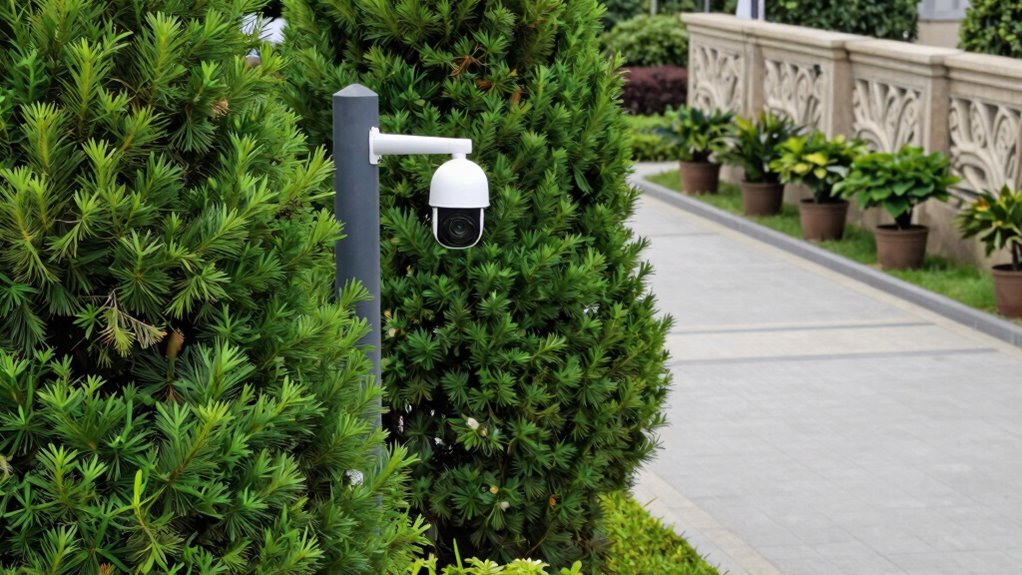
Physical barriers and strategic landscaping can markedly reduce false motion alerts by blocking or distracting common sources of interference. By redesigning your garden and installing fences, you create physical obstructions that prevent false triggers. Here are some effective tips:
- Plant shrubs or hedges along driveways and walkways to shield motion detectors from moving objects like cars or animals.
- Install a fence to block line-of-sight to busy streets or neighboring properties that often cause false alerts.
- Use landscaping features, such as decorative rocks or trees, to divert attention away from areas prone to false triggers, reducing unnecessary alerts.
These simple steps can markedly improve your camera’s accuracy by minimizing false alarms caused by environmental factors.
Keep Your Camera Firmware and App Settings Up-to-Date

To reduce false motion alerts, you need to keep your camera firmware current and guarantee your app settings are optimized. Regularly check for firmware updates and enable notifications so you don’t miss important improvements. Staying up-to-date helps your camera better differentiate between real movement and false triggers.
Regular Firmware Checks
Regularly checking your camera’s firmware and app settings guarantees it functions at its best and helps prevent false motion alerts. Firmware updates are essential for fixing bugs, improving performance, and guaranteeing software compatibility with your device. Outdated firmware can cause misinterpretations of motion, leading to false alerts. To stay current:
- Regularly visit the manufacturer’s website or app for latest firmware updates.
- Enable automatic updates if available, so your camera stays current effortlessly.
- Monitor your app’s compatibility with device software to prevent conflicts that may trigger false alerts.
Keeping your firmware and app settings up-to-date not only enhances detection accuracy but also prolongs your camera’s lifespan. Staying proactive minimizes false alarms and guarantees reliable security around your driveway or front door.
Update Notification Settings
Keeping your firmware and app settings current is essential for maintaining peak camera performance. Regular updates often include improvements to notification customization options and alert frequency controls, helping you reduce false motion alerts. Check for firmware updates through your camera’s app regularly, and install them promptly. Adjust notification settings to better match your environment, turning off unnecessary alerts or setting specific times for alerts to be active. Updating the app ensures you have the latest features and bug fixes, which can enhance alert accuracy. By maintaining everything up-to-date, you gain better control over motion detection, reducing unnecessary alerts caused by bugs or outdated software. Staying current with updates is a simple but effective step toward minimizing false alarms and enhancing your overall home security experience.
Is Upgrading to AI-Powered Security Systems Worth It?
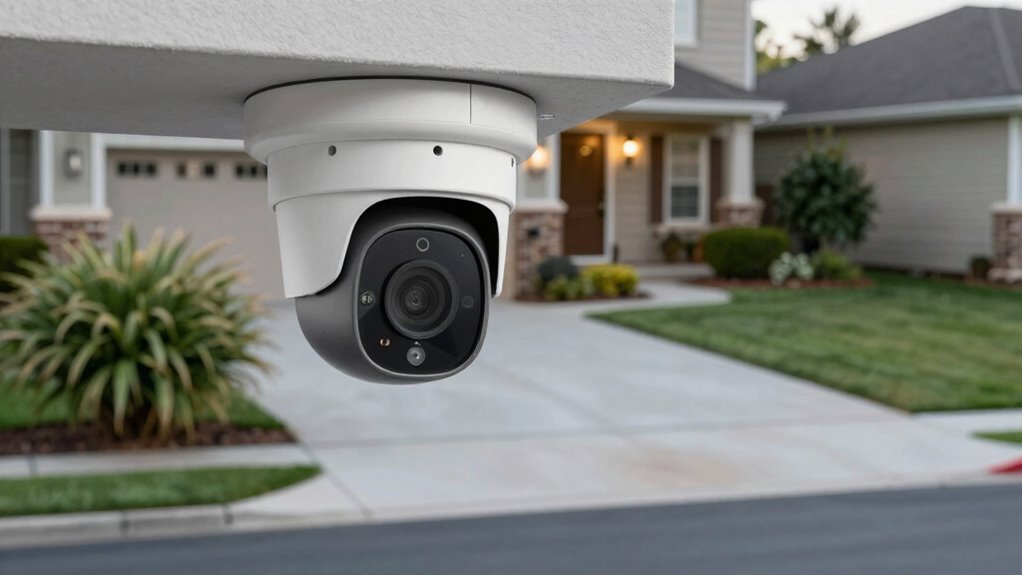
Is upgrading to AI-powered security systems truly worth it? If you want smarter, more accurate alerts, then yes. AI analytics can distinguish between real threats and false alarms, reducing unnecessary notifications. Plus, with smart home integration, your security system seamlessly connects with other devices, enhancing overall control. Here are three reasons to contemplate upgrading:
- Enhanced Accuracy: AI filters out false motion alerts caused by animals or weather.
- Convenience: Smart home integration allows you to control and monitor everything from a single app.
- Proactive Security: AI analytics can recognize familiar faces and detect unusual activity faster than traditional systems.
Investing in AI-powered security means fewer false alarms and better protection, making your home safer and more manageable.
Routine Checks and Maintenance to Keep False Alarms at Bay
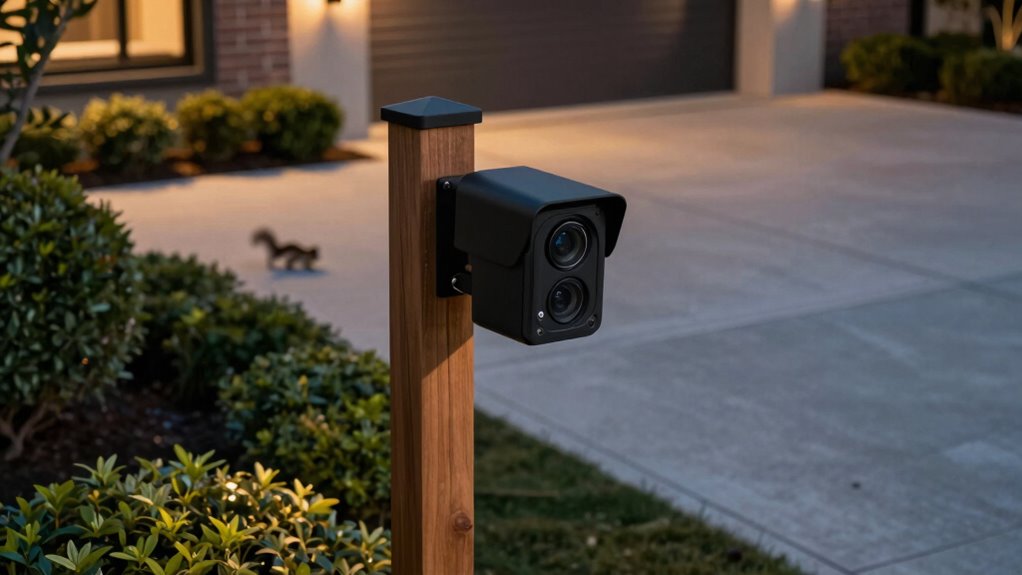
Upgrading to AI-powered security systems is a great step toward reducing false alarms, but consistent routine checks and maintenance are equally important to keep your system functioning at its best. Regularly calibrate sensors to guarantee accurate detection, and verify that your power supply is stable and reliable. Check for dirt, debris, or obstructions that might trigger false alerts, especially around motion sensors. Keep an eye on wiring and connections to prevent power issues that could cause false triggers. Performing these simple tasks helps maintain peak performance and prevents unnecessary alerts.
| Task | Frequency | Tips |
|---|---|---|
| Sensor calibration | Monthly | Use calibration tools or follow manufacturer guidelines |
| Power supply check | Monthly | Inspect wiring and replace batteries if needed |
| Sensor cleaning | Bi-weekly | Use a soft cloth to remove dust and dirt |
| System testing | Weekly | Walk past sensors to verify detection |
| Connection inspection | Monthly | Ensure all connections are secure |
When to Consult a Security Professional for Help
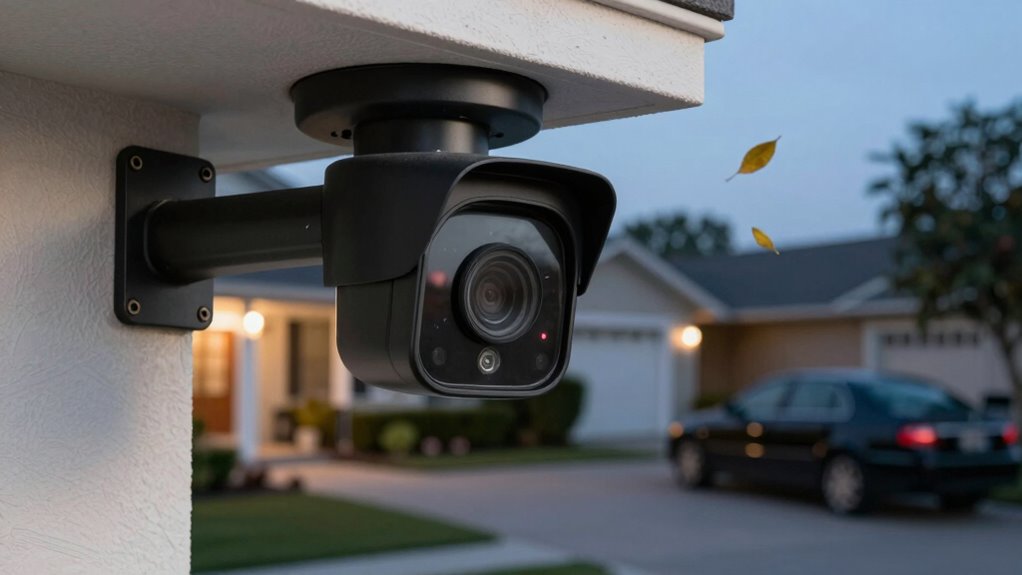
If false alerts keep happening despite your efforts, it’s time to bring in a security professional. Complex systems or safety concerns that arise may require expert troubleshooting to guarantee your setup is reliable. Don’t hesitate to seek help when the situation feels overwhelming or risky.
Persistent False Alerts
Consider consulting a professional if:
- False alerts persist despite adjusting outdoor lighting and addressing weather-related triggers.
- Your system reacts to minor environmental changes like wind or shadows.
- You notice inconsistent or malfunctioning sensor behavior that you can’t fix on your own.
An expert’s insight helps guarantee your system works accurately without constant false alarms.
Complex Security Systems
When your security system becomes too complex to manage on your own, it’s a clear sign that professional help is needed. Complex systems often involve multiple cameras, intricate wiring, and advanced security lighting that can be difficult to optimize. If you find yourself constantly adjusting camera placement or struggling to fine-tune security lighting to reduce false alerts, it’s time to seek expert advice. Professionals can evaluate your system’s layout, ensuring cameras are positioned to minimize false triggers, and that security lighting is correctly configured to avoid unnecessary alerts caused by shadows or reflections. They can also help you integrate smart technology seamlessly, providing a reliable setup that reduces false motion alerts and enhances your overall security.
Safety Concerns Arise
Security concerns should prompt you to seek professional help immediately, especially when you notice signs of potential vulnerabilities. If your security system isn’t providing clear alerts or if you observe suspicious activity, it’s time to consult a security professional. They can assess your setup for gaps in community awareness and guarantee it complies with legal considerations.
Consider calling a pro if:
- You notice persistent false alarms despite adjustments.
- There’s evidence of tampering or forced entry attempts.
- You’re unsure about the legal use of surveillance equipment in your area.
A security expert can help you implement effective solutions, enhance safety, and address any legal or community-related issues before they escalate.
Frequently Asked Questions
Can Weather Conditions Cause False Motion Alerts?
Yes, weather interference can cause false triggers on your motion alerts. Rain, snow, fog, or strong winds can move objects or create shadows that your camera detects as motion. These conditions trick the sensor, leading to false alarms. To reduce this, you can adjust sensitivity settings, add physical barriers, or change camera placement to minimize exposure to weather elements. Regularly cleaning your camera also helps maintain accurate detection.
How Do Camera Angle and Height Affect False Alarms?
Camera placement and angle adjustments directly impact false alarms. If your camera is too low or angled incorrectly, it might capture moving objects like trees or passing cars, triggering alerts. To reduce false alarms, position your camera at an ideal height—usually eye level—and adjust the angle to focus on the intended area, such as your driveway or door. Proper camera placement minimizes unwanted motion detection and keeps alerts accurate.
Are There Specific Camera Models Better at Reducing False Triggers?
Did you know that some cameras reduce false triggers by up to 90%? Certain models excel at minimizing false alarms through advanced motion detection technology and smart algorithms. Cameras with customizable settings and better placement are your best bet. Focus on those with features like infrared, PIR sensors, or AI-based detection, and guarantee proper camera placement—aimed at high-traffic areas or with adjustable sensitivity—to get fewer false alerts and better security.
How Long Should I Monitor Alerts Before Adjusting Settings?
You should monitor alerts for at least a week before adjusting settings to get a clear sense of patterns. During this period, observe how sensor sensitivity affects false triggers and note the timing of alerts—are they coming at odd hours or during specific activities? This helps you fine-tune sensor sensitivity and alert timing, ensuring your camera detects genuine motion without frequent false alarms. Regular monitoring allows for more precise adjustments.
What Are Common Mistakes That Cause False Motion Alerts?
False motion alerts often sneak in like unwelcome guests, caused by common mistakes. You might neglect proper camera placement, letting shadows and trees dance into the sensor’s view. Poor motion sensor calibration can make it overly sensitive, catching every gust of wind. To avoid this, position your camera carefully, ensuring it’s aimed at the right zone, and calibrate your sensors accurately, so they only alert for genuine activity, not phantom movements.
Conclusion
So, next time your driveway’s more active than Times Square, remember: a little tweaking, strategic placement, and the occasional software update can save you from endless false alarms. Or, you know, you could just invest in that AI-powered system — because nothing says “security” like having your camera politely ignore passing squirrels. Ultimately, the goal is peace of mind, not a never-ending game of “spot the false alert.” Happy monitoring!
Flea & tick season Picks
flea and tick prevention
As an affiliate, we earn on qualifying purchases.