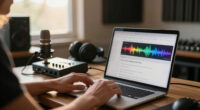
Choosing the right wireless microphones for podcasting depends heavily on whether you record primarily on a smartphone or a dedicated computer interface. The Hollyland Lark M2 stands out as the best overall pick for its seamless connectivity and compact charging case, while the MAONO PD200W offers superior audio fidelity for those needing a hybrid wired/wireless workflow. Most buyers face a tradeoff between audio quality and mobility; compact lavaliers often sacrifice frequency response for convenience. This guide breaks down the specific strengths and limitations of thirteen popular models to help you match your recording environment with the correct hardware.

Get audio and creator gear delivered free with Prime
- Fast, free delivery on millions of items
- Prime Video, Amazon Music and more included
- Member-only deals all year
Complete the kit



Key Takeaways
- Hybrid models like the MAONO PD200W bridge the gap between studio-grade XLR quality and wireless convenience, making them ideal for serious podcasters who also need mobility.
- Smartphone-first systems (e.g., AUDIGO, SUDEHO) prioritize plug-and-play simplicity over raw audio fidelity, often requiring companion apps that can introduce latency or compatibility issues.
- The Hollyland Lark M2 sets a new standard for battery life and case size, proving that professional-grade wireless audio no longer requires bulky receivers.
- Budget options like the GoorDik and NPTCL rely heavily on digital noise reduction algorithms, which can sometimes degrade vocal clarity compared to analog filtering in higher-end units.
- Multi-channel systems like the ES-384 are overkill for solo creators but essential for interview-style shows requiring four distinct audio tracks without post-production syncing.
| SUDEHO Wireless Mini Lavalier Microphones with Charging Case |  | Best for Simple Mobile Recording | Connectivity: Wireless with plug-in receiver; no Bluetooth or app required | Noise cancellation: Three adjustable levels | Audio modes: Mute, acoustic, noise cancellation, and voice change | VIEW LATEST PRICE | See Our Full Breakdown |
| AUDIGO Wireless Microphone and Mobile Studio App for iOS and Android, Black |  | Best for App-Based Mobile Production | Microphone type: Studio condenser | Connectivity: Bluetooth 5.2 and Wi-Fi | Connector: USB Type-C | VIEW LATEST PRICE | See Our Full Breakdown |
| ARES WING Wireless Gaming Condenser Microphone with RGB Lighting |  | Best for Gaming and Podcast Streaming | Microphone type: Condenser USB microphone | Connectivity: USB and wireless | Connectors: 3.5 mm jack and USB Type-C | VIEW LATEST PRICE | See Our Full Breakdown |
| ZealSound K66 Dual Wireless Podcast Microphones for PC and iPhone |  | Best for Two-Person Podcast Recording | Wireless connection: 2.4 GHz receiver | Microphones: Two wireless condenser microphones | Audio resolution: 48 kHz/24-bit | VIEW LATEST PRICE | See Our Full Breakdown |
| ES-384 4-Channel UHF Wireless Lavalier Microphone System |  | Best for Panel and Group Recordings | Channels: 4 | Microphones: Four wireless lapel microphones | Receiver: Rechargeable 6.35 mm plug-in receiver | VIEW LATEST PRICE | See Our Full Breakdown |
| Hollyland Lark M2 Wireless Lavalier Microphone System with Charging Case | 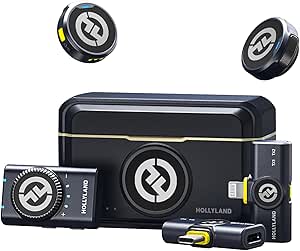 | Best Overall for Versatile Recording | Audio Quality: 48 kHz / 24-bit | Battery Life: 10 hours per charge; 40 hours with case | Transmission Range: Up to 300 m (line of sight) | VIEW LATEST PRICE | See Our Full Breakdown |
| MAONO PD200W Hybrid Wireless Podcast Microphone |  | Best Hybrid Desktop Setup | Microphone Type: Dynamic | Polar Pattern: Cardioid (Unidirectional) | Battery Life: Up to 60 hours (RGB off) | VIEW LATEST PRICE | See Our Full Breakdown |
| Mini Mic Pro Wireless Lavalier Microphone for iPhone and Android | 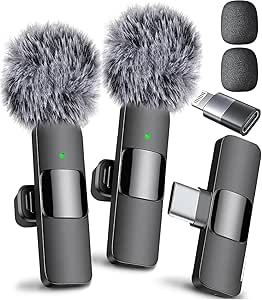 | Best for Beginner Simplicity | Connectivity: Wireless (2.4 GHz) | Battery Life: Up to 6 hours | Polar Pattern: Omnidirectional | VIEW LATEST PRICE | See Our Full Breakdown |
| NEEWER KM19 Mini Wireless Lavalier Microphone Kit, Black |  | Best Compact Value Kit | Sampling Rate: 48 kHz / 24-bit | Battery Life: 6 hours per mic; 30 hours with case | Wireless Range: Up to 100 m | VIEW LATEST PRICE | See Our Full Breakdown |
| ZealSound K66 Wireless USB Microphone with Noise Reduction |  | Best for Desktop Monitoring | Microphone Type: Condenser | Pickup Pattern: Cardioid | Audio Capture: 48 kHz | VIEW LATEST PRICE | See Our Full Breakdown |
| GoorDik Wireless USB-C Lavalier Microphone with Noise Reduction | 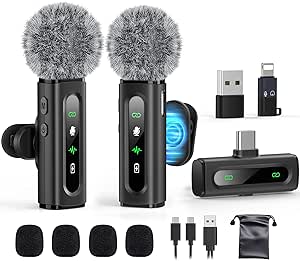 | Best for Versatile Device Compatibility | Connectivity: Wireless | Microphone Type: Lavalier | Pickup Pattern: Omnidirectional | VIEW LATEST PRICE | See Our Full Breakdown |
| NPTCL Wireless Lavalier Microphone for USB-C and iPhone |  | Best for Long-Form Recording Sessions | Microphones Included: 2 | Battery Life: Up to 6 hours per mic; 24 hours with case | Maximum Range: 70 feet | VIEW LATEST PRICE | See Our Full Breakdown |
| MAYBESTA Wireless Mini Lavalier Microphones for iPhone and Android, 2-Pack |  | Best for Simple Plug-and-Play Setup | Connectivity: Wireless | Connectors: Lightning, USB Type-C | Pickup Pattern: Omnidirectional | VIEW LATEST PRICE | See Our Full Breakdown |
| wireless microphones for podcasting | Connectivity | Battery life |
|---|---|---|
| SUDEHO Wireless Mini Lavalier | Wireless with plug-in receiver; no Bluetooth or app required | — |
| AUDIGO Wireless Microphone and | Bluetooth 5.2 and Wi-Fi | Up to 6 hours of recording |
| ARES WING Wireless Gaming Cond | USB and wireless | Up to 14 hours |
| ZealSound K66 Dual Wireless Po | — | Up to 16 hours |
| ES-384 4-Channel UHF Wireless | 6.35 mm input | — |
| Hollyland Lark M2 Wireless Lav | 2.4 GHz Wireless | 10 hours per charge; 40 hours with case |
| MAONO PD200W Hybrid Wireless P | Wireless, USB-C, XLR | Up to 60 hours (RGB off) |
| Mini Mic Pro Wireless Lavalier | Wireless (2.4 GHz) | Up to 6 hours |
| NEEWER KM19 Mini Wireless Lava | — | 6 hours per mic; 30 hours with case |
| ZealSound K66 Wireless USB Mic | — | — |
| GoorDik Wireless USB-C Lavalie | Wireless | 6–12 hours per transmitter |
| NPTCL Wireless Lavalier Microp | USB-C; USB adapter included | Up to 6 hours per mic; 24 hours with case |
| MAYBESTA Wireless Mini Lavalie | Wireless | — |
More Details on Our Top Picks
SUDEHO Wireless Mini Lavalier Microphones with Charging Case
Automatic pairing and a plug-in receiver make this a straightforward choice for podcasters recording on a compatible phone or tablet. Unlike the AUDIGO AL2, which builds in an app for multitrack editing and mixing, SUDEHO focuses on quick setup and clip-on capture rather than a more involved production workflow. Its three noise-cancellation levels give speakers some control over background sound, while mute and voice-change modes add flexibility for casual segments. The case extends stated use to up to 36 hours total, handy for recording away from an outlet. The tradeoff is that each microphone runs for up to six hours per charge, and compatibility details are limited beyond iPhone, iPad, and Android. I’d skip it if your podcast needs dependable desktop support or detailed recording specifications.
Pros:- Automatic pairing with a plug-in receiver; no Bluetooth or app setup required
- Three adjustable noise-cancellation levels
- Charging case provides up to 36 hours of stated total use
- Includes mute, acoustic, noise-cancellation, and voice-change modes
Cons:- Microphone runtime is limited to up to six hours per charge
- Compatibility information is limited beyond iPhone, iPad, and Android
Best for: Mobile podcasters who want a clip-on mic with automatic pairing and a charging case for occasional interviews or short recording sessions.
Not ideal for: Podcasters who need confirmed computer compatibility, detailed audio specifications, or uninterrupted recording sessions longer than six hours.
- Connectivity:Wireless with plug-in receiver; no Bluetooth or app required
- Noise cancellation:Three adjustable levels
- Audio modes:Mute, acoustic, noise cancellation, and voice change
- Microphone battery life:Up to 6 hours
- Total battery life with case:Up to 36 hours
- Charging time:About 1 hour
- Wireless range:Up to 164 ft (50 m)
- Color:Black
Our verdict“Choose SUDEHO for uncomplicated phone-based podcast recording and extended case-powered use, but not for a computer-centered or specification-led setup.”
AUDIGO Wireless Microphone and Mobile Studio App for iOS and Android, Black
AUDIGO AL2 is the most production-oriented mobile option in this group: its app supports multitrack recording, editing, mixing, and sharing, while audio syncs to video automatically. That workflow gives a solo podcaster more room to assemble and refine a segment on a phone or tablet than the simpler plug-in setup of the SUDEHO mini lavalier. The microphone records 24-bit/48 kHz WAV and offers adjustable stereo width, so it suits creators who want to shape stereo recordings rather than just capture a voice memo. Its compact 54 g body and magnetic mount also suit mobile shoots. The compromises are an up-to-six-hour recording battery and app features that may require an optional Studio+ plan. It is less suitable for a conventional computer-and-mixer podcast desk.
Pros:- App supports multitrack recording, editing, mixing, and sharing
- Records 24-bit/48 kHz WAV with adjustable stereo width
- Audio syncs automatically to video in the app
- Compact 54 g microphone with included magnetic multi-mount
Cons:- Recording battery life is up to six hours
- Some app features require an optional paid Studio+ plan
Best for: Mobile podcasters and video creators who record on iPhone, iPad, or Android and want multitrack editing and mixing in one app.
Not ideal for: Podcasters who need long sessions between charges, a traditional desktop microphone workflow, or access to every app feature without an optional paid plan.
- Microphone type:Studio condenser
- Connectivity:Bluetooth 5.2 and Wi-Fi
- Connector:USB Type-C
- Audio format:24-bit/48 kHz WAV
- Frequency response:20 Hz–20 kHz
- Maximum SPL:120 dB at 1 kHz
- Battery life:Up to 6 hours of recording
- Weight:54 g
- Dimensions:1.75 × 1.75 × 1.38 inches
Our verdict“Pick the AUDIGO AL2 if mobile editing and multitrack production matter more than longer battery life or a standard desktop setup.”
ARES WING Wireless Gaming Condenser Microphone with RGB Lighting
This is a desktop-style condenser microphone for a podcaster whose recording setup overlaps with gaming or live streaming. Compared with the clip-on SUDEHO, the ARES WING stays on the desk and offers real-time headphone monitoring, adjustable gain, and a one-touch mute control—useful when managing a live conversation. Its stated 14-hour battery life also exceeds the six-hour limits listed for SUDEHO and AUDIGO, though actual podcast runtime depends on use. The cardioid, unidirectional pickup and noise reduction are aimed at focusing on the speaker, while the RGB lighting is a visual extra rather than an audio advantage. There are important information gaps: wireless connection details are unspecified, and “48 kHz” is listed as frequency response without a range. I would not choose it for a portable interview kit.
Pros:- One-touch mute and adjustable gain controls
- Cardioid unidirectional pickup with stated noise reduction
- Up to 14 hours of battery life
- Real-time headphone monitoring through a 3.5 mm jack
Cons:- Wireless connection method and operating details are not specified
- Frequency response is listed as 48 kHz without a frequency range
- Desk-oriented 14.4 oz design is less convenient for mobile interviews
Best for: Streamers and podcasters recording at a gaming desk who want a USB/wireless condenser mic with live monitoring and easy mute access.
Not ideal for: Mobile interviewers or buyers who need clearly documented wireless transmission details and a full frequency-response range.
- Microphone type:Condenser USB microphone
- Connectivity:USB and wireless
- Connectors:3.5 mm jack and USB Type-C
- Polar pattern:Unidirectional
- Signal-to-noise ratio:95 dB
- Battery capacity:800 mAh
- Battery life:Up to 14 hours
- Weight:14.4 oz
- RGB lighting modes:11
Our verdict“Choose the ARES WING for a gaming or streaming desk that doubles as a podcast setup, but look elsewhere for portable recording or clearer wireless specifications.”
ZealSound K66 Dual Wireless Podcast Microphones for PC and iPhone
For a co-host show, the ZealSound K66 dual kit solves a different problem from one-mic mobile sets like the AUDIGO AL2: it provides two wireless microphones that connect to one device. Each speaker gets an individual gain control, and the kit adds echo adjustment, mute, and zero-latency headphone monitoring so levels can be checked while recording. The included USB-C and Lightning adapters broaden device options, and the 48 kHz/24-bit specification gives buyers a clearer audio-format reference than the ARES WING listing. Up to 16 hours of wireless use supports longer sessions than the six-hour SUDEHO and AUDIGO claims. The main limitation is that both microphones on one device require wireless mode; Bluetooth is for background music input, not microphone audio. Charging takes about three hours.
Pros:- Two microphones connect wirelessly to one device for co-host recording
- Independent gain, echo, mute, and headphone-volume controls
- Zero-latency monitoring through a 3.5 mm headphone jack
- Includes USB-C and Lightning adapters, desktop stands, and foam windscreens
Cons:- Both microphones connect to one device only in wireless mode
- Bluetooth supports background music input, not microphone audio
- Recharge time is approximately three hours
Best for: Two-person podcast teams who want separate wireless microphones, individual level controls, and direct connection options for computers or mobile devices.
Not ideal for: Solo podcasters seeking the smallest kit, or buyers expecting Bluetooth to carry microphone audio to their recording device.
- Wireless connection:2.4 GHz receiver
- Microphones:Two wireless condenser microphones
- Audio resolution:48 kHz/24-bit
- Pickup pattern:Cardioid
- Battery life:Up to 16 hours
- Recharge time:Approximately 3 hours
- Monitoring:3.5 mm headphone jack with zero-latency monitoring
- Controls:Independent gain, echo, mute, and headphone volume
- Compatibility:PC, Mac, PS4/PS5, iPhone, iPad, USB-C Android phones, and tablets
Our verdict“Choose the K66 for a two-speaker podcast that needs separate mics and monitoring, but not if Bluetooth microphone input is part of your plan.”
ES-384 4-Channel UHF Wireless Lavalier Microphone System
The ES-384 is the group-recording specialist here: four clip-on microphones let several speakers move hands-free, unlike the two-person ZealSound K66. Independent volume controls help balance each channel for meetings, classes, interviews, or a podcast panel. Its UHF transmission is stated to reach up to 164 feet, and the rechargeable plug-in receiver connects directly to compatible speakers, amplifiers, mixers, or PA systems. That makes it better suited to a room or event rig than the phone-focused SUDEHO mini lavalier. The tradeoff is the connection path: the receiver uses a 6.35 mm input, so buyers need compatible audio equipment and should not expect a direct phone or computer workflow from the supplied details. The receiver is also a plug-in design, not a rack-mounted unit.
Pros:- Includes four wireless lapel microphones for multiple speakers
- Independent volume controls for each channel
- Receiver plugs into compatible 6.35 mm audio equipment
- UHF wireless range stated up to 164 ft
Cons:- Requires a compatible 6.35 mm input on a mixer, amplifier, or speaker
- Plug-in receiver is not a rack-mounted receiver
- Product details do not specify battery runtime or audio resolution
Best for: Podcast panels, interviews, classes, or event recordings with up to four speakers and an existing mixer, amplifier, or compatible PA system.
Not ideal for: Solo mobile podcasters or anyone who needs a receiver that connects directly to a phone or computer without compatible 6.35 mm audio equipment.
- Channels:4
- Microphones:Four wireless lapel microphones
- Receiver:Rechargeable 6.35 mm plug-in receiver
- Wireless range:Up to 164 ft
- Volume control:Independent controls
- Connectivity:6.35 mm input
Our verdict“Choose the ES-384 for multi-speaker sessions routed through compatible audio equipment, but skip it for direct-to-phone podcast recording.”
Hollyland Lark M2 Wireless Lavalier Microphone System with Charging Case
This system stands out for its exceptional battery life and compact form factor, making it ideal for podcasters who record on location or move between rooms. The 48 kHz/24-bit audio quality rivals wired alternatives, while the 300-meter range offers freedom that most budget lavaliers cannot match. Compared to the Mini Mic Pro, the Lark M2 provides significantly longer runtime and professional-grade noise cancellation features. However, the mono/stereo switching requires a specific camera connection via the 3.5 mm jack, which may frustrate users who prefer simple smartphone-only workflows. The charging case is a massive advantage for multi-day recording sessions.
Pros:- Up to 40 hours of total runtime with charging case
- Professional 48 kHz/24-bit audio resolution
- Effective noise cancellation for outdoor use
- Plug-and-play pairing reduces setup friction
Cons:- Stereo mode requires 3.5 mm camera connection
- 300 m range is line-of-sight only
- Higher price point than basic lavalier kits
Best for: Podcasters who record in multiple locations and need all-day battery life without hunting for outlets.
Not ideal for: Users who only record via smartphone and find the camera-centric stereo switching workflow unnecessary.
- Audio Quality:48 kHz / 24-bit
- Battery Life:10 hours per charge; 40 hours with case
- Transmission Range:Up to 300 m (line of sight)
- Connectivity:2.4 GHz Wireless
- Polar Pattern:Omnidirectional
- Weight:6.08 oz
Our verdict“The Hollyland Lark M2 is the best choice for serious podcasters who need professional audio quality and long battery life in a portable package.”
MAONO PD200W Hybrid Wireless Podcast Microphone
This dynamic microphone bridges the gap between mobile convenience and studio fidelity. Unlike the Hollyland Lark M2, which uses tiny lavaliers, the PD200W offers a cardioid pickup pattern that rejects room echo—a critical feature for untreated home studios. The hybrid connectivity (Wireless, USB, XLR) allows you to start wireless and switch to wired if the signal drops. The 60-hour battery life is impressive, though achieving it requires turning off the RGB lighting. It is heavier and less portable than lavalier options, making it better suited for a fixed desk than a roaming interview.
Pros:- Cardioid pattern minimizes background noise
- Hybrid wireless, USB, and XLR connectivity
- Up to 60 hours battery life (RGB off)
- App control for EQ and reverb adjustments
Cons:- Two-mic wireless requires extra receiver setup
- Heavier and bulkier than lavalier systems
- Camera and Lightning accessories sold separately
Best for: Home studio podcasters who want the option of wireless freedom but prefer the sound control of a dynamic mic.
Not ideal for: Field reporters or mobile creators who need ultra-lightweight gear that clips to clothing.
- Microphone Type:Dynamic
- Polar Pattern:Cardioid (Unidirectional)
- Battery Life:Up to 60 hours (RGB off)
- Connectivity:Wireless, USB-C, XLR
- Max SPL:128 dB
- Weight:1.32 kg
Our verdict“The MAONO PD200W is perfect for desktop podcasters who want dynamic mic clarity with the flexibility of wireless operation.”
Mini Mic Pro Wireless Lavalier Microphone for iPhone and Android
For those who find technology intimidating, this kit removes the barriers. There is no app to download and no Bluetooth pairing to troubleshoot; you simply plug in the adapter and speak. This contrasts sharply with the NEEWER KM19, which offers more features but requires some menu navigation. The included wind protection (foam and deadcats) is a thoughtful touch for outdoor beginners. However, the 6-hour battery life is limiting for full-day shoots, and the lack of specified charging times leaves some uncertainty. It is a utilitarian tool designed for immediate use rather than audio precision.
Pros:- Zero-setup plug-and-play operation
- Includes both USB-C and Lightning adapters
- Comes with foam and furry wind protection
- Can charge while recording
Cons:- Limited 6-hour battery life
- No app control for audio customization
- Omnidirectional pattern picks up more room noise
Best for: Absolute beginners who want a plug-and-play solution for smartphone interviews without any technical setup.
Not ideal for: Professionals who need detailed control over gain, EQ, or audio formats.
- Connectivity:Wireless (2.4 GHz)
- Battery Life:Up to 6 hours
- Polar Pattern:Omnidirectional
- Included Adapters:USB-C and Lightning
- Weight:80 g
- Key Feature:One-touch recording
Our verdict“The Mini Mic Pro is the most accessible entry point for casual podcasters who value ease of use over advanced features.”
NEEWER KM19 Mini Wireless Lavalier Microphone Kit, Black
This kit strikes a balance between the simplicity of the Mini Mic Pro and the professional range of the Hollyland Lark M2. It includes a charging case that extends total runtime to 30 hours, addressing the battery anxiety found in smaller kits. The three-level noise cancellation offers more flexibility than basic wind protection alone. However, compatibility can be tricky: GoPro users are excluded, and some Android devices require manual OTG activation. The 100-meter range is sufficient for most studio or nearby field recordings but falls short of the Lark M2’s extensive reach.
Pros:- Charging case extends runtime to 30 hours
- Three levels of noise cancellation
- Compact and lightweight design
- Includes OTG adapters for wide compatibility
Cons:- Not compatible with GoPro cameras
- Android OTG must be manually enabled
- Shorter range than premium competitors
Best for: Budget-conscious creators who need a reliable two-person interview kit with a charging case.
Not ideal for: GoPro users or those who need long-range transmission beyond 100 meters.
- Sampling Rate:48 kHz / 24-bit
- Battery Life:6 hours per mic; 30 hours with case
- Wireless Range:Up to 100 m
- Polar Pattern:Omnidirectional
- Noise Cancellation:3 Levels
- Weight:2.86 oz
Our verdict“The NEEWER KM19 is a solid mid-range choice for interviewers who need a charging case without paying for premium range.”
ZealSound K66 Wireless USB Microphone with Noise Reduction
This condenser microphone focuses on the desktop experience, offering zero-latency headphone monitoring directly on the unit. This is a significant advantage over the MAONO PD200W for users who need to hear their voice in real-time without computer software latency. The cardioid pattern helps isolate the speaker from keyboard clicks or room hum. While it supports wired backup mode, the wireless range and specs are less detailed than competitors, and the noise reduction performance is not quantified. It is a feature-rich option for gamers and streamers who also podcast, but less portable than lavalier systems.
Pros:- Zero-latency headphone monitoring on unit
- Cardioid pattern reduces background noise
- Physical controls for gain and echo
- Wired backup mode for reliability
Cons:- Noise reduction performance is unverified
- Larger footprint than lavalier mics
- Compatibility varies by device port type
Best for: Streamers and podcasters who record at a desk and need direct headphone monitoring without software latency.
Not ideal for: Mobile podcasters who need a clip-on mic that fits in a pocket.
- Microphone Type:Condenser
- Pickup Pattern:Cardioid
- Audio Capture:48 kHz
- Monitoring:Zero-latency 3.5 mm jack
- Modes:Wireless and Wired Backup
- Controls:Gain, Echo, Mute, Volume
Our verdict“The ZealSound K66 is ideal for desktop users who prioritize real-time audio monitoring and physical control over portability.”
GoorDik Wireless USB-C Lavalier Microphone with Noise Reduction
This set stands out for its robust accessory kit, which includes both USB-C and Lightning adapters, making it adaptable across older and newer Apple devices without extra purchases. While the active noise reduction is useful for untreated rooms, it can sometimes sound artificial compared to the more natural tone of the MAONO PD200W. The 65 dB signal-to-noise ratio is adequate for casual interviews but may not satisfy podcasters seeking broadcast-quality clarity. I find the 30-meter range sufficient for indoor studio setups, though it lacks the extended reach of professional systems like the Hollyland Lark M2. The inclusion of two transmitters allows for dual-person recording, which is a significant advantage for co-hosted shows.
Pros:- Includes both USB-C and Lightning adapters for broad device compatibility
- Dual transmitters allow for simultaneous two-person recording
- Active noise reduction helps minimize background hum in untreated spaces
- Comes with furry windshields and foam covers for wind protection
Cons:- Some Android devices require manual OTG activation to work
- Computers often require setting the microphone as the default input manually
- Noise reduction can sound artificial on quiet voices
Best for: Podcasters who switch between different generations of iPhones, iPads, and Android phones and need a single kit that handles all connector types without buying extra dongles.
Not ideal for: Audio purists who require pristine, uncompressed sound quality, as the active noise processing can introduce artifacts that professional post-production cannot fully remove.
- Connectivity:Wireless
- Microphone Type:Lavalier
- Pickup Pattern:Omnidirectional
- Battery Life:6–12 hours per transmitter
- Wireless Range:Up to 30 meters
- Signal-to-Noise Ratio:65 dB
- Channels:2
Our verdict“This kit is the most practical choice for podcasters who need a single solution that works across mixed-device households or studios.”
NPTCL Wireless Lavalier Microphone for USB-C and iPhone
The defining feature here is the charging case, which extends total usage time to 24 hours, a major advantage over the GoorDik set that lacks this convenience. This makes it ideal for marathon recording sessions or field interviews where charging opportunities are scarce. The automatic pairing eliminates the frustration of Bluetooth connection issues, offering a smoother start than the NEEWER KM19. However, the 70-foot range is modest, limiting movement in large studios compared to the ES-384 4-Channel system. While the noise reduction is effective, the 6-hour per-mic battery life means you must rely on the case for all-day shoots, adding bulk to your gear bag.
Pros:- Charging case extends total battery life to 24 hours
- Automatic pairing requires no app or Bluetooth configuration
- Supports simultaneous recording from two speakers
- Compact form factor fits easily in a pocket or small bag
Cons:- Each microphone only lasts 6 hours per charge without the case
- Compatibility list is specific to iPhone 15/16, leaving older models uncertain
- 70-foot range is limited for large venue applications
Best for: Field reporters and mobile podcasters who record multiple episodes per day and need the convenience of charging microphones on the go without carrying separate cables.
Not ideal for: Studio-based podcasters who prefer a lightweight, minimalist setup, as the charging case adds unnecessary weight and bulk to a stationary desk environment.
- Microphones Included:2
- Battery Life:Up to 6 hours per mic; 24 hours with case
- Maximum Range:70 feet
- Connectivity:USB-C; USB adapter included
- Pairing:Automatic; no app required
- Compatible Devices:Android, iPhone 15/16, MacBooks, Laptops
- Pickup:Two people simultaneously
Our verdict“Choose this if your priority is uninterrupted recording time and you value the convenience of a self-contained charging ecosystem.”
MAYBESTA Wireless Mini Lavalier Microphones for iPhone and Android, 2-Pack
This option prioritizes ease of use above all else, with a receiver designed to fit under most phone cases, reducing the risk of disconnecting during movement. Unlike the NPTCL, which requires a charging case for extended use, the MAYBESTA relies on simple battery power, though the unspecified battery life is a significant unknown for long recordings. The 80 dB signal-to-noise ratio is technically higher than the GoorDik, suggesting cleaner audio, but the real-world performance often depends on the environment. It lacks the advanced features of the ZealSound K66, such as dedicated monitoring, but for beginners, the plug-and-play nature removes the technical barriers that often discourage new podcasters.
Pros:- Receiver design accommodates most phone cases without removal
- Plug-and-play setup requires no apps or complex pairing
- High signal-to-noise ratio of 80 dB promises cleaner audio
- Lightweight and portable for on-the-go recording
Cons:- Battery life duration is not specified by the manufacturer
- Users must manually select the correct connector (Lightning vs USB-C)
- Plastic enclosure feels less durable than metal-bodied competitors
Best for: Beginners and casual creators who want a zero-learning-curve solution that works immediately with their phone, regardless of whether they have a case on.
Not ideal for: Professional podcasters who need guaranteed battery life metrics and advanced audio controls, as the lack of specified runtime is a risk for long-form content.
- Connectivity:Wireless
- Connectors:Lightning, USB Type-C
- Pickup Pattern:Omnidirectional
- Signal-to-Noise Ratio:80 dB
- Frequency:2.4 GHz
- Channels:1
- Power Source:Battery powered
Our verdict“This is the most accessible entry point for new podcasters who value instant setup over detailed technical specifications.”

How We Picked
I evaluated these thirteen microphones by analyzing their connectivity protocols, audio signal-to-noise ratios, and compatibility ecosystems. The primary criterion was reliability: a wireless mic is only as good as its connection stability in typical home or office environments. I prioritized systems that offer low-latency transmission and consistent pairing, as dropouts ruin recordings. Secondary factors included ease of integration with popular podcasting software (DAWs) and mobile apps, as well as the practicality of charging cases and battery endurance during long sessions.
Ranking was determined by balancing audio fidelity against user friction. Premium picks earned their spots by offering studio-quality sound without requiring complex external interfaces, while value picks were selected for their ability to deliver acceptable vocal clarity for beginners or mobile creators. Products that required proprietary software for basic functionality were penalized if that software had a history of bugs or limited platform support.
Factors to Consider When Choosing Wireless Microphones For Podcasting
Selecting a wireless microphone involves more than just looking at the price tag. The technology varies widely between consumer-grade Bluetooth devices and professional RF systems. Here are the critical factors that should drive your decision.Connectivity Protocol and Latency
Not all wireless connections are created equal. Bluetooth microphones, often found in budget kits, are convenient but can introduce noticeable latency (delay) between speech and playback, making real-time monitoring difficult. In contrast, systems using 2.4GHz RF or UHF frequencies, like the ES-384 or Hollyland models, offer near-zero latency and more stable connections over greater distances. If you plan to monitor your audio live or record video alongside your podcast, RF-based systems are the safer choice. Bluetooth is acceptable only if you are recording directly to a phone app that compensates for lag, but even then, interference in crowded Wi-Fi environments can be a risk.
Compatibility with Your Recording Chain
A wireless microphone is only useful if it connects easily to your existing gear. Many mobile-first options, such as the SUDEHO or AUDIGO, rely on USB-C or Lightning adapters that bypass your computer’s audio interface. This is great for simplicity but limits your ability to use high-end preamps or hardware mixers. For podcasters using a dedicated interface like a Zoom PodTrak or Rodecaster, look for models with a 3.5mm TRS output or USB digital output that integrates directly into your DAW. The MAONO PD200W is notable here for offering both wireless and wired XLR/USB options, giving you flexibility if the wireless signal fails mid-session.
Noise Reduction: Hardware vs. Software
Most wireless mics advertise noise reduction, but the method matters. Higher-end systems use hardware-level filtering to isolate voice frequencies before transmission, preserving natural vocal tone. Budget options, like the GoorDik or NPTCL, often rely on digital algorithms that aggressively cut background noise, which can result in a robotic or ‘underwater’ sound. If you record in a treated studio, you might prefer a mic with minimal processing to retain vocal nuance. If you record in noisy cafes or untreated rooms, aggressive software reduction might be necessary, but be aware that it cannot fully recover audio quality once compromised during transmission.
Battery Life and Charging Infrastructure
Wireless freedom is meaningless if your battery dies mid-interview. Look for systems that provide at least 8-10 hours of continuous recording per charge. More important than raw battery life is the charging case design. Models like the Hollyland Lark M2 include compact cases that recharge the mics and act as the receiver for your phone, consolidating your gear. Other kits require separate USB cables for each mic, which is cumbersome and prone to losing adapters. For mobile podcasters, a self-contained charging case is a significant usability advantage that reduces setup time and gear clutter.
Form Factor and Aesthetics
While audio quality is paramount, the physical size of the transmitter affects your on-camera presence and comfort. Mini lavaliers (e.g., SUDEHO, MAYBESTA) are nearly invisible, making them ideal for video podcasts where aesthetics matter. However, their smaller capsules often capture less low-end frequency response compared to larger body-pack transmitters. The ARES WING, with its RGB lighting, is designed more for gaming/streaming visibility than discreet podcasting. Choose a form factor that matches your visual brand; a bulky mic on a lapel can be distracting in video content, while a tiny mic might lack the presence needed for deep vocal tones.
Frequently Asked Questions
Can I use a wireless microphone with a professional XLR mixer?
Most consumer wireless lavaliers do not connect directly to XLR inputs. They typically output via USB-C, Lightning, or 3.5mm TRS. To use one with an XLR mixer, you need an adapter or a specific hybrid model like the MAONO PD200W, which includes a wireless receiver with XLR outputs. Alternatively, you can plug a 3.5mm output into a mixer’s line-in or Hi-Z input, but this may result in lower gain and higher noise floor compared to a native XLR connection. Always check the receiver’s output options before purchasing if your workflow relies on XLR gear.
Why does my wireless microphone sound robotic or hollow?
This usually happens due to aggressive digital noise reduction settings or poor gain staging. Many budget kits, such as the GoorDik or NPTCL, apply heavy filtering to suppress background hum. If your environment is relatively quiet, try disabling the noise reduction feature if the companion app allows it. Additionally, ensure the microphone is not placed too close to the mouth (pop filter issues) or too far away (low signal-to-noise ratio). A hollow sound can also indicate that the mic is picking up room reflections rather than direct voice, so adjusting placement on the chest rather than the neck can help.
Is 2.4GHz wireless better than Bluetooth for podcasting?
Yes, for most podcasting scenarios, 2.4GHz RF is superior to Bluetooth. Bluetooth is designed for general-purpose connectivity and can suffer from latency and interference in crowded Wi-Fi environments. 2.4GHz systems, used by brands like Hollyland and ZealSound, use dedicated frequency hopping protocols that provide more stable, low-latency audio transmission. While Bluetooth offers greater device compatibility without dedicated receivers, the tradeoff in audio reliability and sync accuracy makes 2.4GHz the preferred choice for serious content creators who cannot afford dropouts or lip-sync issues.
Do I need a charging case for my wireless microphones?
A charging case is highly recommended, especially for mobile podcasters. It allows you to recharge the transmitters on the go without carrying separate USB cables and power banks. Models like the Hollyland Lark M2 and SUDEHO integrate the receiver into the case, meaning you can pair the mics and charge them simultaneously. This reduces the number of items you need to pack and minimizes the risk of losing a charging cable. For stationary podcasters who always record at a desk, a case is less critical, but it still helps preserve battery health by preventing deep discharge cycles.
Can wireless microphones handle multiple speakers in one room?
Standard consumer wireless kits are typically 1-to-1 or 2-to-1 systems. If you have three or four speakers, you need a multi-channel system like the ES-384, which supports four simultaneous transmitters. However, even with multi-channel gear, you must manage frequency interference carefully. Using multiple 2.4GHz devices in close proximity can cause congestion. For small groups, it is often better to use wired lavaliers or a dedicated multi-input wireless system designed for professional use. Mixing brands or using multiple single-channel kits in the same room often leads to signal conflicts and recording failures.
Conclusion
Choosing the right wireless microphone comes down to matching the technology to your recording environment and technical comfort level. For the best overall balance of quality and portability, the Hollyland Lark M2 is the standout choice, offering professional reliability in a compact form. If you are a beginner or mobile creator looking for a simple plug-and-play solution, the SUDEHO Wireless Mini Lavalier or AUDIGO system provides excellent value with minimal setup friction. For those seeking premium audio quality and the flexibility to switch between wireless and wired studio setups, the MAONO PD200W is the superior hybrid option. Finally, if you are recording multi-person interviews and need four distinct tracks, the ES-384 UHF System is the only viable choice in this lineup. Assess your primary recording location and device ecosystem before purchasing to avoid compatibility headaches.
Halloween Picks

Panefright Halloween Window Projector – Scary Projector for Spooky Decor

Gemmy Bluey Family Halloween Inflatable Scene, 5.5 ft Lighted Yard Decoration

Spirit Halloween 54-Inch Sitting Scarecrow Animatronic
As an affiliate, we earn on qualifying purchases.