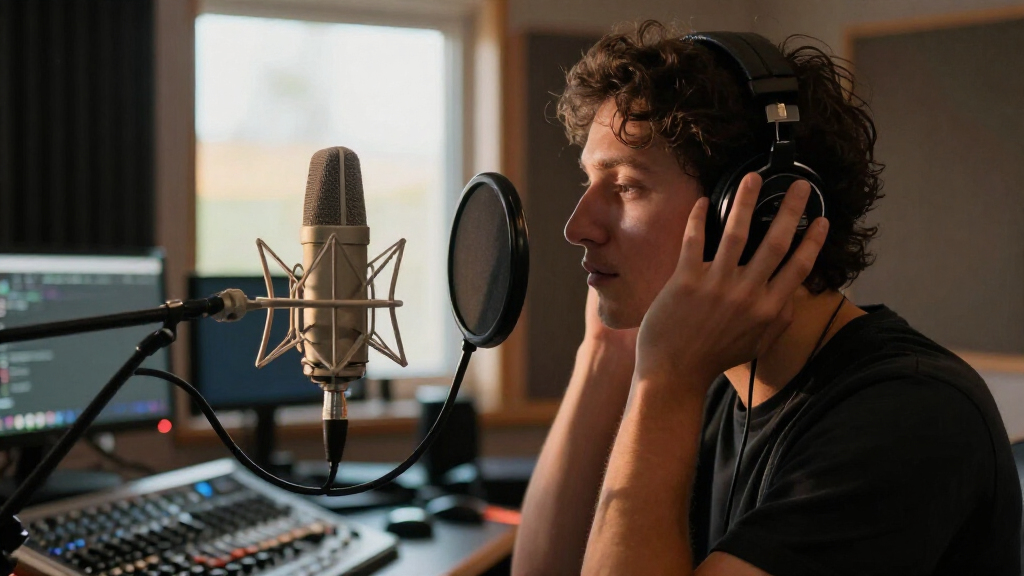

Choosing the right studio condenser microphones can define the clarity and character of your recordings, but the market is saturated with options that vary wildly in build quality and connectivity. My top pick for most home studio producers is the RØDE NT1 5th Generation because it uniquely bridges the gap between professional XLR fidelity and modern USB-C convenience without compromising on noise floor performance. For those strictly on a budget who still need a complete kit, the MAONO A04 Gen2 offers a surprisingly robust dual-interface setup that outperforms cheaper single-mode rivals. The primary tradeoff you face is between versatility and simplicity: hybrid mics offer future-proofing but can complicate gain staging, while dedicated XLR mics require an audio interface but often provide better raw signal integrity at lower price points. Continue reading for a full breakdown of how these 15 models compare in frequency response, build durability, and value.

Get audio and creator gear delivered free with Prime
- Fast, free delivery on millions of items
- Prime Video, Amazon Music and more included
- Member-only deals all year
Complete the kit

Key Takeaways
- Hybrid XLR/USB microphones like the RØDE NT1 5th Gen and MAONO A04 Gen2 are increasingly becoming the standard for home studios, offering a safety net if your audio interface fails or for travel recording.
- Dedicated XLR models such as the AKG P120 and Audio-Technica AT2020 still dominate in pure value for users who already own a preamp, as they lack the digital conversion costs embedded in USB variants.
- Complete kits with boom arms and pop filters (e.g., Shure SM4 Kit, MAONO PM320S) often provide better long-term value than buying components separately, though the included accessories are usually entry-level quality.
- Self-noise levels are the primary differentiator between budget and premium picks in this list, with top-tier models like the LEWITT LCT 440 PURE achieving near-silent performance that eliminates the need for aggressive noise gating.
- USB-only microphones like the FIFINE T669 and Dejasound DJM5 are ideal for podcasting and streaming due to plug-and-play simplicity, but they limit dynamic range compared to their XLR counterparts.
| Shure SM4 XLR Studio Condenser Microphone Kit |  | Best for Interference-Prone Recording Spaces | Connectivity: XLR | Microphone type: Condenser | Capsule: 1-inch brass dual-diaphragm | VIEW LATEST PRICE | See Our Full Breakdown |
| MA-67 Studio Condenser Microphone with 34mm Gold Large-Diaphragm Capsule and Accessories |  | Best Accessory Bundle for Vocal Recording | Connectivity: XLR | Capsule: 34 mm gold large diaphragm | Polar pattern: Unidirectional | VIEW LATEST PRICE | See Our Full Breakdown |
| FIFINE T669 USB Condenser Microphone Kit with Boom Arm |  | Best Beginner USB Setup | Connectivity: USB | Connectors: USB Type-A and USB Type-C | Microphone type: Condenser | VIEW LATEST PRICE | See Our Full Breakdown |
| RØDE NT1 5th Generation Studio Condenser Microphone with XLR and USB-C |  | Best for Flexible Studio Workflows | Microphone type: Large-diaphragm condenser | Connectivity: XLR and USB-C | Polar pattern: Cardioid (unidirectional) | VIEW LATEST PRICE | See Our Full Breakdown |
| Tascam TM-80 Large-Diaphragm Condenser Microphone, Silver |  | Best for Loud Sources on a Simple XLR Rig | Model: TM-80 | Microphone type: Condenser | Diaphragm: 18 mm aluminum | VIEW LATEST PRICE | See Our Full Breakdown |
| MAONO A04 Gen2 USB/XLR Condenser Microphone Kit |  | Best Hybrid USB/XLR Kit | Microphone type: Studio condenser | Connectivity: USB, USB Type-C, XLR | Polar pattern: Cardioid | VIEW LATEST PRICE | See Our Full Breakdown |
| AKG Pro Audio P120 Cardioid Condenser Microphone |  | Best for Loud Sources | Microphone type: Condenser | Diaphragm size: 2/3 inch | Polar pattern: Cardioid | VIEW LATEST PRICE | See Our Full Breakdown |
| LEWITT LCT 440 PURE Large-Diaphragm Condenser Microphone |  | Best for Detailed Studio Vocals | Microphone type: Large-diaphragm condenser | Capsule size: 1 inch | Polar pattern: Cardioid | VIEW LATEST PRICE | See Our Full Breakdown |
| TechZoneAudioProducts Stellar X3 Large-Diaphragm Condenser Microphone |  | Best for Adjustable XLR Recording | Capsule: Gold-sputtered 34 mm K67 style | Polar pattern: Cardioid | Frequency range: 20 Hz–20 kHz | VIEW LATEST PRICE | See Our Full Breakdown |
| Mackie EM-91C Large-Diaphragm Condenser Microphone |  | Best Simple XLR Starter | Microphone type: Large-diaphragm condenser | Polar pattern: Cardioid | Connectivity: XLR | VIEW LATEST PRICE | See Our Full Breakdown |
| Audio-Technica AT2020 Cardioid Condenser Studio XLR Microphone |  | Best for a Straightforward XLR Studio Setup | Microphone type: Condenser | Polar pattern: Cardioid (unidirectional) | Connectivity: Wired XLR; 3-pin XLRM output | VIEW LATEST PRICE | See Our Full Breakdown |
| RØDE NT1 Signature Series Studio Condenser Microphone, Red |  | Best for Quiet, Versatile Studio Recording | Microphone type: Large-diaphragm condenser | Capsule: HF6 1-inch true condenser | Polar pattern: Cardioid (unidirectional) | VIEW LATEST PRICE | See Our Full Breakdown |
| RØDE NT1 Signature Series Studio Condenser Microphone, Black |  | Best Bundled XLR Kit | Microphone type: Large-diaphragm condenser | Capsule: HF6 1-inch true condenser | Polar pattern: Cardioid (unidirectional) | VIEW LATEST PRICE | See Our Full Breakdown |
| MAONO PM320S XLR Condenser Microphone Kit with Boom Arm and Pop Filter | 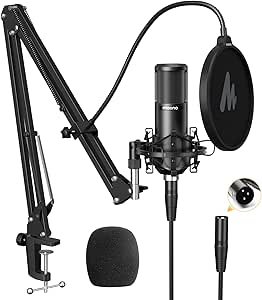 | Best for a Ready-to-Mount XLR Desk Setup | Microphone type: Condenser | Capsule: 16 mm condenser | Polar pattern: Cardioid (unidirectional) | VIEW LATEST PRICE | See Our Full Breakdown |
| Dejasound DJM5 USB Condenser Microphone Kit with Isolation Shield and Pop Filter |  | Best USB Pick for a Treated Desktop Corner | Microphone type: Large-diaphragm condenser | Connectivity: USB; USB Type-B and 3.5 mm jack | Polar pattern: Conflicting listing: hypercardioid and cardioid | VIEW LATEST PRICE | See Our Full Breakdown |
| studio condenser microphone | Polar pattern | Connectivity | Microphone type | Included accessories |
|---|---|---|---|---|
| Shure SM4 XLR Studio Condenser | Cardioid (unidirectional) | XLR | Condenser | — |
| MA-67 Studio Condenser Microph | Unidirectional | XLR | — | Metal shock mount, hydro pop filter, 6-foot XLR cable, and carry pouch |
| FIFINE T669 USB Condenser Micr | Unidirectional (cardioid) | USB | Condenser | Boom arm, C-clamp, desktop mount, shock mount, double pop filter, and USB cable |
| RØDE NT1 5th Generation Studio | Cardioid (unidirectional) | XLR and USB-C | Large-diaphragm condenser | Shock mount, pop filter, XLR cable, and USB-C cable |
| Tascam TM-80 Large-Diaphragm C | Cardioid | Wired XLR | Condenser | Tabletop stand, 6-foot XLR cable, and elastic shock mount |
| MAONO A04 Gen2 USB/XLR Condens | Cardioid | USB, USB Type-C, XLR | Studio condenser | — |
| AKG Pro Audio P120 Cardioid Co | Cardioid | — | Condenser | — |
| LEWITT LCT 440 PURE Large-Diap | Cardioid | — | Large-diaphragm condenser | Shock mount and magnetic pop filter |
| TechZoneAudioProducts Stellar | Cardioid | XLR | — | — |
| Mackie EM-91C Large-Diaphragm | Cardioid | XLR | Large-diaphragm condenser | Shock mount and XLR cable |
| Audio-Technica AT2020 Cardioid | Cardioid (unidirectional) | Wired XLR; 3-pin XLRM output | Condenser | Stand mount, threaded adapter, protective pouch |
| RØDE NT1 Signature Series Stud | Cardioid (unidirectional) | XLR | Large-diaphragm condenser | Shock mount, pop filter, XLR cable |
| RØDE NT1 Signature Series Stud | Cardioid (unidirectional) | XLR | Large-diaphragm condenser | — |
| MAONO PM320S XLR Condenser Mic | Cardioid (unidirectional) | XLR | Condenser | Boom arm, metal shock mount, pop filter, windscreen, XLR cable |
| Dejasound DJM5 USB Condenser M | Conflicting listing: hypercardioid and cardioid | USB; USB Type-B and 3.5 mm jack | Large-diaphragm condenser | Five-panel shield, pop filter, tripod, headphones, Lightning and USB-C adapters |
More Details on Our Top Picks
Shure SM4 XLR Studio Condenser Microphone Kit
The Shure SM4 is the strongest fit here for a studio where nearby wireless devices can be a concern. Its RF shielding helps reduce interference, while the integrated pop filter and included magnetic filter give vocalists practical ways to control plosives. Compared with the RØDE NT1 5th Generation, it offers a simpler XLR-only path rather than a direct USB-C option, but its 140 dB maximum SPL suits loud instruments as well as vocals. The metal build and included shock mount, stand adapter, and case make the kit ready for a conventional mic setup. The tradeoff is that you need phantom power and an audio interface or other compatible XLR equipment; this is not the plug-in-and-record choice for a computer-only setup.
Pros:- RF shielding helps limit interference from wireless devices
- Integrated and detachable pop filters help control plosives
- 140 dB maximum SPL supports loud sources
- Includes a shock mount, brass stand adapter, and carrying case
Cons:- XLR connection requires compatible recording equipment
- Needs phantom power to operate
Best for: Vocalists and musicians recording through an XLR interface in rooms with nearby phones, routers, or other wireless devices
Not ideal for: Computer-only creators who want USB connectivity or buyers without an interface and phantom power
- Connectivity:XLR
- Microphone type:Condenser
- Capsule:1-inch brass dual-diaphragm
- Polar pattern:Cardioid (unidirectional)
- Maximum SPL:140 dB
- Signal-to-noise ratio:60 dB
- Power:Phantom power required
- Enclosure material:Stainless steel
Our verdict“Choose the SM4 for a well-equipped XLR studio that needs interference resistance and useful vocal-control accessories.”
MA-67 Studio Condenser Microphone with 34mm Gold Large-Diaphragm Capsule and Accessories
The MA-67 is a practical vocal-recording package for buyers who want the basic mounting and connection pieces included. Its 34 mm gold large-diaphragm capsule is designed for vocal work, and the supplied metal shock mount, pop filter, XLR cable, and pouch reduce the number of separate items a new setup requires. Compared with the Tascam TM-80, its larger stated diaphragm and 20 Hz–20 kHz frequency range make the recording brief clearer on paper; the Tascam, by contrast, specifies a higher maximum SPL. The MA-67 remains a conventional XLR-only microphone, so its bundle does not remove the need for a 48V phantom-powered interface or mixer. Its unidirectional pattern is also less suited to capturing multiple people around a microphone.
Pros:- 34 mm gold large-diaphragm capsule is aimed at detailed vocal recording
- Includes a metal shock mount and hydro pop filter
- Supplied 6-foot XLR cable helps complete a basic setup
- Lists a 20 Hz–20 kHz frequency range
Cons:- Requires 48V phantom power and compatible XLR equipment
- Unidirectional pickup is not designed for capturing several speakers around the mic
Best for: Home vocalists and podcasters who already have a 48V-capable interface and want a microphone kit with the core accessories included
Not ideal for: USB-only creators or people recording group conversations who need computer-direct connection or broader pickup
- Connectivity:XLR
- Capsule:34 mm gold large diaphragm
- Polar pattern:Unidirectional
- Impedance:150 ohm
- Power:48V phantom power
- Frequency range:20 Hz–20 kHz
- Signal-to-noise ratio:78 dB
- Audible noise:16 dB
- Included accessories:Metal shock mount, hydro pop filter, 6-foot XLR cable, and carry pouch
Our verdict“Pick the MA-67 if you have phantom-powered XLR gear and want a vocal-focused bundle with its main accessories included.”
FIFINE T669 USB Condenser Microphone Kit with Boom Arm
The FIFINE T669 is the straightforward pick for a beginner recording at a computer who does not own an audio interface. Its USB connection works with PCs and laptops, and the included boom arm, shock mount, and double-layer pop filter provide a useful starting setup without a separate XLR signal chain. Compared with the RØDE NT1 5th Generation, the T669 gives up XLR flexibility and advanced USB recording formats, but its computer-focused kit is easier to assemble for basic podcasts, calls, and voiceovers. The cardioid pattern favors sound from in front of the mic rather than a room full of speakers. This is not a fit for Xbox, and the wired USB connection keeps it tied to a nearby compatible device.
Pros:- USB connection supports a simple PC or laptop setup
- Includes an adjustable scissor boom arm and C-clamp
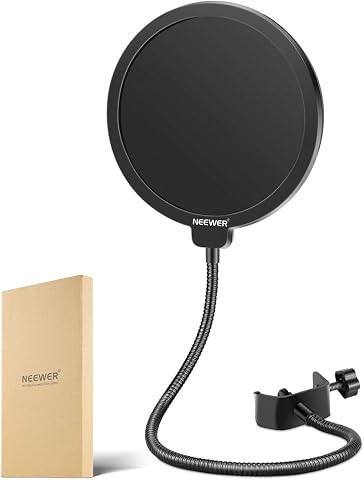
- Shock mount and double-layer pop filter are supplied
- Cardioid pickup focuses on sound from the front
Cons:- Not compatible with Xbox
- Wired USB setup does not provide XLR connectivity
- Computer-focused design is less suitable for studios built around an audio interface
Best for: First-time podcasters, streamers, and voiceover creators recording on a PC or laptop who want a boom arm and pop filter in the box
Not ideal for: Xbox users, musicians seeking an XLR studio chain, or buyers who need a wireless microphone
- Connectivity:USB
- Connectors:USB Type-A and USB Type-C
- Microphone type:Condenser
- Polar pattern:Unidirectional (cardioid)
- Frequency response:20 Hz–20 kHz
- Cable length:8.2 ft
- Compatible devices:Laptop, desktop, PC, PS4, and PS5; not Xbox
- Included accessories:Boom arm, C-clamp, desktop mount, shock mount, double pop filter, and USB cable
Our verdict“Choose the T669 for a beginner computer recording setup that prioritizes included mounting gear over XLR flexibility.”
RØDE NT1 5th Generation Studio Condenser Microphone with XLR and USB-C
The RØDE NT1 5th Generation earns its place through its uncommon combination of XLR and USB-C: use an interface in a traditional studio, or connect directly to a computer when a simpler setup makes sense. Its listed 4 dB self-noise supports quiet vocal and instrument recording, while 32-bit float USB recording can offer more flexibility when setting levels in compatible workflows. Compared with the XLR-only Shure SM4, the RØDE adapts more easily between computer-direct and interface-based recording; the Shure instead lists a higher 140 dB maximum SPL and RF shielding. The NT1 includes a shock mount, pop filter, and both cables, but USB features are only useful if they match your recording software and needs. For XLR operation, you still need a compatible interface or mixer.
Pros:- Offers both XLR and USB-C connectivity
- Listed 4 dB self-noise suits quiet recording sources
- USB supports 32-bit float recording and conversion up to 192 kHz
- Includes a shock mount, pop filter, XLR cable, and USB-C cable
Cons:- XLR use requires a compatible interface or mixer
- The supplied product details conflict on whether the color is silver or black
Best for: Home-studio musicians, voiceover artists, and podcasters who want one microphone for both interface-based XLR and direct USB-C recording
Not ideal for: Buyers who need a multi-pattern mic, or those who will use only XLR and do not need its USB recording features
- Microphone type:Large-diaphragm condenser
- Connectivity:XLR and USB-C
- Polar pattern:Cardioid (unidirectional)
- Frequency range:20–20,000 Hz
- Digital conversion:Up to 192 kHz
- USB recording format:32-bit float
- Self-noise:4 dB
- Signal-to-noise ratio:80 dB
- Included accessories:Shock mount, pop filter, XLR cable, and USB-C cable
Our verdict“Choose the NT1 5th Generation if you want a low-self-noise studio condenser that can move between USB-C and XLR setups.”
Tascam TM-80 Large-Diaphragm Condenser Microphone, Silver
The Tascam TM-80 is a compact XLR option for home studios recording vocals and instruments, with a stated 136 dB SPL maximum that gives it room to handle loud sources such as guitar amps and drums. Its supplied tabletop stand, elastic shock mount, and 6-foot XLR cable make the package useful for a basic wired setup. Compared with the Shure SM4, the TM-80 lists a slightly lower maximum SPL and a smaller 18 mm aluminum diaphragm, while the Shure adds RF shielding and a more extensive filter kit. Tascam’s lighter, simple package may suit a modest desk setup, but it cannot connect directly by USB and requires compatible XLR equipment. The published frequency-response spec gives only 20 kHz, without a lower limit, so it offers less information for comparing tonal coverage.
Pros:- 136 dB SPL handling suits loud sources including amps and drums
- Includes a tabletop stand, elastic shock mount, and XLR cable
- Compact 8-ounce microphone body
- Cardioid pattern is suited to recording a primary source from the front
Cons:- Requires wired XLR equipment and phantom power
- Published frequency response lists 20 kHz without a lower-frequency value
Best for: Home-recording musicians with an XLR interface who need a compact condenser for vocals, acoustic instruments, or loud sources
Not ideal for: Computer-only creators and buyers who need a fully specified frequency range or direct USB recording
- Model:TM-80
- Microphone type:Condenser
- Diaphragm:18 mm aluminum
- Polar pattern:Cardioid
- Connectivity:Wired XLR
- Maximum SPL:136 dB
- Frequency response:Listed as 20 kHz; lower-frequency value not provided
- Weight:8 ounces
- Included accessories:Tabletop stand, 6-foot XLR cable, and elastic shock mount
Our verdict“Pick the TM-80 for a compact, accessory-equipped XLR setup when loud-source handling matters more than USB convenience or complete frequency-response documentation.”
MAONO A04 Gen2 USB/XLR Condenser Microphone Kit
The MAONO A04 Gen2 is the flexible choice for someone starting with direct USB recording but wanting an XLR path for a later studio setup. Unlike the AKG P120, which needs an interface and phantom power from the outset, this model can connect over USB and includes an arm, shock mount, pop filter, and windscreen to get a basic recording position in place. USB recording supports up to 192 kHz/24-bit, and MAONO Link adds software controls and noise reduction in that mode. The tradeoff is that those controls do not carry over to XLR, which requires phantom power; an XLR cable is also absent. Its 16 mm capsule and listed 30 Hz–16 kHz response make it a practical all-in-one starter, rather than the large-diaphragm studio-focused pick I’d choose for a dedicated XLR vocal chain.
Pros:- USB and XLR connections support both computer-first and interface-based setups.
- The kit includes an adjustable arm, shock mount, pop filter, and windscreen.
- USB mode supports recording up to 192 kHz/24-bit.
- MAONO Link provides software audio controls and noise reduction over USB.
Cons:- XLR cable is not included, and XLR operation requires phantom power.
- Software controls and noise reduction are limited to USB mode.
- The 16 mm capsule and 30 Hz–16 kHz response are less studio-oriented than large-diaphragm alternatives.
Best for: New podcasters, streamers, and home vocalists who want to record by USB now and retain the option to move to XLR later.
Not ideal for: Buyers building an XLR-only studio chain who want a large-diaphragm capsule or plan to use MAONO Link controls while connected through XLR.
- Microphone type:Studio condenser
- Connectivity:USB, USB Type-C, XLR
- Polar pattern:Cardioid
- Capsule size:16 mm
- USB recording:Up to 192 kHz/24-bit
- Frequency response:30 Hz–16 kHz
- Signal-to-noise ratio:70 dB
- XLR power requirement:Phantom power required
Our verdict“Choose the A04 Gen2 if you want a complete USB starter kit with a usable route to XLR, but not if your priority is a dedicated large-diaphragm XLR microphone.”
AKG Pro Audio P120 Cardioid Condenser Microphone
The AKG P120 earns its place for home-studio owners who want an XLR microphone that can handle both voice and forceful sources. Its stated 150 dB maximum SPL and switchable -20 dB pad give it more headroom for loud instruments than the USB-focused MAONO A04 Gen2, while the bass-cut filter can help tame low-frequency rumble before it reaches the recording chain. The 2/3-inch diaphragm and 20 Hz–20 kHz range make it a versatile general-purpose option, though it is not the 1-inch large-diaphragm design of the LEWITT LCT 440 PURE. This is a straightforward mic, not a ready-to-go kit: it needs phantom power and a suitable interface or mixer, and the included package lists only a stand adapter. I’d favor it for utility over bundled convenience.
Pros:- Handles sound pressure levels up to 150 dB.
- A -20 dB pad adds headroom for loud sound sources.
- Bass-cut filter can reduce low-frequency rumble.
- Metal construction and a standard XLR connection suit a conventional studio setup.
Cons:- Requires phantom power and an XLR-compatible interface or mixer.
- The package includes a stand adapter but not a full recording accessory kit.
- Its 2/3-inch diaphragm is smaller than the 1-inch capsule in the LEWITT LCT 440 PURE.
Best for: Home-studio musicians and voice creators with an audio interface who need one XLR condenser for vocals, speech, and loud instruments.
Not ideal for: USB-only creators or buyers who need a microphone bundle with an arm, pop filter, and shock mount included.
- Microphone type:Condenser
- Diaphragm size:2/3 inch
- Polar pattern:Cardioid
- Connector:XLR
- Frequency range:20 Hz–20,000 Hz
- Maximum sound pressure level:150 dB
- Preattenuation pad:-20 dB
- Power source:Phantom power
Our verdict“Pick the P120 if you already have an XLR interface and need a practical condenser with useful controls for loud sources.”
LEWITT LCT 440 PURE Large-Diaphragm Condenser Microphone
The LEWITT LCT 440 PURE is the lineup’s focused choice for recording detailed vocals and instruments through an XLR studio chain. Its 1-inch capsule, cardioid pickup, and listed 7 dB audible-noise figure make it a more dedicated studio option than the all-in-one MAONO A04 Gen2, which trades capsule size for USB convenience and bundled setup gear. LEWITT also includes a shock mount and magnetic pop filter, so the essentials for managing handling vibration and plosive sounds are covered. The tradeoff is a narrower setup path: this is wired XLR, not a plug-directly-into-a-computer microphone, and it requires compatible equipment. Compared with the TechZoneAudioProducts Stellar X3, it lacks the listed high-pass filter and pad, so it is less adjustable for rumble-heavy or especially loud sources.
Pros:- The 1-inch capsule is suited to detailed studio vocal and instrument capture.
- Cardioid pickup helps reduce sound arriving from behind the microphone.
- A shock mount and magnetic pop filter are included.
- The listed 7 dB audible-noise figure suits quiet recording applications.
Cons:- Requires an XLR input and compatible studio equipment.
- Does not list a high-pass filter or pad like the Stellar X3.
- The wired setup offers less placement flexibility than a USB microphone.
Best for: Vocalists and instrumentalists with an XLR interface who want a large-diaphragm condenser and included pop-filter and shock-mount accessories.
Not ideal for: USB-only creators, or engineers who want onboard high-pass and attenuation controls for adapting to rumble or loud sources.
- Microphone type:Large-diaphragm condenser
- Capsule size:1 inch
- Polar pattern:Cardioid
- Connector:XLR
- Impedance:200 ohms
- Signal-to-noise ratio:87 dB
- Audible noise:7 dB
- Included accessories:Shock mount and magnetic pop filter
Our verdict“Choose the LCT 440 PURE for detailed studio recording with an XLR chain, but look elsewhere if you need USB simplicity or onboard source controls.”
TechZoneAudioProducts Stellar X3 Large-Diaphragm Condenser Microphone
The Stellar X3 suits engineers who want more control over source level and low-frequency buildup than a basic cardioid condenser provides. Its hand-tuned 34 mm K67-style capsule is designed for a smooth midrange response, while the high-pass filter and -10 dB pad help with rumble and louder close-miked sources. That makes it more adjustable than the LEWITT LCT 440 PURE, whose supplied details do not list either control. The X3 also arrives with a spring shockmount, foam wind cover, and protective case, although it still requires a 48V phantom-power XLR chain. The main caveat is a discrepancy in the supplied weight figures—440 g in one place and 346 g elsewhere—so I would not choose it based on exact weight or portability expectations.
Pros:- The 34 mm hand-tuned capsule is designed for a smooth midrange response.
- A high-pass filter and -10 dB pad offer useful recording adjustments.
- The spring shockmount is designed to limit vibration and resonance.
- Includes a flight case, foam wind cover, and mounting accessories.
Cons:- Requires 48V phantom power and an XLR connection.
- Supplied weight information conflicts between 440 g and 346 g.
- The included accessories do not remove the need for a compatible interface or mixer.
Best for: Home-studio engineers with 48V phantom power who record vocals or instruments at varied levels and want a pad and high-pass filter.
Not ideal for: USB-only creators, or buyers who need unambiguous weight specifications or want a microphone that works without phantom power.
- Capsule:Gold-sputtered 34 mm K67 style
- Polar pattern:Cardioid
- Frequency range:20 Hz–20 kHz
- Maximum SPL:135 dB at 0.5% THD
- Signal-to-noise ratio:87 dB (A-weighted)
- Equivalent self-noise:<8 dB (A-weighted)
- Connectivity:XLR
- Power requirement:48V phantom power ±4V
Our verdict“Choose the Stellar X3 if you want an adjustable XLR condenser with a large capsule, and skip it if phantom power or reliable weight details are priorities.”
Mackie EM-91C Large-Diaphragm Condenser Microphone
The Mackie EM-91C is a sensible entry point for a home studio that already has an XLR mixer or interface and needs a straightforward large-diaphragm condenser. It keeps the setup simpler than the LEWITT LCT 440 PURE by including both an XLR cable and shock mount, while its cardioid pattern is intended to focus on the source and reduce ambient pickup. That practical bundle is the main distinction; the supplied product data does not list capsule size, frequency response, or sensitivity, so I would not pick it over the LEWITT for buyers who want detailed technical figures to guide a vocal-mic choice. Like the AKG P120, it depends on an XLR recording chain rather than direct USB connection. For a basic vocal-and-instrument mic, convenience is its draw; for finer source matching, its sparse specifications are a limitation.
Pros:- Large-diaphragm design is intended for studio vocals and instruments.
- Cardioid pattern helps reduce pickup of ambient sound.
- Includes a shock mount and XLR cable.
- Stainless-steel enclosure provides a rugged construction.
Cons:- Requires an XLR connection and compatible recording equipment.
- The supplied specifications omit capsule size, frequency response, and sensitivity.
- No USB connection is listed for direct computer recording.
Best for: First-time home-studio owners with an XLR mixer or interface who want a large-diaphragm condenser with its cable and shock mount included.
Not ideal for: USB-only users or detail-focused buyers who want published capsule, frequency-response, and sensitivity specifications before choosing a vocal microphone.
- Microphone type:Large-diaphragm condenser
- Polar pattern:Cardioid
- Connectivity:XLR
- Enclosure material:Stainless steel
- Weight:0.2 kg
- Dimensions:6.1 × 1.85 × 1.85 inches
- Included accessories:Shock mount and XLR cable
- Warranty:1-year all-inclusive, nontransferable
Our verdict“Choose the EM-91C for a simple XLR starter bundle, but prefer a better-documented model if technical specifications are central to your decision.”
Audio-Technica AT2020 Cardioid Condenser Studio XLR Microphone
The AT2020 is a practical pick for a home or project studio that needs a conventional XLR condenser without a bundled recording rig. Its cardioid pattern favors sound in front of the mic, which can help limit pickup from the sides and rear, while high-SPL handling gives it room to work with louder sources. Compared with the RØDE NT1 Signature Series, it has fewer included recording accessories and no listed self-noise figure, so the NT1 is the more ready-to-use choice for a vocal chain where quiet capture matters. The AT2020 instead suits buyers who already have a stand and interface, or want a compact set of basic mounting accessories. It still needs phantom power and compatible XLR equipment, so it is not a direct-to-computer option.
Pros:- Cardioid pickup helps limit sound from the sides and rear.
- High-SPL handling and wide dynamic range suit a variety of recording sources.
- Includes a stand mount, threaded adapter, and protective pouch.
- Metal enclosure provides a sturdy microphone body.
Cons:- Requires phantom power from an interface, mixer, or preamp.
- XLR connection requires compatible recording equipment.
- Does not include a shock mount, pop filter, or XLR cable.
Best for: Home-studio musicians and voice-over creators who already own an audio interface with phantom power and want a cardioid XLR condenser for varied sources.
Not ideal for: USB-only creators or buyers seeking a complete vocal setup with a shock mount, pop filter, and XLR cable included.
- Microphone type:Condenser
- Polar pattern:Cardioid (unidirectional)
- Connectivity:Wired XLR; 3-pin XLRM output
- Frequency response:20 Hz (listed specification)
- Signal-to-noise ratio:74 dB
- Impedance:200 ohms
- Power:Phantom power required
- Included accessories:Stand mount, threaded adapter, protective pouch
Our verdict“Choose the AT2020 if you already have an XLR studio chain and want a capable, no-frills condenser rather than a complete starter kit.”
RØDE NT1 Signature Series Studio Condenser Microphone, Red
The red RØDE NT1 Signature Series is the strongest fit here for creators who want a quiet large-diaphragm mic for vocals, instruments, and spoken-word work. Its stated 4 dBA self-noise helps keep the microphone’s own noise low in quieter takes, while high-SPL handling also leaves room for louder sources. Unlike the Audio-Technica AT2020, this package includes a shock mount, pop filter, and XLR cable, reducing the number of recording-chain pieces a new studio needs to source. That makes it a more complete vocal setup, though it still depends on an XLR input and phantom-powered equipment; it does not plug straight into a computer by USB. The red finish is a visible styling choice, not a different recording format or pickup pattern.
Pros:- Listed 4 dBA self-noise supports quiet recordings.
- High-SPL handling accommodates louder instruments and vocal performances.
- Includes a shock mount, pop filter, and XLR cable.
- Cardioid large-diaphragm design suits vocals, instruments, streaming, and voice-over.
Cons:- Requires compatible XLR recording equipment and phantom power.
- No USB connection for direct computer recording.
- The supplied accessories do not remove the need for a suitable interface and mic stand.
Best for: Vocalists, podcasters, and home-studio musicians who want low self-noise and useful vocal accessories in an XLR microphone package.
Not ideal for: Creators who need USB connectivity, or buyers who do not have an interface, mixer, or preamp with phantom power.
- Microphone type:Large-diaphragm condenser
- Capsule:HF6 1-inch true condenser
- Polar pattern:Cardioid (unidirectional)
- Connectivity:XLR
- Self-noise:4 dBA
- Signal-to-noise ratio:77 dB
- Weight:313 g
- Included accessories:Shock mount, pop filter, XLR cable
Our verdict“Pick the NT1 Signature Series if low self-noise and a more complete XLR vocal package matter more than USB convenience.”
RØDE NT1 Signature Series Studio Condenser Microphone, Black
The black NT1 Signature Series fills much the same recording role as the red NT1 in this roundup: a low-noise, large-diaphragm cardioid condenser for vocals, instruments, and spoken word. Its distinction is the specified SM6 shock mount, pop filter, 6 m XLR cable, and dust cover, a useful bundle for buyers assembling an XLR setup from scratch. The stated 4 dB (also listed as 4.5 dBA) self-noise supports quiet capture, while the cardioid pattern focuses on the source in front of the mic. Compared with the AT2020, this package supplies more of the vocal-chain accessories; compared with the red NT1 listing, its listed bundle includes a longer cable and dust cover. It still needs an interface and phantom power, and the supplied cable does not make it portable or USB-ready.
Pros:- Low listed self-noise supports clean voice and instrument recordings.
- SM6 shock mount and pop filter help address vibration and plosive sounds.
- Includes a 6 m XLR cable and dust cover.
- Cardioid pattern suits focused vocal and instrument capture.
Cons:- Requires an audio interface or other compatible XLR equipment.
- Needs phantom power to operate.
- The listed self-noise figures vary between 4 dB and 4.5 dBA.
Best for: Home vocalists and podcasters who want a low-noise XLR condenser with a shock mount, pop filter, long cable, and dust cover included.
Not ideal for: USB-first streamers or recording beginners without an audio interface and phantom-power source.
- Microphone type:Large-diaphragm condenser
- Capsule:HF6 1-inch true condenser
- Polar pattern:Cardioid (unidirectional)
- Connectivity:XLR
- Self-noise:4 dB; also listed as 4.5 dBA
- Signal-to-noise ratio:78 dB
- Dimensions:2.05 × 2.05 × 7.44 in
- Included items:SM6 shock mount with pop filter, 6 m XLR cable, dust cover
Our verdict“Choose this black NT1 package over the AT2020 when a fuller accessory bundle and low-noise capture are priorities, provided you already have an XLR recording chain.”
MAONO PM320S XLR Condenser Microphone Kit with Boom Arm and Pop Filter
The MAONO PM320S is aimed at buyers who want the desk hardware as well as the microphone. Its kit adds a boom arm, shock mount, pop filter, windscreen, and XLR cable, so it has a more immediately usable desk setup than the bare-bones Audio-Technica AT2020. The 16 mm capsule and cardioid pattern target vocals, podcasts, streaming, and music, with the supplied pop filter and windscreen helping manage breath noise at close range. The tradeoff is that the microphone needs 48V phantom power and an XLR input; the included arm does not replace an interface, mixer, or preamp. Its 20 Hz–18 kHz listed response is specified, unlike the AT2020’s incomplete frequency-response entry here, but this package is less suitable for anyone seeking a simple USB connection.
Pros:- Includes a boom arm, metal shock mount, pop filter, windscreen, and XLR cable.
- Cardioid pattern is suited to a single voice or instrument in front of the mic.
- Specified 20 Hz–18 kHz frequency response.
- Desk-oriented kit reduces the need to source mounting accessories separately.
Cons:- Requires a separate 48V phantom-power source.
- Needs an interface, mixer, or preamp with an XLR input.
- The included accessories do not provide direct USB recording.
Best for: First-time desk-studio builders who have or plan to add a phantom-powered XLR interface and want the arm and vocal accessories in one kit.
Not ideal for: USB-only streamers, mobile creators, or musicians who need a microphone that works without separate phantom-powered equipment.
- Microphone type:Condenser
- Capsule:16 mm condenser
- Polar pattern:Cardioid (unidirectional)
- Connectivity:XLR
- Power requirement:48V phantom power
- Frequency response:20 Hz–18 kHz
- Sensitivity:-34 dB ±3 dB
- Included accessories:Boom arm, metal shock mount, pop filter, windscreen, XLR cable
Our verdict“Choose the PM320S if you are building an XLR desk setup and value bundled mounting accessories more than plug-and-play USB operation.”
Dejasound DJM5 USB Condenser Microphone Kit with Isolation Shield and Pop Filter
The Dejasound DJM5 is the outlier in this group of studio condensers: instead of relying on XLR and phantom power like the MAONO PM320S, it connects by USB and adds controls for mute, volume, echo, and headphone monitoring. Its foldable five-panel isolation shield, pop filter, and tripod make the kit geared toward a fixed desktop recording spot, while included Lightning and USB-C adapters broaden device compatibility. The listed 192 kHz/24-bit capability is a specification, not a guarantee of better results than the XLR microphones; room acoustics and setup still shape a recording. There is also an uncertainty worth weighing: the description gives both hypercardioid and cardioid patterns. That ambiguity makes it harder to predict room pickup than with the clearly specified cardioid AT2020 or NT1 models.
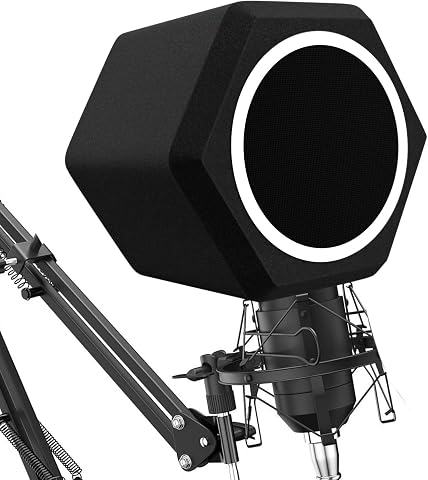
Pros:- USB connectivity supports direct connection to compatible computers and devices.
- Includes a foldable five-panel isolation shield and pop filter.
- Onboard mute, volume, echo, and headphone-monitoring features support desktop use.
- Includes Lightning and USB-C adapters, headphones, and a tripod stand.
Cons:- Product information conflicts on whether the polar pattern is cardioid or hypercardioid.
- Requires a wired 5 V power connection.
- The included kit is larger and less suited to a minimal studio setup than a standalone XLR microphone.
Best for: Podcasters and streamers who want direct USB recording, onboard monitoring and mute controls, and an included shield for a dedicated desktop setup.
Not ideal for: Buyers who need a clearly defined polar pattern, an XLR studio workflow, or a compact setup without a wired power connection and multiple accessories.
- Microphone type:Large-diaphragm condenser
- Connectivity:USB; USB Type-B and 3.5 mm jack
- Polar pattern:Conflicting listing: hypercardioid and cardioid
- Sampling rate and bit depth:192 kHz / 24-bit
- Frequency response:30 Hz–16 kHz
- Power:Corded, 5 V
- Controls and monitoring:Echo, volume, mute, headphone monitoring
- Included accessories:Five-panel shield, pop filter, tripod, headphones, Lightning and USB-C adapters
Our verdict“Pick the DJM5 if USB convenience and an all-in-one desktop kit outweigh the uncertainty around its stated pickup pattern.”
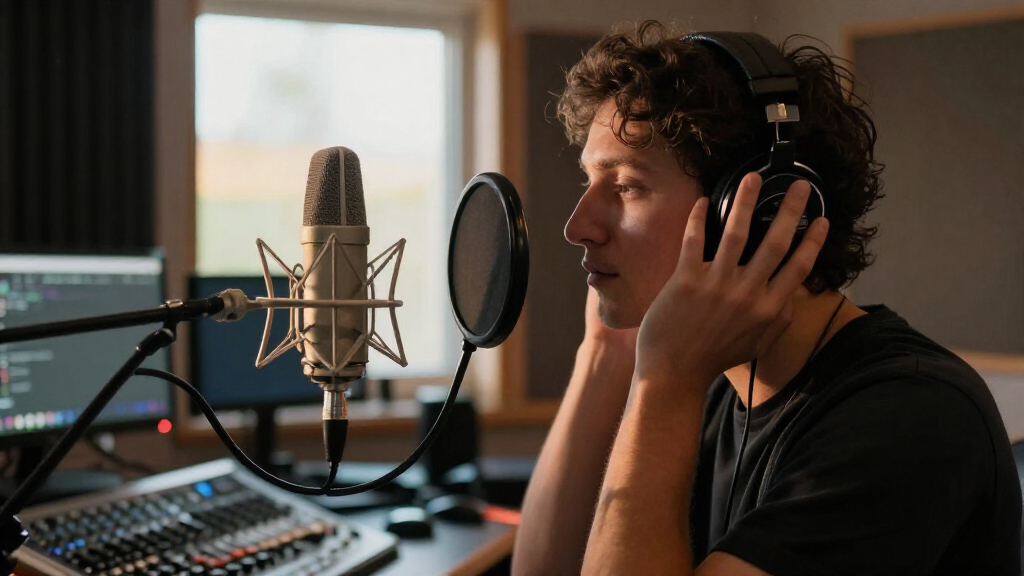
How We Picked
I evaluated these microphones based on three core pillars: audio fidelity, build quality, and ecosystem compatibility. For audio fidelity, I looked at self-noise specs, frequency response consistency, and transient response, prioritizing models that offer a flat or gently colored response suitable for multiple sources rather than just one niche. Build quality was assessed by examining the housing materials, shock mount stability, and the durability of the included accessories, as home studios often move equipment more than commercial ones do.
Ecosystem compatibility was the final deciding factor for ranking. I favored models that offer flexibility, such as dual XLR/USB outputs or broad accessory compatibility, because a microphone that locks you into a specific software or hardware setup becomes obsolete faster. The ranking logic prioritizes the best all-rounder first, followed by specialized picks for budget-conscious users, beginners needing plug-and-play solutions, and professionals seeking specific sonic signatures.
| studio condenser microphone | Microphone type | Polar pattern |
|---|---|---|
| Shure SM4 XLR Studio Condenser | Condenser | Cardioid (unidirectional) |
| MA-67 Studio Condenser Microph | — | Unidirectional |
| FIFINE T669 USB Condenser Micr | Condenser | Unidirectional (cardioid) |
| RØDE NT1 5th Generation Studio | Large-diaphragm condenser | Cardioid (unidirectional) |
| Tascam TM-80 Large-Diaphragm C | Condenser | Cardioid |
| MAONO A04 Gen2 USB/XLR Condens | Studio condenser | Cardioid |
| AKG Pro Audio P120 Cardioid Co | Condenser | Cardioid |
| LEWITT LCT 440 PURE Large-Diap | Large-diaphragm condenser | Cardioid |
| TechZoneAudioProducts Stellar | — | Cardioid |
| Mackie EM-91C Large-Diaphragm | Large-diaphragm condenser | Cardioid |
| Audio-Technica AT2020 Cardioid | Condenser | Cardioid (unidirectional) |
| RØDE NT1 Signature Series Stud | Large-diaphragm condenser | Cardioid (unidirectional) |
| RØDE NT1 Signature Series Stud | Large-diaphragm condenser | Cardioid (unidirectional) |
| MAONO PM320S XLR Condenser Mic | Condenser | Cardioid (unidirectional) |
| Dejasound DJM5 USB Condenser M | Large-diaphragm condenser | Conflicting listing: hypercardioid and cardioid |
Factors to Consider When Choosing Studio Condenser Microphones
Selecting a studio condenser microphone requires more than just reading spec sheets. You must consider how the microphone integrates into your existing workflow and what specific recording tasks you will perform most frequently.XLR vs. USB: The Connectivity Decision
The first major fork in the road is choosing between analog XLR and digital USB connectivity. XLR microphones send an analog signal to an audio interface, which then converts it to digital data; this allows for higher-quality preamplifiers and more precise gain control. USB microphones have the analog-to-digital converter built-in, making them plug-and-play with computers but often limiting your ability to upgrade your preamp later. If you already own an interface, XLR is generally the superior choice for long-term audio quality. If you are starting from zero, a hybrid model or a high-quality USB mic reduces the initial barrier to entry. Consider whether you need the flexibility to record on the go or strictly in a fixed studio setup.
Self-Noise and Dynamic Range
Self-noise, measured in decibels (dB), dictates the quietness of your recordings. A lower self-noise rating means the microphone itself contributes less hiss to the signal chain. For vocal recordings, where silence between phrases is common, low self-noise is critical to avoid having to use aggressive noise gates that can clip consonants. Budget microphones often have self-noise ratings above 15dB, which can be audible in quiet environments. Premium options in this roundup often stay under 7dB. Dynamic range refers to the difference between the loudest sound the mic can handle and its self-noise floor. A wider dynamic range allows you to capture both soft nuances and loud peaks without distortion or noise, a key factor for recording acoustic instruments.
Polar Patterns and Versatility
Most studio condensers operate in a cardioid pattern, which captures sound from the front while rejecting side and rear noise. This is ideal for untreated rooms because it minimizes room reflections and background hum. Multi-pattern microphones offer cardioid, omnidirectional, and figure-8 settings, allowing for stereo recording techniques or capturing ambient room sound. However, multi-pattern mics are often more expensive and may have slightly higher self-noise than their single-pattern counterparts. If you primarily record solo vocals or single instruments, a dedicated cardioid mic often delivers better performance per dollar. Only invest in multi-pattern capabilities if you plan to record choirs, drum overheads, or stereo pairs.
Build Quality and Accessory Ecosystem
Studio microphones are fragile pieces of precision equipment. Look for metal housings rather than plastic, as they reduce resonance and withstand accidental knocks better. The quality of the included shock mount is equally important; a poor shock mount transfers desk vibrations directly into the audio. Many kits in this roundup include pop filters and arms, but these are often basic. I recommend checking if the microphone uses a standard thread size, as this allows you to replace the cheap included accessories with professional-grade mounts and filters later. A microphone that fits standard industry mounts will serve you longer than one requiring proprietary, hard-to-find accessories.
Room Acoustics and Rejection
No microphone can fix a bad room. Large-diaphragm condensers are sensitive and will capture the ‘boxiness’ or ‘flutter echo’ of an untreated space. If your room is untreated, you might benefit from a microphone with a tighter rear rejection or consider a dynamic microphone instead, though this list focuses on condensers. Using a reflection filter or isolation shield can help, but it is not a cure-all. When choosing from this list, consider that some mics have a ‘presence boost’ in the high frequencies which can make room noise sound harsher. Flatter response mics tend to be more forgiving in less-than-ideal acoustic environments.
Frequently Asked Questions
Do I need an audio interface for all these microphones?
No, not for all of them. Several models in this roundup, such as the FIFINE T669, MAONO A04 Gen2, and RØDE NT1 5th Generation, feature USB connectivity that allows direct connection to a computer without an interface. However, dedicated XLR models like the Audio-Technica AT2020 and AKG P120 absolutely require an audio interface or mixer with a preamp to function. If you do not have an interface yet, choosing a USB or hybrid model is the most cost-effective way to start recording immediately.
Is a large-diaphragm condenser better than a small-diaphragm one?
It depends on the application. Large-diaphragm condensers (LDCs), which make up the majority of this list, are generally preferred for vocals because they tend to have a warmer, more flattering low-mid presence and lower self-noise. Small-diaphragm condensers are often favored for acoustic guitars and cymbals because they offer a more accurate, neutral transient response. For a general-purpose home studio, an LDC is the more versatile starting point, but it is not inherently ‘better’ for all instruments.
Why do some kits include boom arms and others don’t?
Cost and target audience drive this distinction. Kits like the Shure SM4 Kit and MAONO PM320S include boom arms because they are marketed as ‘all-in-one’ solutions for beginners who want to start recording without buying separate accessories. Standalone microphones like the LEWITT LCT 440 PURE assume you may already have a mount or prefer to choose your own high-end stand. Buying a kit is convenient, but the included arms are often lighter and less stable than dedicated studio-grade arms.
Can I use a condenser microphone for live stage performance?
Generally, no. Condenser microphones are highly sensitive and prone to feedback in loud stage environments because they pick up monitor speakers and crowd noise. Dynamic microphones are the industry standard for live vocals due to their durability and lower sensitivity. While you can technically use a condenser in a controlled live setting, it requires advanced gain staging and monitoring. This roundup focuses on studio environments where isolation and detail retrieval are prioritized over feedback rejection.
How important is the warranty when buying a studio mic?
Warranty length varies significantly by brand and price point. Major manufacturers like RØDE often offer extended warranties (up to 10 years) upon registration, reflecting confidence in their build quality. Budget brands may offer only 1-2 years. Since condenser microphones contain delicate capsules that can fail due to humidity or physical shock, a longer warranty provides peace of mind. Always check if the warranty covers accidental damage, as most standard warranties do not.
Conclusion
Choosing the right microphone depends on your current gear and recording goals. For the best overall balance of quality, flexibility, and noise performance, the RØDE NT1 5th Generation stands out as the most versatile choice for modern home studios. If you are on a tight budget and need a complete setup, the MAONO A04 Gen2 provides the best value with its dual USB/XLR connectivity and included accessories. For beginners who want zero setup hassle, the FIFINE T669 is a reliable USB option that just works. If you already own an interface and want premium fidelity, the LEWITT LCT 440 PURE offers professional-grade specs that rival microphones twice its price. Finally, for those seeking a classic studio sound on a budget, the Audio-Technica AT2020 remains a trusted industry standard. Match the connectivity type to your existing hardware, and prioritize low self-noise if you record in quiet environments.