
📊 Full opportunity report: Camera Speaking Practice For Small Business Owners, Made Simple on IdeaNavigator AI — validation score, market gap, and execution plan.

Get audio and creator gear delivered free with Prime
- Fast, free delivery on millions of items
- Prime Video, Amazon Music and more included
- Member-only deals all year
TL;DR
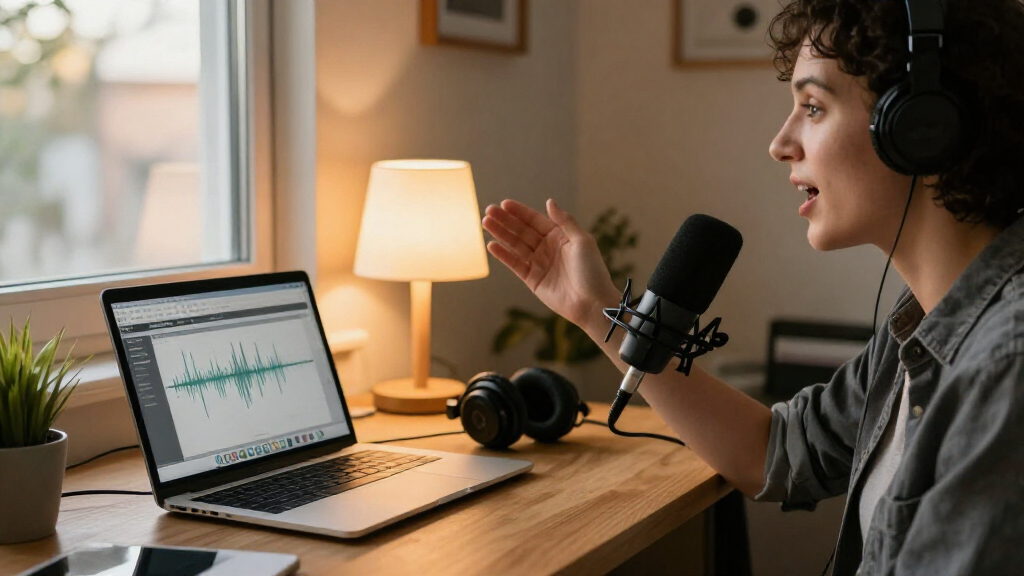
IdeaNavigator AI has outlined a proposed practice app for business owners who understand video marketing but struggle to record themselves. The concept uses short daily exercises and feedback on delivery, with a 30-day cohort proposed to test whether users publish a real video by day 45.
IdeaNavigator AI has outlined a proposed practice app to help small-business owners who freeze when recording video, using brief daily exercises and private feedback on delivery. In its concept description, the company frames the idea as an early product hypothesis and suggests a 100-owner, 30-day cohort to test whether participants publish a real video by day 45. The description does not report a launch or completed results.
IdeaNavigator AI describes the potential customer as a business owner who already believes video matters for marketing but struggles to speak naturally while recording alone. The company’s problem description identifies stumbling, self-criticism and repeated retakes as obstacles that can keep owners from posting. It distinguishes this situation from public-speaking training, which may not recreate the experience of talking to a camera without an audience.
According to the proposed product outline, the minimum viable product would deliver daily, two-minute prompts, starting with reading aloud and progressing toward more spontaneous speaking. The concept proposes analyzing pace, filler words, eye line and energy, then showing progress over time. A further step would help users move from practice clips to recording real business content, with confidence streaks marking continued practice.
IdeaNavigator AI says the business model under consideration combines a consumer subscription with a possible team tier for agencies that coach clients. To test whether the idea changes behavior, the company proposes a 30-day cohort of 100 business owners and a waitlist control group. The suggested outcome is whether participants publish their first real video by day 45. These are proposed validation details, not evidence that the app has been built, owners have enrolled, or the approach has worked.
Camera Speaking Practice For Small Business Owners, Made Simple
A proposed practice app aims to help business owners move from camera hesitation to publishing a real video, one short exercise at a time.
Daily prompts progress from reading aloud to more spontaneous speaking.
A proposed outcome for a 30-day cohort, not a reported result.
IdeaNavigator AI has outlined a possible app for owners who know video can help their marketing but struggle to record themselves. The concept pairs brief daily practice with private delivery feedback. A proposed 100-owner cohort would test whether participants publish a real video by day 45. No launch or results are reported.
A short, repeatable practice session
Business owners proposed for testing
With a waitlist control group
Did participants publish a first video?
Knowing video matters is not the same as pressing record.
The proposal targets owners who record alone and may get stuck in stumbling, self-criticism, or repeated retakes.
Small business owners
People who believe video can support marketing but feel uncomfortable speaking naturally to a camera.
Solo recording feels different
Public-speaking advice may not recreate the experience of facing a lens, reviewing a take, and deciding it is good enough.
Practice before publishing
A private routine could create a lower-stakes step between marketing intent and making content public.
From a read-aloud prompt to a real business video.
The outline combines short exercises, possible AI feedback, and a path toward creating publishable content.
Start with a prompt
Read aloud in a brief, two-minute daily exercise.
Build spontaneity
Progress from scripted delivery toward speaking more freely.
Review delivery
Potential feedback: pace, filler words, eye line, and energy.
Make real content
Move from practice clips toward recording business videos; track practice streaks.
Posting behavior is the proposed signal.
The concept prioritizes whether owners publish a real video, rather than relying only on confidence ratings or app activity.
Practice for 30 days
Invite 100 business owners to follow the proposed daily exercise flow.
Waitlist control group
Compare the cohort with owners waiting to access the practice experience.
Publish by day 45
Check whether participants have posted their first real video. Verification details are not specified.
Does structured practice help owners post?
The proposed comparison could help decide whether the practice flow merits further development. It would not establish that posting improves sales, reach, or other business outcomes.
Bars show the proposed comparison groups only; no participant data or results have been reported.
Important details remain untested.
The concept description does not confirm a finished product, a trial start date, or evidence of customer demand.
How reliable are the scores?
Accuracy across speakers and recording conditions, plus user control over feedback, is not described.
How are recordings handled?
Storage, protection, and deletion practices are not specified in the proposal.
Will people pay?
A consumer subscription and possible agency team tier are under consideration; pricing and demand remain unknown.
What the proposal does—and does not—say.
Is the app available now?
The description presents a proposed concept. It does not confirm a launch or download availability.
Who is it for?
Business owners who see marketing value in video but feel stuck when recording themselves.
What would users practice?
Two-minute prompts, progressing from reading aloud toward spontaneous speaking, with proposed delivery feedback.
Does it show an increase in sales?
No. The suggested test looks at publishing a video, not sales, audience growth, or other marketing results.
IdeaNavigator AI reports no product launch, cohort enrollment, or test results. The app’s effectiveness and commercial viability remain untested. Further validation would need to address feedback quality, privacy, pricing, and whether practice translates into useful business content.
Testing Video Practice Against Posting
IdeaNavigator AI’s proposal focuses on a practical gap between knowing that video could help a business and actually publishing it. The company’s description suggests that anxiety or repeated attempts to perfect a clip may make advice to post more insufficient on its own. A private practice routine could provide a lower-stakes way to rehearse before making content public.
The proposed test centers on a behavioral outcome: publishing a video, rather than relying only on users’ confidence ratings or time spent in an app. IdeaNavigator AI suggests comparing a cohort with a waitlist group as an initial way to assess whether structured practice is associated with more owners posting. The proposal reports no study results and does not establish that video posting would improve sales, reach or other business outcomes.
The company frames the idea as relevant to small businesses because it targets a task often added to marketing responsibilities without dedicated media training. It also proposes a team tier for agencies supporting several clients, but pricing, demand and the time required to coach users have not been tested.
Products Worth Considering

DJI Mic 3 Wireless Microphone System (2 Transmitters, 1 Receiver, Charging Case)

Apple AirPods Pro 3 Wireless Earbuds with Active Noise Cancellation

Bose QuietComfort Wireless Noise-Cancelling Headphones, Petal Pink
As an affiliate, we earn on qualifying purchases.
A Narrow Use Case for AI Feedback
In IdeaNavigator AI’s proposal, the concept sits within communication-skills training but narrows the problem to solo camera practice. The company’s premise is that conventional public-speaking advice may not address the discomfort of recording alone, reviewing one’s own face and voice, and deciding whether a take is acceptable. The proposed exercises would progress from scripted delivery toward more spontaneous speaking.
The concept identifies multimodal AI as a possible way to assess visible and audible aspects of delivery, including pace, filler words, eye line and energy. These are proposed measurement features; IdeaNavigator AI provides no information confirming a finished analysis system, its accuracy, or how users’ video data would be handled. The source therefore describes an early product outline, not an available service.
Product and Test Details Await
IdeaNavigator AI’s description reports no product launch, cohort enrollment or test results. It does not say whether development has begun, when a trial might start, or whether a finished app exists. The proposed 30-day cohort and day-45 publishing measure are recommendations for validation, not confirmed commitments or outcomes.
The source also leaves several product questions open: how the app would score delivery, how reliable those scores would be across different speakers and recording conditions, and whether users could choose which feedback they receive. It does not specify how recordings would be stored, protected or deleted, or provide subscription pricing, agency-tier terms or evidence of customer demand.
A Cohort Would Test First Posts
IdeaNavigator AI’s suggested next step is to recruit 100 business owners for a 30-day cohort, alongside a waitlist control group. The central checkpoint would come by day 45: whether participants have published their first real video. The proposal says this comparison could help determine whether the practice flow merits further development, but it does not state a start date or define how a published video would be verified.
Further development would also need to address feedback quality, privacy, pricing and the difference between practicing a short exercise and producing useful business content. Until a trial is run and its results are reported, the app’s effectiveness and commercial viability remain untested.
Source: IdeaNavigator AI
Key Questions
Is the camera-speaking app available now?
The information describes a proposed app concept. It does not confirm that a product has launched or is available to download.
Who is the proposed app for?
It is aimed at business owners who believe video is useful for marketing but feel uncomfortable or stuck when recording themselves.
What would users practice?
The suggested routine uses two-minute daily prompts, moving from reading aloud toward more spontaneous speaking. Proposed feedback covers pace, filler words, eye line and energy.
How would the concept be tested?
IdeaNavigator AI proposes a 30-day cohort of 100 owners and a waitlist control group. The suggested measure is whether participants publish a first real video by day 45; no trial results are available.
Does the proposal show that the app increases sales?
No. The proposed test focuses on whether owners publish a video, not on sales, audience growth or other marketing results.
Source: IdeaNavigator AI