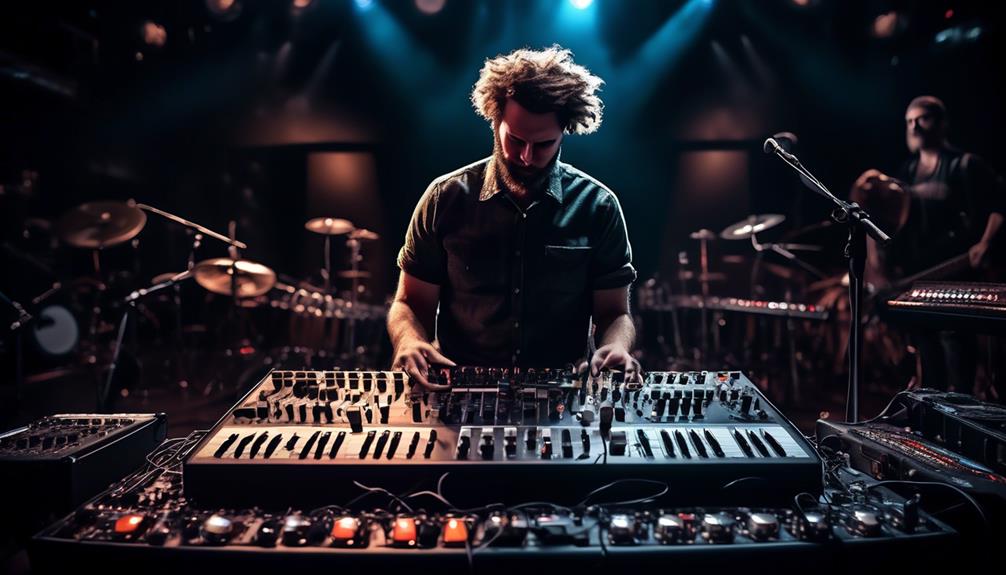
Finding the right looper for live performance can be challenging due to the wide range of features, complexity, and price points. The BOSS RC-1 Loop Station stands out as the best overall pick thanks to its simplicity and reliability, making it ideal for solo performers and beginners. For more advanced setups, the BOSS RC-600 offers extensive looping capabilities suited for complex live arrangements, though it comes at a higher cost. The Singular Sound Aeros Loop Studio appeals to those needing multi-track flexibility with touch controls and mixing features. Keep reading to explore these options and find the best fit for your live performance needs, along with key tradeoffs to consider.
Complete the kit


Key Takeaways
- Top picks differ primarily based on complexity: simple pedals like the RC-1 are best for straightforward looping, while multi-track stations like the RC-600 suit advanced performers.
- Ease of use often correlates with price; more feature-rich models tend to have steeper learning curves but offer greater versatility.
- Build quality and reliability are critical for live settings—brands like BOSS consistently deliver dependable performance under demanding conditions.
- Recording time and overdub capacity vary significantly; consider your typical looping length and overdubbing needs before choosing.
- Additional features such as MIDI connectivity, touch screens, and onboard effects can enhance live control but add to the cost and complexity.
| BOSS RC-1 Loop Station Pedal | Simple Looper for Guitar, Bass, Keyboards & More | 24-Segment LED | 12 Minutes Record Time |  | Best for Beginners and Portability | Voltage: 9 Volts | Amperage: 95 Milliamps | Audio Output Effects: Loop | VIEW ON AMAZON | See Our Full Breakdown |
| BOSS RC-505mkII Loop Station |  | Best for Studio and Live Multi-Track Looping | Sound Quality: 32-bit AD/DA and 32-bit floating-point processing | Number of Tracks: 5 simultaneous stereo phrase tracks | Effects: 49 Input FX and 53 Track FX types | VIEW ON AMAZON | See Our Full Breakdown |
| BOSS RC-600 Floor-Based Loop Station for Musicians |  | Best for Advanced Live Performance and Multi-Loop Creation | Loops: up to 6 in real-time | Sound Quality: 32-bit AD/DA and 32-bit floating-point | Tracks: 6 stereo phrase tracks | VIEW ON AMAZON | See Our Full Breakdown |
| BOSS RC-500 Loop Station |  | Best for Versatile Dual-Track Live and Studio Use | Track Count: 2 | Recording Time: 13 hours | Drum Kits: 16 | VIEW ON AMAZON | See Our Full Breakdown |
| Singular Sound Aeros Loop Studio – 6 Track Stereo Looper Pedal with Touch Screen and Hands-Free Mixing |  | Best for Creative Flexibility and Multi-Instrument Setup | Tracks: 6 | Recording Time: Up to 10 hours | Inputs: Multiple inputs/outputs | VIEW ON AMAZON | See Our Full Breakdown |
| Donner Triple Looper Guitar Pedal, 3 Loops, 90 Minutes Recording Time, Unlimited Overdubs, Undo/Redo, True Bypass |  | Best Overall for Multi-Loop Live Performance | Loop Slots: 3 | Loop Duration per Slot: up to 30 mins | Total Recording Time: 90 mins | VIEW ON AMAZON | See Our Full Breakdown |
| BOSS VE-8 Acoustic Singer |  | Best for Singers and Acoustic Guitarists in Live Settings | Type: Preamp and effects processor | Features: Real-time harmonies, looping, vocal effects | VIEW ON AMAZON | See Our Full Breakdown | |
| TC Electronic DITTO 2 LOOPER Guitar Looper Pedal for Live Performances |  | Best for Simplicity and Portability in Live Gigs | Voltage: 9 Volts | Hardware Interface: 3.5mm Audio | Item Weight: 0.56 Pounds | VIEW ON AMAZON | See Our Full Breakdown |
| Pigtronix Infinity 3 Looper Pedal |  | Best for Long-Form and Multi-Loop Live Performance | Type: Dual Looper Pedal | Connectivity: Stereo Ins/Outs | Recording Quality: 24-bit/48kHz | VIEW ON AMAZON | See Our Full Breakdown |
| BOSS RC-202 Loop Station |  | Best for Electronic Musicians and Beatboxers | Tracks: 2 stereo tracks | Phrase Memories: 64 | Input FX: 4 | VIEW ON AMAZON | See Our Full Breakdown |
More Details on Our Top Picks
BOSS RC-1 Loop Station Pedal | Simple Looper for Guitar, Bass, Keyboards & More | 24-Segment LED | 12 Minutes Record Time
The BOSS RC-1 stands out for its straightforward design, making it an ideal choice for musicians who want a reliable, easy-to-operate looper without complex features. Compared to the BOSS RC-505mkII, it offers less versatility and fewer tracks, but its simplicity shines for solo performers or newcomers who prioritize quick setup and clarity. Its 12-minute stereo recording limits longer performances, but for most practice or small gigs, this suffices. The LED indicator provides clear status updates, and its compact form makes it perfect for gigging musicians on the move. However, the lack of advanced effects or overdubbing options means it’s not suited for complex layering or studio-grade work. It’s best suited for solo artists, beginners, or those seeking portability and straightforward looping.
Pros:- User-friendly interface suitable for beginners
- Compact and lightweight for portability
- 24-segment LED indicator offers clear status updates
- Supports up to 12 minutes of stereo recording
Cons:- Limited to 12 minutes of recording, restricting longer performances
- No built-in effects or complex looping features
- Requires external power supply, which may add setup hassle
Best for: Beginners, solo performers, and musicians who need a compact, easy-to-use looper for small gigs or practice.
Not ideal for: Advanced performers or studio musicians who require extensive overdubbing, effects, or longer recording times.
- Voltage:9 Volts
- Amperage:95 Milliamps
- Audio Output Effects:Loop
- Controls Type:Knob
- Power Source:Battery Powered, Corded Electric
- Hardware Interface:USB
- Item Dimensions:3.85″L x 2.7″W x 6″H
- Item Weight:440 Grams
Our verdict“This looper is ideal for beginners and performers seeking a simple, portable solution for basic looping needs.”
BOSS RC-505mkII Loop Station
The BOSS RC-505mkII excels with its five stereo phrase tracks and extensive effects, making it perfect for performers who want to layer complex loops live. Unlike the BOSS RC-600, which offers up to 6 real-time loops, the RC-505mkII provides more onboard effects and independent tracks, giving more creative control. Its tabletop design favors studio setups and stage use but sacrifices portability. The 32-bit processing ensures high audio fidelity, yet the interface’s complexity can pose a learning curve for new users. This pedal is best suited for solo performers, beatmakers, and vocalists who want detailed control over multiple loops and effects, but less so for those needing a portable setup or quick, straightforward looping.
Pros:- High-quality 32-bit audio processing
- Five simultaneous stereo tracks for layered performances
- Numerous onboard effects for creative flexibility
- Durable construction for stage use
Cons:- Learning curve due to complex interface
- Limited portability—best suited for tabletop setup
- Higher price point compared to simpler loopers
Best for: Live performers, vocalists, and producers who need multi-track looping with extensive onboard effects.
Not ideal for: Musicians seeking a portable or simple looper, or those who prefer pedal-based interfaces over tabletop units.
- Sound Quality:32-bit AD/DA and 32-bit floating-point processing
- Number of Tracks:5 simultaneous stereo phrase tracks
- Effects:49 Input FX and 53 Track FX types
- Inputs:2 XLR mic inputs with phantom power, 2 stereo line inputs
- Outputs:3 stereo line output pairs
- Memory:99 memories
Our verdict“This looper is best for performers who want maximum control and effects but are comfortable with a steeper learning curve and tabletop setup.”
BOSS RC-600 Floor-Based Loop Station for Musicians
The BOSS RC-600 offers extensive live looping capabilities with six stereo phrase tracks and advanced real-time control, making it ideal for multi-instrumentalists and performers who need complex, layered loops on stage. Compared to the RC-505mkII, it provides more real-time loops—up to 6—plus a flexible footswitch setup for hands-free operation, essential during performances. Its floor-based design prioritizes control and ease of use during live sets but is less portable. The 32-bit processing and onboard effects allow for professional sound quality, yet the device’s size and complexity may be overwhelming for casual players. This model suits serious live performers and multi-instrumentalists who want maximum performance flexibility at the expense of portability.
Pros:- High-quality 32-bit sound processing
- Supports up to 6 real-time stereo loops
- Flexible real-time control with assignable footswitches
- Robust build designed for stage durability
Cons:- Steep learning curve due to complex interface
- Primarily designed for stage use, less portable
- Can be intimidating for beginners
Best for: Multi-instrumentalists and performers needing extensive real-time loops and hands-free control during gigs.
Not ideal for: Casual musicians or those seeking a small, portable looper for practice or minimal setups.
- Loops:up to 6 in real-time
- Sound Quality:32-bit AD/DA and 32-bit floating-point
- Tracks:6 stereo phrase tracks
- Effects:49 Input FX and 53 Track FX types
- Control:9 assignable footswitches, 3 pedal modes
- Connectivity:Multiple inputs and outputs
Our verdict“This looper is tailored for advanced performers who need maximum control and multiple loops during live shows, accepting its larger size and complexity.”
BOSS RC-500 Loop Station
The BOSS RC-500 combines two stereo tracks with extensive onboard storage, making it a flexible choice for performers who balance live and studio work. Its 13 hours of stereo recording capacity surpasses most similar units like the Aeros Loop Studio, providing ample space for complex compositions. Its onboard rhythms and multiple editing features support dynamic, layered performances, while MIDI and external control options add further versatility. The interface can be complex for newcomers, but experienced users will appreciate the detailed editing capabilities. The limited to two tracks might be a constraint for some, but for solo artists or duos, this setup offers a good balance of power and simplicity.
Pros:- Very long recording time of 13 hours
- Built-in rhythms and multiple editing options
- Supports external MIDI and footswitch control
- High-quality 32-bit processing for clarity
Cons:- Limited to two tracks, which may restrict complex layering
- Complex interface can be challenging for beginners
- Requires additional adapters for MIDI connectivity
Best for: Musicians who need a dual-track looper with extensive recording capacity and onboard rhythms for live or studio use.
Not ideal for: Performers requiring more than two simultaneous loops or seeking a portable, pedal-based looper.
- Track Count:2
- Recording Time:13 hours
- Drum Kits:16
- Preset Rhythms:57 with A/B variations
- Loop Memory:99 phrases
- Processing:32-bit AD/DA and floating-point
Our verdict“This looper offers extensive recording and control features ideal for performers who need depth in a dual-track setup, but less suited for multi-loop layering or portability.”
Singular Sound Aeros Loop Studio – 6 Track Stereo Looper Pedal with Touch Screen and Hands-Free Mixing
The Aeros Loop Studio excels by combining six stereo tracks with a touch screen interface, making it a standout for musicians who want to control multiple instruments and perform live with complex arrangements. Its 10-hour recording capacity per song offers long-form looping for creative sessions. Compared with pedal-only loopers like the TC Electronic DITTO, it provides more tracks and a visual interface that simplifies editing and mixing on the fly. The touchscreen and routing options make it highly versatile, though this complexity can be daunting for beginners. This model is best suited for touring artists, multi-instrumentalists, and producers who need detailed control and long recording times but may be overwhelming for those new to looping.
Pros:- Intuitive color-coded LCD touchscreen with waveforms
- Supports multiple instrument inputs and routing options
- Long recording time of up to 10 hours per song
- Durable build for touring environments
Cons:- SD card not included, requiring external purchase
- Complex features may overwhelm beginners
- Pricing may be higher than simpler pedal loopers
Best for: Musicians needing multi-track, multi-instrument live looping with visual control for complex performances.
Not ideal for: Beginners or performers seeking a simple, pedal-based looper with minimal features.
- Tracks:6
- Recording Time:Up to 10 hours
- Inputs:Multiple inputs/outputs
- Display:Color touchscreen
- Power:9V included
- Warranty:2 years
Our verdict“This looper is best for experienced performers and producers who need extensive multi-instrument control and visual editing, despite its advanced interface.”
Donner Triple Looper Guitar Pedal, 3 Loops, 90 Minutes Recording Time, Unlimited Overdubs, Undo/Redo, True Bypass
This pedal stands out for its straightforward interface and flexible looping options, making it a top choice for live performers who need quick, reliable control. Unlike the TC Electronic DITTO 2, which offers simplicity but limited capacity, the Donner provides three independent loops with up to 30 minutes each, totaling 90 minutes of recording time—ideal for layered live performances or complex practice sessions. The high-visibility display and auto-save feature enhance usability, while true bypass maintains sound purity. The main tradeoff involves its limited number of loops—some users might find three slots restrictive if they prefer extensive, multi-part looping. This pedal suits players who want a balance of ease and capacity without sacrificing tone quality.
Pros:- Bright, easy-to-read display for quick control
- Allows unlimited overdubs for complex layering
- Auto-save function preserves loops even after power off
- True bypass maintains original tone quality
Cons:- Power supply sold separately, adding extra cost
- Limited to three loops, which could restrict complex live arrangements
Best for: Musicians who perform live and need multiple, lengthy loops with easy controls.
Not ideal for: Beginners seeking the simplest possible looper, as the interface may require some learning.
- Loop Slots:3
- Loop Duration per Slot:up to 30 mins
- Total Recording Time:90 mins
- Power Supply:9V DC, center negative, 500mA (not included)
- Display:High-visibility screen
- True Bypass:Yes
Our verdict“This looper makes the most sense for performers who need multiple, sizable loops with straightforward operation.”
BOSS VE-8 Acoustic Singer
This all-in-one preamp and effects processor is tailored for acoustic performers who want integrated vocal and guitar processing. Compared with dedicated guitar loopers like the Pigtronix Infinity 3, the VE-8 emphasizes vocal effects and real-time harmonies, making it less suitable for purely guitar-focused looping. Its compact size and studio-quality effects make it ideal for solo performers who need versatile sound shaping without carrying extra gear. However, the learning curve can be steep for those unfamiliar with multi-effects units, and it’s limited to acoustic guitarists and singers. Its main strength is combining vocal and guitar effects, but it doesn’t support extensive looping like a dedicated looper pedal.
Pros:- Compact and portable for easy transportation
- Studio-quality vocal and guitar effects built-in
- Real-time harmonies and looping capabilities for live performance
Cons:- Limited to acoustic guitarists and singers, not suitable for electric guitar looping
- Steep learning curve for new users unfamiliar with effects processors
Best for: Solo acoustic performers who want to enhance their live sound with effects and harmonies.
Not ideal for: Guitarists seeking a dedicated, feature-rich looper without vocal effects or processing.
- Type:Preamp and effects processor
- Features:Real-time harmonies, looping, vocal effects
Our verdict“This is best suited for solo acoustic performers seeking integrated effects and harmonies, rather than multi-looping features.”
TC Electronic DITTO 2 LOOPER Guitar Looper Pedal for Live Performances
This looper offers a straightforward operation with high-quality analog sound, making it perfect for guitarist performers who prioritize ease of use during live shows. Compared to the Pigtronix Infinity 3, which supports stereo and longer recordings, the DITTO 2 is more limited but excels in simplicity and compact design. Its minimalist interface reduces setup time, but this also means fewer features—no effects, limited memory, and basic looping functions. It’s ideal for musicians who want quick, dependable looping without distractions, but less suitable for complex live arrangements or multi-part performances. Its small footprint makes it a go-to for gigging guitarists who demand reliability and ease.
Pros:- Simple, intuitive interface for quick looping
- Lightweight and compact for portability
- High-quality analog sound preserves tone clarity
Cons:- Limited features—no effects or multi-loop capacity
- Requires a separate 9V power supply, which may be inconvenient
Best for: Guitarists who need a reliable, easy-to-use looper for live improvisation and looping on the fly.
Not ideal for: Producers or performers requiring extensive looping options, effects, or multi-track capabilities.
- Voltage:9 Volts
- Hardware Interface:3.5mm Audio
- Item Weight:0.56 Pounds
- Item Dimensions:4.15 x 2.7 x 2.4 inches
Our verdict“This pedal is perfect for guitarists who want a straightforward, portable looper for live performance with minimal fuss.”
Pigtronix Infinity 3 Looper Pedal
This dual stereo looper supports up to 3 hours of recording and recalling 50 loops, making it ideal for performers who require extensive live layering and complex arrangements. Compared with the BOSS RC-202, which emphasizes electronic and beat-based looping, the Infinity 3 is more versatile for live guitar and multi-instrument setups, thanks to its stereo ins and outs. Its long recording duration and high-quality 24-bit/48kHz sound ensure professional results, but the complexity can overwhelm beginners who might struggle with its advanced features. It’s best suited for experienced performers needing a robust, flexible looping station that can handle lengthy, layered performances.
Pros:- Long recording time of 3 hours for extended performances
- High-quality 24-bit/48kHz audio fidelity
- Ability to store and recall up to 50 loops for complex arrangements
- Stereo ins and outs for immersive sound setups
Cons:- Steep learning curve for new users
- Stereo-only connections limit compatibility with mono setups
Best for: Experienced performers requiring extensive, high-fidelity looping with stereo connectivity.
Not ideal for: Beginners or solo performers who want a simple, straightforward looper without stereo or complex features.
- Type:Dual Looper Pedal
- Connectivity:Stereo Ins/Outs
- Recording Quality:24-bit/48kHz
- Record Time:3 hours
- Recallable Loops:50
Our verdict“This looper is aimed at advanced live performers who need long, high-quality recordings and extensive loop management.”
BOSS RC-202 Loop Station
This tabletop looper shines for electronic performers and beatboxers needing multiple tracks, effects, and external control options. Its two stereo tracks with dedicated controls allow for complex live arrangements, and the 64 phrase memories provide ample space for live loops. Compared to the simpler BOSS RC-1, the RC-202 offers more effects and control options, but at the cost of a steeper learning curve. Its external control features—via footswitches, expression pedals, and MIDI—are a major plus for advanced users, yet it’s less portable and more suited to studio or stage setups. For those focused on electronic performance, this device balances flexibility with extensive control, though it isn’t ideal for guitar-only looping.
Pros:- Two stereo tracks with dedicated controls for complex layering
- 64 phrase memory slots for extensive live content
- Multiple effects and external control options for creative flexibility
Cons:- Tabletop design reduces portability for gigging musicians
- Learning curve can be challenging for beginners
Best for: Electronic musicians, beatboxers, and performers who need advanced looping with multiple effects and external control.
Not ideal for: Guitarists or solo performers looking for a small, portable looper with basic features.
- Tracks:2 stereo tracks
- Phrase Memories:64
- Input FX:4
- Track FX:4
- Connectivity:USB Audio/MIDI
Our verdict“This looper suits electronic and experimental performers seeking extensive control and multiple tracks in a studio-friendly format.”

How We Picked
These products were selected based on a combination of performance features, usability, durability, and versatility in live settings. Priority was given to models that balance ease of operation with advanced capabilities, ensuring they serve both beginners and seasoned performers. We also considered brand reputation and user feedback to ensure reliability during live shows. The ranking reflects a mix of straightforward usability, feature richness, and value for different types of performers, from solo artists to full bands.Factors to Consider When Choosing Looper For Live Performance
Choosing the right looper for live performance involves considering several key factors. The perfect device should match your skill level, the complexity of your setup, and your specific performance needs. A good looper must be intuitive enough to operate smoothly during a show but also offer enough features to grow with your skills. Understanding these factors helps avoid common pitfalls like overpaying for unnecessary features or selecting a too-simple model that limits creativity.Ease of Use and Interface
For live performance, a looper with an intuitive interface and straightforward controls saves valuable stage time and reduces errors. Pedals with single-foot operation and minimal menu navigation are ideal for quick overdubs and real-time control. Touch screens and dedicated buttons can enhance usability but may add complexity. Consider your comfort level with technology; opting for a simple, reliable unit can be more effective in high-pressure moments than a feature-heavy but complicated device.
Recording Time and Overdub Capacity
Live performances often require longer loops, so pay attention to maximum recording time and overdub layers. Some pedals offer just a few minutes, which might suffice for simple riffs, while others provide unlimited overdubs and hours of recording. Assess your typical performance style—solo looping might need less capacity, but full band arrangements demand more memory. Remember, more capacity often means a higher price and increased complexity.
Build Quality and Reliability
Stage gear must withstand frequent use and transport. Look for sturdy construction, protected jacks, and a reputation for durability. Devices from trusted brands like BOSS tend to offer consistent performance and spare parts availability. Cheaper options might be tempting but can lead to failures during critical moments. Investing in a robust unit minimizes surprises during live shows and ensures longevity.
Connectivity and Expandability
Features like MIDI, USB, or effects loop compatibility can greatly expand your setup’s capabilities. If you plan to integrate your looper into a broader rig, ensure it supports these connections. However, more connectivity options often increase complexity, so evaluate whether you’ll utilize these features regularly. For solo performers, basic stereo input/output may suffice, while band setups benefit from multi-channel or MIDI control for seamless integration.
Price and Value
Pricing varies widely, from affordable simple pedals to advanced multi-track stations. Balance your budget against your performance needs—investing in a higher-end model can offer more reliability, features, and future-proofing, but may be unnecessary for casual or beginner players. Look for models that offer the best mix of features and build quality relative to their price, ensuring you get a good return on your investment.
Frequently Asked Questions
Can I use a looper for both guitar and vocals during live performances?
Yes, many looper pedals and stations support multiple instrument inputs, allowing you to loop guitar, vocals, or other instruments simultaneously. Devices like the BOSS RC-600 or Aeros Loop Studio are designed with multiple inputs and flexible routing options, making them suitable for multi-instrument live setups. Just ensure the device has enough inputs and controls to handle your specific needs without complicating your live operation.
Is it better to choose a dedicated looper pedal or a multi-track station for live shows?
The choice depends on your performance complexity. Dedicated pedals like the BOSS RC-1 are simple, reliable, and quick to operate, ideal for solo acts and straightforward looping. Multi-track stations like the RC-600 or Aeros Looper offer advanced features for layered, intricate performances but require more learning and setup time. For solo performers or those new to looping, a dedicated pedal often offers a more intuitive experience in live settings.
How important is recording time for live performance looper pedals?
Recording time is critical if you plan to build long, layered loops or perform extended improvisations. Shorter recording times may limit your creative options, especially for complex arrangements. Many professional models provide unlimited overdubs and hours of recording capacity, which are better suited for intricate live looping. Evaluate your typical performance length and style before choosing a model with adequate recording capacity.
Are touch screens necessary on a looper for live use?
Touch screens can improve control and visual feedback, making it easier to manage multiple layers and settings. However, they add complexity and potential points of failure during a performance. For live use, tactile buttons and footswitches are usually more reliable, especially in high-pressure situations. Consider your comfort with touchscreen controls versus tactile buttons based on your performance style.
Should I prioritize portability or feature set when choosing a looper?
If you perform in multiple venues or travel frequently, portability becomes a key factor, favoring compact, lightweight pedals. Conversely, if your setup is stationary and you need advanced features like multi-tracking, effects, or extensive memory, a larger, more feature-rich model may be justified. Balance your mobility needs with the features that will genuinely enhance your live performances.