TL;DR

Get audio and creator gear delivered free with Prime
- Fast, free delivery on millions of items
- Prime Video, Amazon Music and more included
- Member-only deals all year
The source compares nine 34-inch and 49-inch ultrawide monitors for gaming and productivity, with listed refresh rates from 100Hz to 200Hz where specified. It highlights the Dell S3425DW for USB-C connectivity, the Samsung Odyssey G9 for its 49-inch dual-QHD screen, and lower-priced CRUA and Sceptre models as high-refresh options. The material does not provide prices, testing methods or a publication date, so its rankings and comparative performance claims cannot be independently evaluated here.
A buying guide titled “9 Best Ultrawide Monitors for Gaming and Productivity in 2027” compares nine 34-inch and 49-inch displays, as detailed in the original analysis, naming the Dell S3425DW its overall pick for combining a 120Hz refresh rate with USB-C connectivity. The list also includes large dual-QHD gaming screens and lower-cost monitors with higher listed refresh rates, giving readers options across different desk sizes and uses, including ultrawide monitors under $1,000.
The guide lists the Dell 34 Plus USB-C Curved Monitor (S3425DW) at 34 inches with a 3440-by-1440 resolution, VA panel and 120Hz refresh rate. It says the USB-C connection supports video, data and up to 65W power delivery, and cites 95% DCI-P3 color coverage. The guide presents those features as useful for people who connect a laptop and peripherals, while noting a 300-nit peak brightness and a large footprint.
For larger displays, the Samsung 49-inch Odyssey G9 and Z-Edge UG49W are listed with 5120-by-1440 resolutions. The Samsung model is specified at 144Hz, while the Z-Edge is listed at up to 165Hz. The guide says the Odyssey’s 1000R curve calls for a deep desk. Its other gaming-oriented picks include the CRUA 34-inch WQHD at 165Hz, SANSUI’s 34-inch model at 200Hz, and the Sceptre 34-inch at up to 180Hz.
The remaining options include the Samsung ViewFinity S50GC, a 34-inch 3440-by-1440 display listed at 100Hz, and two LG models. The LG 34-inch WFHD IPS has a 2560-by-1080 resolution; its refresh rate is not supplied. The LG 34WR55QK-B is listed at 3440 by 1440 and 100Hz, with USB-C power delivery up to 65W. The guide favors IPS viewing angles on the WFHD model and laptop connectivity on the 34WR55QK-B, but offers no test results to support its color or ergonomic comparisons; readers focused on office use can also consult an ultrawide monitor office guide.
Nine screens, different priorities Gaming and productivity in 2027
The guide compares nine 34-inch and 49-inch monitors for gaming and work. Match screen size and connectivity to your desk and devices, then verify performance claims independently.
Pick for your setup
The guide’s recommendations reflect different uses, not independently verified rankings.
Dell S3425DW
A 34-inch 120Hz display with USB-C for video, data and laptop power.
Samsung Odyssey G9
A 49-inch dual-QHD display at 144Hz; its 1000R curve may need a deep desk.
SANSUI 34-inch
Listed at 200Hz, the highest stated refresh rate among the nine picks.
Screen size and workspace
Larger panels offer more horizontal room but can demand more desk space.
- 3440-by-1440 on several models
- Smaller footprint than 49-inch screens
- Refresh rates vary by model
- 5120-by-1440 on Samsung and Z-Edge
- More horizontal workspace
- Check desk width and depth
Check before buying
Confirm the details that affect your devices, desk and everyday work.
- Verify current resolution, refresh rate and ports with the manufacturer.
- Laptop users should check USB-C power needs and connectivity.
- Measure your desk for large screens and curved displays.
- Look for independent tests of color, motion and screen uniformity.
Choosing Between Desk Space and Screen Area
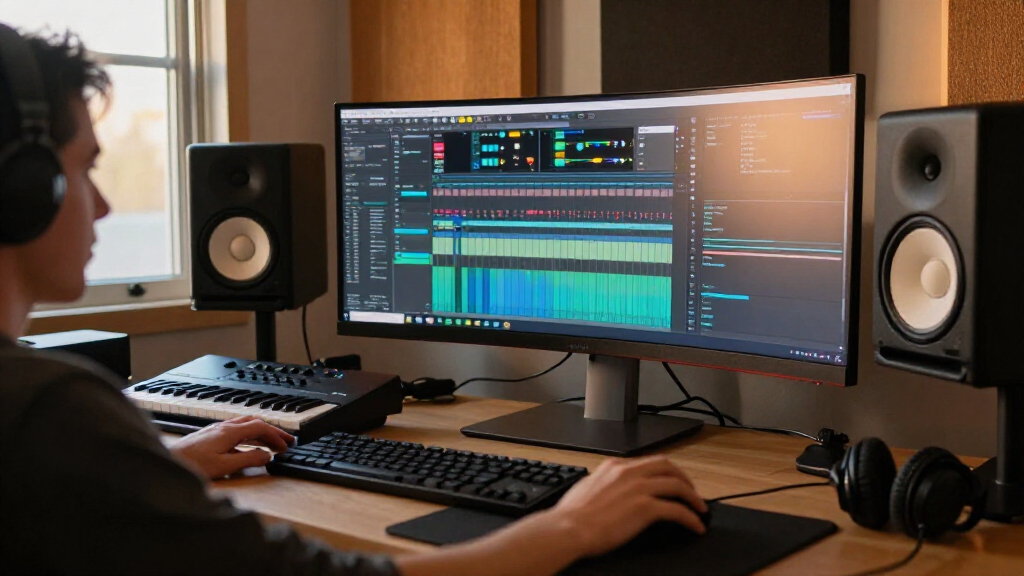
Ultrawide monitors can combine game space and room for multiple work windows, but the guide’s specifications show how sharply the options differ. A 34-inch, 3440-by-1440 display uses less desk width than a 49-inch model, while the latter’s 5120-by-1440 resolution provides more horizontal workspace. The larger screen can also demand more desk depth, especially where the monitor has a strong curve.
Connectivity may affect everyday use as much as refresh rate. The Dell and LG 34WR55QK-B list USB-C power delivery up to 65W, which can simplify connecting a laptop. By contrast, the source does not list equivalent USB-C features for several gaming-focused picks. Readers choosing between these models should check the full port list, stand adjustments and physical dimensions for their setup.
Products Worth Considering

EcoFlow Delta 3 Max Portable Power Station with 220W Solar Panel, 2048Wh

LG UltraGear 25G590B-B 25-Inch Full HD 1000Hz Gaming Monitor

Amazon Kindle Paperwhite Signature Edition (12th Generation, 2024), 32 GB, Metallic Raspberry
As an affiliate, we earn on qualifying purchases.
Nine Models, Different Priorities
The guide groups its selections by intended use rather than presenting one specification as decisive. It calls the Dell S3425DW its best overall choice, the Samsung ViewFinity S50GC a productivity value, the CRUA a high-refresh gaming pick, and the Odyssey G9 a premium immersion option. These are the guide’s editorial labels; the source does not provide prices or a scoring method that would let readers compare value independently.
It also points to curvature as a practical distinction. The source associates stronger curves, including 1000R to 1500R, with immersion in games and flatter curves with less geometric distortion for tasks such as spreadsheets. It describes the LG WFHD IPS as the only white-chassis option in this group. No measurements or side-by-side test procedure are supplied for these assessments.
What the Guide Does Not Establish
The supplied material does not identify who tested the monitors, when testing took place, or how image quality, latency, color uniformity and ergonomics were measured. It also omits prices and availability, despite characterizing some choices as budget or value options. Those labels may change by retailer and over time.
Several specification fields are absent, including refresh rates for the LG WFHD IPS and resolution for the CRUA. The source also includes a stated 1,000,000:1 contrast ratio for the Samsung Odyssey G9 without explaining the measurement method. Readers should confirm current manufacturer specifications and independent testing before treating the guide’s rankings or comparisons as settled.
Check Current Listings and Testing
Before buying, readers can compare current prices and availability with the monitor’s intended use, then confirm the resolution, refresh rate, ports and stand adjustments on the manufacturer’s listing. Laptop users should verify USB-C power requirements; owners of 49-inch displays should measure desk width and depth. Independent reviews can help fill the source’s gaps on measured color performance, motion handling and screen uniformity.
Key Questions
Which monitor does the guide name as its overall pick?
It names the Dell 34 Plus USB-C Curved Monitor (S3425DW), citing its 34-inch 3440-by-1440 screen, 120Hz refresh rate and USB-C connection with up to 65W power delivery.
Which listed monitor has the highest refresh rate?
The source lists the SANSUI 34-inch curved UWQHD at 200Hz, the highest stated rate among the nine models. The guide does not provide independent test results confirming performance.
What should buyers know about the 49-inch monitors?
The Samsung Odyssey G9 and Z-Edge UG49W are both listed at 5120 by 1440. The guide says the Odyssey’s 1000R curve needs a deep desk; buyers should check both models’ dimensions and curve against their workspace.
Does the source establish which monitor is the best value?
No. It labels the Samsung ViewFinity S50GC a productivity value and describes CRUA and Sceptre as lower-cost options, but supplies no prices, test methodology or value calculation.
Source: Thorsten Meyer AI