
📊 Full opportunity report: A Friendly AI Voice On The Line For Seniors Living Alone on IdeaNavigator AI — validation score, market gap, and execution plan.

Get audio and creator gear delivered free with Prime
- Fast, free delivery on millions of items
- Prime Video, Amazon Music and more included
- Member-only deals all year
TL;DR
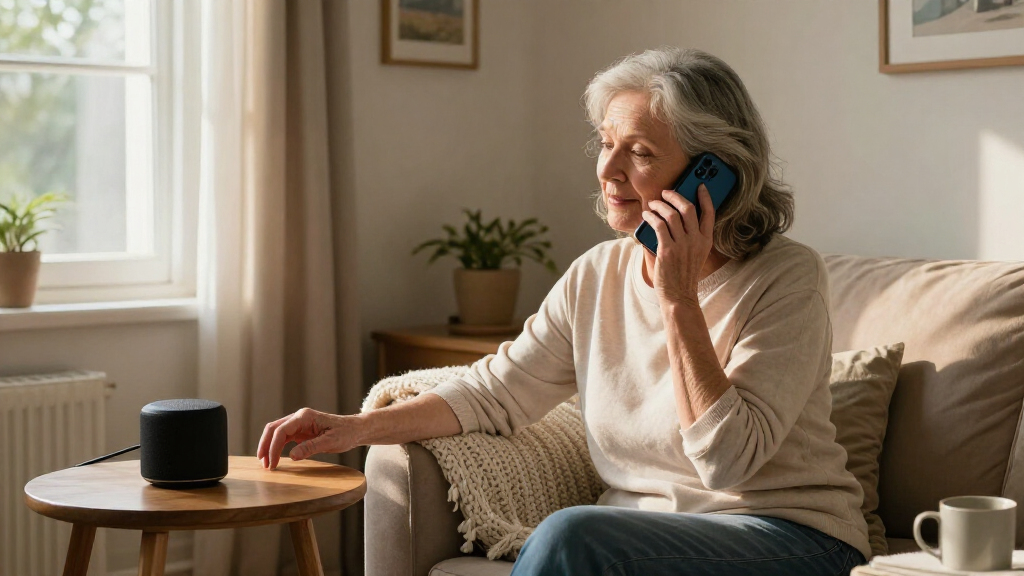
IdeaNavigator AI proposes testing scheduled daily AI phone calls that ask seniors living alone a few wellness questions and notify an adult child if a call is missed or concerning. The suggested pilot would involve 15 senior-and-family pairs for three weeks; no operating service, results, or customer demand are reported.
IdeaNavigator AI has proposed a three-week test of scheduled AI phone calls for seniors living alone, with a text alert to an adult child if a call is missed or raises concern. The proposal would test whether a short daily check-in can give families a useful routine signal; it does not report that a service is already operating or that the approach has been validated.
The proposed service would place a daily call to a senior’s landline or mobile phone, ask a few wellness questions and send the adult child either an all-clear message or a flag for a missed or concerning call. The intended customer is an adult child who lives in another city and cannot reliably call a parent each day. The outline does not specify the questions, how the AI would interpret answers, or what steps follow an alert.
IdeaNavigator AI recommends testing the idea with 15 senior-and-adult-child pairs over three weeks. The proposed measures are the rate at which seniors answer the calls and whether families consider the all-clear alerts valuable enough to pay for. The outline suggests a monthly subscription billed to the adult child per parent, but gives no price, budget, pilot results or evidence of willingness to subscribe.
The proposal describes natural-sounding voice AI as making brief automated calls feasible on standard phones. That is the rationale offered for testing the service, not evidence that calls would be reliable or that seniors would welcome them. No named company, product launch, rollout schedule or clinical service is identified.
Testing a Daily Family Check-In
The idea addresses a specific gap for families: an adult child may worry about a parent who lives alone but cannot check in every day. A regular call could create a simple signal that a parent answered and responded, while a missed call could prompt the family to follow up. That could be useful as a communication aid, particularly for families living far apart.
But an automated check-in is not the same as confirming a person is safe. A missed call could result from a phone being off, a schedule change or a technical problem; an answered call might not reveal a fall or another urgent issue. The proposal does not establish how the system would distinguish those cases or how quickly a family should respond. Its value depends on whether the alerts are dependable and understandable, and whether users see them as worth the cost.
The proposed trial is small and short, and its stated measures focus on answering and perceived value. Those results could help assess basic usability and interest, but would not by themselves show that the calls prevent harm, detect emergencies, or work across a wider range of seniors and circumstances.
Products Worth Considering

Bose TV Speaker Compact Soundbar with Bluetooth and HDMI-ARC, Black

Bose QuietComfort Wireless Bluetooth Noise-Cancelling Headphones, Ice Blue

Jackery Solar Generator 1000 v2 with 200W Solar Panel, 1024Wh LiFePO4 Battery
As an affiliate, we earn on qualifying purchases.
A Small Pilot, Not a Launched Service
IdeaNavigator AI frames the concept as a first workflow in aging-in-place wellness: a parent continues living independently, while an adult child receives a routine update. The suggested format is deliberately narrow—a scheduled phone call, a few questions and a simple text result—rather than a broader monitoring system.
The proposal’s stated problem is that families cannot always make daily calls, leaving a period in which a fall or difficult day may go unnoticed. It presents voice AI as a way to make short calls affordable at scale, but provides no cost analysis, technology specifications, comparison with existing check-in services or evidence that seniors prefer an AI caller. The only concrete next step described is the proposed three-week test with 15 pairs.
Safety, Privacy and User Response
No pilot results are available, and the proposal does not identify a launch date, service provider or confirmed participants. It is not clear what counts as a concerning answer, how missed calls would be escalated, or whether the system would retry before notifying family. The outline also does not explain how it would handle a senior who cannot answer, wants to stop receiving calls or needs urgent help.
Other practical questions remain open, including how call responses and phone numbers would be stored, who could access them, and how consent would work for both the senior and the family member paying. There is no stated subscription price or evidence that families would pay. The suggested measures—answer rate and perceived value of alerts—would not alone establish clinical effectiveness or show that the service can reliably identify emergencies.
Pilot Results Would Test Demand
The next step in the proposal is to recruit 15 senior-and-adult-child pairs and run daily calls for three weeks. The suggested assessment would track how often calls are answered and ask families whether the all-clear alerts are valuable enough to pay for. No dates or recruitment details are provided, so it is not clear when or whether that test will take place.
If a pilot proceeds, its results could indicate whether seniors tolerate the calls and whether adult children find the notifications useful. Further testing would be needed to assess reliability, privacy safeguards, alert handling and performance over a longer period. Until those details and results are reported, the concept remains a proposal rather than an established service.
Source: IdeaNavigator AI
Key Questions
Has an AI check-in service for seniors launched?
The information describes a proposed service and pilot. It does not identify a launched product or a company operating the calls.
How would the proposed calls work?
A scheduled call to a senior’s landline or mobile phone would ask a few wellness questions. The adult child would receive an all-clear text or a flag if the call were missed or concerning.
How large is the proposed test?
IdeaNavigator AI suggests testing the calls with 15 senior-and-adult-child pairs for three weeks. No completed results are reported.
Would the calls replace emergency or medical care?
No such role is established. The concept describes routine check-in calls and family alerts, and provides no evidence that the system can detect emergencies or replace medical or emergency services.
What remains unknown about the service?
The call script, alert criteria, escalation process, privacy protections, subscription price and user response are not specified. It is also unknown whether the proposed pilot will take place.
Source: IdeaNavigator AI