
🔍 Read the full analysis: Bangladesh Responds To Garment Protests With A New Wage Board on ThorstenMeyerAI.com

Get audio and creator gear delivered free with Prime
- Fast, free delivery on millions of items
- Prime Video, Amazon Music and more included
- Member-only deals all year
TL;DR
Bangladesh named a six-member board on Nov. 1 to review minimum wages for garment workers, as protests demanding 30,000 taka a month disrupted production at 529 factories, according to the manufacturers’ association. The current minimum is 12,500 taka; the board has no publicly announced meeting date or deadline for recommending a new wage.
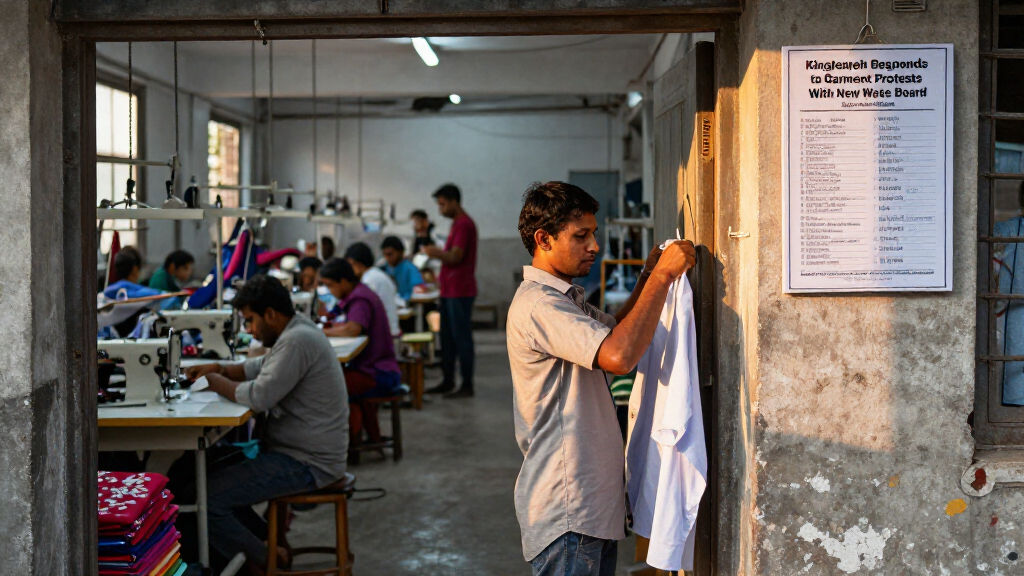
Bangladesh appointed a six-member garment wage board on Nov. 1, as protests over pay disrupted 529 factories and nearly 987,200 workers left their workplaces, according to figures from the Bangladesh Garment Manufacturers and Exporters Association (BGMEA). The board is to review the minimum wage, now 12,500 taka a month, after workers demanded 30,000 taka.
The Labour and Employment Ministry issued notifications establishing the board under the Bangladesh Labour Act, as amended in 2026. The members include a chair, an independent academic, two employer representatives and two representatives of workers. The chair is tasked with working with the other members to determine a minimum wage. The notifications did not set out when the board would meet or when it would announce a proposed wage structure.
BGMEA’s situation report covered 2,134 factories in five industrial regions on Nov. 1. It recorded disruptions at 529 sites and 987,190 workers leaving their workplaces. The association’s figures, reported by The Daily Star, included 276 affected factories in Gazipur and Mymensingh and 185 in Savar, Ashulia and Jirani. No disruptions were reported in the covered factories in Narayanganj or Chattogram. The count describes workers walking out and production being disrupted, not factories being shut by their owners.
Reuters reported road blockades in Dhaka and Gazipur, and said police used tear gas and water cannon after bricks were thrown. Reports also described a police vehicle and a police box being set alight, with Border Guard Bangladesh personnel deployed. Factories reopened on Monday, Nov. 2, Reuters reported, though owners were concerned about further unrest.
Wage Talks Reach Export Factories
The dispute affects workers’ household budgets and an export industry whose production schedules serve international clothing brands. A new wage decision could alter pay for a large garment workforce, but the board’s appointment does not itself change the current minimum. Until it recommends a wage and the government sets a new structure, 12,500 taka remains the applicable floor.
Interruptions also carry potential costs beyond the factory gates. Labour and Employment Minister Ariful Haque Choudhury urged workers to return and warned that prolonged disruption could delay export shipments and payments from foreign buyers, according to Reuters and Al Jazeera. Reuters reported that factories had reopened, but said owners remained braced for more unrest. The duration and scale of any further disruption are not yet known.
The wage debate also involves the buyers who place orders with Bangladeshi suppliers. Reuters reported that workers, employers and an economist it quoted pointed to international buyers’ purchasing prices as part of the pressure on factories. An International Labour Organization survey from 2016 found that suppliers in Bangladesh said only 17% of their customers were willing to reflect minimum-wage increases in the prices they paid. That survey is historical evidence, not a measure of current buyer practices.
Products Worth Considering

DJI Osmo Mobile 7P Phone Gimbal with Mic Mini Transmitter, Infinity Black

Bose SoundLink Plus Portable Bluetooth Speaker, Wireless Outdoor Speaker, Up to 20 Hours Battery Life, Waterproof and Dustproof, Black

DJI Osmo Mobile 8 Gimbal with Mic Mini Transmitter, Infinity Black
As an affiliate, we earn on qualifying purchases.
A Review Due Under Labour Law
The current minimum wage of 12,500 taka has applied since December 2023. Workers in the latest protests are demanding 30,000 taka a month; Reuters converted that demand to roughly $243–$245. The gap between the demand and the current floor is substantial, but the board has not yet recommended a figure, and the government has not announced a new wage.
The Daily Star reported that a 2026 amendment to the Labour Act shortened the interval between minimum-wage reviews from five years to three. A review was therefore due, even as the protests added urgency to the process. The board’s worker members are Anwar Hossain, president of Bangladesh Jatiyatabadi Sramik Dal, and Babul Akhter, general secretary of the Bangladesh Garment and Industrial Workers Federation, according to the reports. Employer representatives are Asif Ayub of the Bangladesh Employers’ Federation and BGMEA director ABM Shamsuddin; Professor Mosleh Uddin Ahmed of the University of Dhaka is the independent member.
Protests had been reported before the weekend escalation. The Daily Star said workers had blocked roads from mid-October. On Oct. 31, about 30 factories around Ashulia declared holidays, according to Mohammad Mominul Islam Bhuiyan, superintendent of the Ashulia Industrial Police, cited by Reuters and Al Jazeera. Police said clashes there injured several people, including officers.
““After paying rent, there is very little left for food, our children’s education and other essential expenses.””
— Garment worker Mahin Hossain, speaking to Reuters
Board Timeline Remains Undated
The ministry notifications do not say when the board will hold its first meeting, how long its review will take or when a new wage structure might be announced. No public deadline has been reported, and the board’s appointment does not confirm that the 30,000-taka demand will be accepted.
The protest and disruption figures are attributed to BGMEA and reported by The Daily Star; they are not an independent count. The reports also do not establish how many workers will continue protesting after factories reopened, or whether further stoppages will affect production and shipments. The effect of the wage dispute on buyer prices and orders remains unclear.
Attention Turns to the Board
The next reported milestone is the wage board’s first meeting, but no date has been announced. Its members are expected to consult on a minimum wage, after which the government’s process for setting a new wage structure will determine what change, if any, takes effect. Until that process produces a decision, the existing 12,500-taka minimum remains in place.
Workers and factory owners will also be watching whether protests resume after the Nov. 2 reopening. Further reporting will be needed to confirm the board’s schedule, any proposed wage figure, and whether production and export deliveries remain affected.
Key Questions
What did Bangladesh announce?
The Labour and Employment Ministry appointed a six-member board on Nov. 1 to review minimum wages for garment workers. The board includes employer and worker representatives, an independent member and a chair.
How much are garment workers demanding?
Workers are demanding a minimum wage of 30,000 taka a month. The current minimum is 12,500 taka, in effect since December 2023. The board has not recommended a new figure.
How many factories were affected by the protests?
BGMEA reported disruptions at 529 of 2,134 factories it covered on Nov. 1, with 987,190 workers leaving their workplaces. Those figures were reported by The Daily Star and reflect the association’s situation report.
When will the new wage be announced?
No date or public deadline has been announced for the board’s first meeting or for a wage decision. The board must review the issue before a new wage structure is set.
Did factories reopen after the protests?
Reuters reported that factories reopened on Nov. 2. Owners remained concerned about further unrest, and it is not yet clear whether additional stoppages will take place.
Source: ThorstenMeyerAI.com