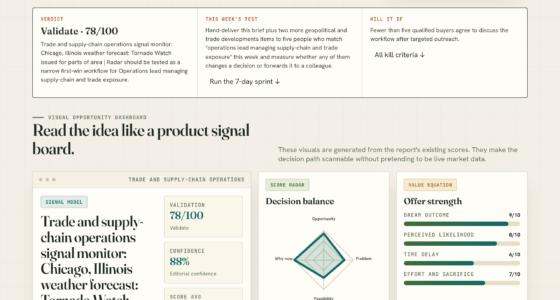

📊 Full opportunity report: Capital: The Lever Beneath the Levers on ThorstenMeyerAI.com — validation score, market gap, and execution plan.

Get audio and creator gear delivered free with Prime
- Fast, free delivery on millions of items
- Prime Video, Amazon Music and more included
- Member-only deals all year
TL;DR
In 2026, the largest private AI companies are going public with multi-trillion valuations, revealing how capital funding drives AI expansion. This creates cyclical risks and economic fragility.
In June 2026, SpaceX, which now includes xAI, listed on the Nasdaq with a valuation near $1.77 trillion, briefly surpassing $2 trillion in early trading, while Anthropic and OpenAI prepare for public offerings valued at nearly $1 trillion each. This marks the largest wave of AI-related IPOs in history, illustrating how capital underpins the entire AI buildout and its associated risks.
The surge in AI company valuations reflects a massive transfer of risk from early investors to the public markets, with over $4 trillion in private value set to hit public markets within 18 months. Notably, more than 600 OpenAI staff sold $6.6 billion worth of stock before listing, indicating early risk-taking by insiders. These companies are heavily funded through a circular flow of capital involving tech giants like Microsoft, Amazon, and Google, which invest in Nvidia, Nvidia supplies hardware, and cloud providers like Azure and AWS facilitate the ecosystem.
This circular funding loop creates two risks: reflexive demand, where demand appears endless, and mispriced capacity, leading to inefficient investments based on internal signals rather than market needs. Recently, Microsoft has begun to pull back, allowing other cloud providers to fill gaps, signaling caution. The entire structure is fragile, with estimates of over $3 trillion in global data-center spending between 2025 and 2028, primarily debt-financed, with only a small consumer base paying directly for AI services.
Capital: The Lever Beneath the Levers
Every chokepoint costs money — so whoever can fund the buildout decides who builds at all. In 2026 the bill came due in public: a trillion-dollar IPO wave, financed by a circle of firms paying each other, now sold to everyone else.
The meta-chokepoint: it gates the other five, because you can’t build any of them without clearing the capital bar. A synchronized machine has no natural brake — no one can slow first — and the IPO wave moves the risk to the public as insiders take gains. The hedge is solvency that doesn’t depend on the music playing: sane burn, own what’s cheap, self-host where you can.
Implications of Capital Concentration in AI Development
This concentration of capital and risk among a few dominant firms makes the AI ecosystem highly fragile. A downturn or slowdown in spending could trigger cascading failures across the entire infrastructure, affecting not just tech stocks but the broader economy. The move of risk from private insiders to public markets at high valuations increases the potential for market corrections, especially given the thin demand from consumers for AI products. Economists warn that such reliance on debt-financed infrastructure and internal demand loops heightens economic vulnerability, with potential repercussions beyond the tech sector.
enterprise AI data center hardware
As an affiliate, we earn on qualifying purchases.
As an affiliate, we earn on qualifying purchases.
The 2026 AI Funding Boom and Its Origins
Over the past few years, private valuations of AI firms like SpaceX/XAI, Anthropic, and OpenAI skyrocketed, driven by aggressive investment rounds and strategic funding from tech giants. These firms are preparing for IPOs valued collectively at around $4 trillion, a historic figure. The funding cycle involves deep internal circularity: Microsoft invests via Azure credits into OpenAI, which in turn drives Nvidia hardware sales, which then fuels further cloud and infrastructure investments. This cycle has been described as an ouroboros, a self-consuming loop that amplifies demand but also risks overheating the system.
Meanwhile, the broader market is increasingly exposed to this cycle, with over $3 trillion in expected data-center spending, mostly debt-funded, with minimal direct consumer revenue. The pattern reflects a shift of risk from early-stage investors to public markets, often at peak valuations, raising concerns about market stability and economic fragility.
“There is more greed than fear right now, and plenty of liquidity — so long as optimism holds.”
— Goldman Sachs chief executive
Unclear Risks and Market Stability Concerns
While the scale of upcoming IPOs and investments is confirmed, the precise impact on the broader economy remains uncertain. It is unclear how fragile the system is if demand weakens or if a major player pulls back suddenly. The extent to which debt-driven infrastructure spending could trigger a broader economic correction is still being evaluated by economists, with some warning of potential systemic risks.
Monitoring the Impact of Public Listings and Capital Flows
In the coming months, market watchers will scrutinize the performance of the new AI IPOs, especially SpaceX/XAI, Anthropic, and OpenAI. Attention will focus on how investor appetite evolves and whether companies can sustain high valuations amid slowing demand. Regulators and economists will also monitor the systemic risks posed by the debt-heavy infrastructure investments and the potential for a market correction if confidence wanes.
Key Questions
Why are AI companies going public now?
AI companies are seeking access to public capital to fund their rapid growth and infrastructure needs, with valuations reaching trillions, making IPOs an attractive exit for early investors and insiders.
What risks does this funding cycle pose?
The cycle creates risks of demand collapse, mispricing capacity, and potential systemic economic fragility due to heavy debt financing and reliance on internal demand signals.
Who controls the capital chokepoint in AI development?
Major tech giants like Microsoft, Amazon, and Google hold disproportionate influence through their investments and cloud services, effectively controlling the flow of capital and infrastructure.
How could a slowdown affect the broader economy?
A slowdown or correction in AI infrastructure spending could cascade through the tech sector and beyond, risking broader economic instability due to interconnected debt and demand cycles.
What is the significance of the circular funding loop?
The circular loop amplifies demand but also concentrates risk, making the entire AI ecosystem vulnerable to shocks if one node slows or pulls back.
Source: ThorstenMeyerAI.com
Halloween Picks
halloween
As an affiliate, we earn on qualifying purchases.