
📊 Full opportunity report: Glasspane: One Dataset, Three Views on ThorstenMeyerAI.com — validation score, market gap, and execution plan.

Get audio and creator gear delivered free with Prime
- Fast, free delivery on millions of items
- Prime Video, Amazon Music and more included
- Member-only deals all year
TL;DR
Glasspane has launched a prototype demonstrating how a single data source can be presented through three tailored views for different roles. This approach aims to enhance transparency and trust in infrastructure monitoring, especially for external stakeholders.
Glasspane has unveiled a demonstration of its ‘One Dataset, Three Views’ approach, designed to provide role-specific perspectives on infrastructure data to foster transparency and trust. This initiative aims to shift the focus from traditional uptime metrics to demonstrable trust, especially useful for clients, auditors, and internal teams.
The demonstration is built around a single dataset that is re-presented through three different views tailored for distinct roles: executives, business managers, and engineers. Each view filters and highlights relevant information without overwhelming the user with unnecessary data.
According to the developers, this approach emphasizes transparency as a product — enabling external stakeholders to verify system health without relying solely on trust or reports. The demo is open-source under the AGPL-3.0 license and can be self-hosted, including options for local models to keep data within the network.
It is important to note that this is a prototype built on mock data, intended to demonstrate the concept rather than a fully operational system in production. The project emphasizes that trust layers are built through transparent data, model interpretability, and honest reporting of system gaps.
Glasspane — one dataset, three views
Most tools answer “is it up?” Glasspane answers a harder one: how do you prove it’s fine to someone who isn’t you? Transparency itself, made the product.
Independent commentary, produced with AI assistance under human editorial oversight. The views are the author’s own and may change. Glasspane is open source under AGPL-3.0, provided “as is” without warranty; see the repository LICENSE. It is a demo / MVP — the views and figures shown run on illustrative, mock data and do not represent a live production deployment. AI interpretation of telemetry may contain errors and should be independently verified. Product and company names are trademarks of their respective owners; mention does not imply endorsement.
Implications for Transparency and External Trust in Infrastructure
This development signifies a potential shift in how infrastructure health is communicated externally. By providing role-specific, verifiable views of a single data source, organizations could reduce reliance on internal reports and increase credibility with clients and auditors.
It also highlights the importance of transparency in AI-driven monitoring tools, where trust depends on both data integrity and model interpretability. The open-source, self-hostable design aligns with growing demands for data sovereignty and verifiable systems.
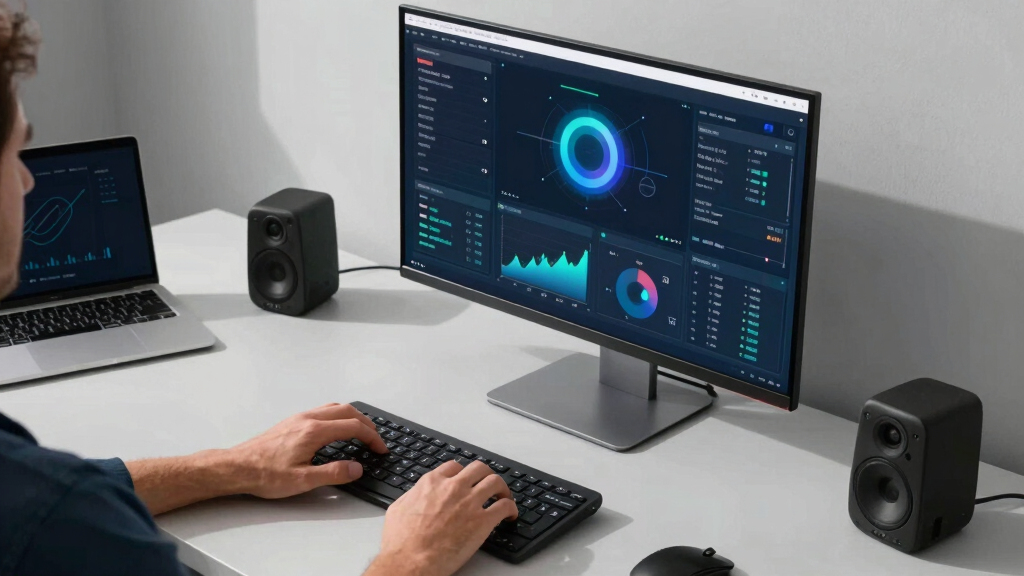
infrastructure monitoring dashboard software
As an affiliate, we earn on qualifying purchases.
As an affiliate, we earn on qualifying purchases.
Background on Transparency in Infrastructure Monitoring
Traditional monitoring tools focus on uptime and incident reports primarily for internal use. Recently, there has been a push toward external transparency, especially as AI plays a larger role in data interpretation. Existing solutions often lack role-specific views or verifiability, limiting their usefulness for external trust-building.
Glasspane’s approach builds on the idea that transparency can be a product, not just a feature, by making data accessible and interpretable for different stakeholders without sacrificing security or control. Its open-source nature and focus on local deployment differentiate it from many proprietary, cloud-based monitoring solutions.
“Our goal is to demonstrate that transparency itself can be a product—showing the same data through tailored, role-aware lenses to build credible trust externally.”
— Thorsten Meyer, Glasspane developer
Uncertainties Around Production Readiness and Adoption
It remains uncertain how well the prototype will scale in real-world scenarios or how organizations will adopt the concept of verifiable transparency as a product. The demo is built on mock data, and its effectiveness in live environments has yet to be tested.
Questions also persist about whether buyers will pay for transparency-focused features or see them as complementary to existing monitoring tools. The challenge of trusting AI models and their interpretability continues to be a concern.
Next Steps for Development and Industry Adoption
The Glasspane team plans to further develop the prototype, incorporating real data and testing in operational environments. They aim to gather feedback from early adopters and explore integration with existing monitoring platforms.
Additionally, the project will seek to clarify how transparency as a product can be monetized and whether organizations are willing to pay for demonstrable trust features. Community engagement and open-source collaboration will likely play a key role in its evolution.
Key Questions
Is Glasspane ready for production use?
Currently, Glasspane is a demo / MVP built on mock data. Further development and testing are needed before it can be considered production-ready.
How does Glasspane ensure trust in AI interpretations?
By making the AI models transparent and providing verifiable, role-specific views, Glasspane aims to build confidence in the data and its interpretations. Model interpretability and openness are core to this approach.
Can organizations self-host Glasspane?
Yes, Glasspane is open-source under the AGPL-3.0 license and designed to be self-hosted, including options for local models to keep data within the organization’s network.
What are the main benefits of this approach?
It offers tailored, credible views of infrastructure data for different stakeholders, reduces the need for repeated reassurance, and enhances external trust through transparency.
Will this replace existing monitoring tools?
Not necessarily; it aims to complement existing tools by providing a transparency-focused layer that external stakeholders can verify independently.
Source: ThorstenMeyerAI.com
Halloween Picks
halloween
As an affiliate, we earn on qualifying purchases.