
You might overlook the importance of precise time synchronization in AI clusters, but even microsecond differences can cause data inconsistencies, errors in model training, and incorrect decision-making. Without advanced protocols like PTP or GPS-based sync, your system could suffer from clock drift, affecting real-time processing and security. As your infrastructure grows, these issues become more critical. Stay with us to discover how better synchronization can streamline your AI operations and protect your results.
Key Takeaways
- Precise time sync ensures accurate event ordering, critical for debugging and system reliability in high-speed AI processing.
- Microsecond-level synchronization prevents data discrepancies that can compromise model accuracy and training results.
- Enhanced protocols enable synchronized operations across geographically dispersed AI clusters, reducing latency and drift.
- Accurate timestamps support security, audit trails, and compliance, safeguarding AI systems from malicious exploits.
- As AI infrastructure grows, robust time synchronization maintains data integrity, system performance, and organizational trust.
As AI clusters become more powerful and interconnected, their ability to synchronize time accurately is more vital than ever. When you’re managing multiple nodes working together, precise time coordination isn’t just a technical detail—it’s the backbone of data consistency. Without it, you risk creating discrepancies that can compromise your entire system’s reliability. Data consistency depends heavily on synchronized clocks, ensuring that all parts of the cluster interpret events in the same chronological order. If timestamps are off, you might end up with conflicting data, flawed machine learning models, or inaccurate results. That’s why implementing robust synchronization protocols is indispensable. These protocols help your nodes agree on the exact time, reducing drift and ensuring that every piece of data aligns seamlessly across the network.
Precise time synchronization is essential for data integrity and reliable AI system performance.
You might think that standard time synchronization methods are enough, but in high-stakes AI environments, they often fall short. The sheer volume of data and the speed at which it’s processed demand more precise protocols. Techniques such as the Precision Time Protocol (PTP) or GPS-based synchronization can deliver microsecond-level accuracy, which becomes vital in real-time AI applications. When your AI clusters perform tasks like distributed training or real-time inference, even tiny time discrepancies can cascade into significant errors. This can cause inconsistencies in training data, model updates, or decision outputs, undermining your system’s integrity.
Furthermore, better time sync allows your AI clusters to handle complex operations more effectively. In distributed training, for example, synchronized timing ensures that gradients are aggregated correctly, preventing stale updates or conflicting weights. It also helps in debugging and monitoring, where accurate timestamps allow you to trace issues precisely. If your timestamps are inconsistent, you won’t be able to track the sequence of events accurately, making troubleshooting a nightmare. This is especially true in environments where multiple clusters operate simultaneously across geographies, where network latencies and clock drift can exacerbate synchronization issues. Implementing robust protocols can also help mitigate the effects of network latency and jitter, ensuring more reliable synchronization even over long distances. Additionally, maintaining a consistent time source is crucial for reliable data logging and audit trails, which are vital for compliance and troubleshooting.
A failure to maintain proper synchronization can also impact real-time decision-making, which relies on the timely processing of data for accurate outputs. Proper time synchronization is also essential for system security, as inconsistencies can be exploited for malicious purposes or cause data tampering. Ultimately, you need to recognize that as your AI infrastructure grows, so does the importance of robust synchronization protocols. They’re not just about keeping clocks aligned; they’re about maintaining data integrity, system efficiency, and trustworthiness. Proper synchronization also supports color accuracy in data interpretation, which is vital for precise AI decision-making. Without proper time sync, your AI clusters risk delivering unreliable outcomes, which could impact your organization’s credibility and effectiveness. Investing in better synchronization isn’t optional anymore—it’s a necessity to keep pace with the demands of modern AI workloads.
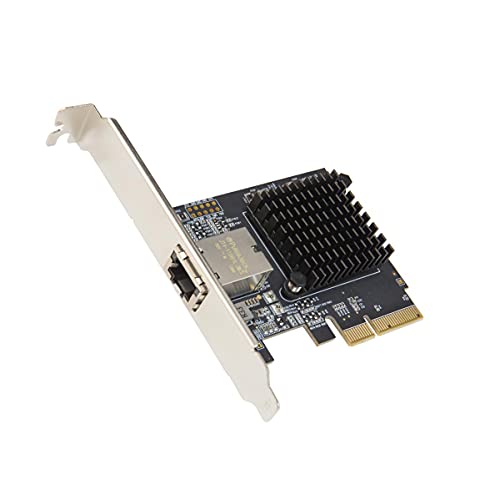
1 Port 10 Gigabit Ethernet Network Card – PCIe x4 10Gb 10GBASE-T NIC AQTION AQC107-10Gbps Ethernet PCI-Express x4 Adapter SD-PEX24055
Integrated PCIe, MAC, and PHY solution enables power- and space-efficient connectivity for client systems
As an affiliate, we earn on qualifying purchases.
As an affiliate, we earn on qualifying purchases.
Frequently Asked Questions
How Does Time Drift Affect AI Training Accuracy?
Time drift, caused by clock drift across servers, can negatively impact your AI training accuracy. As clocks fall out of sync, data synchronization issues occur, reducing training precision. You might see inconsistent results or slower convergence because models aren’t trained on perfectly aligned data. To maintain high accuracy, you need to implement precise time synchronization across your AI clusters, preventing clock drift from compromising your training process.
What Are the Best Tools for Synchronizing Cluster Clocks?
You should use NTP protocols for precise clock synchronization across your AI cluster. They guarantee that all nodes stay aligned by regularly adjusting system clocks. Additionally, leveraging cloud synchronization offers a centralized time source, reducing drift issues. Combining NTP protocols with cloud sync provides robust, accurate timekeeping, which is vital for training accuracy and consistent results. This approach minimizes time drift, maintaining the integrity of your AI workloads.
Can Poor Time Sync Cause Data Inconsistencies?
Absolutely, poor time sync can cause data inconsistencies. When your cluster clocks are out of whack, it’s like trying to keep a secret in a room full of gossipers—data integrity suffers. Time discrepancies lead to mismatched timestamps, corrupting logs, and skewing results. So, if you value accurate insights, don’t underestimate how critical synchronized clocks are—they’re the backbone of trustworthy, consistent data.
How Often Should Time Synchronization Be Performed?
You should perform time synchronization regularly, ideally every few minutes or in real-time, depending on your workload. Use a reliable time protocol like NTP to keep clocks aligned and maintain a strict clock hierarchy within your AI cluster. Frequent syncs prevent data inconsistencies caused by drift, ensuring all nodes share an identical timestamp reference. This consistency is essential for accurate data processing and seamless coordination across your AI infrastructure.
What Are the Security Risks of Time Synchronization?
While sync issues might seem minor, they can introduce subtle security vulnerabilities, like clock skew, which hackers could exploit to manipulate logs or bypass security checks. Poor time synchronization can also lead to inconsistent data, making it harder to detect anomalies. Ensuring your clocks are aligned tightens security, reducing risks of malicious activities, and keeps your AI clusters resilient against potential threats hiding behind seemingly harmless discrepancies.
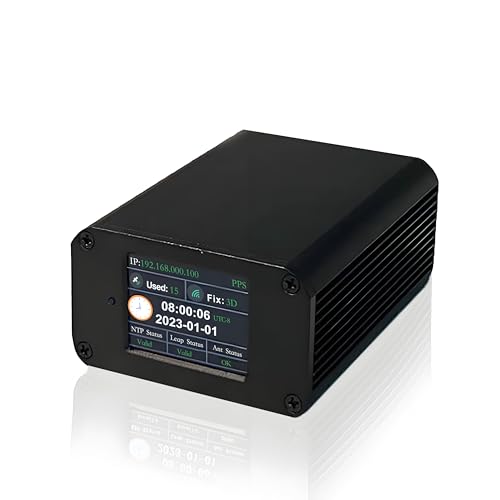
GPS-Synced NTP Server – High-Precision Network Time Protocol Device for Enterprise Data Centers – Reliable Global Satellite Time Synchronization Solutio(32ft Portable Antenna)
1. GPS Satellite Time Synchronization: This NTP server receives global time signals from GPS satellites, ensuring nanosecond-level time…
As an affiliate, we earn on qualifying purchases.
As an affiliate, we earn on qualifying purchases.
Conclusion
Remember, a chain is only as strong as its weakest link. When your AI clusters lack proper time synchronization, it’s like trying to build with mismatched puzzle pieces—you risk errors and inefficiencies. By prioritizing better time sync, you guarantee smoother operations and more accurate results. Don’t wait for problems to surface; act now. After all, “time and tide wait for no one,” so keep your AI clusters aligned and running seamlessly.

Microsemi Frequency & Time Syncserver S200 (1520R-S200)
Provides an extensible design that enables Service prioritization for data
As an affiliate, we earn on qualifying purchases.
As an affiliate, we earn on qualifying purchases.
distributed AI cluster time sync hardware
As an affiliate, we earn on qualifying purchases.
As an affiliate, we earn on qualifying purchases.