
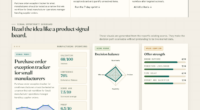
📊 Full opportunity report: The license. Why the AI content market pays the brand-name corpus and strands the long tail. on ThorstenMeyerAI.com — validation score, market gap, and execution plan.

TL;DR

Major publishers are striking large licensing deals with AI companies, securing payments for their archives. Small publishers remain excluded, highlighting structural inequalities in the AI content ecosystem. The key question is whether collective licensing can address this imbalance.

Major publishers have signed multi-million dollar licensing agreements with AI companies, securing payments for access to their content archives. These deals reinforce existing structural inequalities, as smaller publishers remain largely excluded from licensing opportunities, raising concerns about fairness and market dynamics.

Recent disclosures reveal that large publishers like News Corp, the New York Times, and the Associated Press have secured licensing deals exceeding hundreds of millions of dollars with AI firms such as OpenAI and Meta. These agreements give AI companies access to high-trust, brand-name corpora that hold significant leverage due to their scarcity and reputation.

In contrast, small publishers and niche sites, which collectively produce vast amounts of content, are largely unable to negotiate similar licensing arrangements. Their content is viewed as interchangeable training data, with little bargaining power or leverage. This asymmetry means that while large publishers profit from licensing, small publishers continue to be exploited through scraping and minimal attribution, deepening the divide.

The pattern reflects a winner-take-all market dynamic, where value flows to the few with high-value archives, and the many providing abundant but less valuable content are left without fair compensation. Experts warn that this trend could entrench existing inequalities in the publishing ecosystem.

The License — Thorsten Meyer AI
LICENSE
● DISPATCH / MAY 2026
THORSTEN MEYER AI · POST-WIRE · § 04
POST-WIRE · 04
PUBLISHER / LICENSE
Essay · Publisher-Side Licensing Forensic · 2026-05-30

The license.
Why the AI content market
pays the brand-name corpus
and strands the long tail.

When AI severed the referral, licensing looked like the escape. It is — for the publishers who needed it least, and closed to the ones who needed it most.
The disclosed deals are large and exclusively large publishers’ deals: News Corp $250M+/5yr (OpenAI) and ~$50M/yr (Meta), Reddit $60-70M/yr, academic $10-23M — and no deal under $10M has been publicly disclosed. The pattern inverts the harm: the referral collapse hit the small publisher hardest (−60% vs −22%); the licensing escape is open almost exclusively to the large publisher. Underneath is a leverage asymmetry — a brand-name archive is scarce and worth licensing; a niche site’s content is one interchangeable drop in a training set the AI company can assemble without it. The structural argument: the licensing market that emerged as the answer to the referral collapse reproduces the same asymmetry it was meant to solve — value flows to the corpus with leverage, the long tail provides the training and grounding data for free, and receives a citation that does not pay. The only correction is collective or statutory licensing — real, advancing, and not within the small publisher’s power to build.
$10M
The floor — no disclosed
licensing deal below it
$250M
News Corp / OpenAI over 5 years ·
the large-publisher reality
~200x
OpenAI’s Nvidia commitment vs its
largest licensing deal · a rounding error
50%
ProRata revenue-share — the long
tail’s most direct shot, via aggregation
THE LICENSE· CONTENT FOR PAYMENT REPLACING CONTENT FOR TRAFFIC· NEWS CORP $250M+/5YR · REDDIT $60-70M/YR· NO DISCLOSED DEAL UNDER $10 MILLION· A WINNER-TAKE-ALL MARKET WITH A HARD FLOOR· SCARCE BRANDED CORPUS HAS LEVERAGE· INTERCHANGEABLE CONTENT HAS NONE· THE SAME BRAND THAT SURVIVED THE REFERRAL COLLAPSE· SMALL PUBLISHER = THE FREE GROUNDING LAYER· TRAINED ON + RAG-SCRAPED · PAID FOR NEITHER· A CITATION THAT DOES NOT PAY· ANTHROPIC $1.5B SETTLEMENT = THE LEVERAGE PRECEDENT· PRORATA 50% REVENUE-SHARE · MICROSOFT MARKETPLACE· EU / WIPO STATUTORY LICENSING · THE BRUSSELS EFFECT· AGGREGATION IS THE ONLY ROUTE TO LONG-TAIL LEVERAGE· THE MARKET WORKS CORRECTLY · AND NEVER PAYS THE TAIL· THE LICENSE· CONTENT FOR PAYMENT REPLACING CONTENT FOR TRAFFIC· NEWS CORP $250M+/5YR · REDDIT $60-70M/YR· NO DISCLOSED DEAL UNDER $10 MILLION· A WINNER-TAKE-ALL MARKET WITH A HARD FLOOR· SCARCE BRANDED CORPUS HAS LEVERAGE· INTERCHANGEABLE CONTENT HAS NONE· THE SAME BRAND THAT SURVIVED THE REFERRAL COLLAPSE· SMALL PUBLISHER = THE FREE GROUNDING LAYER· TRAINED ON + RAG-SCRAPED · PAID FOR NEITHER· A CITATION THAT DOES NOT PAY· ANTHROPIC $1.5B SETTLEMENT = THE LEVERAGE PRECEDENT· PRORATA 50% REVENUE-SHARE · MICROSOFT MARKETPLACE· EU / WIPO STATUTORY LICENSING · THE BRUSSELS EFFECT· AGGREGATION IS THE ONLY ROUTE TO LONG-TAIL LEVERAGE· THE MARKET WORKS CORRECTLY · AND NEVER PAYS THE TAIL·
FIG. 01 — THE ESCAPE ROUTE · WHO CAN WALK THROUGH IT
Licensing is a sound answer to the referral collapse — and the roster is a directory of the largest media companies on earth
Content for payment, replacing content for traffic — for the publishers who can command a fee
$250M+
News Corp · OpenAI
Over 5 years (cash + credits); WSJ, NY Post, Times of London, The Australian
~$50M/yr
News Corp · Meta
Plus Reach–Amazon, AP–Google, AFP–Mistral, Guardian/FT/Vox–OpenAI…
$60-70M/yr
Reddit
The branded-corpus premium — a distinct, high-volume training source
$10-23M
Academic publishers
Still firmly inside the eight-figure band the disclosed market lives in
OpenAI alone has 18+ publisher deals; every major platform (OpenAI, Google, Microsoft, Meta, Amazon, Perplexity, Mistral) has signed partners. The structure is typically a fixed fee for archive/training access plus performance payments tied to surfacing, with attribution and tech access in exchange. The escape route is real. The roster answers who can take it — the publishers with brand-name archives and negotiating teams, which is to say, not the long tail the referral collapse hit hardest.
FIG. 02 — THE LEVERAGE ASYMMETRY · WHY A MARKET PAYS THE BRAND, NOT THE TAIL
Not bias or oversight — the structure of leverage
A market pays for scarcity and leverage; the small publisher has neither
The large publisher
A scarce branded corpus
There is one Wall Street Journal, one AP. The AI company cannot reconstruct it from other sources — so it pays. And a citation of a trusted brand is worth paying for.
vs
scarcity

leverage

a fee
The small publisher
An interchangeable corpus
One of millions of similar pages. The AI company can answer without any single niche site — abundance destroys leverage, so it pays nothing.
This is the market functioning correctly, not a fixable flaw: the scarce, branded, trusted archive commands a fee; the abundant, interchangeable, unbranded page does not. And because brand recognition is exactly what survived the referral collapse, the licensing market pays precisely the publishers who were already insulated — and ignores precisely the ones who were not. The asymmetry compounds.
FIG. 03 — THE WINNER-TAKE-ALL DATA · A MARKET WITH A HARD FLOOR
The disclosed market begins at $10 million and concentrates at the top of the publisher distribution
Disclosed annual / multi-year licensing values by publisher tier
News Corp / OpenAIover 5 years
$250M+
Redditannual
$65M
News Corp / Metaannual
$50M
Academic publishersper deal
$10-23M
No content-licensing deal under $10 million has been publicly disclosed. A deal sized for a small publisher would fall below the threshold at which deals are even announced. Even the biggest are rounding errors to the labs — OpenAI’s ~$100B Nvidia commitment is ~200x its largest licensing deal; Anthropic’s $1.5B settlement was 44% of the entire 2025 training-data market.
FIG. 04 — THE FREE GROUNDING LAYER · WHAT THE SMALL PUBLISHER PROVIDES
The long tail is not outside the AI economy — it is the unpaid substrate of it
Content valuable enough to use, abundant enough not to pay for — the definition of a commodity input
The large publisher provides
A scarce corpus → a license
A branded archive the AI company pays to train on and be seen citing. A license + a citation.
The small publisher provides
The free grounding layer → a citation
Trained on (the basis of the lawsuits) and RAG-scraped in real time to ground the answer — paid for neither. Only a citation, which pays nothing.
The content does double duty — training the model and grounding the answer that replaces the visit — and is paid for neither. The AI companies pay the large publishers for the scarce branded corpora and take the abundant interchangeable long tail for free as the grounding substrate. The small publisher grounds the answers the large publishers get paid to be cited in — exactly the commodity-input position the first Post-Wire dispatch warned the identical paragraph was heading toward.
FIG. 05 — THE ONLY REAL ALTERNATIVE · COLLECTIVE & STATUTORY LICENSING
The only mechanism that could price the long tail in — real, advancing, and not within the small publisher’s power to build
Aggregate un-negotiable small claims into one negotiable collective claim — or pay by right instead of leverage
Collective marketplace
ProRata · 50% rev-share
News/Media Alliance members license into Gist.ai on a 50% revenue share. Aggregation lowers the per-publisher transaction cost below the prohibitive floor.
Brokered marketplace
Microsoft’s platform
Publishers post content + terms; developers license; Microsoft takes a cut. Lowers the fixed deal cost that excluded the small publisher — in principle, below $10M.
Statutory licensing
EU · WIPO · LatAm
Pay publishers automatically for content used, priced by regime — like music royalties. The only mechanism that pays the tail by right, not by leverage.
All real, all advancing — but none proven at scale. The platforms fought and weakened earlier bargaining-code laws (Australia) all over the world; statutory regimes depend on new law or favorable verdicts; there is still no standardized model for pricing content. Europe’s collecting-society tradition makes statutory licensing most achievable there — and the Brussels Effect could propagate it to exactly the kind of European niche-publisher operation the individual-deal market ignores. The small publisher’s escape depends on a correction it cannot itself build.
The license that saved the Wall Street Journal does not reach the niche site, and the only thing that could is a market the small publisher cannot build alone. The escape route is real. For most of the publishers who needed it, it leads to a door they cannot open.
Thorsten Meyer · The License · Post-Wire 04

Implications of Licensing Concentration for Small Publishers

This licensing pattern confirms that the AI training data market favors large, brand-name publishers, potentially marginalizing small publishers. It raises questions about fair compensation, market fairness, and the future sustainability of diverse content creation. Without intervention, the small publisher segment risks further decline, as their content remains undervalued and unprotected.

Commercial Contracts : A Practical Guide to Deals, Contracts, Agreements and Promises

Commercial Contracts : A Practical Guide to Deals, Contracts, Agreements and Promises

As an affiliate, we earn on qualifying purchases.

As an affiliate, we earn on qualifying purchases.

Structural Inequalities in AI Content Licensing

The collapse of referral traffic to publishers, especially small sites, has prompted a search for alternative revenue streams. Licensing emerged as a solution, promising direct payments for content used in AI training. However, the disclosed deals reveal a structural asymmetry: large publishers with scarce, high-value archives negotiate lucrative contracts, while small publishers, whose content is abundant and interchangeable, are largely excluded.

This dynamic echoes previous trends where the value of content is dictated by scarcity and leverage, not quality or diversity. The emerging market thus reproduces the very inequalities it was supposed to address, favoring the few with high-value corpora and leaving the many to compete over scraps.

“The licensing market reproduces the same asymmetry it was meant to solve — value flows to brand-name corpora with leverage, leaving the long tail unpaid.”

— Thorsten Meyer

Unclear Prospects for Collective Licensing Solutions

While several initiatives for collective or statutory licensing are underway, such as the UK coalition and EU proposals, their viability at scale remains uncertain. It is unclear whether these mechanisms will be adopted widely or effectively counteract the current asymmetries before small publishers are further marginalized.

Next Steps for Licensing Reform and Market Fairness

Legal and policy developments are ongoing, with potential court rulings and legislative changes that could enable broader collective licensing. Stakeholders are watching these efforts closely, as their success or failure will determine whether the market can be restructured to fairly compensate small publishers and reduce inequality.

Key Questions

Why do large publishers get better licensing deals?

Large publishers have high-value, scarce archives and strong bargaining leverage due to their brand reputation, making them more attractive to AI companies willing to pay for access.

Are small publishers completely excluded from licensing?

Most small publishers are largely unable to negotiate licensing deals and are instead subjected to scraping and minimal attribution, which offers little compensation.

Can collective licensing fix this inequality?

Yes, collective or statutory licensing could create a more equitable system by paying publishers regardless of individual leverage, but such mechanisms are still unproven at scale and face resistance.

What is the main obstacle to fair licensing?

The main obstacle is the structural asymmetry: the market inherently favors publishers with scarce, high-value archives, leaving others without bargaining power.

What happens if no reform occurs?

If no effective reform is implemented, small publishers may continue to be marginalized, risking further decline and loss of diverse content sources.

Source: ThorstenMeyerAI.com

You May Also Like

Every Benchmark Launched 2023-2024 Has Fallen — The METR / SWE-Bench / CORE-Bench / MLE-Bench / PostTrainBench Sequence

Every major AI research benchmark launched in 2023-2024 has either saturated or is nearing saturation, signaling accelerated AI capability growth.

Search as Code: Perplexity Is Right About the Future — Just Not First to It

Perplexity introduces Search as Code, enabling AI models to dynamically assemble search pipelines, promising improved accuracy and efficiency in complex tasks.

The Bubble Is Not in Valuations: It’s in the Productivity Gap

New research shows AI’s productivity gains are smaller than expected, revealing a gap between market expectations and reality, affecting valuations and strategies.