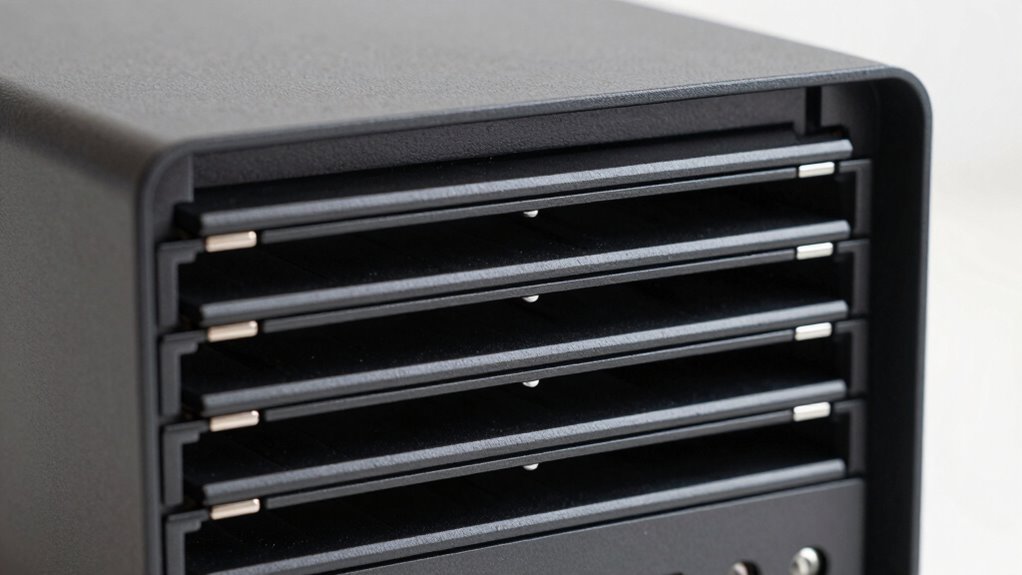

To understand NAS drive bay counts, consider what each bay offers regarding storage capacity, expandability, and performance. More bays mean higher storage options, better redundancy, and future growth potential. However, don’t assume more bays automatically enhance performance—think about your needs and environment. Keep in mind environmental factors and long-term goals. If you keep learning more, you’ll gain deeper insights into making the right choice for your future storage needs.

Get audio and creator gear delivered free with Prime
- Fast, free delivery on millions of items
- Prime Video, Amazon Music and more included
- Member-only deals all year
Key Takeaways
- Check the NAS model specifications to determine the maximum number of supported drive bays.
- Understand that more bays typically mean higher storage capacity and expandability potential.
- Consider whether the bays are fixed or hot-swappable for easier maintenance and scalability.
- Evaluate if the NAS supports additional expansion units for future growth beyond initial bays.
- Match the drive bay count with your current and future storage needs to avoid under- or over-investing.
As an affiliate, we earn on qualifying purchases.
What Do NAS Drive Bays Really Mean for Your Storage?
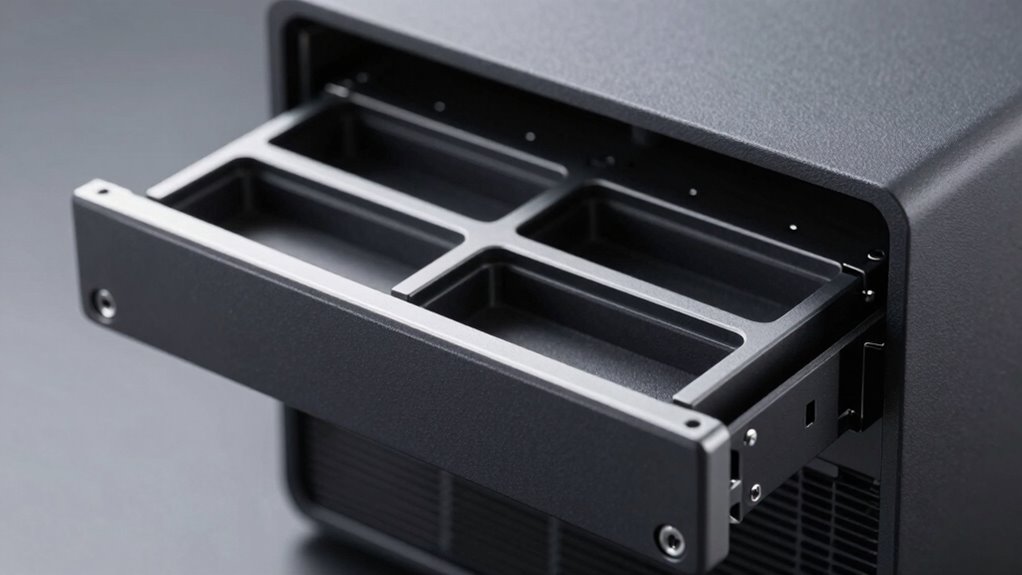
Have you ever wondered what those numbers next to NAS drive bays really signify? They indicate how many drives your NAS can hold, directly impacting your storage potential. Beyond capacity, drive bay aesthetics and NAS enclosure design play a role in your setup. The number of bays influences not just storage size but also how your NAS fits into your workspace. Larger enclosures with more bays often feature a robust design, emphasizing expandability, while smaller units focus on compactness. Understanding these details helps you choose a NAS that matches your storage needs and aesthetic preferences, ensuring your setup is both efficient and visually appealing. Exploring digital concepts can also help optimize your storage solutions for future needs, especially when considering drive bay configurations and their impact on scalability. Additionally, selecting the right power and cooling setup is crucial for maintaining device performance over time.
How Do Drive Bays Affect Storage Capacity and Expandability
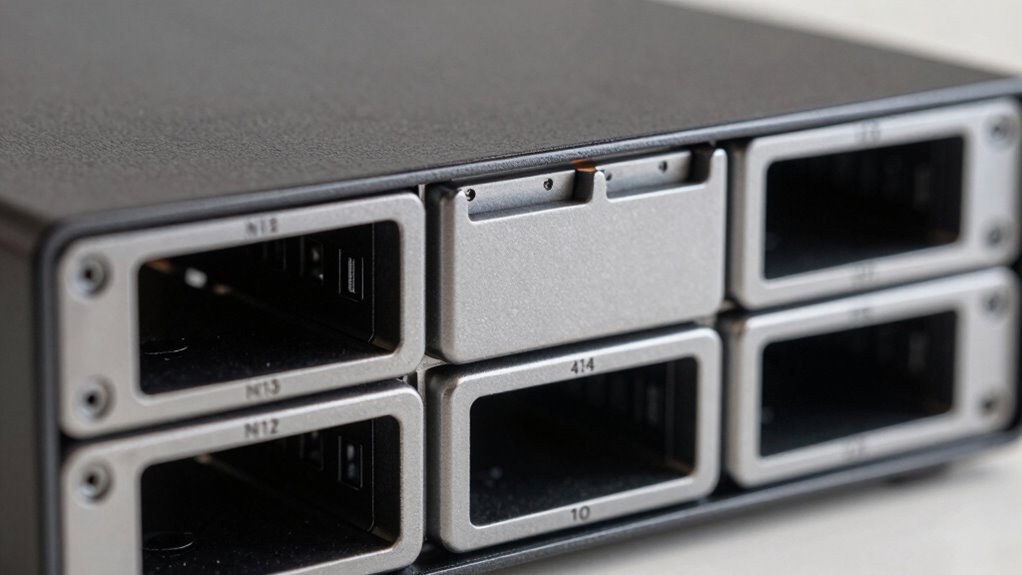
The number of drive bays in a NAS directly determines how much data you can store and how easily you can expand your system later on. More bays mean greater storage capacity and flexibility for future upgrades. For example, a 4-bay NAS can hold more data than a 2-bay model and offers better options for drive redundancy, protecting your data if a drive fails. Keep in mind that adding more drives increases power consumption, which may impact energy costs. Additionally, choosing a NAS with best vacuums for dust removal can help maintain optimal performance by keeping internal components clean and dust-free. Understanding your storage capacity needs is essential when selecting the right number of drive bays to ensure your system will meet both current and future demands. Considering expandability options can also influence your decision, especially if you anticipate significant data growth over time. Being aware of drive compatibility ensures that you select drives that work efficiently with your NAS model, avoiding potential setup issues. Moreover, selecting drives with durability features can enhance the longevity and reliability of your data storage solutions.
How to Choose the Right Number of Drive Bays for Your Needs
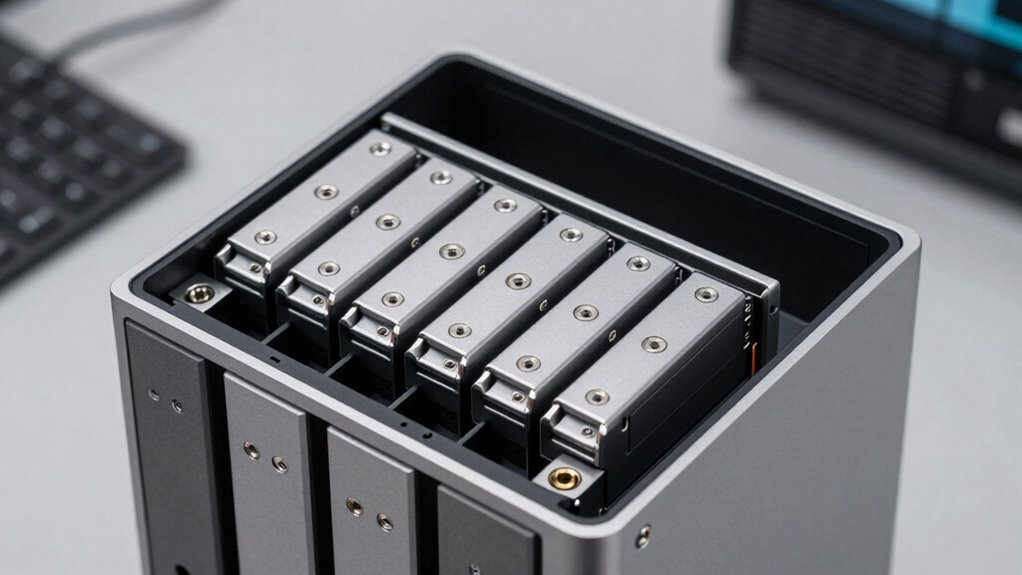
Choosing the right number of drive bays depends on your current storage needs and future plans. If you prioritize robust backup strategies, consider expanding storage capacity now and later. For small offices or home use, a 2-4 bay NAS might suffice for daily backups and file sharing. Larger networks or business environments require more bays to support multiple users and higher data volumes. Think about your network configurations; more bays mean greater flexibility for RAID setups, redundancy, and scalability. Planning ahead helps avoid frequent upgrades or migrations. Assess your data growth projections, backup frequency, and how many devices will access the storage. This guarantees you select a NAS with an appropriate number of drive bays that matches your current needs while accommodating future expansion. Additionally, understanding optical drives and enterprise USB backups can enhance your overall data protection strategy. Incorporating cloud backup options can also provide additional security and peace of mind. Considering drive bay configurations can help optimize your setup for both current and future requirements.
How Drive Bays Influence NAS Performance
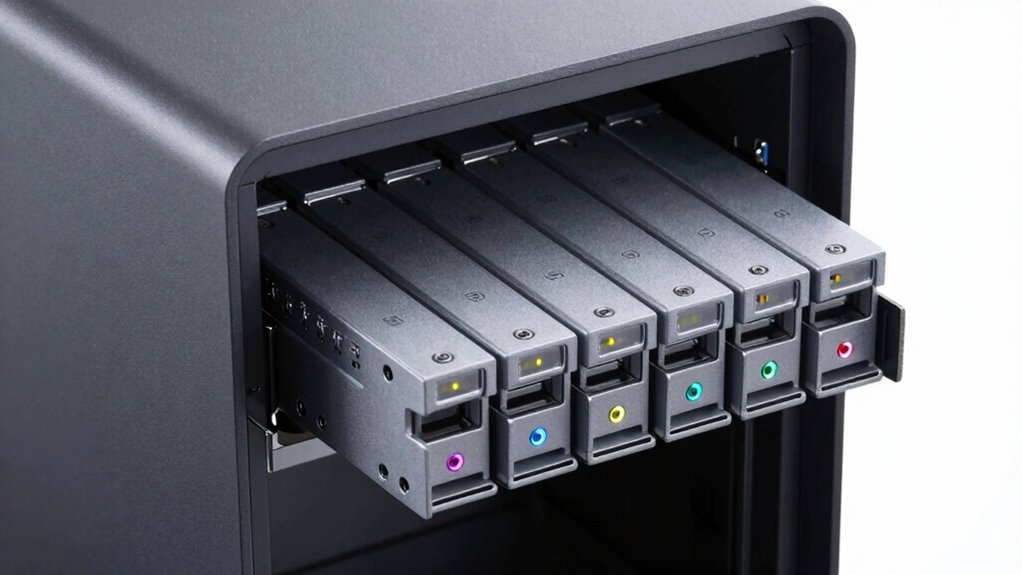
Drive bays directly impact NAS performance because they determine how many drives can operate simultaneously, influencing data transfer speeds and system responsiveness. More bays enable higher data redundancy options like RAID configurations, improving data safety during failures. They also affect network compatibility, as multiple drives can support faster or more diverse network protocols. Additionally, utilizing landscaping techniques can enhance the overall environment, making the backyard more functional and aesthetically pleasing. Consider these points:
- Increased drive bays allow for better data redundancy, reducing risk of data loss.
- They enable higher aggregate data transfer speeds, enhancing overall performance.
- More bays support diverse network compatibility options, accommodating various connection types.
- Understanding drive bay counts helps in selecting a NAS that aligns with your needs for scalability and future-proofing.
- Recognizing the importance of industry standards ensures compatibility and optimal performance in your network setup, especially as technological advancements continue to evolve.
- Familiarity with drive capacity and how it interacts with bay counts can help optimize storage efficiency and cost-effectiveness.
Ultimately, the number of drive bays shapes your NAS’s capacity to handle data efficiently, guarantee reliable redundancy, and stay compatible with evolving network standards.
Common Mistakes When Interpreting NAS Drive Bays and How to Avoid Them
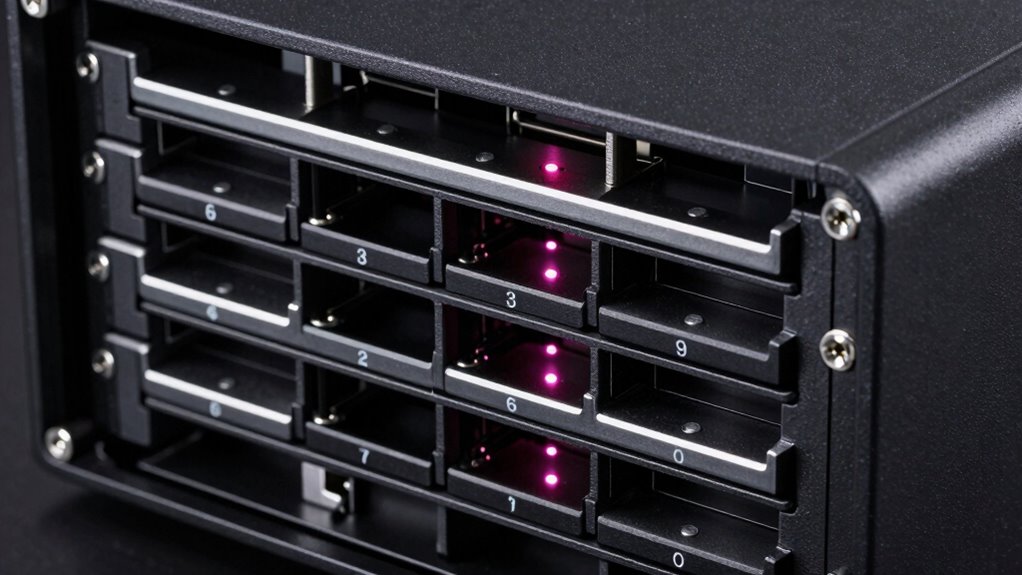
While more drive bays can boost your NAS’s capabilities, misinterpreting their significance can lead to costly mistakes. One common error is assuming that additional bays automatically mean better performance without considering drive noise or power consumption. Larger NAS units with many bays often generate more drive noise, which can be disruptive in quiet environments. Also, more drives consume more power, increasing energy costs and affecting overall efficiency. Failing to account for these factors might lead you to overestimate the benefits of a higher bay count. To avoid this, evaluate your actual needs carefully. Balance the number of bays with the potential increase in drive noise and power consumption. Additionally, understanding whole-home water systems can help you make more informed decisions about your NAS setup, ensuring it’s both capable and suited to your environment.
Future-Proof Your NAS: Tips for Upgrading and Scaling
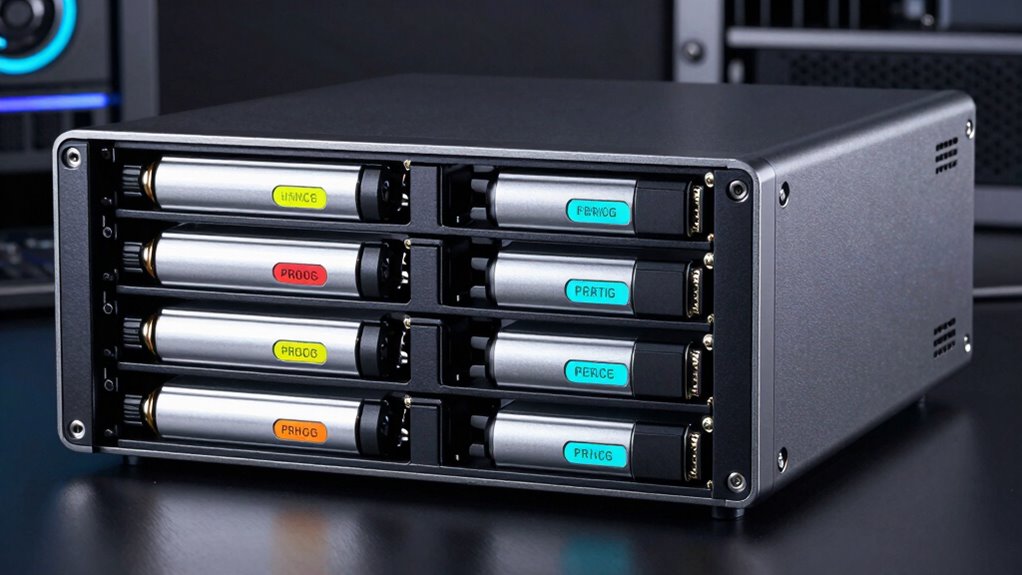
To guarantee your NAS remains useful as your needs grow, it’s essential to plan for upgrades and scalability from the start. First, choose a model with extra drive bays or support for expansion units, ensuring future storage needs are met without replacing the entire system. Second, prioritize features like robust network security and data encryption to protect your growing data. Third, consider a NAS with flexible RAID configurations and hot-swappable drives for easy upgrades. Regular firmware updates also improve security and performance. Additionally, understanding drive bay counts and how they impact scalability can help you select a system that best fits your long-term storage plans. Recognizing the importance of cabling solutions and proper installation can prevent potential failures and data loss. Being aware of drive bay expansion options allows you to plan for future upgrades more effectively. Moreover, choosing a NAS with modular components can make future hardware upgrades more straightforward and cost-effective. Considering expandable storage capacities ensures your system can grow alongside your data needs without significant disruptions. By selecting a scalable system with advanced security options, you future-proof your NAS against increasing data demands and evolving threats, making upgrades seamless and maintaining data integrity. Planning ahead ensures your NAS adapts to your expanding storage and security requirements effortlessly.
Frequently Asked Questions
Can You Upgrade or Add Drive Bays to an Existing NAS?
You generally can’t add drive bays to an existing NAS because of drive bay limitations and upgrade compatibility issues. Most NAS devices have fixed bays, designed specifically for their chassis. If you need more storage, your best option is to replace the current unit with a higher-capacity one or choose a model with more drive bays from the outset. Always check your NAS’s specifications before attempting any upgrades.
Do Larger NAS Drive Bays Always Mean Better Performance?
Larger NAS drive bays don’t always mean better performance. While bigger drives often have higher capacities, drive speed varies based on the drive type and technology, impacting data transfer rates. Additionally, larger drives tend to consume more power, which can affect energy efficiency and cooling needs. So, focus on drive speed and power consumption alongside bay size to guarantee your NAS meets your performance needs effectively.
Are All NAS Drive Bays Compatible With Any Hard Drives?
Not all NAS drive bays are compatible with every hard drive. You need to check drive compatibility, which includes factors like drive size, interface type, and firmware. Keep in mind, larger bays can house more drives, but noise levels vary—more drives often mean more noise. So, choose drives carefully, considering compatibility and drive noise, to guarantee your NAS performs well without unnecessary disruptions.
How Do RAID Configurations Impact the Number of Usable Bays?
Raid configurations directly impact your usable bays because they determine drive redundancy and data redundancy. For example, RAID 1 uses two drives for mirroring, so you only get one usable bay out of two. RAID 5 requires at least three drives, offering a balance of redundancy and storage capacity. As you choose different RAID levels, remember that some bays are dedicated to redundancy, reducing the total number available for data storage.
What Are the Cost Implications of Choosing More Drive Bays?
Imagine you’re upgrading your NAS with six drive bays. Choosing more bays increases costs due to additional drive compatibility and larger enclosures. For example, a 4-bay NAS might cost $500, while a 6-bay model costs $700. The cost comparison shows that more bays mean higher initial investment, but they also offer expanded storage. Keep in mind, larger setups require compatible drives, which can further impact your overall expenses.
Conclusion
Understanding NAS drive bays is like having a map for a treasure hunt—you need the right clues to find what works best for you. By knowing how bays impact capacity, performance, and upgrade options, you can make smarter choices. Don’t just follow trends; choose what truly fits your needs. With careful planning, your NAS can grow with you, like a sturdy tree that’s ready to branch out as your storage needs expand.
Halloween Picks
halloween
As an affiliate, we earn on qualifying purchases.