TL;DR
Jean-Michel Jarre’s account of making Oxygène describes a six-part instrumental album recorded in a small Paris kitchen studio using a handful of synthesizers and a single eight-track tape machine. He says the limited equipment and hand-built sequences shaped the sound, while the use of only two tapes left him with no archive of the album’s original sessions.
Jean-Michel Jarre says he recorded Oxygène, the six-part instrumental album released in late 1976, in a kitchen studio in his Paris flat using a small collection of electronic instruments and a single eight-track recorder. His account describes how limited equipment, hand-made sequences and an effort to bring experimental sound together with melody shaped an album that later reached charts in several countries.

Get audio and creator gear delivered free with Prime
- Fast, free delivery on millions of items
- Prime Video, Amazon Music and more included
- Member-only deals all year
Jarre’s account, published on his official website, traces the album’s origins to his interest in sound manipulation and electronic music. He says he had experimented with guitar and organ, including playing tape backwards and changing its speed, before a drummer in his band suggested he visit the Groupe de Recherches Musicales (GRM), a Paris-based experimental music group associated with French public radio. Jarre says he spent three years working with Pierre Schaeffer and Pierre Henry and also visited Cologne to work with Karlheinz Stockhausen.
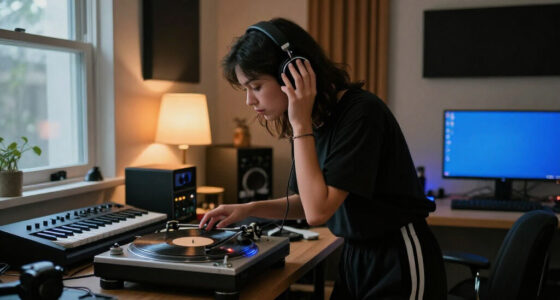
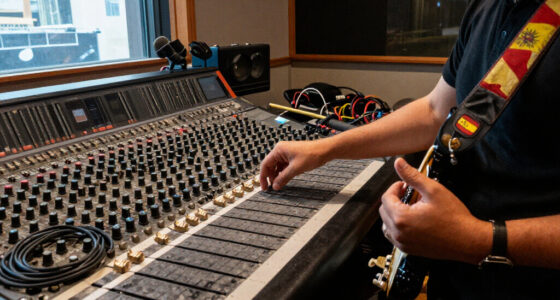
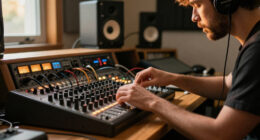
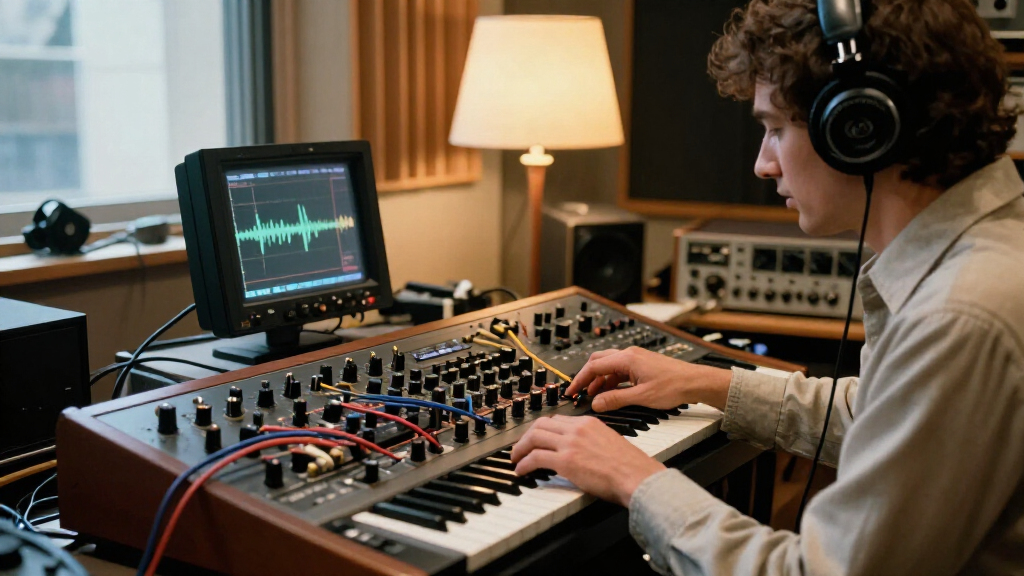
By the time he began making Oxygène, Jarre says he had left the GRM and earned money doing production work for rock musicians. He used that income to assemble a home studio, initially with few instruments. His equipment for the album included an EMS VCS3, an EMS Synthi AKS and an ARP 2600, alongside an Eminent String Ensemble, an RMI Harmonic Synthesizer and a Farfisa organ. An RMI Keyboard Computer was used for some sequencing. The recording was made on a Scully eight-track machine, through a homemade mixer, using Ampex and 3M tape.
Jarre describes the recording process as hands-on and constrained. He says he and collaborator Michel Geiss had only two tapes, meaning that material could be erased when a new attempt was needed. Jarre says that is why he has no archive of the original Oxygène sessions. He also says sequences were made by hand and sounds were not repeated in precisely the same way, including drum-machine sounds that he subtly filtered. Those details help explain how he remembers the album’s patterns and textures being built.
A Home Studio Shaped the Sound
Jarre’s account matters because it links the album’s production conditions to the music’s construction, rather than presenting electronic sound as the result of a large, fully equipped studio. He says he worked with a limited number of instruments and an eight-track recorder, assembling and recording sounds in the same space. The use of hand-made sequences and tape-based recording placed performance and sound design close together.
The story also illuminates a creative aim that Jarre identifies directly: combining experimentation with pop melody. He says he wanted electronic music to be more open to listeners than he felt some contemporary music had become. That account offers a useful way to understand the album’s approach, though it remains Jarre’s own retrospective description rather than an independent production analysis.
According to the official account, Oxygène reached the top 10 in seven countries, spent 24 weeks in the UK album charts and has sold close to 20 million copies worldwide. The source does not specify the dates or methodology behind the worldwide sales figure. Even with that qualification, the reported reach gives the story significance beyond studio technique: Jarre’s small-scale production accompanied an album that found a broad international audience.
Products Worth Considering

Bose QuietComfort True Wireless Earbuds with Active Noise Cancellation, Bluetooth 5.3, USB-C Charging, IPX4, Black

Samsung 27-Inch Odyssey G5 QHD Gaming Monitor (G50F)

Samsung Galaxy Tab A11+ Tablet (6GB RAM, 128GB Storage, Gray)
As an affiliate, we earn on qualifying purchases.
From GRM to a Paris Kitchen
Jarre places his interest in electronic music in the late 1960s, when he felt that classical music, rock and other styles operated within separate boundaries. He says working at the GRM exposed him to electronic sound-making and to the ideas of Schaeffer, a pioneer of musique concrète. Jarre also cites the BBC Radiophonic Workshop and the German electronic music environment associated with Stockhausen as important examples of institutions exploring sound.
His experience did not lead him to abandon melody. In his account, Jarre wanted to take techniques associated with experimental music and make them accessible to a larger audience. He describes the VCS3 as rough and harsh compared with American synthesizers, but says he valued that character. He also recounts discovering that a Revox tape machine could delay sound from a loudspeaker and create a sense of space.
The finished album was unusual in its format as well as its production: it consists of six tracks titled Oxygène Parts 1 through 6 and is entirely instrumental. Jarre’s account frames the kitchen studio as a practical response to the equipment and recording resources available to him, not as a purpose-built commercial facility.
“The main difference with electronic music is that you create music in terms of sound, not just notes.”
— Jean-Michel Jarre
The Missing Session Tapes
Jarre says he has no archive of Oxygène’s original material because he and Geiss had only two tapes and erased recordings as they worked. The account does not provide surviving session documents, a detailed track-by-track recording log or independent confirmation of each production detail. It also does not date the website account, and the supplied material gives no additional release, anniversary or archival announcement tied to its publication.
The commercial figures in the account require care: it reports nearly 20 million copies sold worldwide, but gives no cutoff date, sales breakdown or calculation method. The report also describes the album as having broken new ground, but that is a retrospective characterization; the source does not offer comparative data about other electronic releases of the period.
No New Release Announced
The source material is a retrospective account of the album’s making, not an announcement of a new recording, reissue or exhibition. It sets out Jarre’s recollections of the instruments, collaborators and recording constraints behind Oxygène, but does not identify a forthcoming project or a next milestone.
For readers seeking further detail, the immediate reference is Jarre’s full first-person account on his official website. Any additional claims about the sessions, the sales history or surviving tapes would need separate sourcing; the material provided here does not say that new documentation or audio has been found.
Key Questions
When was Oxygène released?
The source says the album was released in late 1976. It does not give a specific release date.
How many tracks are on Oxygène?
The album has six instrumental tracks, titled Oxygène Parts 1 through 6, according to Jarre’s account.
Where did Jarre record the album?
Jarre says he recorded it in a kitchen studio in his Paris flat, using a homemade mixer and a Scully eight-track tape recorder.
What equipment did Jarre use?
The listed equipment includes an EMS VCS3, Synthi AKS and ARP 2600, as well as an Eminent String Ensemble, an RMI Harmonic Synthesizer and a Farfisa organ. An RMI Keyboard Computer was used for some sequencing.
Why are there no original Oxygène session recordings?
Jarre says he and collaborator Michel Geiss had only two tapes and erased earlier recordings when they needed to make new attempts, leaving him without an archive of the original sessions.
Source: jeanmicheljarre.com