For most home recording setups, I’d start with the Mackie ProFX10v3+: its USB recording and broader mixer workflow make it the strongest all-around choice in this group. The TKLBLS 12-Channel Mixer suits projects that need more inputs, while the MAONO Podcast Equipment Bundle offers a simpler path for new podcasters who want a mic and mixer together. The tradeoff is between recording flexibility and ease: a larger mixer gives you more room to grow, while compact bundles can be easier to set up but less adaptable. Some listed models are aimed at streaming or DJ use, so their feature labels do not automatically make them good multitrack recording tools. Read on for the full comparison and guidance on choosing a mixer that fits your room, sources, and recording plans.

Get audio and creator gear delivered free with Prime
- Fast, free delivery on millions of items
- Prime Video, Amazon Music and more included
- Member-only deals all year
Complete the kit


Key Takeaways
The Mackie ProFX10v3+ leads for general home recording because USB recording and a more developed mixer workflow make it a better fit for varied sources than the creator-oriented bundles.
More channels matter when you record several sources at once. The TKLBLS 12-Channel and FULUODE CT-80S offer more input capacity than the compact four-channel options, but buyers should verify the USB recording path they need.
Bundles trade flexibility for convenience. The G10, OZMI, ALSO GO, TENLAMP, and MAONO packages combine accessories with a mixer, which can simplify a first setup but may not suit later microphone or instrument upgrades.
Streaming features are not the same as recording features. The FIFINE AmpliGame SC3 and several compact podcast mixers focus on creator controls and effects, while serious multitrack workflows call for careful checking of interface capabilities.
Bluetooth and USB playback help with backing tracks, not necessarily recording. DJ-oriented and budget mixers can be handy for monitoring or playback, but buyers should distinguish those functions from sending separate inputs to recording software.
| 4-Channel Bluetooth Audio Mixer with USB Interface |  | Best Compact Recording Mixer | Channels: 4 | Connectivity: USB, Bluetooth, auxiliary, XLR | Inputs: Microphone, MP3, XLR, 6.5 mm, Bluetooth, USB | VIEW LATEST PRICE | See Our Full Breakdown |
| G10 Podcast Equipment Bundle with Audio Mixer and Microphone |  | Best Starter Podcast Bundle | Channels: 2 | Connectivity: 3.5 mm, 6.35 mm, XLR/48V microphone, Bluetooth, Type-C | Outputs: TRS, USB Type-C, XLR | VIEW LATEST PRICE | See Our Full Breakdown |
| FULUODE CT-80S 8-Channel Audio Mixer with Bluetooth, USB, Reverb, and 48V Phantom Power |  | Best for Multi-Mic Home Sessions | Channels: 8 | Connectivity: USB, Bluetooth 5.0 | Input types: Microphone, instrument, USB | VIEW LATEST PRICE | See Our Full Breakdown |
| OZMI Podcast Equipment Bundle with RGB Audio Mixer, Microphone, Headphones and Boom Arm |  | Best All-in-One Voice Creator Kit | Channels: 1 | Included components: RGB mixer, 3.5 mm condenser microphone, headphones, boom arm, pop filter | Connectivity: Bluetooth, USB, 3.5 mm AUX, OTG/PC | VIEW LATEST PRICE | See Our Full Breakdown |
| TKLBLS 12-Channel Audio Mixer with USB, Bluetooth, and DSP Effects |  | Best for Expandable Home Studios | Channels: 12 | Inputs: 12 microphone inputs and 2 stereo line inputs | Channel EQ: 3-band | VIEW LATEST PRICE | See Our Full Breakdown |
| Mackie ProFX10v3+ 10-Channel Mixer with Bluetooth, USB Recording, and GigFX+ |  | Best Overall for Home Studio Flexibility | Channels: 10 | Connectivity: 1/4-inch, USB-C, XLR, Bluetooth | Recording: USB recording with switchable modes | VIEW LATEST PRICE | See Our Full Breakdown |
| ALSO GO F998 Podcast Equipment Bundle with BM800 Microphone | 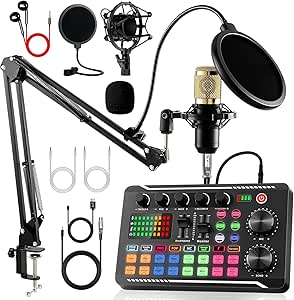 | Best Complete Starter Bundle | Channels: 2 | Microphone: BM800 studio condenser, super-cardioid | Connectivity: Bluetooth, USB, 3.5 mm | VIEW LATEST PRICE | See Our Full Breakdown |
| Pyle 6-Channel Audio Mixer with Bluetooth and DSP Effects |  | Best for Small Multi-Source Sessions | Model: PMX506 | Channels: 6 | Microphone inputs: 2 XLR combo inputs | VIEW LATEST PRICE | See Our Full Breakdown |
| Kaschun 4-Channel DJ Audio Mixer with Bluetooth and USB MP3 Input |  | Best Compact Pick for Basic Recording | Channels: 4 | Connectivity: Bluetooth, USB | Audio inputs: Microphone, MP3, Bluetooth, XLR, 6.5 mm | VIEW LATEST PRICE | See Our Full Breakdown |
| TKLBLS 4-Channel Podcast Audio Mixer with DSP Effects |  | Best for Hands-On Vocal Shaping | Model: Z4 | Channels: 4 | Microphone inputs: 2 XLR | VIEW LATEST PRICE | See Our Full Breakdown |
| FIFINE AmpliGame SC3 Gaming Audio Mixer |  | Best for Desktop Voice Recording | Channels: 4 | Connectivity: USB; XLR microphone input | Microphone input: XLR | VIEW LATEST PRICE | See Our Full Breakdown |
| TENLAMP G10 Creator Audio Mixer Bundle with Microphone |  | Best Starter Bundle for Mobile Creators | Channels: 2 | Connectivity: Auxiliary; Bluetooth; USB | Power source: Battery powered | VIEW LATEST PRICE | See Our Full Breakdown |
| MAONO Podcast Equipment Bundle with Audio Mixer and 3.5 mm Microphone |  | Best for Two-Person, Multi-Platform Podcasting | Channels: 9 | Connectivity: USB Type-C; 3.5 mm; auxiliary; Bluetooth | Power source: Battery powered | VIEW LATEST PRICE | See Our Full Breakdown |
| audio mixers for home recording | Channels | Connectivity | Phantom power |
|---|---|---|---|
| 4-Channel Bluetooth Audio Mixe | 4 | USB, Bluetooth, auxiliary, XLR | 48V |
| G10 Podcast Equipment Bundle w | 2 | 3.5 mm, 6.35 mm, XLR/48V microphone, Bluetooth, Type-C | — |
| FULUODE CT-80S 8-Channel Audio | 8 | USB, Bluetooth 5.0 | 48V |
| OZMI Podcast Equipment Bundle | 1 | Bluetooth, USB, 3.5 mm AUX, OTG/PC | — |
| TKLBLS 12-Channel Audio Mixer | 12 | — | 48V, independent switches per channel |
| Mackie ProFX10v3+ 10-Channel M | 10 | 1/4-inch, USB-C, XLR, Bluetooth | — |
| ALSO GO F998 Podcast Equipment | 2 | Bluetooth, USB, 3.5 mm | — |
| Pyle 6-Channel Audio Mixer wit | 6 | Auxiliary, Bluetooth 5.0, USB | +48V |
| Kaschun 4-Channel DJ Audio Mix | 4 | Bluetooth, USB | +48 V |
| TKLBLS 4-Channel Podcast Audio | 4 | Bluetooth 5.0, USB, OTG | 48V |
| FIFINE AmpliGame SC3 Gaming Au | 4 | USB; XLR microphone input | 48V |
| TENLAMP G10 Creator Audio Mixe | 2 | Auxiliary; Bluetooth; USB | — |
| MAONO Podcast Equipment Bundle | 9 | USB Type-C; 3.5 mm; auxiliary; Bluetooth | — |
More Details on Our Top Picks
4-Channel Bluetooth Audio Mixer with USB Interface
For a small home setup that needs more than one mic input without giving up desk space, this Kaschun mixer is a practical middle ground. Its four channels, USB computer connection, and 48V phantom power cover basic vocal and instrument recording, while the 7-band EQ and 99 DSP effects offer extra ways to shape a monitor or streaming mix. Compared with the FULUODE CT-80S, it gives up channel capacity but takes up less room and is easier to fit into a compact setup. The tradeoffs matter: Bluetooth only brings audio in, not out to a speaker, and USB or Bluetooth playback must be disabled when using channels 3 and 4. I’d choose it for a modest recording desk, not a session that needs every input available at once.
Pros:- Four channels accommodate a small vocal-and-instrument setup.
- USB supports computer connectivity and playback.
- 48V phantom power supports compatible condenser microphones.
- Compact metal chassis, 7-band EQ, and 99 DSP effects.
Cons:- Bluetooth is input-only and cannot transmit audio to a speaker.
- USB or Bluetooth playback must be turned off when channels 3 and 4 are in use.
Best for: Home recordists with one or two microphones and occasional instruments who want USB computer connectivity in a compact mixer.
Not ideal for: Small bands or podcasters who need more than four simultaneous channels, or anyone who expects Bluetooth to send audio to speakers.
- Channels:4
- Connectivity:USB, Bluetooth, auxiliary, XLR
- Inputs:Microphone, MP3, XLR, 6.5 mm, Bluetooth, USB
- Outputs:USB, XLR, 1/4 inch
- Effects and EQ:99 DSP effects; 7-band EQ
- Phantom power:48V
- Dimensions and weight:9.65 × 7.87 × 1.58 in; 1.2 kg
Our verdict“Choose this compact Kaschun for a small USB-connected recording setup, but pick the FULUODE CT-80S if you need more channels.”
G10 Podcast Equipment Bundle with Audio Mixer and Microphone
This G10 bundle is the most ready-to-start option here for a solo voice creator: it includes a mixer, 3.5 mm condenser microphone, and boom arm, along with noise reduction, EQ controls, sound pads, and reverb. Connections for computers, Macs, and mobile devices make it more adaptable than a mixer aimed only at a desktop recording chain. Compared with the OZMI Podcast Equipment Bundle, it has two channels rather than one, which gives a beginner more room to add a source; OZMI, by contrast, includes headphones and a pop filter. The G10’s built-in voice effects and follow-singing mode suit streaming and casual performance, but its supplied mic’s 3.5 mm connection is less conventional than an XLR mic setup. I’d treat it as a creator bundle, not a flexible multitrack studio mixer.
Pros:- Includes a microphone and boom arm to get a basic voice setup started.
- Connects to computers, Macs, and mobile devices.
- Noise reduction, EQ, voice effects, sound pads, and reverb presets provide voice-focused controls.
- Two channels offer more source flexibility than the one-channel OZMI bundle.
Cons:- The included microphone uses a 3.5 mm connection rather than XLR.
- The supplied information does not specify a software update date.
Best for: First-time podcasters or streamers who want a bundled microphone and boom arm with effects for voice recording and live sessions.
Not ideal for: Home recordists building an XLR microphone chain or recording several performers and instruments at the same time.
- Channels:2
- Connectivity:3.5 mm, 6.35 mm, XLR/48V microphone, Bluetooth, Type-C
- Outputs:TRS, USB Type-C, XLR
- Included microphone:3.5 mm condenser microphone
- Sound effects:12 built-in effects
- Reverb:5 preset modes; 19 customizable modes
- Power:Battery powered; 5 volts
- Dimensions and weight:11.73 × 5.51 × 8.58 in; 4.6 lb
Our verdict“Pick the G10 if you want a bundled starter rig for solo podcasting and streaming, not a conventional multi-mic recording mixer.”
FULUODE CT-80S 8-Channel Audio Mixer with Bluetooth, USB, Reverb, and 48V Phantom Power
The FULUODE CT-80S is the strongest fit in this group when a home recording session needs several microphones or instruments connected at once. Its eight channels give it a clear capacity advantage over the four-channel Kaschun, while USB input, MP3 playback, Bluetooth 5.0, and reverb add flexible playback and monitoring options. 48V phantom power also supports compatible condenser microphones. That extra capacity comes with a larger footprint, and the product details do not clarify which input types are available on each channel, making setup harder to plan than the more specifically documented TKLBLS 12-channel mixer. It is also specified for 110V power with an American plug, a limitation for buyers outside compatible regions. I’d favor it for a modest group setup, but verify the input layout and power fit before choosing it.
Pros:- Eight channels handle more simultaneous sources than the four-channel Kaschun.
- USB input, MP3 playback, and Bluetooth 5.0 provide multiple playback options.
- 48V phantom power supports compatible condenser microphones.
- Slim profile and LED display suit a shared home recording or rehearsal space.
Cons:- The input types available on each channel are not specified.
- 110V power and an American plug may not suit other electrical regions.
- Its size is less convenient for a compact desktop setup than the Kaschun.
Best for: Home bands, small ensembles, or podcasters who need several mic and instrument sources connected during a session.
Not ideal for: Solo creators with little desk space, or buyers whose local power setup does not match the specified 110V American-plug configuration.
- Channels:8
- Connectivity:USB, Bluetooth 5.0
- Input types:Microphone, instrument, USB
- Audio features:Reverb and MP3 playback
- Phantom power:48V
- Display:LED
- Power:Corded electric; 110V
- Dimensions and weight:13.7 × 15.75 × 1.77 in; 3.3 kg
Our verdict“Choose the CT-80S for a home group that needs eight inputs, provided its channel layout and 110V power match your setup.”
OZMI Podcast Equipment Bundle with RGB Audio Mixer, Microphone, Headphones and Boom Arm
OZMI makes the most sense for a creator who wants a complete voice-focused desk kit rather than a mixer to expand over time. The bundle includes a 3.5 mm microphone, monitoring headphones, boom arm, and pop filter, plus pitch effects, voice changing, sound pads, ducking, and loopback. That makes it more immediately equipped for solo streaming than the Kaschun four-channel mixer, which offers more conventional channel capacity but does not come with recording accessories. The key compromise is the OZMI’s single channel: it is not a sensible choice for recording multiple mics or building a flexible instrument setup. Bluetooth, AUX, and OTG/PC connections broaden its use, and its rechargeable battery can help with mobile placement, though some features depend on compatible stereo sources or devices.
Pros:- Bundle includes a microphone, monitoring headphones, boom arm, and pop filter.
- Loopback, ducking, sound pads, and voice effects support solo streaming workflows.
- Bluetooth, AUX, and OTG/PC connections offer several ways to connect devices.
- 3600 mAh rechargeable battery supports use away from a fixed outlet.
Cons:- One channel limits recording to a single source at a time.
- Some features depend on compatible stereo music sources or devices.
Best for: Solo streamers and voice creators who want a bundled microphone, headphones, boom arm, and pop filter with built-in performance effects.
Not ideal for: Home musicians or interviewers who need multiple microphone inputs, separate instrument channels, or a conventional multi-channel recording mixer.
- Channels:1
- Included components:RGB mixer, 3.5 mm condenser microphone, headphones, boom arm, pop filter
- Connectivity:Bluetooth, USB, 3.5 mm AUX, OTG/PC
- Audio input and output:XLR input; auxiliary output
- Pitch effects:12 settings
- Voice and sound features:6 preset modes, 4 voice changer modes, 3 built-in sound effects, 4 custom sound pads
- Battery capacity:3600 mAh
Our verdict“Choose OZMI for an accessories-included solo streaming station, but skip it if your home recordings need more than one channel.”
TKLBLS 12-Channel Audio Mixer with USB, Bluetooth, and DSP Effects
For a home studio that needs substantial input capacity, TKLBLS offers the most clearly specified channel layout in this group: 12 microphone inputs plus two stereo line inputs. That makes it a stronger candidate than the eight-channel FULUODE CT-80S for larger recording or rehearsal setups, especially with independent 48V phantom power switches and 3-band EQ on each channel. USB recording and playback add a direct computer connection, while the 7-band main EQ and 99 DSP effects give the overall mix further shaping options. The tradeoff is scale: this is more mixer than a solo podcaster needs, and its corded power requires an outlet nearby. Bluetooth is convenient for bringing in playback, but the stated 15-foot range is limited. I’d choose it for multiple simultaneous sources, not a compact one-mic desk.
Pros:- Twelve microphone inputs and two stereo line inputs support larger sessions than the FULUODE CT-80S.
- Independent 48V phantom power switches give channel-by-channel control for compatible microphones.
- 3-band channel EQ and 7-band main output EQ provide separate tone-shaping stages.
- USB recording and playback, Bluetooth, and 99 DSP effects add recording and monitoring flexibility.
Cons:- Bluetooth range is specified at only 15 feet.
- Corded power limits placement to locations near an outlet.
- Its channel count and dimensions may be excessive for a solo home recording setup.
Best for: Home studio owners and small groups recording multiple microphones and stereo line sources who need channel-level EQ and individually switched phantom power.
Not ideal for: Solo voice creators or compact desktop users who need only one or two inputs and want to avoid a larger corded mixer.
- Channels:12
- Inputs:12 microphone inputs and 2 stereo line inputs
- Channel EQ:3-band
- Main output EQ:7-band
- DSP effects:99
- Phantom power:48V, independent switches per channel
- Connectivity and output:USB, Bluetooth; XLR output
- Dimensions and weight:12.41 × 17.88 × 3.27 in; 4.54 kg
Our verdict“Pick TKLBLS when your home sessions need many mic and line inputs with individual phantom-power control; choose a smaller mixer for solo recording.”
Mackie ProFX10v3+ 10-Channel Mixer with Bluetooth, USB Recording, and GigFX+
I’d put the Mackie ProFX10v3+ first for home recordists who want an analog mixer that can also serve as a USB recording hub. Its 10 channels and Onyx mic preamps give a small band or multi-mic podcast more room to grow than the four-channel TKLBLS Z4 or Kaschun mixer. Switchable USB recording modes and bidirectional Bluetooth with Mix Minus also suit streaming and remote call workflows, while the color LCD makes the 24 GigFX+ effects easier to adjust than a basic effect section. The tradeoff is size and complexity: a solo creator may not need all those channels or routing options, and the simpler bundles offer more ready-to-use accessories. It also needs mains power, and its warranty is nontransferable.
Pros:- Ten channels provide room for multiple microphones and instruments.
- Onyx preamps are included on every microphone channel.
- Switchable USB recording modes and Bluetooth support recording and streaming workflows.
- Twenty-four adjustable effects with tap tempo and a color LCD.
Cons:- Its channel count and controls may be more than a solo creator needs.
- Requires corded electric power.
- The one-year all-inclusive warranty is nontransferable.
Best for: Home recordists and small bands who need several microphone inputs, USB recording, and effects in one mixer.
Not ideal for: Solo podcasters seeking a simple, accessory-packed starter kit or anyone needing a battery-powered mixer.
- Channels:10
- Connectivity:1/4-inch, USB-C, XLR, Bluetooth
- Recording:USB recording with switchable modes
- Effects:24 GigFX+ effects with tap tempo
- Frequency:96 kHz
- Dimensions:10.7 × 3.3 × 11.9 inches
- Weight:4.9 pounds
- Power:Corded electric
Our verdict“Choose the Mackie if you want a capable home-recording hub with room for multiple sources; choose a smaller mixer if simplicity matters more.”
ALSO GO F998 Podcast Equipment Bundle with BM800 Microphone
The ALSO GO F998 is the most ready-to-start option here: it pairs a mixer with a BM800 condenser microphone, boom arm, shock mount, pop filters, cables, and earphones. That makes it a more complete entry point than the Mackie ProFX10v3+, which offers more channels and recording flexibility but does not include a microphone kit. Its 16 background effects, seven recording modes, and four voice-changer modes cater more to casual podcasting, streaming, or gaming than to detailed multitrack home recording. Wired USB and 3.5 mm connections cover common devices, with Bluetooth as another playback option. I’d be cautious about the listing’s inconsistent references to F998 and P99, and the description leaves some ambiguity around using Bluetooth and wired phone connections together. The two-channel format also limits growth.
Pros:- Includes a BM800 microphone, boom arm, shock mount, pop filters, cables, and earphones.
- Offers 16 background effects, seven recording modes, and four voice effects.
- Supports USB, 3.5 mm, and Bluetooth connections.
- Noise reduction and included pop filters and foam caps target common unwanted vocal noise.
Cons:- Two channels offer limited room for additional microphones or instruments.
- The product description inconsistently identifies the mixer as F998 and P99.
- The phone Bluetooth and wired connection options may require choosing between connection methods.
Best for: New podcasters or streamers who want a microphone, mounting gear, and basic mixer controls in one package.
Not ideal for: Musicians recording several sources or creators who need clearly specified routing and a more expandable mixer.
- Channels:2
- Microphone:BM800 studio condenser, super-cardioid
- Connectivity:Bluetooth, USB, 3.5 mm
- Background effects:16
- Recording modes:7
- Voice changer modes:4
- Included accessories:Boom arm, shock mount, pop filters, cables, earphones
- Dimensions:4.52 × 1.77 × 7.4 inches
Our verdict“Pick this bundle for an accessible, mostly complete vocal setup, but choose a more expandable mixer for music sessions with multiple sources.”
Pyle 6-Channel Audio Mixer with Bluetooth and DSP Effects
The Pyle PMX506 suits a home setup that needs more than a basic two-mic podcast mixer without stepping up to the Mackie ProFX10v3+. With six channels, two XLR combo inputs, instrument-friendly HI-Z switching, and a low-cut option, it can handle a modest mix of vocals and instruments. The Mackie gives buyers more channels and a more clearly described USB recording workflow; the Pyle counters with straightforward Bluetooth and USB playback, plus PC recording. Its +48V phantom power supports condenser mics, while stereo meters make level checks visible at a glance. The limitation is that the available details do not spell out the full input and output routing, so I would not choose it for a workflow that depends on precise routing options. It is also cord-powered rather than a portable, battery-run unit.
Pros:- Six channels accommodate a small combination of microphones and instruments.
- Two XLR combo inputs include +48V phantom power.
- USB supports playback and PC recording, with Bluetooth 5.0 for streaming.
- Low-cut and HI-Z switches help tailor sources before recording.
Cons:- The full range of input and output routing options is not specified.
- Only two XLR combo microphone inputs are listed.
- Requires corded electric power.
Best for: Home musicians and podcast teams recording a few microphones or instruments who want six channels and basic USB recording.
Not ideal for: Creators who need detailed routing specifications, many XLR mic inputs, or a battery-powered setup.
- Model:PMX506
- Channels:6
- Microphone inputs:2 XLR combo inputs
- Connectivity:Auxiliary, Bluetooth 5.0, USB
- USB playback formats:MP3, WAV
- Effects:DSP modes including echo, reverb, and delay
- Phantom power:+48V
- Dimensions:10.4 × 11 × 2.9 inches
Our verdict“Choose the Pyle for a compact six-channel home setup with basic recording and instrument support, but favor the Mackie for more channels and clearer workflow detail.”
Kaschun 4-Channel DJ Audio Mixer with Bluetooth and USB MP3 Input
The Kaschun is a compact choice for a desk or mobile home setup where space matters more than extensive channel control. Its four channels, XLR and 6.35 mm inputs, and +48V phantom power cover a modest microphone-and-instrument arrangement, while the USB audio interface supports PC recording and live streaming. Unlike the TKLBLS Z4, the Kaschun’s listed strengths center on Bluetooth music input and USB MP3 playback rather than a specified 3-band EQ and large DSP effects library. That makes it a better fit for simple capture or karaoke-style use than for shaping a detailed home-studio mix. Bluetooth is for incoming music, not sending audio to wireless headphones or speakers, and USB MP3 playback requires selecting the MP3 Route control. Its small footprint is useful, but its feature set is basic.
Pros:- Four channels accept microphones and instruments.
- USB audio interface supports PC recording and live streaming.
- Bluetooth music input and USB MP3 playback are built in.
- Compact dimensions and low listed weight suit space-limited setups.
Cons:- Bluetooth does not support audio output to wireless devices.
- USB MP3 playback requires selecting the MP3 Route control.
- The product details do not specify an onboard effects or per-channel EQ section.
Best for: Bedroom creators and portable recording users who need a small mixer for one or two mics, instruments, and simple PC recording.
Not ideal for: Home recordists who need extensive channel EQ, many microphone inputs, or Bluetooth audio output to headphones.
- Channels:4
- Connectivity:Bluetooth, USB
- Audio inputs:Microphone, MP3, Bluetooth, XLR, 6.5 mm
- Phantom power:+48 V
- Outputs:3.5 mm, USB, XLR, 1/4-inch, RCA
- Dimensions:7.87 × 6.7 × 1.57 inches
- Weight:0.61 kg
- Power source:Corded electric
Our verdict“Choose the Kaschun when a small footprint and simple USB recording matter most, but pick the TKLBLS Z4 for more specified tone-shaping and effects.”
TKLBLS 4-Channel Podcast Audio Mixer with DSP Effects
For a compact mixer centered on vocal tone and effects, I’d favor the TKLBLS Z4 over the Kaschun. Both have four channels and support USB and Bluetooth, but the Z4 specifies 3-band EQ per channel, 99 DSP effects, an 80Hz high-pass filter, and a -26dB PAD. Those controls give home podcasters more ways to tame rumble, handle stronger signals, and add ambience before or during a session. It also supports USB recording and OTG connections, which can suit a computer or compatible mobile workflow. The Mackie ProFX10v3+ remains the stronger option when a session needs more channels and a more fully featured recording hub; the Z4 is smaller and focused, but lists only two XLR mic inputs. Its Bluetooth range is also limited to 15 feet.
Pros:- Provides 3-band EQ on each channel and 99 selectable DSP effects.
- 48V phantom power supports condenser microphones.
- PAD and 80Hz high-pass filter help manage strong signals and low-frequency rumble.
- USB recording, OTG, and Bluetooth 5.0 offer several connection options.
Cons:- Only two XLR microphone inputs are specified.
- Bluetooth range is limited to 15 feet.
- Four channels provide less room to expand than the Mackie ProFX10v3+.
Best for: Podcasters and vocal creators who want compact channel EQ, built-in effects, and USB or OTG connectivity.
Not ideal for: Small bands or multi-mic recording teams that need more than two specified XLR microphone inputs or longer-range Bluetooth.
- Model:Z4
- Channels:4
- Microphone inputs:2 XLR
- EQ:3-band per channel
- DSP effects:99 selectable effects, including reverb and delay
- Phantom power:48V
- Filters and pad:-26dB PAD; 80Hz high-pass filter
- Connectivity:Bluetooth 5.0, USB, OTG
Our verdict“Choose the Z4 for compact vocal shaping and effects, but move to the Mackie if you need more channels for a growing recording setup.”
FIFINE AmpliGame SC3 Gaming Audio Mixer
The FIFINE AmpliGame SC3 suits a home setup centered on one XLR microphone and a computer, with hands-on controls that make level changes and muting easy while recording or streaming. Its 48V phantom power supports compatible condenser mics, giving it a more conventional microphone connection than the MAONO bundle, whose included mic uses a 3.5 mm input and does not support phantom power. Separate controls for microphone, line input, headphones, and output help keep listening and recording levels manageable without digging through software. The tradeoff is its gaming-oriented effects and connections: it does not support USB microphones, and the supplied details do not describe multitrack recording or expanded channel routing. Compared with the TENLAMP G10 bundle, the SC3 offers a dedicated XLR input but does not include a microphone or recording accessories.
Pros:- XLR input with 48V phantom power supports compatible condenser microphones.
- Independent controls for microphone, line input, headphones, and line output.
- Front-mounted mute and monitoring buttons provide quick access during recording.
- Programmable sound effects and voice modes offer options for voice-led content.
Cons:- Does not support USB microphones.
- XLR cable is not included, and the mixer bundle does not include a microphone.
- Gaming effects and the listed connections make it less suited to complex studio routing.
Best for: Desktop creators who already own an XLR condenser microphone and want direct controls for voice recording, monitoring, and muting.
Not ideal for: Beginners seeking a ready-to-record kit, or anyone using a USB microphone or needing a mixer designed for instrument-heavy multitrack sessions.
- Channels:4
- Connectivity:USB; XLR microphone input
- Microphone input:XLR
- Phantom power:48V
- Power:USB-C
- Outputs:3.5 mm line out; 3.5 mm headphone; headset
- Compatibility:Windows; macOS
- Dimensions:4.44 × 6.45 × 1.6 in
Our verdict“Choose the SC3 if you already have an XLR mic and want accessible desktop voice controls, but skip it if you need a complete recording kit or broader studio routing.”
TENLAMP G10 Creator Audio Mixer Bundle with Microphone
The TENLAMP G10 bundle is aimed at creators who want a mixer and condenser microphone together, with controls for noise reduction, voice effects, bass, treble, reverb, and pitch. Its PC, phone, and tablet compatibility gives it a broader mobile-friendly brief than the desktop-focused FIFINE AmpliGame SC3, while the included mic and accessories make it easier to assemble a basic voice-recording setup. The two-channel design is a better fit for simple speech sessions than a recording project that needs several independent sources. Battery power also frees the setup from a fixed USB power connection, but the product data does not state battery life, so I would not choose it for long sessions without a charging plan. Compared with the MAONO bundle, its stated channel count is lower, and the supplied details do not specify support for two-person recording.
Pros:- Includes a mixer, condenser microphone, and accessories in one bundle.
- Noise reduction and real-time tone and voice controls support speech-focused recording.
- Compatibility includes Windows, Mac, iOS, and Android devices.
- Battery-powered design can suit recording setups away from a fixed power connection.
Cons:- Battery life is not specified, making session planning less predictable.
- Two channels limit its fit for projects with multiple simultaneous recording sources.
- The listed input and output formats may require checking device and cable compatibility before purchase.
Best for: New podcasters and mobile-first creators who want a mixer, condenser microphone, and voice-shaping controls for simple recordings across computers and mobile devices.
Not ideal for: Musicians recording several sources, creators who need a documented long-session power plan, or buyers who want clearly specified multi-person routing.
- Channels:2
- Connectivity:Auxiliary; Bluetooth; USB
- Power source:Battery powered
- Audio input:TRS / XLR
- Outputs:3.5 mm TRS; 6.35 mm TRS; OTG/Type-C
- Controls and effects:Noise reduction; voice effects; bass; treble; reverb; pitch
- Compatibility:Windows; Mac; iOS; Android
- Weight:4.2 lb
Our verdict“Pick the TENLAMP G10 for a bundled, mobile-friendly voice setup, but choose a higher-channel mixer if your home recordings involve several sources at once.”
MAONO Podcast Equipment Bundle with Audio Mixer and 3.5 mm Microphone
The MAONO podcast bundle stands out for voice-led home recording that needs more than one participant or destination: the listing says it supports up to two people and four devices or platforms at once. It also supplies a 3.5 mm microphone, tripod, windscreen, cables, and a mixer with recordable and built-in effects, so it covers more setup basics than the FIFINE SC3, which requires a separately supplied XLR mic and cable. That bundle-first approach comes with a clear limitation: its microphone input is 3.5 mm and lacks phantom power, so it is not the right base for upgrading to a standard condenser mic that needs 48V. Instrument connections may also need an adapter. Compared with the two-channel TENLAMP G10, the MAONO offers more stated channels and multi-platform support, but its battery life is not specified.
Pros:- Bundle includes a mixer, microphone, tripod, windscreen, and connection cables.
- Supports up to two people and simultaneous use across four devices or platforms, according to the listing.
- Built-in and recordable sound effects, voice effects, reverb, tone controls, and noise reduction support varied speech content.
- Compatibility spans Windows, macOS, iOS, and Android.
Cons:- The 3.5 mm microphone input does not support phantom power for standard XLR condenser microphones.
- A separate adapter is required for instruments with a 6.35 mm output.
- Phones without a 3.5 mm jack require an OTG adapter that is not included; battery life is also unspecified.
Best for: Podcasters recording conversations with two people who want included recording accessories and the option to stream or connect across several devices.
Not ideal for: Musicians or voice artists planning to use an XLR condenser microphone with phantom power, and phone users whose devices lack a 3.5 mm jack and do not have an OTG adapter.
- Channels:9
- Connectivity:USB Type-C; 3.5 mm; auxiliary; Bluetooth
- Power source:Battery powered
- Microphone input:3.5 mm; no phantom power
- Outputs:1/4-inch; XLR; 3.5 mm audio; USB Type-C
- Included components:Microphone; mic cable; tripod; windscreen; mixer; charging cable; two 3.5 mm TRRS cables
- Compatibility:Windows; macOS; iOS; Android; PCs; smartphones; tablets
- Dimensions:9.44 × 5.11 × 1.65 in
Our verdict“Choose the MAONO for bundled two-person podcasting and multi-platform use, but not for an XLR-microphone or instrument-focused home studio.”
How We Picked
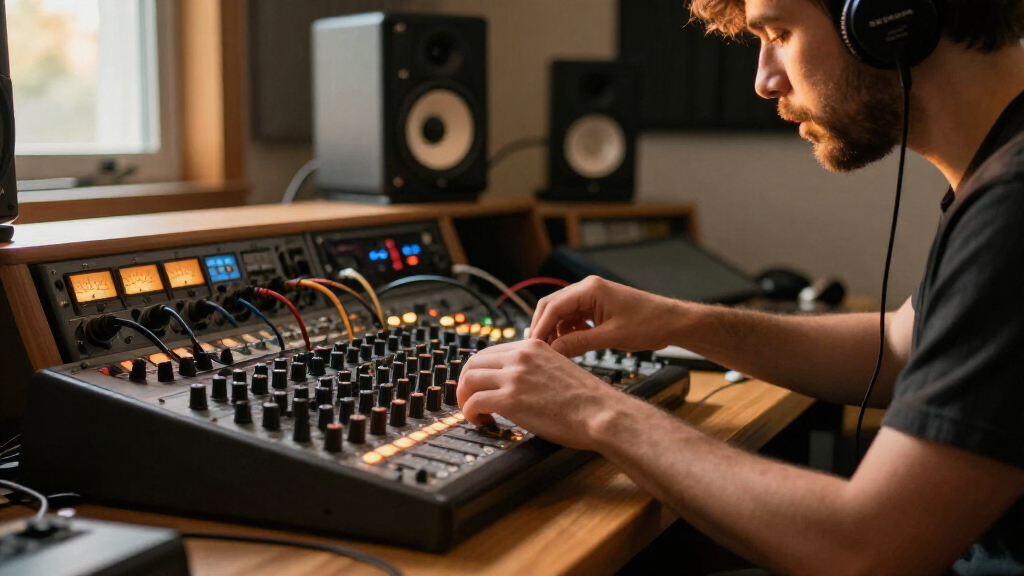
I ranked these audio mixers for home recording by how well their stated functions map to recording tasks: connecting microphones and instruments, routing audio to a computer, handling more than one source, and supporting a workflow that can grow beyond a first recording. I also weighed setup clarity, input capacity, included accessories, and whether effects or playback features add practical value for home use. A USB port alone does not prove a mixer can record each channel separately, so I treated the distinction between USB playback, stereo output, and multitrack recording as a key buying check.
The Mackie ProFX10v3+ ranks first for its more balanced mix of recording and mixer functionality. Models with greater channel counts place well for multi-source needs, while bundles earn their place for convenient entry-level setups rather than presumed studio performance. Compact podcast and gaming units rank lower for general recording because their creator controls can be useful but may narrow their role; DJ-focused products are best matched to playback and simple mixes. Where product details do not establish a capability, I avoid treating it as confirmed and recommend verifying the manual before purchase.
Factors to Consider When Choosing Audio Mixers For Home Recording
Before choosing a mixer, I’d map the recording job rather than start with channel count or bundled accessories. These factors can help separate a practical home-recording tool from a device that mainly handles streaming, playback, or live-style mixing.
Match the USB workflow to your recording software
USB connection does not always mean multitrack recording. Some mixers send one stereo mix to a computer, while others can route separate channels for editing after the session. Decide whether you need to adjust each voice or instrument independently once it is recorded. Check the manufacturer documentation for the number of USB input and output channels and operating-system support. A stereo mix can work well for a finished podcast or simple performance, but it offers less room to fix level imbalances later. If your sessions involve several simultaneous sources, confirm the recording path before paying for extra mixer channels.
Count simultaneous sources, not every possible input
Channel needs depend on what you record at the same time. A solo voice-and-guitar session may need fewer inputs than a conversation with several microphones or a small band. List the microphones, instruments, playback feeds, and return channels you expect to connect in one session. Leave some spare capacity if you plan to add a guest or another instrument, but do not assume an oversized mixer improves sound by itself. More channels can mean a larger footprint and a more involved setup. Check whether the advertised channel count includes stereo pairs or other inputs that share controls.
Choose mic inputs and phantom power for your microphones
Microphone compatibility should come before bundled accessories. Condenser microphones commonly need phantom power, while many dynamic microphones do not; confirm the mixer supplies the power your chosen mic requires. Also check how many microphone preamps are available, since a mixer’s total channel count may include line-level or stereo inputs. If you expect to record two or more microphones at once, count the actual mic inputs rather than the headline number. Bundled microphones can reduce setup friction, but they should not dictate your entire recording system. A mixer that supports your preferred future microphone may be a better long-term fit than a larger package of accessories.
Separate recording features from creator and DJ controls
Effects, sound pads, and Bluetooth solve different problems from clean recording. Reverb or voice effects can be useful for monitoring and live content, yet a recorded effect may be difficult to remove later. Bluetooth and USB media playback are convenient for backing tracks, but they do not establish that the mixer records each input to a computer. For editing flexibility, record a clean signal and add effects in your software where possible. Gaming and podcast controls can make live operation quicker, especially when muting or triggering audio. Choose those features when live production is part of the job, not as a substitute for the routing you need in a recording session.
Plan for monitoring, room noise, and desk space
A mixer cannot correct a noisy room or poor microphone placement. Before spending on extra channels, consider whether your room needs basic acoustic treatment, a stable mic stand, or quieter computer placement. Headphone monitoring helps you catch clipping, hum, and distracting background sound while recording, so check the available headphone connection and level control. Large mixers can be awkward on a small desk, while compact creator units may offer fewer routing choices. Think through where the mixer, microphone, and cables will sit during an actual session. A tidy, accessible setup often makes consistent recording easier than a feature-heavy unit that crowds the workspace.
Pay more for workflow, not a longer feature list
Extra features earn their keep only when they remove a real bottleneck. A multichannel interface or sturdier, more flexible mixer can be worthwhile if you record guests, instruments, or multiple microphones regularly. A beginner recording one voice may get more value from a straightforward bundle, provided its mixer connects cleanly to the intended computer and software. Avoid paying for effects or lighting-oriented features that will not affect your recordings. Factor in the cost and effort of replacing a bundled microphone, stand, or cable if it does not suit your needs. The best upgrade is the one that improves your recording path, not simply the one with the most controls.
Frequently Asked Questions
Is a mixer with USB enough to record separate tracks in my computer?
Not necessarily. USB can carry a single stereo mix, playback from a computer, or separate channels, depending on the mixer. Check the manual or product specifications for the number of USB recording channels and whether each mixer input appears separately in your software. If you only need a finished voice mix, stereo USB may be enough. For editing each microphone or instrument on its own, confirm multitrack routing before buying. Do not infer that capability from the presence of a USB port alone.
Should I buy a mixer or a standalone audio interface for home recording?
Choose based on how you want to work. A standalone interface often provides a direct route for recording a small number of sources into software, while a mixer can make live level adjustments and combine several sources before recording. If you need hands-on control, multiple inputs, or playback routing, a mixer may suit you better. If your priority is recording one or two sources separately with minimal setup, an interface may be simpler. Compare the actual input count and computer routing rather than assuming either product type offers more recording flexibility.
Can I use a podcast or gaming mixer to record music?
Sometimes, but check the recording routes first. Creator mixers can work for vocals, instruments, or a simple live mix if they accept the sources you use and connect reliably to your computer. Their effects, sound triggers, and mute controls may be more useful for streaming than for editing music later. Confirm whether the device records separate channels or only a combined output. Also check for the microphone inputs, phantom power, and instrument connections your sessions require. A music-focused workflow can outgrow a compact creator unit if you need independent tracks.
Do I need phantom power for a home-recording microphone?
It depends on the microphone, not the room. Many condenser microphones need 48V phantom power, while most dynamic microphones do not. Check the microphone’s specifications and confirm that the mixer provides phantom power on the input you plan to use. If you may add a condenser mic later, this feature can widen your options. Phantom power does not improve every microphone, and it is not a substitute for a suitable preamp or proper placement. Follow the equipment instructions when connecting or disconnecting microphones.
Is a bundled microphone and mixer a good first recording setup?
A bundle can simplify getting started by putting several basic pieces in one package, especially for spoken-word recording. Its value depends on whether the microphone, monitoring gear, and mixer fit your intended computer and recording software. Check the connector types, included cables, and whether the mixer sends the signal in the format you need. Bundles may be less adaptable if you later want a different microphone or separate tracks. If you already own a good mic or headphones, a mixer-only option may avoid paying for duplicate accessories.
Conclusion
For most people building a home recording setup, I recommend the Mackie ProFX10v3+ as the best overall pick because it offers the most balanced route between mixing and computer recording in this lineup. The TKLBLS 12-Channel Mixer is the better value direction for buyers who need more connected sources, while the Mackie is my best premium-style choice for a more established recording workflow. Beginners who want a ready-made spoken-word setup can compare the MAONO and G10 bundles, checking compatibility and routing before committing. For creator controls and live streaming, the FIFINE AmpliGame SC3 has a more specific role; for DJ-style playback, the Kaschun is the more relevant fit. If your main need is separate tracks in recording software, prioritize verified USB multitrack capability over Bluetooth, effects, or bundled extras.