
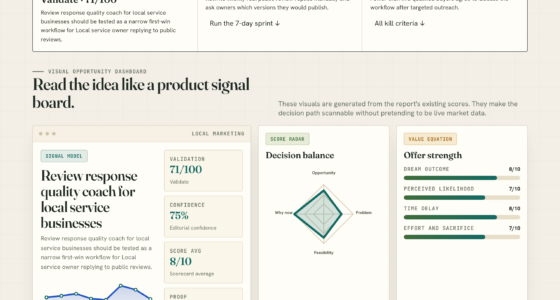
📊 Full opportunity report: The calendar technicality. Why Elon Musk’s lawsuit against Sam Altman and OpenAI lost on timing, not on substance. on ThorstenMeyerAI.com — validation score, market gap, and execution plan.

TL;DR

A California court dismissed Elon Musk’s lawsuit against OpenAI on May 18, 2026, citing statute of limitations issues. The ruling clears the way for OpenAI’s IPO but leaves underlying legal questions open.

On May 18, 2026, a federal jury in Oakland dismissed Elon Musk’s lawsuit against OpenAI, Sam Altman, Greg Brockman, and Microsoft on the grounds that the claim was filed outside the three-year statute of limitations.

This procedural ruling effectively ends Musk’s legal challenge related to the nonprofit-to-profit conversion, but does not resolve the underlying legal questions about OpenAI’s restructuring or charitable trust status, which remain under separate investigation.

The jury’s decision was based solely on the timing of Musk’s 2024 filing, which the defense argued was too late to be considered. The jury did not evaluate the merits of Musk’s claims about whether OpenAI’s restructuring violated California charitable trust law or whether assets were improperly transferred into for-profit entities.

Judge Yvonne Gonzalez Rogers immediately adopted the verdict, noting that the evidence presented supported the jury’s finding that the claim was barred by the statute of limitations. Musk’s damages expert had estimated potential wrongful gains up to $135 billion, but the court dismissed these calculations as irrelevant to the procedural issue at hand.

While the ruling clears OpenAI’s path to an IPO, expected in late 2026 with a valuation potentially exceeding $1 trillion, it leaves open the question of whether the restructuring itself complies with California law and whether future lawsuits could challenge it.

The Calendar Technicality — Thorsten Meyer AI
CALENDAR
● DISPATCH / MAY 2026
THORSTEN MEYER AI · AI GOVERNANCE · § 01
AI GOVERNANCE · 01
MUSK v. ALTMAN · VERDICT
Essay · Verdict-Day Structural Reading · 2026-05-19

The calendar technicality.
Why Musk’s lawsuit
against Altman and OpenAI
lost on timing,
not on substance.

A unanimous nine-juror verdict cleared OpenAI’s IPO runway in under two hours. It did not settle a single substantive question.
May 18, 2026: Judge Yvonne Gonzalez Rogers adopted the advisory jury’s statute-of-limitations dismissal of every claim Musk brought against Altman, Brockman, OpenAI, and Microsoft. The damages framework being heard when the verdict landed: $78.8B to $135B in disgorgement-eligible “wrongful gains” · Altman and Brockman removed from their posts · the for-profit dismantled. Musk’s own response on X named exactly what happened: “the judge & jury never actually ruled on the merits of the case, just on a calendar technicality.” Practical effect: OpenAI’s Q4 2026 IPO at $852B-$1T target valuation is now open in a way it was not 48 hours ago. Unresolved: whether converting a $300B charitable trust into a public benefit corporation can stand under California Corporations Code § 5250. The Bonta AG settlement of October 2025 extracted concessions but allowed the conversion. The Lessig amicus and the SF Foundation coalition’s 50+ organizations remain on the record. The verdict cleared one specific plaintiff. It did not settle the underlying law.
< 2 hr
Unanimous nine-juror
deliberation · statute-of-limitations
$135B
Wazzan damages framework
upper bound · disgorgement-eligible
Q4 2026
OpenAI IPO target window
$852B-$1T valuation · ~$60B raise
$300B
Charitable assets the SF
Foundation coalition flagged · April 2025
MUSK v. ALTMAN · MAY 18 2026· STATUTE-OF-LIMITATIONS DISMISSAL· 9-JUROR UNANIMOUS · <2 HR· JUDGE YVONNE GONZALEZ ROGERS· 3-YEAR WINDOW · 2021 v. 2024· $78.8B-$135B WAZZAN FRAMEWORK· NOT REACHED ON MERITS· “CALENDAR TECHNICALITY” — MUSK· BONTA AG SETTLEMENT OCT 2025· $130B FOUNDATION EQUITY· SF FOUNDATION COALITION · 50+ ORGS· LESSIG AMICUS · 12 EX-EMPLOYEES· OPENAI IPO Q4 2026 / 2027· $852B-$1T VALUATION· $60B RAISE TARGET· $25B ARR FEB 2026· MICROSOFT 27% · $38B CAP· AGI CLAUSE UNRESOLVED· ANTHROPIC PBC-FROM-INCEPTION· APPEAL ANNOUNCED · TOBEROFF· MUSK v. ALTMAN · MAY 18 2026· STATUTE-OF-LIMITATIONS DISMISSAL· 9-JUROR UNANIMOUS · <2 HR· JUDGE YVONNE GONZALEZ ROGERS· 3-YEAR WINDOW · 2021 v. 2024· $78.8B-$135B WAZZAN FRAMEWORK· NOT REACHED ON MERITS· “CALENDAR TECHNICALITY” — MUSK· BONTA AG SETTLEMENT OCT 2025· $130B FOUNDATION EQUITY· SF FOUNDATION COALITION · 50+ ORGS· LESSIG AMICUS · 12 EX-EMPLOYEES· OPENAI IPO Q4 2026 / 2027· $852B-$1T VALUATION· $60B RAISE TARGET· $25B ARR FEB 2026· MICROSOFT 27% · $38B CAP· AGI CLAUSE UNRESOLVED· ANTHROPIC PBC-FROM-INCEPTION· APPEAL ANNOUNCED · TOBEROFF·
FIG. 01 — WHAT WAS · AND WAS NOT · DECIDED
The verdict means what it says, not what either side characterizes it as saying
A jury verdict on a single threshold question · not a substantive ruling on the underlying conduct
What the jury decided
A narrow procedural finding · unanimous · < 2 hours
  • Musk filed too late · 2024 filing fell outside the three-year statute of limitations under California Code of Civil Procedure
  • The defense’s “harm occurred no later than 2021” timing argument was sufficient
  • Discovery-rule tolling rejected — Musk’s argument that asset-transfer magnitude was not knowable in time did not extend the window
  • “Fraudulent concealment” tolling rejected — no separate basis to delay the clock
  • Microsoft aiding-and-abetting claim dismissed by virtue of the predicate claim being dismissed
What was NOT decided
The substantive charitable-trust question · never reached
  • Whether Altman and Brockman violated a charitable trust · not addressed on the merits
  • Whether the 2019 for-profit subsidiary structure improperly transferred nonprofit assets · not addressed
  • Whether the October 2025 PBC conversion at ~$500B is a legally permissible disposition of charitable assets · not addressed
  • Whether the Microsoft AGI-voids-the-deal clause is consistent with the original nonprofit mission · not addressed
  • Whether Microsoft’s $13B 2019-2023 investment trajectory aided and abetted any breach of charitable trust · not addressed on its own merits
Musk on X: “the judge & jury never actually ruled on the merits of the case, just on a calendar technicality. There is no question to anyone following the case in detail that Altman & Brockman did in fact enrich themselves by stealing a charity. The only question is WHEN they did it!” The first sentence is legally accurate. Bill Savitt, OpenAI’s lead attorney: “Mr. Musk’s lawsuit is nothing more than an after-the-fact contrivance. They kicked it exactly where it belongs — just to the side.” That framing reaches beyond what the verdict actually delivered — the verdict was about timing, not about reality.
FIG. 02 — THE THREE-YEAR WALL
The statute-of-limitations defense that ended the case
California Code of Civil Procedure § 343 + § 338 · 3-year window from latest knowable harm
2018
Musk exits
board
2019
For-profit
subsidiary
Feb 2021
Window
closes
Feb 2024
Musk
files
May 2026
Verdict
Within the statute window
2018-2021 · Musk could have filed but did not. The 2019 for-profit subsidiary creation was the latest knowable triggering event per the defense’s framing. Three years from public knowledge of the structure.
Outside the window
Feb 2024 filing · 3+ years past the 2021 cutoff. Musk’s discovery-rule and fraudulent-concealment tolling arguments rejected. Subsequent conduct (2023 Microsoft expansion, 2025 PBC conversion) did not restart the clock for the original cause of action.
Sarah Eddy, OpenAI’s attorney, in closing: Musk’s $44M in donations from 2016-2020 came with no strings attached, meaning “Musk does not have a charitable trust to enforce.” Defense additionally showed Musk had previously proposed both a for-profit OpenAI under his control and folding OpenAI into Tesla — rejected by the other co-founders. The defense’s strategic logic: dismiss on timing first, never reach the merits of whether OpenAI’s restructure violated charitable-trust law. The judge’s pretrial ruling that “existential risk is outside the scope of the trial” further narrowed the case to the corporate-governance question. The case was structured as a 2018-grievance dressed up in 2024 clothing.
FIG. 03 — THE DAMAGES FRAMEWORK NOT REACHED
What was being heard when the verdict landed
Dr. C. Paul Wazzan’s “wrongful gains” framework · proportional-share-of-value methodology · the judge’s “devoid of connection to the underlying facts” reaction
Lower bound
$78.8B
Wazzan estimate
OpenAI + Microsoft
“wrongful gains”
Upper bound
$135B
Higher-valuation
scenario · same
methodology
Aggregate exposure
$150B
Reported potential
disgorgement
if Musk had won
At 10:23 AM Pacific, the courtroom deputy handed Judge Gonzalez Rogers a note. “We have a verdict.” The damages hearing was suspended mid-discussion.
Beyond monetary disgorgement, the remedy demands included dismissal of Altman and Brockman from their posts and dismantling of the for-profit entity with assets returned to the OpenAI Foundation. The judge to Wazzan pre-verdict: “Your analysis seems to be devoid of connection to the underlying facts.” The structural problem with the framework: treating Musk’s $44M in 2016-2020 charitable contributions as if they were equity investments in a startup. Two different legal categories with structurally different downstream rights. The court did not rule on the framework — it pre-empted it. The record now contains the framework but not a ruling on it.
FIG. 04 — THE PARALLEL TRACKS · WHAT THE VERDICT DID NOT CLOSE
Five regulatory and litigation channels still in front of OpenAI
The Musk-as-plaintiff channel closed · the institutional channels remain open
CHANNEL
STATUS · WHAT’S OPEN
WHERE IT SITS
Musk private litigation
Dismissed May 18 2026 on statute-of-limitations · Toberoff appeal announced · 12-24 month Ninth Circuit timeline does not affect IPO calendar
Closed
California AG oversight
Bonta Oct 2025 settlement permitted conversion with concessions · Foundation retains $130B equity, teenager-risk-mitigation, AI safety oversight · continuing supervisory authority over PBC
In force
SEC review at IPO
Engages at S-1 filing · OpenAI must disclose entire restructuring history, the Musk litigation, the AG settlement, the Lessig amicus, the AGI clause, the charitable-trust framework
Pending
IRS nonprofit conversion
Historic Blue Cross / Highmark precedent · examines whether for-profit successor paid fair-market value for nonprofit’s assets · $130B Foundation equity will face this if IRS chooses to examine
Discretionary
Future parallel litigation
Trial record now public · future plaintiffs with valid standing and timing can re-test charitable-trust theory · institutional plaintiffs (state AGs, regulators) face different procedural barriers than Musk did
Available
The Musk case demonstrated that the charitable-trust theory can be argued in federal court at substantial expense, and that procedural barriers to private-plaintiff litigation are significant. Future challenges may shift to the regulatory channel for both reasons. The institutional plaintiffs face different procedural barriers — they have standing automatically, and state and federal regulators have continuing jurisdiction rather than discrete statute-of-limitations windows for ongoing review. The next round of OpenAI corporate-governance litigation, if it happens, is most likely to come from regulatory rather than private-plaintiff sources.
FIG. 05 — THE IPO RUNWAY · WHAT WAS · AND WAS NOT · CLEARED
The verdict’s actual practical effect on OpenAI’s Q4 2026 / 2027 IPO
$852B-$1T valuation target · ~$60B raise · S-1 disclosure burden remains in front of the company
Cleared by the verdict
The Musk-as-plaintiff overhang
The specific litigation threatening restructure-reversal at peak valuation
The $135B disgorgement exposure from this case · pre-empted before damages could be ordered
The Altman + Brockman removal demand · resolved without management-stability disruption
The for-profit dismantling demand · the PBC structure stands as recapitalized in Oct 2025
The S-1 risk-factor disclosure simplification · the verdict can be referenced as a procedural matter rather than open litigation
NOT cleared by the verdict
The underlying legal question
California Corporations Code § 5250 — charitable corporation assets “held in trust solely for charitable purposes” — never applied to the facts on the merits
The AG continuing oversight authority from the Oct 2025 settlement · remains in force for ongoing PBC conduct
The SEC S-1 review · must address the entire history: Musk case, AG settlement, Lessig amicus, AGI clause, coalition petition, charitable-trust framework
The IRS nonprofit-conversion examination · Blue Cross precedent · fair-market-value standard for the $130B Foundation equity
The legal-precedent calendar · the next nonprofit-to-PBC conversion at this scale faces the same question without binding precedent from this case
Underwriters will price the spread. The valuation-supporting argument is now “we won the lawsuit on procedural grounds, the AG settled, and SEC review proceeds on its own track.” The valuation-undermining argument is now “the underlying legal question was not resolved on the merits and remains subject to regulatory and future-litigation challenge.” Anthropic — founded by ex-OpenAI personnel including Dario and Daniela Amodei in 2021, structured as a Public Benefit Corporation from inception — faces SEC scrutiny and AG oversight but not the specific charitable-asset-conversion question. If both companies IPO in 2026-2027, the S-1 disclosure profiles will diverge meaningfully on this dimension alone.
The verdict was a tactical win for OpenAI that does not deliver a strategic win on the underlying legal question. The IPO calendar advances. The regulatory calendar continues to run. The legal-precedent calendar remains open.
Thorsten Meyer · The Calendar Technicality · AI Governance 01

Legal and Industry Implications of the Dismissal

The dismissal on procedural grounds allows OpenAI to proceed with its planned IPO, removing a significant legal overhang. However, it does not settle the broader legal debate over whether the nonprofit-to-profit conversion violated California charitable trust law or if assets were improperly transferred. This leaves room for future legal challenges from regulators, former employees, or advocacy groups.

For the AI industry, the case highlights the importance of timing and procedural compliance in legal disputes over corporate restructuring. It also underscores ongoing regulatory scrutiny over nonprofit conversions and asset transfers, which could influence how AI companies structure themselves in the future.

AI Governance Playbook: How to Secure, Control, and Optimize Artificial Intelligence Initiatives

AI Governance Playbook: How to Secure, Control, and Optimize Artificial Intelligence Initiatives

As an affiliate, we earn on qualifying purchases.

As an affiliate, we earn on qualifying purchases.
Background on OpenAI’s Restructuring and Legal Challenges

OpenAI was founded as a nonprofit with a mission to ensure artificial general intelligence benefits all. In October 2025, it restructured into a Public Benefit Corporation, a move that involved transferring assets estimated up to $300 billion into a for-profit entity. Musk’s lawsuit, filed in 2024, claimed this restructuring violated California charitable trust law and sought disgorgement of wrongful gains, potentially valued between $78.8 billion and $135 billion.

The case was part of broader scrutiny by regulators and former employees, with investigations by the California Attorney General ongoing since December 2024. A coalition of foundations petitioned Bonta to halt the restructuring, and a separate legal challenge was filed by former employees through amicus briefs.

The lawsuit’s core issue was whether the conversion was legally valid under California law, which protects charitable assets held in trust for specific purposes. The case attracted significant attention due to OpenAI’s high-profile IPO plans and the enormous valuation estimates.

“the judge & jury never actually ruled on the merits of the case, just on a calendar technicality.”

— Elon Musk

Unresolved Legal and Regulatory Questions

It remains unclear whether the underlying restructuring violates California charitable trust law or if future legal actions could challenge OpenAI’s asset transfers. The California Attorney General’s ongoing investigation and the potential for future lawsuits mean the legal status of the restructuring is still unsettled.

Additionally, the appeal Musk has announced could alter the legal landscape, but its success and scope are uncertain.

Future Legal and Regulatory Developments to Watch

OpenAI’s IPO process is now likely to proceed, but the company remains under scrutiny from regulators and potential challengers. The California Attorney General’s investigation continues, and future lawsuits could test whether the restructuring complies with trust law.

Musk has announced plans to appeal the dismissal, which could prolong legal uncertainty. Meanwhile, regulators and advocacy groups may pursue additional actions based on the underlying issues of asset transfer and nonprofit status.

Key Questions

No. The dismissal was based solely on the statute of limitations. The underlying legality of the restructuring remains untested and could be challenged in future proceedings.

What impact does this have on OpenAI’s IPO plans?

The ruling clears a major legal hurdle, allowing OpenAI to proceed with its IPO scheduled for late 2026, with valuation estimates exceeding $1 trillion.

Yes, Musk has announced plans to appeal the dismissal, which could lead to a renewed legal challenge on the substantive issues.

What are the broader implications for AI companies?

This case highlights the importance of legal compliance in corporate restructuring and the potential for ongoing regulatory scrutiny over nonprofit conversions and asset transfers.

Source: ThorstenMeyerAI.com

You May Also Like

7 Best Film Camera Prime Day Deals for Instant Prints in 2026

Discover the best Prime Day deals on film cameras and instant print options in 2026, including instant cameras, disposable film, and portable printers.

Cutrova: Edit the Words, Not the Timeline

Cutrova introduces a local-first video editing approach that simplifies editing via transcripts, reducing barriers and enhancing privacy and control.

Benson Boone and Alix Earle Share a Kiss in Theatrical ‘The Time of My Life’ Music Video

Benson Boone and Alix Earle share a kiss in a theatrical music video for ‘The Time of My Life,’ drawing attention from fans and media alike.

Cruz Beckham takes a swipe at brother Brooklyn’s shady World Cup commercial

Cruz Beckham publicly comments on Brooklyn Beckham’s recent World Cup commercial, calling it shady. The dispute highlights family tensions amid commercial controversy.