
📊 Full opportunity report: Apple Is Reaching for Chinese Memory. Europe Doesn’t Even Have That Option. on ThorstenMeyerAI.com — validation score, market gap, and execution plan.
TL;DR
Apple is lobbying Washington to purchase memory chips from China’s CXMT, a move that underscores Europe’s absence of similar options. This highlights Europe’s reliance on external suppliers and its limited control over critical chip components.
Apple is lobbying Washington for permission to purchase memory chips from Chinese manufacturer CXMT, a company on the Pentagon’s blacklist. This move follows recent price hikes on Macs and iPads, attributed to a global memory shortage, and underscores Apple’s strategic options amid supply chain constraints. The development matters because it exposes the fragility of Europe’s semiconductor independence and its limited leverage in global chip markets.
According to reports from Thorsten Meyer AI, Apple’s lobbying effort aims to secure approval from US authorities to buy chips from CXMT, a Chinese firm on the US Pentagon’s blacklist. The company’s move comes shortly after Apple increased prices on its products, citing a shortage of memory chips as a key factor. Apple has alternative sources, including Micron in the US, but reaching for Chinese suppliers highlights the limited options available to the company and the broader industry.
Europe, by contrast, has almost no capacity to access or influence Chinese memory chip supplies. The EU manufactures less than 10% of the world’s semiconductors by value, with memory production concentrated outside Europe. The few European chip companies are primarily involved in design and assembly, not manufacturing, and the continent relies heavily on imports from East Asia and the US. This dependency leaves Europe vulnerable to supply disruptions and price fluctuations, which have quadrupled over recent quarters.
European policymakers face structural barriers: subsidies and regulation cannot rapidly create advanced fabrication capacity, and existing projects like Intel’s Magdeburg plant or the STMicro/GlobalFoundries fab are stalled or collapsing. Meanwhile, US and Asian firms dominate the supply chain, especially in high-performance memory like HBM, which is already booked out by major US hyperscalers. The EU’s “tech sovereignty” efforts focus on critical upstream chokepoints like ASML’s EUV lithography machines, which are indispensable for advanced chip manufacturing and controlled by the Netherlands.
Apple is reaching for Chinese memory. Europe doesn’t even have that option.
The shortage exposes America’s dependence — and Europe’s far more brutally. Apple has a domestic supplier, political weight, and the China option. Europe has no memory of its own, no seat at the table, no leverage on what counts.
- EU makes < 10% of the world’s semiconductors
- Effectively no DRAM, no HBM from Europe
- 3–4 memory makers worldwide — none European
- Pure price-taker: memory ~4× in 3 quarters
- ASML: EUV monopoly — no leading-edge chip without it
- Zeiss: precision optics, unrivalled worldwide
- imec · CEA-Leti · Fraunhofer: world-class research
- Infineon, NXP, STMicro: automotive · power · SiC
The shortage is a sovereignty test — Europe fails on supply but still holds the leverage in its hand. If even Apple can’t buy its way out, Europe’s answer isn’t to buy its way in, but to run two tracks: press the unique chokepoints as real leverage — and cut dependence wherever it can without Brussels: local-first, open weights, quantization, right-sized hardware. Bury the 20% dream, defend what’s yours, need less.
Implications of Europe’s Lack of Memory Chip Options
The inability of Europe to access Chinese memory chips highlights its dependency on external suppliers and its limited influence over critical components in the global supply chain. This dependency exposes Europe to supply shocks, price volatility, and strategic vulnerabilities, especially as US-China tensions escalate. Apple’s move serves as a cautionary example for Europe, emphasizing the importance of building resilient, upstream capabilities to ensure supply security and technological sovereignty.
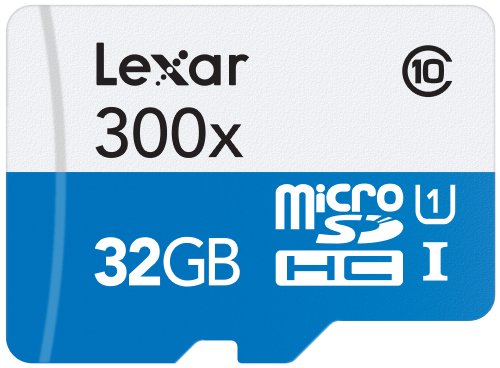
Lexar High-Performance MicroSDHC 300x 32GB UHS-I/U1 w/Adapter Flash Memory Card – LSDMI32GBB1NL300A
Premium memory solution for tablets, sports camcorders, and smartphones
As an affiliate, we earn on qualifying purchases.
As an affiliate, we earn on qualifying purchases.
Europe’s Semiconductor Industry and Strategic Gaps
Europe produces less than 10% of the world’s semiconductors and has seen its domestic manufacturing capacity shrink over decades. Key players like TSMC, Samsung, and SK Hynix dominate global memory production, with Europe largely absent from the manufacturing landscape. Major projects aimed at boosting European fabrication, such as Intel’s Magdeburg plant, face delays or cancellations due to high costs and complex supply chain dependencies. Meanwhile, the US and Asia continue to control most high-performance memory and advanced chip manufacturing, leaving Europe dependent on imports and vulnerable to external shocks.
European efforts, including the 2023 Chips Act, aim to increase local capacity and technological independence, but experts acknowledge that reaching 20% market share by 2030 is unlikely without unprecedented investment and structural change. The continent remains a key player in design and upstream manufacturing but lacks the critical mass for autonomous supply, especially in high-end memory chips.
“Our goal is to build resilient supply chains, but the reality is that we cannot match the scale of US and Asian manufacturers overnight.”
— European Commission official

Patriot Memory Viper Venom DDR5 RAM 16GB (1X16GB) 6000MHz CL30 1.35v UDIMM Desktop Gaming Memory Compatible with Intel XMP/AMD Expo – PVV516G60C30
Capacity: 16GB (1 x 16GB) 6000MHz
As an affiliate, we earn on qualifying purchases.
As an affiliate, we earn on qualifying purchases.
Unclear Impact of US-China Tensions on Supply Options
It remains uncertain how US government approval will be granted or denied for Apple’s request to buy Chinese memory chips. Additionally, the broader implications for Europe’s supply chain resilience depend on future policy decisions, investment levels, and the evolution of US-China relations, which are still unfolding.
European semiconductor manufacturing equipment
As an affiliate, we earn on qualifying purchases.
As an affiliate, we earn on qualifying purchases.
Next Steps in US Approval and European Capacity Building
Apple’s lobbying efforts are ongoing, with a decision from US authorities expected soon. Meanwhile, Europe continues to pursue its Chips Act and other initiatives, but significant capacity expansion will take years. The industry and policymakers will watch closely how supply chain dependencies evolve amid geopolitical tensions and technological competition.
Memory chip supply chain solutions
As an affiliate, we earn on qualifying purchases.
As an affiliate, we earn on qualifying purchases.
Key Questions
Why is Apple seeking Chinese memory chips now?
Apple cites a global memory shortage as the reason for seeking Chinese chips, aiming to secure supply amid rising prices and constrained options from US suppliers.
What does this mean for Europe’s semiconductor strategy?
It exposes Europe’s limited influence and capacity in critical memory manufacturing, emphasizing the need to develop upstream chokepoints and reduce dependency on external suppliers.
Could Europe develop its own memory chip industry?
While possible in the long term, current technological, financial, and supply chain barriers make rapid development unlikely. Europe’s focus remains on strategic chokepoints and design capabilities.
What role does US policy play in this situation?
US export controls and diplomatic policies heavily influence global chip supply chains, affecting access to Chinese memory chips and shaping global industry dynamics.
Will Apple’s move affect global chip prices?
Potentially, as increased demand for Chinese memory could tighten supplies elsewhere, but the overall impact depends on US approval and broader supply chain responses.
Source: ThorstenMeyerAI.com