
TL;DR

Get audio and creator gear delivered free — and shop member deals
- Fast, free delivery on millions of items
- Access to Prime Big Deal Days deals on October 6–7
- Prime Video, Amazon Music and more included
Moving your rig into a closet and focusing on placement and targeted treatment dramatically reduces noise. Foam and absorption help inside, but sealing gaps and proper ventilation are key for real silence and safety.
If you’ve ever tried to record in a closet, you know the struggle. Echo, noise leaks, and heat buildup make it a challenge. But here’s the secret: most of the noise problem isn’t about foam or absorption — it’s about where the rig is placed and how you treat the space around it.
In this guide, you’ll learn why moving your setup into a closet can be your best move, how to handle heat and airflow, and what actually makes a closet rig quiet and safe. Because in the end, the best soundproofing is often just putting distance between you and the noise source.
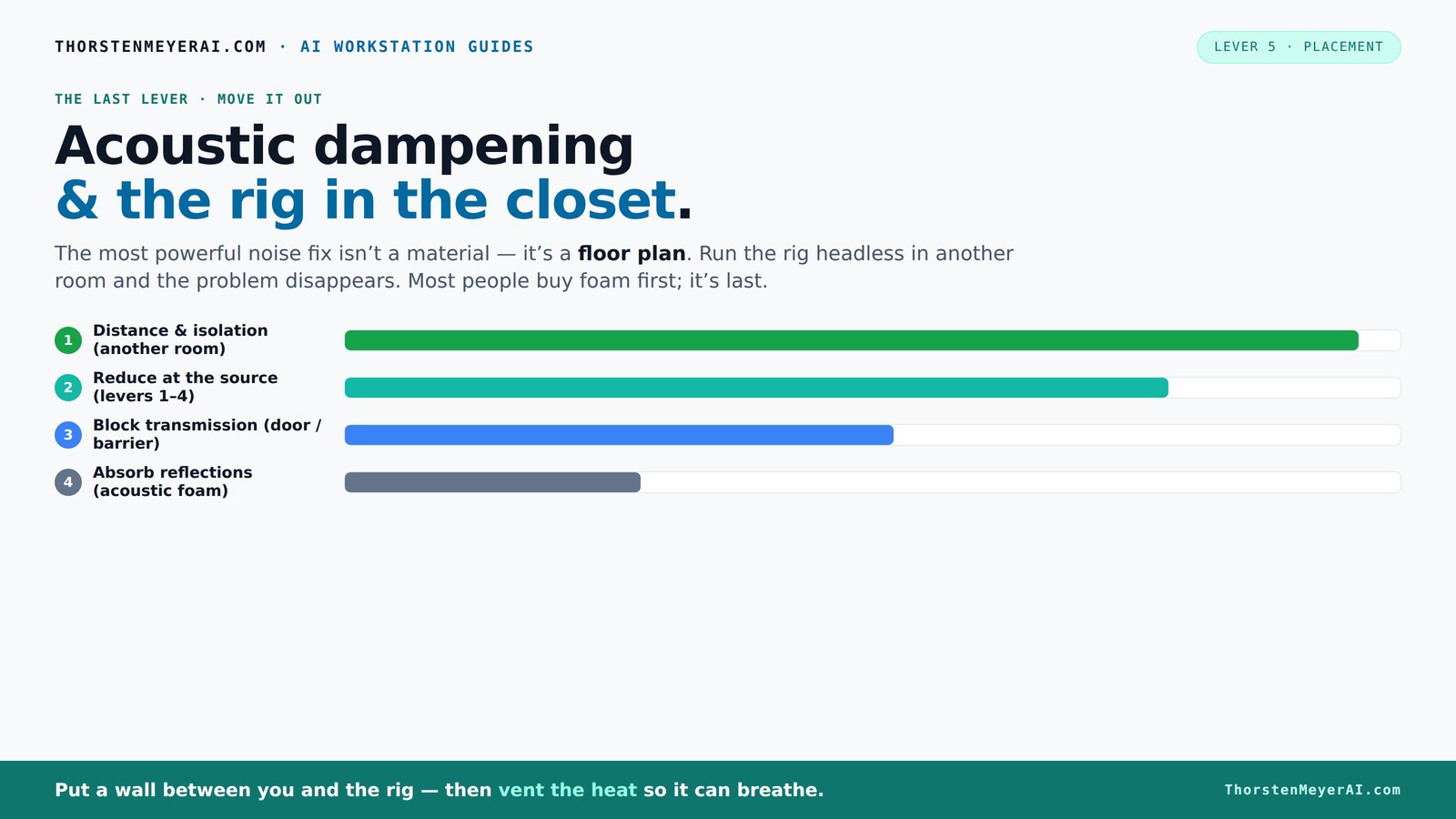
Acoustic dampening
& the rig in the closet.
The most powerful noise fix isn’t a material — it’s a floor plan. A rig you can’t hear because it’s in another room beats any amount of foam. Tap the approaches in Part 1 to see what actually works.
(another room)
(levers 1–4)
(door / barrier)
(acoustic foam)
Contain the noise, not the heat
Key Takeaways
- Moving your rig into a closet dramatically reduces noise — distance is king.
- Sealing gaps around the door and vents is more effective than foam alone.
- Target reflection points—behind the mic, ceiling, and nearby hard surfaces—for best acoustic treatment.
- Balance soundproofing with ventilation; heat buildup can be deadly for 24/7 rigs.
- Use a combination of absorption, sealing, and proper placement for the quietest, safest closet setup.
soundproof acoustic foam panels for studio
As an affiliate, we earn on qualifying purchases.
As an affiliate, we earn on qualifying purchases.
What Acoustic Dampening Really Does — and Why It’s Not the Whole Story
Acoustic dampening materials like foam, blankets, and rugs reduce reflections and echo inside the space. They make your recordings sound warmer and less boomy. But they don’t stop sound from leaking out or entering the room.
Think of dampening as softening the room’s “reverb,” not sealing the room shut. For example, a foam panel behind your mic cuts down on echoes bouncing off the wall, but it won’t stop your neighbor from hearing the noise.
Research shows that a combination of dampening and sealing gaps makes a real difference. Foam alone is dead last in soundproofing effectiveness — the real magic happens when you block and seal, not just absorb.
Understanding this distinction highlights an important tradeoff: while dampening improves the clarity and warmth of your recordings, it cannot be relied upon to isolate sound. For true noise reduction, sealing gaps and controlling airflow are essential. This means that investing solely in foam can lead to a false sense of security—without proper sealing, noise leaks will persist, undermining your efforts. The key is to view dampening as part of a broader strategy that includes sealing and proper ventilation for both safety and sound isolation.
Why Placement in a Closet Matters More Than You Think
Moving your rig into a closet isn’t just about hiding the noise; it’s about strategic placement. The farther the sound source from your ears, the quieter it feels. Plus, a closet can be a dedicated space for treatment.
Imagine your typical desktop rig next to your desk. Now picture it inside a closet, behind a door, with a microphone set up at the right distance. You’ll notice a huge drop in noise — especially if you treat reflection points.
According to experts, the key is to position the mic at the main reflection point — usually the wall directly behind or beside it — and treat those surfaces for best results.
Placing your rig inside a closet effectively creates a buffer zone. The distance reduces the direct sound reaching your microphone and ears, which can significantly cut down noise leakage. This isn’t just about hiding the setup; it’s about leveraging physical space to improve acoustics naturally. The tradeoff, however, is that the further the rig is from your main workspace, the more you might need to manage heat and airflow carefully to prevent overheating. Strategic placement maximizes noise reduction while minimizing the need for heavy damping, but it requires thoughtful planning about how and where your equipment sits.
Best Treatment Spots in a Closet Rig — Where to Focus Your Efforts
In a small closet, the main reflection points are the wall behind the mic, the ceiling, and nearby hard surfaces like shelves or the door. Target these areas first for treatment.
Use acoustic panels or blankets on the wall behind your mic, and hang moving blankets or rugs on the door and nearby surfaces. These prevent harsh echoes and reduce sound bouncing around.
Here’s a quick list of treatment priorities:
- Wall behind the mic
- Ceiling overhead
- Door and door frame
- Shelves and hard surfaces nearby
- Floor with a rug or carpet
Focusing on these points allows you to target the primary sources of echo and reflection, which are often the biggest contributors to unwanted reverb. Proper placement of treatment materials at these key points can dramatically improve clarity and reduce unwanted noise. Keep in mind that over-treating can lead to a boxy sound, so balance is essential. The goal is to tame reflections without deadening the space entirely, which requires understanding how sound travels and interacts within your specific closet environment.
Sealing Gaps and Handling the “Weak Points” in Your Closet
Gaps around the door and vents often let sound escape or come in. Sealing these is crucial. Use weatherstripping or acoustic sealant around the door frame, and consider adding a heavy curtain or blanket over the door for extra damping.
For vents or electrical outlets, install acoustic gaskets or covers. These small fixes prevent sound leaks that foam alone can’t block.
Remember, a sealed space traps heat, so ventilation is vital if you’re putting a hot machine inside. Proper airflow keeps your gear safe and cool, which is a must for a 24/7 rig. However, sealing gaps must be balanced with maintaining sufficient ventilation. The tradeoff is that overly sealed spaces can trap heat and moisture, risking equipment damage or unsafe conditions. Use ducted ventilation or vent covers with acoustic dampening to strike a balance—sealing gaps for noise reduction while allowing enough airflow for safety. This approach ensures your setup remains both quiet and operational without risking overheating or humidity buildup.
Common DIY Closet Booth Mistakes — And How to Avoid Them
Many DIYers think piling on foam is enough. But sealing gaps and treating reflection points matter more. Over-insulating can trap heat and cause overheating if ventilation isn’t addressed.
Another mistake is ignoring the door. A well-sealed door with blankets or acoustic seals makes a huge difference. Also, avoid blocking airflow sources or creating a sealed box without ventilation.
Remember: a tiny space with no airflow can turn into a sauna or cause hardware issues. Balance soundproofing with cooling and power access. Over-sealing without proper ventilation can lead to dangerous heat buildup, risking hardware failure or fire hazards. Always plan for airflow—use ducted fans, vent covers with dampening, or small ventilation ports designed for quiet operation. The tradeoff here is between maximum noise isolation and maintaining a safe temperature. Proper planning and understanding of your equipment’s heat output are critical to avoid costly mistakes and ensure a safe, effective setup.
Gear and Materials That Make Your Closet Rig Work Better
Choose materials based on your needs: foam panels for echo reduction, moving blankets for sealing, and rugs for the floor. For doors, consider weatherstripping or acoustic seals.
For a small budget, layering blankets and foam on reflection points can drastically improve sound quality. For a more professional setup, invest in dedicated acoustic panels, bass traps, and a quiet ventilation system.
Here are some essentials:
- Acoustic panels and foam
- Moving blankets or heavy curtains
- Weatherstripping or door seals
- Rugs or carpets for the floor
- Quiet exhaust fans and ducting for ventilation
Check out [this guide](https://thorstenmeyerai.com/reduce-heat-noise-ai-workstation/) for more tips on cooling and noise reduction in high-power setups.
FAQs: Your Top Questions About Closet Rigs Answered
- What’s the difference between acoustic dampening and soundproofing? Dampening reduces echoes and reflections inside a space; soundproofing blocks sound from escaping or entering. Both work together for best results.
- Where should I place acoustic panels in a closet booth? Focus on the wall behind the mic, the ceiling, and nearby hard surfaces like shelves or the door. First reflection points are key.
- Do I need foam, blankets, or panels for the best result? Use a combination. Foam helps with echo; blankets and panels seal gaps and absorb reflections. The right mix depends on your space and budget.
- How do I stop sound from leaking through the closet door? Seal gaps with weatherstripping, hang blankets, or install acoustic seals. A heavy curtain can also help.
- How thick should acoustic panels be for a small closet? 2-4 inches is typical. Thicker panels absorb more low frequencies but may be overkill for tiny spaces.
Frequently Asked Questions
Can I build a closet rig without permanent changes?
Absolutely. Use removable blankets, portable panels, and temporary seals. This way, you keep your space versatile and renter-friendly.How do I handle ventilation without creating noise leaks?
Use ducted exhaust fans with noise dampening, and consider venting outside or into a separate space. Proper airflow keeps your gear safe and your space quiet.Do I really need bass traps in a tiny closet?
Usually not — unless you’re recording music with lots of low-end. Small spaces often suffer from bass buildup, so a single bass trap in the corner can help if you notice boominess.Conclusion
The best way to silence your rig isn’t just adding foam — it’s about smart placement, sealing gaps, and managing heat. A closet can become the perfect quiet zone if you treat it right, with proper airflow and strategic damping.
Think of your closet as a dedicated sound fortress. When done properly, it’s quiet, cool, and ready for high-quality recordings. Your best move? Move it out of sight, treat the surfaces that matter, and keep ventilation flowing.
Evergreen bestsellers Picks
bestsellers
As an affiliate, we earn on qualifying purchases.