You often realize too late that your capture card doesn’t match your hardware or software needs, causing lag, dropped frames, or connection issues during streams. It’s essential to check compatibility with your computer’s CPU, GPU, and operating system early on. Ignoring these details can lead to frustrating troubleshooting or device failure when you’re live. Keep these considerations in mind now—if you continue exploring, you’ll discover how to avoid these common pitfalls altogether.

Get audio and creator gear delivered free with Prime
- Fast, free delivery on millions of items
- Prime Video, Amazon Music and more included
- Member-only deals all year
Key Takeaways
- Streamers often delay checking hardware compatibility, leading to connection issues during setup or live streams.
- Many underestimate the importance of verifying system requirements before purchasing a capture card.
- Compatibility with streaming software like OBS or Streamlabs is frequently overlooked until problems arise.
- Streamers tend to test capture card performance only after initial setup, risking late-stage troubleshooting.
- Failing to assess hardware and software compatibility early can cause performance drops and content quality issues.
Are you wondering which capture card is best for your streaming setup? If so, you’re not alone. Many streamers explore the world of streaming without fully considering how their chosen capture card will fit into their existing hardware. The key factors you should focus on are hardware compatibility and how well the device integrates with your streaming software. Too often, streamers wait until they’re deep into setup or even live broadcasting to realize that their capture card doesn’t work seamlessly with their PC or streaming platform. This oversight can lead to frustrating delays, technical glitches, and even the need to buy a new device altogether.
Before making a purchase, it’s essential to check that your capture card is compatible with your computer’s hardware. Not all cards work with every system, especially when considering operating systems, ports, or GPU requirements. For example, some cards demand specific USB types or HDMI configurations, and if your setup doesn’t match, you’ll encounter connectivity issues. It’s also critical to verify that your CPU and GPU can handle the data stream without causing lag or dropped frames. Overlooking these hardware compatibility details can mean investing in a device that doesn’t perform as expected, which wastes time and money. Additionally, understanding hardware compatibility is crucial to ensure your entire setup functions smoothly. Incorporating compatibility testing as part of your initial research can help prevent these issues. Conducting thorough system requirements checks can safeguard your investment and streamline your streaming process. Being aware of hardware specifications can further help you select a device that aligns with your existing setup. Moreover, understanding device drivers and their updates is vital for maintaining optimal performance over time.
Ensure your capture card matches your system’s hardware to avoid connectivity issues and performance problems.
Equally important is ensuring that your capture card plays nicely with your streaming software. Whether you’re using OBS Studio, Streamlabs, or XSplit, compatibility issues can crop up if the device isn’t supported or requires additional drivers. Many streamers realize too late that their chosen capture card isn’t recognized or causes conflicts with their preferred software, forcing them to troubleshoot or switch platforms mid-stream. It’s a good idea to research and read user reviews to confirm that your intended device integrates smoothly with your streaming software of choice before purchase. This foresight saves you from a lot of headaches later.
Ultimately, the most overlooked question is whether your entire setup, including hardware compatibility and software integration, supports your streaming ambitions. Waiting until you’re in the middle of a stream to discover a compatibility problem often results in unnecessary stress and interruptions. If you take the time upfront to verify that your capture card fits your hardware and software environment, you’ll enjoy a smoother experience. A well-chosen device doesn’t just capture your gameplay; it enhances your whole streaming workflow, letting you focus on content and audience engagement rather than technical troubleshooting.
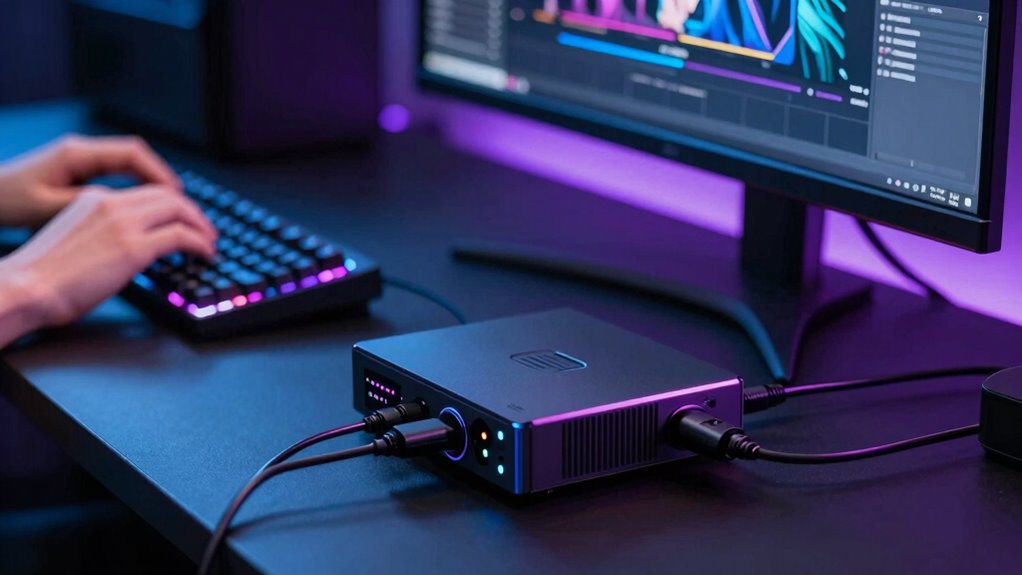
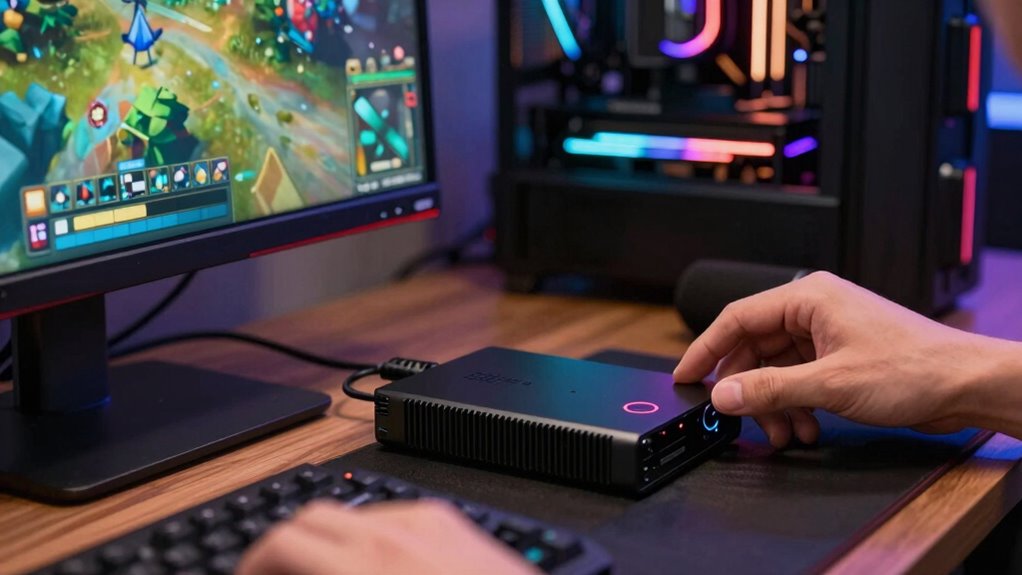
USB 3.0 HDMI capture card for streaming
As an affiliate, we earn on qualifying purchases.
As an affiliate, we earn on qualifying purchases.
Frequently Asked Questions
What Is the Best Capture Card for 4K Streaming?
The best capture card for 4K streaming is the Elgato 4K60 Pro MK.2, offering excellent capture card quality and smooth 4K60 gameplay. You want a device that fits into your streaming setup seamlessly, providing reliable performance and minimal latency. Look for features like HDR support and high bandwidth to guarantee your stream looks professional. Upgrading to a top-tier capture card enhances your overall streaming quality and viewer experience.
How Do I Troubleshoot Capture Card Connectivity Issues?
To troubleshoot capture card connectivity issues, first check hardware compatibility to guarantee your device supports your system and streaming setup. Next, examine cables and connections for secure fit and look out for signal interference from other electronic devices nearby. Restart your computer and capture card, update drivers, and test with different ports or cables if problems persist. These steps help identify whether hardware or interference issues are causing the connectivity problems.
Can I Use a Capture Card With a Laptop?
Yes, you can use a capture card with a laptop, but it depends on compatibility. Check your laptop’s ports and confirm it supports external capture cards via USB or Thunderbolt. External capture cards are easier to set up, while internal ones require more technical skills and compatibility checks. Make sure your laptop meets the requirements for bandwidth and power, and verify the capture card’s compatibility before purchasing.
What Are the Latency Differences Between Brands?
Latency differences between brands vary like a finely tuned orchestra, each with unique timing. You’ll find that reputable brands prioritize lower latency metrics for smoother streaming, but compatibility with your setup is crucial. Some brands excel in real-time performance, while others might introduce a slight delay. Always check brand compatibility and compare latency metrics to guarantee your streaming experience remains seamless, avoiding pesky lag that can throw off your rhythm.
Is a Capture Card Necessary for Console Streaming?
A capture card isn’t strictly necessary for console streaming, especially if you explore capture card alternatives like using a PC’s built-in HDMI input or streaming directly from your console with compatible software. Many streamers use streaming software options such as OBS or Streamlabs, which can handle the process without extra hardware. However, a capture card often offers lower latency and better video quality, making it a preferred choice for professional streams.
Conclusion
Think of your capture card as the bridge connecting your world to your viewers. When you ask the right questions early, you’re building a sturdy path that guarantees smooth sailing during your streams. Don’t wait until issues pile up like traffic on a busy highway—address them now, so your content flows seamlessly. Stay proactive, and your stream will be a well-oiled machine, ready to take your audience on an unforgettable ride.
Halloween Picks
halloween
As an affiliate, we earn on qualifying purchases.