
We talk a lot about pipelines on this site. Vocal chains, sample management, render workflows — the unglamorous systems that decide whether a project ships or dies in a folder called final_v3. So when we heard how the brand website for a construction software product was put together, we didn’t hear a marketing story. We heard a production story. It has everything a good session report needs: a hard brief, one spectacularly failed take, a screening process strict enough to keep weak material off the record, and a media bank of 51+ self-produced clips and posters cut at effectively zero marginal cost.

Get audio and creator gear delivered free with Prime
- Fast, free delivery on millions of items
- Prime Video, Amazon Music and more included
- Member-only deals all year
How the Gewerkton brand site was built like a record — a solo founder directing AI agents, one failed take that became policy, and every clip forced to earn its place.
Pages, all finished
No placeholder text, no stock photos, no “coming soon” boxes. If a page couldn’t be filled with something true, it didn’t ship.
Self-produced clips
Every moving image and poster made in-house — none stock, none licensed. 51 chances to get the mood right.
Point screening
Every AI clip passes a four-point review before it earns a place on a page. None of the points asks if it’s impressive.
Marginal cost per clip
Once the pipeline existed, the expensive parts became judgment and review time — not the render.
Lettering
Read every word in the frame. If the text can’t be read cleanly, the clip is out.
Physics
Materials, motion, machines must behave like the real world — construction pros will watch.
Honesty
No implied capability the beta can’t back up. A clip that oversells is worse than no clip.
The Rewatch
One final human pass, cold. Anything that reads as AI slop on a fresh viewing doesn’t ship.
The brand-name mangle that became policy. Models learn what letters look like, not what they say — so every word in the frame gets read before anything ships. The GEWRRKTAN check.
What the site sells
Gewerkton Field — voice-first site app: dictation to evidence. Studio — browser workspace for plans and models. Cloud — operations and coordination between Field, Studio, and third parties.
The platform underneath
Bring-your-own-AI: 13 AI providers, your own keys, no lock-in. 27 content languages. German-market roots: GAEB, REB, XRechnung, DATEV. Public beta planned fall 2026.
The product is Gewerkton, a voice-first construction documentation and defect management platform built for global markets, and the site that introduces it is unusual twice over. First, it is honest to a degree that borders on confrontational: Gewerkton is in beta right now, with a public beta planned for fall 2026, and the site states that plainly. Second, every visual on it was generated, screened, and placed by a team of one — a solo founder directing a fleet of AI coding agents. Here’s how that build worked, and what it teaches anyone producing visual content with generative tools.
The brief: honesty as a design constraint
Most product sites are built backwards. The layout comes first, lorem ipsum fills the gaps, and somewhere near launch day someone scrambles to replace the placeholders with real claims. This site went the other way: eleven pages, each finished — no placeholder text, no stock photography, no “coming soon” boxes. If a page couldn’t be filled with something true, the page didn’t ship.
The discipline shows in what the copy refuses to do. There are no invented customer logos and no testimonial theater. Instead you get honesty markers: the beta status in plain language, the actual numbers behind the project, and a single marketing line that does more work than a page of adjectives — “On site, what counts is what’s proven.” It’s a claim about construction evidence, but it doubles as the site’s own editorial policy. Every asset on the page has to prove it belongs there.
For an audience of producers, that framing should sound familiar. It’s the difference between a demo and a record. A demo is allowed to promise; a record has to deliver, because once it’s pressed, every weakness is permanent. Treating a website like a record — eleven tracks, no filler — is the first craft lesson in this build.
voice-first construction documentation platform
As an affiliate, we earn on qualifying purchases.
As an affiliate, we earn on qualifying purchases.
GEWRRKTAN: what image models do to lettering
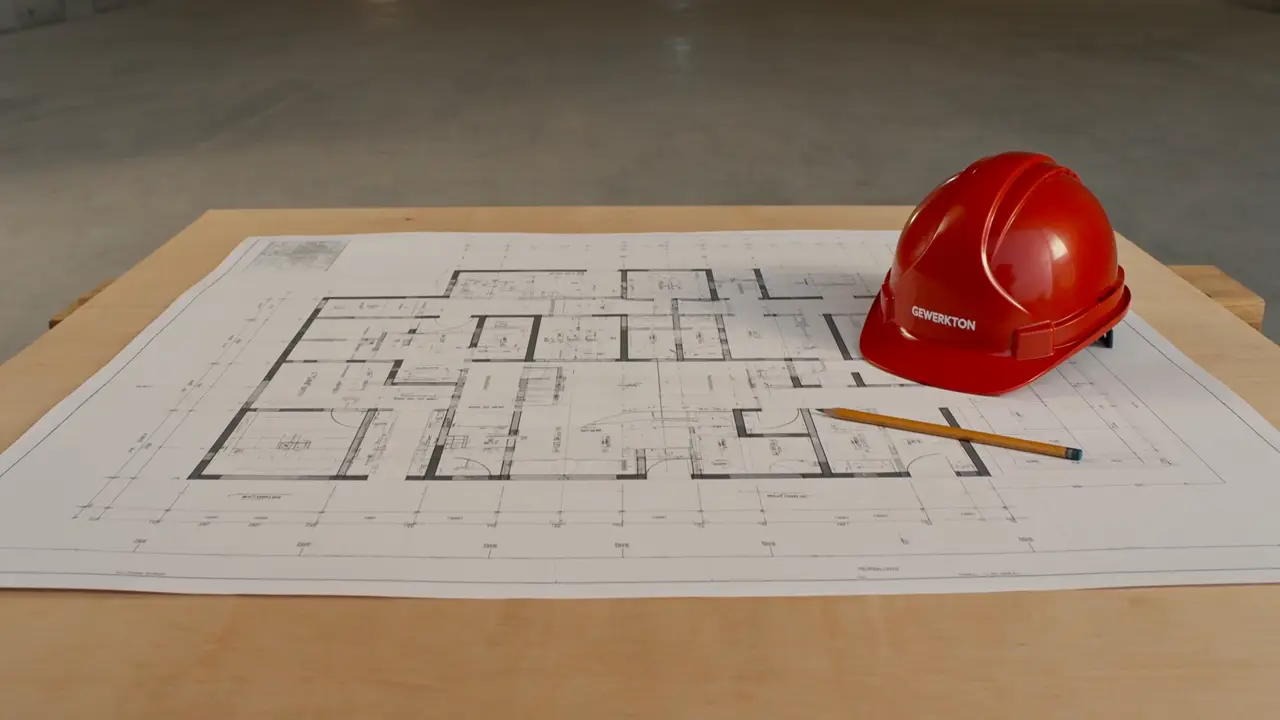
Every good production story has a failed take, and this one is genuinely funny. During the poster work, an image model was asked to render the brand name — GEWERKTON — into a scene. What came back, confidently and with excellent lighting, was GEWRRKTAN. Not a typo in the prompt: the model simply did what image models do with text. It treated the lettering as texture, a plausible-looking arrangement of glyphs, rather than as spelling that someone would actually read.
Anyone who has generated images with text in them has met this failure mode. Models learn what letters look like, not what they say. Serifs in the right places, kerning that almost convinces, and a word that collapses the moment you read it. The brand-name version is just the most expensive-looking way to learn the lesson: if a model can’t be trusted to spell the product’s own name, nothing else in the frame can be taken on trust either. Not the geometry of a staircase, not the label on a warning sign.
That anecdote could have ended in a decision to avoid generated imagery altogether. Instead it became policy. Every generated asset for the site goes through human review before it ships, with lettering given special attention — call it the GEWRRKTAN check: read every word in the frame before you approve anything. Generation is cheap; review is the job. That sentence could hang over the door of every creator working with AI tools right now.
The four-point screen
Out of that review discipline came a concrete process: every AI-generated video clip considered for the site passes a four-point screening before it earns a place on a page. It’s worth spelling out, because it transfers directly to anyone’s text-to-video work.
- Lettering. Read every piece of text in the frame. If the model rendered words, they have to be the right words, spelled right — GEWERKTON, not GEWRRKTAN. If the text can’t be read cleanly, the clip is out.
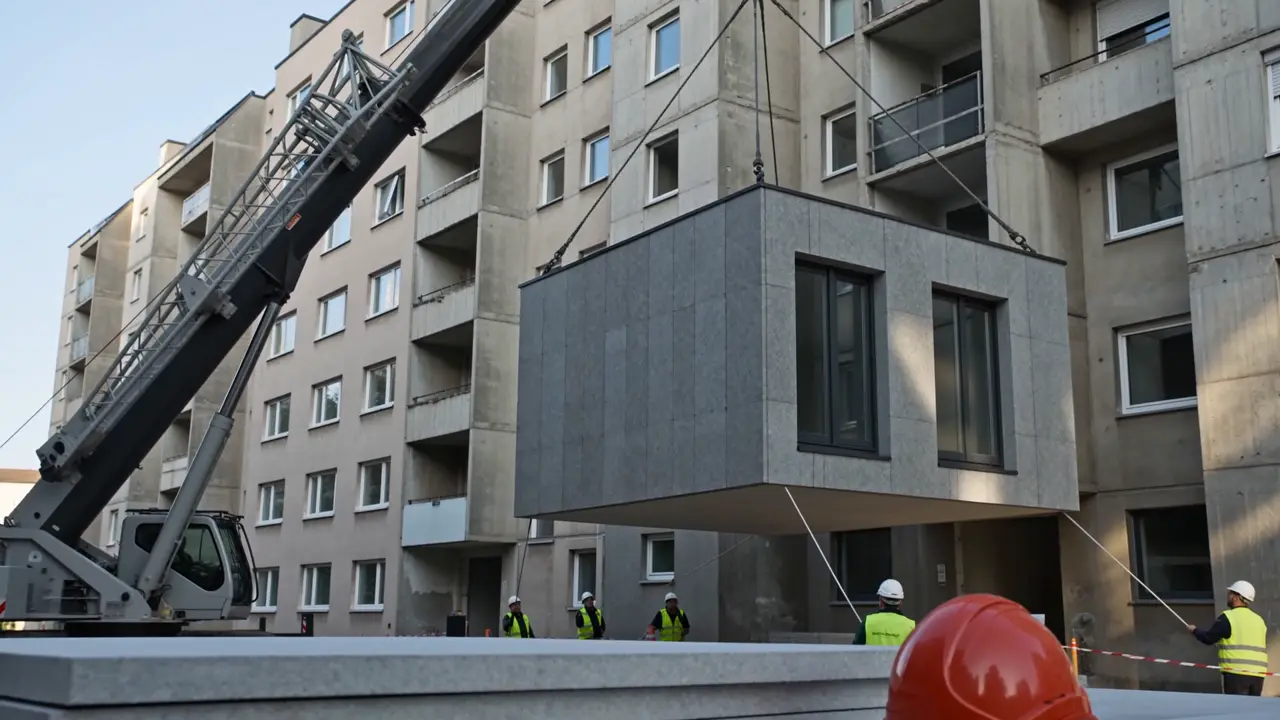
- Physics. Does the scene behave like the real world? Materials, motion, machines. Construction professionals will watch these clips; a physically impossible site scene reads to them the way a phasey drum recording reads to an engineer.
- Honesty. The clip must not imply a capability the product doesn’t have. No invented interface, no fantasy features, nothing the beta can’t back up. A clip that oversells is worse than no clip.
- The rewatch. A final human pass, start to finish, once the first three checks have cooled. If anything reads as AI slop on a fresh viewing, it doesn’t ship.
Note what all four points have in common: none of them asks whether the clip is impressive. Impressive is the default state of generative video now. The screen exists to catch the ways a clip can be impressive and wrong — the same way a technically flawless mix can still be the wrong mix for the song.
The pipeline: 51 clips, zero marginal cost
The result of that discipline is a media bank of 51+ self-produced clips and posters — every moving image and every poster on the site produced in-house, none of it stock, none of it licensed. Once the pipeline and the screening process existed, the marginal cost of each additional clip effectively dropped to zero: the expensive parts are judgment and review time, not the render.
That’s a shift audio creators already lived through. Sample libraries did it to session budgets, then soft synths did it to hardware, and now generative video is doing it to the brand-film budget. The economics stop being about cost per asset and start being about taste per asset — how good your screen is, and how honest your rejects are. A founder who can produce 51 clips for a website doesn’t have a cheaper website; he has a website with 51 chances to get the mood right, minus every take that failed the screen.
Prompt lessons worth stealing
The prompt-craft lessons this build reinforces will be familiar to anyone who has fought a model for a specific result — and they’re worth stating plainly, because they transfer across tools.
- Treat the prompt like mic placement, not like a wish. Small, concrete changes — camera behavior, light direction, what’s in the foreground — move the output far more than piling on adjectives. “Cinematic” is the reverb preset of prompting: everyone tries it, nobody’s mix improved.
- One action per clip. A short clip that does one thing well cuts into a page cleanly. Ask for three things and you get a mush of all three — the visual equivalent of tracking a band in one take with one mic.
- Iterate on the noun, not the adjective. When a generation misses, change what the subject is doing or where the camera stands before you touch the style words. Structure first, polish second — same order as a mix.
- Expect text to fail. If lettering matters, assume the model will mangle it and plan for review or replacement. GEWRRKTAN is not a bug in one model; it’s how the whole category handles words.
- Keep the rejects. Failed generations tell you where the model’s judgment ends and yours begins. That boundary is the actual craft knowledge.
What the site is actually selling
All of this craft serves a product that, fittingly for this site’s readership, starts with sound. Gewerkton Field is a voice-first construction site app: dictation to evidence. A site manager speaks; the app turns it into structured documentation — defects, daywork reports, takt planning, a portal. If you’ve ever watched a field recordist work, the logic is identical: the microphone is the fastest input device that doesn’t interrupt the work. On a construction site, gloves, dust, and deadlines make typing the bottleneck. Voice removes it.
Gewerkton Studio is the browser workspace for plans and models — and where no model exists for a building, the site team creates one in the browser rather than waiting for one to appear. Gewerkton Cloud handles operations and the coordination of models and data between Field, Studio, and third parties. One brand, three product lines — and a deliberate architecture beneath them: the platform is bring-your-own-AI, with 13 AI providers, your own keys, and region selection across EU, US, and Asian providers including mainland China. No vendor lock-in. Data residency works the same way: EU cloud or your own infrastructure, your choice.
The platform was born in the German market, which means it carries the deepest German commercial integration — GAEB, REB, XRechnung, DATEV — while being built for global markets, with 27 content languages and regional AI-provider choice. The deployment fields it describes are a tour of the hardest documentation environments in construction: wind farms and renewables, with distributed sites, rotating crews, field acceptance, and offline capture in dead zones; data centers and industrial plants, where many trades run in parallel against tight deadlines and meeting decisions become trade-sorted task lists; housing and building construction, with defects documented by photo and deadline, daywork reports dictated instead of typed, and a signature captured on the device at handover; infrastructure and tunnels, where projects run long, change orders pile up, and instructions stay backed by the original audio; cross-border teams, with EU, US, and APAC crews on the same project, each working in their own language while the evidence original stays unambiguous; and projects in Asia, where Chinese, Korean, and Vietnamese crews need multilingual support from capture to report, with data residency by choice.
Notice the thread connecting those scenarios: the original audio. In a dispute, the dictated note isn’t a convenience — it’s the evidence, captured in the speaker’s own voice and language. “On site, what counts is what’s proven” turns out to be a product architecture, not just a tagline. For an audio audience, that’s the most interesting engineering decision in the platform: the voice memo, treated as the master recording that everything else is mixed down from.
One builder, a fleet of agents
The build itself is the other story worth telling. Gewerkton is being developed by a solo founder directing a fleet of coding agents — Codex and Claude working under human direction. In one night, that fleet shipped 21 software packages, and the output wasn’t taken on faith: it was verified with negative controls and mutation tests, the software equivalent of proofing a master by trying to break it on purpose.
That detail matters more than the headline number. Shipping 21 packages overnight is only impressive if you can trust them, and trust here is manufactured the same way the site’s video clips are: generation is fast, verification is deliberate, and nothing ships because it merely looks right. The same discipline that screens a clip — check it, stress it, rewatch it — shows up in the engineering as negative controls and mutation tests. One philosophy, applied to pixels and to code alike.
It’s hard not to read this as the near future of independent production generally. One person with taste, a review process, and a fleet of agents can now produce what used to take a small studio: the product, the website, the media bank, the copy. The bottleneck has moved, permanently, to judgment — which is precisely where creators have always said it should be.
The site as an engineering object
One more detail deserves its own moment, because it’s rare enough to be news: the marketing site itself is engineered like the product. It runs in 27 languages, with zero trackers, no cookie banner, and a fully egress-free architecture — nothing calls out to third parties, because there’s nothing third-party to call. No analytics beacons, no tag managers, no consent theater. The missing cookie banner isn’t a trick; it’s a consequence. If nothing tracks the visitor, there’s nothing to consent to.
For a site whose product is about evidence and proof, that restraint reads as an honesty marker too. A company willing to give up surveillance of its own marketing funnel, because the architecture is cleaner without it, is telling you something about how it will treat your project data.
What to take from this build
Gewerkton is in beta now, with a public beta planned for fall 2026 — stated here as plainly as the site states it. Whether or not you work anywhere near construction, the making-of is worth studying as a production template: eleven pages with no placeholders, a media bank where every asset survived a four-point screen, an agent fleet checked by negative controls and mutation tests, and a hard rule that nothing ships on vibes. Generation is cheap. Review is the job. GEWRRKTAN forever.
You can read all eleven pages — and check the lettering for yourself — at gewerkton.com.
Halloween Picks
halloween
As an affiliate, we earn on qualifying purchases.