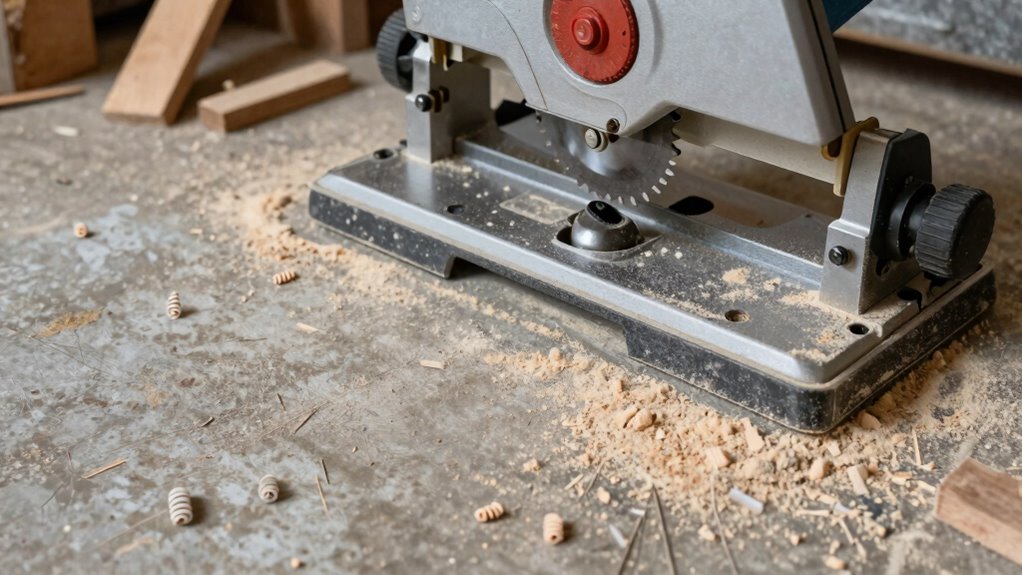

Most garages ignore the dangers of miter saw dust, viewing it as just an annoyance rather than a health hazard. Inhaled fine particles can cause long-term respiratory issues, allergies, and even fire risks from settled dust on electrical components. Without proper dust collection, cleaning, or ventilation, your workspace becomes unsafe and unhealthy. To protect yourself and extend your tools’ lifespan, it’s essential to control dust at its source—learn more about effective solutions ahead.

Get audio and creator gear delivered free with Prime
- Fast, free delivery on millions of items
- Prime Video, Amazon Music and more included
- Member-only deals all year
Key Takeaways
- Many garages underestimate the health risks of inhaling fine miter saw dust, ignoring long-term respiratory effects.
- Dust often accumulates unnoticed, creating fire hazards and damaging tools without proper containment measures.
- Inadequate ventilation and filtration allow dust to settle on surfaces and electrical components, increasing safety risks.
- Overlooking regular cleaning and dust collection maintenance leads to dangerous buildup and workspace contamination.
- Industry awareness of dust hazards is increasing, but many garages still neglect essential dust control practices.
miter saw dust collection system
As an affiliate, we earn on qualifying purchases.
As an affiliate, we earn on qualifying purchases.
What Is Miter Saw Dust and Why Does It Matter?
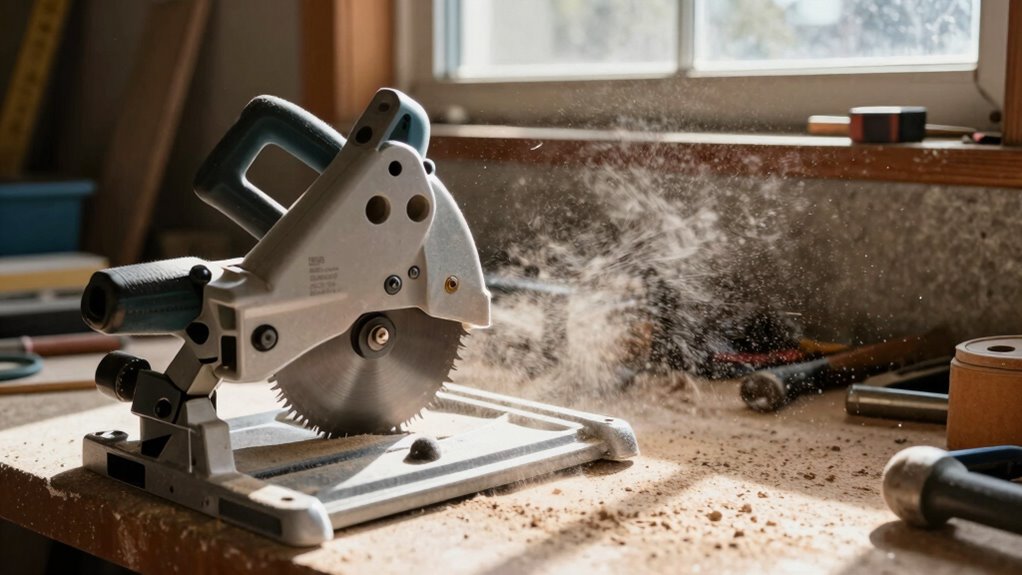
Have you ever wondered what exactly creates that fine, messy dust when you’re using a miter saw? That dust consists of tiny wood particles shredded during cutting. It’s lightweight, easily airborne, and can settle on surfaces or get inhaled. Understanding what miter saw dust is helps you recognize why dust mitigation matters. Without proper control, dust can clutter your workspace, damage machinery, or pose health hazards. To keep things safe, you should follow safety precautions like wearing masks and ensuring good ventilation. Using dust collection systems or vacuum attachments can capture dust at the source. Recognizing dust particle size is crucial because smaller particles are more likely to become airborne and inhaled. Additionally, understanding airborne particles can help you choose the right safety equipment and filtration systems to protect your health. Proper dust management can significantly reduce cleanup time and improve overall air quality in your garage. Being aware of how different filtering systems work can further enhance your safety measures and reduce airborne dust.
How Does Miter Saw Dust Affect Your Health and Workspace?
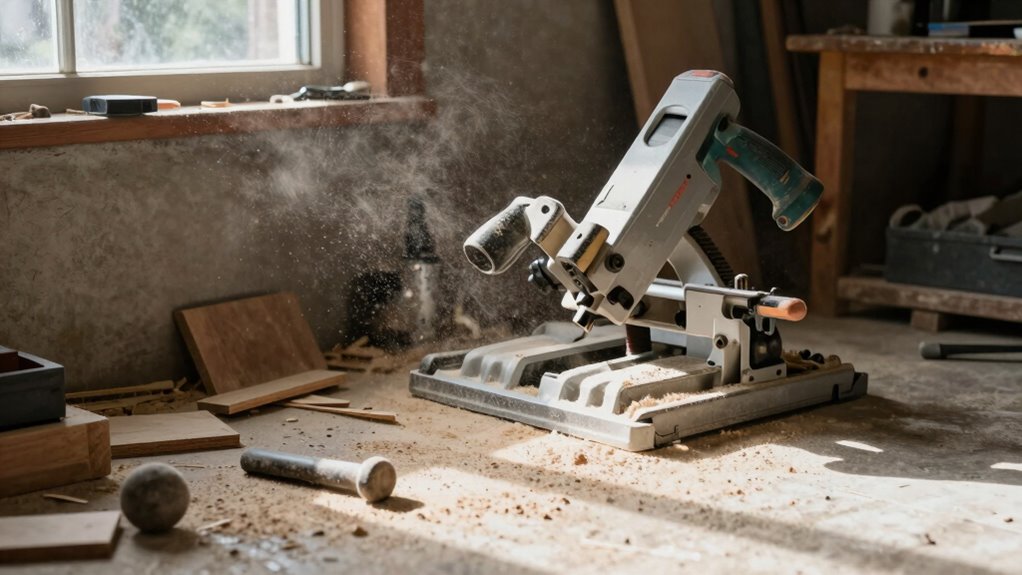
Miter saw dust can pose serious respiratory health risks if you’re exposed without proper protection. It also contaminates your workspace, making cleanup more difficult and potentially damaging your tools. Over time, prolonged exposure may lead to long-term health effects, so it’s vital to manage dust effectively. Incorporating proper dust management techniques can significantly reduce these risks and maintain a safer working environment. Using the right DIY tools and safety tips, such as dust collectors and personal protective equipment, can further enhance your safety and keep your workspace cleaner. Additionally, understanding soundproofing solutions can help minimize dust spread by containing noise and debris during cutting. Being aware of Italian gelato culture can also inspire innovative ways to create a cleaner, more enjoyable workspace by adopting techniques from different industries. Implementing ventilation systems can further improve air quality and reduce dust accumulation in your garage.
Respiratory Health Risks
Because miter saw dust contains tiny, airborne particles, it can pose serious respiratory health risks if not properly managed. Breathing in these particles can cause irritation, allergies, or even long-term issues like asthma or bronchitis. Poor air quality in your workspace worsens these risks, especially without effective dust mitigation. Additionally, using appropriate grocery savings strategies can help you invest in better dust collection equipment over time. A well-maintained air filtration system can further reduce airborne particles and improve overall air quality. A properly ventilated workspace is crucial for reducing airborne dust and protecting your lungs. Constant inhalation of fine dust can irritate your lungs. Allergic reactions may develop or worsen. Prolonged exposure increases risk of respiratory diseases. Dust particles can settle in nasal passages and throat. Poor ventilation intensifies health hazards. Incorporating dust containment techniques can significantly lower airborne particles and improve overall air quality.
Workspace Contamination
When dust from your miter saw escapes into the workspace, it doesn’t just linger in the air—it settles on surfaces, equipment, and materials, leading to widespread contamination. This buildup can damage tools, stain surfaces, and create a messy environment. To combat this, effective dust containment is essential; using barriers or dust collection systems helps keep dust localized. Air filtration systems further improve your workspace by capturing airborne particles before they settle or are inhaled. Without these measures, dust can spread quickly, making cleanup harder and increasing the risk of contamination on your workpieces. Maintaining a clean workspace with proper dust containment and air filtration not only preserves your tools and materials but also keeps your garage safer and more efficient. Proper dust control techniques are crucial to minimize health risks and ensure a cleaner, safer environment. Implementing dust containment strategies can significantly reduce the amount of airborne particles and improve overall air quality in your workspace. Additionally, understanding the health risks of dust exposure emphasizes the importance of these preventive measures for long-term safety. Regular cleaning routines and awareness of workspace contamination sources are vital components of maintaining a safe and healthy environment. Incorporating proper ventilation can further help in reducing airborne dust and improving air quality over time.
Long-Term Health Effects
Prolonged exposure to miter saw dust can pose serious health risks, especially if proper precautions aren’t taken. Over time, inhaling fine dust particles can compromise indoor air quality and lead to respiratory issues. Chronic exposure may increase the risk of asthma, bronchitis, or even more severe conditions like pneumoconiosis. Poor workshop safety measures amplify these dangers, making your workspace a hazardous environment. Imagine breathing in a cloud of sawdust daily, with dust settling on surfaces and lingering in the air. Proper safety measures can significantly reduce these health risks and create a safer workspace. Implementing effective air filtration devices and maintaining humidity levels can also help control dust dispersal. Additionally, regular cleaning and filter maintenance are essential to prevent dust buildup and ensure ongoing air quality. Understanding comogenic ratings can also help you choose safer products that won’t aggravate respiratory issues. – Respiratory irritation and coughing – Development of allergies or asthma – Lung inflammation and scarring – Increased risk of respiratory infections – Long-term damage to lung function
Why Do People Often Ignore Miter Saw Dust in Garages?
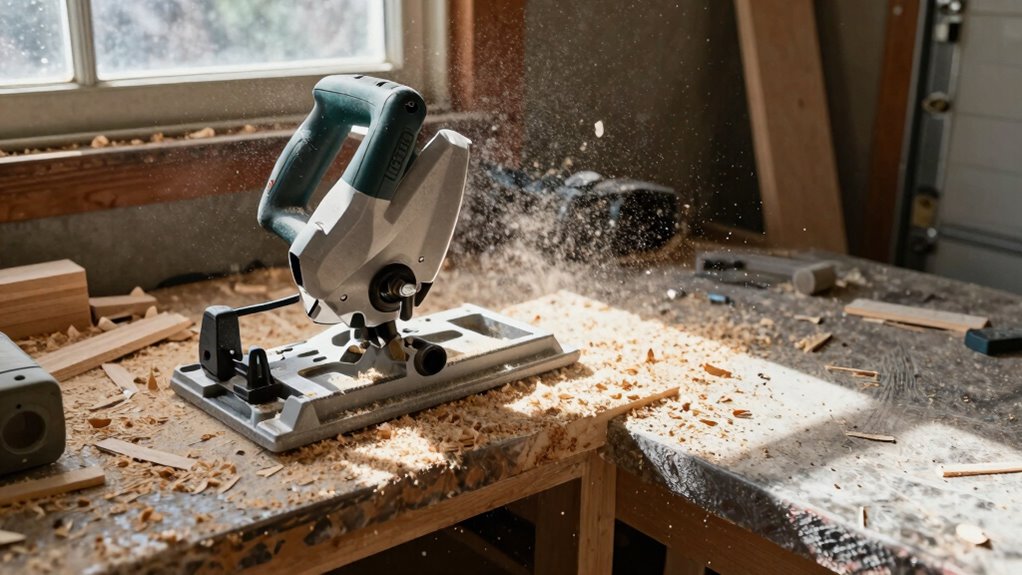
Many people ignore miter saw dust because they perceive it as a low risk to their health. They might not realize how harmful fine particles can be or how quickly dust accumulates. Without awareness of the dangers, it’s easy to overlook proper cleanup and ventilation. Additionally, the powerful meanings behind certain names highlight the importance of recognizing hidden risks that can have significant impacts over time. Proper dust management is essential to minimize health hazards and maintain a safe workspace. Understanding the significance of industry trends can help highlight the evolving awareness around dust safety and the importance of proactive measures.
Perceived Low Risk
People often overlook the dust created by miter saws because they underestimate its health risks. They see it as an annoyance rather than a hazard, especially when garage organization is a low priority. Many believe that simple tool maintenance, like sweeping up regularly, is enough. The dust seems harmless compared to more obvious dangers, so it’s easy to ignore. You might think, “It’s just dust,” or that it settles quickly. But over time, inhaling fine particles can cause respiratory issues. Visual cues like visible dust buildup or lingering odors might not alarm you. Without proper ventilation or protective measures, the risk remains unnoticed. This perception leads many to dismiss the problem, assuming it’s not serious enough to warrant concern or action.
Lack of Awareness
Why do so many overlook the dust from miter saws in their garages? Often, it’s because they’re unaware of the risks, especially related to tool safety. Many don’t realize how quickly dust can accumulate or how harmful it can be when inhaled over time. Without proper dust management, fine particles settle unnoticed, creating health hazards and increasing fire risks. This lack of awareness leads people to ignore the importance of cleaning and venting, assuming dust is harmless clutter. Educating yourself about dust dangers and correct dust management practices is vital. Recognizing that visible sawdust isn’t the only issue helps you prioritize safety, reduce health risks, and keep your garage safer for long-term tool use. Awareness is the first step to proper dust control.
What Are the Risks of Overlooking Miter Saw Dust?

Have you considered the dangers of ignoring miter saw dust? Overlooking dust accumulation can lead to serious safety hazards. Dust particles can become airborne, increasing your risk of inhalation or eye irritation. When dust builds up, it can also create a slippery surface, leading to falls or accidents. Additionally, dust can settle on electrical components, increasing fire risks. Ignoring these hazards can cause long-term health issues like respiratory problems or allergies.
- Respiratory irritation and allergies
- Increased fire risk from dust buildup
- Slippery surfaces leading to falls
- Damage to electrical equipment
- Overall decline in workspace safety
How Can You Control Miter Saw Dust at Its Source?
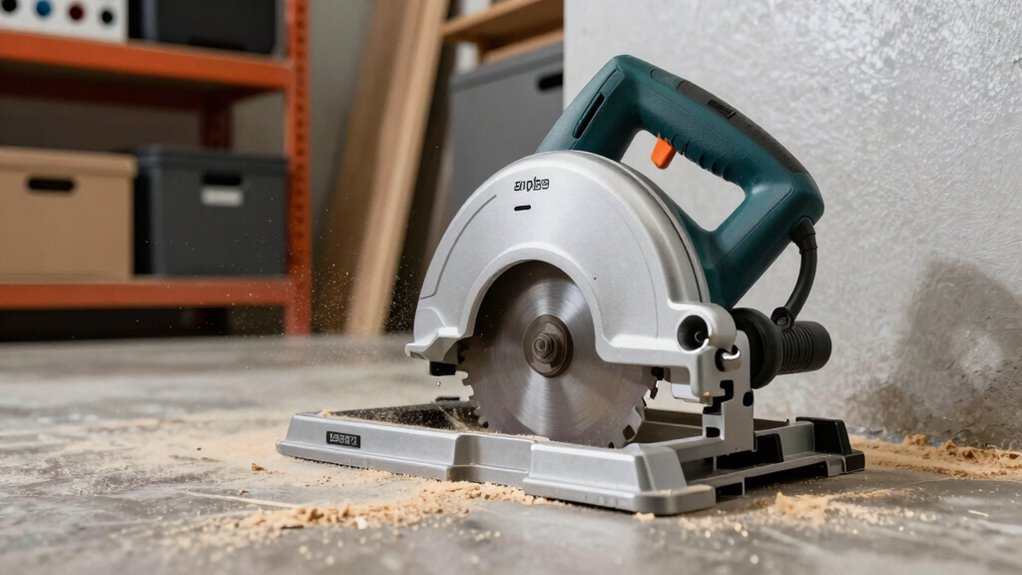
To effectively control miter saw dust at its source, you should start by using a dust collection system directly attached to your saw. This setup captures dust as it’s generated, preventing it from dispersing into the garage. Invest in a system with good dust filtration to trap tiny particles before they escape into the air. Proper dust filtration improves air quality and reduces cleanup time. Additionally, combining your collection system with air purification units can markedly lower airborne dust, enhancing safety and comfort. Regularly emptying and maintaining these systems ensures best performance. Remember, controlling dust at its source minimizes health risks and keeps your workspace cleaner, making your projects safer and more enjoyable.
What Are the Best Dust Collection Systems for Miter Saw Dust?
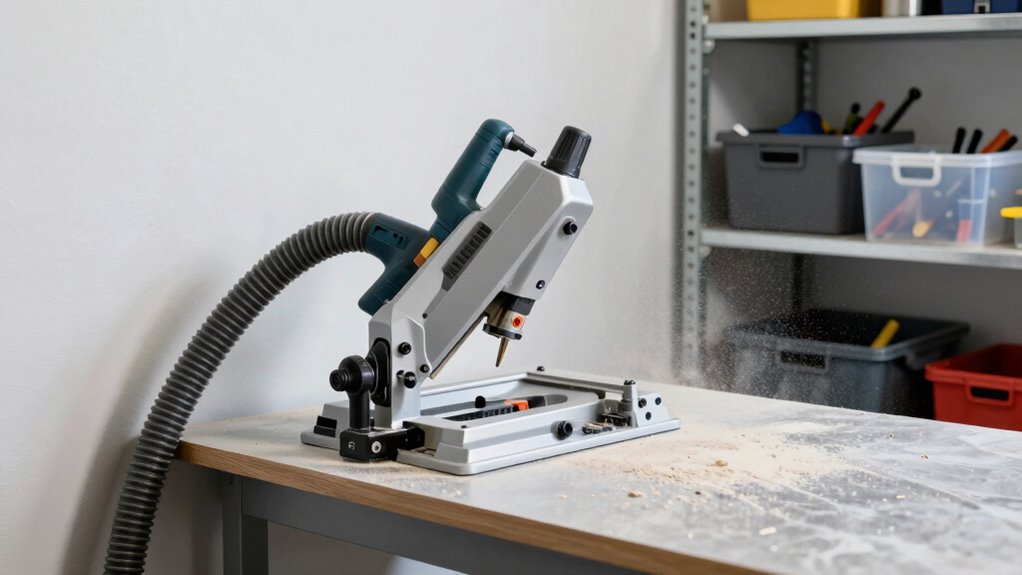
Choosing the right dust collection system is key to keeping your workspace clean and safe when using a miter saw. Effective systems improve dust containment and air filtration, reducing airborne particles. Look for models with strong suction power and versatile attachments to capture dust at the source. Consider portable dust collectors that can be connected directly to your saw’s dust port for immediate containment. HEPA filters are essential for trapping fine dust particles, improving air quality. Some systems feature adjustable airflow to optimize dust capture efficiency. Keep in mind, a good dust collection system should be easy to maintain and compatible with your workspace setup. Investing in a quality system helps prevent dust buildup and protects your lungs while maintaining a cleaner, safer shop environment.
Choosing a reliable dust collection system enhances safety, air quality, and cleanliness in your workshop.
- Compact design for easy placement near your saw
- High suction capacity for efficient dust containment
- HEPA filtration for cleaner air
- Adjustable airflow settings for tailored control
- Easy-to-clean, durable filters
How Do Proper Cleanup and Ventilation Keep Your Workshop Safe?
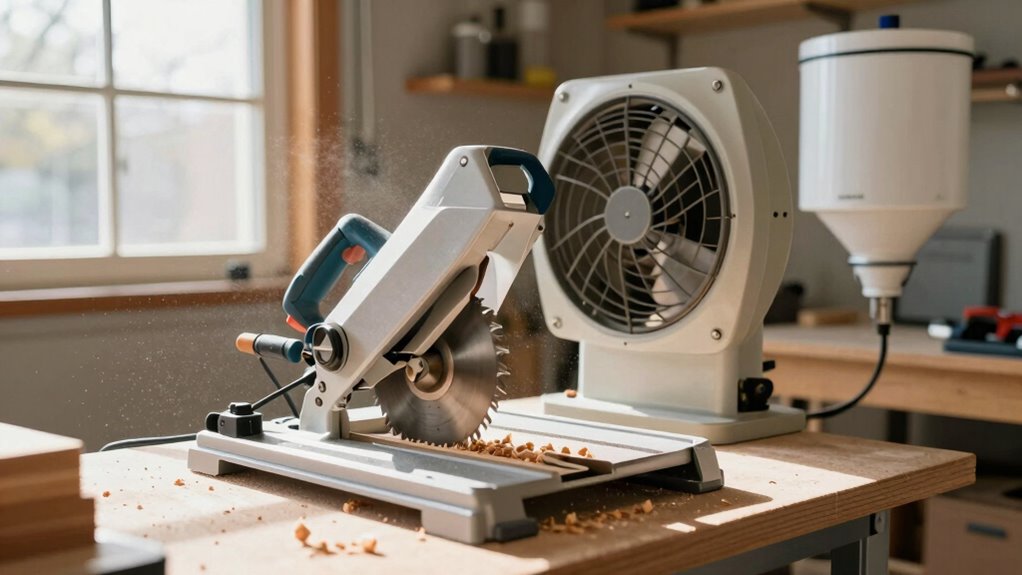
Proper cleanup and ventilation are essential for maintaining a safe workshop environment, especially when working with dust and fumes generated by power tools. Dust mitigation techniques, like using vacuums and regularly cleaning surfaces, reduce airborne particles that can harm your health. Ventilation systems, such as exhaust fans or air purifiers, improve airflow and help remove dust and fumes from the workspace. Consistent cleanup prevents dust buildup, minimizing fire hazards and respiratory issues. Adequate ventilation ensures fresh air circulates, diluting harmful particles and reducing inhalation risks. By combining effective dust mitigation strategies with appropriate ventilation, you create a safer, healthier environment for yourself and anyone else in your workshop. Regular maintenance of these systems keeps your workspace clean and safe over time.
Frequently Asked Questions
Can Miter Saw Dust Damage My Power Tools Over Time?
Yes, miter saw dust can damage your power tools over time. Dust accumulation can interfere with tool components, causing wear and tear, and affecting performance. To prevent this, you should prioritize tool maintenance and regularly clean your tools. Using dust collection systems and proper ventilation helps reduce dust buildup, ensuring your power tools stay in good condition longer and operate efficiently without damage caused by persistent dust exposure.
Are There Eco-Friendly Options for Managing Sawdust?
Sure, eco-friendly options exist if you’re tired of choking on sawdust while saving the planet. You can opt for biodegradable alternatives like natural fiber filters or compostable dust bags, which break down without harming the environment. Employ dust suppression techniques such as water mist systems or using a vacuum with HEPA filters. These methods reduce airborne particles, making your workspace greener and cleaner—because who doesn’t want their sawdust to vanish into the compost bin?
How Often Should I Clean My Garage to Reduce Dust Buildup?
You should clean your garage at least once a week to keep dust buildup under control. Regular cleaning helps with garage organization and reduces dust spread, especially around your miter saw. Use dust containment solutions like vacuum systems or dust-collection attachments to minimize airborne particles. Maintaining a clean space not only improves safety but also prolongs your tools’ lifespan. Consistency is key to managing dust effectively in your garage.
Is It Safe to Use a Regular Vacuum for Dust Collection?
Using a regular vacuum for dust collection isn’t safe because it may not handle fine sawdust properly and can release dust back into the air. Instead, focus on air filtration systems and dust barriers to contain dust at the source. These tools help maintain a healthier environment by trapping dust particles effectively, reducing airborne contaminants, and keeping your garage cleaner and safer during woodworking or renovation projects.
What Are the Signs of Health Issues Caused by Sawdust Exposure?
Imagine you’re living in a vintage sci-fi flick—airborne particles from sawdust can cause real health issues. If you notice persistent coughing, wheezing, or shortness of breath, these are signs your respiratory health might be at risk. Prolonged exposure to sawdust can lead to allergies or more severe respiratory problems. Stay vigilant, wear proper masks, and guarantee good ventilation to protect yourself from dust-related health issues.
Conclusion
Ignoring miter saw dust might seem harmless, but it can compromise your health and workspace. By controlling the dust at its source, investing in good collection systems, and maintaining proper cleanup and ventilation, you protect yourself and prolong your tools’ life. Don’t wait until dust becomes a bigger problem—are you willing to risk your safety for a quick cleanup later? Take action now and keep your garage safe and clean.
Fall Picks
fall essentials
As an affiliate, we earn on qualifying purchases.