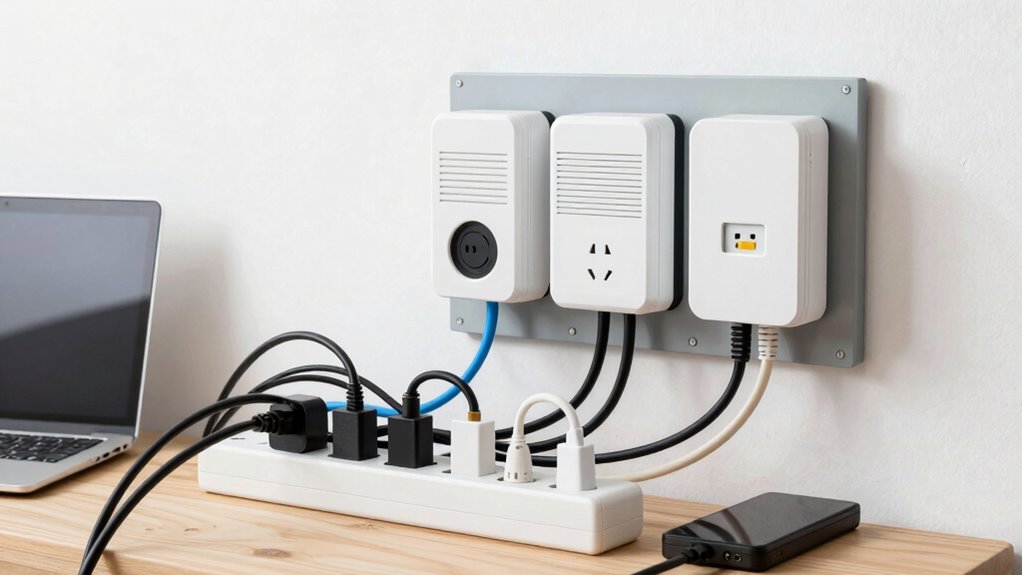

Whole-home surge protection offers professional-grade, full-house defense by monitoring your entire electrical system and diverting dangerous surges before they reach your devices. In contrast, power strips only protect the devices plugged into them, providing localized and basic surge defense. While whole-home systems are more costly and need proper installation, they deliver better overall protection. To understand which option suits your needs and how to maximize safety, explore the detailed differences further.

Get audio and creator gear delivered free — and shop member deals
- Fast, free delivery on millions of items
- Access to Prime Big Deal Days deals on October 6–7
- Prime Video, Amazon Music and more included
Key Takeaways
- Whole-home surge protection covers the entire electrical system, while power strips only protect connected devices locally.
- Whole-home units are professionally installed at the main panel, offering comprehensive, larger surge handling.
- Power strips are affordable, portable, and protect individual devices but do not safeguard wiring or entire home.
- Whole-home systems provide superior response time, voltage regulation, and durability for long-term protection.
- Power strips are simple to set up but may require frequent replacement and do not prevent large surges from damaging wiring.
As an affiliate, we earn on qualifying purchases.
What Is Whole-Home Surge Protection and How Does It Work?
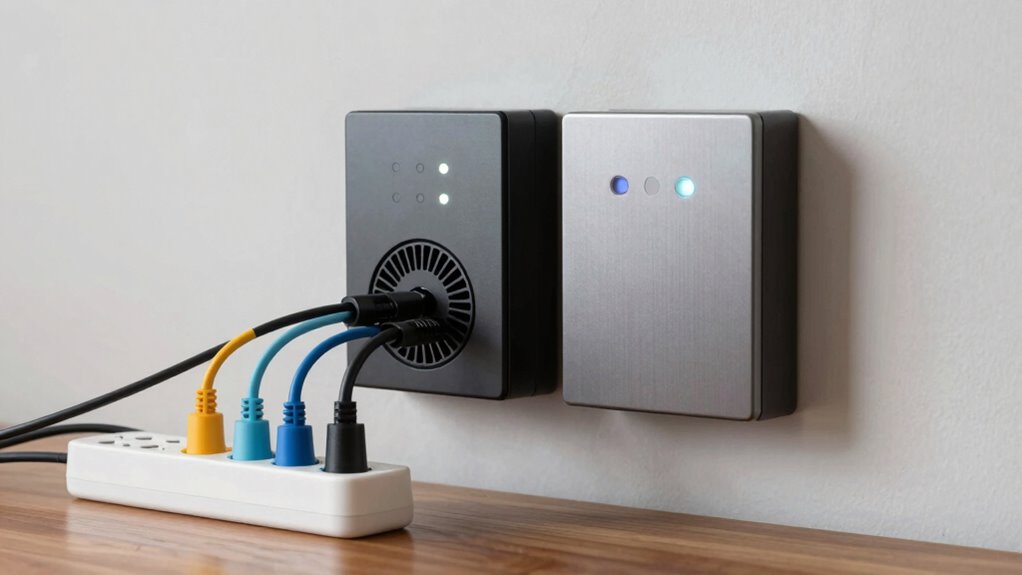
Have you ever wondered how your home stays protected from sudden electrical spikes? Whole-home surge protection works by monitoring your electrical wiring for voltage fluctuations and acting quickly to block excess energy. When lightning strikes nearby or there’s a power surge, this system detects the spike and diverts it safely into the ground, preventing damage. Unlike power strips, which offer localized protection, whole-home systems are installed at your main electrical panel. They respond instantly to protect all connected devices, ensuring that sudden surges don’t travel throughout your home’s wiring. This proactive approach keeps your appliances safe from unpredictable power surges caused by lightning strikes or utility issues, giving you peace of mind that your entire home is shielded from electrical threats. Additionally, understanding the importance of voltage regulation can help you appreciate how these systems maintain consistent power levels for your devices. Proper system installation is essential to ensure maximum protection and efficiency of your whole-home surge protection system.
How Do Power Strips With Surge Protection Guard Your Devices?

Power strips with surge protection shield your devices using a surge absorption mechanism that diverts excess voltage away. They also feature safety features like circuit breakers that shut off power if a surge is too strong. Together, these elements help keep your electronics safe from unexpected power spikes. Additionally, some surge protection devices include outdoor rated features suitable for backyard or poolside areas, ensuring safety in various environments. Understanding drone bees and hive stability can remind us of the importance of safeguarding delicate systems from electrical disturbances. Proper maintenance and understanding of electrical safety principles can further enhance the protection of your valuable electronics, especially when considering the symbols and shapes that represent safety and protection in various contexts. Recognizing innovative safety features in modern surge protectors can also improve overall electrical safety.
Surge Absorption Mechanism
When a voltage spike occurs, surge protectors in power strips respond instantly to shield your devices from damage. They use surge absorption to divert excess energy away from your electronics, preventing it from passing through. They rely on components like metal oxide varistors (MOVs) that absorb the transient suppression caused by sudden voltage increases. When a spike hits, the MOV quickly clamps the voltage, transforming the surge energy into heat, which is then safely dissipated. This rapid action helps protect your devices from potential damage caused by electrical surges. The surge absorption mechanism in power strips is essential for providing immediate, reliable protection, ensuring your electronics remain safe during unexpected power fluctuations. Understanding surge protection is crucial for choosing the right device for your needs. Recognizing how electrical surges are managed can help you better understand the importance of surge protection devices.
Device Safety Features
Power strips with surge protection incorporate multiple safety features to guard your devices against electrical damage. These safety protocols help prevent power surges from harming sensitive electronics, ensuring better device durability over time. Built-in circuit breakers automatically shut off power if an overload occurs, protecting your devices from potential fire hazards. Additionally, some power strips feature grounding mechanisms that reduce the risk of electrical shock. The surge protection components absorb and divert excess voltage, shielding your electronics from sudden spikes. These combined safety features make power strips a reliable safeguard, providing peace of mind when connecting multiple devices. By adhering to safety protocols, these surge-protected power strips help extend the lifespan of your devices and minimize the risk of electrical mishaps. Incorporating smart features can further enhance device safety by enabling remote monitoring and automatic shutdowns during electrical irregularities.
Comparing Coverage and Effectiveness: Whole-Home vs. Power Strips
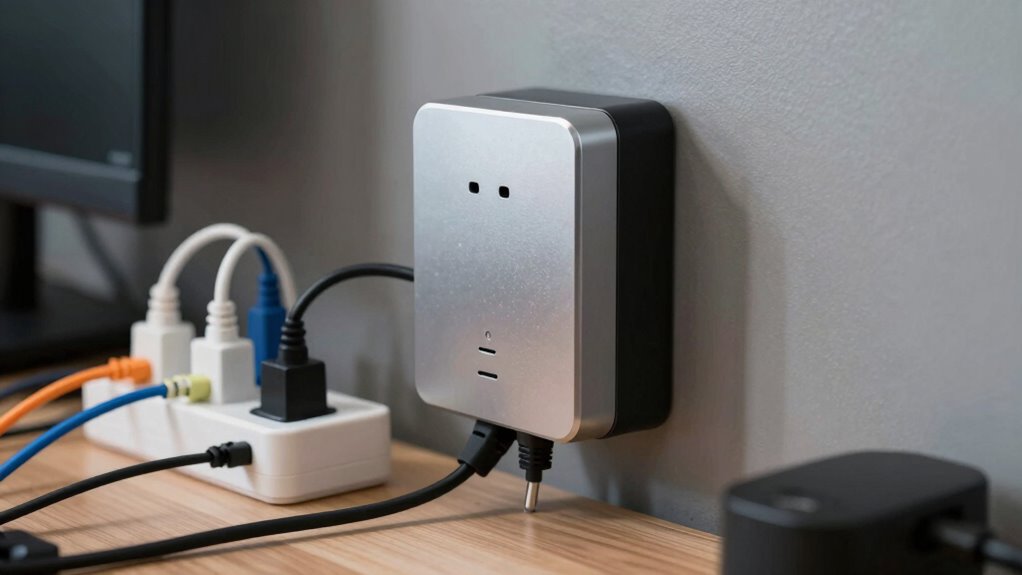
While power strips are convenient for expanding your outlet options, they offer limited protection by only covering individual devices. Whole-home surge protection, on the other hand, safeguards your entire electrical wiring system from surges, reducing risk across all connected devices. Power strips are reactive, often only absorbing small surges, while whole-home systems intercept larger, damaging surges before they reach your wiring. Consider these points:
- Whole-home systems provide extensive coverage, protecting your entire electrical system
- Power strips protect specific devices but don’t prevent surges from damaging your wiring
- Power consumption spikes are mitigated better with whole-home protection
- Whole-home units handle larger surges, reducing potential electrical wiring damage
- Power strips are limited in scope, offering minimal protection against major surges
- Incorporating mythology-inspired names into your home safety features can symbolize strength and wisdom in protecting your household. Additionally, understanding electrical surge mechanisms can help you make more informed decisions about your home’s surge protection strategy. Recognizing the importance of electrical safety standards can further enhance your home’s overall protection. Being aware of surge protection technology enables homeowners to select the most effective solutions for their needs.
In essence, whole-home protection offers superior coverage and effectiveness for your entire house.
Which Surge Protection Solution Is Best for Your Home?
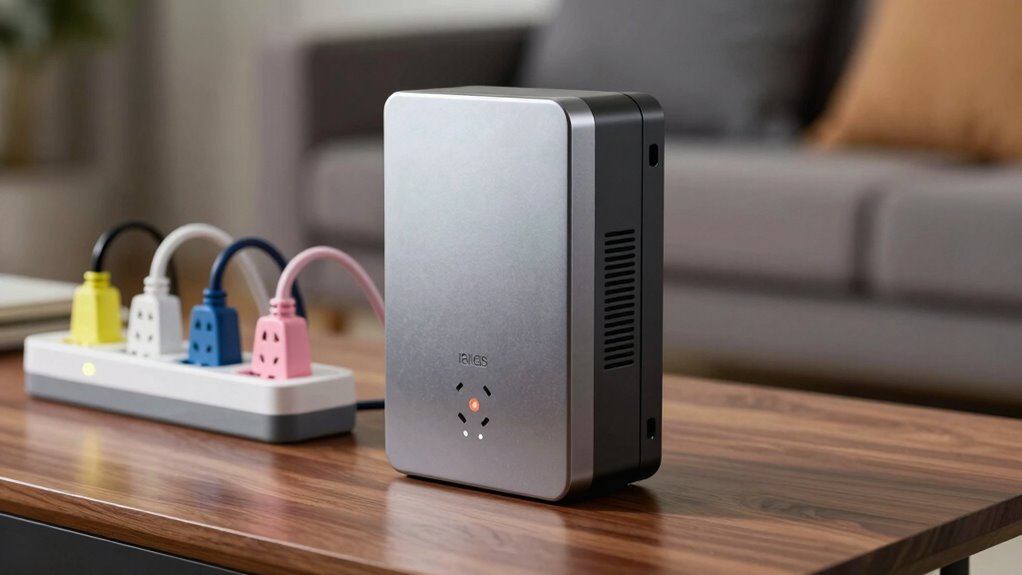
Choosing the right surge protection depends on your home’s coverage needs, budget, and how much protection you want. Whole-home systems offer broader coverage and higher protection levels but can cost more and require professional installation. Power strips are budget-friendly and easy to set up but provide limited protection for specific devices. Additionally, integrating household safety products like surge protectors can help prevent damage from power surges and ensure a safer environment. Understanding the electrical system in your home can also influence which surge protection solution is most effective for your situation. Being aware of nail biology/hygiene can also help you understand how electrical systems are maintained and protected, ensuring your home’s safety strategies are effective. Proper maintenance and understanding of electrical wiring can further enhance your overall surge protection approach, especially when considering system grounding techniques to improve safety.
Coverage Area Differences
When considering coverage area, whole-home surge protection clearly outperforms power strips by safeguarding your entire electrical system. Its broader coverage scope guarantees every outlet and connected device is protected, providing peace of mind during power surges. Power strips, on the other hand, have a limited protection reach, only covering what’s plugged into them. This means your devices outside that range remain vulnerable.
- Protects your entire home vs. just a few devices
- Covers main electrical panel for complete safety
- Eliminates blind spots in surge protection
- Ensures consistent protection across all outlets
- Reduces risk of unseen damage from electrical surges
- Additionally, integrating surge protection with whole-home systems can help maintain optimal performance of high-powered devices like electric bikes or dirt bikes. Recognizing the importance of comprehensive protection, some home systems also incorporate electricity safety, which is crucial for preventing damage from unexpected surges. Properly configured surge protection devices can also help extend the lifespan of your home’s electrical components. Understanding the potential vulnerabilities in your electrical system and implementing feature Buddies strategies can help you achieve a safer, more reliable home environment. Incorporating a holistic SEO approach in your home safety strategy can ensure that all aspects of electrical protection are effectively covered, enhancing overall safety and reliability.
Cost and Installation Needs
Considering the costs and installation requirements, whole-home surge protection typically involves a higher upfront investment and professional installation, but it offers extensive coverage and long-term peace of mind. It requires evaluating your electrical wiring and ensuring compatibility with your home’s system. The initial cost includes the device itself and installation fees, which can vary based on your home’s size and wiring complexity. Power consumption of the surge protector is minimal but should be considered. Power strips are more affordable and easier to install, often requiring no professional help, but they provide limited protection.
| Aspect | Whole-Home Surge Protection | Power Strips |
|---|---|---|
| Cost | Higher upfront, professional installation needed | Lower, easy to plug in |
| Installation Needs | Requires electrician | No installation needed |
| Electrical Wiring | Compatibility check needed | No wiring concerns |
Protection Level Variations
The level of protection you need depends on your home’s specific electrical setup and the devices you want to safeguard. Whole-home surge protectors typically offer higher voltage regulation, reducing the risk of damage from large surges, and handle increased power consumption during voltage spikes. Power strips provide basic surge protection but often lack the capacity for significant voltage fluctuations. Consider these factors:
- Voltage regulation capabilities
- Surge suppression thresholds
- Clamping voltage levels
- Response time during power surges
- Compatibility with your devices’ power consumption
Choosing the right solution hinges on your home’s electrical demands and the value of your electronics. For high-end appliances or sensitive tech, investing in a whole-home system offers extensive protection. For simpler needs, power strips might suffice. Understanding electrical demand can help determine the most suitable surge protection solution for your home.
Cost, Installation Tips, and Maintenance for Surge Protectors
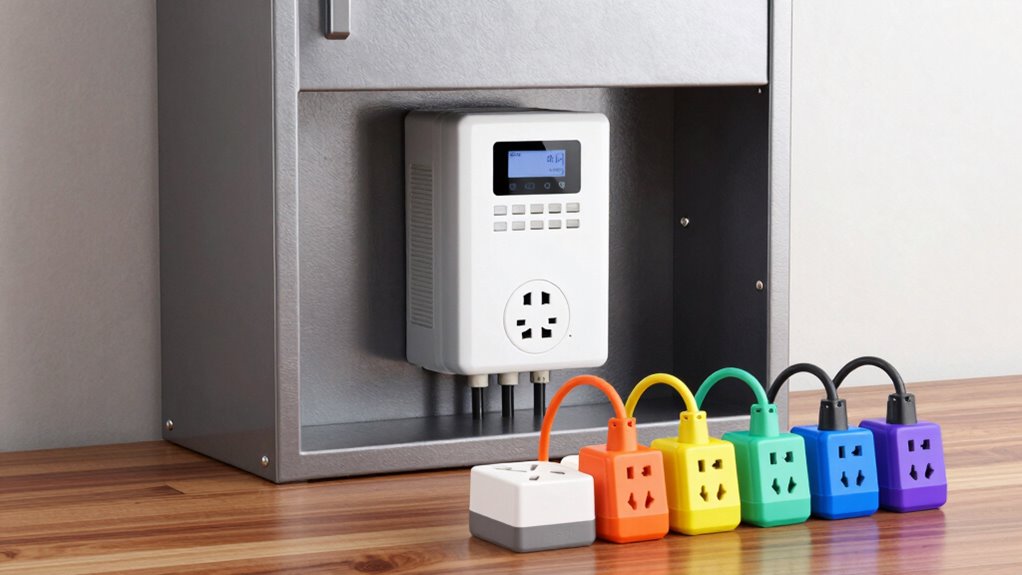
Installing surge protectors involves some upfront costs, but understanding the options can help you choose a solution that fits your budget. Whole-home systems tend to have higher initial prices, yet they offer superior energy efficiency and brand reliability, providing long-term savings and peace of mind. Power strips are more affordable upfront but may require frequent replacement if they fail. When installing, make certain you follow manufacturer instructions carefully, or hire a professional for a seamless setup. Regular maintenance involves inspecting for wear, testing functionality, and replacing units as needed. Keep in mind that investing in quality surge protectors can protect your electronics better and save money over time. Prioritize reputable brands known for durability and energy efficiency to maximize your protection and investment.
Common Mistakes to Avoid When Protecting Your Electronics
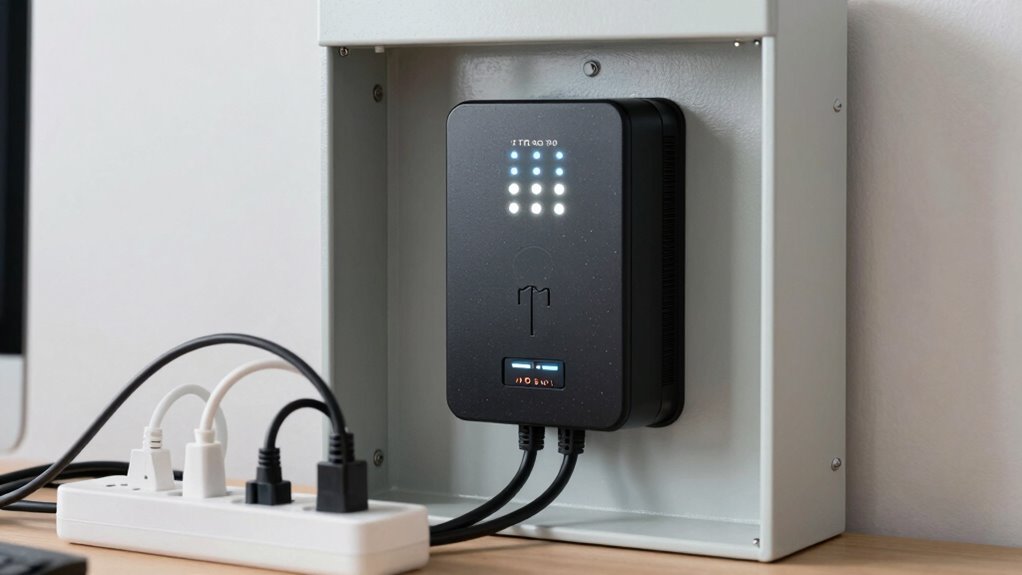
One common mistake is underestimating the importance of proper grounding and wiring when setting up surge protection. Without solid electrical grounding, surge protectors can fail to divert excess voltage safely, risking damage to your electronics. Additionally, neglecting surge noise filtering means your devices could suffer from interference or subtle damage over time. To avoid these pitfalls:
- Make certain your whole-home surge protector is correctly grounded.
- Regularly check wiring connections for corrosion or looseness.
- Use surge protectors with built-in noise filtering for cleaner power.
- Avoid daisy-chaining multiple power strips, which can weaken protection.
- Consult a professional for proper installation and maintenance.
Taking these steps helps make sure your electronics stay protected from surges and noise, extending their lifespan.
Frequently Asked Questions
Can Surge Protectors Prevent All Electrical Damage?
Surge protectors can’t prevent all electrical damage. While they shield your devices from power surges caused by electrical wiring issues or lightning strikes, their effectiveness depends on surge protector ratings. High-rated protectors offer better protection, but no device can guarantee complete safety. To minimize risks, combine surge protection with proper electrical wiring maintenance and consider a whole-home system for all-encompassing coverage.
How Often Should I Replace My Surge Protectors?
You should replace your surge protector before it gives up the ghost, typically every 3-5 years. The surge protector lifespan depends on its quality and how often it experiences power surges. Don’t wait until it’s too late—frequent replacement guarantees your devices stay protected. Think of it as changing the guard; regular updates keep your electronics safe from unexpected power spikes.
Do Whole-Home Systems Protect Against Power Outages?
Whole-home systems mainly protect against power surges, not power outages. They work through your home wiring and electrical grounding to prevent voltage spikes from damaging appliances. However, they don’t provide backup power during outages. To stay powered during blackouts, you’ll need a generator or uninterruptible power supply (UPS). Whole-home protection is essential for safeguarding your wiring and devices from surges, but it doesn’t replace backup power solutions.
Are There Different Types of Surge Protection Devices?
Yes, there are different types of surge protection devices. You can choose from point-of-use surge protectors, like power strips with surge protection, or whole-home surge protection systems. These devices enhance electrical safety by safeguarding your appliances and electronics from voltage spikes. Point-of-use protectors are ideal for individual devices, while whole-home systems offer thorough protection at the electrical panel. Understanding these options helps keep your home safe from electrical surges.
Can Surge Protectors Block Power Surges From Lightning Strikes?
Yes, surge protectors can block power surges from lightning strikes, but their effectiveness depends on their quality and type. For lightning safety, whole-home surge protectors connected to proper electrical grounding are your best defense, as they protect your entire system from high-voltage surges. Power strips with surge protection offer some defense, but they’re less reliable against powerful lightning strikes, making grounding and whole-home protection essential.
Conclusion
Choosing between whole-home surge protection and power strips depends on your needs, but remember, “better safe than sorry.” Whole-home systems offer extensive coverage, while power strips provide localized protection. Think about your devices, budget, and installation options. Ultimately, investing in the right surge protector helps keep your electronics safe and saves you money in the long run. Don’t wait for a lightning strike—prevention is always better than repair.
Fall Picks
fall essentials
As an affiliate, we earn on qualifying purchases.