

AI policies need an owner because policies can become inactive or outdated without someone responsible for keeping them relevant and enforceable. An owner actively updates guidelines, guarantees they’re practically applied, and promotes ethical standards across your organization. They act as a bridge between stakeholders, making sure policies adapt to new challenges and technology shifts. Without a dedicated owner, policies risk losing their effectiveness, but with one, they become dynamic tools that truly guide responsible AI use. Keep exploring to discover how ownership shapes policy impact.

Get audio and creator gear delivered free with Prime
- Fast, free delivery on millions of items
- Prime Video, Amazon Music and more included
- Member-only deals all year
Key Takeaways
- An owner ensures AI policies remain current, relevant, and effectively implemented, unlike a static PDF.
- Owners facilitate ethical oversight, accountability, and practical application across organizational teams.
- They adapt policies to evolving AI technologies and emerging challenges, preventing obsolescence.
- Owners embed policies into daily operations, promoting responsible AI use and organizational culture.
- Active ownership transforms policies from documents into dynamic decision-making tools, enhancing efficacy.
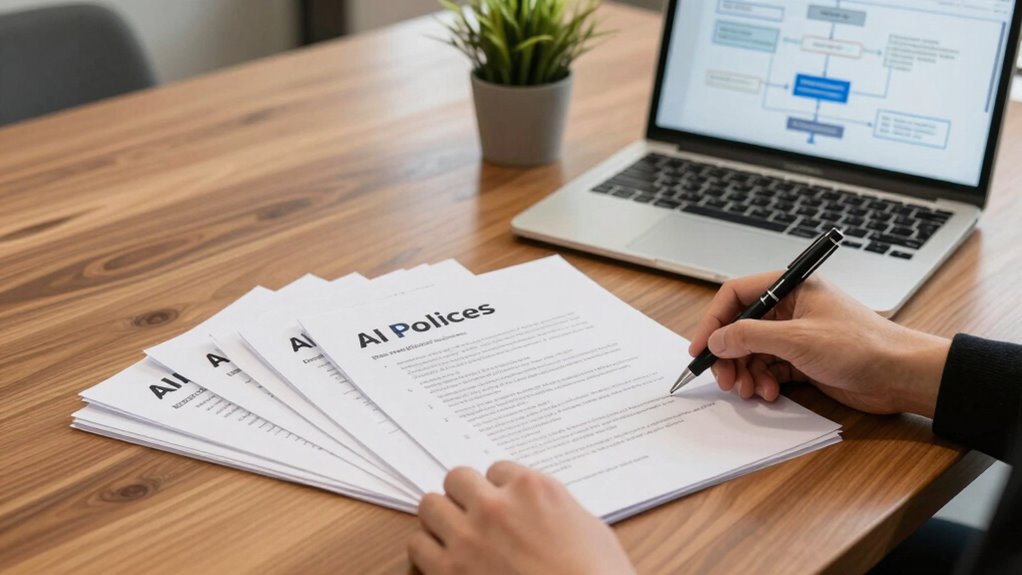
As artificial intelligence becomes more integrated into our daily lives, having clear policies to guide its development and use is essential. But creating policies isn’t enough—someone needs to own them. Without a dedicated owner, these policies risk becoming mere documents gathering dust, rather than active frameworks that shape real-world actions. An owner ensures that policies remain relevant, enforceable, and aligned with evolving technology and societal expectations. They’re responsible for translating high-level guidelines into practical steps, overseeing ethical oversight, and maintaining implementation accountability. When policies are owned by someone committed, it’s easier to hold organizations and individuals accountable for adhering to ethical standards, preventing misuse, and addressing unforeseen issues.
Effective AI policies require dedicated owners to ensure they stay relevant, enforced, and ethically grounded.
Having an owner also means policies aren’t static. As AI technology advances rapidly, policies need regular updates, and an owner is essential to facilitate this process. They serve as the bridge between policymakers, developers, and users, ensuring that the policies adapt to new challenges and innovations. This active accountability fosters trust among users and stakeholders, who want assurance that AI systems operate ethically and transparently. Without an owner, policies risk becoming outdated or ignored altogether, leaving gaps that could lead to ethical breaches or unintended consequences. Incorporating insights from cybersecurity tactics can help identify vulnerabilities and strengthen policy resilience. Recognizing that policy ownership is a key factor in effective AI governance is vital for ensuring ongoing compliance and adaptability.
Furthermore, an owner plays an integral role in integrating policies into everyday operations. It’s one thing to develop a document outlining ethical oversight, but it’s another to implement those principles effectively across teams and projects. An owner champions the importance of responsible AI use and ensures that compliance becomes part of the organizational culture. This person also handles training, audits, and monitoring, making sure policies aren’t just theoretical but practiced consistently. When accountability is clearly assigned, it’s easier to spot problems early and correct course before issues escalate.
In essence, policies need a dedicated owner to realize their full potential. They breathe life into guidelines, turning them from static papers into dynamic tools that guide decision-making and behavior. An owner ensures that ethical oversight isn’t just a checkbox, and that implementation accountability is maintained at every level. Without someone in this role, policies risk becoming ineffective and disconnected from the real-world contexts they’re meant to influence. To truly harness AI’s benefits while managing its risks, organizations must recognize that policies require active ownership—someone committed to making them work, not just storing them in a PDF. Recognizing the importance of content formats and how they support ongoing policy development can enhance overall effectiveness. Additionally, aligning policies with technology trends ensures they remain relevant and adaptable to future challenges.
As an affiliate, we earn on qualifying purchases.
Frequently Asked Questions
How Do Ownership Responsibilities Evolve Over Time?
Your ownership responsibilities evolve over time through dynamic oversight, adapting to new AI developments and risks. As technology advances, you must stay informed, update policies, and address emerging ethical concerns. This ongoing process requires active engagement, continuous monitoring, and refining your approach to guarantee responsible AI use. By doing so, you maintain control, mitigate potential issues, and foster trust, making your oversight more effective and responsive to changing circumstances.
What Skills Are Essential for an AI Policy Owner?
As an AI policy owner, you need strong skills in AI ethics to guarantee responsible development and deployment. Stakeholder engagement is vital, so you can effectively communicate policies and gather diverse perspectives. You should also be adept at adapting to evolving technology, translating complex concepts into clear guidelines, and collaborating across teams. These skills help you manage risks, uphold ethical standards, and foster trust in your organization’s AI initiatives.
How Can Organizations Ensure Accountability in AI Policy Management?
To guarantee accountability in AI policy management, you should foster a culture of AI ethics and actively engage stakeholders at all levels. Regularly review policies, clarify responsibilities, and create transparent reporting channels. By promoting ongoing dialogue and accountability, you help your organization stay aligned with ethical standards, ensuring AI systems operate responsibly and trustworthiness remains central. This approach keeps everyone committed and informed, guiding responsible AI development and deployment.
What Challenges Arise From Decentralized AI Policy Ownership?
Decentralized AI policy ownership challenges stakeholder engagement and policy clarity, making it hard to guarantee consistent standards across teams. You might face difficulties coordinating updates, leading to gaps or conflicts in policies. When ownership is dispersed, it’s tough to ensure accountability and clear communication. To overcome this, you need centralized oversight that fosters stakeholder collaboration and keeps policies transparent, helping everyone understand their roles and responsibilities.
How Does Ownership Influence AI Policy Compliance and Enforcement?
Ownership greatly boosts AI governance and ethical oversight by making policies actionable. When you own AI policies, you’re more likely to guarantee compliance, enforce standards, and adapt guidelines as needed. Without ownership, policies risk becoming dead documents, ignored or misinterpreted. A designated owner actively monitors, updates, and enforces ethical standards, fostering a culture of responsibility and accountability that’s essential for trustworthy AI development and deployment.
Conclusion
Without a dedicated owner, AI policies risk becoming nothing more than silent sentinels, forgotten on a shelf. An owner breathes life into these policies, guiding their evolution and ensuring they serve their true purpose. Think of policies as seeds—without care and attention, they wither; with ownership, they grow into sturdy trees offering shade and guidance. So, don’t just leave your AI policies in a PDF—nurture them, own them, and watch them flourish.
Halloween Picks
halloween
As an affiliate, we earn on qualifying purchases.