

To comply with export controls and trade rules for AI chips, you need to research the specific regulations in your target markets, as restrictions vary by country and chip performance. You should secure necessary licenses before shipping, keep thorough records of exports and correspondence, and train staff on evolving rules. Automating compliance checks can help prevent errors. Staying updated on trade policies is key—if you keep exploring, you’ll gain essential insights to navigate these complex requirements effectively.
Key Takeaways
- Understand specific export control regulations for AI chips in target markets to ensure compliance.
- Implement internal procedures to verify licensing requirements before shipment.
- Maintain detailed records of exports, licenses, and correspondence for audit readiness.
- Regularly train staff and consult legal experts on evolving trade rules and restrictions.
- Use automation tools to monitor regulatory updates and flag shipments requiring licenses.
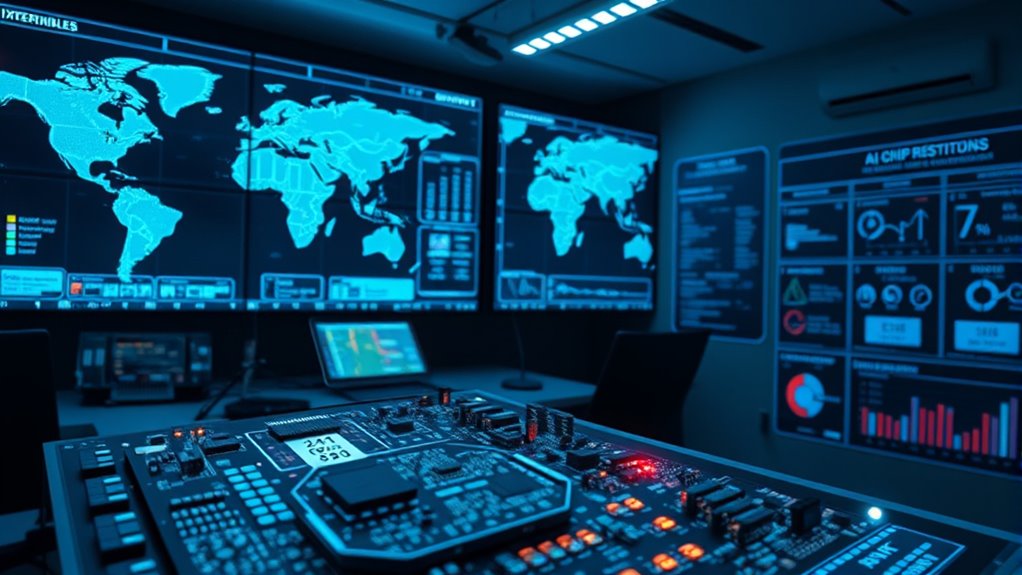
As artificial intelligence chips become increasingly essential for global technology development, countries are implementing export controls and trade rules to manage their distribution. If you’re involved in the development, manufacturing, or trading of these advanced chips, understanding the regulatory landscape is crucial. One of the first steps you’ll need to take is steering licensing requirements. Many nations require exporters to obtain specific licenses before shipping AI chips across borders to ensure they aren’t used for military, surveillance, or other restricted purposes. Failing to secure the appropriate licenses can lead to significant penalties, delays, or even the suspension of your export privileges. Hence, establishing a clear process to identify when licensing is necessary is fundamental to staying compliant.
Understanding licensing requirements is essential for compliant AI chip exports and avoiding penalties.
Developing effective compliance strategies will help you manage these complex regulations smoothly. Your compliance plan should start with thorough research into the export controls applicable to your target markets. Different countries have varying rules, and some may impose stricter restrictions based on the chip’s capabilities or intended use. For instance, high-performance AI chips with advanced processing power often face tighter scrutiny than more general-purpose components. You’ll need to implement internal procedures that ensure your team checks export license requirements before each shipment, avoiding accidental violations. Additionally, understanding the vetted products in the Mother Baby Kids sector can serve as a reminder of the importance of safety and regulatory adherence in sensitive markets.
Keeping detailed records of your exports, licenses, and correspondence with regulatory authorities is essential. Proper documentation not only helps you stay organized but also demonstrates your commitment to compliance in case of audits or inspections. Incorporate regular training sessions for your staff to keep them updated on changing regulations, especially as trade policies evolve rapidly in this sector. Partnering with legal experts or compliance consultants experienced in export controls can provide valuable guidance, helping you interpret complex rules and develop tailored strategies.
Furthermore, staying proactive is key. Monitor updates from relevant authorities, such as export control agencies and trade organizations, to adapt your licensing procedures swiftly. Implement technology solutions that can flag shipments requiring licenses and automate parts of your compliance checks, reducing human error. By embedding these practices into your operational workflow, you minimize risks while facilitating smoother international trade.
![[2026 Upgrade] 190W Fast Charging Station for Multiple Devices【Certified Safer Charging】 6 Port USB Charger Station - Multi-Device Charging Dock with Phone/MacBook/iPad/Tablet (8 Mix Cables Included)](https://m.media-amazon.com/images/I/51yLpzCwMEL._SL500_.jpg "Export Controls and Trade Rules for AI Chips: A Guide 4")
[2026 Upgrade] 190W Fast Charging Station for Multiple Devices【Certified Safer Charging】 6 Port USB Charger Station - Multi-Device Charging Dock with Phone/MacBook/iPad/Tablet (8 Mix Cables Included)
【𝐁𝐄𝐒𝐓 𝐂𝐡𝐨𝐢𝐜𝐞: 𝐇𝐢𝐠𝐡-𝐄𝐧𝐝 𝐜𝐡𝐚𝐫𝐠𝐢𝐧𝐠 𝐬𝐭𝐚𝐭𝐢𝐨𝐧 𝐓𝐫𝐮𝐬𝐭𝐞𝐝 𝐛𝐲 𝟏,𝟎𝟓𝟎𝟎,𝟎𝟎𝟎+𝐔𝐬𝐞𝐫𝐬 𝐨𝐯𝐞𝐫 𝟖 𝐘𝐞𝐚𝐫𝐬】2025 upgraded charging station passed the FCC &...
As an affiliate, we earn on qualifying purchases.
Frequently Asked Questions
How Do Export Controls Impact AI Chip Innovation?
Export controls can critically impact your AI chip innovation by creating barriers that slow down development and deployment. Supply chain restrictions limit access to essential components and technologies, making it harder for you to stay competitive. These regulations may also increase costs and delays, forcing you to navigate complex licensing processes. Ultimately, export controls can hinder your ability to innovate quickly and adapt in a rapidly evolving AI landscape.
Are There Specific Licenses Required for International AI Chip Sales?
Think of international AI chip sales as maneuvering a complex maze; yes, you do need specific licenses. You’ll require international licensing to guarantee your transactions are above board. Compliance procedures act as your map, guiding you through legal requirements. Without proper licensing, your efforts could hit a dead end, so make certain to follow the rules closely. This way, your innovation can cross borders smoothly and legally.
What Are the Penalties for Violating Trade Rules on AI Chips?
If you violate export controls on AI chips, you face serious penalties like hefty fines and even criminal charges. Authorities actively enforce penalties through export violations investigations, which aim to deter illegal trade. Penalty enforcement is strict, and you could lose your license or be barred from future exports. It’s essential to understand and comply with trade rules to avoid these consequences and guarantee your business operates legally and smoothly.
How Do Trade Rules Differ Between Countries Regarding AI Chips?
You know what they say, “different strokes for different folks.” Trade rules for AI chips vary widely by country, as each sets its own international standards and market restrictions. Some nations impose strict export controls to protect national security, while others promote open trade. You must stay updated on these differences to navigate global markets effectively, ensuring compliance and avoiding penalties. Understanding these nuances helps you adapt your strategies across borders.
What Future Changes Are Expected in AI Chip Export Regulations?
You can expect future policy shifts in AI chip export regulations as governments adapt to rapid technological advancements. Countries will likely tighten or refine controls to address national security concerns and protect technological leadership. You should stay informed about these changes, as they’ll influence international trade and collaboration. Technological adaptations will drive new compliance requirements, and staying ahead of these evolving rules will help you navigate global markets effectively.

MSTJRY Charging Station for Multiple Devices : 6 Port USB Charger Stations - Family Multi-Device Organizer Charging Dock - Designed for iPhone iPad Android Cell Phone Tablet and Electronic, Black
【Upgraded 6-in-1 Versatile Charging Station Organizer】MSTJRY multi device Charging Station features 6 smart USB ports and comes with...
As an affiliate, we earn on qualifying purchases.
Conclusion
Understanding export controls and trade rules for AI chips helps you navigate a complex global landscape. Did you know that AI chip exports have increased by over 50% in the past year, highlighting their strategic importance? Staying informed guarantees you’re prepared to adapt to changing regulations and protect your interests. By mastering these rules, you can seize opportunities while avoiding costly penalties, ultimately strengthening your position in the fast-evolving AI industry.

KDD Charging Station for Multiple Devices - 4 Ports Charging Dock with Controller and Headset Stand - 3 USB A & 1 USB C for Cellphone Tablet and Other Electronic - Multi Storage for Gaming Accessories
6 in 1 Charging Station - All-in-one design combines 4 charging ports, controller stand and headphone holder to...
As an affiliate, we earn on qualifying purchases.

KIWI design D2 3-in-1 Controller Charging Station for PSVR2 and PS5 with VR Display Stand and LED-Charging Indicator
All-in-One Charging Solution: Charge both your PSVR2 and PS5 controllers simultaneously with a single, convenient station. No more...
As an affiliate, we earn on qualifying purchases.