
To guarantee your AI vendor meets security and compliance standards, verify their data privacy policies, including encryption and unauthorized access safeguards. Check their data handling practices, retention policies, and whether they comply with regulations like GDPR or CCPA. Review their security controls, certifications, and incident management processes. Confirm regular assessments and prompt breach responses. If you want a thorough understanding of what to look for, keep exploring the key points that can help protect your organization.
Key Takeaways
- Verify vendor’s data privacy policies, including encryption, access controls, and compliance with GDPR or CCPA.
- Assess data handling, retention, and secure disposal procedures for transparency and legal adherence.
- Confirm adherence to industry-specific regulations with certifications and audit reports.
- Review security controls, vulnerability management, incident response, and ongoing security improvements.
- Evaluate breach management processes, notification procedures, and vendor’s ability to adapt to regulatory changes.
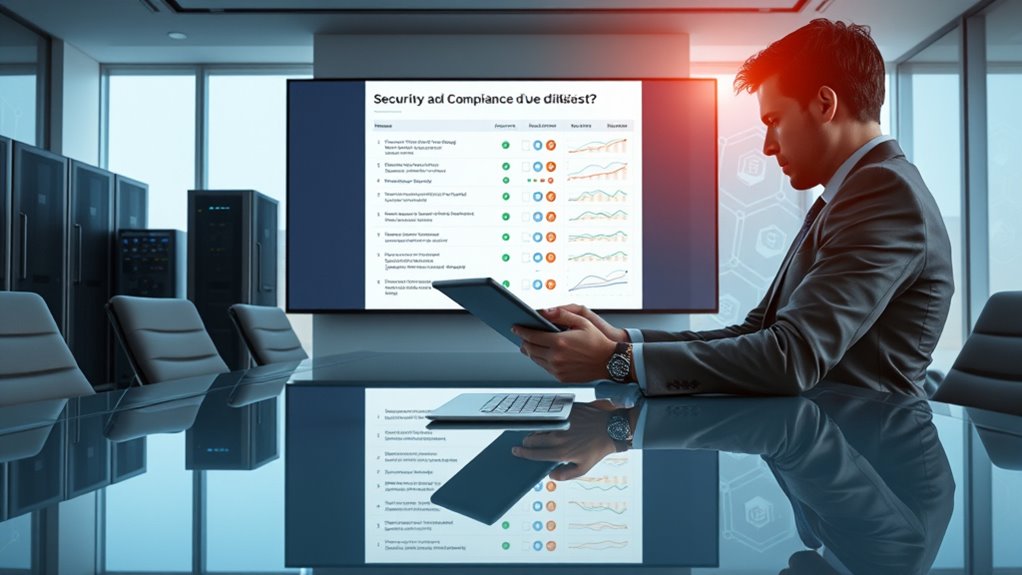
As organizations increasingly rely on AI vendors to power critical functions, conducting thorough due diligence becomes essential. One of the key areas to focus on is data privacy, which directly impacts your organization’s reputation and legal standing. You need to ensure that the vendor has robust data privacy policies aligned with industry best practices and legal requirements. Ask how they handle sensitive data, what encryption methods they use, and how they prevent unauthorized access. Confirm that their data handling procedures are transparent and that they comply with relevant data protection laws, such as GDPR or CCPA. It’s crucial to understand whether the vendor has a clear data retention policy and procedures for data deletion once the data is no longer needed.
Alongside data privacy, adherence to regulatory standards is vital. Different industries are governed by specific rules, and your AI vendor should demonstrate a strong understanding of these regulations. Verify that they meet regulatory standards applicable to your sector, whether it’s healthcare, finance, or other fields with strict compliance requirements. Look for certifications or audits that confirm their compliance—these serve as proof of their commitment to meeting legal standards. Also, examine their track record for regulatory audits and whether they have faced any compliance issues in the past. This information helps you gauge their reliability and their capacity to operate within legal parameters.
Verify your vendor’s compliance with industry-specific standards and review their audit history to ensure legal reliability.
When evaluating a vendor’s security posture, don’t overlook their approach to data privacy and regulatory standards. Ask for detailed documentation about their security controls, including vulnerability management, incident response, and employee training programs. Ensure they conduct regular security assessments and penetration testing. A vendor that invests in proactive security measures demonstrates a commitment to protecting your data and maintaining compliance. Additionally, understanding their security controls can provide insight into their overall commitment to safeguarding sensitive information.
Furthermore, it’s wise to review their process for handling data breaches and incidents, including notification procedures and remediation steps. You want to partner with a vendor that not only complies with current standards but is also prepared to adapt to evolving regulations. Their ability to stay ahead of regulatory changes minimizes your risk of non-compliance.
AI vendor security compliance checklist
As an affiliate, we earn on qualifying purchases.
As an affiliate, we earn on qualifying purchases.
Frequently Asked Questions
How Do I Verify an AI Vendor’s Data Privacy Policies?
You verify an AI vendor’s data privacy policies by reviewing their documentation thoroughly. Check for clear data privacy commitments, compliance with regulations like GDPR or CCPA, and their approach to data handling and protection. Conduct policy verification by asking for independent audits or certifications, and guarantee they have robust data privacy measures in place. This helps confirm that their practices align with your privacy standards and legal requirements.
What Are Common Red Flags During AI Vendor Security Assessments?
Watch out for red flags like potential vendor lock-in and cybersecurity vulnerabilities. If a vendor pushes proprietary tech that makes switching difficult, it’s a red flag. Similarly, weak security measures, outdated software, or unclear data handling practices signal trouble. These issues can leave you exposed and limit flexibility, so trust your instincts and dig deeper when evaluating their security posture. Better safe than sorry, as the saying goes.
How Often Should I Review an AI Vendor’s Compliance Status?
You should review an AI vendor’s compliance status at least quarterly to effectively manage vendor risk. Regular compliance monitoring helps you catch issues early, ensuring the vendor adheres to security standards and regulations. If your organization handles sensitive data or faces regulatory pressures, consider more frequent reviews, such as monthly. Staying proactive with compliance checks minimizes risks and keeps your vendor relationships secure and trustworthy.
What Legal Considerations Exist for Cross-Border AI Data Transfer?
You need to understand that cross-border regulations and legal compliance are vital when transferring AI data internationally. Laws vary by country, and failure to adhere can result in hefty fines or legal action. Always verify if the data transfer complies with regulations like GDPR or other local laws, and make certain your vendor has appropriate safeguards. Investigate these legal considerations thoroughly to protect your organization from potential compliance risks.
How Can I Ensure an AI Vendor’s Transparency in Algorithms?
You can guarantee an AI vendor’s transparency in algorithms by requesting detailed documentation on their algorithm design and decision-making processes. Ask about their bias mitigation strategies and how they test for fairness. Insist on regular audits and clear communication about updates. By prioritizing algorithm transparency and bias mitigation, you’ll better understand how the AI operates and reduce potential ethical or legal risks associated with its use.
data encryption tools for vendors
As an affiliate, we earn on qualifying purchases.
As an affiliate, we earn on qualifying purchases.
Conclusion
By thoroughly evaluating security, verifying compliance, and understanding your AI vendor’s practices, you protect your organization, build trust, and ensure responsible AI deployment. Prioritize due diligence to minimize risks, safeguard data, and uphold standards. Make informed decisions, establish clear expectations, and maintain ongoing oversight. In doing so, you create a resilient foundation for your AI initiatives, fostering confidence, ensuring security, and achieving long-term success. Stay vigilant, stay proactive, and stay committed to responsible AI partnership.
GDPR CCPA compliance audit software
As an affiliate, we earn on qualifying purchases.
As an affiliate, we earn on qualifying purchases.
vendor security assessment tools
As an affiliate, we earn on qualifying purchases.
As an affiliate, we earn on qualifying purchases.