
When choosing a site for an AI data center, prioritize locations with access to renewable energy sources like wind or solar to reduce your carbon footprint and guarantee stable power supplies. Consider areas with reliable water resources or innovative cooling alternatives to manage heat efficiently. Also, review local policies and incentives that favor sustainable practices, helping you meet regulations and optimize costs. Exploring these factors further will give you valuable insights for strategic site selection.
Key Takeaways
- Prioritize sites with abundant renewable energy sources to ensure sustainable and cost-effective power supply.
- Assess water availability and cooling options to minimize environmental impact and water dependency.
- Consider local policies and incentives that promote renewable energy use and environmentally compliant construction.
- Evaluate climate conditions to reduce cooling needs and enhance operational efficiency.
- Choose locations with minimal ecological disruption and existing infrastructure to support long-term sustainability.
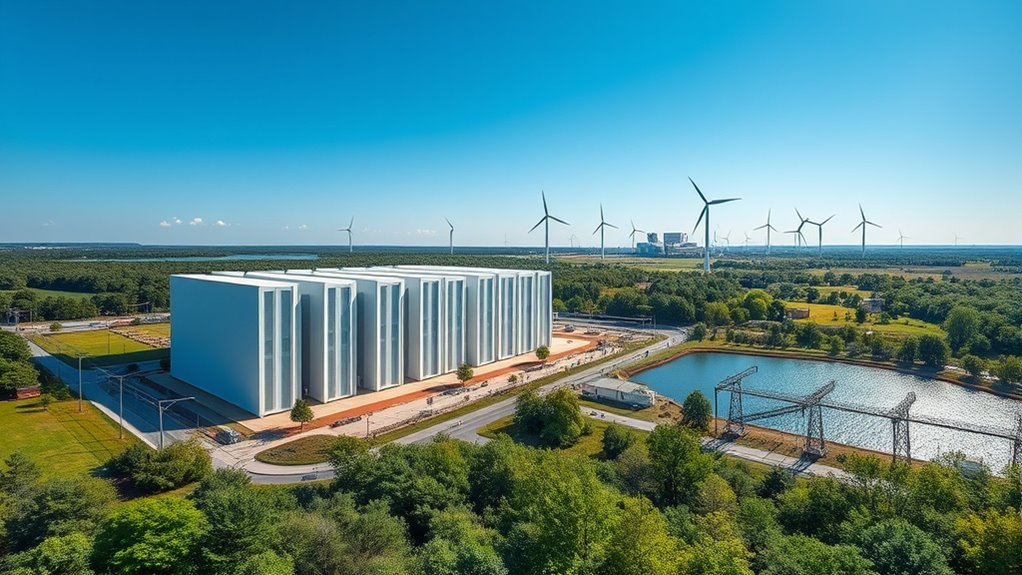
Choosing the right site for an AI data center is essential to guarantee peak performance, security, and cost-efficiency. One of the most critical factors to consider is the availability of renewable energy sources. AI data centers consume enormous amounts of power, which can substantially impact operational costs and environmental sustainability. By selecting a location with access to renewable energy—such as wind, solar, or hydro—you not only reduce your carbon footprint but also ensure a more stable and predictable energy supply. This shift toward clean energy sources minimizes reliance on fossil fuels, which are subject to price volatility and supply disruptions, ultimately leading to long-term savings and improved environmental impact.
Beyond energy considerations, the environmental impact of your site choice plays a vital role. You need to evaluate how the location’s natural landscape, local ecosystems, and community will be affected by construction and ongoing operations. Choosing sites that are already developed or have minimal ecological disruption helps preserve biodiversity and reduces the negative footprint of your data center. Additionally, sites with favorable climate conditions—such as cooler temperatures—can decrease cooling requirements, further lessening environmental strain.
Location also influences the availability of water, an essential resource for data center cooling systems. Opting for a site with reliable water sources or alternative cooling options helps prevent operational interruptions and reduces stress on local water supplies. This consideration is particularly important in drought-prone regions or areas facing water scarcity, where overuse can lead to conflicts or regulatory restrictions. A thoughtful site selection balances water needs with environmental sustainability, ensuring your data center operates efficiently without harming the surrounding ecosystem. Moreover, understanding the renewable energy infrastructure of a region can greatly enhance your ability to meet sustainability targets.
Policies and regulations at the local, state, or national level also greatly impact your choice. Some regions offer incentives for renewable energy use, sustainable construction practices, or green certifications, which can lower costs and enhance your company’s reputation. Conversely, areas with strict environmental regulations may impose additional compliance costs but can also provide a framework for sustainable development. Understanding the local policy landscape helps you plan for future regulatory changes and align your project with long-term sustainability goals.
Frequently Asked Questions
How Do Local Regulations Impact Data Center Site Choices?
Local regulations greatly impact your data center site choices through zoning restrictions and tax incentives. Zoning laws determine where you can build, potentially limiting your options or requiring special permits. Tax incentives can make some locations more financially attractive by reducing costs. You need to carefully evaluate these regulations to guarantee compliance and maximize benefits, ultimately choosing a site that aligns with your operational needs and offers favorable legal and financial conditions.
What Are the Environmental Risks Associated With Potential Sites?
You should consider environmental risks like the site’s environmental footprint and biodiversity impact. A location with a high environmental footprint may lead to greater energy consumption and waste, increasing your ecological impact. Additionally, if the site threatens local biodiversity, it could cause habitat loss and disrupt ecosystems. Evaluating these risks helps you choose a site that minimizes environmental harm, aligning your data center’s operations with sustainability goals and regulatory requirements.
How Does Community Acceptance Influence Site Selection?
Did you know that 78% of communities say public perception influences their support for data centers? Your community’s acceptance hinges on effective engagement and transparent communication. When you involve locals early, you build trust and address concerns, making site approval smoother. Neglecting community engagement can lead to opposition, delays, and increased costs. Thus, understanding and positively shaping public perception is essential for successful site selection.
What Are the Long-Term Sustainability Considerations?
You need to contemplate long-term sustainability by prioritizing renewable energy sources to power your data center, which helps reduce your carbon footprint. Think about water efficiency measures and the potential impacts on local water resources. Additionally, evaluate policies that support sustainable practices, ensuring your site remains environmentally responsible and resilient over time. Incorporating these considerations will help your data center stay sustainable and compliant with future regulations.
How Do Geopolitical Factors Affect International Site Decisions?
Geopolitical factors are like a tightrope walk, balancing risks and opportunities. When you consider international site decisions, geopolitical stability is vital because it guarantees reliable operations and minimizes disruptions. Unstable regions can threaten supply chains, especially in international trade, leading to increased costs or delays. You need to assess political relationships, trade agreements, and regional security to choose locations that support long-term growth and operational security.
Conclusion
Choosing the right site for an AI data center is like planting a delicate seed—you need the perfect environment to make it grow strong and resilient. Power, water, and policy are the nourishing elements that support its future. When you select wisely, you’re not just building a facility; you’re cultivating a crucial heartbeat for innovation. With careful planning, you’ll foster a thriving hub that powers progress for years to come.