

Privacy frameworks like NIST PF 1.1 and AI RMF guide you to manage privacy risks throughout AI development. They help you identify personal data, assess impacts, and promote transparency. By incorporating these frameworks, you guarantee responsible AI use aligned with ethical standards and societal values. This creates a trustworthy environment while protecting privacy rights. Continuing will reveal how these frameworks can support your organization’s approach to ethical and accountable AI practices.
Key Takeaways
- NIST PF 1.1 offers a flexible, risk-based approach to identifying and managing privacy risks in AI systems.
- AI RMF focuses on lifecycle management, continuous monitoring, and addressing privacy vulnerabilities specific to AI.
- Both frameworks promote transparency, ethical AI practices, and accountability to build public trust.
- Implementing these frameworks supports privacy-by-design principles and helps organizations align with societal values.
- They foster a responsible AI ecosystem by integrating privacy considerations into development, deployment, and ongoing management.
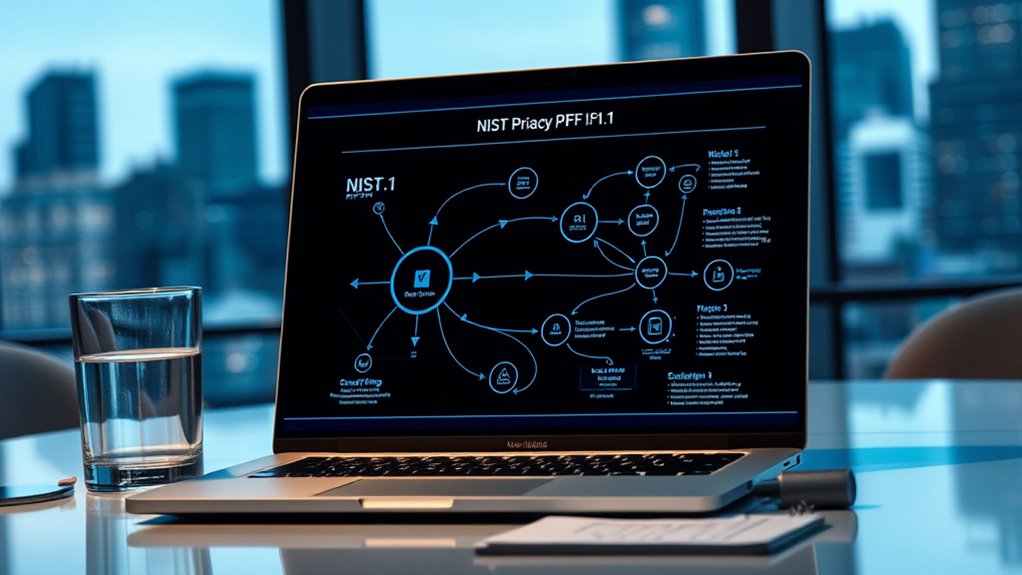
Have you ever wondered how we can protect individual privacy as artificial intelligence becomes more integrated into our daily lives? As AI systems grow more sophisticated, ensuring data protection and addressing ethical considerations become essential. Privacy frameworks like the NIST Privacy Framework (PF) 1.1 and the AI Risk Management Framework (AI RMF) provide structured approaches to tackle these challenges. They help organizations implement privacy-by-design principles and foster a culture of accountability, ensuring that AI technologies respect personal rights while delivering innovative solutions.
The NIST PF 1.1 emphasizes a flexible, risk-based approach to managing privacy risks associated with AI. It guides organizations to identify what personal data they handle, assess potential privacy impacts, and implement controls to mitigate those risks. By integrating privacy considerations early in the development process, companies can prevent privacy breaches and build trust with users. The framework encourages transparency, so individuals understand how their data is used, which directly supports data protection. It also promotes ethical considerations by ensuring that AI systems operate fairly, avoiding bias and discrimination. This proactive stance helps organizations balance innovation with respect for individual privacy rights.
Similarly, the AI RMF focuses on managing risks specific to AI systems. It provides a set of guidelines to analyze and address potential privacy vulnerabilities throughout an AI’s lifecycle. The framework highlights the importance of continuous monitoring, allowing organizations to adapt privacy protections as AI models evolve. It underscores the need for accountability, making sure that those responsible for AI deployment are aware of privacy implications and adhere to ethical standards. This approach not only enhances data protection but also fosters responsible AI use, aligning technological advancement with societal values.
Both frameworks recognize that privacy isn’t just a technical issue but also an ethical one. They advocate for organizations to consider the broader impact of their AI systems on individuals and society. Implementing these frameworks requires a thorough understanding of data flows, potential biases, and the societal context in which AI operates. By doing so, organizations demonstrate their commitment to ethical considerations and public trust. Additionally, integrating precious metals investment strategies can serve as a diversification method to strengthen overall financial security. As AI continues to advance, adopting such frameworks becomes essential for safeguarding privacy and ensuring that technological progress benefits everyone without compromising rights or ethical standards.
Ultimately, integrating NIST PF 1.1 and AI RMF into your organization’s practices helps create a responsible AI ecosystem. It ensures data protection, encourages ethical decision-making, and promotes transparency—key ingredients for maintaining privacy in an increasingly digital world. Embracing these frameworks means you’re taking active steps to uphold privacy rights while fostering innovation, making AI development safer and more trustworthy for all.

Amazon Echo Show 5 (newest model), Smart display, Designed for Alexa+, 2x the bass and clearer sound, Charcoal
Alexa can show you more - Echo Show 5 includes a 5.5” display so you can see news...
As an affiliate, we earn on qualifying purchases.
Frequently Asked Questions
How Do These Frameworks Adapt to Rapidly Evolving AI Technologies?
You adapt to rapidly evolving AI technologies by leveraging frameworks that emphasize adaptive compliance and technological agility. These frameworks are designed to be flexible, allowing you to update policies and controls as new AI capabilities emerge. By continuously monitoring developments and integrating new best practices, you guarantee your privacy measures stay effective and aligned with the latest AI advancements, keeping your organization resilient in a dynamic technological landscape.
Are There Industry-Specific Privacy Considerations Within These Frameworks?
You know what they say, “one size doesn’t fit all.” These frameworks recognize industry nuances and sector-specific compliance needs, so they adapt to different fields like healthcare, finance, and government. By addressing industry-specific privacy considerations, they help you manage unique risks and regulations effectively. This tailored approach guarantees your AI systems stay compliant and trustworthy, no matter your sector’s particular privacy challenges.
How Do These Frameworks Address Cross-Border Data Privacy Issues?
You’ll find that these frameworks emphasize cross-border compliance by aligning with international standards, helping you manage data privacy across jurisdictions. They encourage you to implement practices that respect diverse legal requirements, ensuring your AI systems adhere to global privacy expectations. By doing so, you can effectively address cross-border data privacy issues, reduce risks, and promote trust in your AI applications on an international scale.
What Organizations Are Responsible for Updating These Privacy Standards?
Regulatory agencies and privacy stakeholders are responsible for updating these privacy standards. They monitor technological advances and evolving privacy concerns, ensuring the frameworks stay relevant and effective. You should stay informed about their updates, which often involve public consultations and collaborative efforts. By engaging with these entities, you can help shape policies that protect privacy across borders, fostering trust and compliance in AI development and deployment.
How Do These Frameworks Integrate With Existing Legal Privacy Requirements?
You navigate a landscape where legal compliance and data sovereignty serve as guiding stars, seamlessly weaving these frameworks into your existing privacy obligations. These frameworks act like a sturdy bridge, aligning AI practices with legal standards, ensuring your data stays protected and sovereign. By integrating them, you create a cohesive path that respects regulations while fostering trust, making your AI solutions both innovative and compliant in a complex legal terrain.

Synology 2-Bay NAS DS223 (Diskless)
Centralized Data Storage - Consolidate your data with 100% data ownership and multi-platform access
As an affiliate, we earn on qualifying purchases.
Conclusion
Think of privacy frameworks as your guiding compass through the vast ocean of AI. NIST PF 1.1 and AI RMF are your lighthouse, illuminating the path amid shifting waves. By steering these frameworks, you steer clear of hidden reefs of bias and breach, charting a course toward trust and transparency. Embrace them as your steady crew, ensuring your AI voyage remains safe, ethical, and true to its purpose in this complex digital sea.

Yxk Zero1 2-Bay Desktop NAS, Maximum 60TB (Diskless), User-Friendly Home NAS Storage, Private Security & Remote Access, Silent, 4GB RAM, 2.5GbE Port, 4K HDMI, Network Attached Storage
Advanced Storage Management & Resilience: Yxk NAS ensures data integrity through enterprise-grade features like RAID redundancy, automated backups,...
As an affiliate, we earn on qualifying purchases.

Amazon Echo Show 21 (newest model), Full HD 21" kitchen hub for home organization, with built-in Fire TV, Designed for Alexa+
OUR LARGEST SMART DISPLAY YET - A stunning 21" Full-HD (1080p) smart display with built-in Fire TV and...
As an affiliate, we earn on qualifying purchases.